Two hundred and twenty-five mausoleums,
from Marrakesh to Dhaka
More than a thousand years of tombs, from a tenth-century brick cube in Bukhara to the twentieth-century mausoleums of Rabat and Karachi.
Turn a building in 3D or look around it in a 360° photograph, and step inside wherever the interior has been scanned or photographed. Every fact on these pages is cited.
225 places26 countries801–1971 CE46 you can enter
Drag to turn the globe. Point at a dot to see which mausoleum it marks; click to open it.Tap a dot to see its name, then tap the name to open it.Land and lakes: Natural Earth (public domain). Orthographic projection.
The plates
In order of construction
No place matches. Try another name or clear the filters.
-
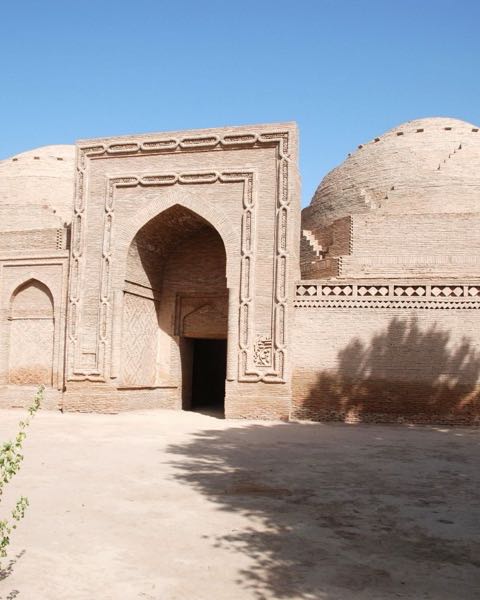 Two domed brick buildings on the south front of an early madrasa near Shahrituz, in southern Tajikistan, dated between the 9th and 12th centuries.
IKhoja Mashhad
خواجه مشهد
-
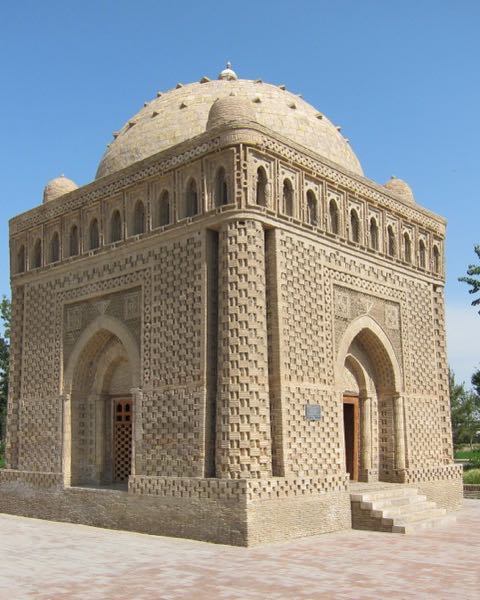 3DA compact 10th-century tomb of patterned baked brick built for the Samanid dynasty, one of the earliest surviving Islamic mausoleums and a highlight of historic Bukhara.
IISamanid Mausoleum
الضريح الساماني
-
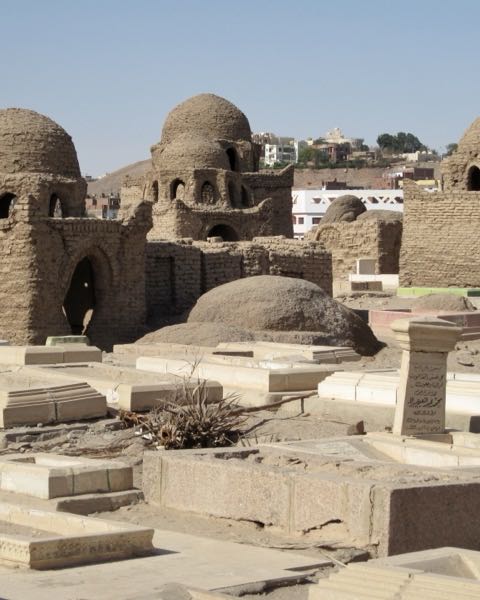 360°The southern, best-preserved part of Aswan’s early Islamic necropolis: mud-brick tombs and domed mausolea, mostly Fatimid, listed by UNESCO in 1979 as the “Islamic Cemetery”.
IIIFatimid Cemetery of Aswan
المقابر الفاطمية بأسوان
-
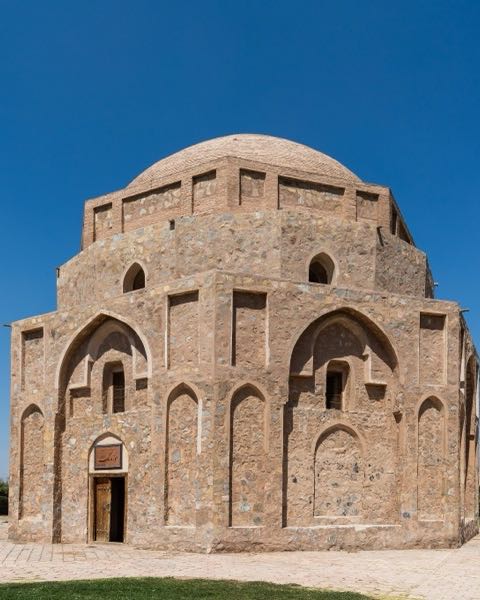 An octagonal stone tomb with a brick dome east of Kerman, dated by most scholars to the Seljuk period and by a 2021 study to the late 10th century.
IVGonbad-e Jabaliyeh
قبة جبلية
-
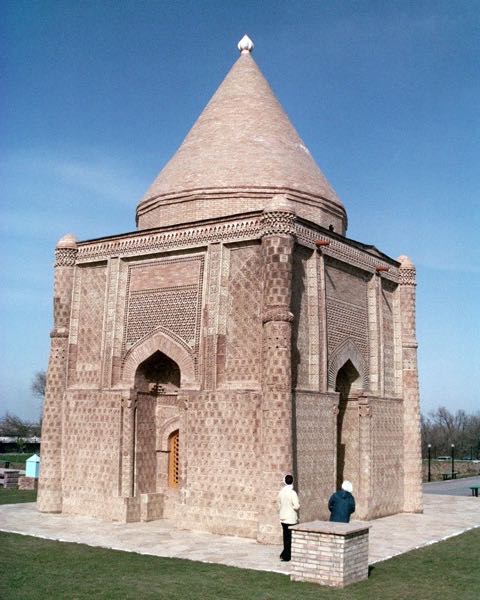 3DA small square tomb near Taraz, faced with carved terracotta tiles in more than 60 designs; legend links it to Aisha Bibi, but who is buried here is unknown.
VAisha Bibi Mausoleum
ضريح عائشة بيبي
-
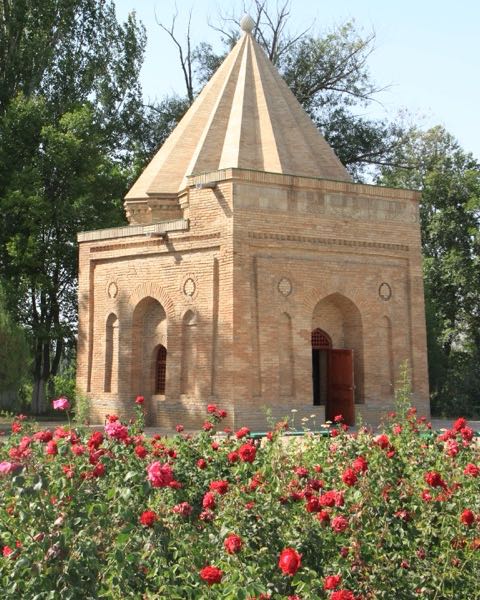 3DA small brick tomb beside the Aisha Bibi mausoleum near Taraz, with no portal and a sixteen-faceted conical dome; a fragmentary inscription names it the tomb of Babaji Khatun.
VIBabaji Khatun Mausoleum
ضريح باباجي خاتون
-
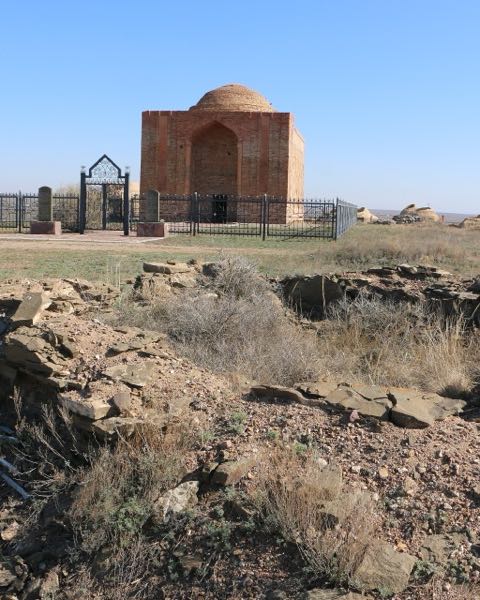 3DA brick portal-and-dome tomb in Ulytau, named after the legendary Alasha Khan, with an octagonal chamber inside a cubic body and a gallery running round its upper level.
VIIAlasha Khan Mausoleum
ضريح آلاشا خان
-
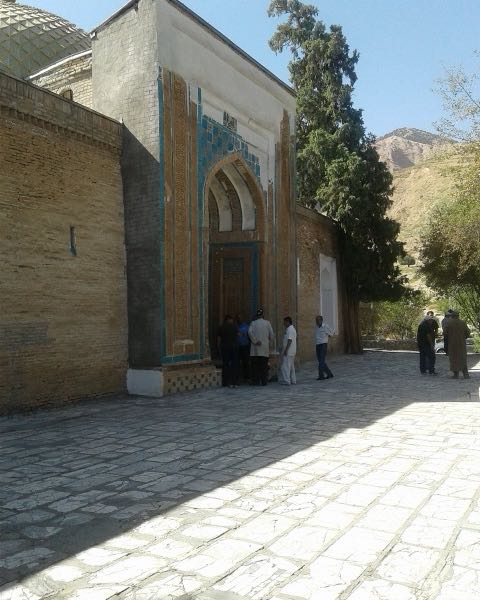 A domed mausoleum of the 11th-12th centuries near Panjakent, fronted by a 14th-century portal of carved terracotta and glazed tile.
VIIIMausoleum of Muhammad Bashoro
ضريح محمد بشارو
-
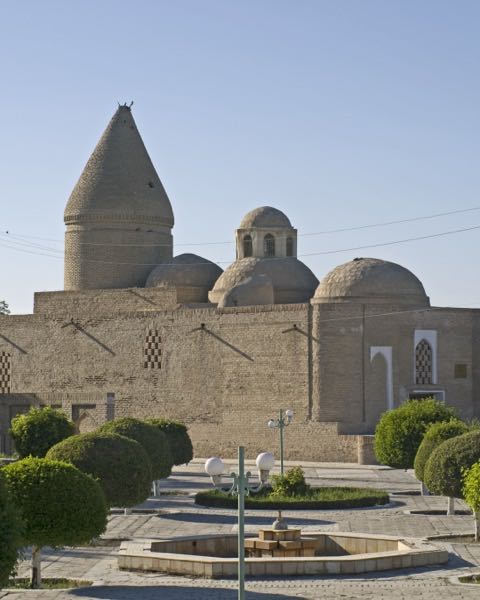 360°A domed shrine in Bukhara named after a spring that legend links with the prophet Ayub (Job), dated by UNESCO to the 11th century and by Archnet to 1379-1380.
IXChashma-Ayub Mausoleum
ضريح تشاشما أيوب
-
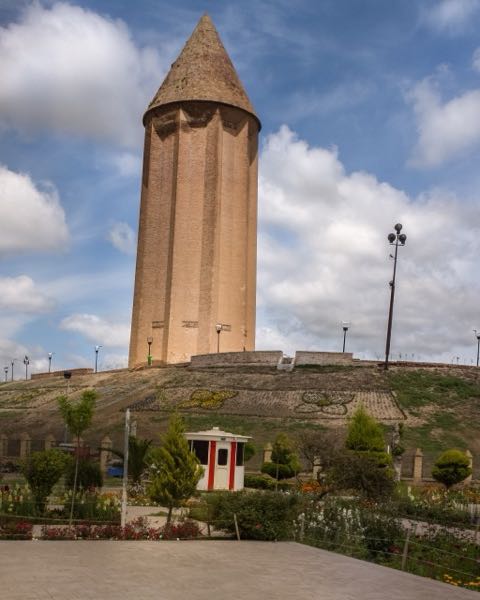 360°A 53 m tomb tower of unglazed brick on a ten-pointed star plan, ordered in 1006-1007 by the Ziyarid emir Qabus ibn Voshmgir near his capital, Jorjan.
XGonbad-e Qabus
برج قابوس
-
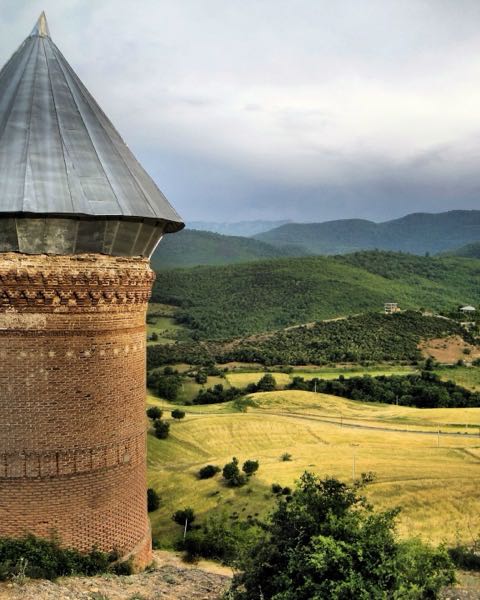 A round brick tomb tower of the Bavandid period on a steep slope at Resket in Mazandaran, with a muqarnas cornice and damaged inscriptions in Kufic and Middle Persian.
XIResket Tower
برج رسكت
-
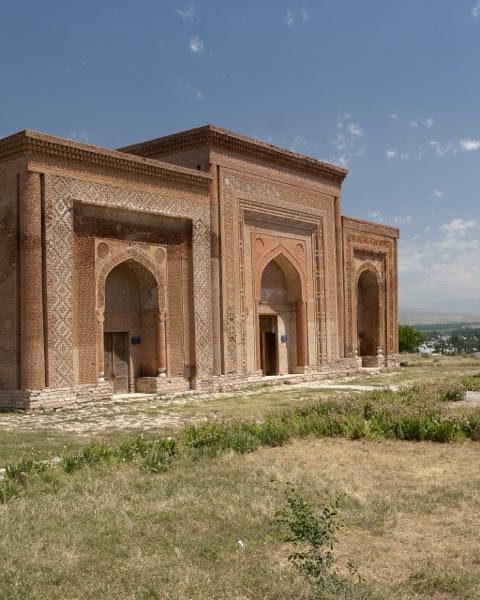 3DThree Karakhanid tombs of fired brick standing side by side in Uzgen, dated from the 11th century to 1186-87 and decorated with carved brick, terracotta and carved plaster.
XIIKarakhanid Mausoleums of Uzgen
أضرحة القراخانيين في أوزكند
-
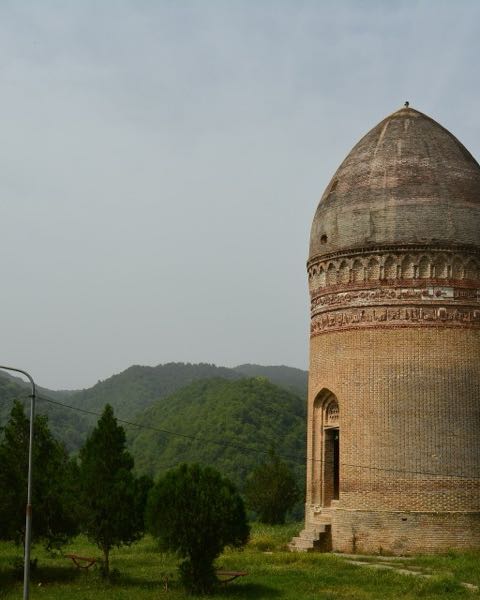 A cylindrical brick tomb tower in the Savadkuh mountains of Mazandaran, built in 1022-23 for a Bavandid prince and inscribed in Kufic Arabic and Middle Persian.
XIIILajim Tower
برج لاجيم
-
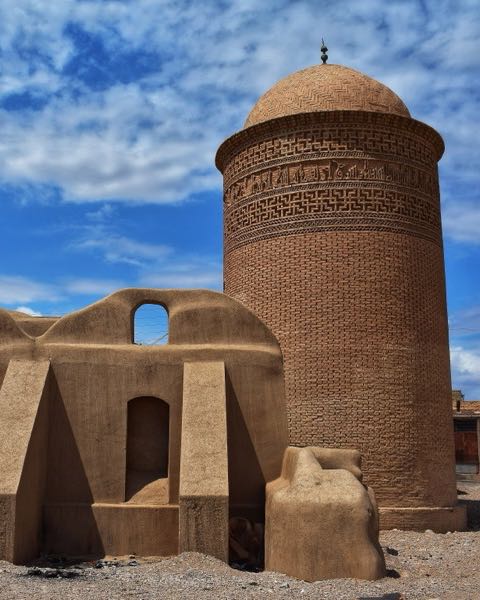 A brick tomb tower in Damghan, built in 1026-27 by the Ziyarid governor Abu Harb Bakhtiyar for his father, with bands of Kufic script and patterned brickwork below its dome.
XIVPir-e Alamdar Tower
ضريح بير علمدار
-
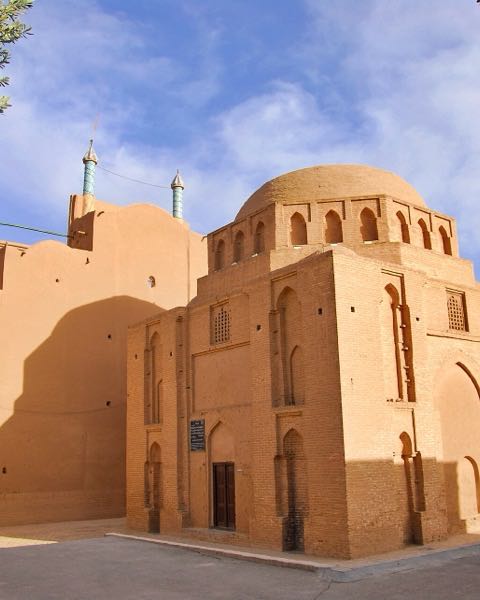 A square brick domed building in Yazd's Fahadan quarter, dated by its inscription to 1038 (429 AH); despite its name, the Twelve Imams are not buried there, and no grave has been found inside. Anisi reads it as a mausoleum built for a holy man.
XVDavazdah Imam Mausoleum
بقعة دوازده إمام (مقام الأئمة الاثني عشر)
-
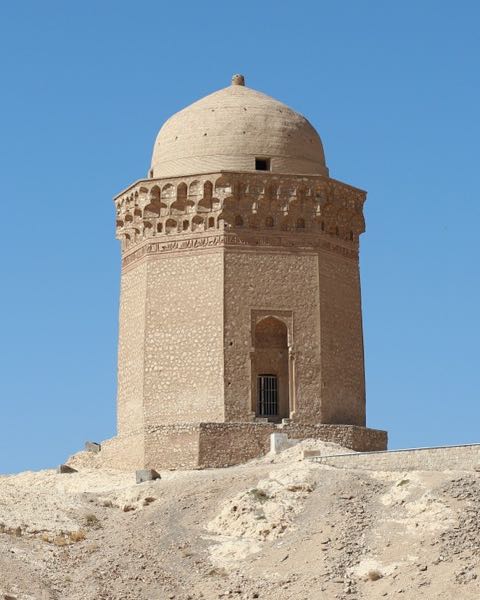 An octagonal tomb tower of rubble stone on a rocky spur outside Abarkuh, built in the 1050s and crowned by a tall muqarnas cornice.
XVIGonbad-e Ali
قبة عالي
-
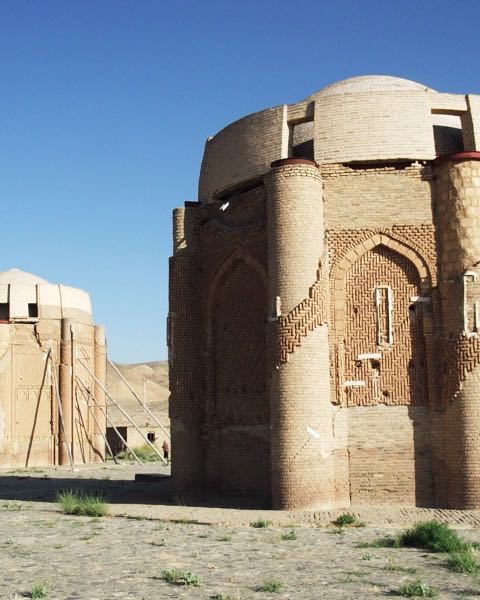 360°Two octagonal brick tomb towers of 1067-68 and 1093-94 at Kharraqan in Qazvin province, faced with varied geometric brickwork and badly damaged by the 2002 earthquake.
XVIIKharraqan Towers
برجا خراقان
-
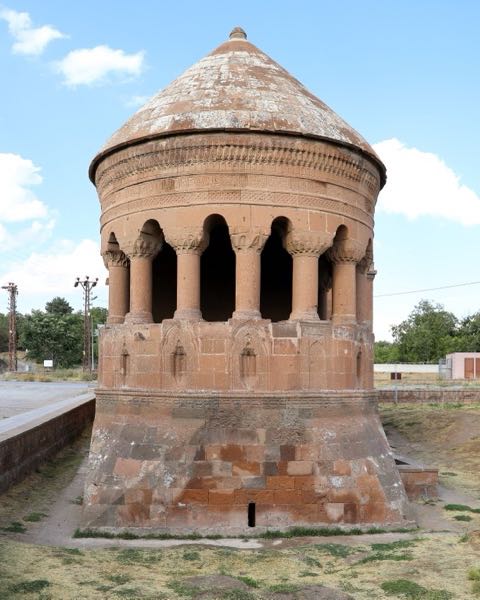 360°A medieval Muslim cemetery on the shore of Lake Van, with carved gravestones up to 3.50 m high and stone tomb towers of the 13th to 15th centuries.
XVIIIAhlat Seljuk Cemetery and Kümbets
مقبرة أخلاط السلجوقية وقبابها
-
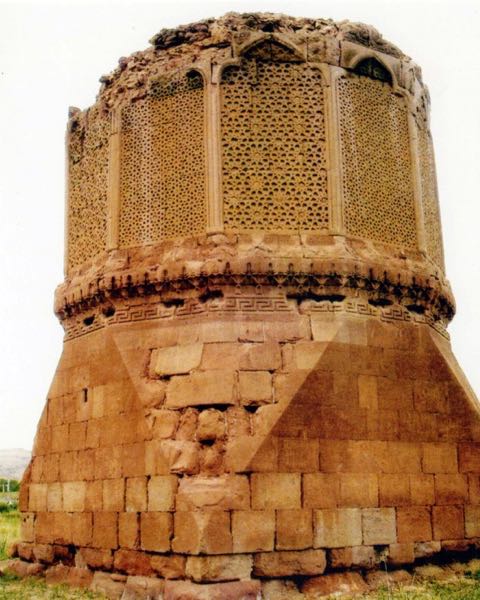 A twelve-sided red sandstone tomb tower on a cut-stone base in Julfa district, dated to the 12th or early 13th century and carved with patterns shared with Ajami’s tombs.
XIXGulustan Mausoleum
ضريح غولستان
-
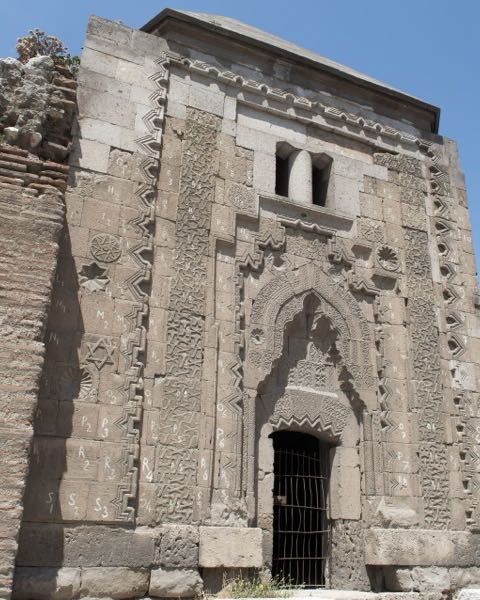 A two-storey octagonal stone tomb in Amasya with a carved south portal, attributed to the Danishmendid emir Halifet Gazi (d. 1232) and dated by scholars between 1145 and 1228.
XXHalifet Gazi Türbesi
ضريح خليفة غازي
-
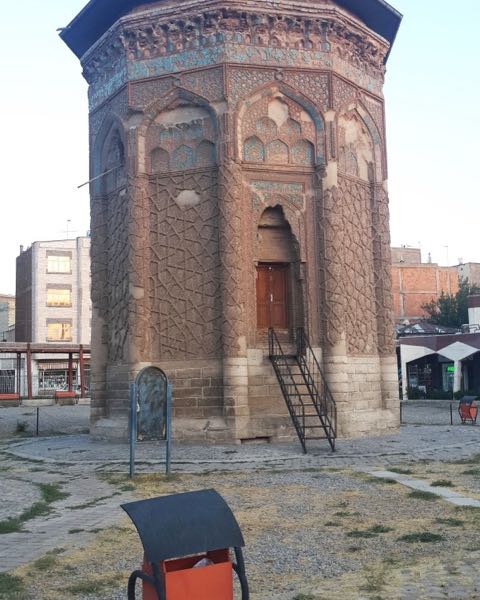 360°Four medieval tomb towers in Maragheh, dated from 1148 to the early 14th century, among them the decagonal brick Gonbad-e Kabud (1196-97) with its interlaced-pentagon patterns.
XXITomb towers of Maragheh
الأبراج الضريحية في مراغة
-
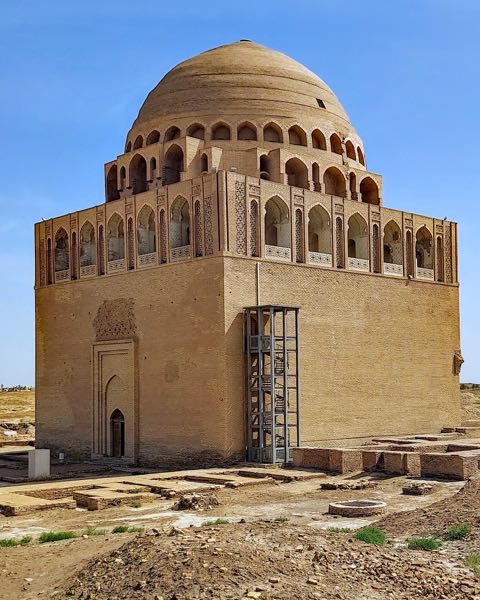 360°A cube-like brick mausoleum crowned by a dome and an arcaded gallery, built in the mid-12th century for the Seljuk sultan Sanjar at the centre of Merv.
XXIIMausoleum of Sultan Sanjar
ضريح أحمد سنجر
-
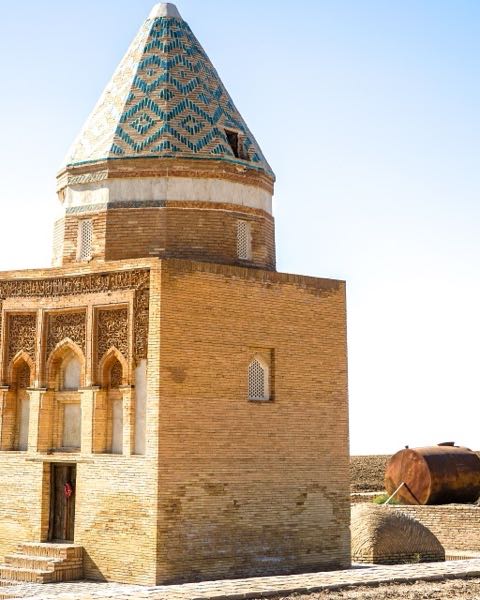 Two brick tombs with tiled conical roofs in ruined Gurganj, traditionally those of the Khwarazmshahs Il-Arslan and his son Tekesh; ICOMOS dates them to about 1150 and 1195.
XXIIIMausoleums of Il-Arslan and Tekesh
ضريحا إل أرسلان وتكش
-
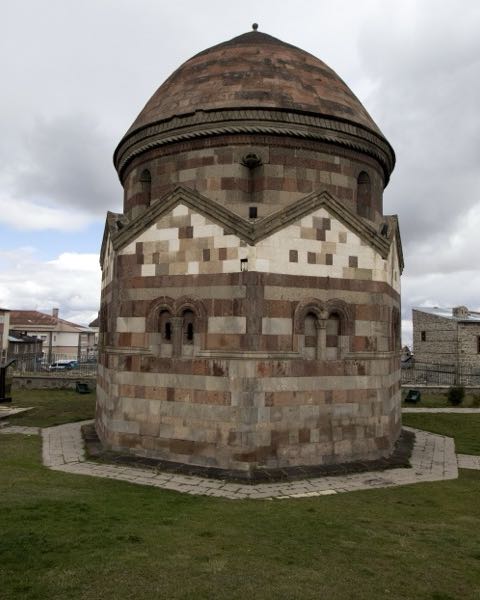 360°An octagonal stone tomb in Erzurum, the largest of the Üç Kümbetler, traditionally linked to the Saltukid dynasty and carved with animals in the niches of its drum.
XXIVEmir Saltuk Kümbeti (Üç Kümbetler)
ضريح الأمير سلتوق (القباب الثلاث)
-
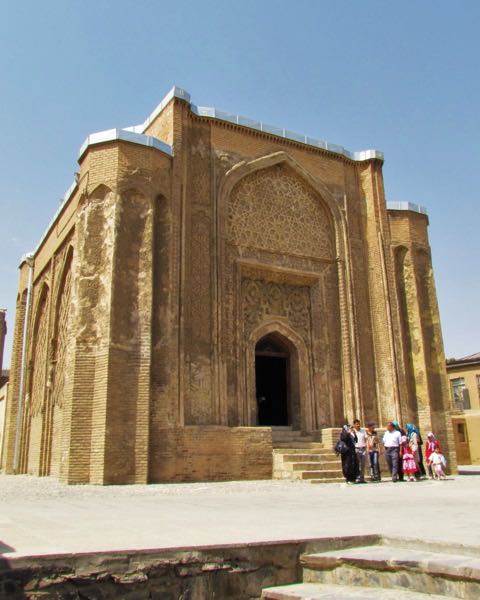 360°A square brick tomb in Hamadan, known as the ’Alawiyan family’s mausoleum, decorated inside and out with high-relief stucco; scholars date it between the 12th and early 14th centuries.
XXVGonbad-e Alavian
قبة علويان
-
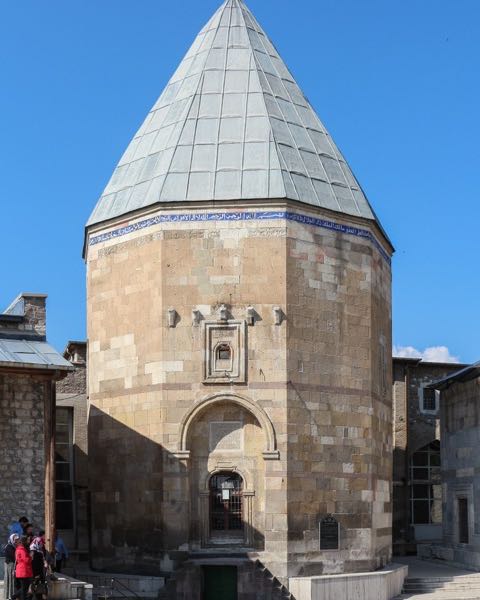 3DA ten-sided stone tomb in the courtyard of Konya's Alaeddin Mosque, ordered by Sultan Kılıç Arslan II and later the burial place of several Seljuk sultans.
XXVIKılıç Arslan II Kümbeti (Tomb of the Seljuk Sultans)
ضريح قلج أرسلان الثاني (ضريح سلاطين السلاجقة)
-
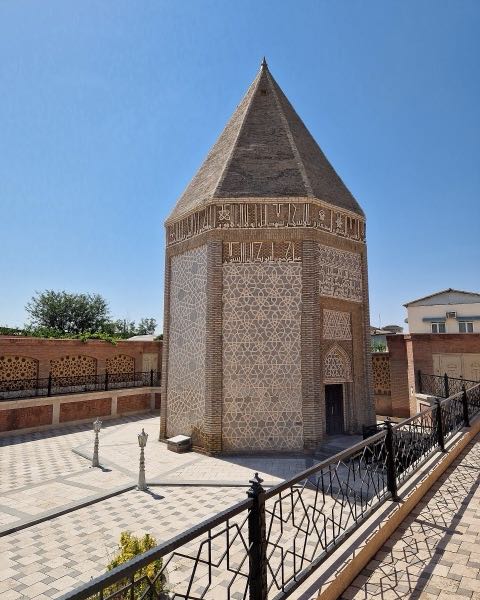 An octagonal brick tomb tower in Nakhchivan, dated 1162 and signed by Ajami ibn Abi Bakr, which keeps its original pyramidal roof.
XXVIIYusif ibn Kuseyir Mausoleum
ضريح يوسف بن كوسير
-
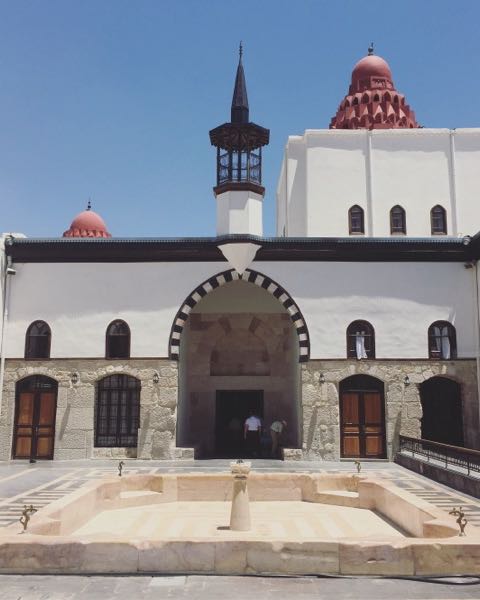 Nur al-Din’s tomb in Damascus: a striped stone chamber under a brick muqarnas dome, beside the portal of the Hanafi madrasa he completed in 1172.
XXVIIIMausoleum of Nur al-Din (al-Madrasa al-Nuriyya al-Kubra)
ضريح نور الدين زنكي (المدرسة النورية الكبرى)
-
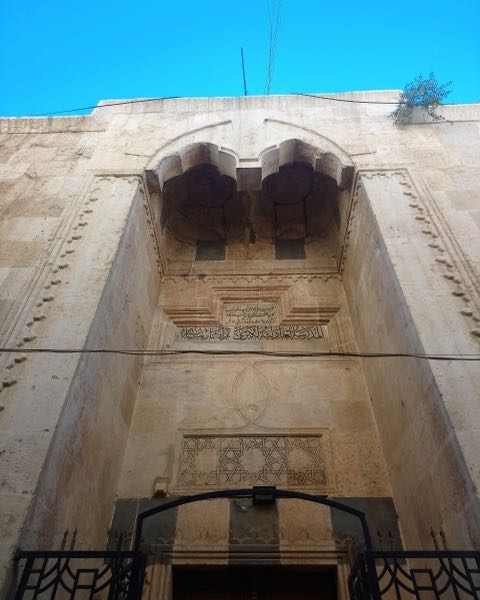 Tomb of the Ayyubid sultan al-Malik al-Adil, Saladin’s brother, at the corner of a Damascus madrasa founded by Nur al-Din in 1172 and finished in 1223.
XXIXMausoleum of al-Malik al-Adil (al-Madrasa al-Adiliyya)
ضريح الملك العادل (المدرسة العادلية الكبرى)
-
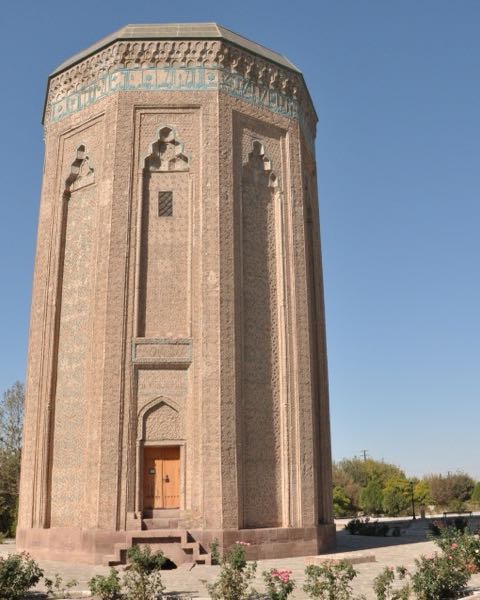 360°A ten-sided brick tomb tower over a crypt, finished in 1186 for Momine Khatun, wife of the atabeg Eldiguz, by the Nakhchivan builder Ajami ibn Abi Bakr.
XXXMomine Khatun Mausoleum
ضريح مؤمنة خاتون
-
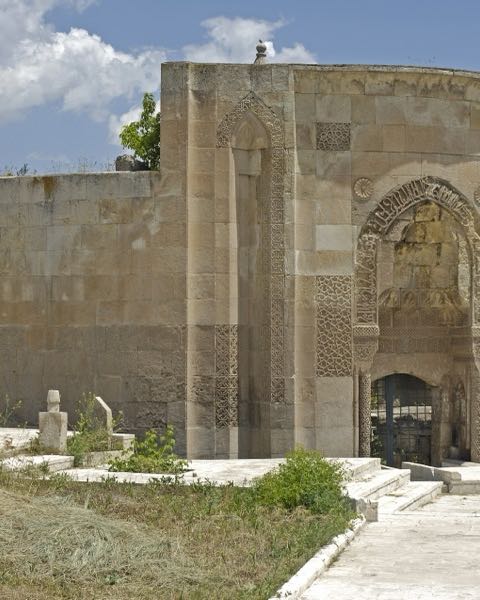 A fluted tomb tower inside a round, niched wall at Tercan, signed by a builder from Ahlat and traditionally the tomb of the Saltukid ruler Mama Hatun.
XXXIMama Hatun Kümbeti
ضريح ماما خاتون
-
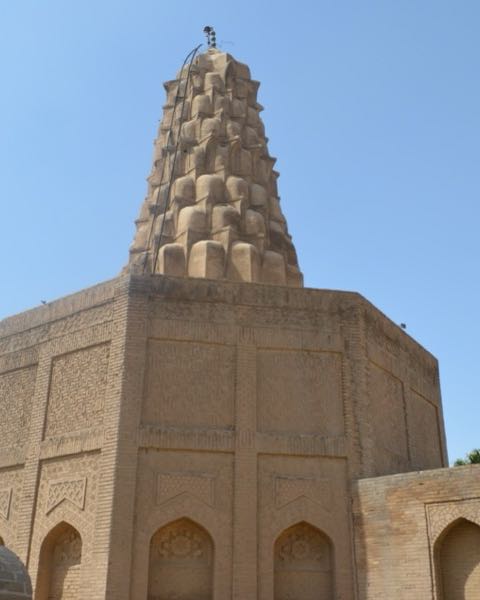 A late Abbasid brick tomb under a conical muqarnas dome, in a cemetery on Baghdad’s west bank, identified since 1947 as that of Zumurrud Khatun, mother of Caliph al-Nasir.
XXXIITomb of Zumurrud Khatun
ضريح زمرد خاتون
-
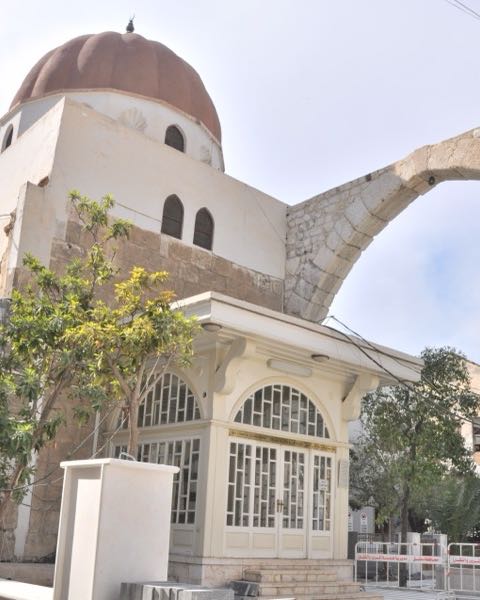 360°Saladin’s tomb in Damascus: a domed square chamber beside the Umayyad Mosque, built by his son al-Afdal in 1193-1196, that still holds his carved Ayyubid wooden cenotaph.
XXXIIIMausoleum of Saladin
ضريح صلاح الدين الأيوبي
-
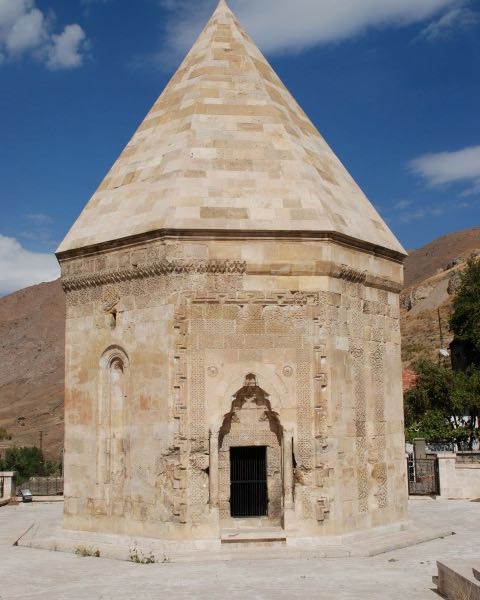 An octagonal cut-stone tomb in Divriği, dated 592 AH (1196), built for the Mengücek ruler Seyfeddin Şehinşah and popularly named after his wife, who was later buried in it.
XXXIVSitte Melik Kümbeti
ضريح ستي ملك
-
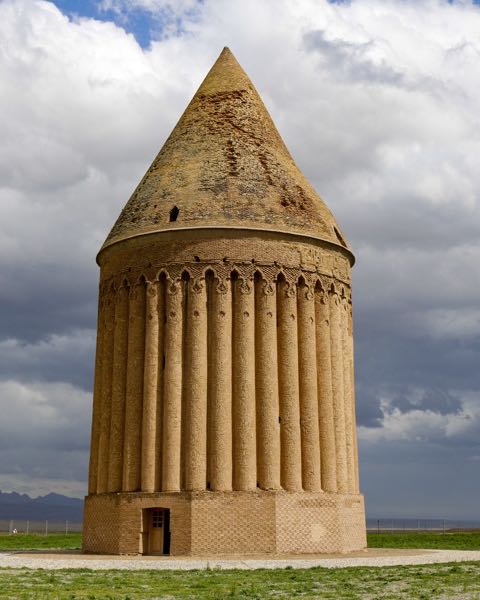 360°A fluted brick tomb tower with a conical roof on the old Radkan meadow north of Mashhad, built in the 13th century; its damaged inscription leaves date and owner uncertain.
XXXVRadkan Tower
برج رادكان
-
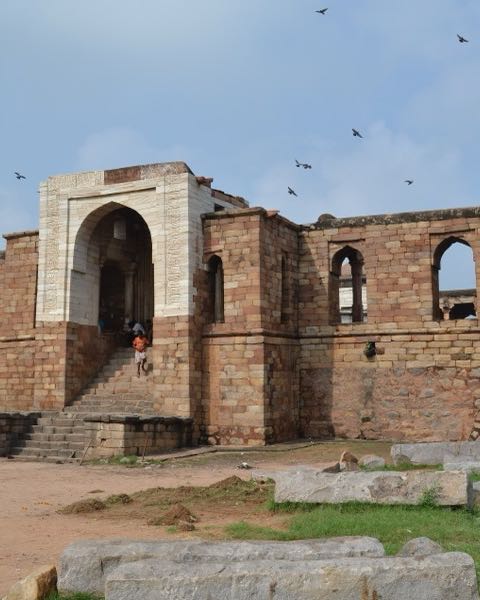 The fortress-like tomb that Iltutmish built in 1231-32 for his eldest son Nasir al-Din Mahmud, with the burial chamber sunk beneath an octagonal marble platform.
XXXVITomb of Sultan Ghari
ضريح سلطان غاري
-
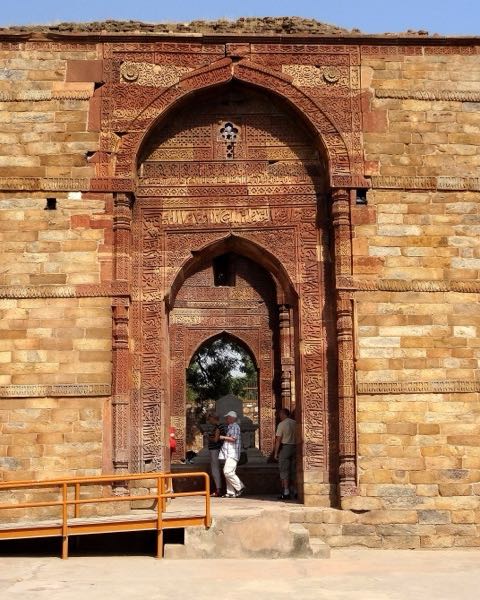 360°Dated 1235, Sultan Iltutmish’s roofless square tomb in Delhi’s Qutb complex has an interior carved with Quranic inscriptions; UNESCO says it began India’s tradition of royal tombs.
XXXVIITomb of Iltutmish
ضريح إلتتمش
-
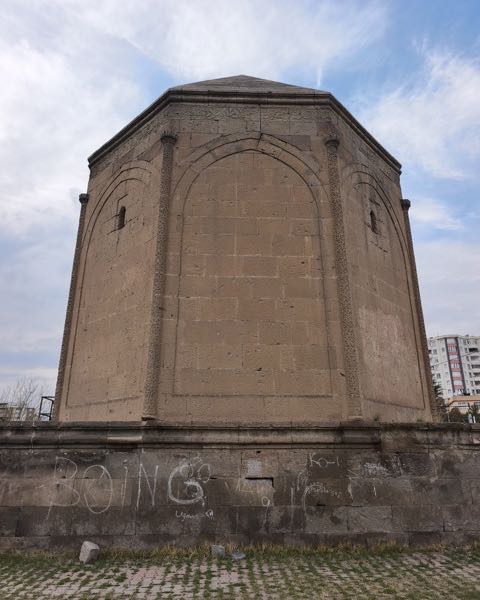 An octagonal stone tomb on the Sivas road in Kayseri, built in 1247-1248 for Melike Adile, the Ayyubid wife of Sultan Alaeddin Keykubad I, by her daughters.
XXXVIIIÇifte Kümbet (Tomb of Melike Adile)
تشيفته كومبت (ضريح الملكة العادلية)
-
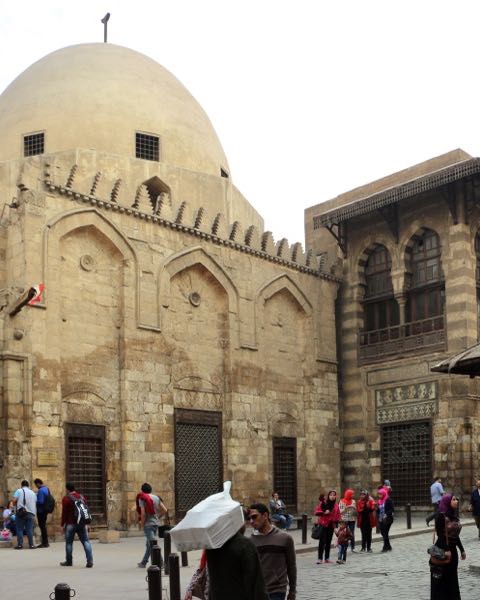 360°Tomb of the Ayyubid sultan al-Salih Najm al-Din Ayyub, built by his widow Shajar al-Durr in 1249-1250 against the madrasa he had founded on al-Mu'izz Street.
XXXIXMausoleum of al-Salih Najm al-Din Ayyub
ضريح السلطان الصالح نجم الدين أيوب
-
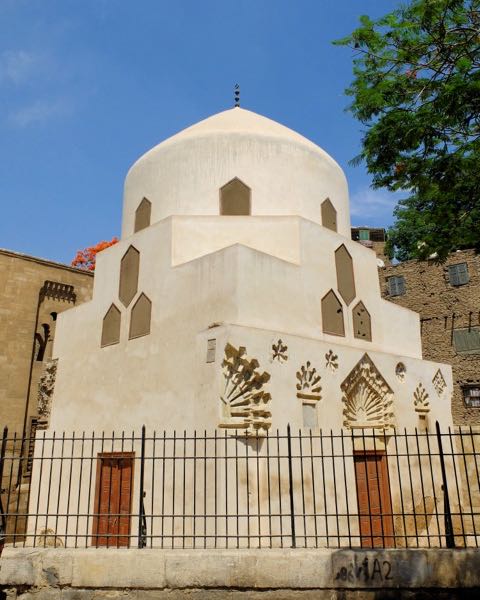 3DDomed tomb that Shajar al-Durr, Egypt’s sultan for less than three months in 1250, built for herself on al-Khalifa Street, its glass-mosaic mihrab showing a tree of pearls.
XLMausoleum of Shajar al-Durr
قبة شجر الدر
-
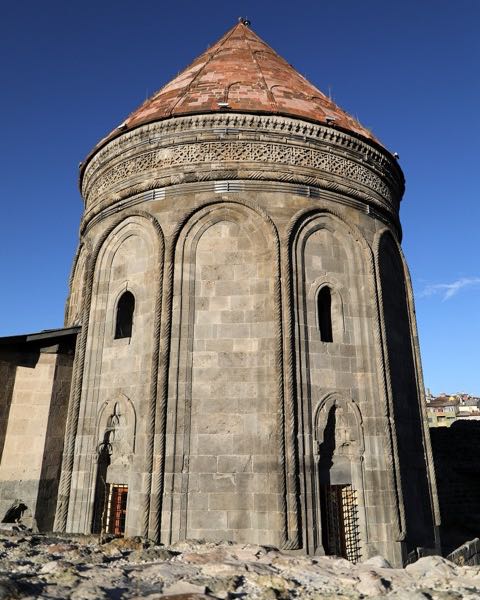 A twelve-sided domed tomb with a conical roof, built against the south side of the Twin Minaret Madrasa in Erzurum; the person buried is unidentified.
XLITomb of the Çifte Minareli Medrese (Hatuniye Tomb), Erzurum
ضريح مدرسة المئذنتين (چفته مينارلي) في أرضروم
-
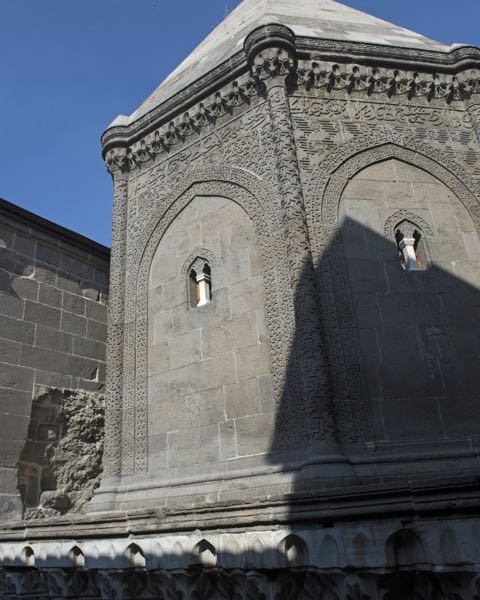 The octagonal stone tomb of Mahperi Hatun, mother of the Seljuk sultan Keyhüsrev II, hidden in a courtyard between the mosque and madrasa of her complex in Kayseri.
XLIITomb of Mahperi Hunat Hatun
ضريح ماه بري هوناط خاتون
-
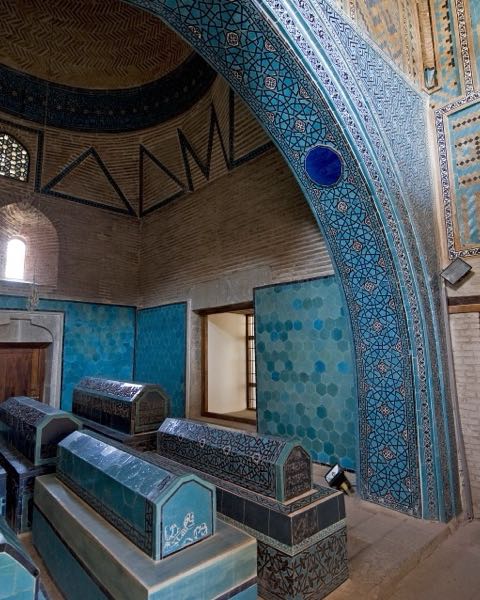 3DThe tile-lined family tomb of the Seljuk vizier Sahib Ata in Konya, set between the mosque and khanqah of his complex and renewed in 1283.
XLIIITomb of Sahib Ata Fahreddin Ali
ضريح صاحب عطا فخر الدين علي
-
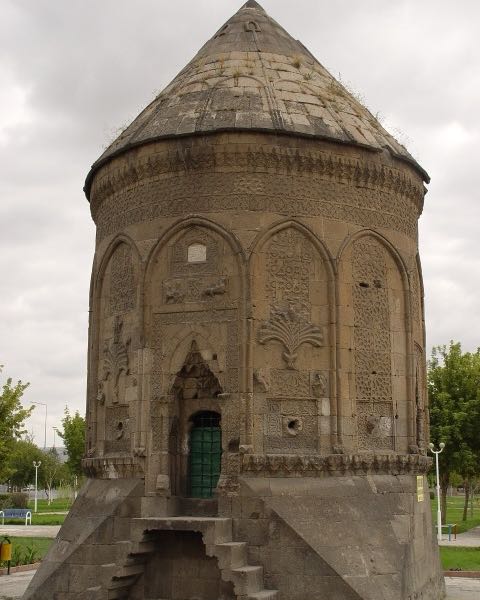 3DA twelve-sided stone tomb tower of the Anatolian Seljuk period in Kayseri, built for a woman named Şah Cihan Hatun and richly carved with eagles, lions and trees.
XLIVDöner Kümbet
دونر كومبت
-
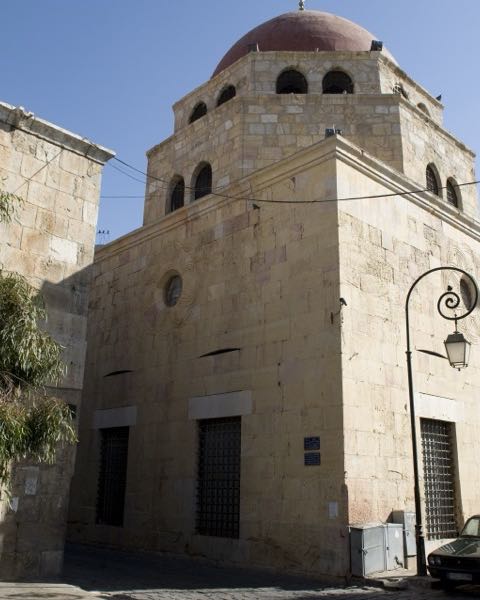 360°The Mamluk sultan Baybars’s domed tomb in Damascus, begun by his son in 1277 and decorated under Qalawun in 1281 with marble panelling and glass mosaic.
XLVMausoleum of Sultan Baybars (al-Madrasa al-Zahiriyya)
ضريح السلطان الظاهر بيبرس (المدرسة الظاهرية)
-
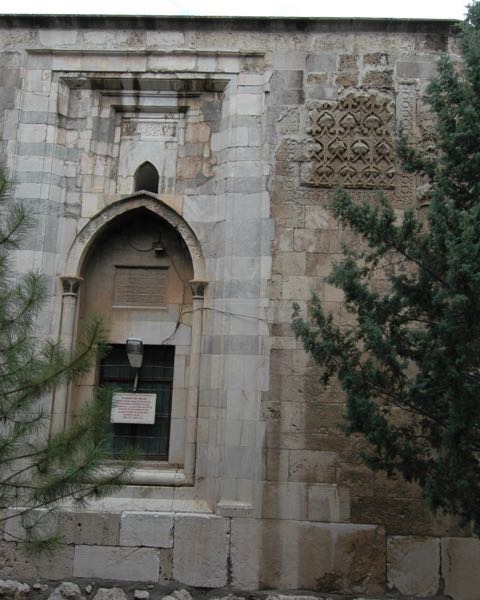 The two-storey stone tomb of Seyfeddin Torumtay, Seljuk governor of Amasya, built in 1278-1279 opposite his Gökmedrese Mosque, with carving concentrated high on its south front.
XLVITorumtay Türbesi
ضريح طورومتاي
-
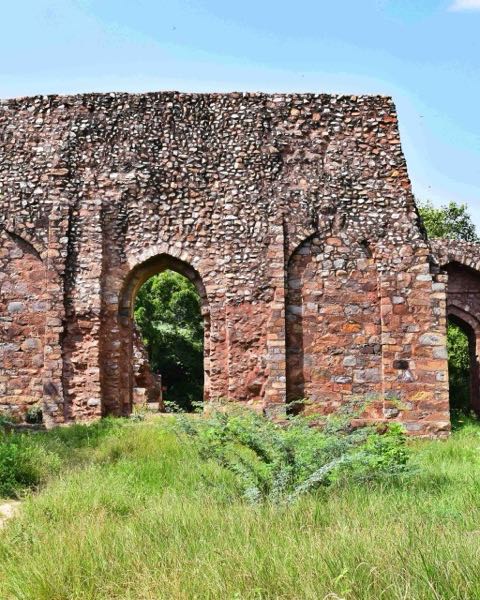 The roofless rubble tomb of Ghiyath al-Din Balban, sultan of Delhi from 1266 to 1287, where the ASI and Percy Brown see the first true arches built in India.
XLVIITomb of Balban
ضريح بلبن
-
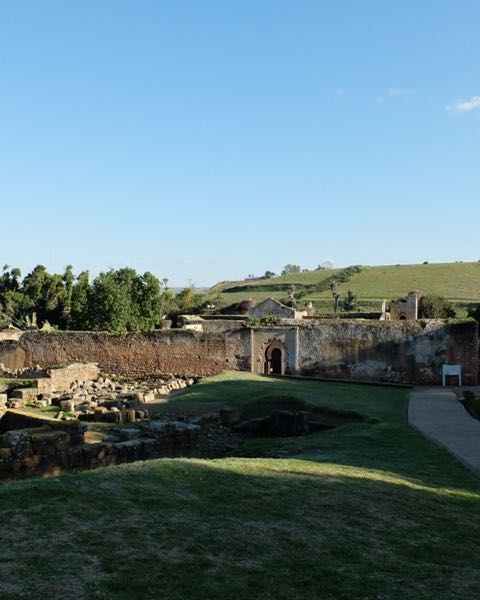 3DRoyal necropolis of the Marinid sultans on the ruins of Roman Sala in Rabat; its walls were completed in 1339 and it holds Abu al-Hasan’s tomb chamber.
XLVIIIChellah Necropolis
مقبرة شالة
-
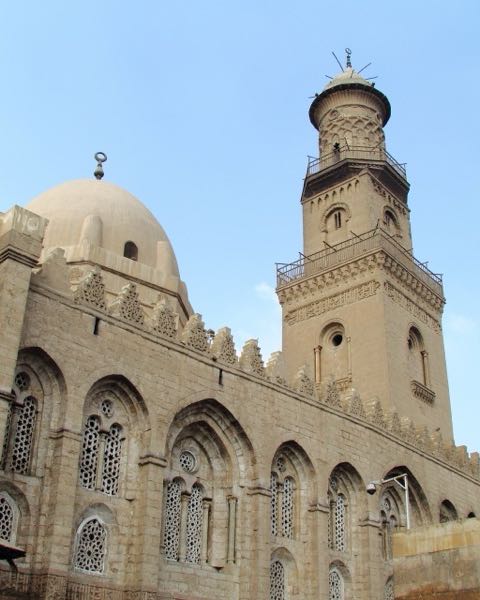 360°Domed tomb of the Mamluk sultan Qalawun, built in 1284-1285 with a madrasa and hospital on Cairo’s al-Mu'izz Street; an octagon of columns and piers carries the dome.
XLIXMausoleum of Sultan Qalawun
ضريح السلطان المنصور قلاوون
-
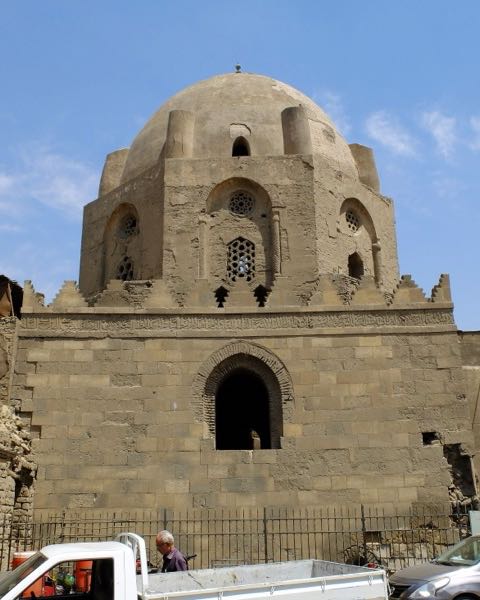 3DDomed tomb that al-Ashraf Khalil, son of Sultan Qalawun, ordered in 1288 near the shrine of Sayyida Nafisa in Cairo; he was buried here after his murder in 1293.
LMausoleum of Sultan al-Ashraf Khalil
قبة الأشرف خليل بن قلاوون
-
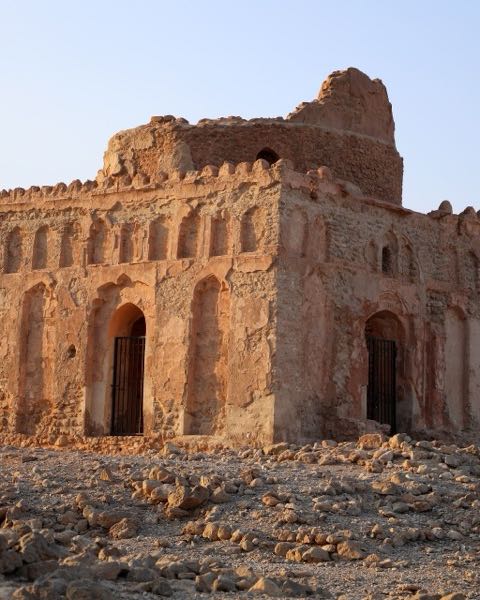 3DOne of the few buildings standing in the ruined port of Qalhat: a mausoleum of about 1300, commissioned by Bibi Maryam, who ruled the city with her husband Ayaz.
LIBibi Maryam Mausoleum
ضريح بيبي مريم
-
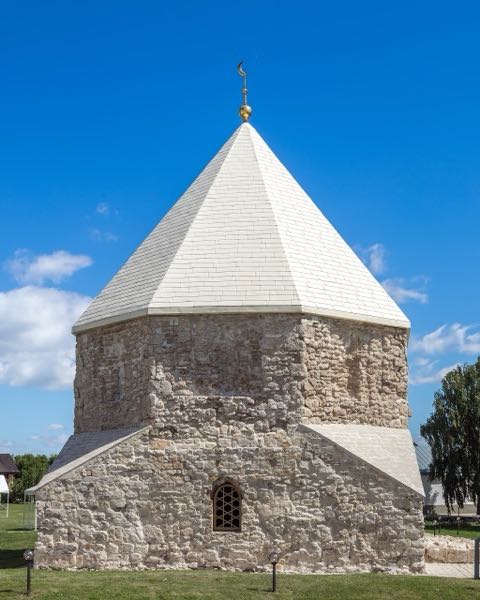 3DFourteenth-century stone tombs of Bolgar, the Golden Horde city on the Volga: the Eastern and Northern Mausoleums beside the ruined Cathedral Mosque, and the domed Khan’s Shrine.
LIIMausoleums of Bolgar
أضرحة بلغار
-
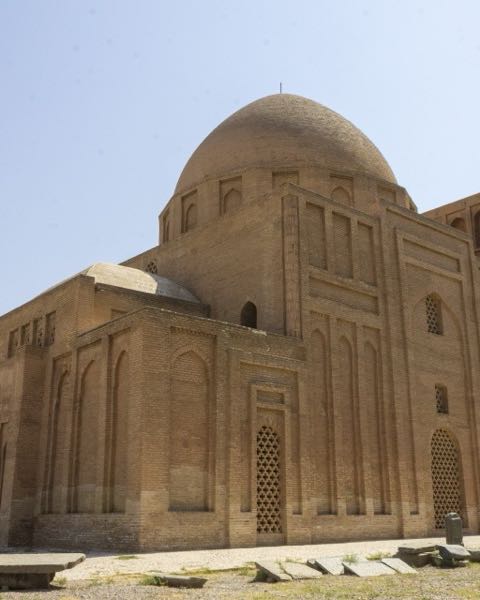 A domed brick tomb or Sufi lodge of the 14th century in the ruins of medieval Tus near Ferdowsi’s tomb, its tall south portal and bare walls left unfinished.
LIIIHaruniyeh Dome
قبة هارونية
-
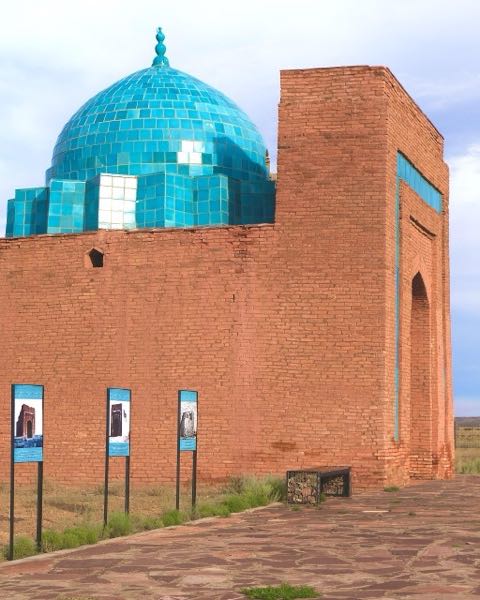 3DA brick tomb with a blue-tiled double dome in Ulytau, central Kazakhstan, long called the grave of Genghis Khan’s eldest son Jochi, though radiocarbon dates point to a 14th-century building.
LIVMausoleum of Jochi Khan
ضريح جوجي خان
-
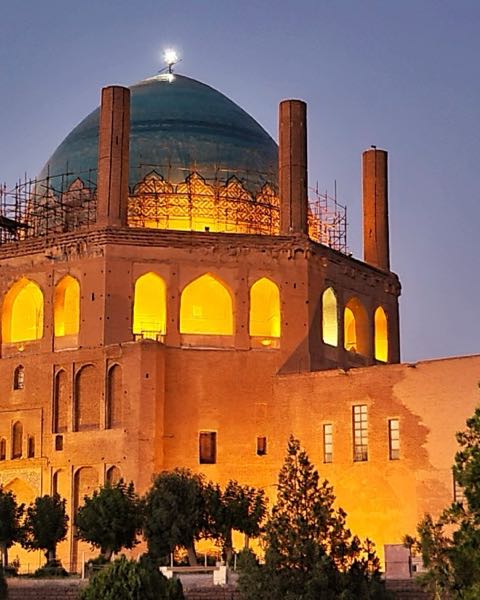 3DThe mausoleum of the Ilkhanid ruler Öljeitü at his short-lived capital of Soltaniyeh, crowned by a turquoise dome about 50 metres high and ringed by eight minarets.
LVDome of Soltaniyeh
قبة السلطانية
-
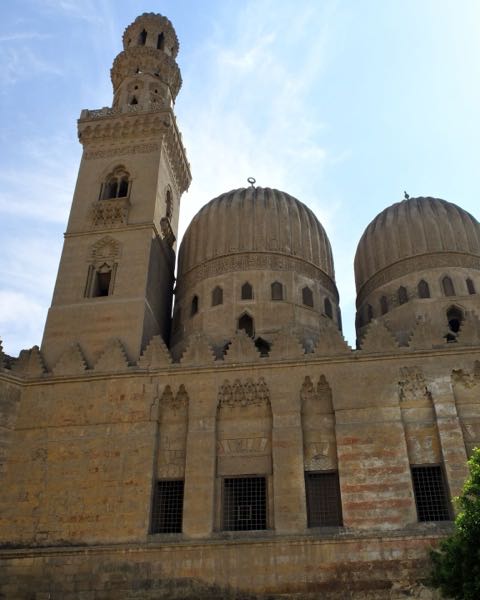 A complex of 1303-04 on Jabal Yashkur in Cairo, where Amir Sanjar al-Jawli built two ribbed-domed mausoleums for himself and his friend Amir Salar beside a minaret.
LVIMausoleums of Salar and Sanjar al-Jawli
قبتا سلار وسنجر الجاولي
-
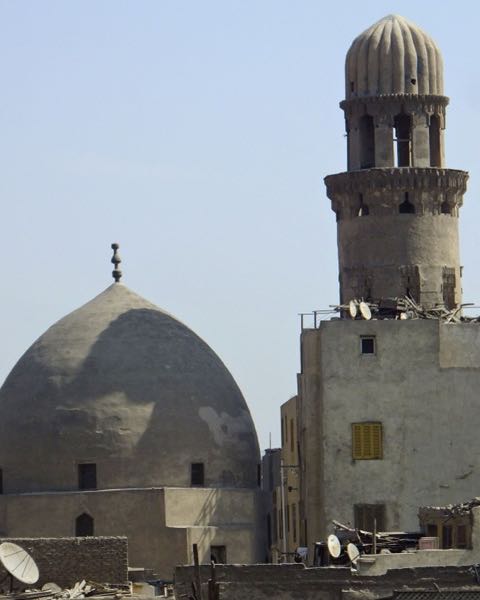 Khanqah (Sufi lodge) and domed mausoleum of Baybars al-Jashankir on al-Gamaliyya Street, begun about 1306-1307 and finished in 1310; TDV calls it Cairo’s oldest surviving khanqah.
LVIIKhanqah and Mausoleum of Baybars al-Jashankir
خانقاه وضريح بيبرس الجاشنكير
-
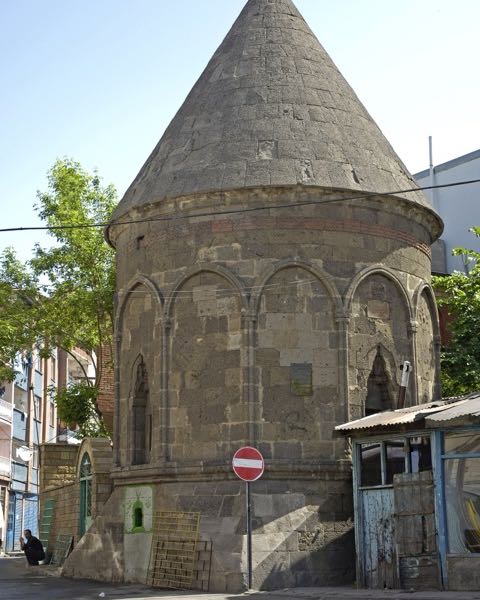 A dated tomb tower of 1308 in Erzurum, twelve-sided outside, with a conical roof and a vaulted lower chamber; the person it was built for is not known.
LVIIIKaranlık Kümbet (Emir Sadreddin Kümbeti)
كارانلك كومبت (قبة الأمير صدر الدين)
-
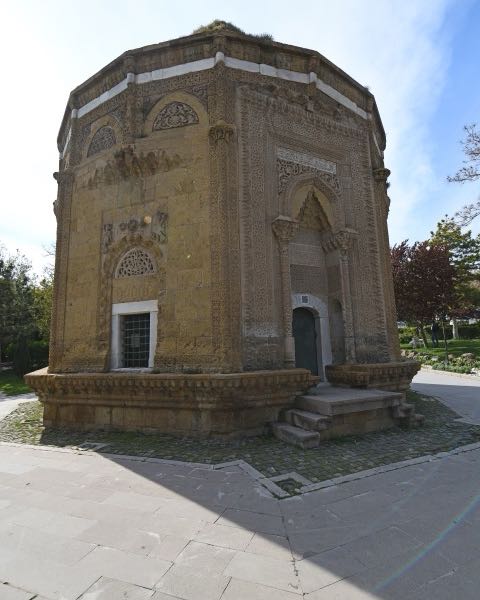 An octagonal stone tomb in Niğde, dated by its portal inscription to 1312-1313, commissioned by the Seljuk princess Hüdavend Hatun and carved with sirens, lions and a double-headed eagle.
LIXHüdavend Hatun Kümbeti
ضريح خداوند خاتون
-
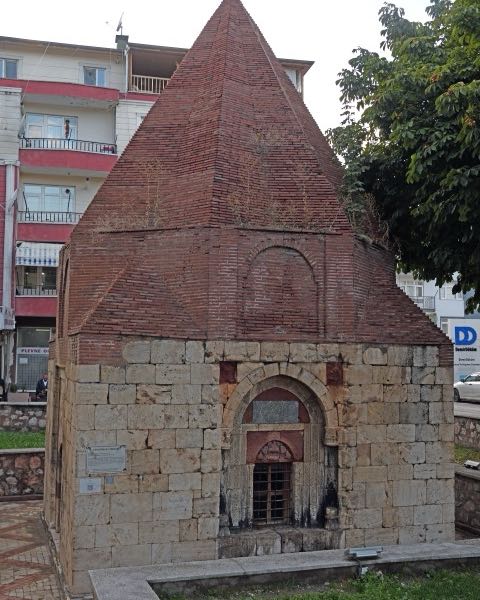 A small Ilkhanid-period tomb in Tokat built for the Mongol emir Nureddin bin Sentimur (d. 1313-1314): a cut-stone cube under a brick star-shaped pyramid, with a terracotta-decorated east window.
LXNureddin bin Sentimur Türbesi
ضريح نور الدين بن سنتيمور
-
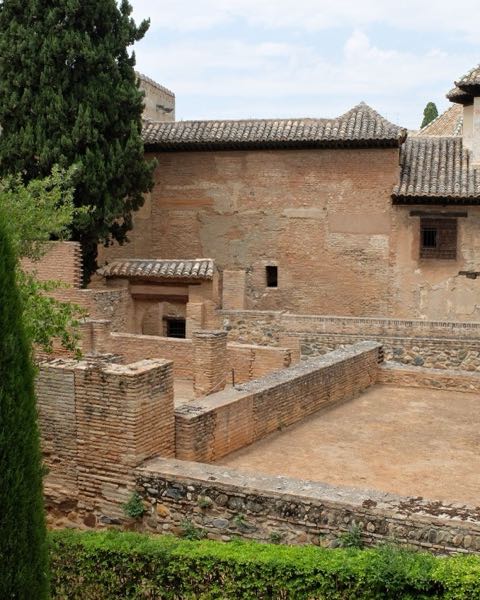 3DThe Nasrid sultans' cemetery behind the Alhambra's Palace of the Lions was used from the early 14th century; today it is a consolidated ruin with empty royal graves.
LXIRauda of the Alhambra
الروضة، المقبرة الملكية في الحمراء
-
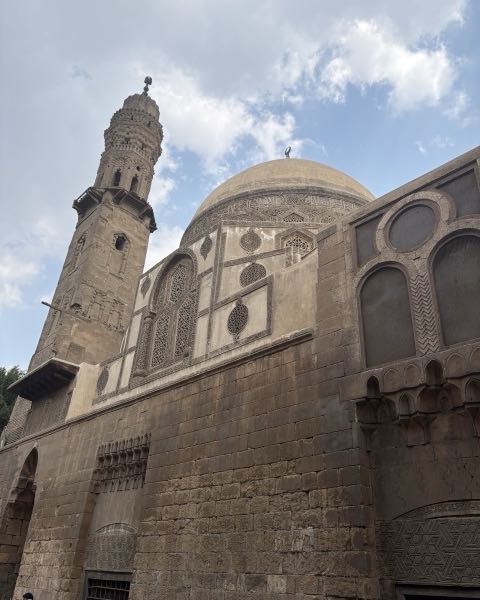 Domed tomb on al-Suyufiyya Street built by the amir Sunqur Sa'di in 1315-1321, later named after Shaykh Hasan Sadaqa and from about 1600 part of a Mevlevi lodge.
LXIIMausoleum of Amir Sunqur Sa'di (Hasan Sadaqa)
ضريح الأمير سنقر السعدي (قبة حسن صدقة)
-
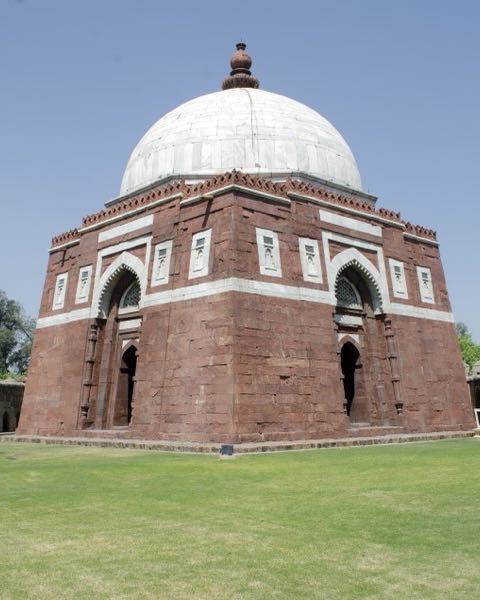 360°The fortified tomb of Ghiyath al-Din Tughluq, founder of the Tughluq dynasty: a red sandstone cube with steeply sloping walls and a white marble dome, built about 1325.
LXIIITomb of Ghiyath al-Din Tughluq
ضريح غياث الدين تغلق
-
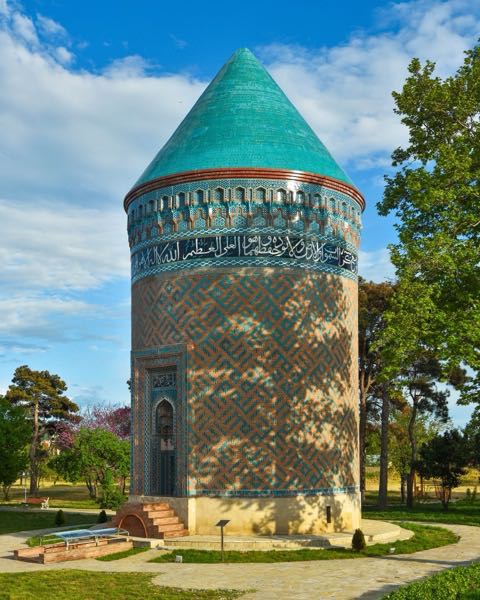 A cylindrical brick tomb tower of 1322 by Ahmad ibn Ayyub al-Hafiz of Nakhchivan, patterned with the word Allah in turquoise tile and red brick, restored in 2012-2018.
LXIVBarda Mausoleum
ضريح بردعة
-
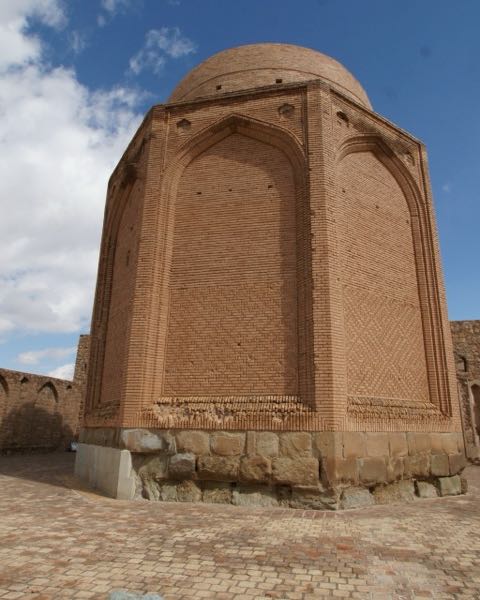 An octagonal brick tomb tower of about 1330 beside a ruined khanqah (Sufi hospice), south-west of Öljeitü’s mausoleum at Soltaniyeh, known as the tomb of Sultan Chelebi Oghlu.
LXVChelebi Oghlu Mausoleum
ضريح جلبي أوغلو
-
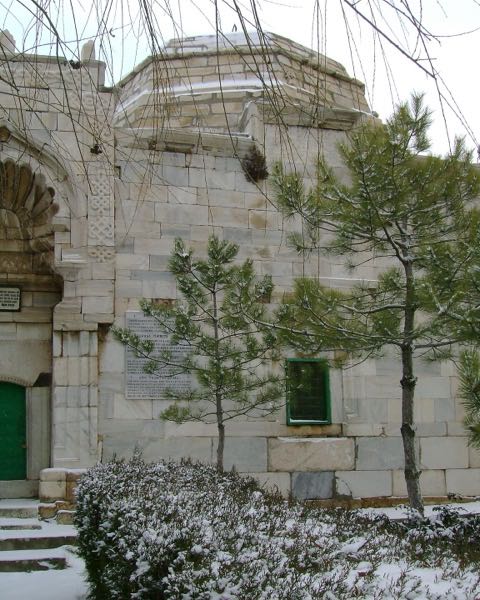 A small marble tomb of the 14th-century poet Âşık Paşa in Kırşehir, with a decorated south portal and a corbelled eight-sided dome over a square chamber.
LXVIAşık Pasha Mausoleum
ضريح عاشق باشا
-
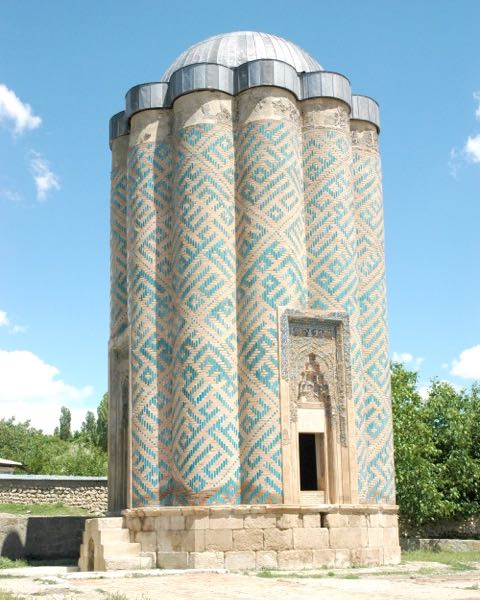 A 14th-century tomb tower in Nakhchivan, formed of twelve joined half-cylinders and patterned in turquoise and red brick, beside a gateway with twin minarets.
LXVIIGarabaghlar Mausoleum
ضريح قره باغلار
-
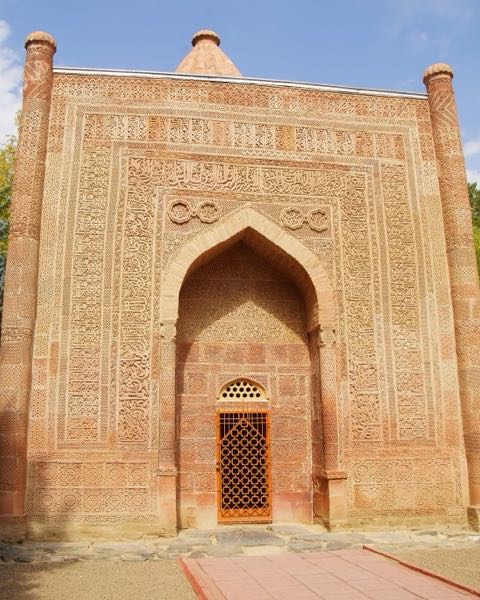 A brick tomb of about 1334 with a carved terracotta portal in the Talas valley; its inscription names Kenizek-Khatun, though legend calls it the grave of the epic hero Manas.
LXVIIIManas Gumbez (Kenkol mausoleum)
قبة ماناس (ضريح كينكول)
-
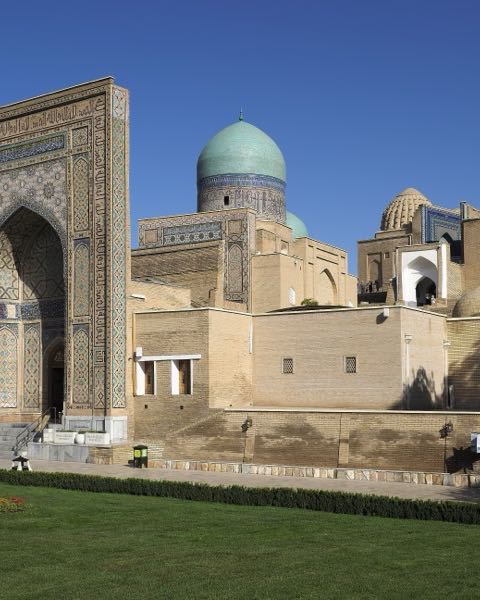 360°A lane of tile-clad mausoleums in Samarkand, many for Timur’s family, built mostly from the 1330s to the 1430s around the shrine of Qutham ibn Abbas.
LXIXShah-i-Zinda Necropolis
مجمّع شاه زنده
-
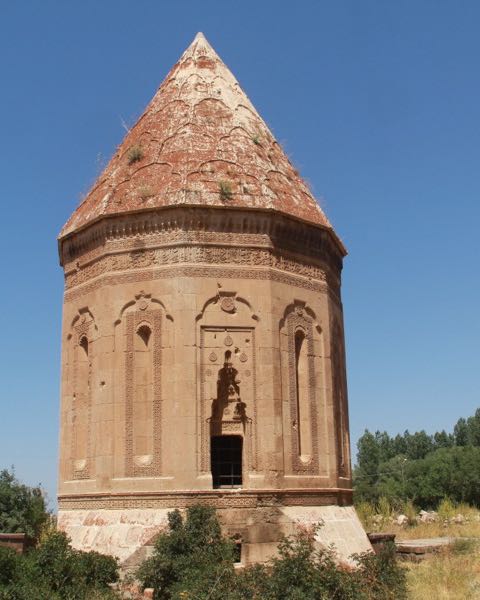 A twelve-sided stone tomb of the 14th century in the old cemetery of Gevaş, built for Halime Hatun by a master from Ahlat and wrapped in carved ornament.
LXXHalime Hatun Kümbeti
ضريح حليمة خاتون
-
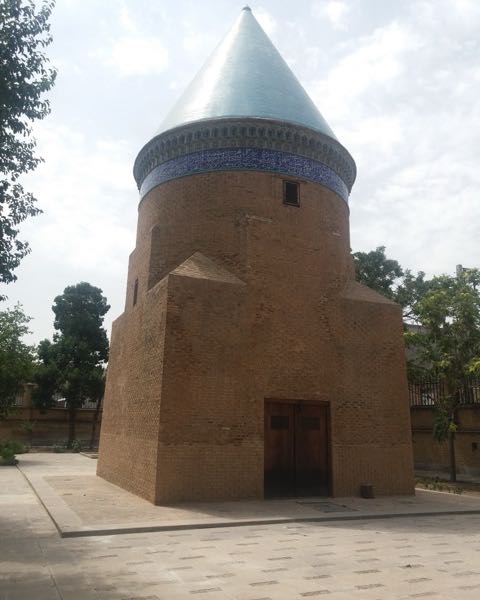 The tomb of Hamdallah Mostowfi, historian of the Ilkhanid period, in Qazvin: a brick tower that passes from a square base to a cylinder under a blue conical roof.
LXXITomb of Hamdallah Mostowfi
ضريح حمد الله المستوفي
-
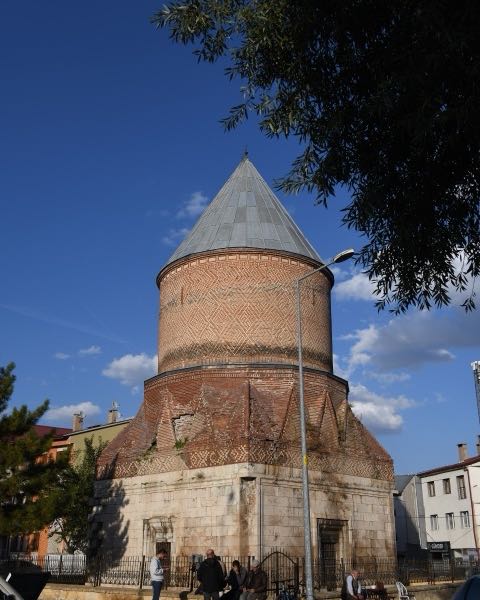 A tomb in central Sivas built in 1347 by Alaeddin Eretna for his eldest son Şeyh Hasan: a cut-stone cube carrying a tall brick drum, nicknamed the “stumpy minaret”.
LXXIIGüdük Minare (Şeyh Hasan Bey Türbesi)
ضريح الشيخ حسن بك (غوديك منارة)
-
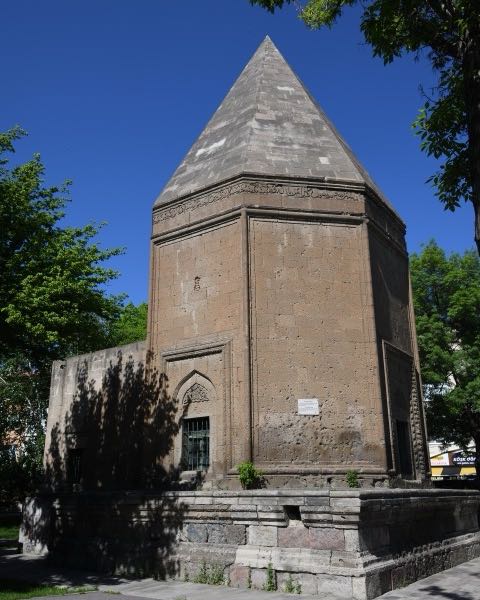 An octagonal cut-stone tomb with a pyramidal roof and a rare entrance room, probably built in Kayseri in the mid-14th century under the Eretnids.
LXXIIIAli Cafer Kümbeti
ضريح علي جعفر
-
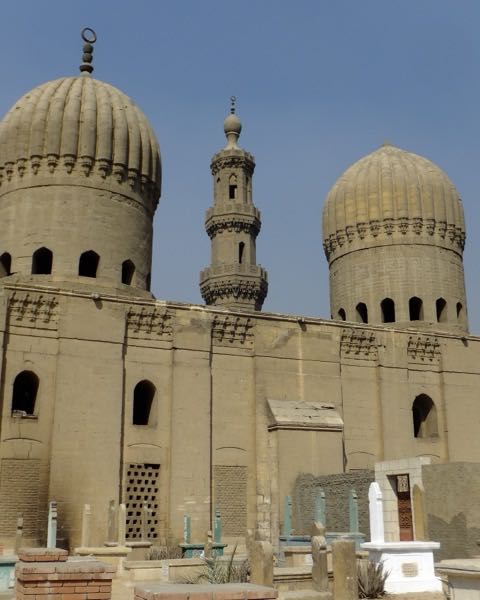 A royal tomb in the Mamluk cemetery south of Cairo’s Citadel, with two bulbous double-shell domes and a separate minaret, usually dated to the 1350s-1360s; its patron is disputed.
LXXIVSultaniyya Mausoleum
ضريح السلطانية
-
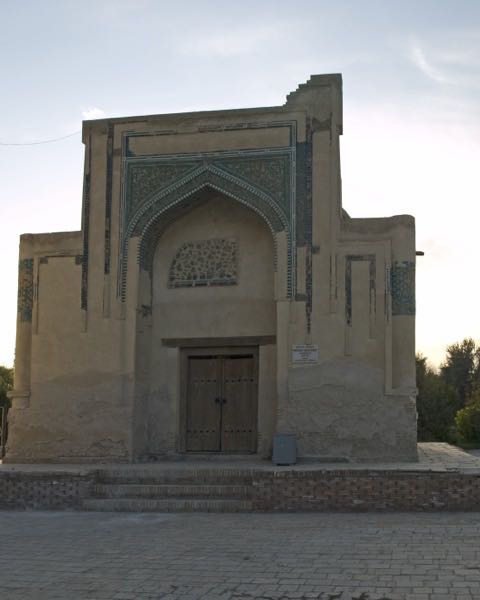 A domed tomb of about 1358-1359 at Fathabad, on the outskirts of Bukhara, raised over the grave of the Chaghatayid khan Buyan Quli and faced with carved, glazed tiles.
LXXVMausoleum of Buyan Quli Khan
ضريح بيان قلي خان
-
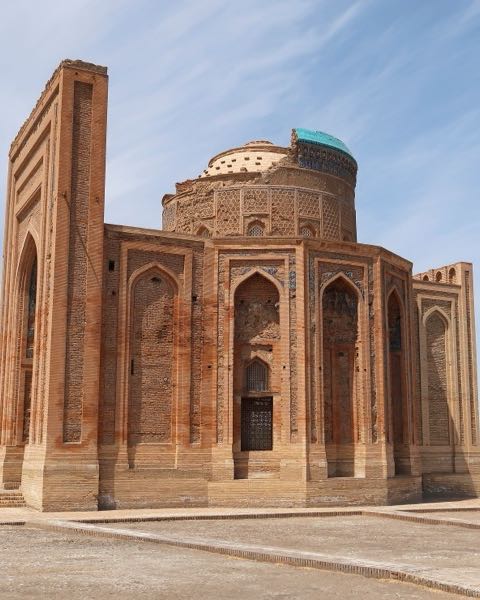 360°A brick tomb at Kunya-Urgench, twelve-sided outside, with a tall portal and a tile-mosaic dome, named after Turabek Khanum by tradition; its date, 1330s to about 1405, is disputed.
LXXVITurabek Khanum Mausoleum
ضريح تورابك خانم
-
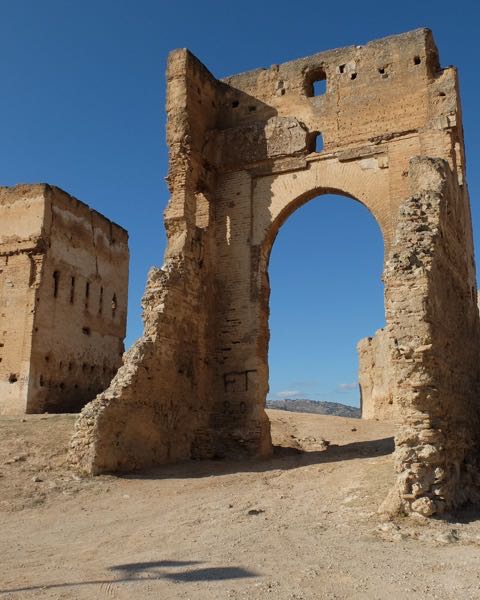 360°Ruined royal tombs of the Marinid dynasty on the hill of al-Qulla above Fez el-Bali, where Abu al-Hasan’s successors were buried between 1361 and 1398.
LXXVIIMarinid Tombs
قبور المرينيين
-
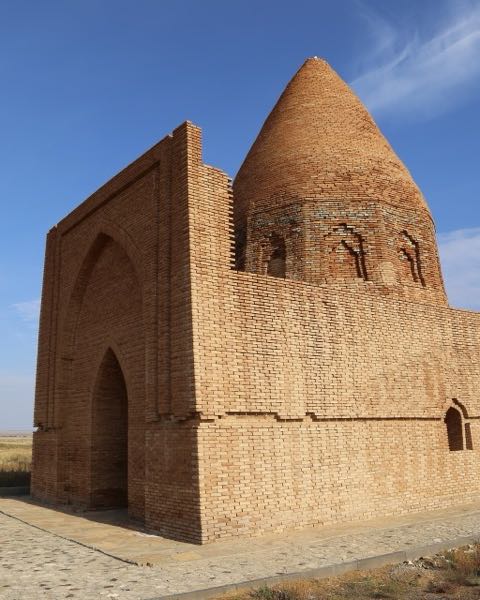 3DA late 14th- or early 15th-century brick tomb with a conical dome near the Kobda river in western Kazakhstan, centre of a necropolis with over 200 carved gravestones.
LXXVIIIAbat-Baitak Mausoleum
ضريح أبات بايتاك
-
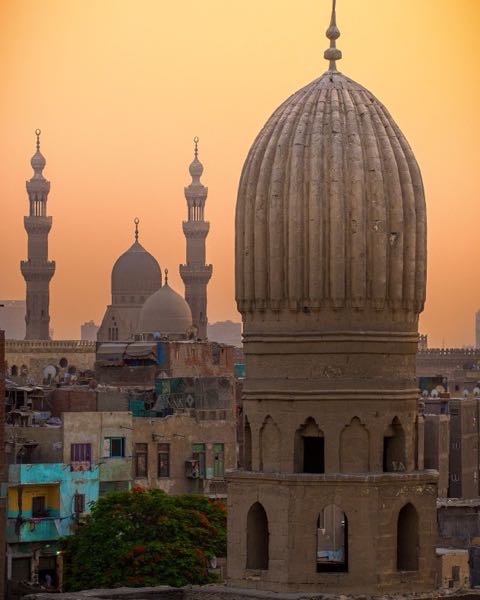 Tomb near Cairo’s Citadel founded by Yunus al-Nayruzi, secretary (dawadar) of Sultan Barquq, around 1382; Nasser Rabbat calls it the first monument of the Burji period.
LXXIXMausoleum of Amir Yunus al-Dawadar
قبة الأمير يونس الدوادار
-
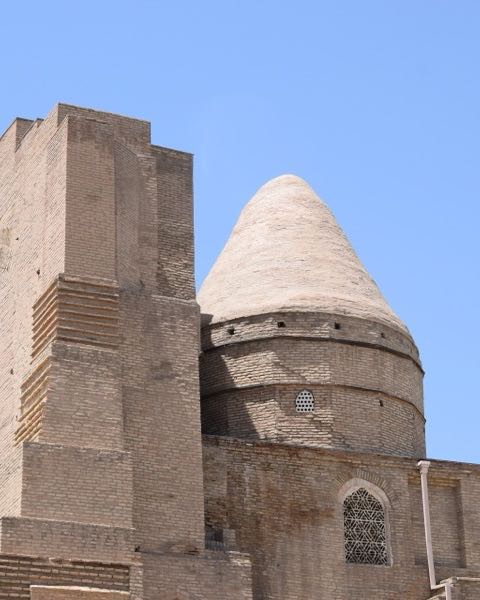 3DTimur’s family burial complex in his home region of Shahrisabz (Kesh): the conical-domed tomb of his son Jahangir and a white-marble tomb Timur prepared for himself.
LXXXDorus Saodat
دار السيادة
-
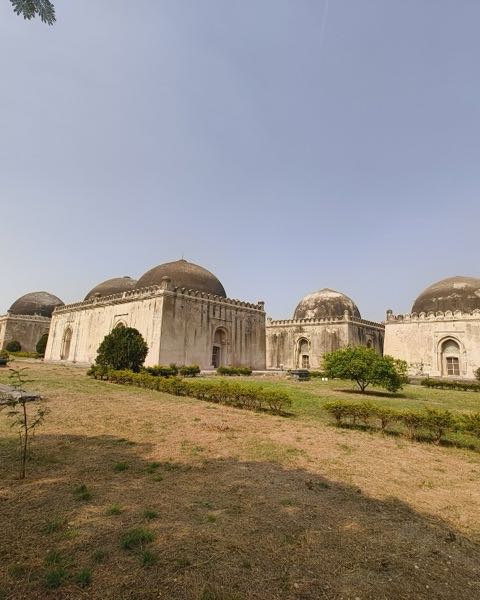 The “Seven Domes” of Kalaburagi: tombs of early Bahmani sultans on the city’s eastern edge, from Mujahid Shah’s (1378) to Firuz Shah’s double tomb (1422).
LXXXIHaft Gumbaz
هفت كنبد (القباب السبع)
-
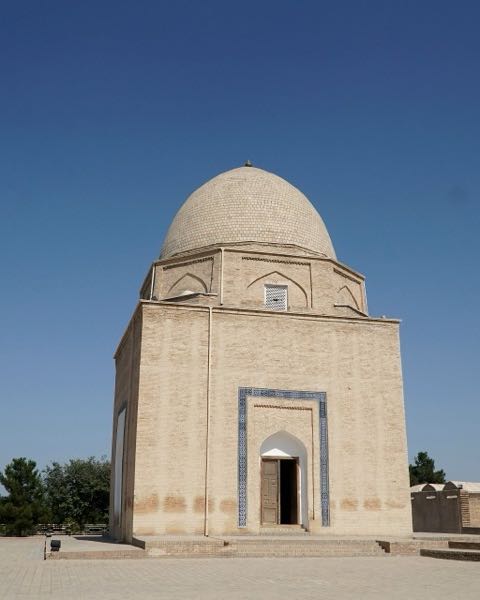 360°A plain domed brick mausoleum without a portal near the Gur-e-Amir in Samarkand, built about 1380 over the grave of the Sufi sheikh Burhan al-Din Sagharji.
LXXXIIRukhabad Mausoleum
ضريح روح آباد
-
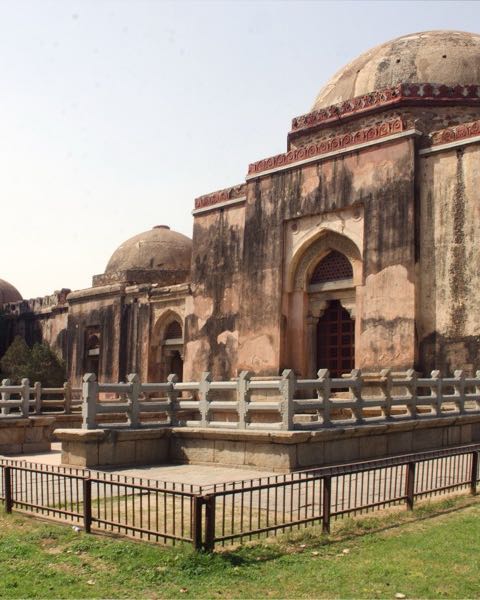 360°The square domed tomb of Sultan Firuz Shah Tughluq (d. 1388), at the corner of his madrasa overlooking the Hauz Khas tank, repaired under Sikandar Lodi in 1507-08.
LXXXIIITomb of Firuz Shah Tughluq
ضريح فيروز شاه تغلق
-
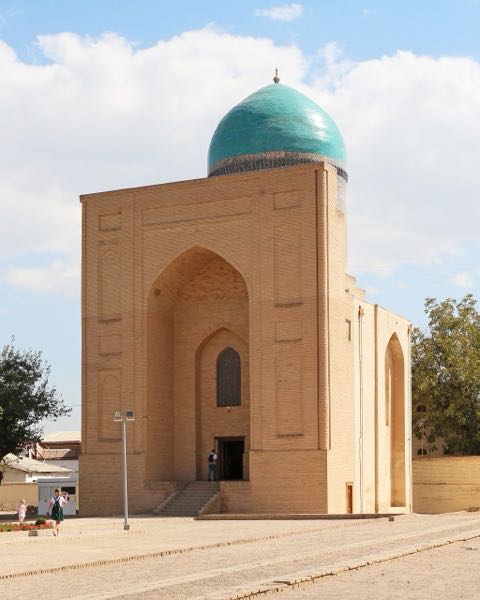 360°The octagonal tomb facing Timur’s congregational mosque in Samarkand, last remnant of his chief wife Saray Mulk Khanum’s madrasa; it received a new dome and facades in 2005-6.
LXXXIVBibi Khanym Mausoleum
ضريح بيبي خانم
-
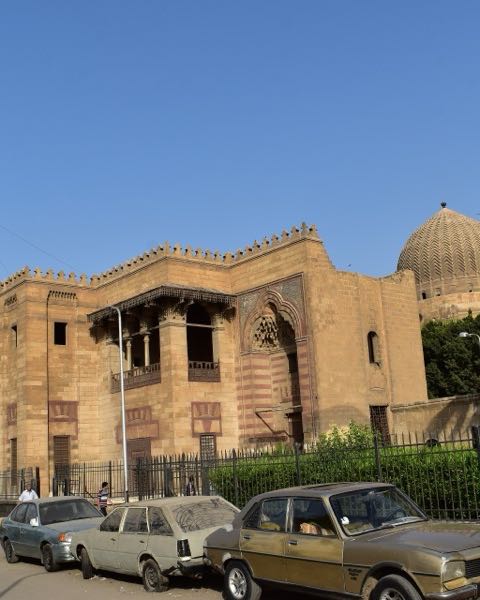 360°Sultan Faraj ibn Barquq’s Mamluk funerary complex in Cairo’s Northern Cemetery (1400-1411), where twin chevron-carved stone domes cover the tombs of his father Barquq and the family’s women.
LXXXVKhanqah and Mausoleums of Sultan Faraj ibn Barquq
خانقاه وضريحا السلطان فرج بن برقوق
-
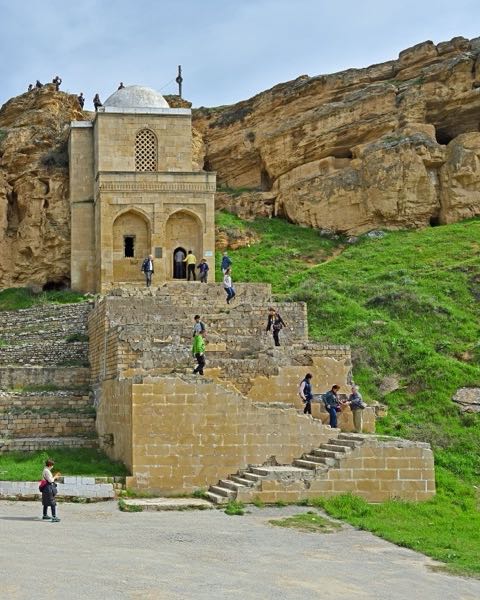 A two-storey stone tomb set against a cliff at Maraza, dated 1402-1403 in the reign of Shirvanshah Sheikh Ibrahim I, with a rock-cut cave behind its domed upper hall.
LXXXVIDiri Baba Mausoleum
ضريح ديري بابا
-
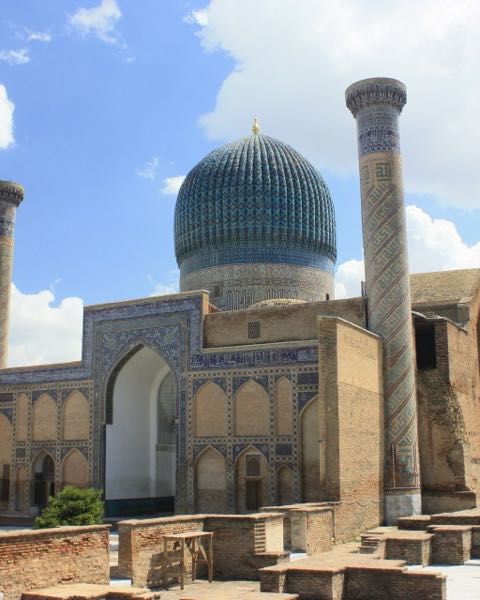 3DTimur’s tomb in Samarkand: an octagonal mausoleum under a ribbed turquoise dome, commissioned in 1404 for his grandson Muhammad Sultan and later the Timurid dynasty’s burial place.
LXXXVIIGur-e-Amir
ضريح كور أمير
-
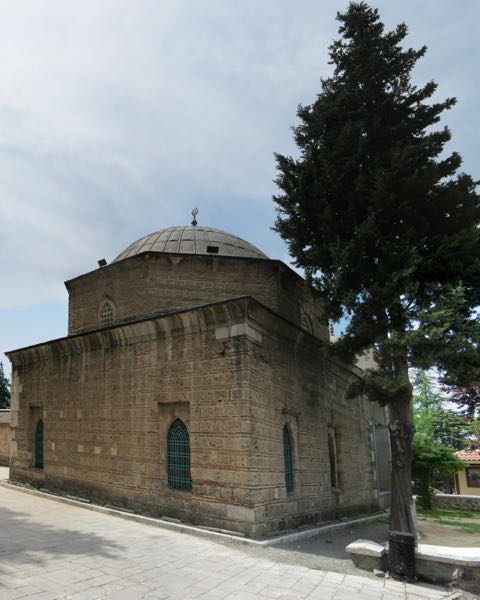 The domed tomb of Bayezid I, who died Timur's captive, in his Bursa complex, built in 1406 by his son Süleyman; TDV calls it the first porched Ottoman tomb.
LXXXVIIITürbe of Sultan Bayezid I
ضريح السلطان بايزيد الأول
-
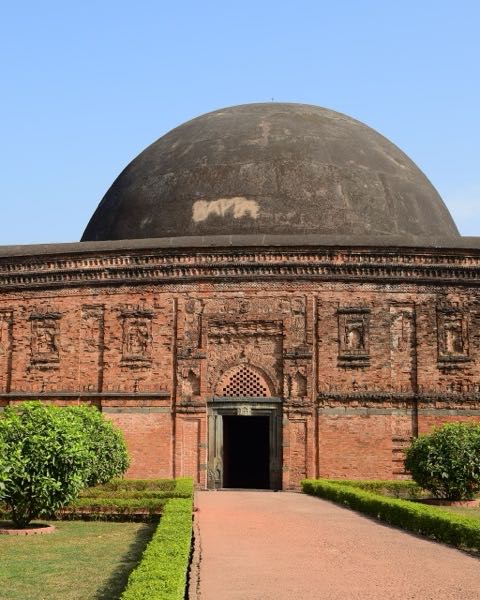 Single-domed brick tomb at Pandua, traditionally of Sultan Jalaluddin Muhammad Shah (d. 1433), whose curved cornice, copied from thatched huts, became a hallmark of Bengal’s Islamic architecture.
LXXXIXEklakhi Mausoleum
ضريح إكلاخي
-
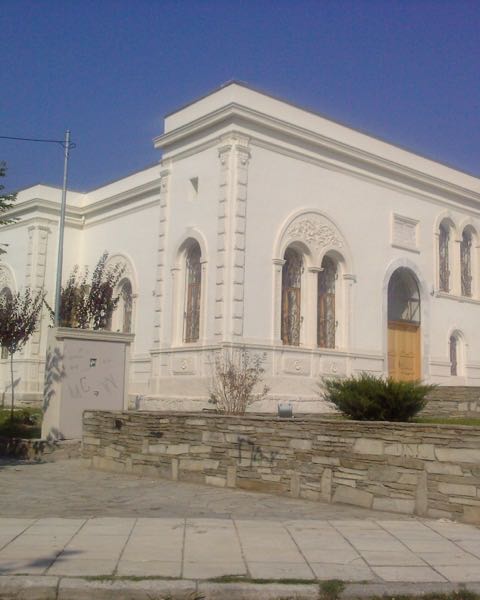 360°The tomb of Gazi Evrenos (d. 1417), the Ottoman commander who founded Giannitsa: a 15th-century türbe rebuilt in 1885-1886 and 1908-1910, now a museum.
XCMausoleum of Gazi Evrenos
ضريح الغازي إيفرينوس
-
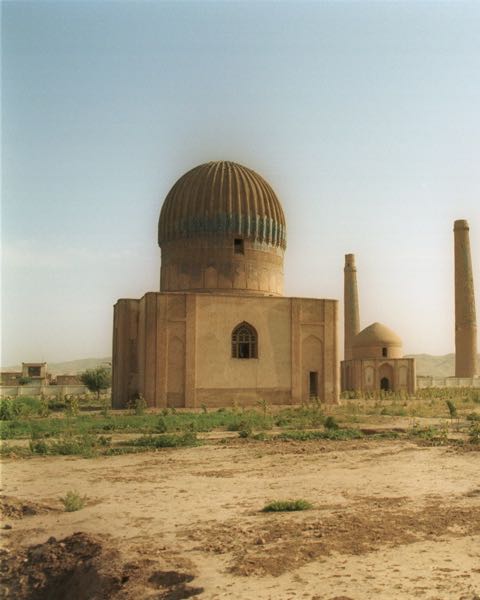 Timurid mausoleum completed in 1432 for Gawhar Shad's family in her Herat madrasa: a ribbed, tile-covered dome over a painted squinch-net vault.
XCIGawhar Shad Mausoleum
ضريح كوهرشاد
-
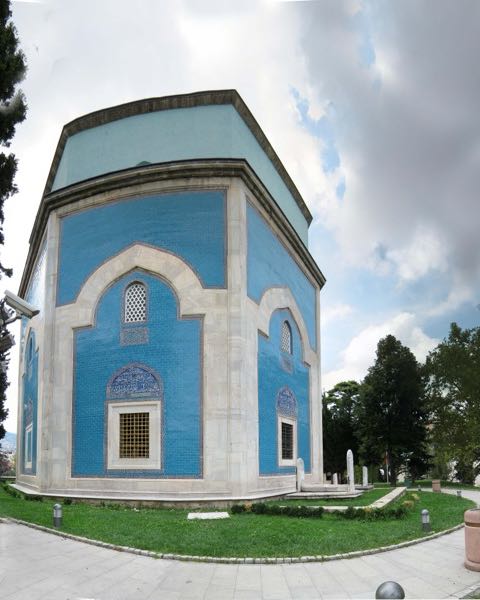 3DSultan Mehmed I's octagonal tomb in Bursa, dated 1421, faced with turquoise tiles outside and known for its tile mihrab and the sultan's tiled cenotaph.
XCIIYeşil Türbe (Green Tomb)
الضريح الأخضر
-
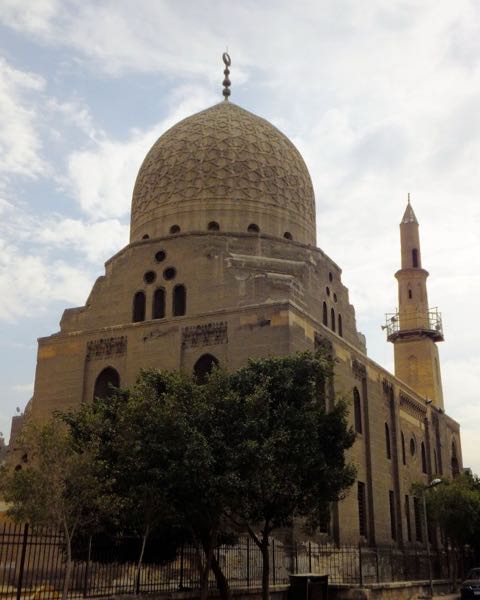 The Mamluk sultan Barsbay’s funerary complex in Cairo’s Northern Cemetery, finished in 1432, with a mausoleum under a stone dome carved outside with an interlacing star pattern.
XCIIIMausoleum of Sultan al-Ashraf Barsbay
ضريح السلطان الأشرف برسباي
-
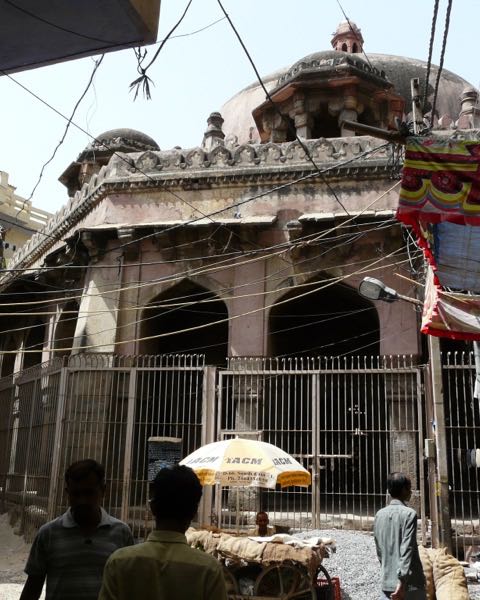 An octagonal tomb in Kotla Mubarakpur, traditionally Mubarak Shah’s (murdered 1434), which Marshall places first among the royal Sayyid and Lodi tombs of Delhi.
XCIVTomb of Mubarak Shah Sayyid
ضريح السيد مبارك شاه
-
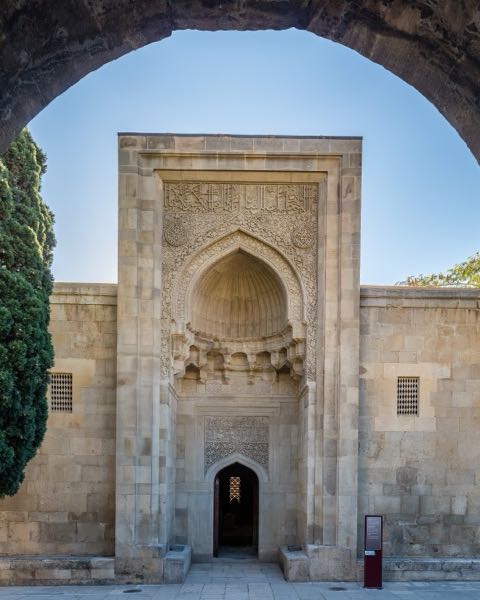 The Shirvanshahs’ family tomb in the lower courtyard of their Baku palace, built in 1435-1436 by Khalilullah I for his mother and young son, under a star-carved stone dome.
XCVTürbe of the Shirvanshahs
ضريح ملوك شروان
-
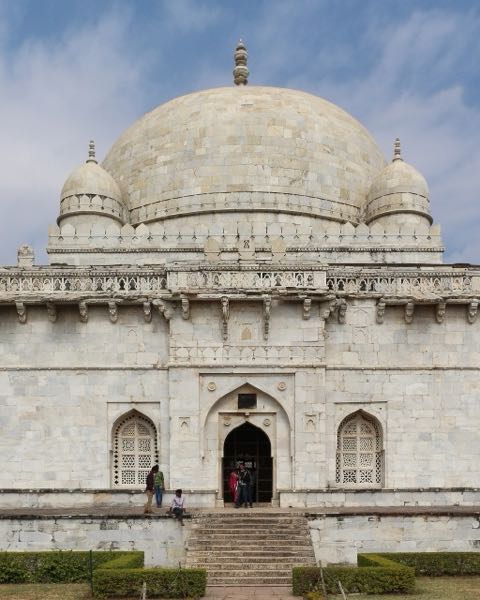 360°A square domed tomb built wholly of white marble behind the Jami Masjid of Mandu, begun for Hoshang Shah of Malwa and finished by Mahmud Khalji.
XCVITomb of Hoshang Shah
ضريح هوشنك شاه
-
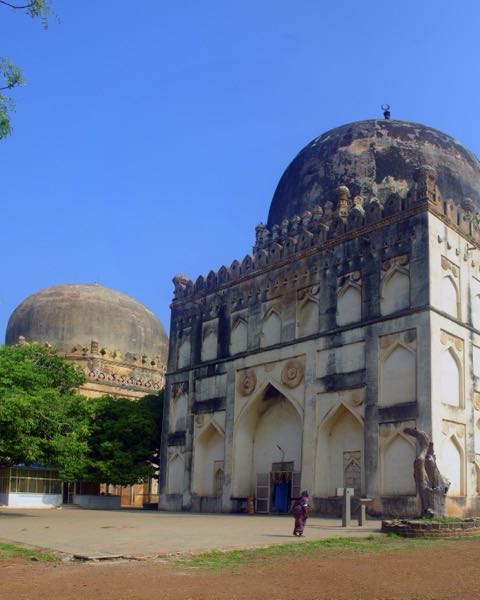 3DThe burial ground of the later Bahmani sultans at Ashtur, east of Bidar: square domed tombs built from 1436 to 1535, the earliest being Ahmad Shah’s painted tomb.
XCVIIBahmani Tombs at Ashtur
أضرحة السلاطين البهمنيين في أشتور
-
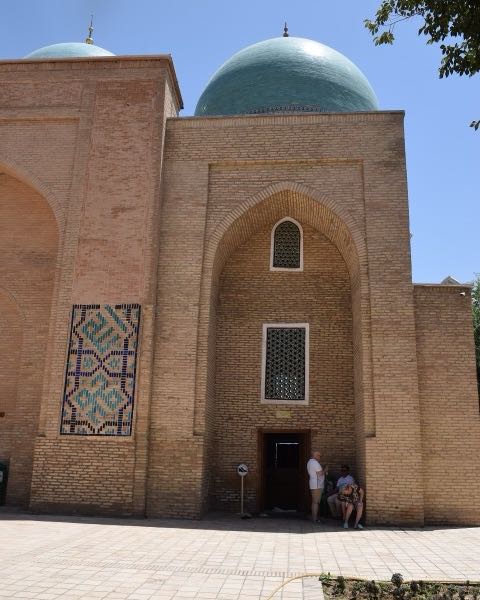 A domed mausoleum built in 1437-1438 by Ulugh Beg in the Dorut Tilovat complex of Shahrisabz; some of its tombstones name sayyids of Termez, descendants of the Prophet.
XCVIIIGumbazi Sayyidan
قبة السادات
-
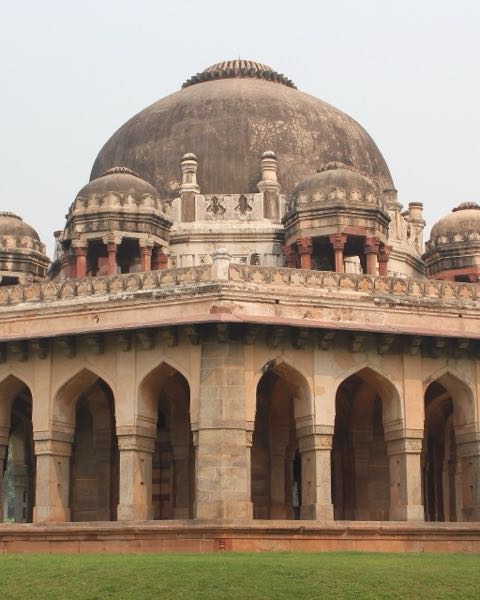 360°The octagonal tomb of Muhammad Shah (d. 1444), third Sayyid sultan of Delhi, ringed by a verandah and roof kiosks, in today’s Lodi Garden.
XCIXTomb of Muhammad Shah Sayyid
ضريح السيد محمد شاه
-
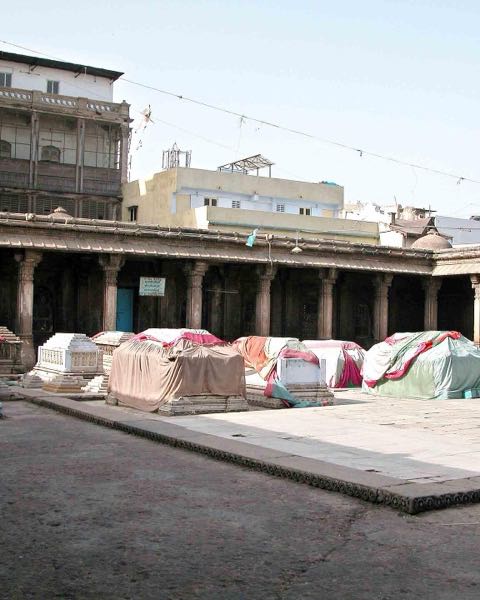 A walled courtyard of marble tombs for the queens of Ahmad Shah I, raised above the street in the Manek Chowk market quarter of old Ahmedabad.
CRani no Hajiro (Tombs of the Queens of Ahmad Shah)
راني نو حجيرو (قبور ملكات أحمد شاه)
-
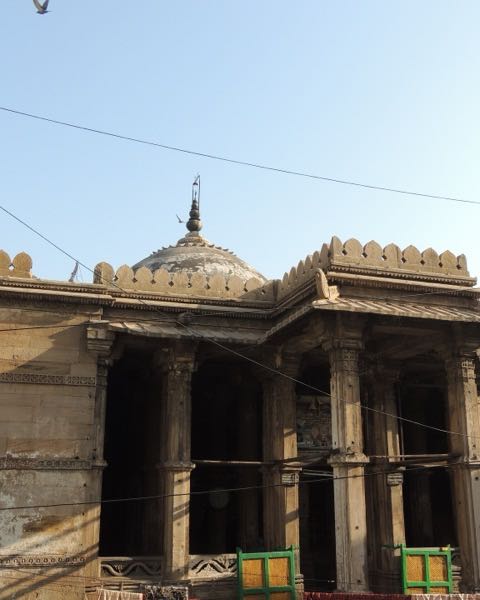 The domed mausoleum of Sultan Ahmad Shah I, founder of Ahmedabad, beside the Jama Masjid in Manek Chowk, where his son and grandson also lie.
CITomb of Ahmad Shah I (Badshah no Hajiro)
ضريح أحمد شاه الأول (بادشاه نو حجيرو)
-
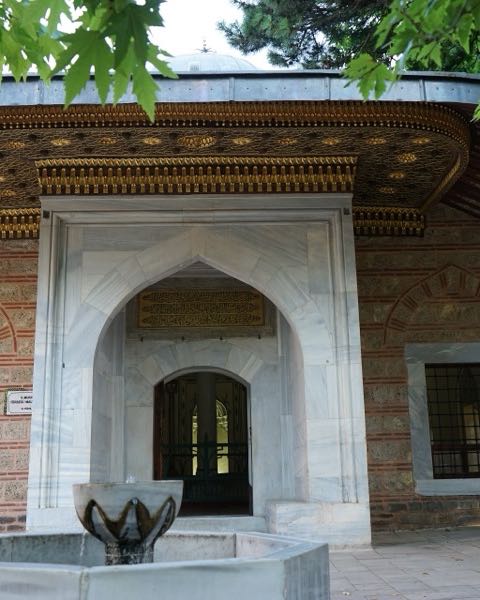 360°A garden of a dozen tombs beside Murad II's mosque in Bursa, around the sultan's own tomb of 1451, which was left open to the sky at his request.
CIITombs of the Muradiye Complex
أضرحة مجمع المرادية
-
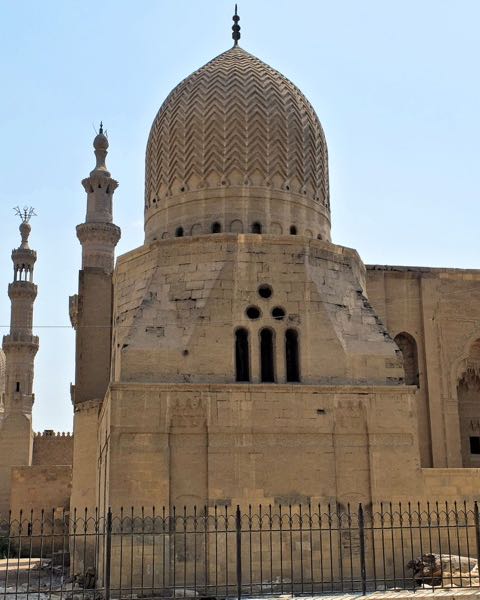 Sultan Inal’s funerary complex in Cairo’s Northern Cemetery, built in stages between 1450 and 1456: first his domed mausoleum as an amir, then a khanqah and a madrasa.
CIIIMausoleum of Sultan al-Ashraf Inal
ضريح السلطان الأشرف إينال
-
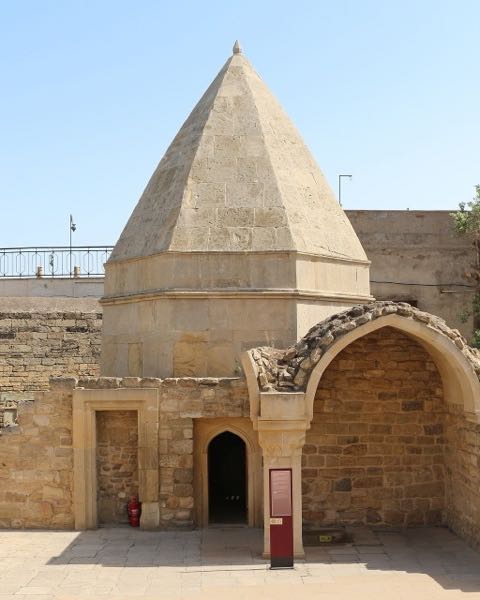 A small octagonal stone tomb with a pyramidal roof in the Shirvanshahs’ Palace, called the Dervish’s tomb and presumed to hold the Sufi scholar Seyid Yahya Bakuvi.
CIVMausoleum of Seyid Yahya Bakuvi
ضريح سيد يحيى الباكوي
-
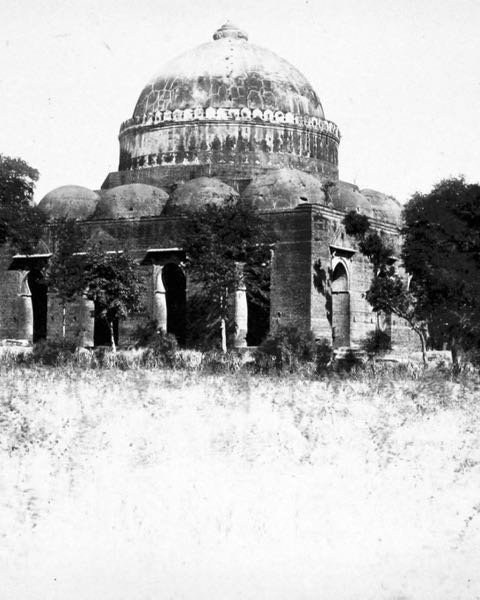 A massive brick tomb of 1453 built by the nobleman Dariya Khan in his lifetime; the Gazetteer calls it the largest tomb in Gujarat.
CVDariya Khan’s Tomb (Ahmedabad)
ضريح دريا خان (أحمد آباد)
-
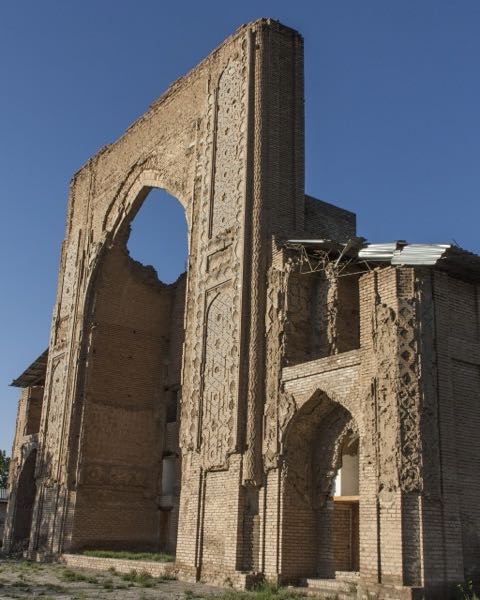 A Timurid tomb in Samarkand, built about 1464 by Habiba Sultan Begim for her young daughter and later used for royal women; its domes fell in 1902-1903.
CVIIshratkhana Mausoleum
ضريح عشرت خانه
-
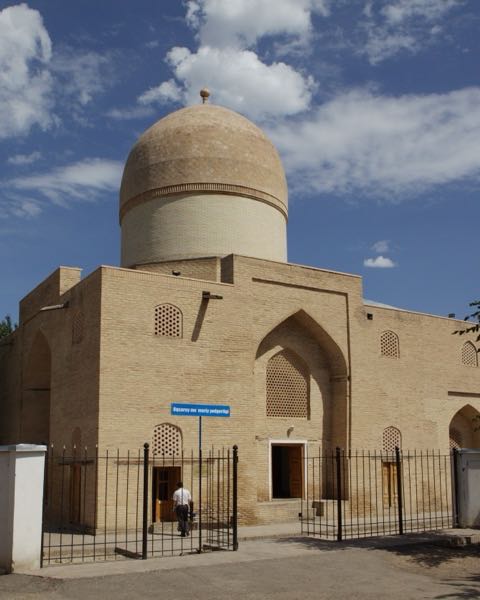 360°A small Timurid family tomb of about 1470 near the Gur-e-Amir in Samarkand, plain outside, with kundal painting in gold (restored in 2007) and a marble-lined crypt.
CVIIAksaray Mausoleum
ضريح آق سراي
-
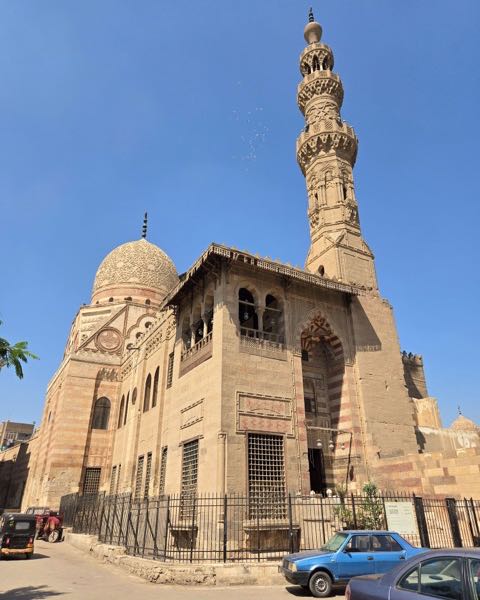 360°Tomb chamber of the Mamluk sultan Qaytbay in Cairo’s Northern Cemetery, finished in 1474 under a stone dome carved with a star pattern laid over arabesques.
CVIIIMausoleum of Sultan Qaytbay
ضريح السلطان الأشرف قايتباي
-
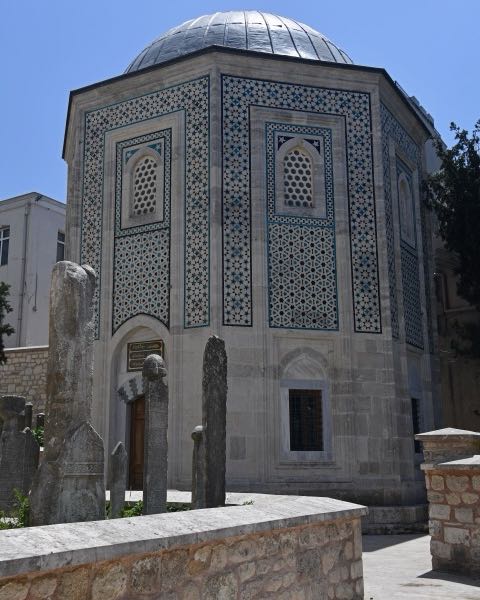 The octagonal türbe of Mehmed II’s grand vizier Mahmud Pasha, finished in 1473 beside his mosque, its upper walls inlaid with turquoise and dark blue tiles.
CIXTürbe of Mahmud Pasha
ضريح محمود باشا
-
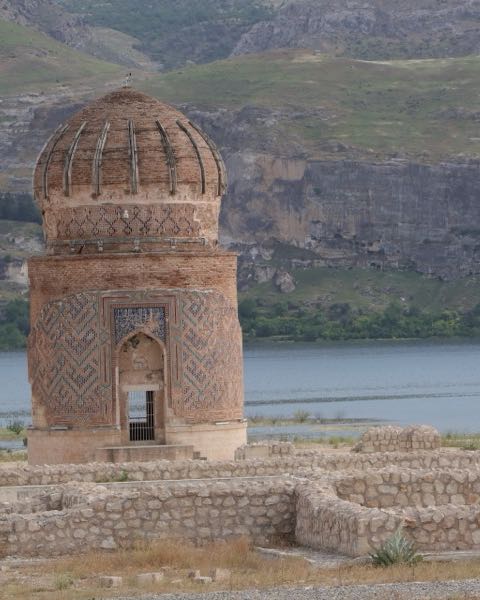 A cylindrical tomb faced with glazed brick and tile mosaic, built at Hasankeyf for the Akkoyunlu prince Zeynel Bey (d. 1473) and moved in 2017 ahead of the Ilısu reservoir.
CXZeynel Bey Türbesi
ضريح زينل بك
-
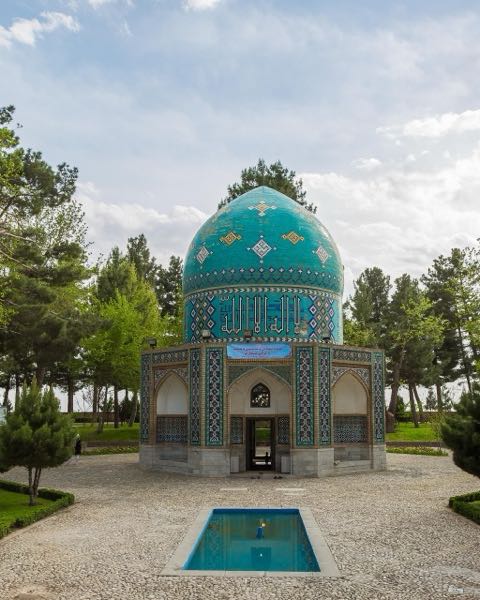 3DThe tomb of the Sufi poet Farid al-Din Attar in Nishapur: an octagonal domed chamber over a Timurid tombstone of 1486, given its present form in 1959-1968.
CXITomb of Attar
ضريح فريد الدين العطار
-
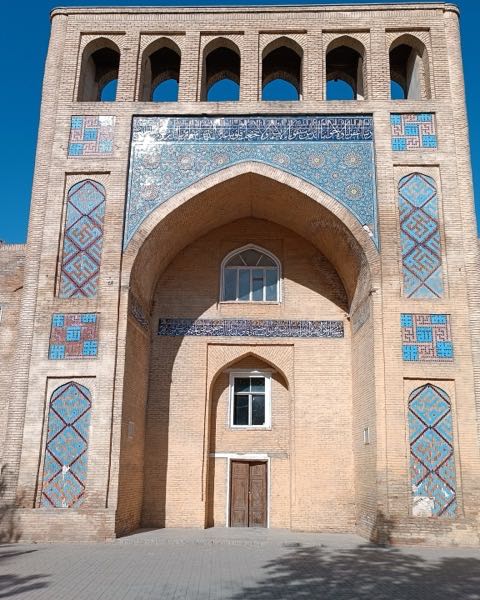 The late 15th-century mausoleum and khanaqah of Yunus Khan, khan of Moghulistan and Babur’s grandfather, in Tashkent’s Sheikhantaur ensemble, with a pointed portal and a double dome.
CXIIMausoleum of Yunus Khan
ضريح يونس خان
-
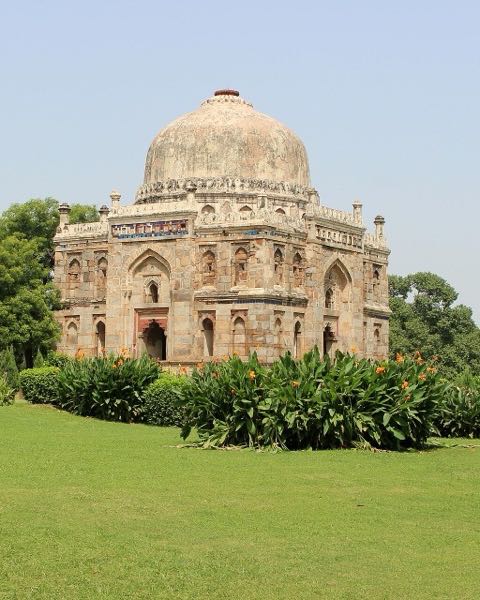 Square Lodi-period tomb in Lodi Garden, Delhi, named for the blue glazed tiles on its exterior; the occupants of its graves are unidentified.
CXIIIShish Gumbad (Lodi Garden)
شيش غومباد (حدائق لودي)
-
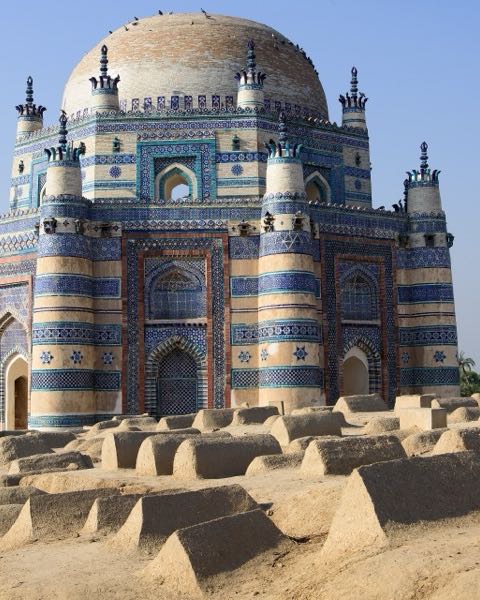 3DAn octagonal brick tomb of about 1494 at Uch, faced in blue and white tiles, built for a great-granddaughter of the Sufi Jahaniyan Jahangasht and now partly ruined.
CXIVTomb of Bibi Jawindi
ضريح بيبي جاويندي
-
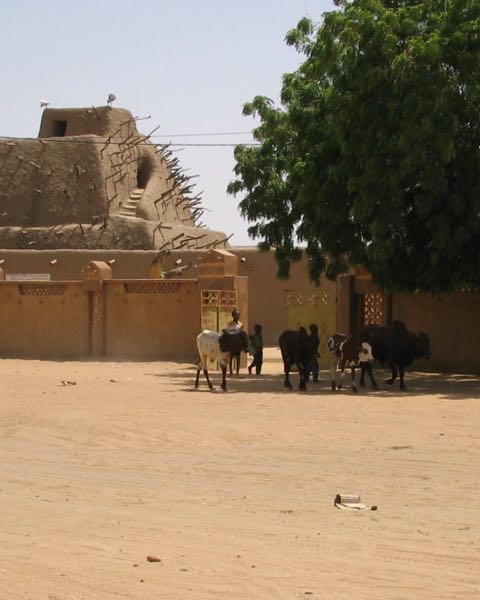 A 17 m stepped pyramid of mud brick bristling with timber, built in 1495 by the Songhai emperor Askia Mohamed in Gao, and still the minaret of its mosque.
CXVTomb of Askia
مدفن أسكيا
-
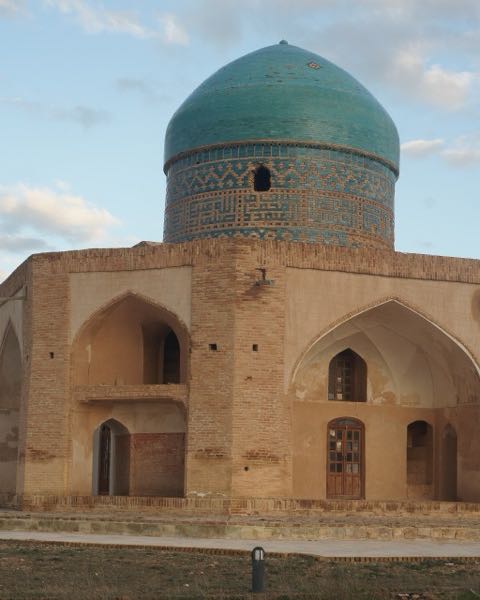 The Safavid-style tomb of the Ilkhanid-era poet Hasan Kashi, standing alone south of Soltaniyeh: octagonal outside, a square hall within, under a blue-glazed double dome.
CXVITomb of Mulla Hasan Kashi
ضريح الملا حسن كاشي
-
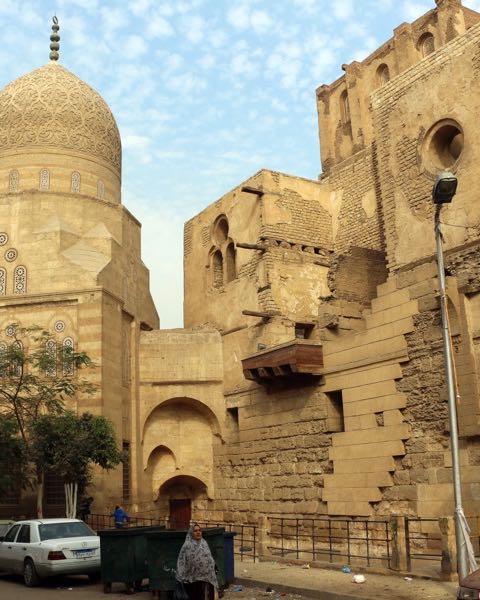 3DTomb of the Mamluk amir Khayrbak, later the first Ottoman governor of Egypt, built in 1502 near Bab al-Wazir in Cairo, with a mosque and sabil-kuttab added about 1520.
CXVIIMausoleum of Amir Khayrbak
ضريح الأمير خاير بك
-
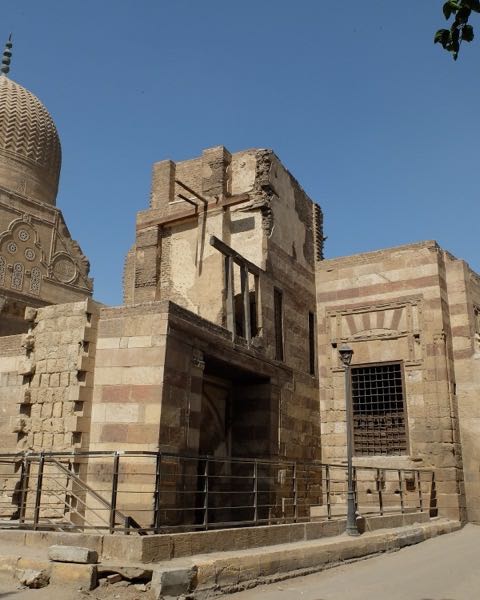 Funerary complex of the Mamluk amir Tarabay al-Sharifi (1503-1504) near Bab al-Wazir in Cairo: a domed mausoleum, madrasa and sabil-kuttab, restored by the Aga Khan Trust for Culture.
CXVIIIMausoleum of Amir Tarabay al-Sharifi
ضريح الأمير طراباي الشريفي
-
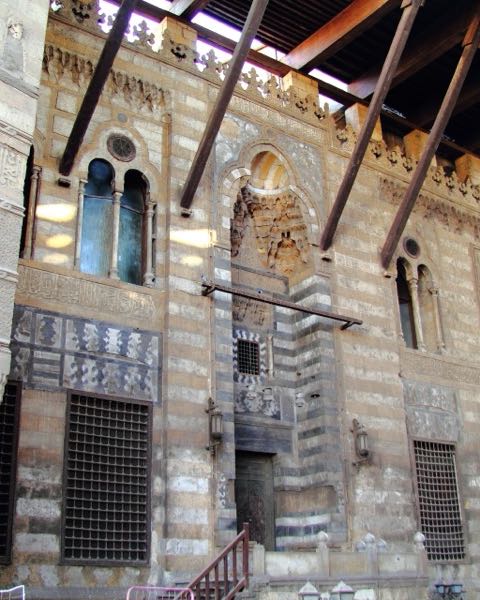 Mausoleum and khanqah that Sultan al-Ghuri built in 1503-1504 facing his mosque across al-Mu'izz Street; he died in Syria in 1516 and was never buried here.
CXIXMausoleum of Sultan al-Ghuri
قبة السلطان الغوري الضريحية
-
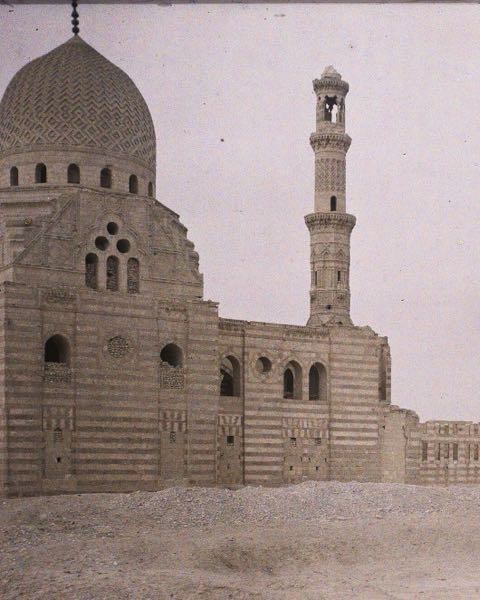 The great amir Qurqumas’s funerary complex in Cairo’s Northern Cemetery (1506-1507): a madrasa, a mausoleum under a stone dome over 12 m across, and the amir’s own residence.
CXXFunerary Complex of Amir Qurqumas
مجموعة الأمير قرقماس
-
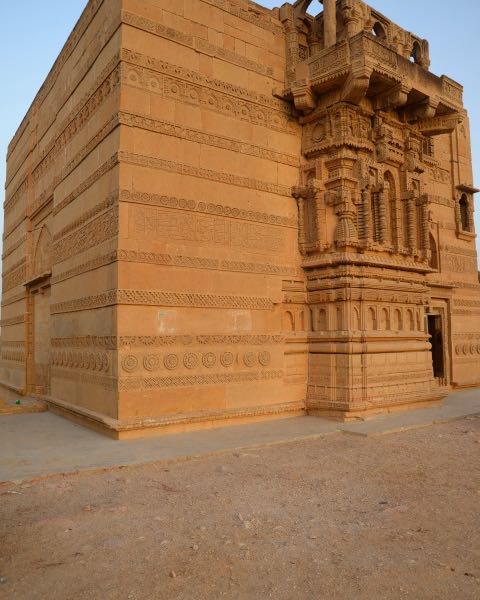 360°Thatta's vast necropolis on Makli Hill (14th-18th centuries), with the carved stone tombs of Samma ruler Jam Nizamuddin II and Mughal governor Isa Khan Tarkhan II.
CXXIMakli Necropolis
مقابر مكلي
-
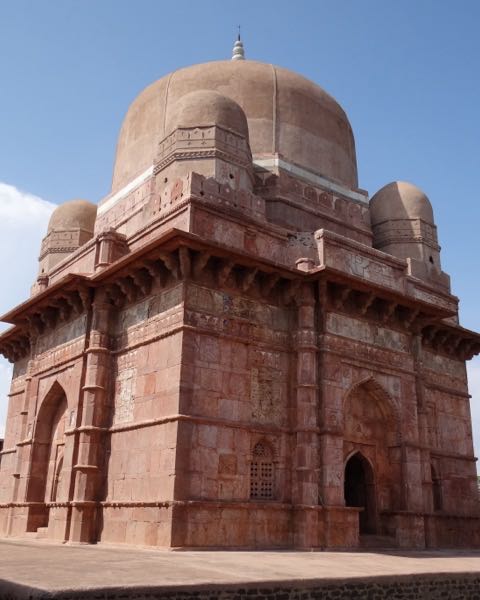 Square domed tomb of red stone on a raised platform, decorated with coloured tiles, built at Mandu for Darya Khan, an official of the Malwa sultan Mahmud II.
CXXIIDarya Khan's Tomb
ضريح دريا خان
-
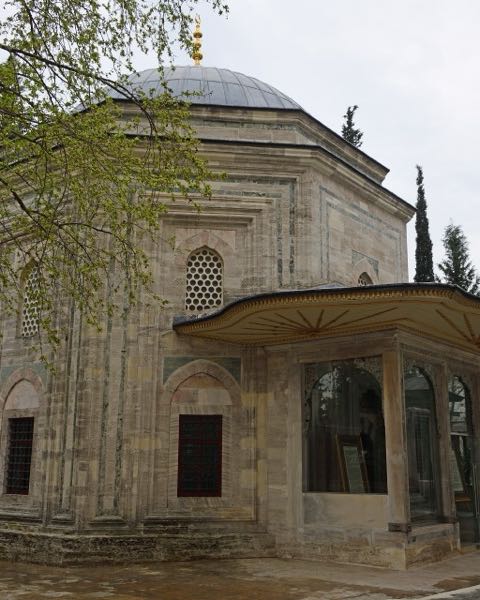 Octagonal domed tomb of cut stone that Selim I built for his father Bayezid II on the qibla side of the Bayezid Mosque, dated by Düzenli to 1513.
CXXIIITürbe of Sultan Bayezid II
ضريح السلطان بايزيد الثاني
-
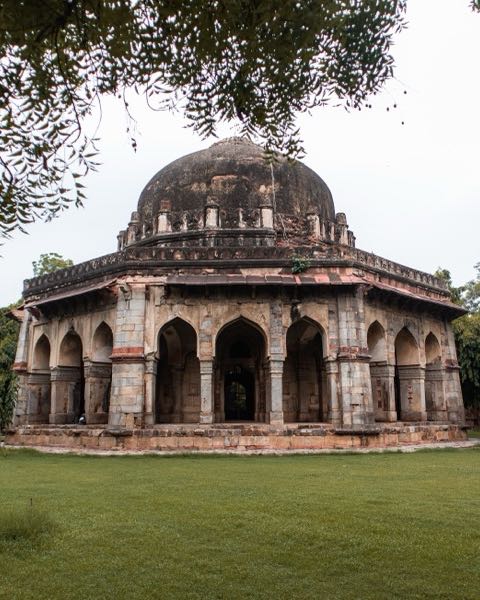 360°The octagonal tomb of Sikandar Lodi (d. 1517) in a walled enclosure in today’s Lodi Garden, probably built by his son Ibrahim Lodi in 1517-18.
CXXIVTomb of Sikandar Lodi
ضريح سكندر لودي
-
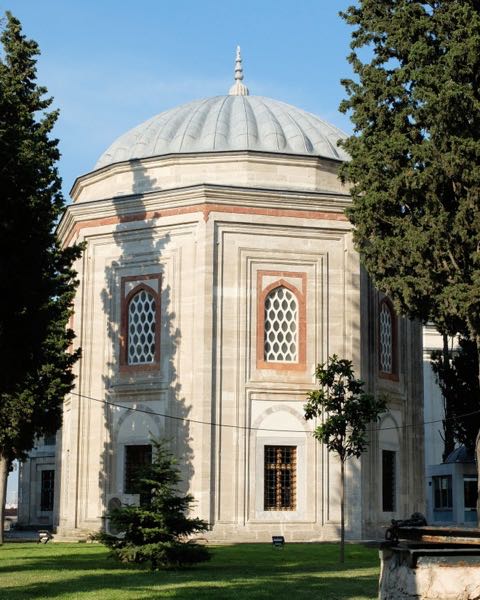 Octagonal tomb with a fluted dome that Süleyman I built for his father Selim I beside the Yavuz Selim Mosque, dated by its tile inscriptions to December 1522.
CXXVTürbe of Sultan Selim I
ضريح السلطان سليم الأول
-
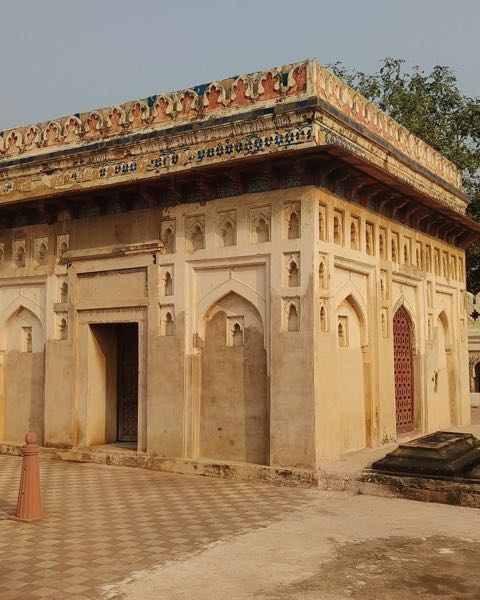 The flat-roofed tomb of the poet Jamali (d. 1535-36) beside his mosque in Mehrauli, built about 1528-29 and decorated inside with tiles, painted plaster and his own verses.
CXXVITomb of Jamali and Kamali
ضريح جمالي كمالي
-
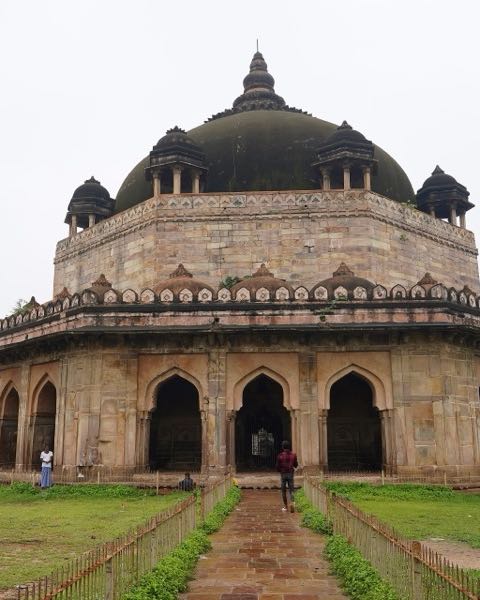 Sher Shah’s tomb for his father Hasan Khan Sur in the centre of Sasaram: an octagonal domed hall inside an arcaded verandah, in a walled courtyard.
CXXVIITomb of Hasan Khan Suri
ضريح حسن خان سوري
-
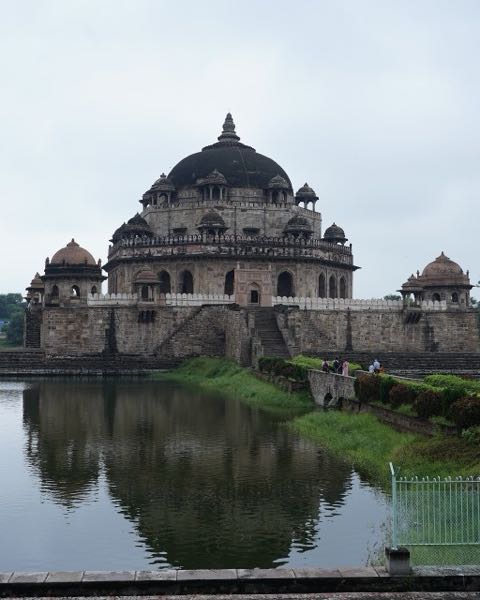 360°Sher Shah’s tomb at Sasaram: an octagonal domed mausoleum on a stepped terrace in an artificial lake, completed by his son Islam Shah in August 1545.
CXXVIIITomb of Sher Shah Suri
ضريح شير شاه سوري
-
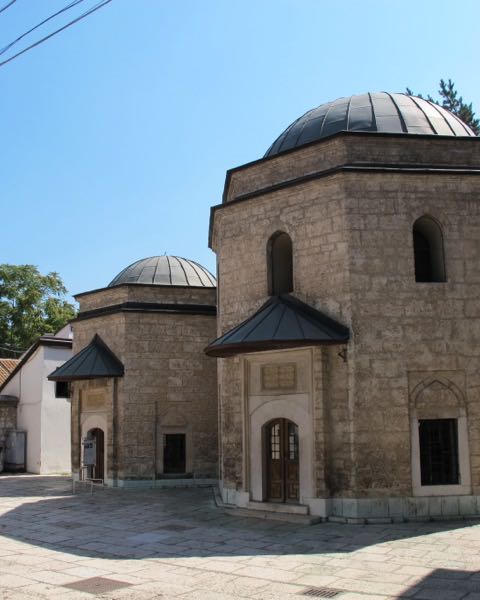 360°Octagonal cut-stone tomb with a lead-covered dome in the courtyard of Sarajevo's Gazi Husrev-beg Mosque, where the Ottoman governor of Bosnia was buried in 1541.
CXXIXTomb of Gazi Husrev-beg
ضريح غازي خسرو بك
-
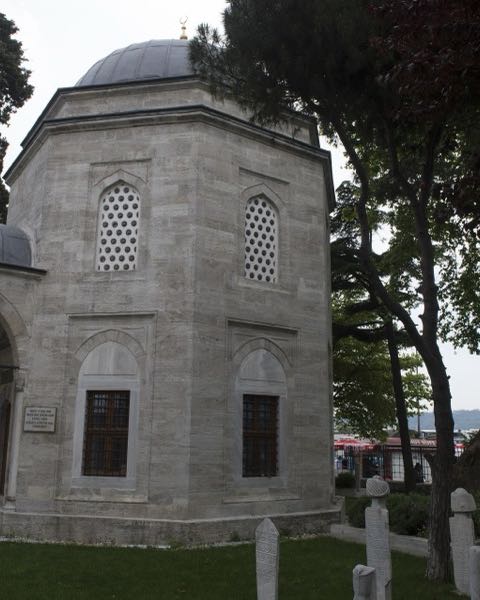 Octagonal stone tomb built by Sinan in 1541-42 for the Ottoman grand admiral Barbaros Hayreddin Pasha (d. 1546), on Barbaros Square in Beşiktaş beside the Naval Museum.
CXXXTomb of Barbaros Hayreddin Pasha
ضريح خير الدين بربروس
-
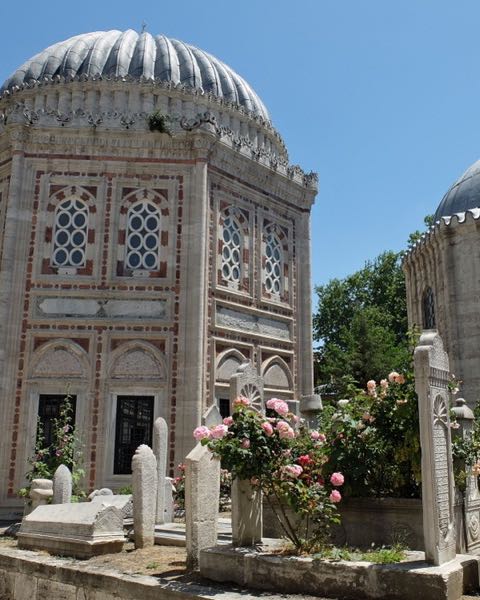 Octagonal tomb of Süleyman I's son Şehzade Mehmed (d. 1543), the first finished part of Sinan's Şehzade complex, with a fluted dome, polychrome stone facades and a tiled interior.
CXXXITomb of Şehzade Mehmed
ضريح الشهزاده محمد
-
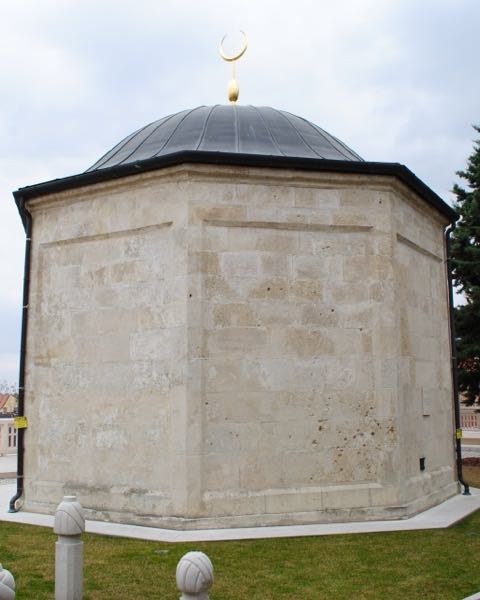 3DAn octagonal Ottoman türbe of cut stone, built in 1543-1548 on Buda's Rózsadomb over the grave of the Bektashi dervish Gül Baba, now a museum in a rose garden.
CXXXIITürbe of Gül Baba
ضريح غول بابا
-
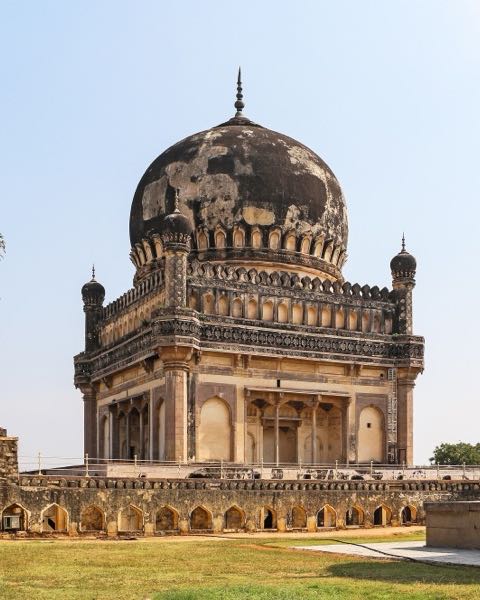 3DThe royal necropolis of the Qutb Shahi sultans of Golconda in Hyderabad, with tombs dated 1543-1672; Bilgrami judged Muhammad Quli Qutb Shah's domed tomb second to none among them.
CXXXIIIQutb Shahi Tombs (Qutb Shahi Heritage Park)
أضرحة قطب شاهي (منتزه قطب شاهي التراثي)
-
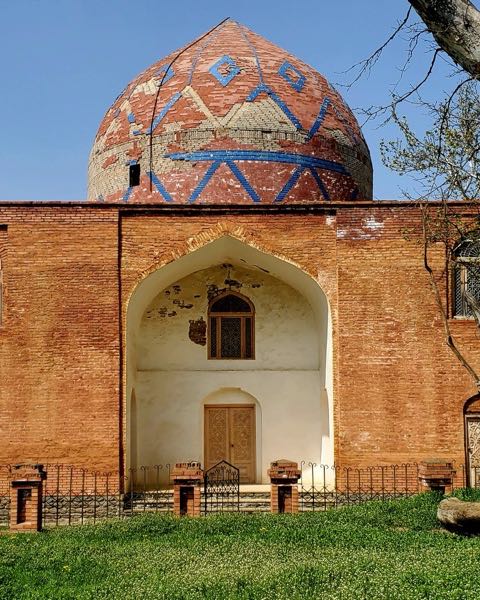 A domed brick tomb in Hazra village, completed in 1544-1545 under Shah Tahmasp I over the grave of Sheikh Juneyd, the Safavid leader killed fighting the Shirvanshah in 1460.
CXXXIVMausoleum of Sheikh Juneyd
ضريح الشيخ جنيد
-
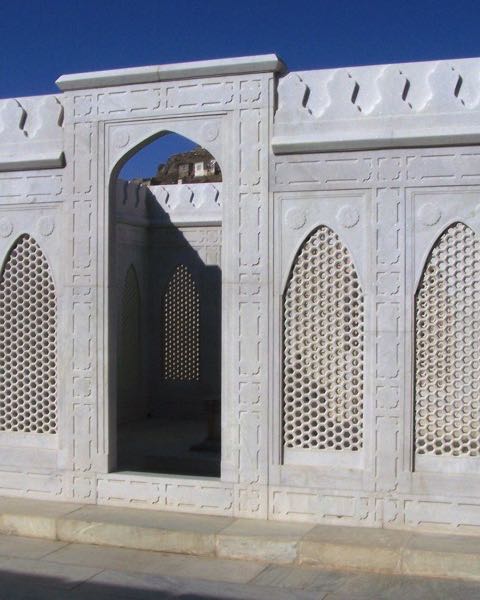 Open-air grave of Babur, founder of the Mughal dynasty, inside a marble screen high in his terraced garden in Kabul, restored by the Aga Khan Trust for Culture.
CXXXVTomb of Babur
ضريح بابر
-
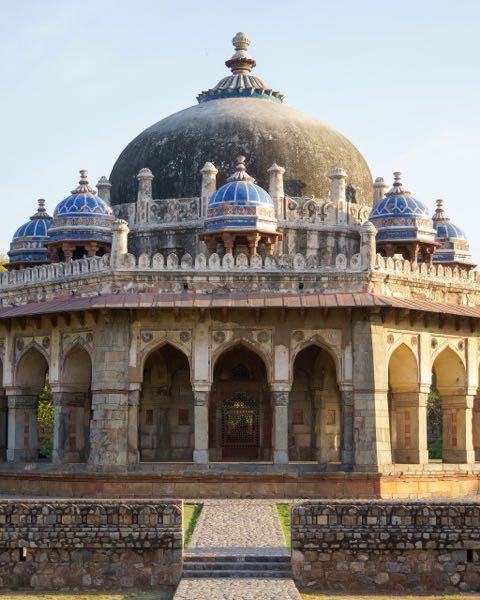 360°The octagonal garden tomb of Isa Khan Niyazi, a noble of the Sur sultans, dated 1547-48 by its inscription and now part of the Humayun’s Tomb World Heritage property.
CXXXVITomb of Isa Khan Niyazi
ضريح عيسى خان نيازي
-
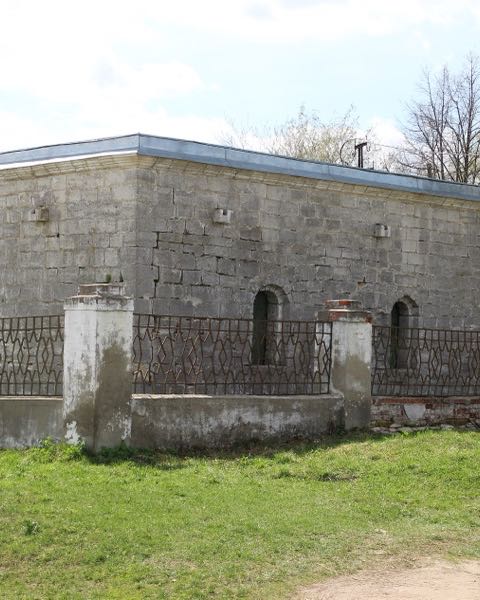 360°The white-stone tomb that Shah Ali, khan of Kasimov and three times khan of Kazan, built for himself in 1555: two rooms over a burial crypt.
CXXXVIITekie of Shah Ali Khan
ضريح شاه علي خان
-
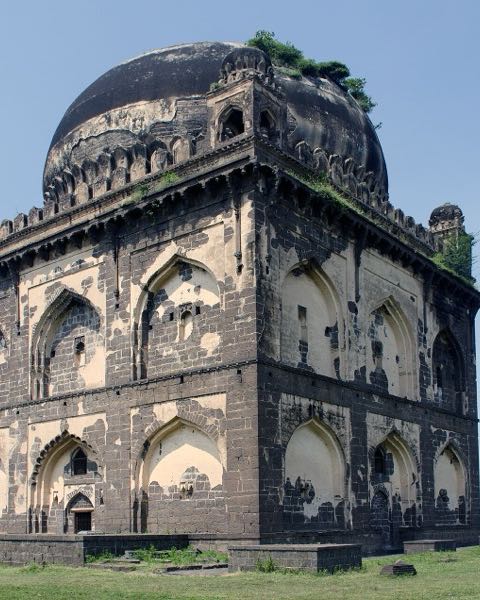 Domed Adil Shahi tomb on open ground east of Vijayapura, ascribed to a noble killed in 1556 and set beside a stucco-decorated mosque.
CXXXVIIIAin-ul-Mulk’s Tomb (Chota Gumbaz)
ضريح عين الملك (تشوتا غومباز)
-
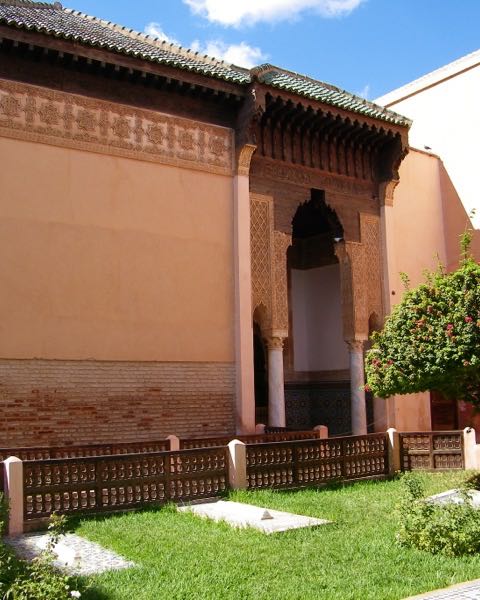 360°Royal necropolis of Morocco’s Saadian sultans in the Marrakesh kasbah, begun in 1557 and enlarged by Ahmad al-Mansur, whose Hall of Twelve Columns holds his tomb.
CXXXIXSaadian Tombs
ضريح السعديين
-
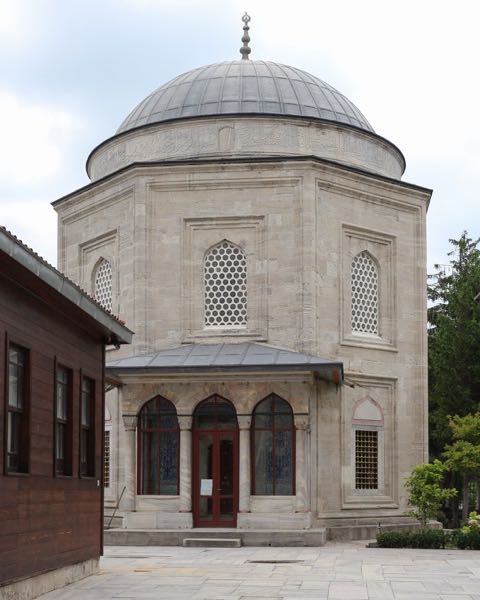 360°Octagonal domed tomb built by Sinan in 1558 for Hürrem Sultan, Süleyman I's consort, in the walled garden behind the Süleymaniye Mosque, its interior lined with Iznik tiles.
CXLTürbe of Hürrem Sultan
ضريح خرم سلطان
-
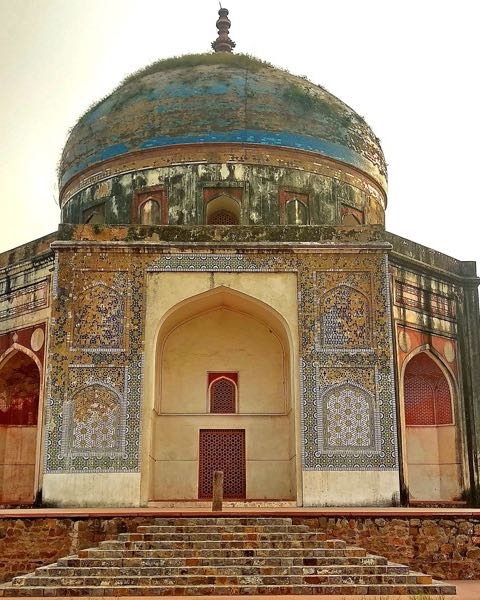 360°A tomb with a turquoise-tiled dome just outside Humayun’s tomb garden in Delhi; its occupant is unknown, and UNESCO and ICOMOS treat it as older than Humayun’s tomb.
CXLINila Gumbad
نيلا غمباد
-
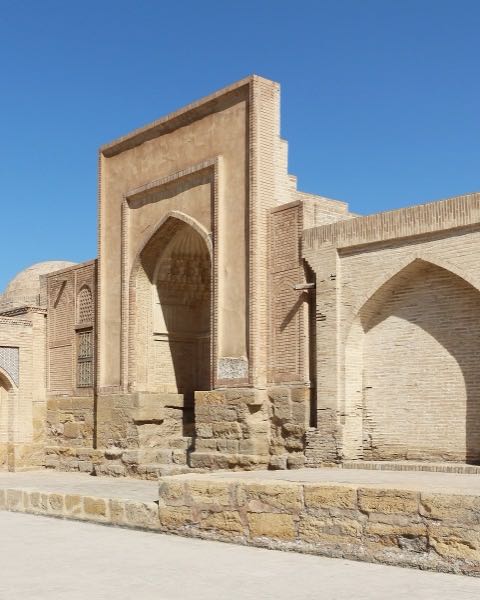 The necropolis of the Juybari sheikhs near Bukhara, with a khanqah and mosque that sources date to the 16th century; part of a World Heritage property since 2023.
CXLIIChor-Bakr Necropolis
مقبرة تشور بكر
-
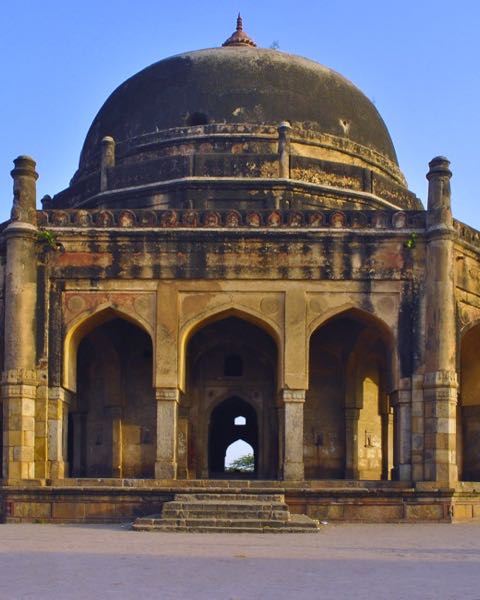 360°Bhul Bhulaiyan, the labyrinth: the octagonal tomb that Akbar raised at Mehrauli for his foster brother Adham Khan, executed in 1562, and Adham’s mother Maham Anaga.
CXLIIITomb of Adham Khan
ضريح أدهم خان
-
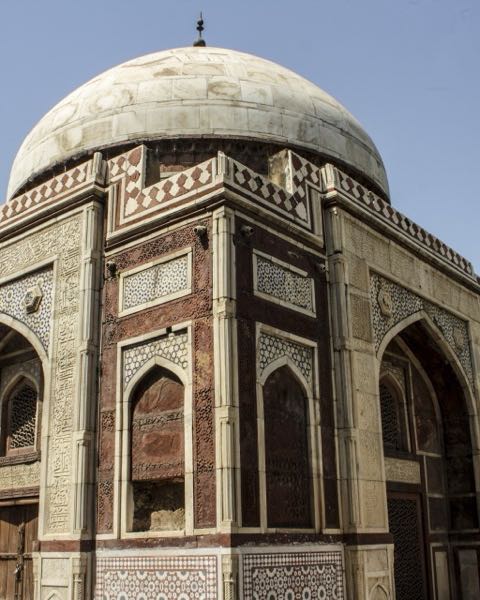 Finished in 1566-67 beside the shrine of Nizamuddin Auliya in Delhi, the marble-domed tomb of Atgah Khan, Akbar’s foster father and chief minister, murdered in 1562.
CXLIVTomb of Atgah Khan
ضريح أتكه خان
-
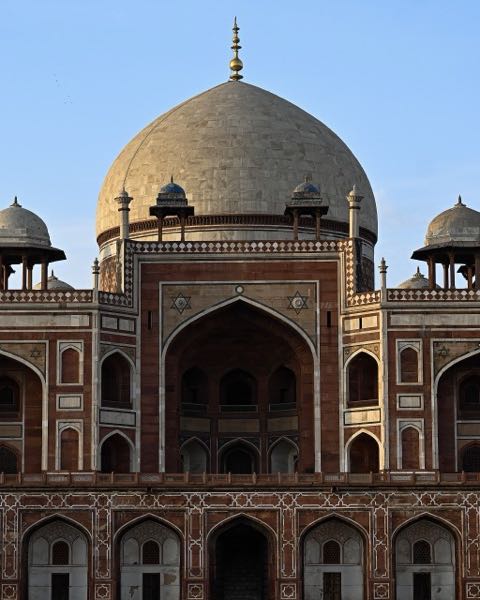 3DEmperor Humayun’s garden-tomb in Delhi, built in the 1560s–1570s; UNESCO calls it the first of the grand Mughal dynastic mausoleums, a line that culminated in the Taj Mahal.
CXLVHumayun’s Tomb
ضريح همايون
-
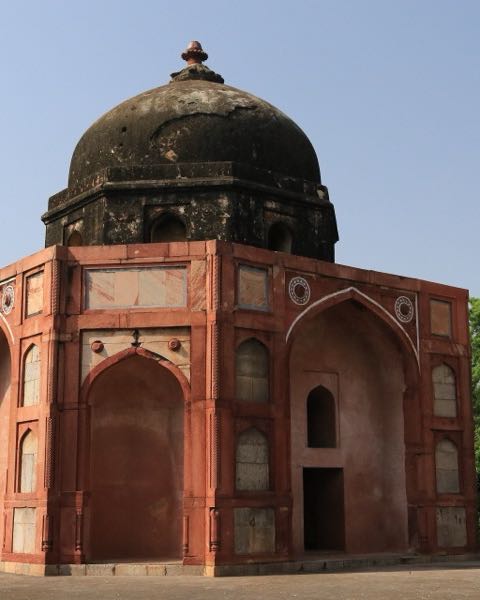 An octagonal, double-domed tomb in the Humayun’s Tomb complex, known only as ‘the officer’s’ (Afsarwala); a marble grave inside is dated 974 AH (1566-67).
CXLVIAfsarwala Tomb
ضريح أفسروالا
-
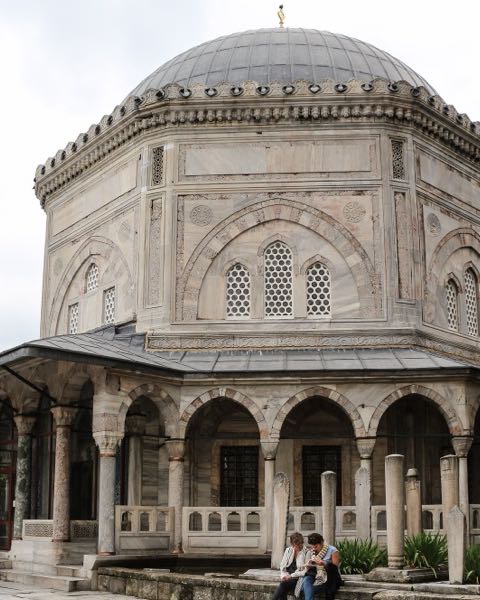 360°Octagonal tomb of Sultan Süleyman I, built by Sinan in 1566-1568 behind the Süleymaniye Mosque and ringed by a columned portico with Iznik tile panels.
CXLVIITomb of Sultan Süleyman I
ضريح السلطان سليمان القانوني
-
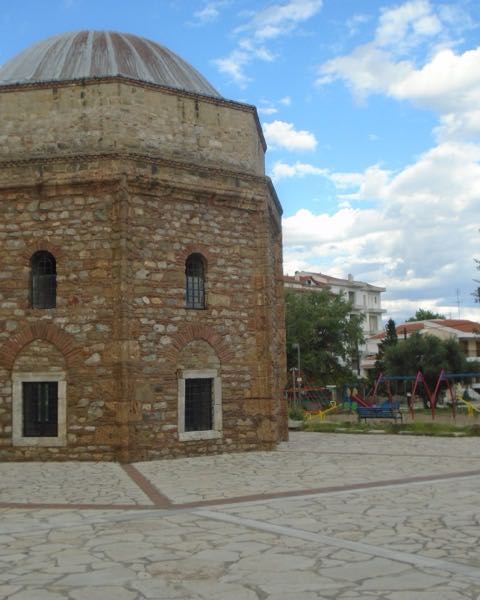 Octagonal, lead-domed tomb of Osman Shah Bey, nephew of Sultan Süleyman I, built about 1566-1571 beside his mosque in Trikala, Greece.
CXLVIIITomb of Osman Shah
ضريح عثمان شاه
-
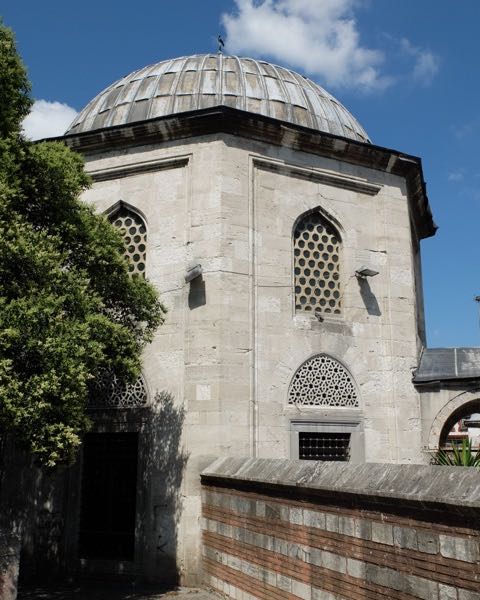 Mimar Sinan's octagonal tomb of 1568-69 in Eyüp, built by the grand vizier Sokollu Mehmed Pasha for sons who died young; he was buried here after his murder in 1579.
CXLIXTürbe of Sokollu Mehmed Pasha
ضريح صوقللي محمد باشا
-
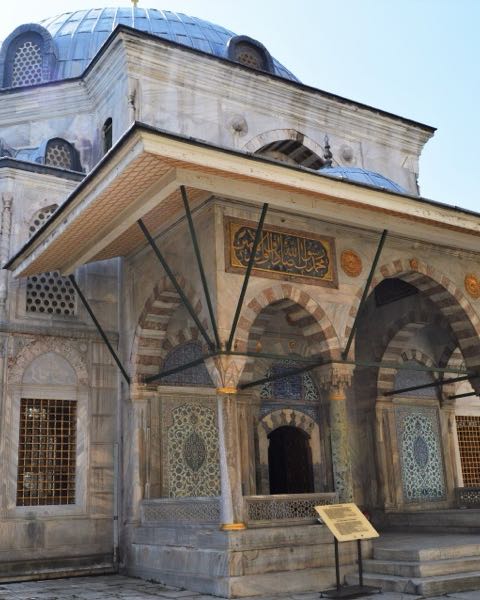 3DSinan's tomb for Sultan Selim II beside Hagia Sophia, begun in 1573-74 and finished in 1576-77: a marble-clad, double-domed building lined with Iznik tiles inside and on its porch.
CLTomb of Sultan Selim II
ضريح السلطان سليم الثاني
-
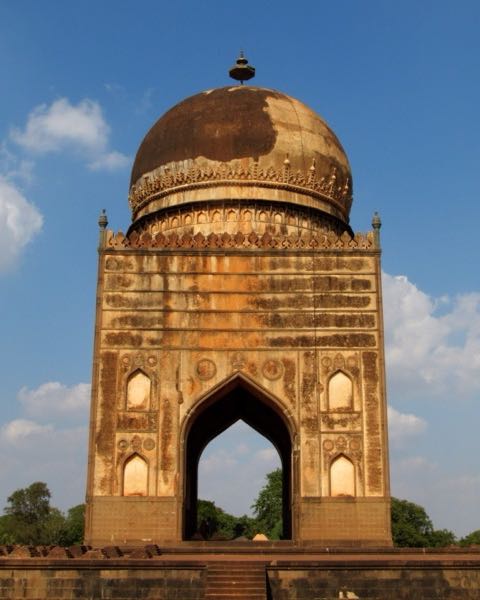 360°The domed tomb of Ali Barid Shah in Bidar, completed in 1576-77: open on all four sides through tall arches, it stands in a walled garden court.
CLITomb of Ali Barid Shah (Barid Shahi Tombs)
ضريح علي بريد شاه (الأضرحة البريدشاهية)
-
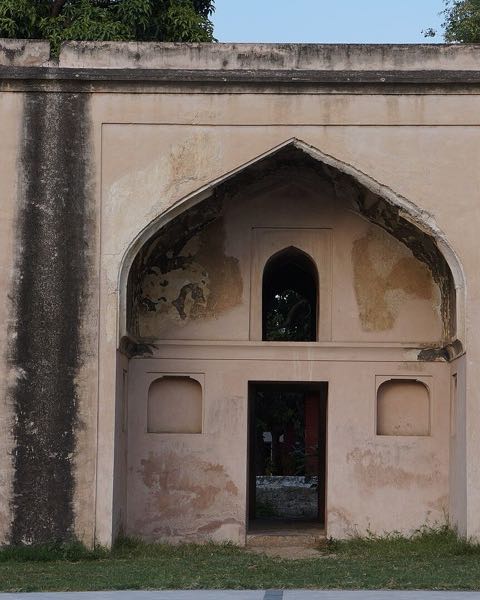 A plastered stone tomb on a platform beside a tank at Hasan Abdal, linked to Akbar's physician Hakim Abul Fath, who was buried in a vault there after dying in 1589.
CLIITomb of the Hakims (Hakimon ka Maqbara)
ضريح الحكيمين (حكيمون كا مقبرة)
-
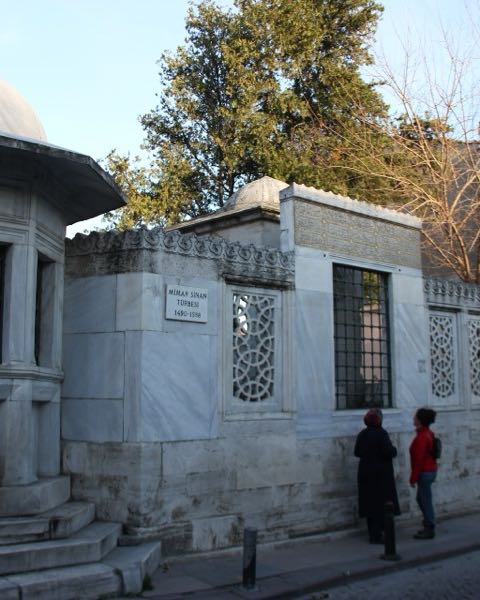 360°Open tomb of the Ottoman architect Sinan (d. 1588), behind a domed fountain at a corner of his Süleymaniye complex, with an epitaph by his friend Sâî Mustafa Çelebi.
CLIIITomb of Mimar Sinan
ضريح معمار سنان
-
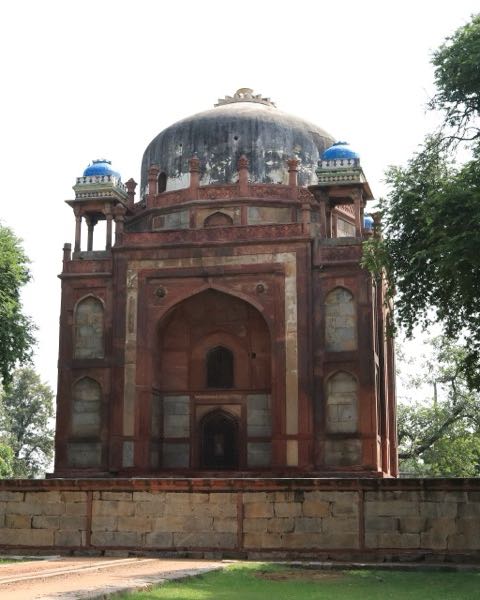 A square, double-domed red sandstone tomb with four tiled corner pavilions in Humayun’s tomb garden; its occupants are unknown, and one grave is marked 999 AH (1590-91).
CLIVBarber’s Tomb (Nai ka Gumbad)
ضريح الحلاق (ناي كا غمباد)
-
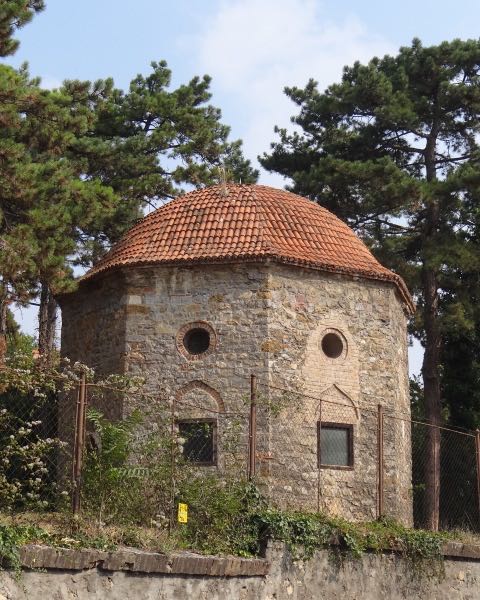 360°An octagonal Ottoman tomb built around 1600 in Pécs over the dervish Idris Baba's grave; surveys name it one of two Ottoman mausoleums left in good condition in Hungary.
CLVTürbe of Idris Baba
ضريح إدريس بابا
-
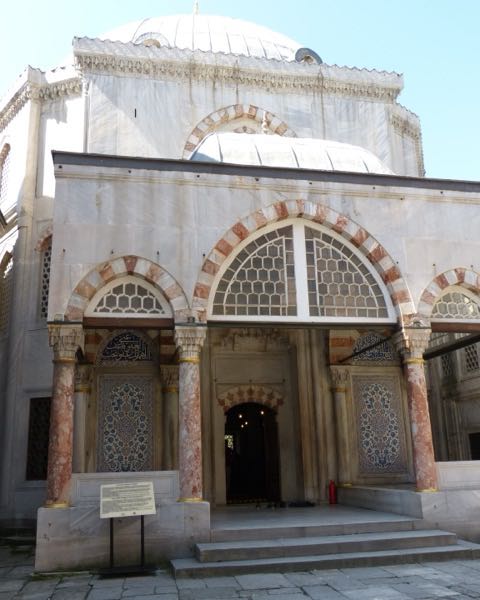 The marble-faced, double-domed tomb of Murad III in Hagia Sophia's burial garden, begun by Davud Ağa after the sultan's death in 1595 and finished by Dalgıç Ahmed Ağa in 1599.
CLVITürbe of Sultan Murad III
ضريح السلطان مراد الثالث
-
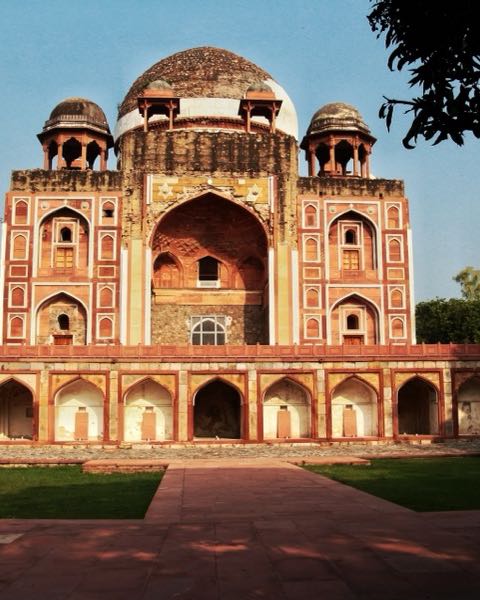 360°Abdul Rahim Khan-i-Khanan, Akbar’s commander and a celebrated poet, built this domed tomb in 1598 for his wife Mah Banu and was buried in it in 1627.
CLVIITomb of Abdul Rahim Khan-i-Khanan
ضريح عبد الرحيم خان خانان
-
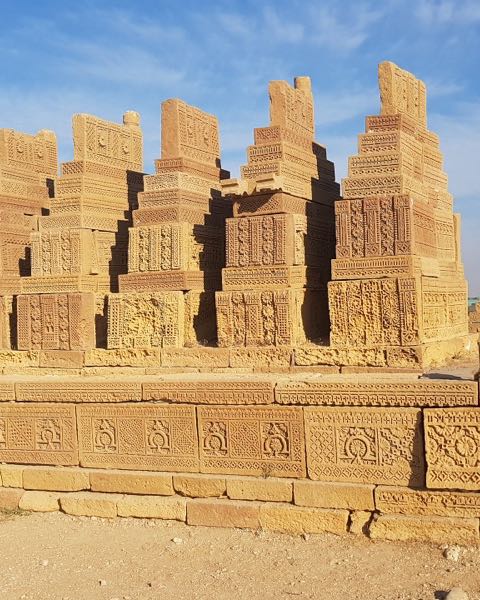 360°Graveyard on a ridge east of Karachi with stepped sandstone graves carved with horsemen, weapons and jewellery, dated by Pakistan's heritage bodies to the 17th and 18th centuries.
CLVIIIChaukhandi Tombs
مقابر جوكندي
-
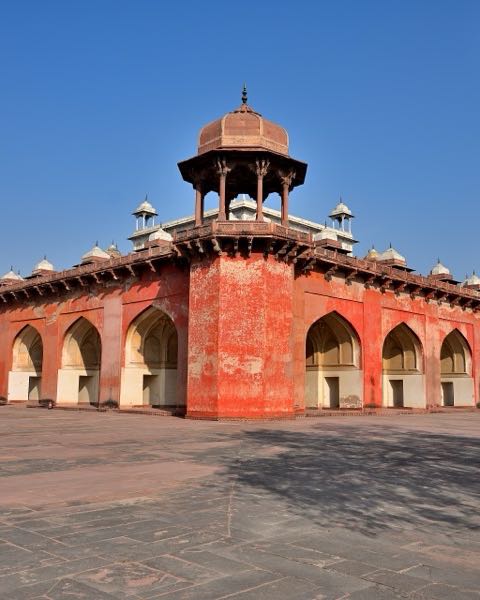 360°Akbar's tomb at Sikandra, Agra: a five-storey mausoleum of red sandstone with a white marble top storey, finished by his son Jahangir around 1613 in a walled garden.
CLIXAkbar's Tomb
ضريح أكبر
-
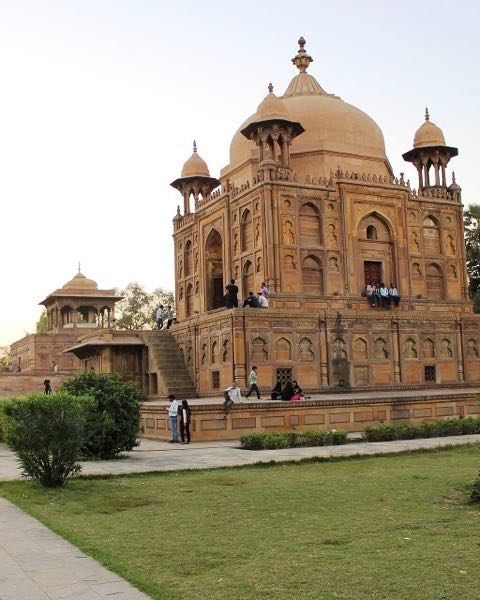 Walled Mughal garden at Prayagraj with sandstone tombs of Prince Khusrau, Jahangir's eldest son, and of women of his family, built in the early 17th century.
CLXKhusro Bagh (Khusrau Bagh)
خسرو باغ
-
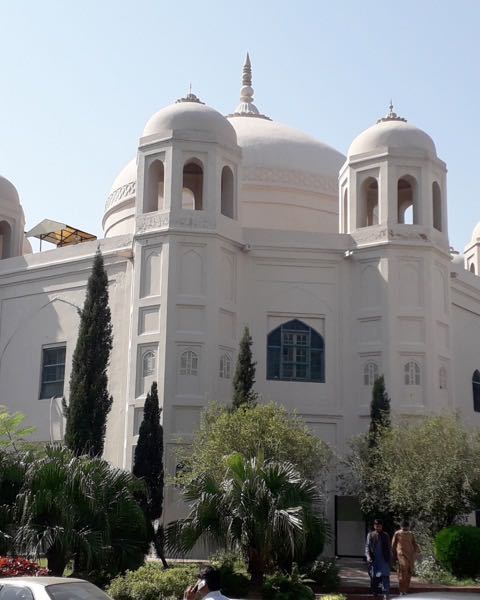 3DAn octagonal Mughal tomb of 1615 under a high double dome, linked by legend to Anarkali; it served as a church and then as a government record office.
CLXITomb of Anarkali
ضريح أناركلي
-
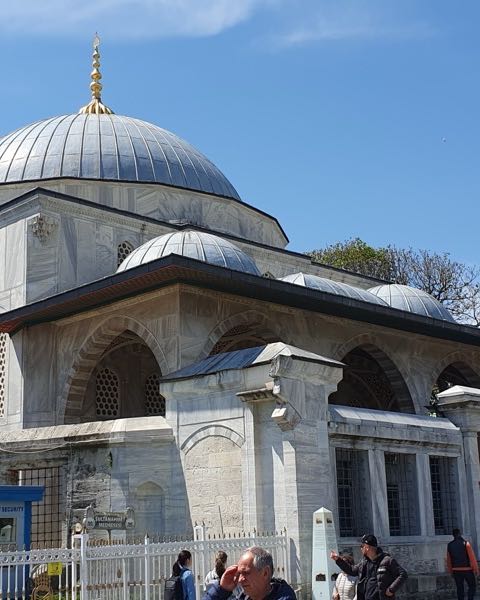 360°Square domed tomb of Sultan Ahmed I beside his mosque in Istanbul, completed by Osman II in 1619, with Iznik tiles inside and 36 cenotaphs of the dynasty.
CLXIITürbe of Sultan Ahmed I
ضريح السلطان أحمد الأول
-
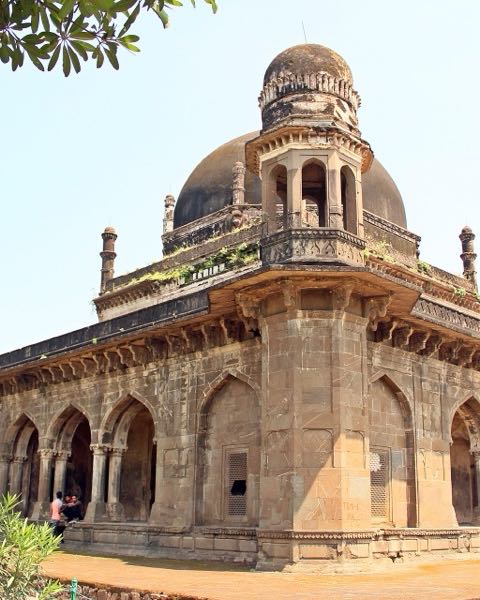 Two-storey square tomb faced in black basalt on the Utavali river at Burhanpur, built for Shah Nawaz Khan (d. 1619), son of the Mughal general Abdul Rahim Khan-i-Khanan.
CLXIIITomb of Shah Nawaz Khan (the “Black Taj”)
ضريح شاه نواز خان («التاج الأسود»)
-
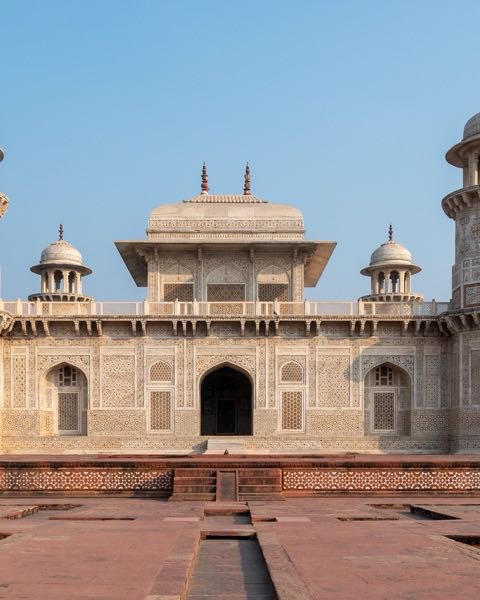 360°Nur Jahan's tomb for her parents on the Yamuna at Agra (1622-1628), which Archnet calls the first Mughal structure completely encased in marble.
CLXIVTomb of I'timad-ud-Daulah
ضريح اعتماد الدولة
-
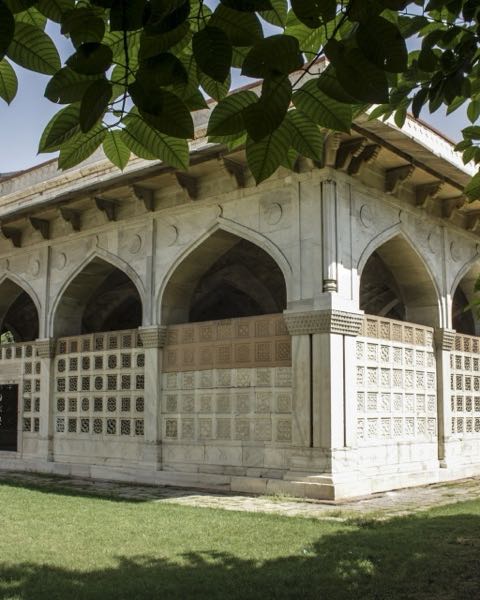 360°A flat-roofed hall of white marble in Delhi’s Nizamuddin quarter, whose 64 pillars carry 25 small domes over the grave of Mirza Aziz Kokaltash, Akbar’s foster brother, dated 1623-24.
CLXVChausath Khamba
تشوسات خامبا
-
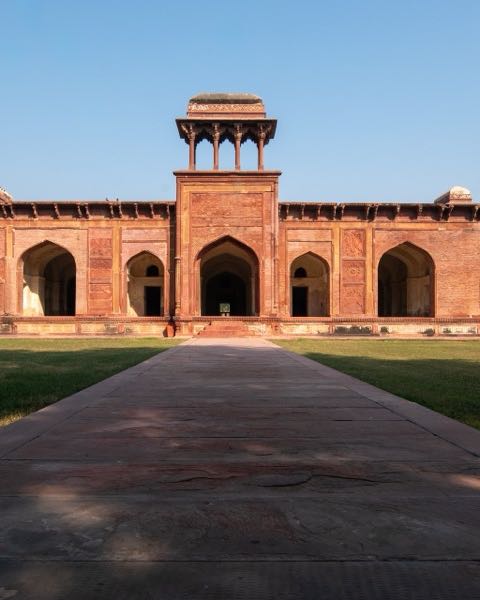 A red sandstone pavilion built by Sultan Sikandar Lodi in 1495 at Sikandra, Agra, converted in 1623 into the tomb of Mariam-uz-Zamani, Akbar’s wife and Jahangir’s mother.
CLXVITomb of Mariam-uz-Zamani
ضريح مريم الزماني
-
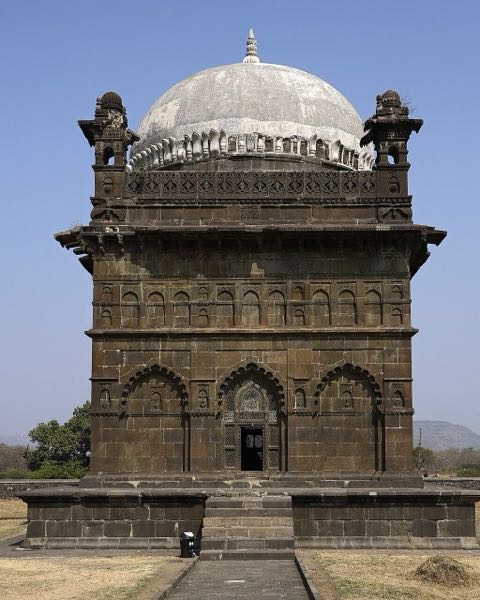 Square mausoleum on a basalt platform at Khuldabad, built about 1625 for Malik Ambar, minister and commander of the Nizam Shahi sultanate of Ahmadnagar, in the dynasty's own style.
CLXVIITomb of Malik Ambar
ضريح ملك عنبر
-
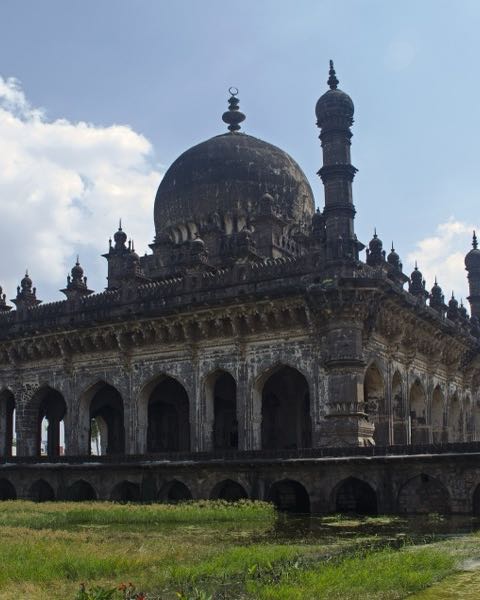 360°The tomb of Sultan Ibrahim Adil Shah II (d. 1627) and Queen Taj Sultana in Vijayapura: a carved stone mausoleum facing its mosque on one terrace, dated 1626.
CLXVIIIIbrahim Rauza
روضة إبراهيم
-
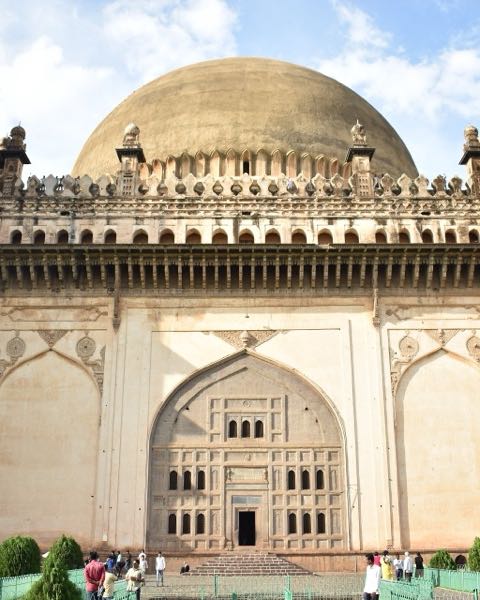 360°The tomb of Sultan Muhammad Adil Shah (d. 1656) in Vijayapura: a square hall 41 m across, with no internal supports, under a dome 37.9 m wide inside.
CLXIXGol Gumbaz
كول كنبد
-
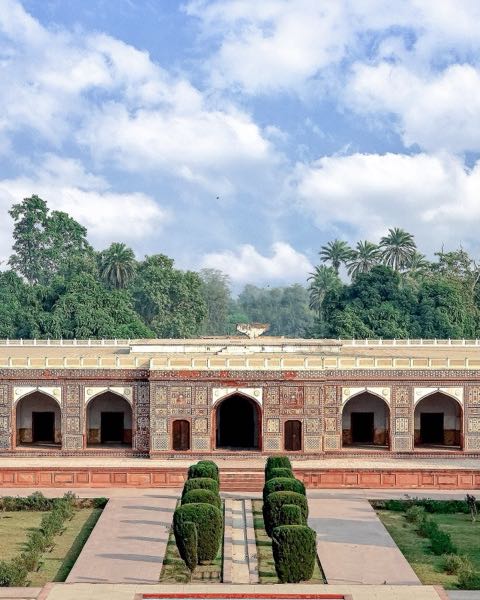 360°The Mughal emperor Jahangir's tomb at Shahdara, across the Ravi from Lahore: a red sandstone platform tomb with four marble-banded minarets, completed in 1637.
CLXXTomb of Jahangir
ضريح جهانكير
-
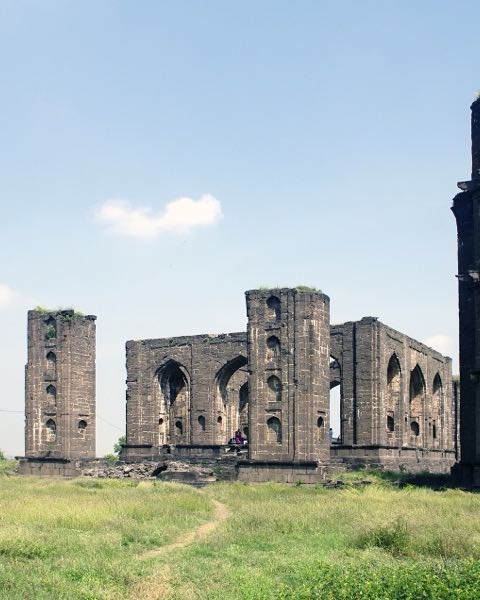 Unfinished Adil Shahi mausoleum at Ainapur, near Vijayapura, planned on the same square plan and corner towers as the Gol Gumbaz but with a smaller dome.
CLXXITomb of Jahan Begum
ضريح جهان بيغم
-
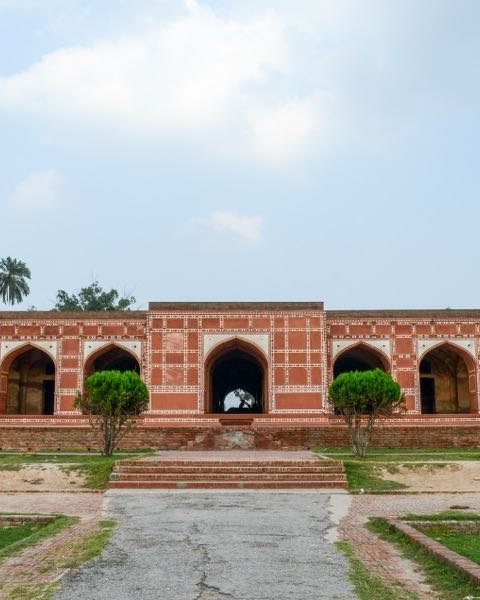 360°Nur Jahan's own tomb at Shahdara, near her husband Jahangir's: a low red sandstone platform tomb she built during her widowhood in Lahore, where she was buried in 1645.
CLXXIITomb of Nur Jahan
ضريح نور جهان
-
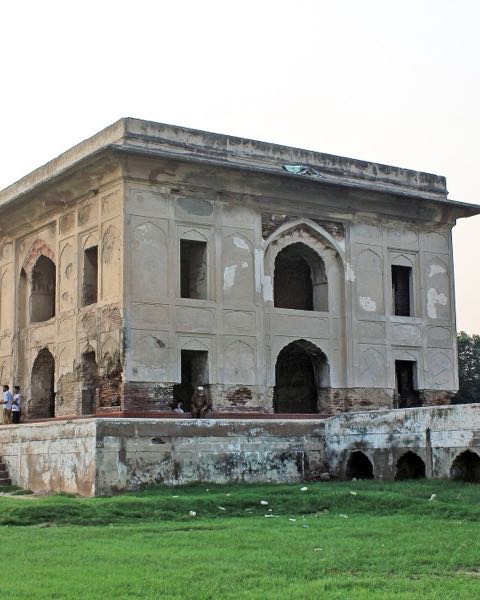 A square two-storey brick pavilion in Lahore that once stood in a large tank, linked by Latif to Dara Shikoh and a woman named Nadira, with painted plaster decoration.
CLXXIIITomb of Nadira Begum
ضريح نادرة بيغم
-
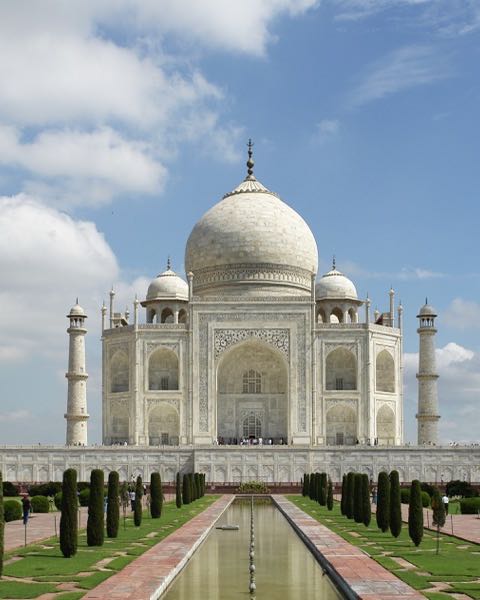 3DShah Jahan’s white-marble mausoleum for his wife Mumtaz Mahal, on the Yamuna at Agra, which UNESCO calls the jewel of Muslim art in India.
CLXXIVTaj Mahal
تاج محل
-
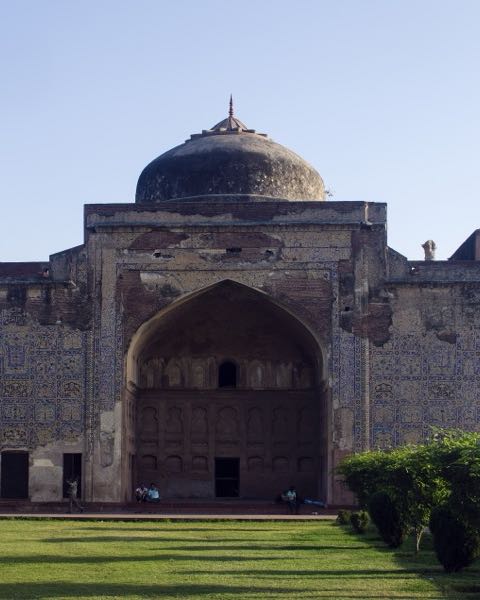 360°The riverside tomb at Agra traditionally ascribed to Afzal Khan Shirazi, Shah Jahan’s prime minister (d. 1639), once faced entirely in glazed tile mosaic.
CLXXVChini ka Rauza
ضريح تشيني كا روضة
-
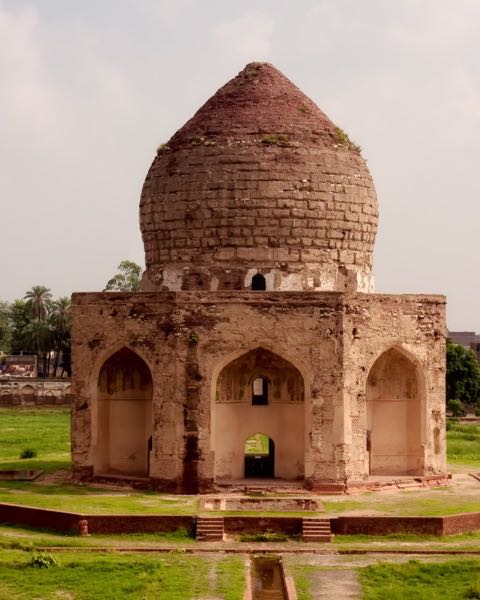 360°Octagonal Mughal tomb with a high bulbous dome, built by Shah Jahan in the 1640s for his father-in-law Asif Khan at Shahdara, beside the tomb of Jahangir.
CLXXVITomb of Asif Khan
ضريح آصف خان
-
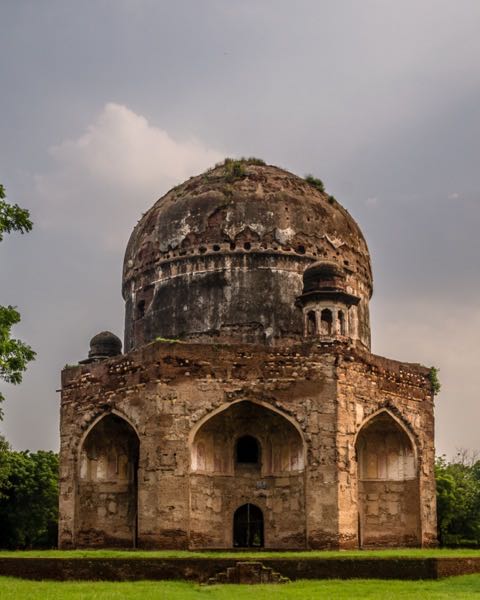 The brick octagonal tomb of Ali Mardan Khan (d. 1657), the Safavid governor of Qandahar who joined Shah Jahan in 1638, under a high dome once faced with marble.
CLXXVIITomb of Ali Mardan Khan
ضريح علي مردان خان
-
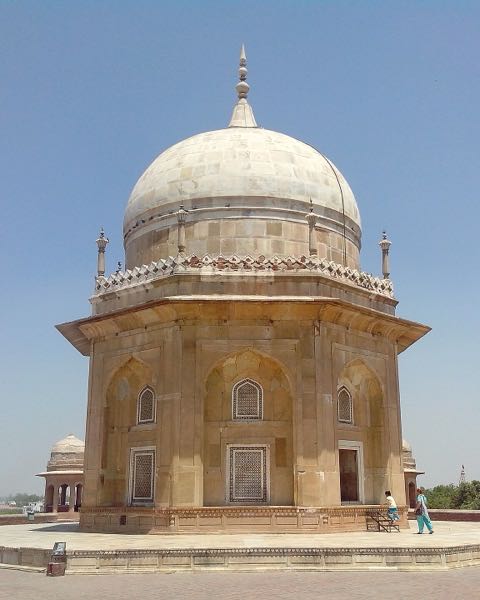 A 17th-century Mughal tomb on an octagonal terrace above a madrasa with a garden tank, in Thanesar; two galleries now hold Archaeological Survey of India museums.
CLXXVIIISheikh Chilli's Tomb
ضريح الشيخ تشيلي
-
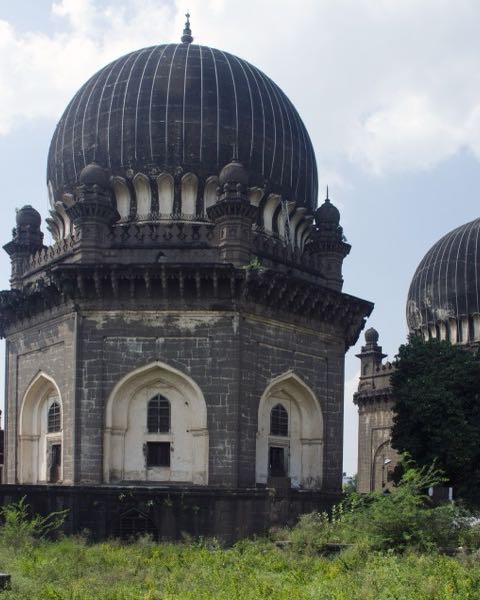 Twin domed tombs in Vijayapura, built after 1658 for the Bijapur general Khan Muhammad (his son Khawas Khan lies with him) and for his son’s teacher Abdul Razzaq Qadiri.
CLXXIXJod Gumbaz
جود كنبد (القبتان التوأمان)
-
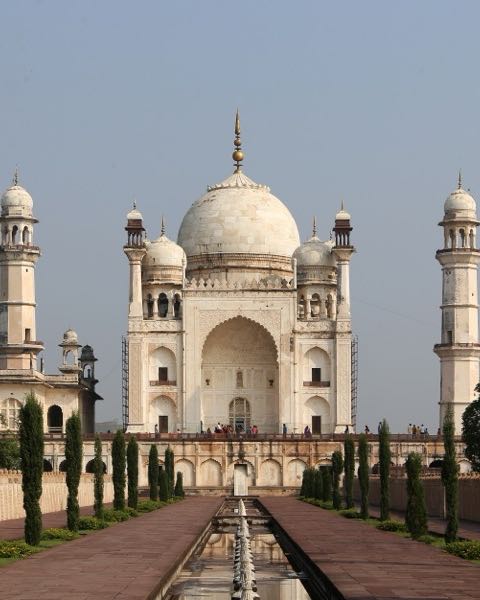 360°The tomb of Aurangzeb’s wife Dilras Banu Begum in Chhatrapati Sambhajinagar (Aurangabad), modelled on the Taj Mahal and dated by its door inscription to 1660-61.
CLXXXBibi Ka Maqbara
بيبي كا مقبرة
-
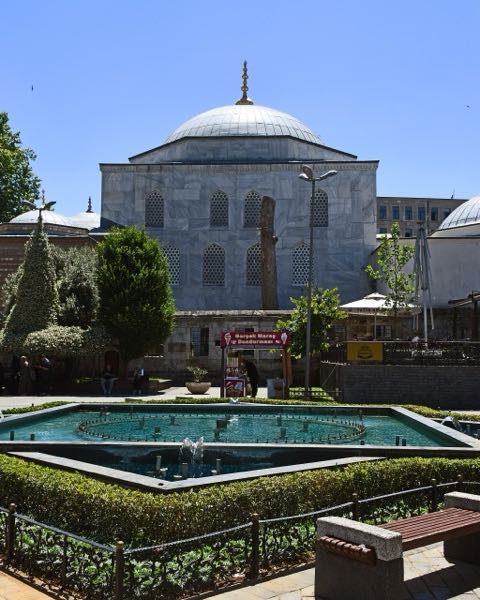 The domed tomb that Turhan Sultan, mother of Mehmed IV, built in 1663 beside her Yeni Cami at Eminönü; 44 members of the dynasty lie here, five sultans among them.
CLXXXITürbe of Hatice Turhan Sultan
ضريح خديجة ترخان سلطان
-
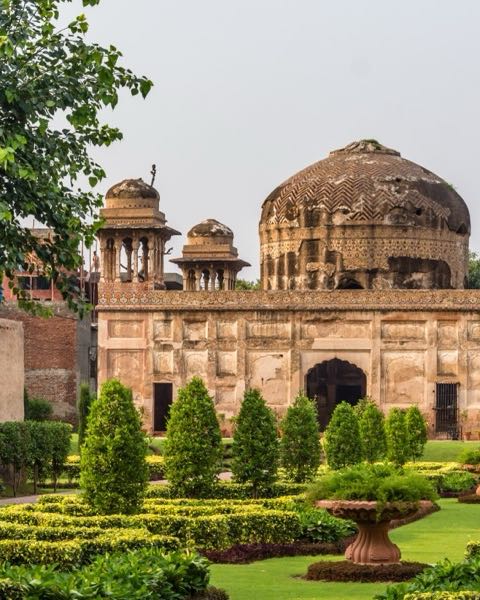 A square brick tomb of 1671 behind the Gulabi Bagh gateway in Lahore, built for Dai Anga, founder of a city mosque, with chevron tile mosaic on its dome.
CLXXXIITomb of Dai Anga
ضريح داي أنغا
-
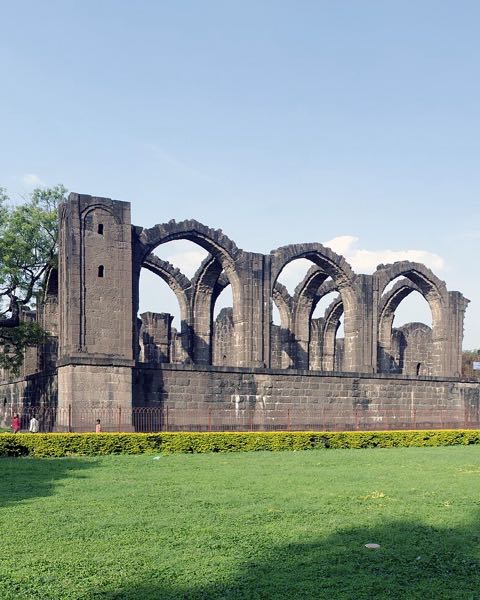 Unfinished mausoleum of Ali Adil Shah II at Bijapur, begun in the 1670s on a base 65.5 m square, of which only the outer arcade of arches was completed.
CLXXXIIIBara Kaman (Ali II Rauza)
بارا كامان (روضة علي عادل شاه الثاني)
-
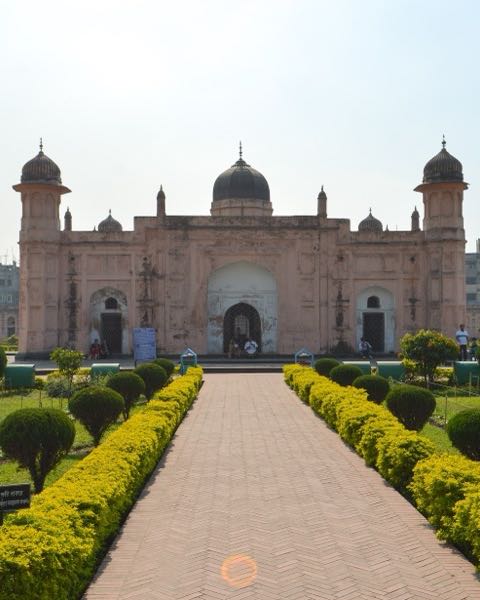 3DThe tomb that Shaista Khan, Mughal governor of Bengal, built for his daughter Pari Bibi (d. 1684) at the centre of Dhaka’s unfinished Lalbagh Fort.
CLXXXIVTomb of Pari Bibi
ضريح بري بيبي
-
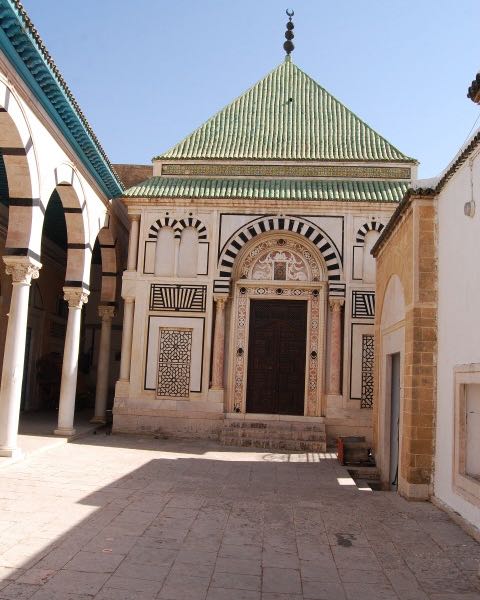 Square marble tomb of the Muradid ruler Hammouda Pacha in his mosque's courtyard in the Medina of Tunis, built by his grandson and finished in 1097 AH (1685-1686).
CLXXXVTourbet of Hammouda Pacha
تربة حمودة باشا
-
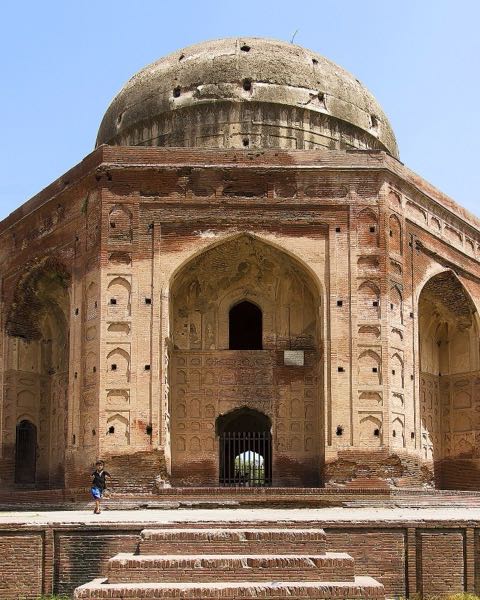 A two-storey octagonal brick tomb on a raised platform east of old Lahore, attributed by DOAM to a governor of Lahore under Aurangzeb, stripped of its marble facing.
CLXXXVITomb of Khan-e-Jahan Bahadur Kokaltash
ضريح خان جهان بهادر كوكلتاش
-
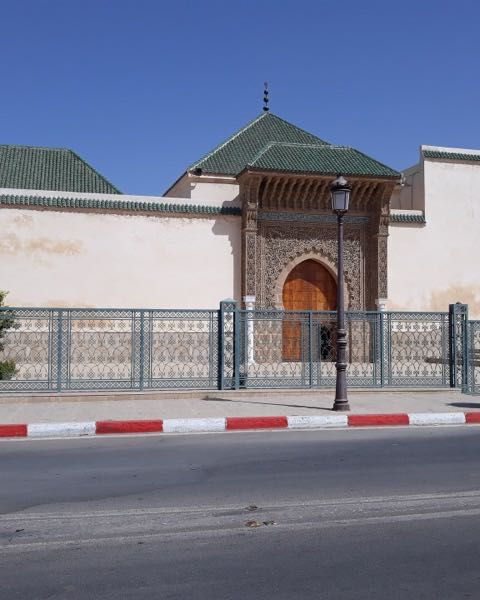 360°Funerary complex of Sultan Moulay Ismail in Meknes, built as a mosque in 1703 and remodelled for his tomb, with zellij courtyards and reused Saadian marble capitals.
CLXXXVIIMausoleum of Moulay Ismail
ضريح المولى إسماعيل
-
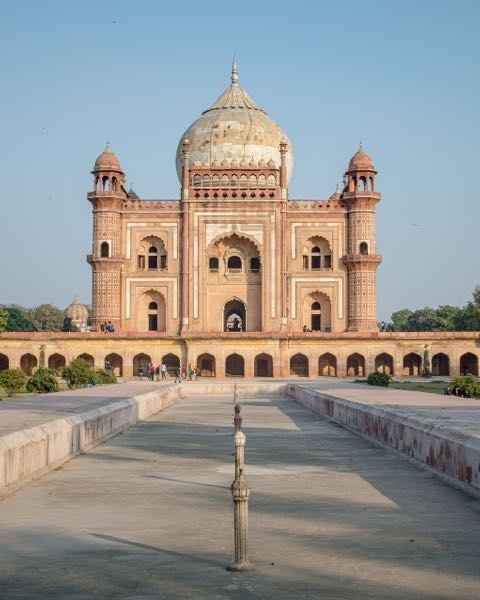 3DBuilt about 1754 by Shuja-ud-Daula for his father Safdar Jang, this Delhi garden tomb is, in the ASI’s words, the last example of the pattern begun at Humayun’s tomb.
CLXXXVIIISafdarjung’s Tomb
ضريح صفدر جنك
-
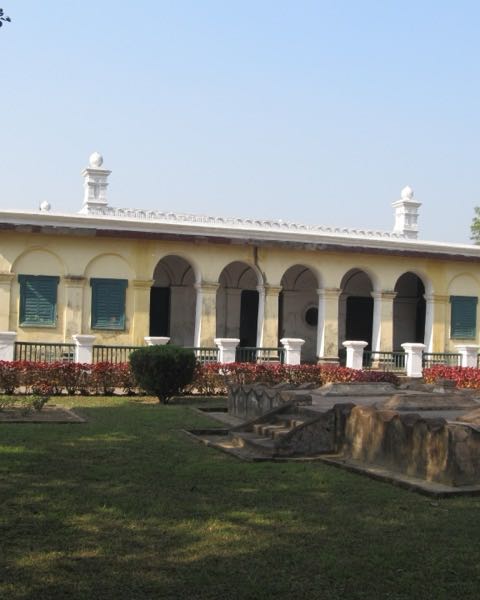 Walled garden cemetery on the west bank of the Bhagirathi at Murshidabad; its flat-roofed arcaded mausoleum holds the graves of Alivardi Khan, his grandson Siraj ud-Daulah and their family.
CLXXXIXKhushbagh (Tombs of Alivardi Khan and Siraj ud-Daulah)
خوش باغ (ضريحا علي وردي خان وسراج الدولة)
-
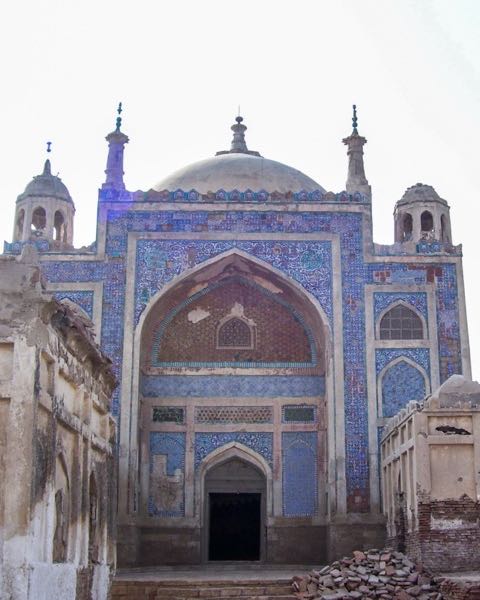 The tiled, domed tomb of Mian Nur Muhammad Kalhoro (d. 1755), ruler of Sindh, built about 1758-63 by his son Ghulam Shah in a walled enclosure near Daulatpur.
CXCTomb of Mian Nur Muhammad Kalhoro
ضريح ميان نور محمد كلهورو
-
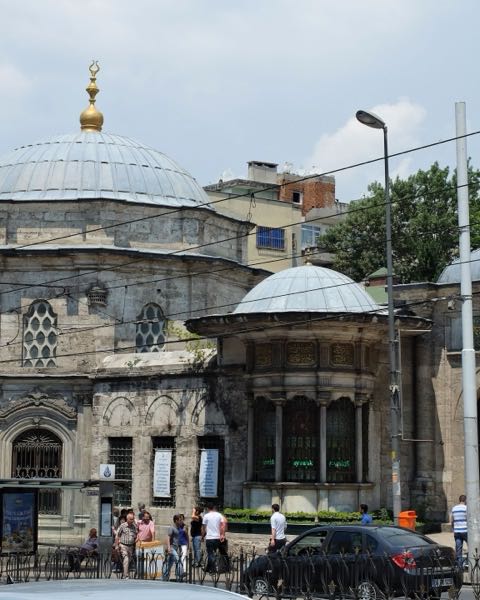 Ten-sided tomb that Mustafa III built in 1763 beside his Laleli Mosque, where he and his son Selim III lie among reused 16th-century Iznik tiles.
CXCITürbe of Sultan Mustafa III
ضريح السلطان مصطفى الثالث
-
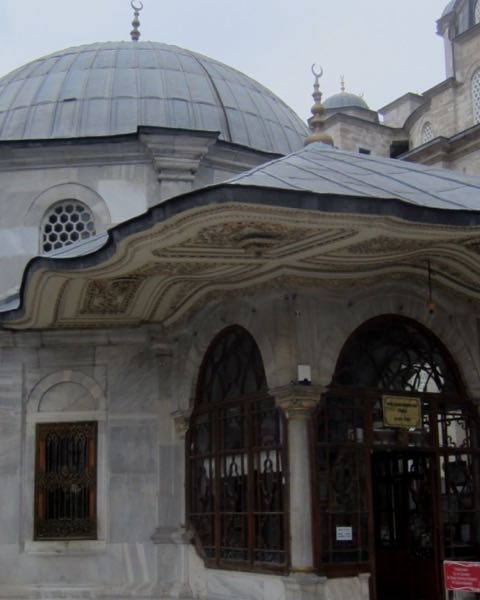 360°Domed tomb of Sultan Mehmed II behind the qibla wall of the Fatih Mosque, rebuilt in Baroque style after the 1766 earthquake and restored after a fire in 1782.
CXCIITürbe of Sultan Mehmed II
ضريح السلطان محمد الفاتح
-
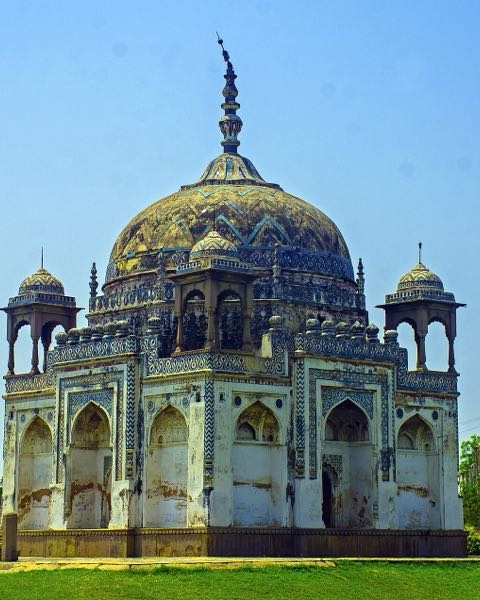 Domed tomb of Lal Khan, built in the late 1760s or early 1770s inside the old Raj Ghat fort at Varanasi, in a court with a tower at each corner and with coloured tilework.
CXCIIITomb of Lal Khan
ضريح لال خان
-
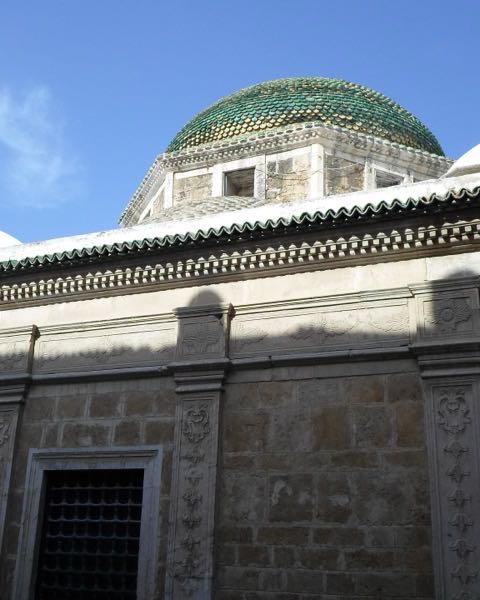 360°Royal necropolis of Tunisia’s Husaynid beys in the Medina of Tunis, begun by Ali Bey II about 1770, with a domed hall of reigning beys on an Ottoman mosque plan.
CXCIVTourbet el Bey
تربة الباي
-
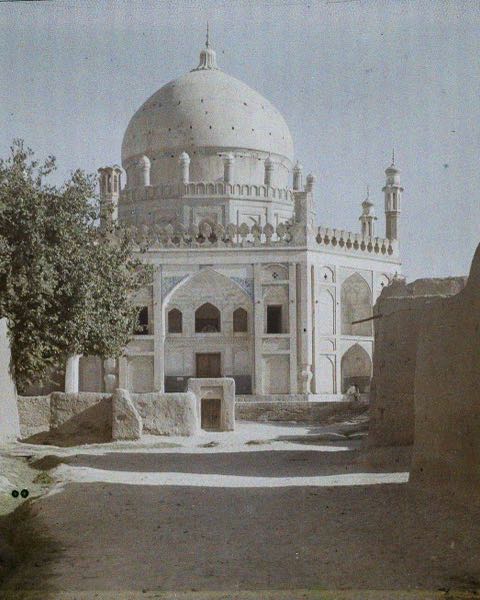 The octagonal, blue-domed tomb of Ahmad Shah Durrani, founder of the Afghan state, built by his son Timur Shah beside Kandahar's Shrine of the Cloak.
CXCVMausoleum of Ahmad Shah Durrani
ضريح أحمد شاه الدراني
-
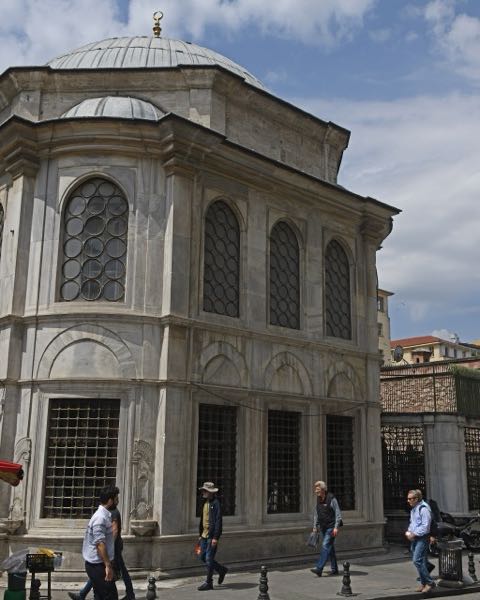 Square domed tomb with rounded Baroque corners, built in 1780 at Bahçekapı within Abdülhamid I's complex; the sultan, Mustafa IV and eighteen young members of the dynasty lie inside.
CXCVITürbe of Sultan Abdülhamid I
ضريح السلطان عبد الحميد الأول
-
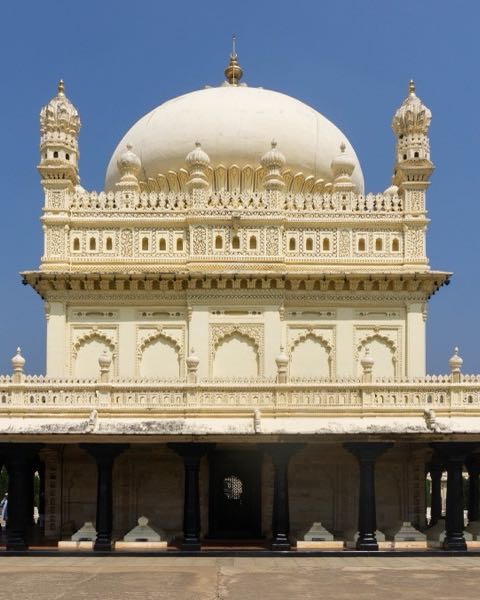 The domed mausoleum that Tipu Sultan built for his father Haidar Ali in the Lal Bagh garden of Srirangapatna, where Tipu himself was buried in 1799.
CXCVIIThe Gumbaz, Tomb of Haidar Ali and Tipu Sultan
الكنبد، ضريح حيدر علي والسلطان تيبو
-
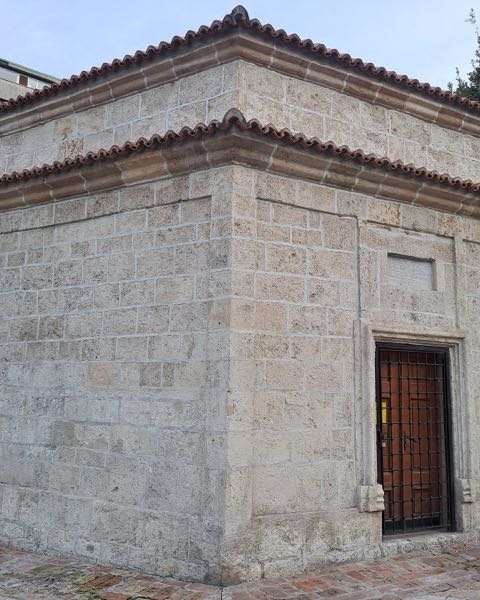 A small hexagonal stone türbe of 1783-1784 in Belgrade's Dorćol, built over the grave of Sheikh Mustafa, head of a Sa'diyya dervish lodge.
CXCVIIITürbe of Sheikh Mustafa
ضريح الشيخ مصطفى
-
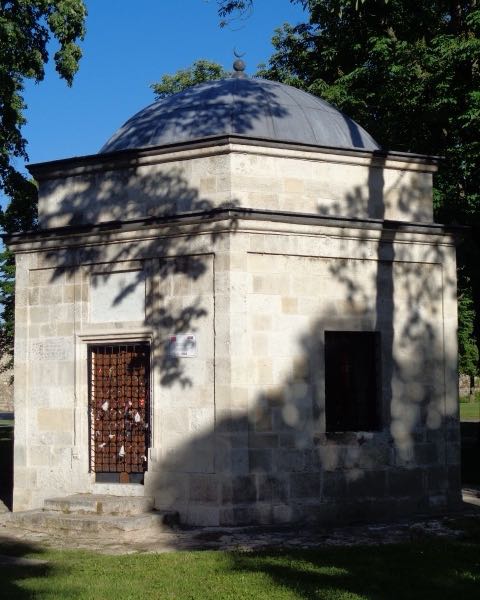 360°Hexagonal Ottoman türbe in Belgrade Fortress's Upper Town, built in 1784 over İzzet Mehmed Pasha's grave and dedicated to Damad Ali Pasha in 1818-1819, according to the fortress administration.
CXCIXTürbe of Damad Ali Pasha
ضريح داماد علي باشا
-
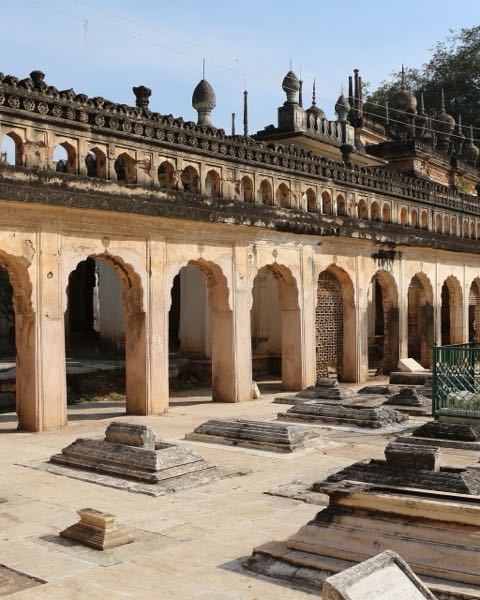 The family necropolis of the Paigah nobles of Hyderabad, begun around the grave of their founder (d. 1790), with marble graves under pierced marble screens.
CCPaigah Tombs
أضرحة بايغاه
-
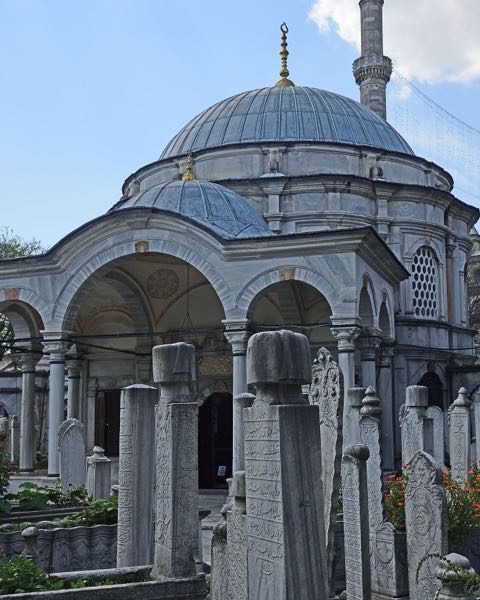 A twelve-sided white marble Ottoman Baroque tomb at Eyüp in Istanbul, built in 1792-1796 as part of the complex of Mihrişah Valide Sultan, mother of Selim III.
CCITomb of Mihrişah Valide Sultan
ضريح مهرشاه والدة السلطان
-
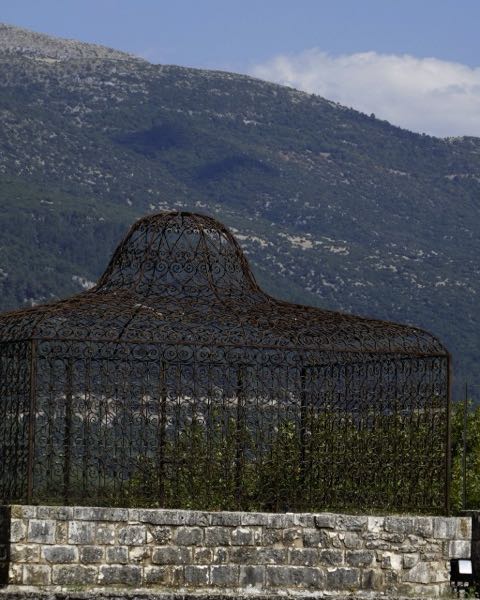 The open-air grave of Ali Pasha, ruler of Ioannina, killed in 1822: a family tomb of 1800 beside the Fethiye Mosque in Its Kale, under a replica wrought-iron cage.
CCIITomb of Ali Pasha of Ioannina
ضريح علي باشا اليانيني
-
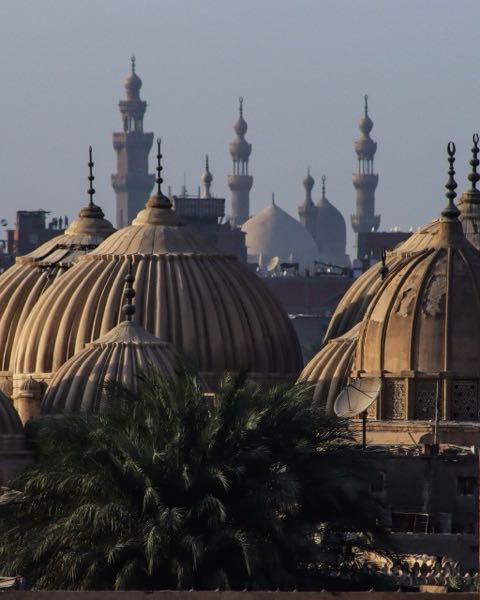 360°Burial court of Muhammad Ali’s family beside Imam al-Shafi'i’s mausoleum in Cairo, built up chamber by chamber from about 1808, with marble cenotaphs topped by carved turbans and headdresses.
CCIIIHosh al-Basha
حوش الباشا
-
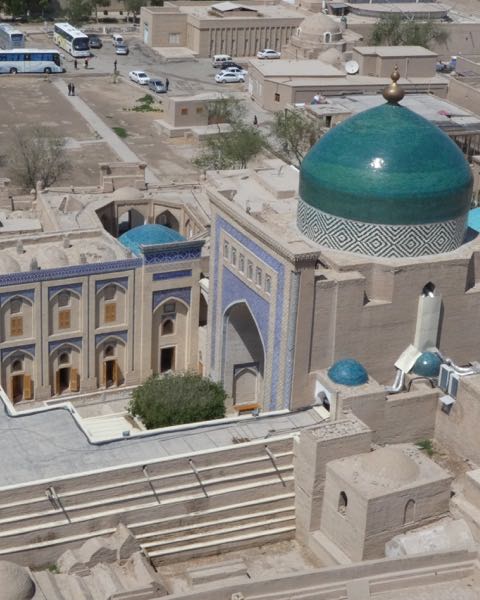 The tomb of Pahlavan Mahmud (1247-1325), remembered as a poet and wrestler, enlarged from 1810 into the dynastic burial complex of the Qungrat khans of Khiva.
CCIVPahlavan Mahmud Mausoleum
ضريح بهلوان محمود
-
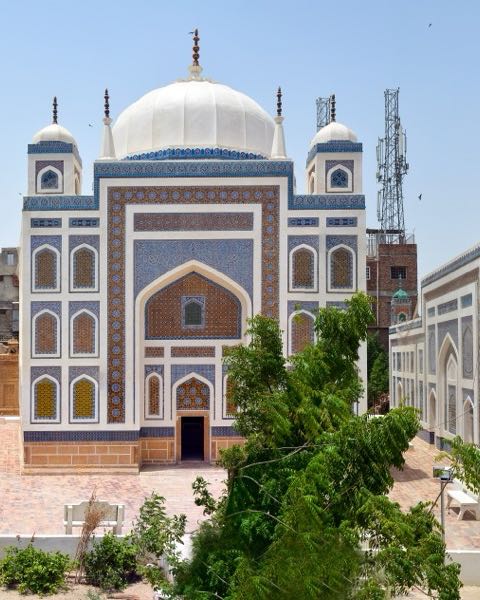 A walled group of domed and flat-roofed tombs in Hyderabad, Sindh, built from about 1812 for the Talpur Mirs, rulers of Sindh until 1843, faced in coloured glazed tiles.
CCVTombs of the Talpur Mirs
مقابر أمراء تالبور
-
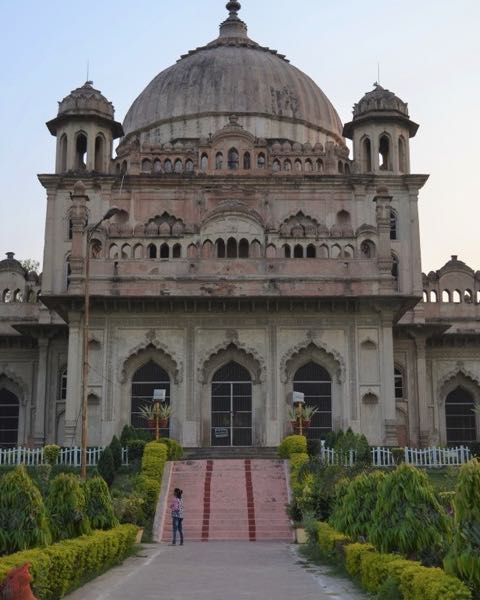 The domed tomb that Ghazi-ud-din Haidar built in Lucknow for his father, Nawab Saadat Ali Khan (d. 1814), on the site of his own former house.
CCVITomb of Saadat Ali Khan
ضريح سعادت علي خان
-
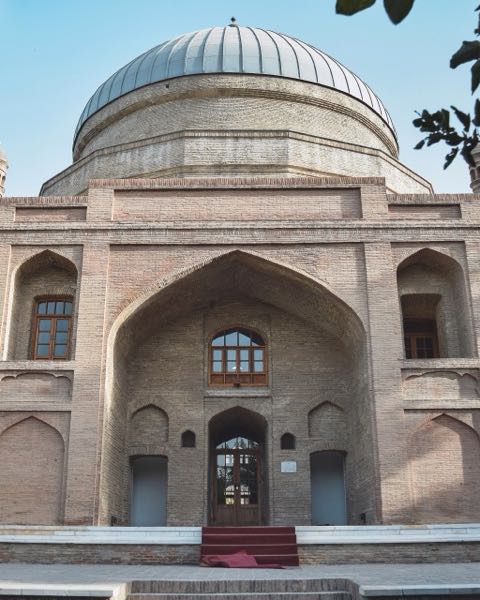 Timur Shah's brick tomb, one of the largest Islamic monuments in central Kabul, begun around 1817, never finished, and conserved by the Aga Khan Trust for Culture from 2003.
CCVIIMausoleum of Timur Shah Durrani
ضريح تيمور شاه الدراني
-
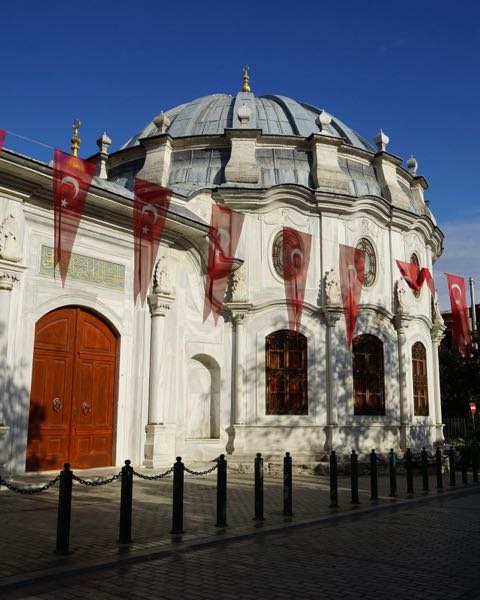 Baroque tomb built in 1817-1818 south of the Fatih Mosque for Nakşidil Sultan, mother of Mahmud II, with a wavy marble front, oval upper windows and a lobed dome.
CCVIIITürbe of Nakşidil Valide Sultan
ضريح نقش دل سلطان
-
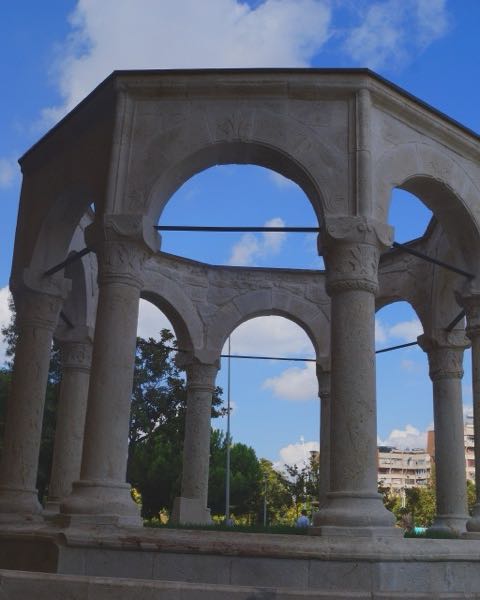 360°An open octagonal türbe of carved stone in central Tirana, built in the early 19th century for Kapllan Pasha Toptani; protected since 1948, it is now a first-category monument.
CCIXKapllan Pasha Tomb
ضريح قبلان باشا
-
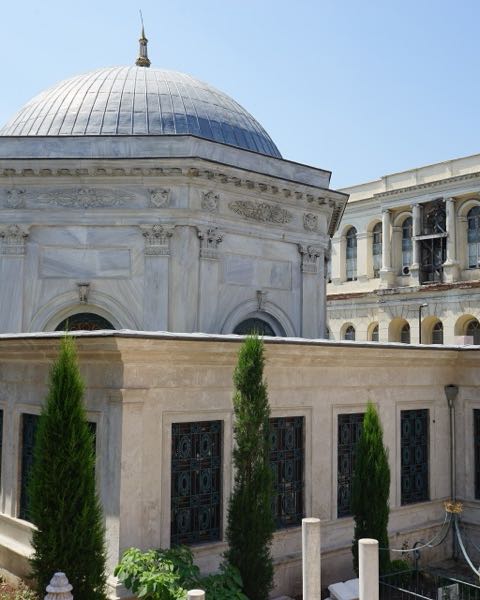 360°Octagonal marble tomb in the Empire style, built on Divanyolu in 1839-1840 for Sultan Mahmud II and later the burial place of the sultans Abdülaziz and Abdülhamid II.
CCXTürbe of Sultan Mahmud II
تربة السلطان محمود الثاني
-
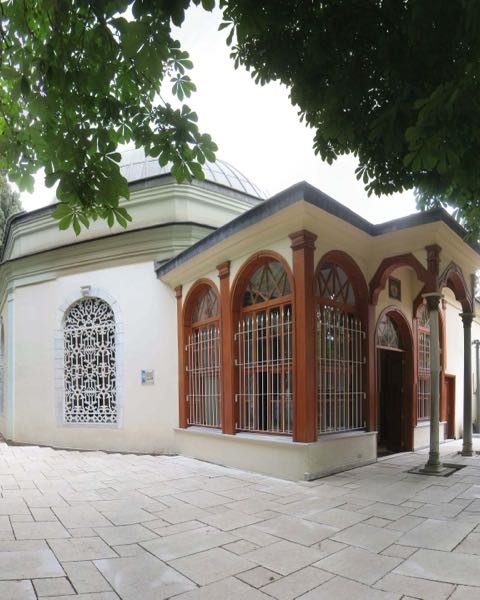 360°Two tombs rebuilt by Sultan Abdülaziz in 1863 in Bursa's old citadel, over the graves of Osman Gazi, founder of the Ottoman state, and his son Orhan, who took Bursa.
CCXITombs of Osman Gazi and Orhan Gazi
ضريحا عثمان غازي وأورخان غازي
-
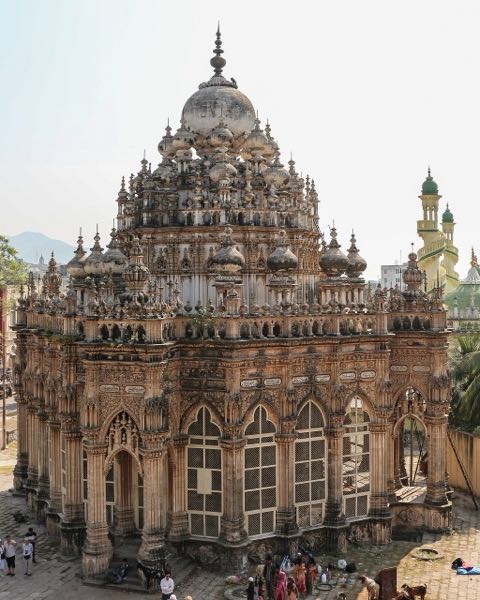 3DThe tomb of Nawab Mahabat Khanji II of Junagadh, finished in 1892 in a mix of Indo-Islamic, Gothic and European styles, beside his vizier Bahauddin’s tomb of 1891-1896.
CCXIIMahabat Maqbara
ضريح مهابت خان
-
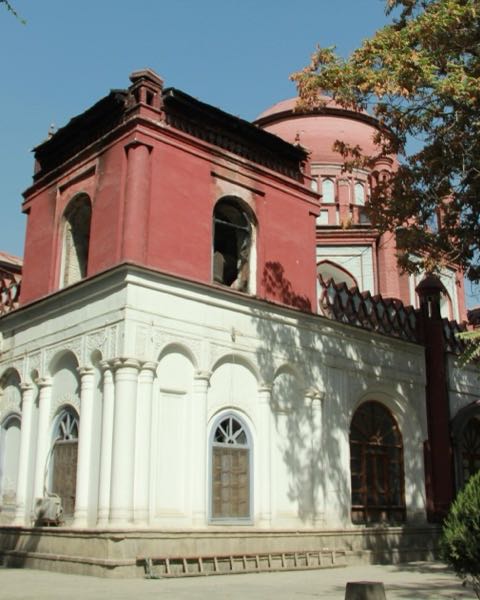 A private palace of Amir Abdur Rahman Khan in Kabul's Zarnegar Park, which his son Habibullah turned into his tomb after 1901, adding a dome and minarets.
CCXIIIMausoleum of Amir Abdur Rahman Khan
ضريح الأمير عبد الرحمن خان
-
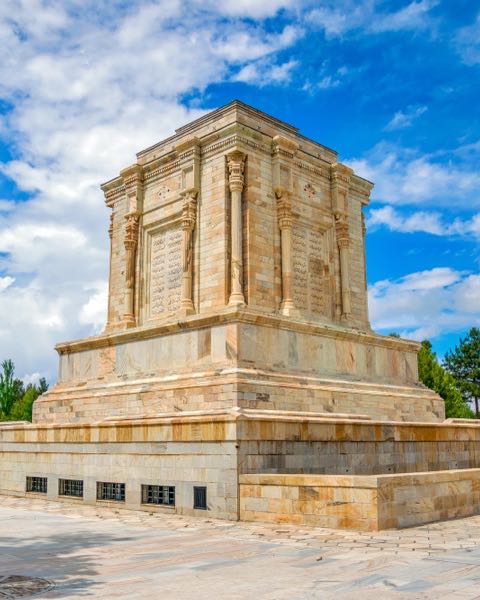 3DFerdowsi’s tomb at Tus, near Mashhad: a marble monument modelled on Cyrus the Great’s tomb, built 1928-1934 and re-erected over a new underground hall by Houshang Seyhoun in 1964-1968.
CCXIVTomb of Ferdowsi
ضريح الفردوسي
-
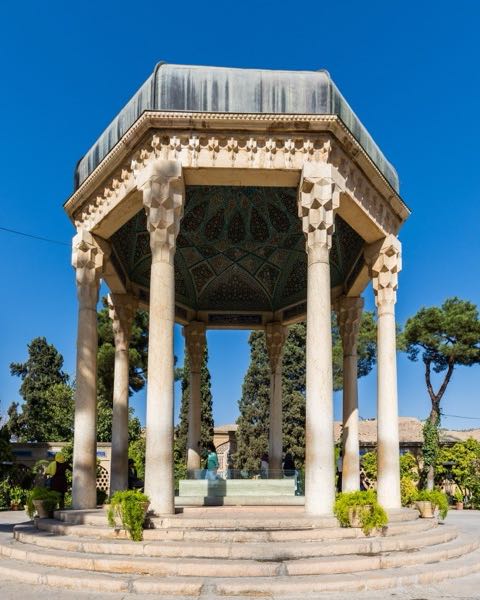 3DAn open domed pavilion over the grave of the Persian poet Hafez, in a garden on the northern edge of Shiraz, designed by André Godard and built 1938–1940.
CCXVTomb of Hafez
ضريح حافظ الشيرازي
-
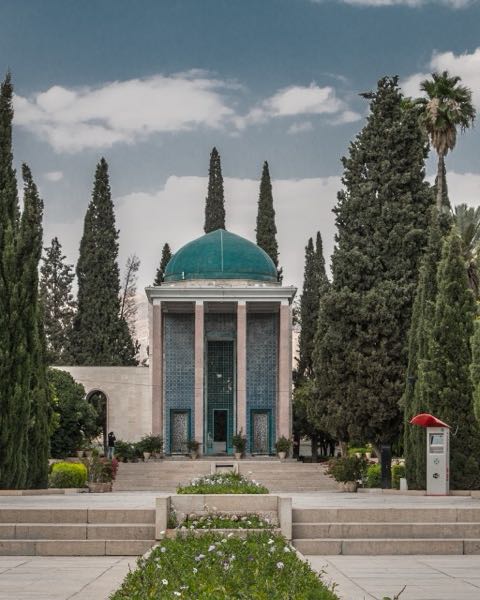 360°Saadi’s tomb in Shiraz: a domed chamber behind a portico of eight columns, designed by Mohsen Foroughi and opened in 1952 on the site of the poet’s khanqah.
CCXVITomb of Saadi
ضريح سعدي الشيرازي
-
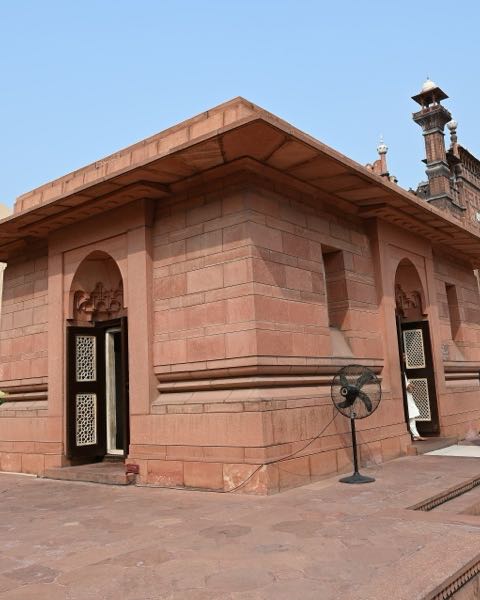 360°The red sandstone tomb of the poet-philosopher Muhammad Iqbal (d. 1938) beside the Badshahi Mosque in Lahore, dated 1951, with a marble cenotaph given by Afghanistan.
CCXVIITomb of Allama Iqbal
ضريح محمد إقبال
-
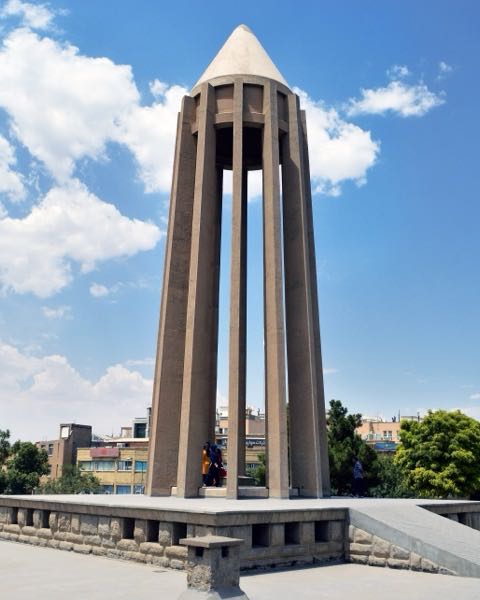 3DAvicenna’s tomb in Hamadan, a 1950s building by Houshang Seyhoun whose open tower of twelve piers adapts the ten-flanged Gonbad-e Qabus, with a museum and library.
CCXVIIIAvicenna Mausoleum
ضريح ابن سينا
-
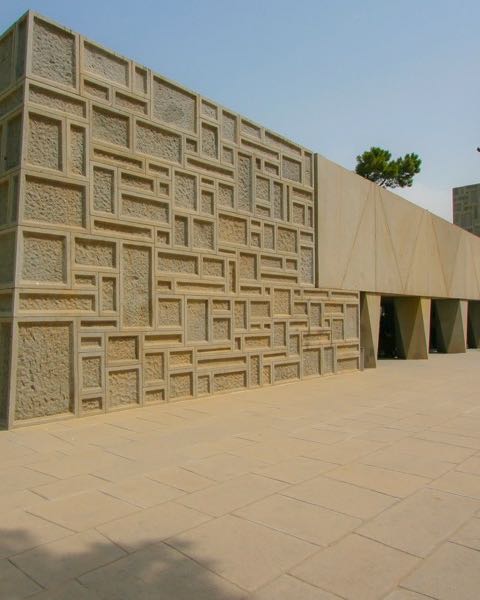 360°Nader Shah’s tomb in Mashhad: a granite monument by Houshang Seyhoun, with a tower carrying Abolhassan Sadighi’s bronze equestrian group, built 1956-1963 with a museum of arms.
CCXIXTomb of Nader Shah
ضريح نادر شاه
-
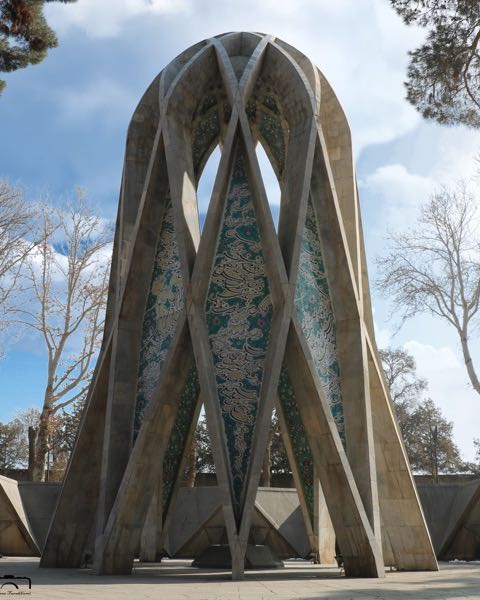 3DOmar Khayyam’s tomb in Nishapur: ten curved piers whose ribs frame tile panels and meet in a star-shaped opening, designed by Houshang Seyhoun and inaugurated in 1963.
CCXXTomb of Omar Khayyam
ضريح عمر الخيام
-
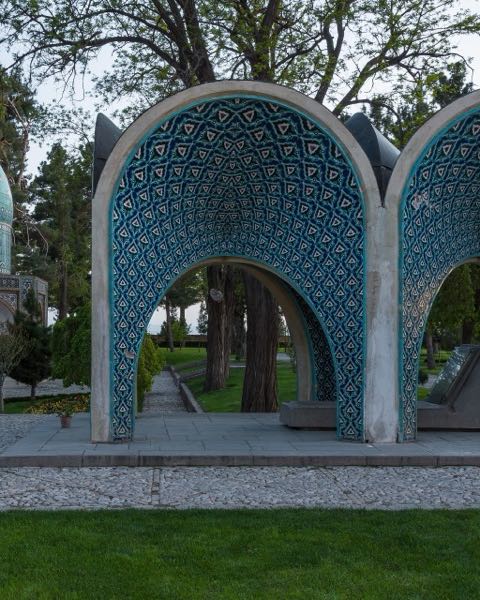 The painter Kamal-ol-Molk’s tomb in the garden of Attar’s tomb at Nishapur: ten tiled arches over a granite gravestone, designed by Houshang Seyhoun and dated to 1963.
CCXXITomb of Kamal-ol-Molk
ضريح كمال الملك
-
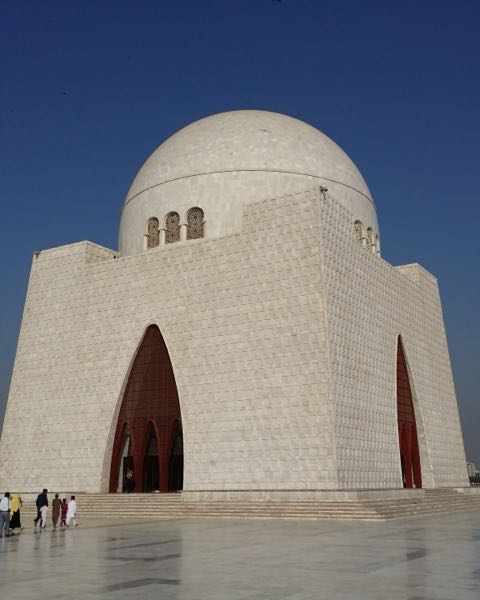 3DThe mausoleum of Muhammad Ali Jinnah, founder of Pakistan, in Karachi: a square, domed building in white marble by Yahya Merchant, built 1960-1970 and opened in 1971.
CCXXIIMazar-e-Quaid
مزار قائد
-
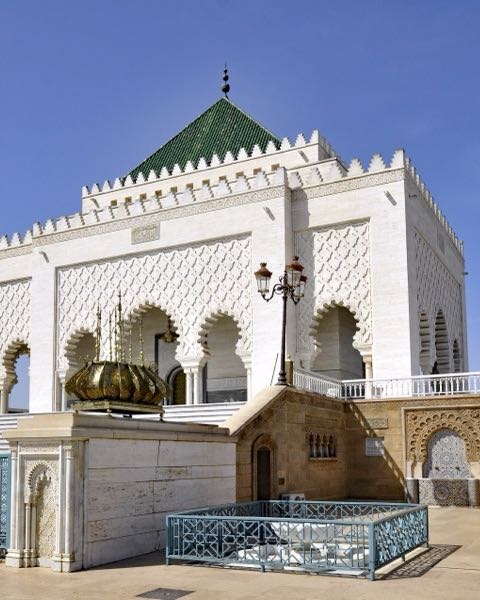 3DThe royal mausoleum of King Mohammed V and his sons, built in 1961-1969 inside the walls of Rabat’s unfinished Almohad Hassan Mosque, facing the Hassan Tower.
CCXXIIIMausoleum of Mohammed V
ضريح محمد الخامس
-
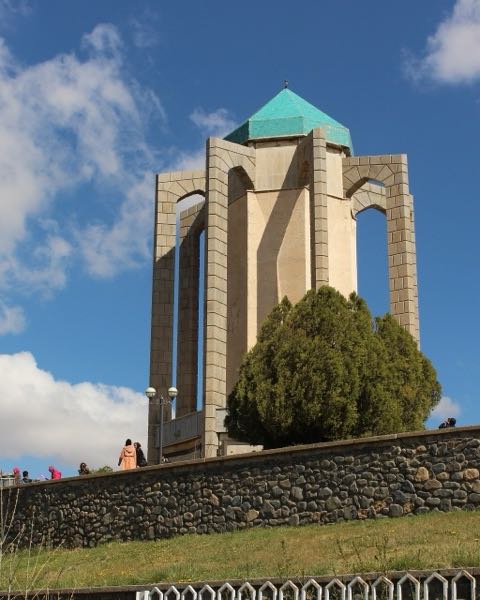 360°Hamadan’s monument to the dervish poet Baba Taher: a hilltop tower of granite and white stone on an octagonal base, designed by Mohsen Foroughi and completed in 1970.
CCXXIVTomb of Baba Taher
ضريح بابا طاهر
-
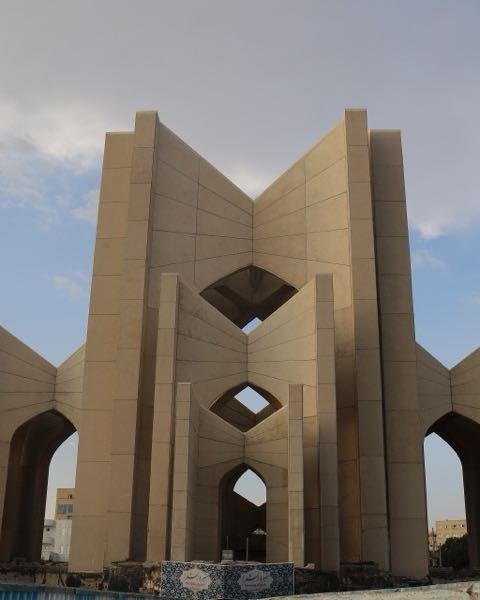 A memorial of intersecting vaults, begun in 1971 over the old Sorkhab cemetery of Tabriz, where Khaqani, Shahriar and many other poets and scholars are buried.
CCXXVMaqbaratoshoara (Tomb of Poets)
مقبرة الشعراء
Trip guides
A thousand years, in two calendars
Years of construction · Common Era on the upper scale, Hijri on the lower
ConstructionDate uncertain (range)Can be entered
The word
In Arabic, turba (تُربة) carries two related senses: Lane’s Arabic–English Lexicon glosses it as ‘a portion of dust or earth’, and also as a man’s grave or ‘a cemetery, burial-place’1. The Encyclopaedia of Islam notes that this word for earth came to mean a tomb or mausoleum in Islamic funerary architecture, and that when it stands alone in a funerary inscription it suggests a mausoleum2,3.
After qubba (‘dome’) had largely displaced it, the word was popularised again by the Turks in the form türbe3. Other names for such buildings, among them kümbet, maqam, mashhad, buq‘a, darih, qubba and rawda, were often used interchangeably with it5. English borrowed the word from Turkish as turbeh, the name of this site, which Merriam-Webster defines as a Muslim tomb or mausoleum, from Turkish türbe and ultimately Arabic turbah4.
- Lane’s Lexicon online (laneslexicon.com): E. W. Lane, An Arabic–English Lexicon (1863–93), root ت ر ب, entry تُرْبَةٌ
- Brill, Encyclopaedia of Islam, Second Edition: T. Leisten, ‘Turba’, doi:10.1163/1573-3912_islam_COM_1259
- Brill, Encyclopaedia of Islam, Second Edition, Glossary and Index of Terms: ‘turba’ (T. türbe)
- Merriam-Webster: ‘turbeh’ (noun; from Turkish türbe, from Arabic turbah)
- TDV İslâm Ansiklopedisi (Türkiye Diyanet Vakfı): ‘TÜRBE’
- Brill, Encyclopaedia of Islam, First Edition (1913–1936): ‘Ḳubba’
- Archnet (MIT / Aga Khan Trust for Culture): ‘Qubbat al-Sulaybiyya’, Samarra, site record
- UNESCO World Heritage Centre: Historic Centre of Bukhara (property 602): description and Statement of Outstanding Universal Value
- TDV İslâm Ansiklopedisi (Türkiye Diyanet Vakfı): ‘DEFİN’ (burial; jurists’ views on building over graves)
- TDV İslâm Ansiklopedisi (Türkiye Diyanet Vakfı): ‘KABİR’ (grave; differing juristic views on domes and türbes over graves)