History
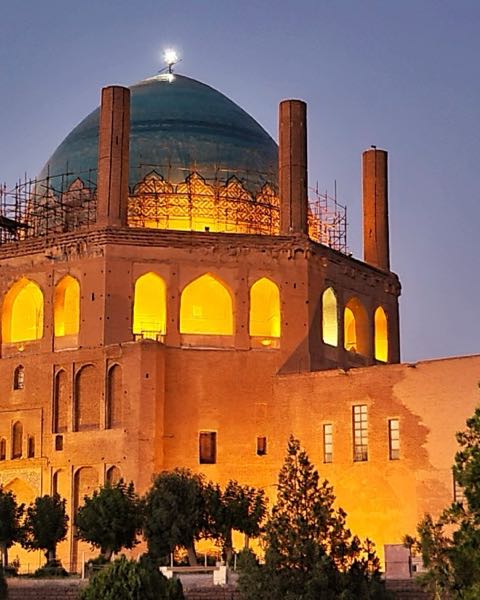
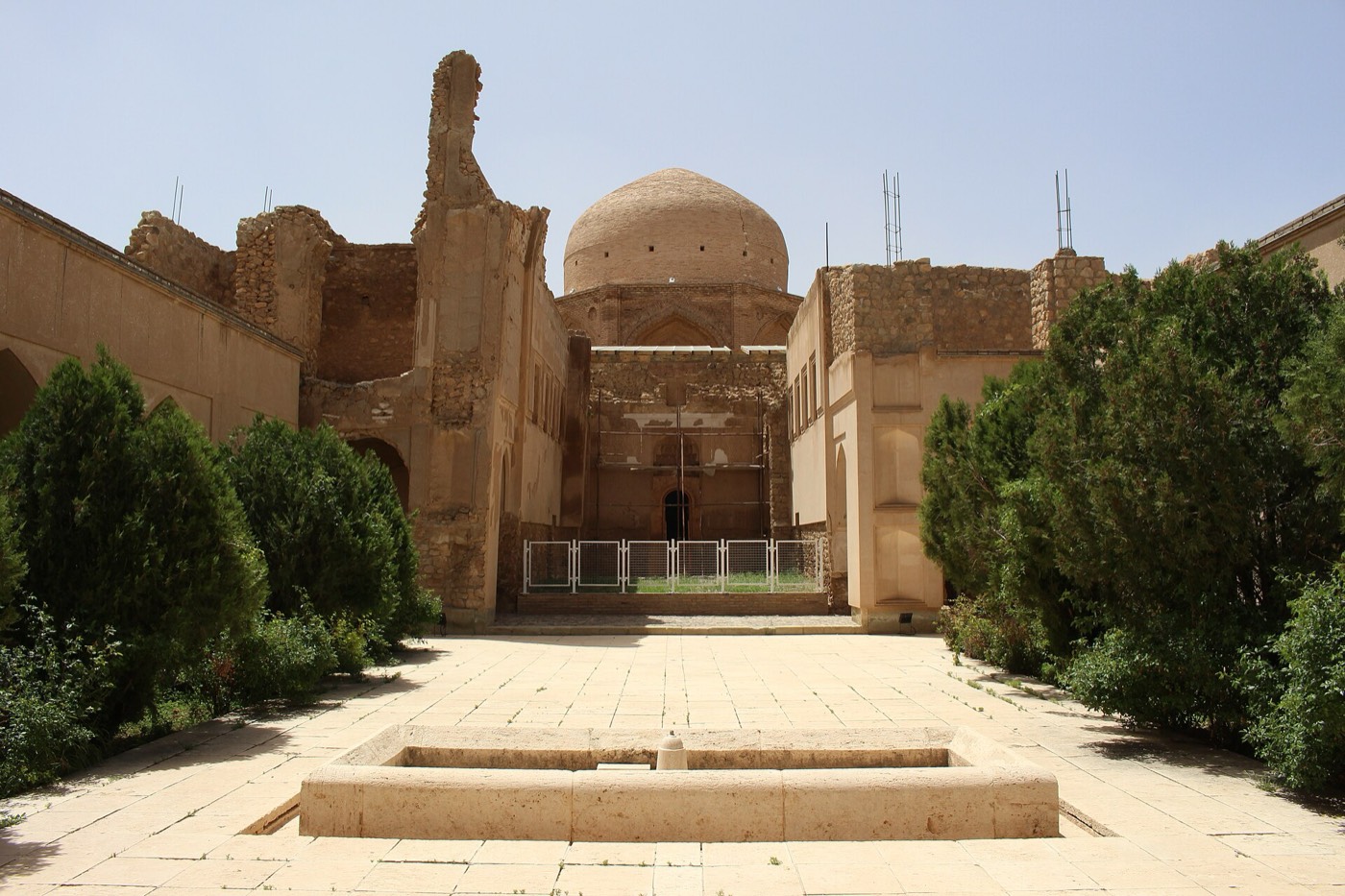
Öljeitü, the Ilkhanid ruler who came to power in 1304, made Soltaniyeh his capital, and the city was finished about 13131. South-west of his mausoleum stands a smaller tomb known as the Mausoleum of Sultan Chelebi Oghlu, whom Iran’s nomination file to UNESCO calls a disciple of the mystic Jalal al-Din Rumi1,2. Beside it lie the ruins of a khanqah, with iwans and arcades around an open court, dated 733 AH (1333)1. The tomb has no clear relation to the khanqah’s plan1. Following the architectural historian Donald Wilber, the nomination file argues that the tomb came first, about 1330, and that the khanqah was sited beside it because the tomb was already held sacred1.
The TDV encyclopedia records that Öljeitü built a tomb and a hospice in Soltaniyeh in memory of the Turkmen dervish Baraq Baba, who was killed in 1307 in Gilan, where Öljeitü had sent him4. Rumi’s grandson Aref Chelebi (1272-1320), head of the Mevlevi order, reached Soltaniyeh in February 1317 and stayed about a year; there he befriended the sheikh of Baraq Baba’s hospice1,4,5. Excavations have uncovered much of the khanqah, and the adjoining building, then in poor condition, has been restored1. Iran first nominated the tomb to UNESCO with Öljeitü’s mausoleum as a serial property; when this became a single nomination, the tomb was placed in the buffer zone of the Soltaniyeh World Heritage site, inscribed in 20051,2.
Architecture
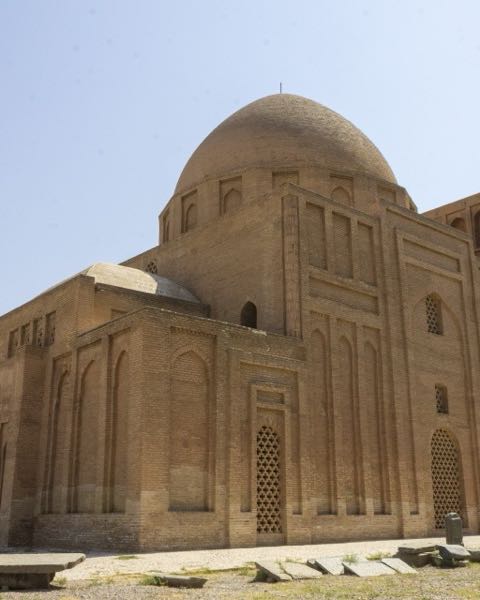
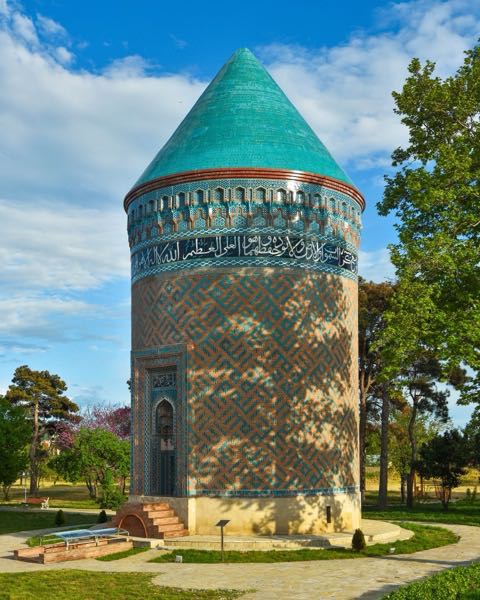
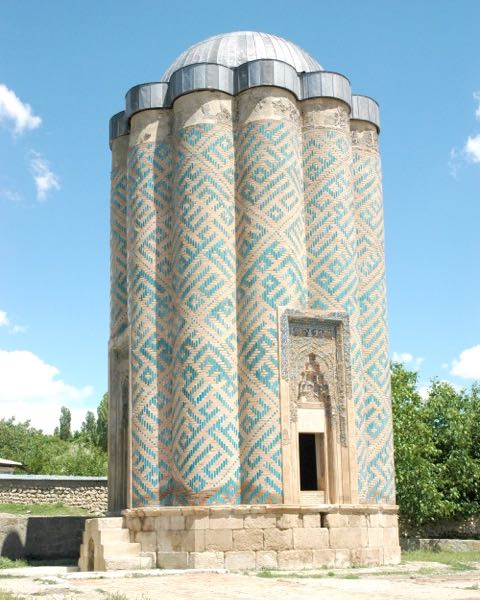
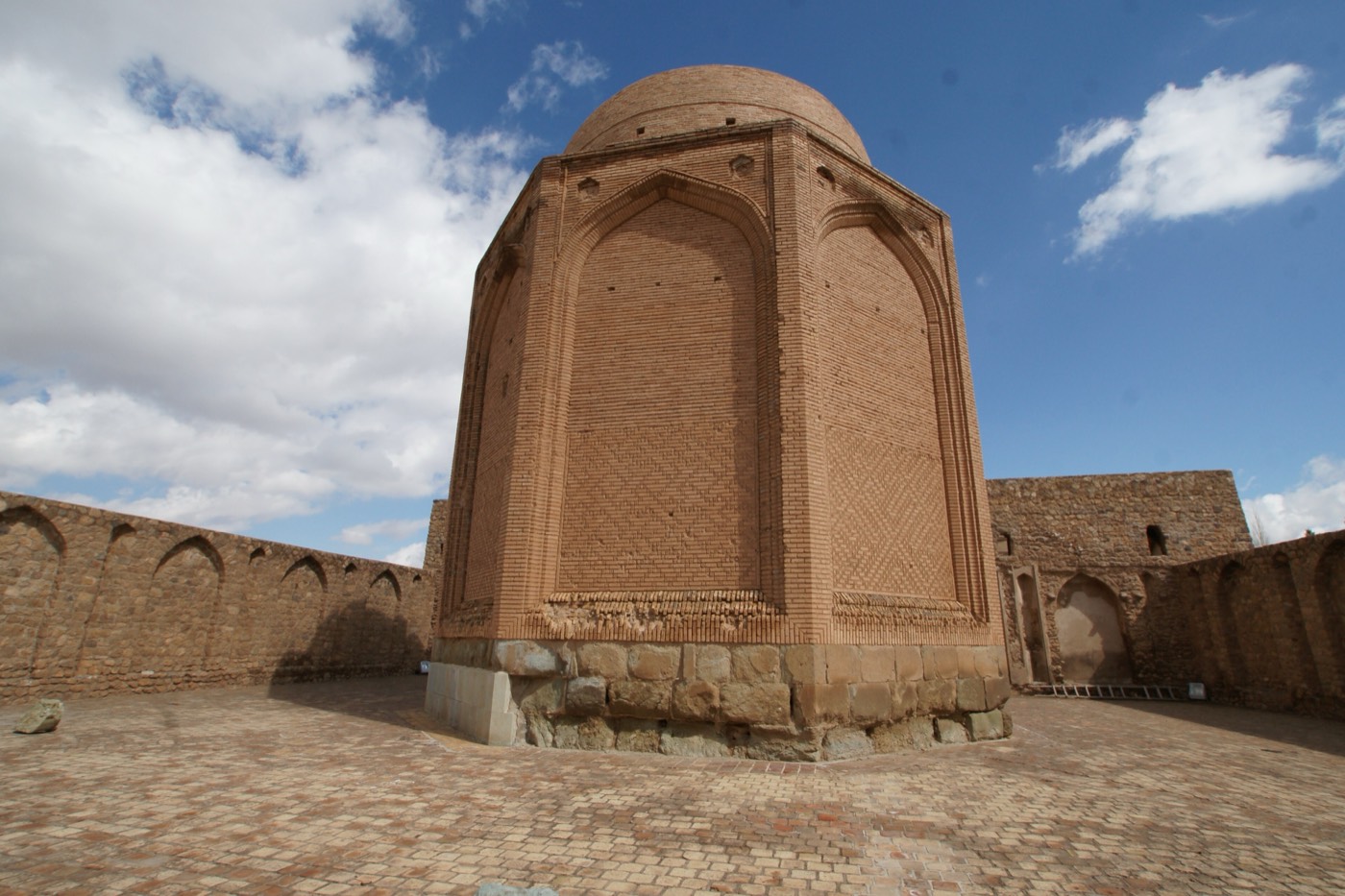
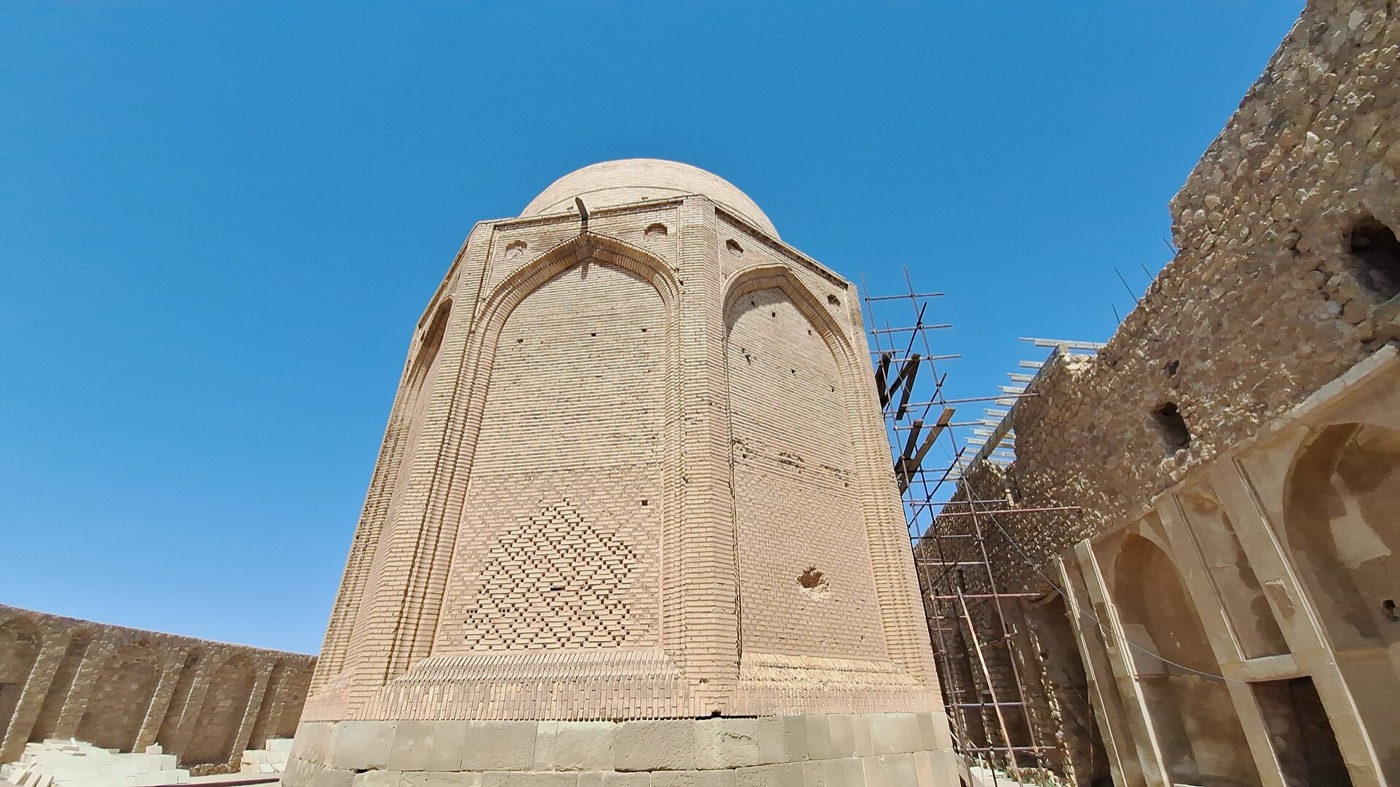
The tomb is an octagonal brick tower with a crypt below the chamber1,2,3. It rests on a base of at least three courses of cut stone, two of them visible to a height of 1.20 m1. Each face has a pointed-arch recessed panel inside a similar splayed panel, framed by a rectangle whose spandrels hold hexagons once filled with a decorative motif1. For 2.50 m above the base the brick is laid in elaborate patterns, then in plain bond, and a line of rectangular panels at the top serves as a cornice1. The dome, set back from the wall line on a sixteen-sided drum, is steeply stilted and rises to a semicircular profile1.
The khanqah next to the tomb was built of rubble masonry, with iwans and arcades around a central open court1. The nomination file gives three reasons for dating the tomb before the khanqah: conditions after 1335 were unfavourable to building in Azerbaijan, all its stylistic features appear in the region’s buildings dated before 1335, and a later tomb would relate more closely to the larger building1.
Inside
What to look for
- The patterned brickwork on the lowest 2.50 m of each face, giving way to plain bond above1.
- The hexagons in the spandrels of the arched panels, once filled with a decorative motif1.
- The dome, set back on a sixteen-sided drum and steeply stilted1.
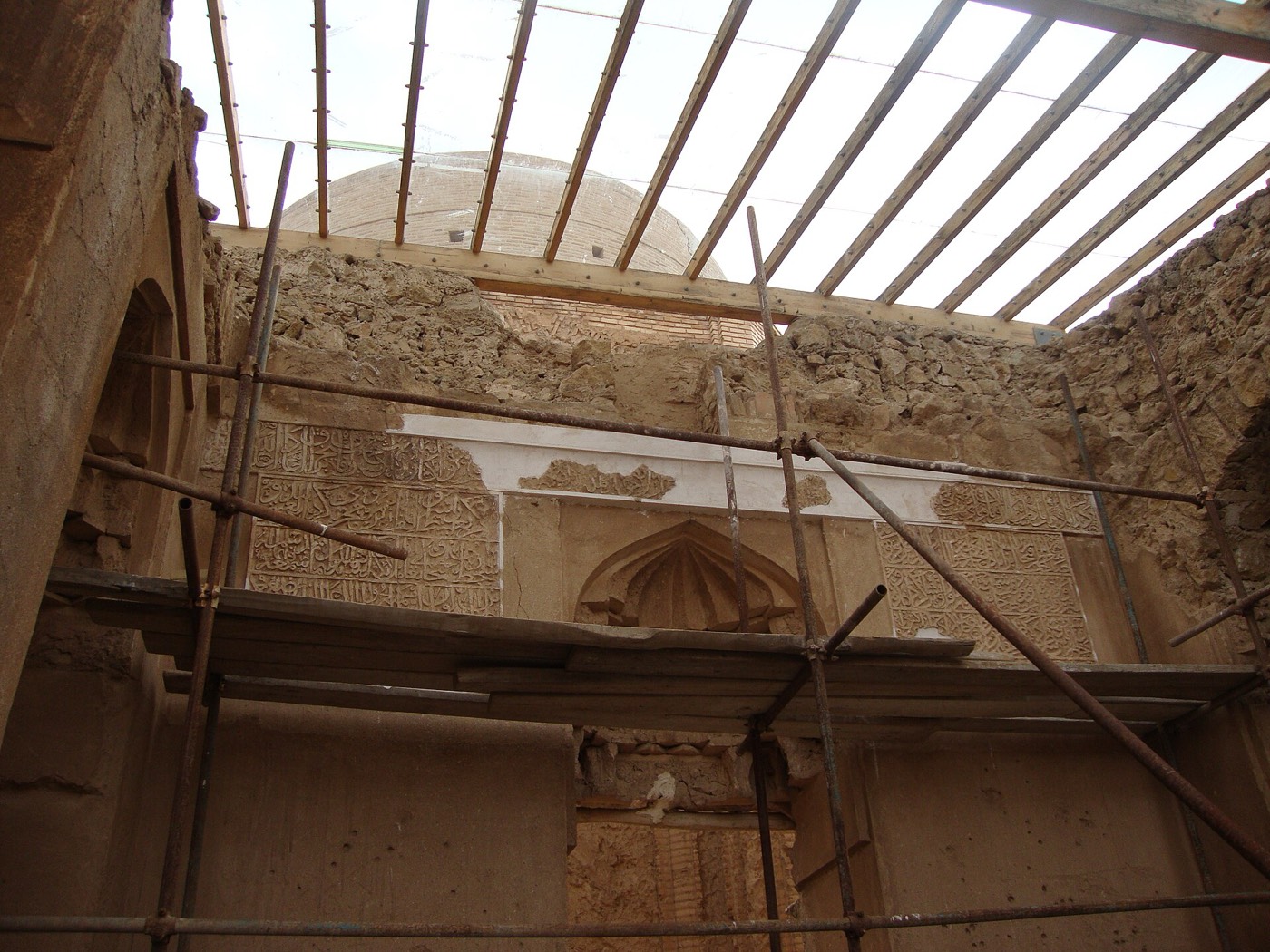
- The stucco muqarnas mihrab inside the octagonal chamber1.
- The rubble-built khanqah next door, with iwans and arcades around an open court1.
Visiting
- The tomb lies south-west of Öljeitü’s mausoleum, in the buffer zone of the Soltaniyeh World Heritage property in Zanjan province, some 240 km from Tehran1,2.
- The tomb of the poet Mulla Hasan Kashi stands on its own about 2.5 km south of the town1.
Official information: Iranian Cultural Heritage Organization, through its Zanjan office and the Soltaniyeh project team (as described in Iran’s nomination file)DirectionsOpen in OpenStreetMapGuided tours in Soltaniyeh