History
Rukhabad, ‘abode of the spirit’, stands between the Registan and the Gur-e-Amir3,4. Uzbekistan’s nomination file to UNESCO says that, according to written sources, it was built for the burial of Burhan al-Din Sagharji, a Sufi of Samarkand who died in the 1380s, and that it probably dates from that time; MIT’s Aga Khan Visual Archive gives 13803,5. The Registan Ensemble Directorate tells a fuller story: citing Ibn Battuta, it calls Sagharji the chief Muslim of Peking in the 1340s, and says that when he died his son Abu Sa’id brought the body to Samarkand, as his father had asked, and buried it beside the grave of a local sheikh, Basir4.
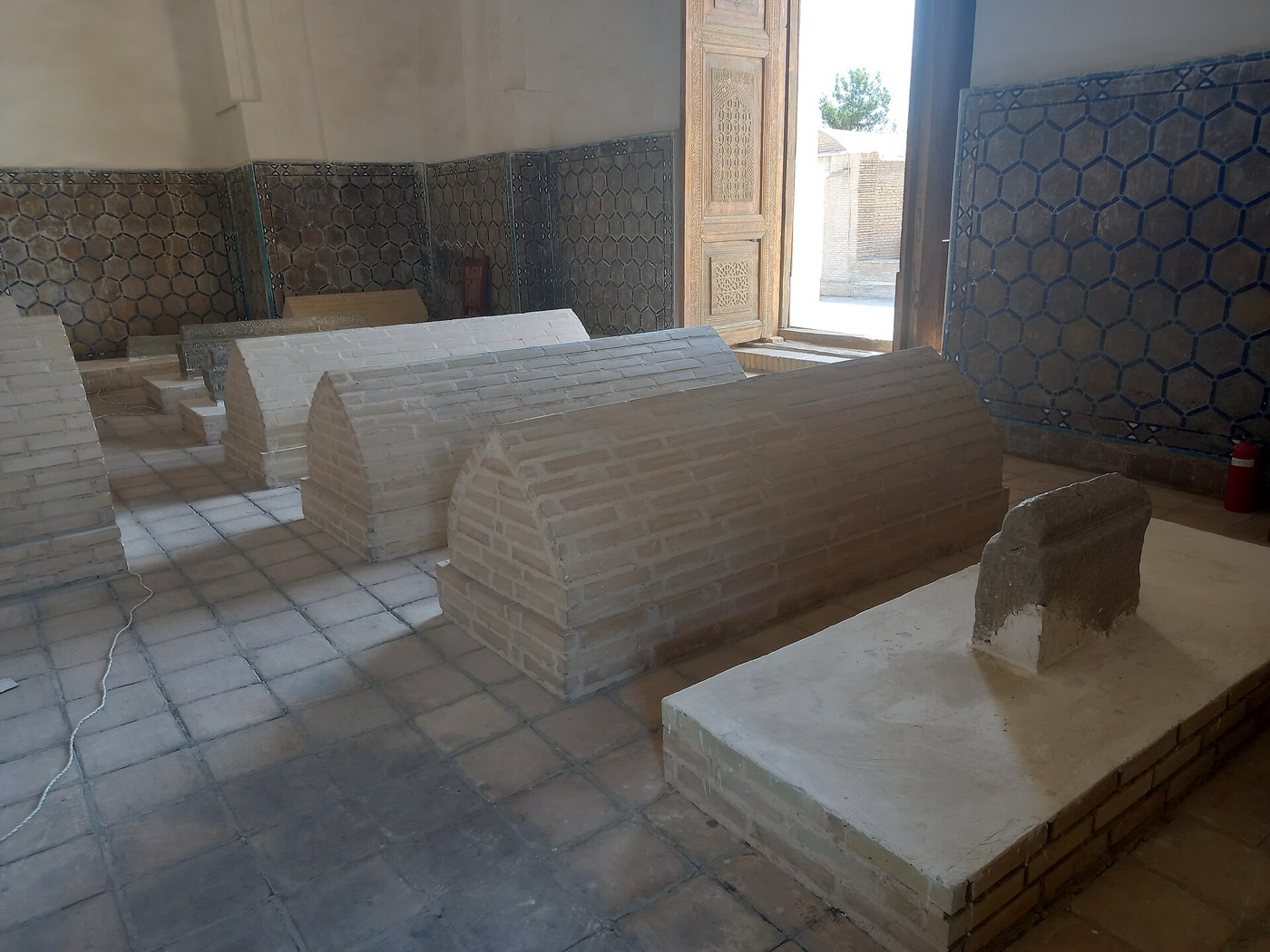
According to the Directorate, Abu Sa’id stayed in Samarkand and became a respected figure at Timur’s court, and Timur ordered the mausoleum built over his father’s grave4. It adds that Abu Sa’id, another son, Shaykhzada Isam al-Din, and other members of the family were buried here too, among them Sagharji’s wife, known as ‘the Chinese princess’4. The Directorate also records a legend that a box holding seven hairs of the Prophet lies under the dome, and a story that Timur always dismounted and walked when he passed the tomb4. In 1996, for Timur’s anniversary, the surrounding buildings were demolished, and the remains of the complex’s mosque, cells, madrasa and minaret were uncovered and conserved2,3.
Architecture
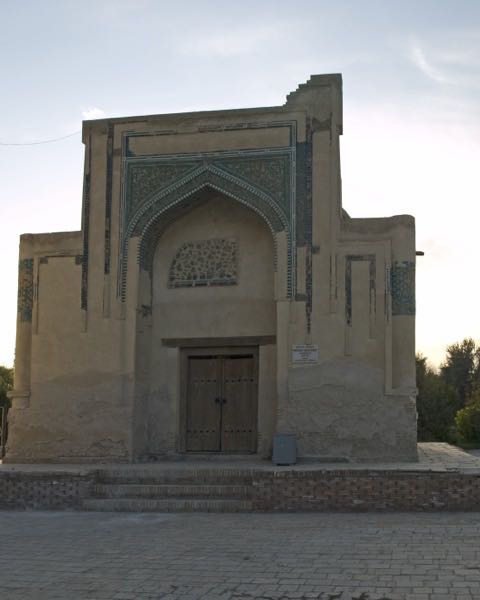
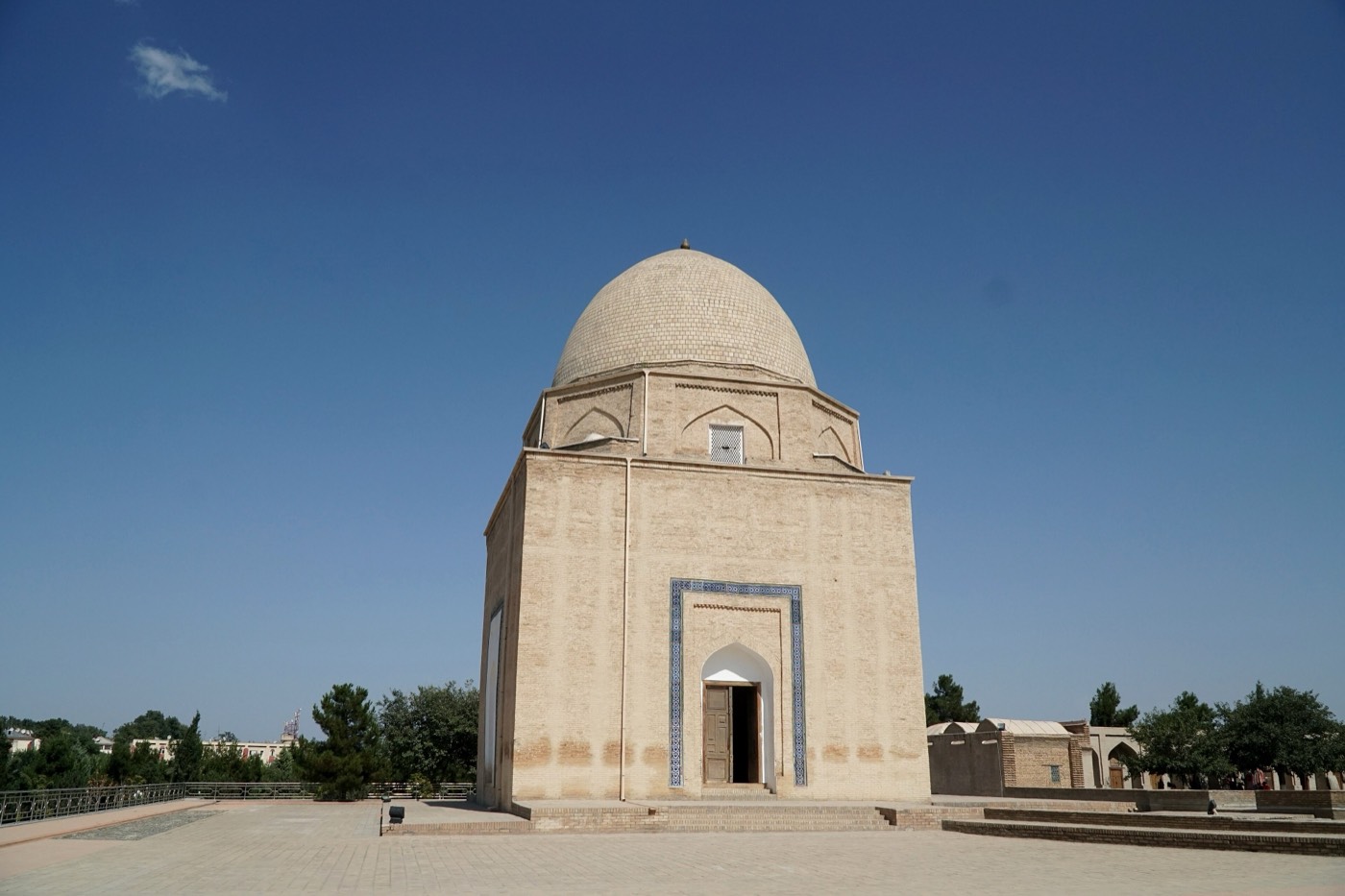
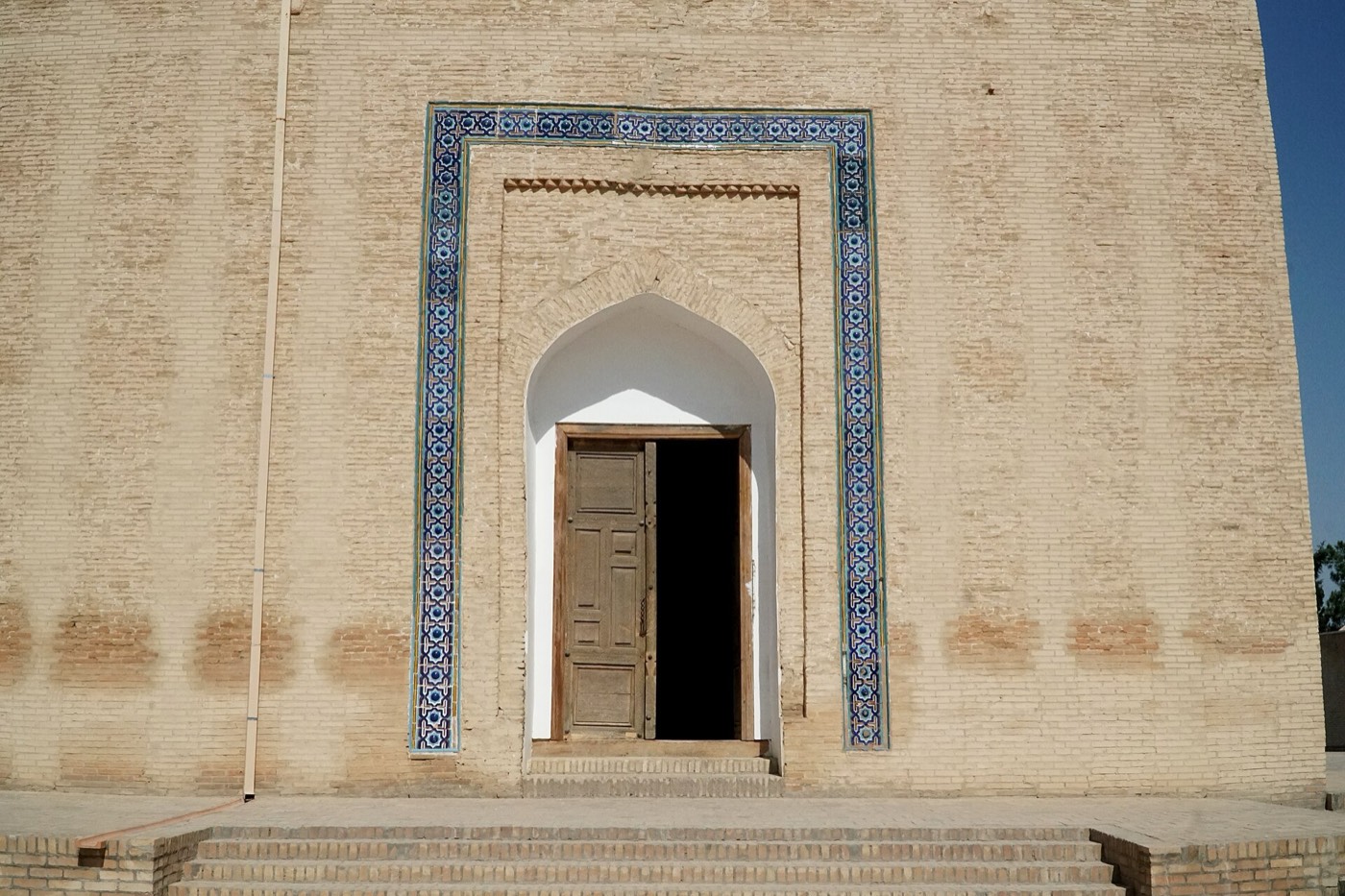
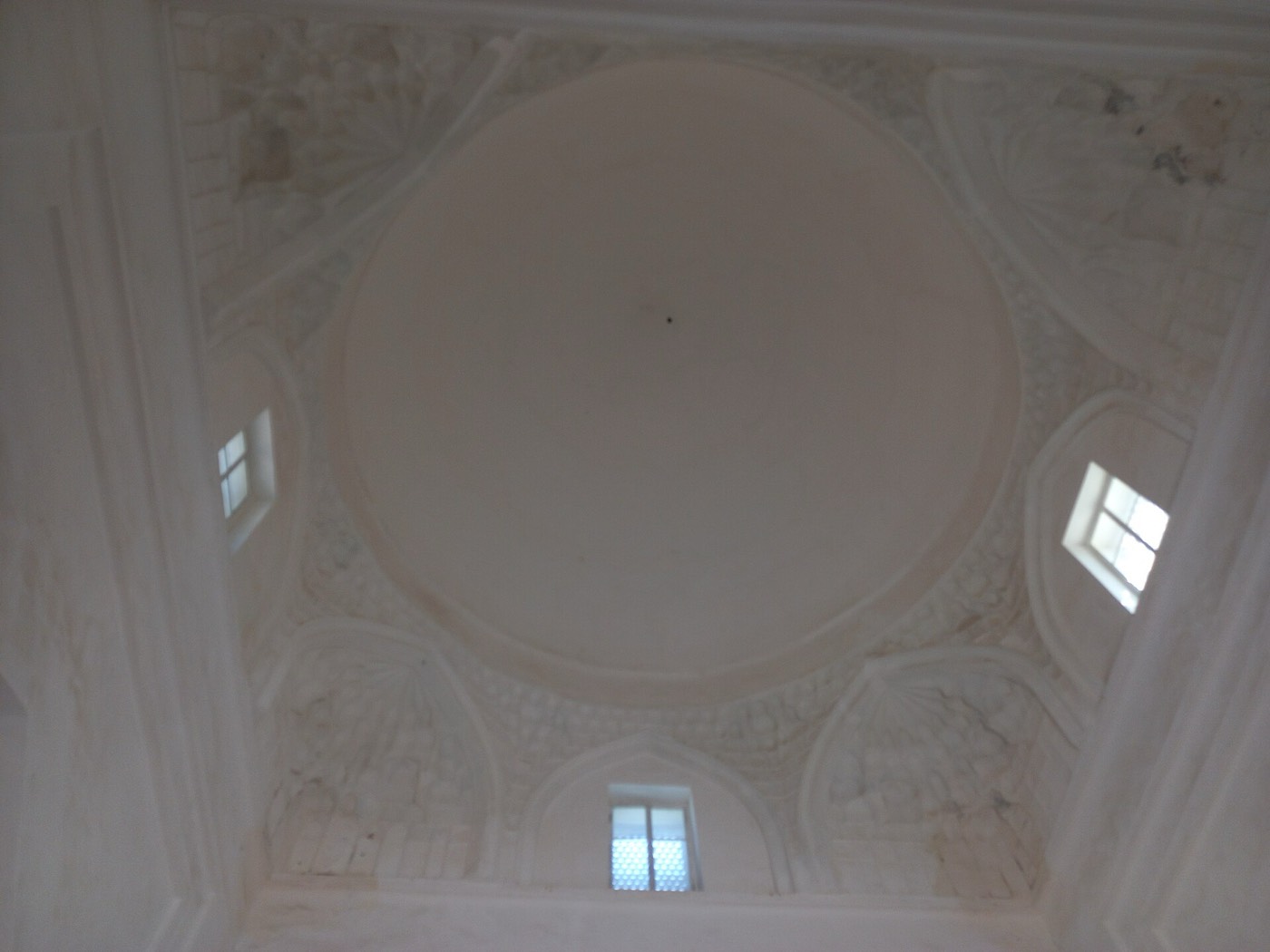
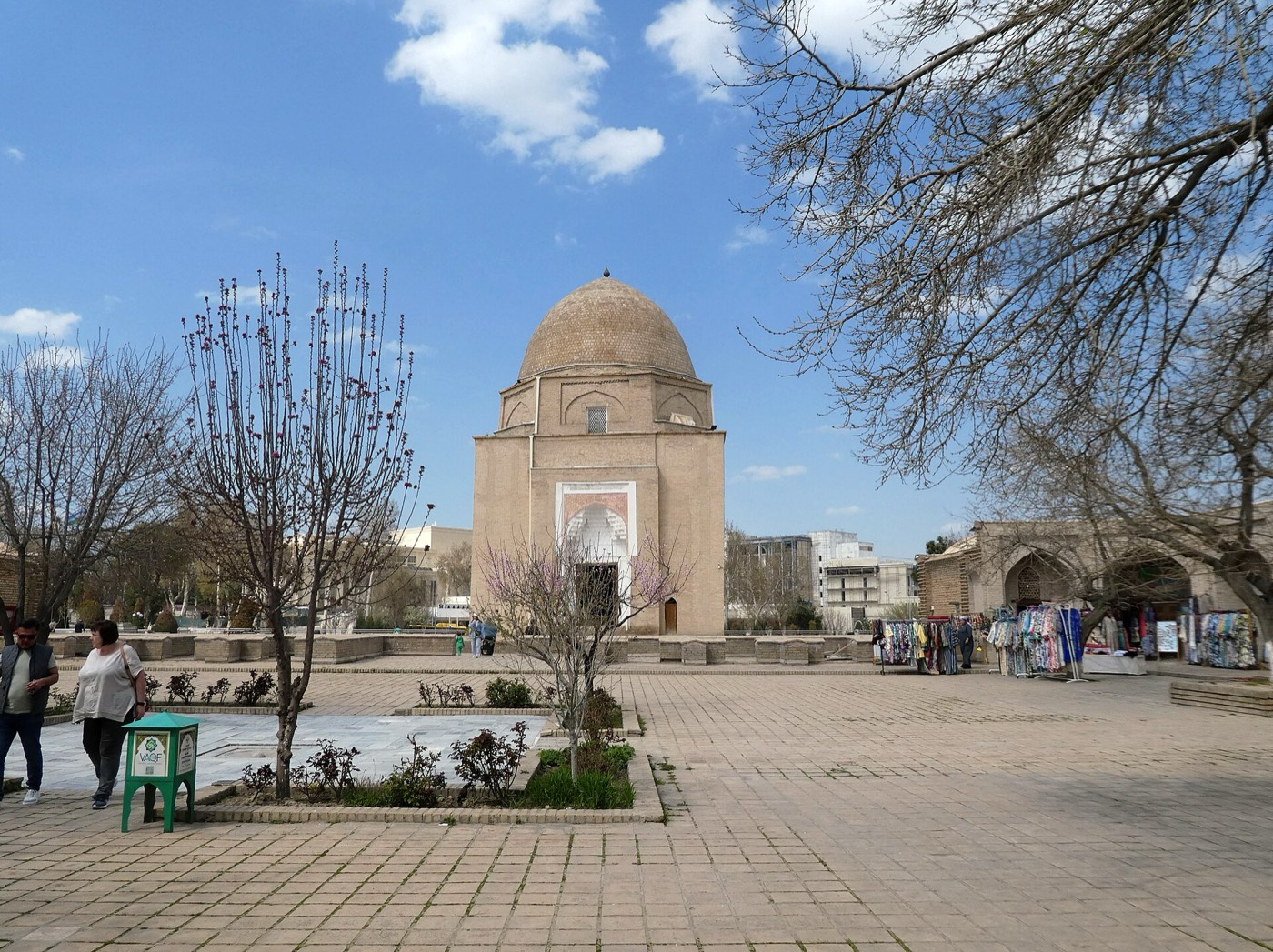
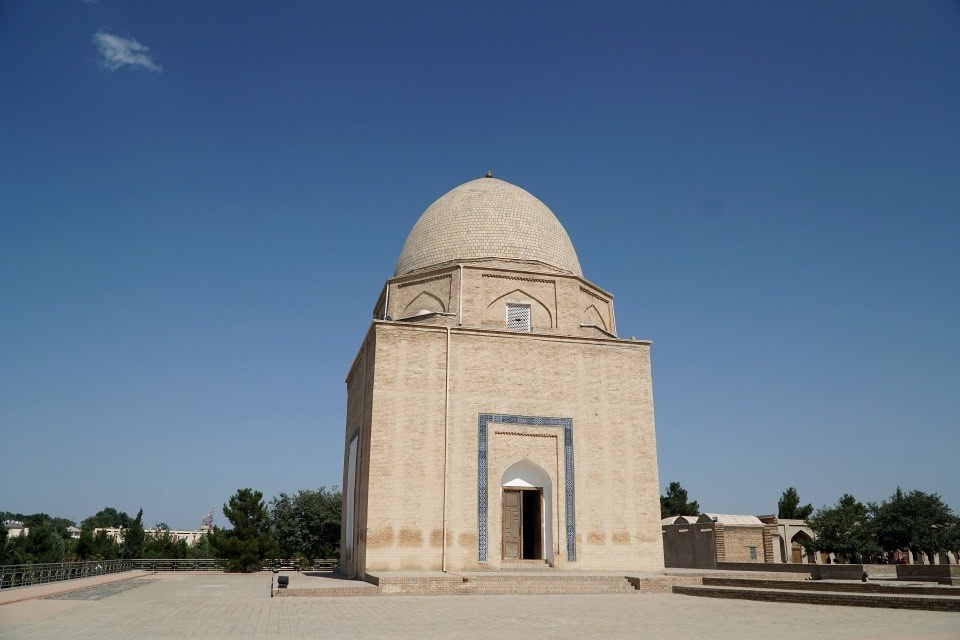
Rukhabad is a centrally planned mausoleum without a portal: its four facades are alike, the main one differing only by its entrance2,3. A cubic base carries an octagon and a spherical-conical dome3. The arched entrance is framed with blue glazed tiles, and the nomination file suggests that the dome was once tiled too3. Otherwise the brick walls are bare; the nomination file notes that it was built when central plans were out of fashion and tombs were richly decorated, and the Directorate stresses its austere, compact form3,4. A ‘royal alley’ paved with white stone linked it with the Gur-e-Amir ensemble to the south2,3.
Beside the mausoleum stands a summer mosque whose decoration, according to the Directorate, shows East Turkic and Chinese motifs4. In its evaluation of 2001, ICOMOS found the restored mausoleum in satisfactory condition2.
What to look for
- Four near-identical brick facades and no portal, unusual among the richly decorated tombs of its time3.
- The frame of blue glazed tiles around the entrance arch3.
- The spherical-conical dome rising from an octagon over a cubic base3.
- The conserved remains of the complex’s mosque, cells, madrasa and minaret, uncovered in 19963.
- The stone-paved alley that links it with the Gur-e-Amir to the south2,3.
Visiting
- The mausoleum stands between the Registan, to its north-east, and the Gur-e-Amir, to its south2,3.
- UNESCO names the ensembles of Gur-e-Amir and Rukhabad among the major monuments of Samarkand’s World Heritage property1.
- The remains of the complex’s mosque, cells, madrasa and minaret lie around the mausoleum3.
Official information: State Samarkand Historical-Architectural Reserve, under Uzbekistan’s culture ministry and the Samarkand regional government (as described by UNESCO)DirectionsOpen in OpenStreetMapGuided tours in Samarkand
In a trip guide: Samarkand in one day