History
Turhan Sultan was a concubine of Sultan İbrahim and bore him the future Mehmed IV on 2 January 16422. TDV repeats the tradition that she was of Russian origin and was captured by Crimean Tatars as a girl2. When her son came to the throne on 8 August 1648 she became valide sultan (queen mother), a rank she held until her death2. After the killing of Kösem Sultan, the young sultan's grandmother, in September 1651, Turhan took control of the palace; she later approved Köprülü Mehmed Pasha's appointment as grand vizier2. Among her foundations was the Yeni Cami at Eminönü, begun by Safiye Sultan in 1598 and left unfinished after Mehmed III died in 16031,2.
After the great fire of 1660 Turhan Sultan decided to complete the mosque; work resumed in 1661 under the chief architect Mustafa Ağa, and the mosque opened on 30 October 16651. The ministry and Düzenli date her tomb to 16633,4. She died at Edirne on 5 July 1683 and was buried here two days later2. Her son Mehmed IV, who died at Edirne on 6 January 1693, was brought to her tomb5. Mustafa II, Ahmed III, Mahmud I and Osman III followed; Osman III was buried here in 1757 instead of in his own tomb at Nuruosmaniye1,4,6. TDV and the ministry count 44 members of the dynasty in the tomb1,3.
Architecture
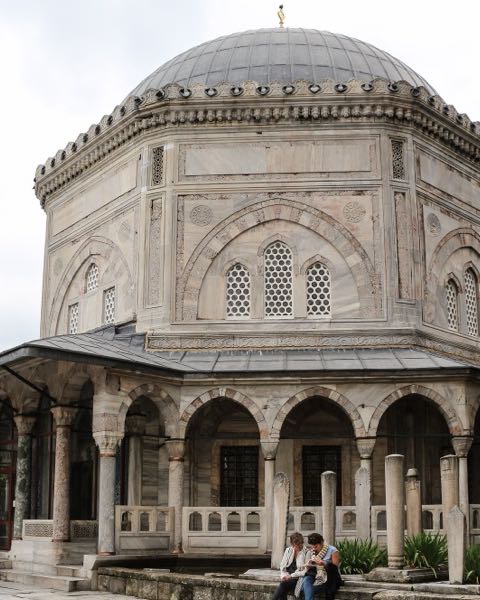
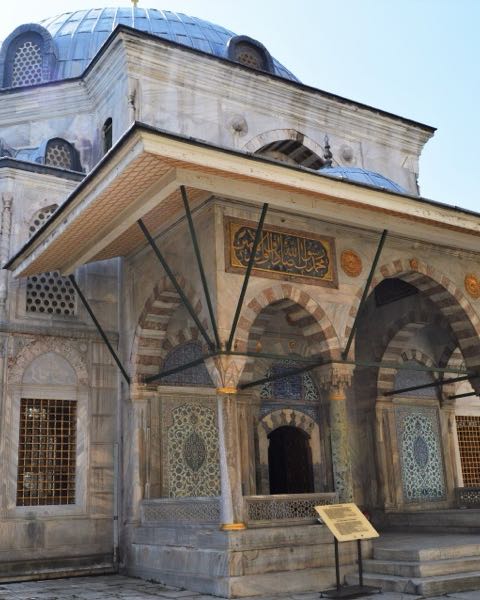
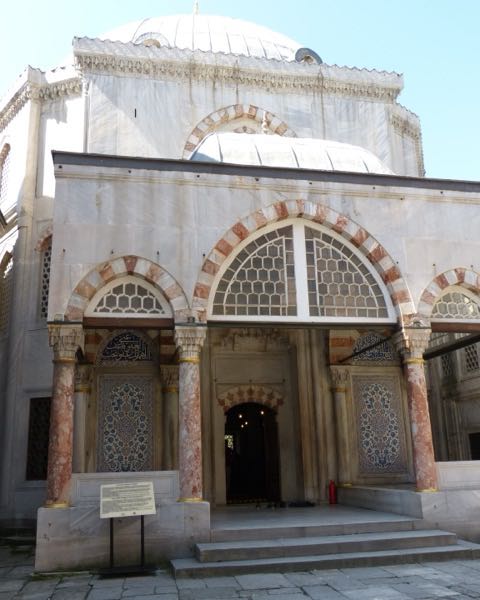
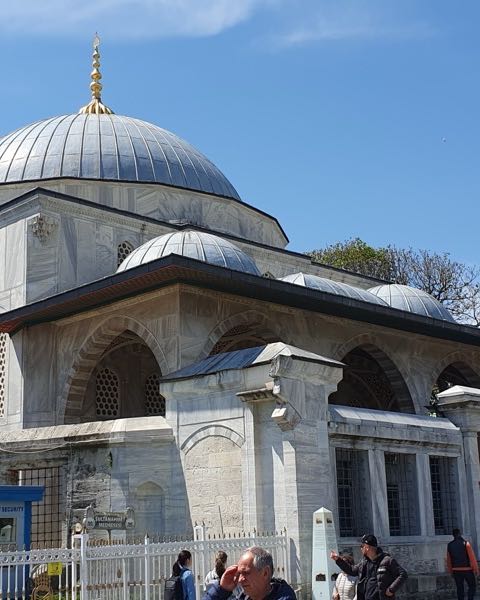
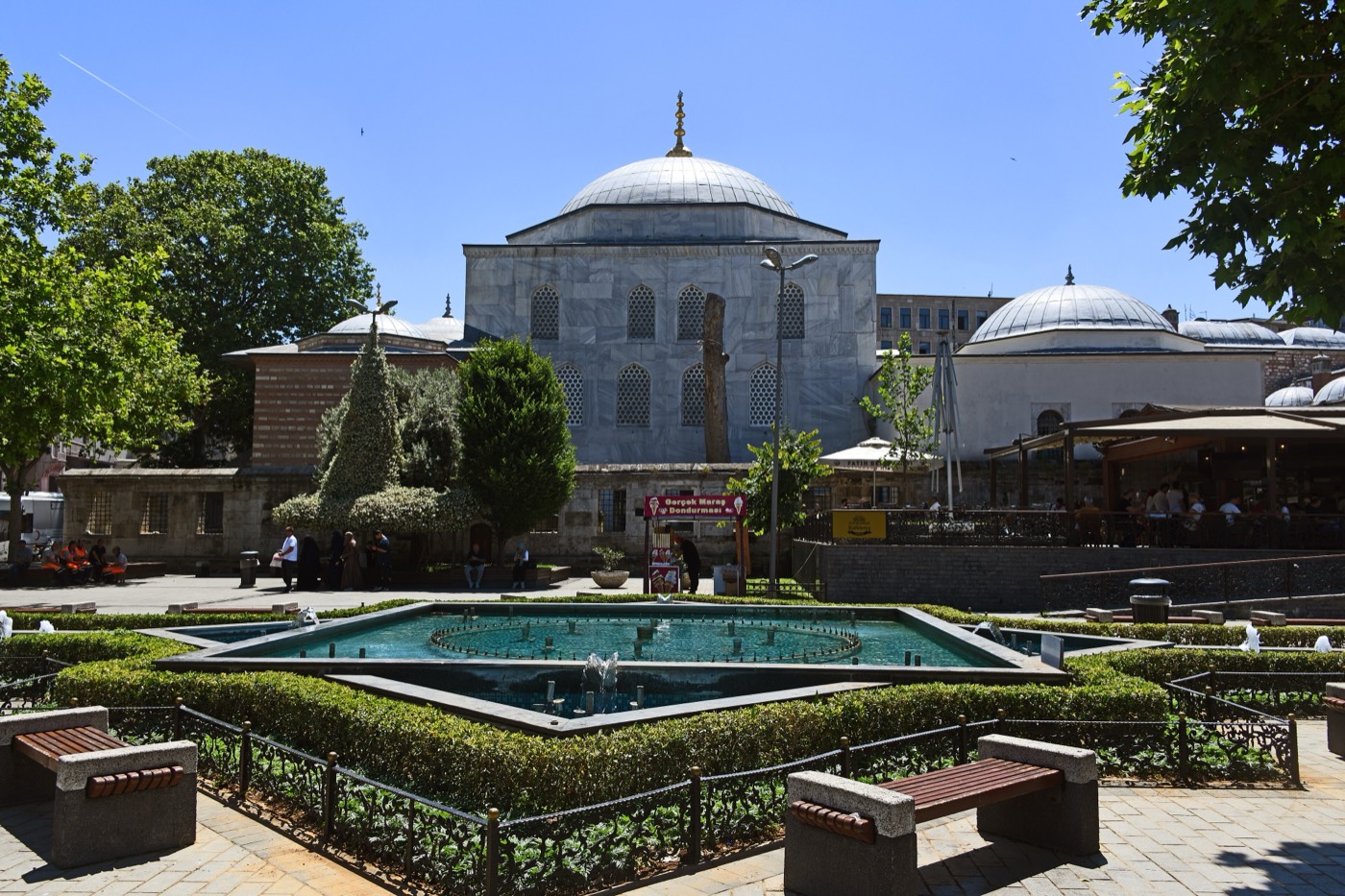
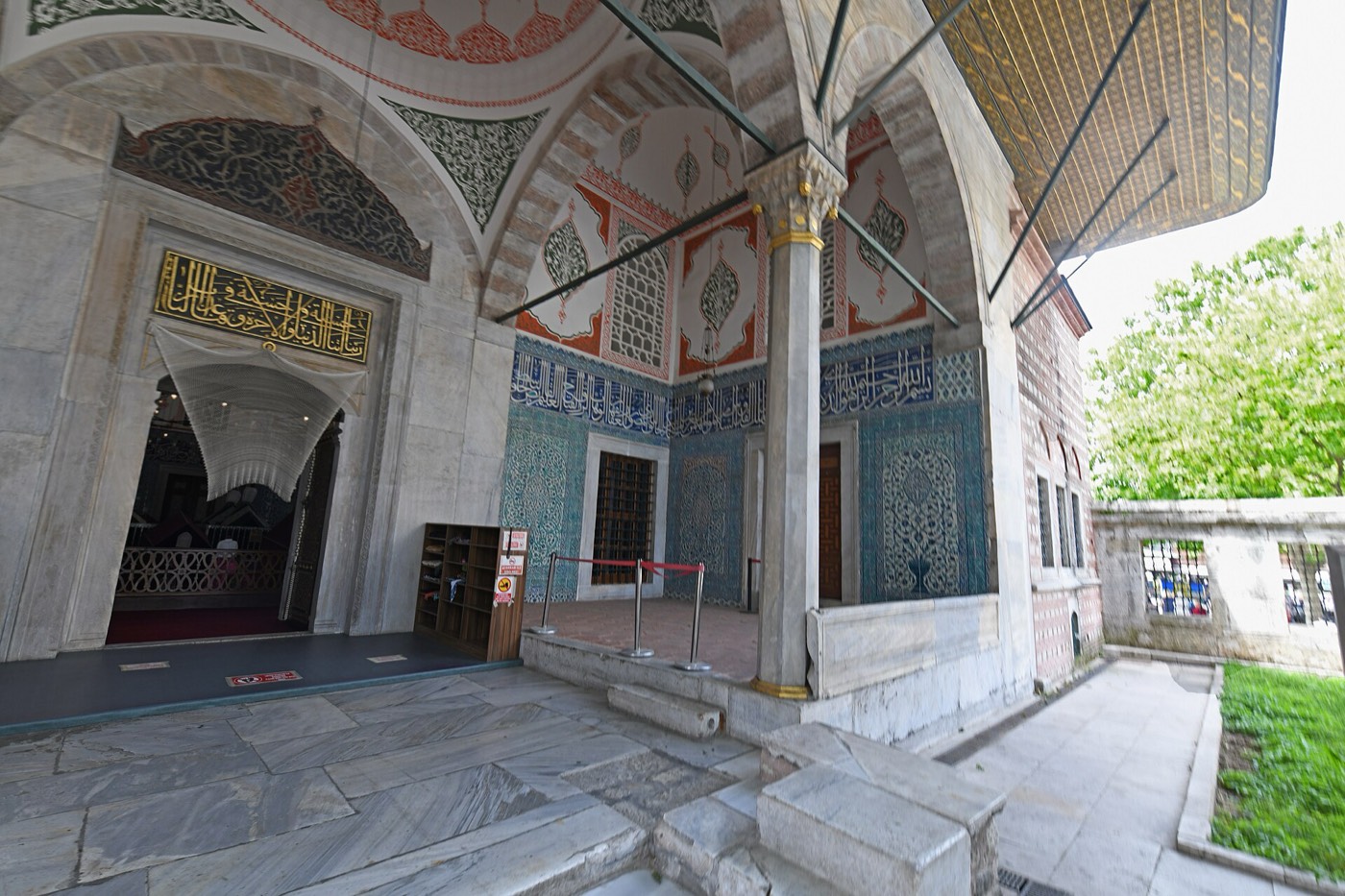
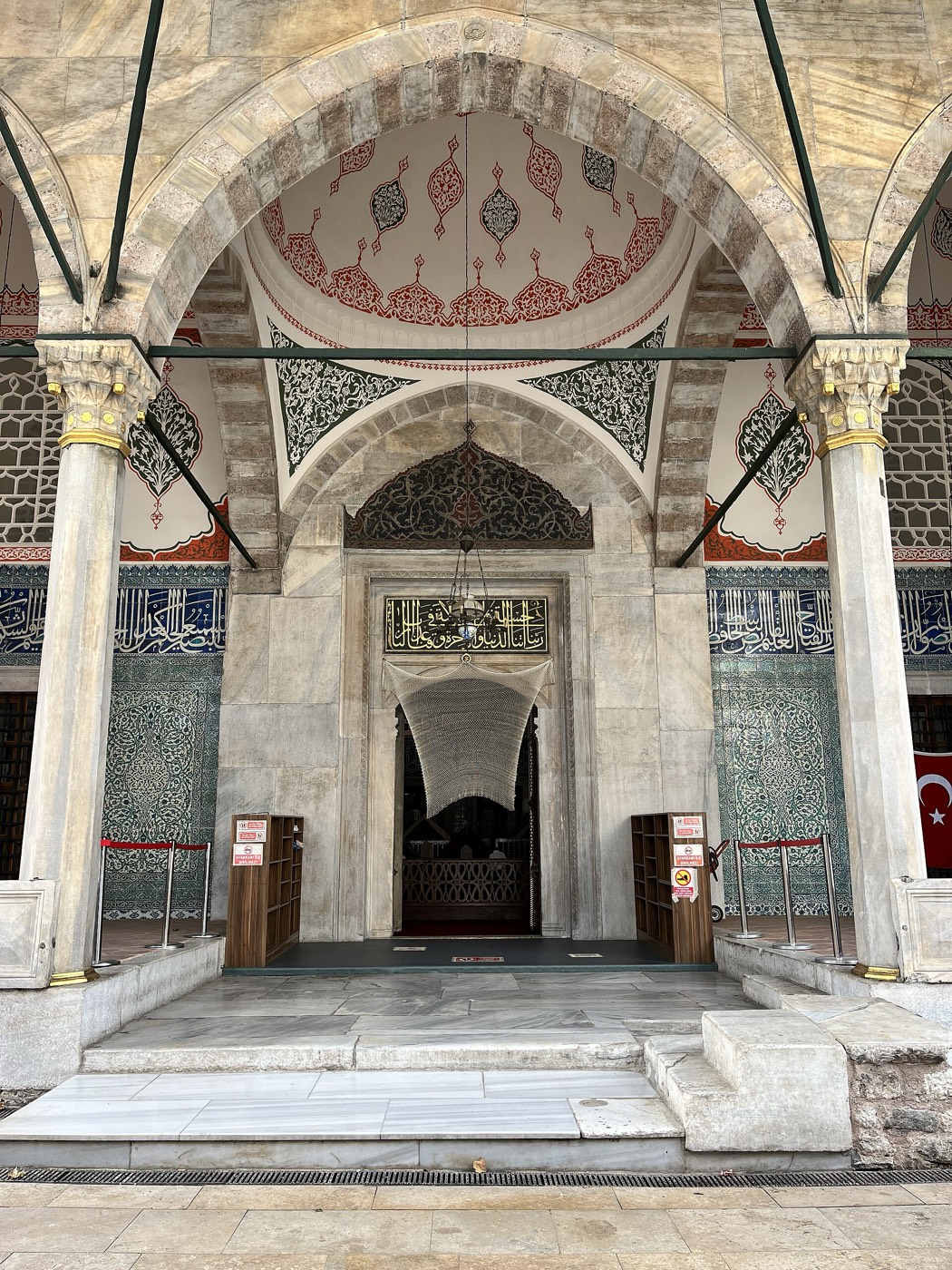
The tomb stands south of the mosque, between it and the Mısır Çarşısı, the covered market of the complex, inside its own walled court1. It is a square building faced with marble and covered by a dome on squinches, with an octagonal drum on the outside1,3. Before the door is a three-bay porch, with a dome in the middle and flat-topped ‘mirror’ vaults (aynalı tonoz) on either side1,3. Opposite the door the hall extends westwards into an eyvan under another mirror vault, as in the tomb of Ahmed I, with which TDV and the ministry compare the plan1,3. Three rows of windows light the walls, rectangular below and pointed-arched above1. Düzenli puts the dome's diameter at more than 15 metres, which in his view makes this the largest of the dynasty's tombs4.
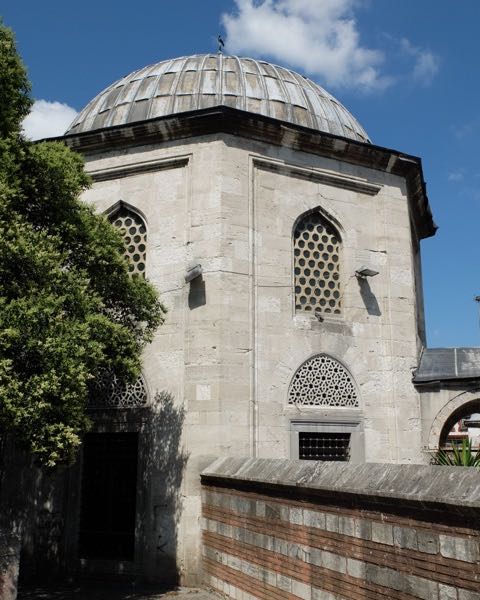
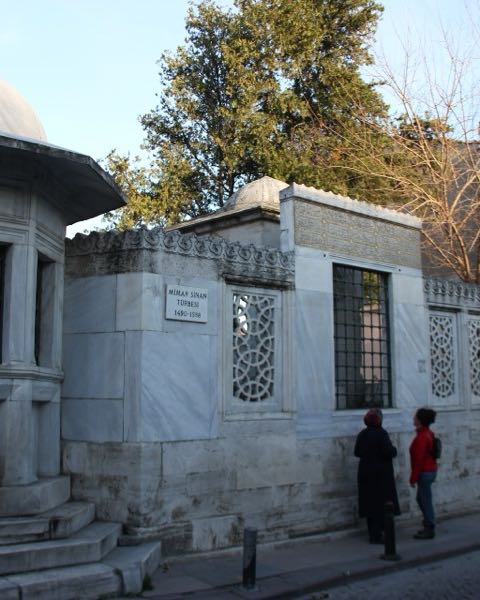
Over time a burial ground grew up in the court on the qibla side, and fountains and so-called hâcet windows were set into the court wall; one such window and the fountain beside it carry inscriptions dated 1151 AH (1738), and a larger baroque window between two fountains dates from the 19th century1. In 1724-1725 Ahmed III added a library to the right of the porch1,3. The domed Qur'an school (darülkurra) built against the eyvan became a tomb after a teacher's daughter was buried there in 1677; known as the Havatin Türbesi, it holds 17 cenotaphs, and a second tomb added to its north in the 19th century, the Cedid Havatin, holds 211,3.
Inside
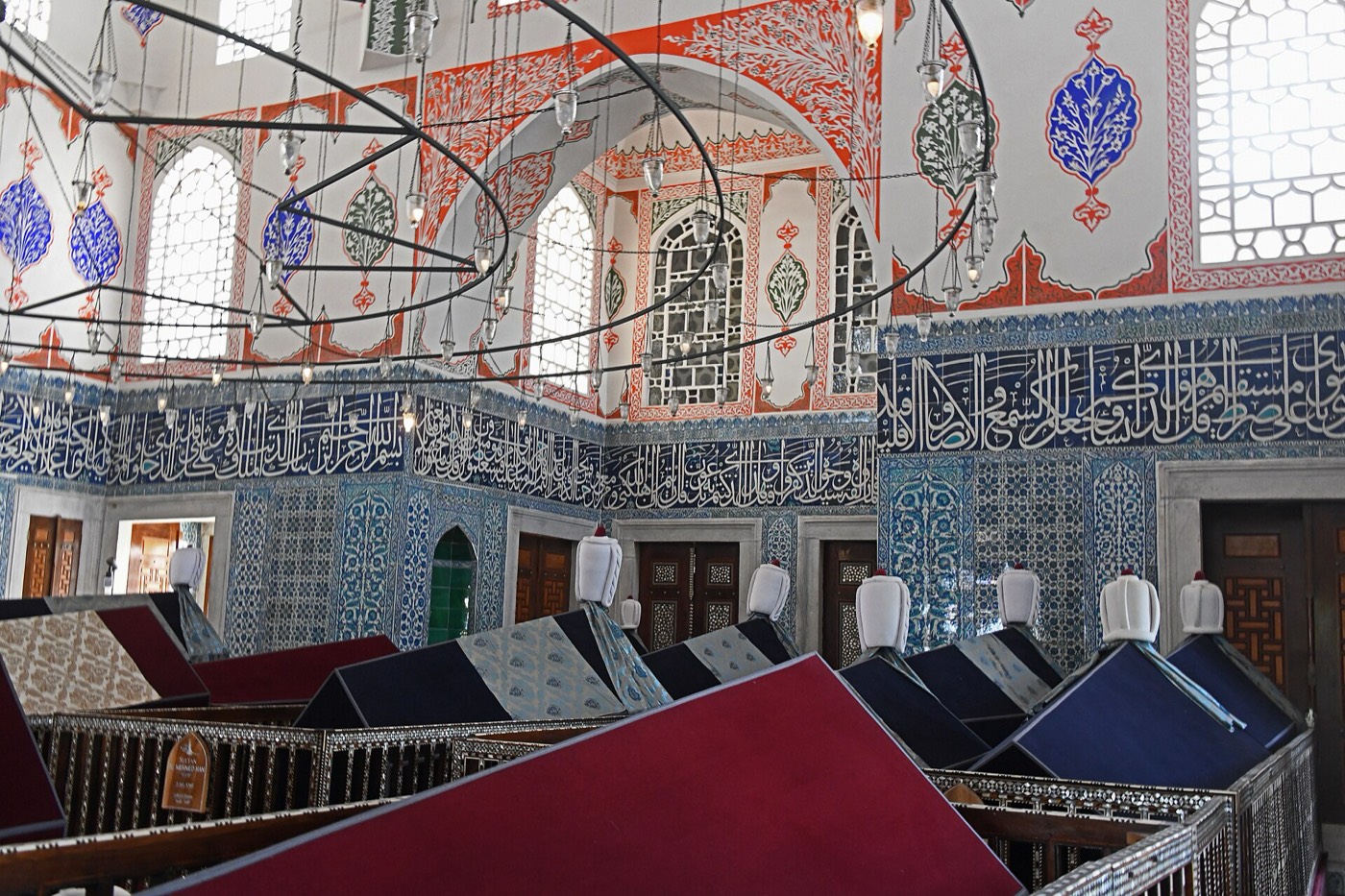
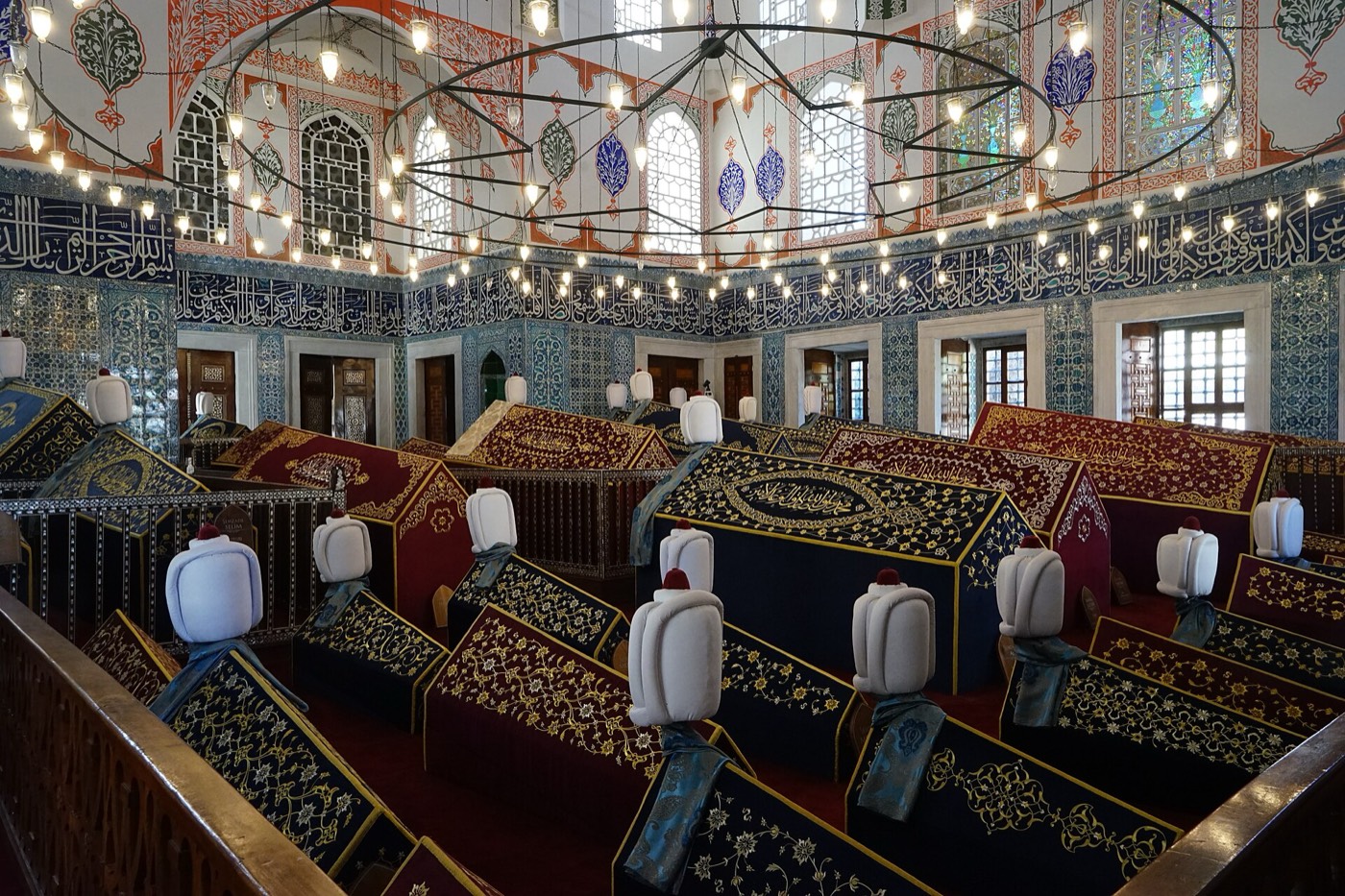
Tiles cover the walls of the porch and of the hall up to the second row of windows; the ministry describes them as blue and white1,3. Above them the walls, the squinches and the inside of the dome are painted, partly in malakari, a moulded relief technique1,3. The floor is filled with cenotaphs: Turhan Sultan's, those of the five sultans and those of their sons and daughters, surrounded by wooden screens inlaid with mother-of-pearl1,3. From the westward eyvan a second door leads into the Havatin Türbesi3.
What to look for
- The three-bay porch: a central dome between two flat-topped mirror vaults1.
- The westward eyvan opposite the door, a plan shared with the tomb of Ahmed I1,3.
- Cenotaphs of five sultans: Mehmed IV, Mustafa II, Ahmed III, Mahmud I and Osman III1.
- Ahmed III's library of 1724-1725 beside the porch1,3.
- The hâcet window and fountain of 1738 in the court wall1.
Visiting
- The tomb stands in its own walled court between the Yeni Cami and the Mısır Çarşısı at Eminönü1.
- The ministry lists it among the tombs of its Istanbul Tombs Museum Directorate, at Yeni Cami Caddesi No. 1, Rüstempaşa, Fatih3.
- The Havatin and Cedid Havatin tombs behind it hold further members of the dynasty, among them Sultan Murad V1,3.
Official information: Istanbul Tombs Museum Directorate (İstanbul Türbeler Müze Müdürlüğü), Republic of Türkiye Ministry of Culture and TourismDirectionsOpen in OpenStreetMapGuided tours in Istanbul
In a trip guide: Istanbul’s türbes on foot