History
Mahmud Pasha, known as Veli, was educated in the Ottoman palace; Erkal links him to the Angelović and Palaiologos families, while Tekindağ notes that accounts of his origin differ1,7. He was grand vizier to Mehmed II from 1456 to 1468 and, after serving as grand admiral, again from 14721,7. Answering the sultan’s call to develop the city, he founded the Mahmutpaşa complex: building began in 1459, the mosque was finished in 867 AH (1462-63) according to its inscription, and most of the complex by 14631,6. His endowments, among them a madrasa, a large bath and the Kürkçü Han, covered a wide area between the bazaar and the New Palace1.
The türbe was completed in 1473, a year before Mahmud Pasha’s execution1,6. İnalcık writes that Mahmud Pasha, who favoured peace with Uzun Hasan, was dismissed on his return to Istanbul from the campaign and later executed on Mehmed II’s orders5. Tekindağ adds that he was held in the Yedikule fortress and lies in the türbe he had built7. It was placed south of the mosque, clearly visible from the street leading from the bedesten, with one of the three courtyard gates aligned on it1. Düzenli names it, with the tombs of the grand viziers Rum Mehmed Pasha and Davud Pasha, as the most valuable and distinctive fifteenth-century tombs of Istanbul2.
Architecture
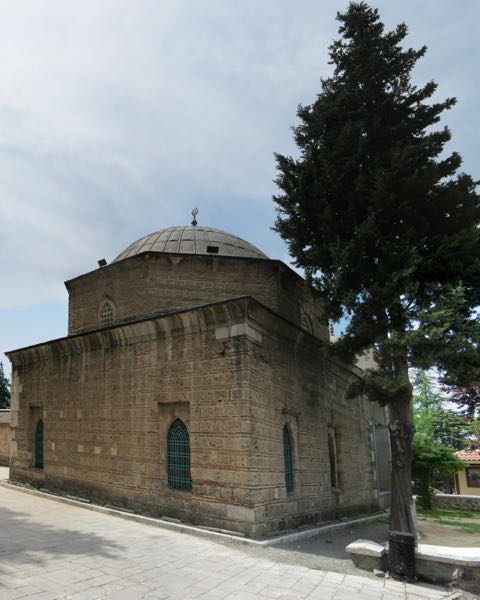
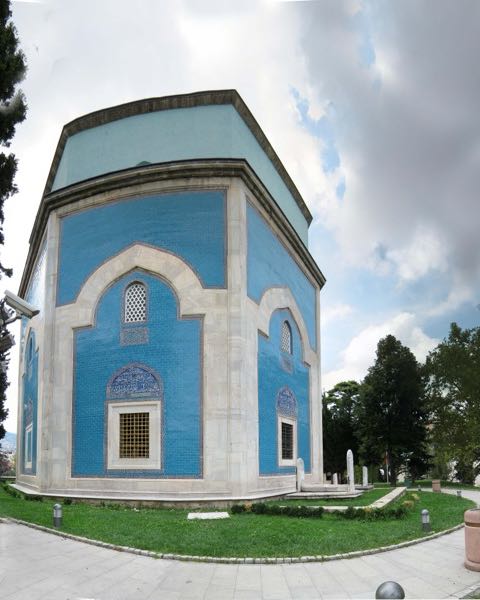
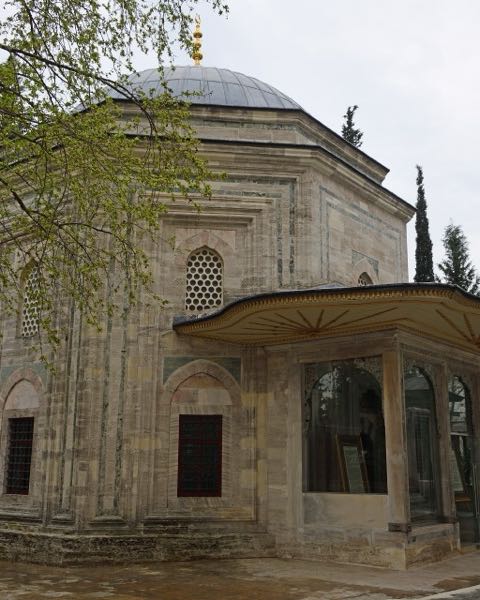
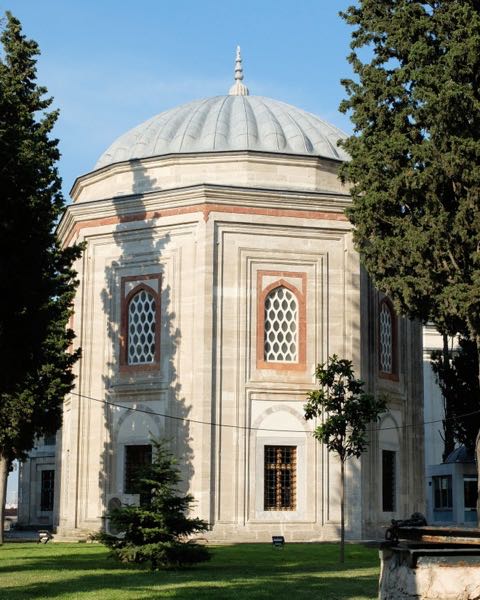
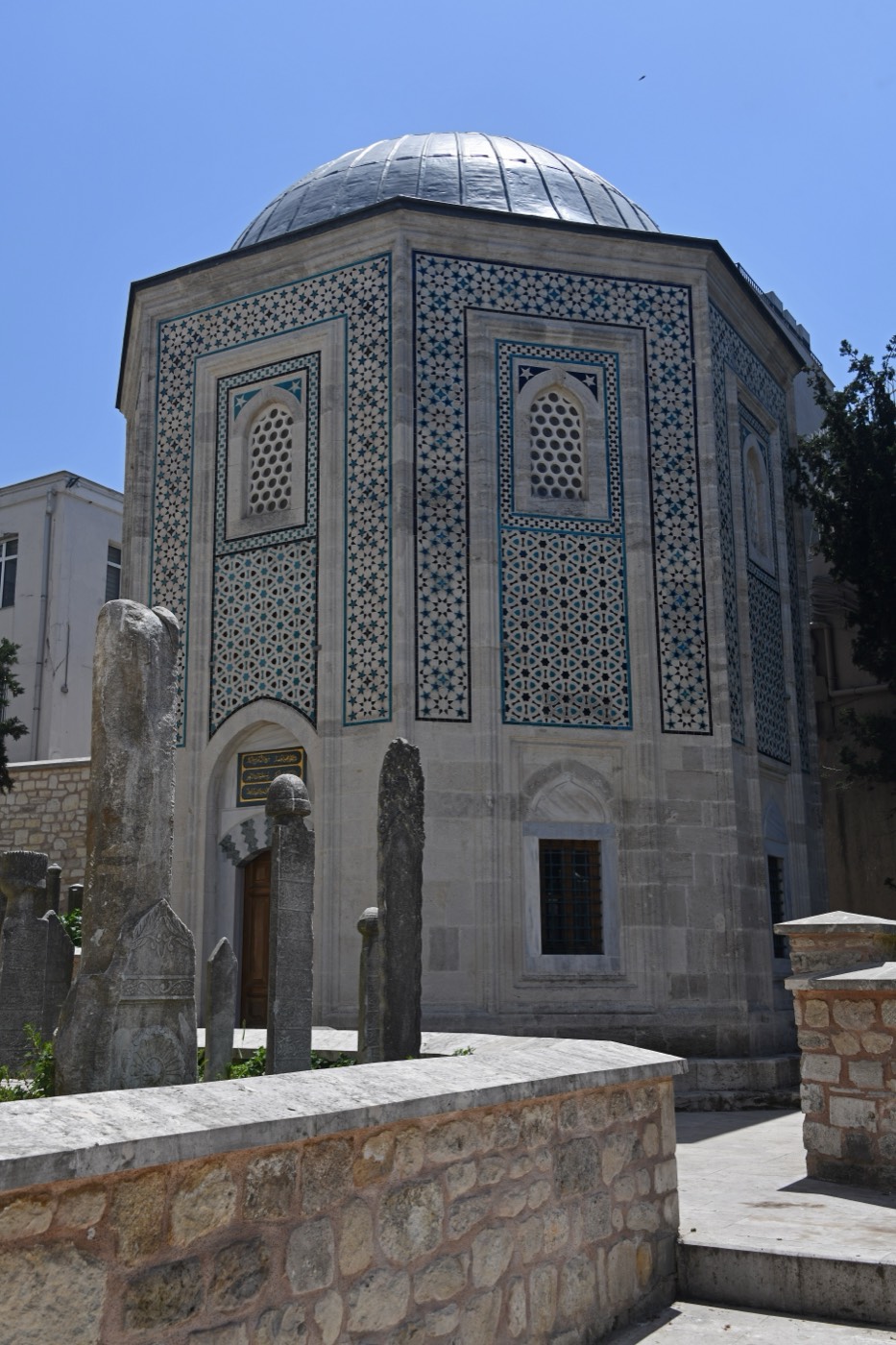
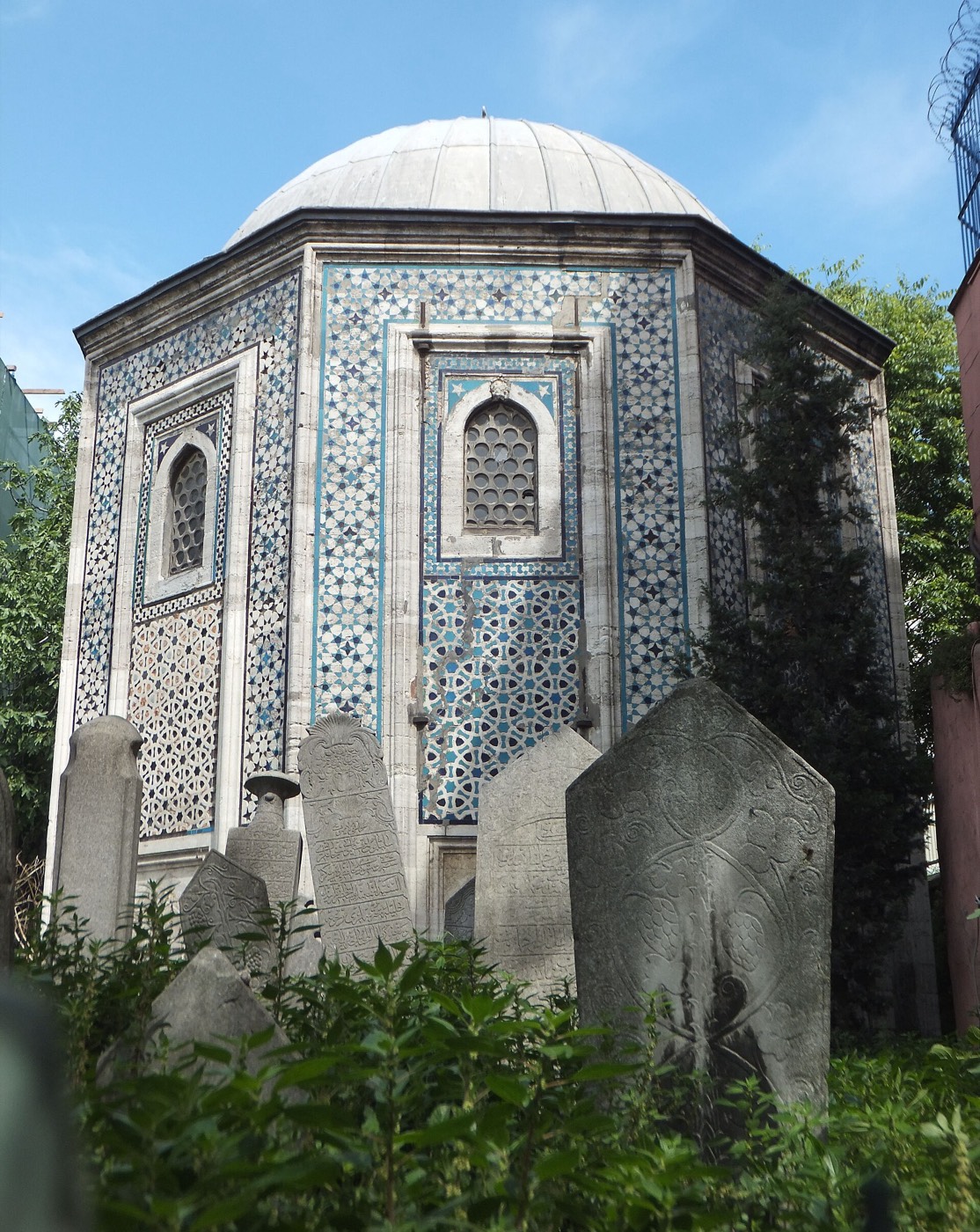
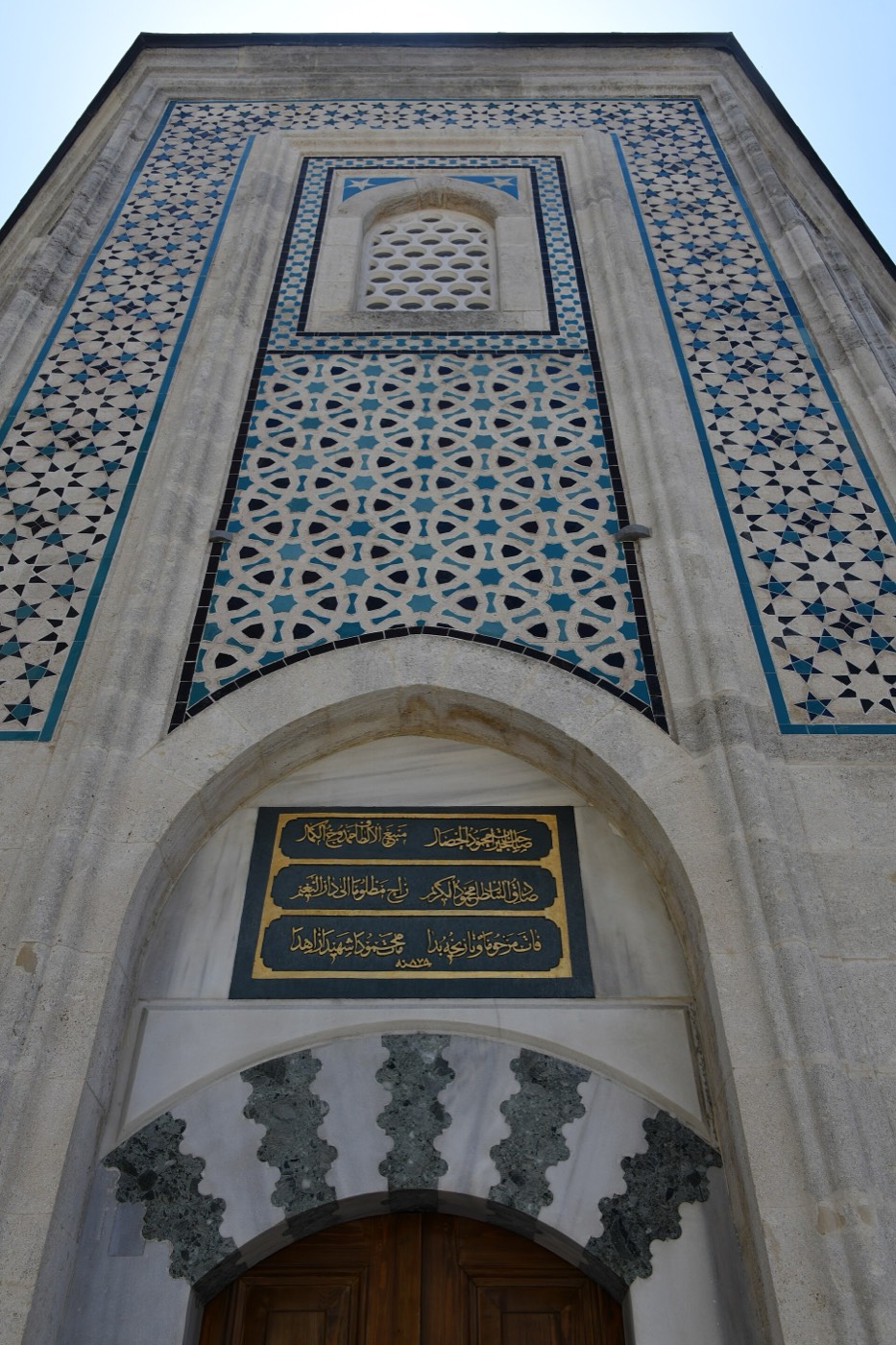
The türbe is an octagon of cut stone covered by a single dome without a drum2,3,6. It repeats the octagonal form of the tomb of Eyüp Sultan (1458), which Düzenli calls the first tomb of Istanbul, and Erkal places it between the early and classical periods in size, proportions and decoration1,2. Each face is framed up to the cornice, and inside this frame a moulded frame links two windows, one above the other1,6. The lower windows are rectangular, each under a pointed-arched lunette, and the upper windows are pointed-arched, with plaster grilles3,6.
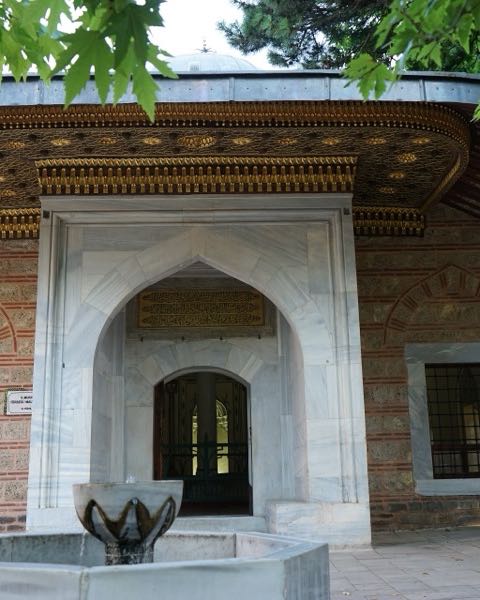
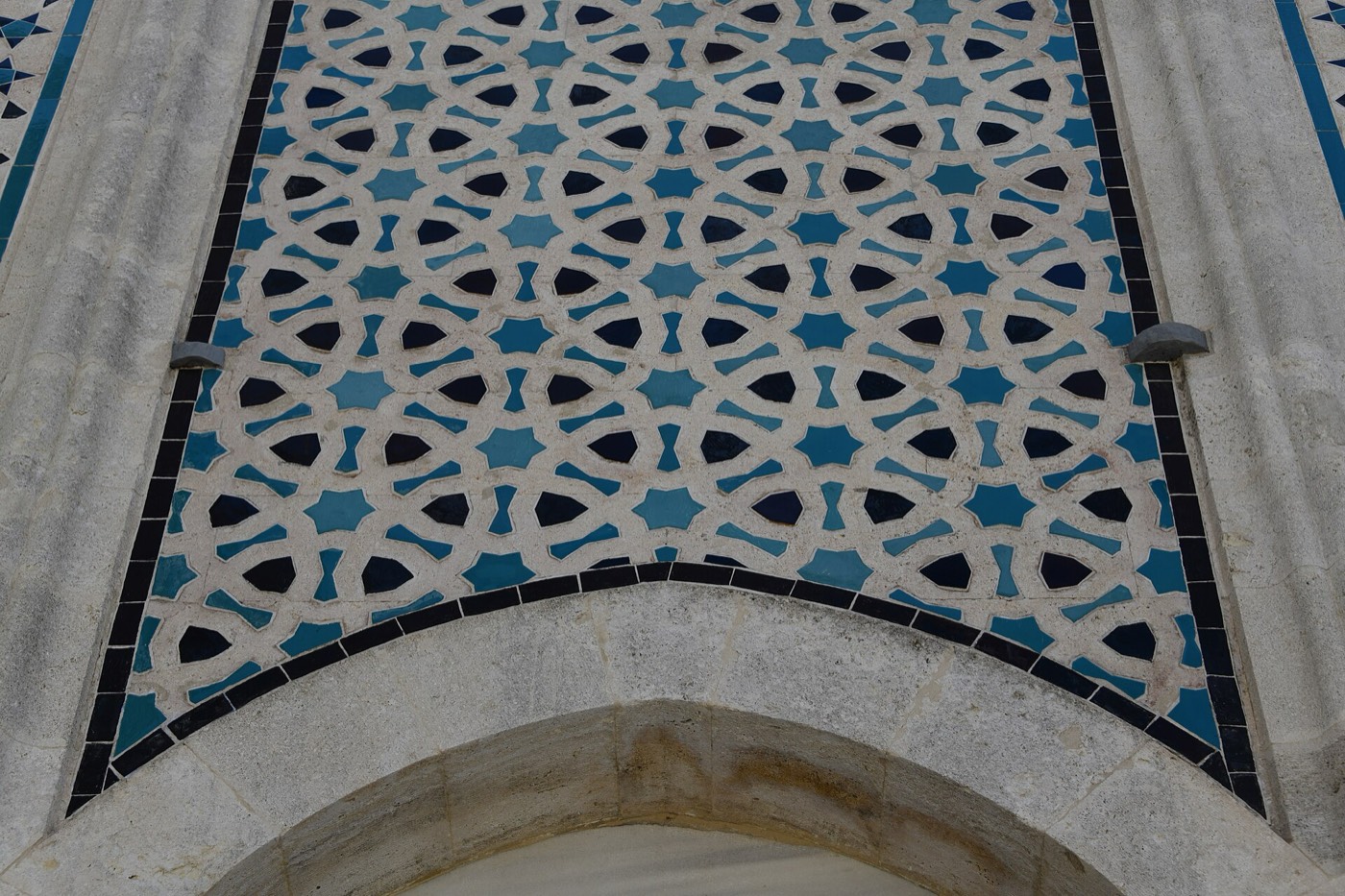
Up to the top of the lower windows the walls are plain stone; above that they are covered with tile inlay3,6. The Ministry describes the technique: sockets were carved in the stone and filled with turquoise and dark blue tiles cut to the same shapes, stars and polygons that run right round the building and enclose the upper windows3. Erkal sees the design and colours as a continuation of early Ottoman tilework, notes the tile stars repeated at the joints of the pattern and above the arches of the upper windows, and calls the türbe one of the last examples of tile-decorated tombs1. In the TDV encyclopedia, Orman calls it a distinctive building for its exterior decoration, and Gündüz counts it, for its Seljuk-style tiles, among the unique works of Istanbul4,6. Over the plain entrance door are a three-line building inscription and a repair inscription of 1730, and Gündüz also records restorations in 1827 and 1949-506.
Inside
What to look for
- Turquoise and dark blue tile stars and polygons set into sockets carved in the stone3.
- The tile band that wraps all eight faces from the lower windows upward3.
- The tile stars set above the arches of the upper windows1.
- Its placement, aligned with a courtyard gate and visible from the street leading from the bedesten1.
- The two inscriptions over the plain door: a three-line building text and a repair text of 17306.
Visiting
- The türbe stands in the grounds of the Mahmutpaşa mosque, in the Mahmutpaşa quarter of Fatih3.
- The Ministry’s Istanbul Tombs Museum Directorate lists it among the tombs in its care3.
- The Kürkçü Han and the bath of Mahmud Pasha’s foundation stand in the same district1.
Official information: Republic of Türkiye Ministry of Culture and Tourism, Istanbul Tombs Museum Directorate (İstanbul Türbeler Müze Müdürlüğü)DirectionsOpen in OpenStreetMapGuided tours in Istanbul
In a trip guide: Istanbul’s türbes on foot