History
Abdülhamid I, a son of Ahmed III, was born in Istanbul on 20 March 1725 and came to the throne on 21 January 1774, aged 49, on the death of his elder brother Mustafa III2,3. He founded the last of Istanbul's sultans' complexes at Bahçekapı, in the commercial quarter between Eminönü and Sirkeci, a choice TDV calls unfortunate and explains by the lack of space in the city's prominent districts1,2. The foundations were laid in a ceremony in September 1777, and the madrasa and library were finished in 17801. TDV names the chief architect Mehmed Tâhir Ağa as the complex's architect and the city prefect Hâfız Mustafa Efendi as building superintendent1,4.
The tomb, built in 1780 at the end of the madrasa's plot, received the sultan's body after he died of a sudden stroke on 7 April 1789, while reading the grand vizier's report on the Russian capture of Özü (Ochakiv)1,3. Mustafa IV, who reigned briefly in 1807-1808, was also buried here1,2. During the Second Constitutional period the complex's soup kitchen and school across the street were pulled down for the Fourth Vakıf Han, and its sebil was moved to Alemdar Yokuşu; TDV calls the Hamidiye complex the building that suffered most from these clearances1. TDV describes the madrasa, its small mosque and the library as surviving, though heavily altered1.
Architecture
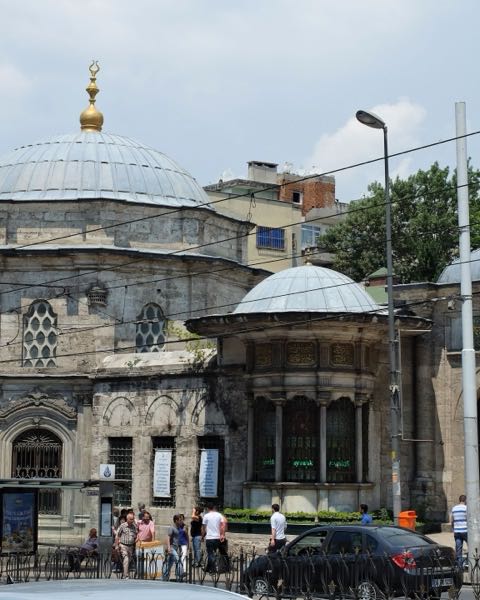
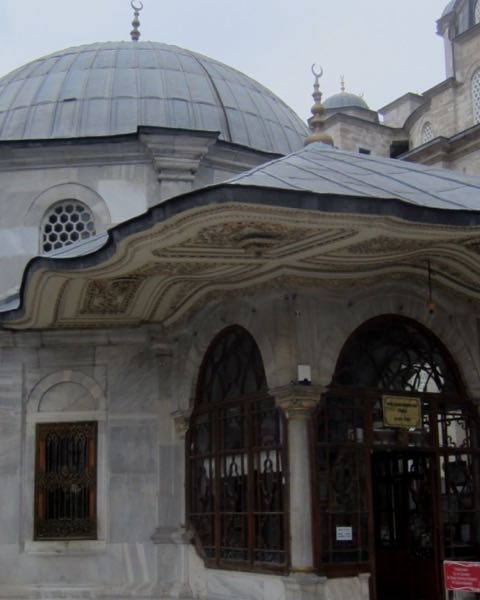
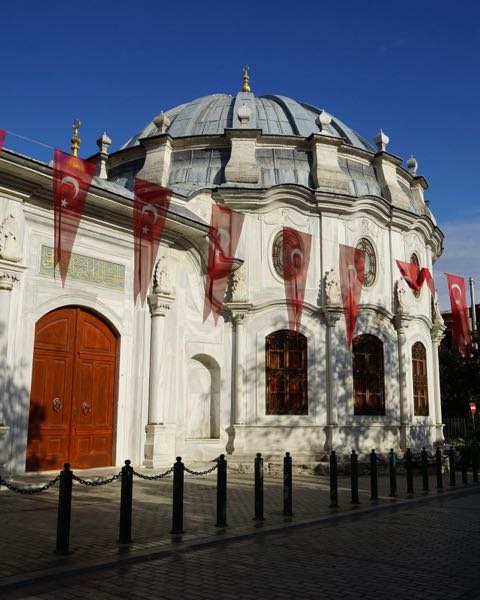
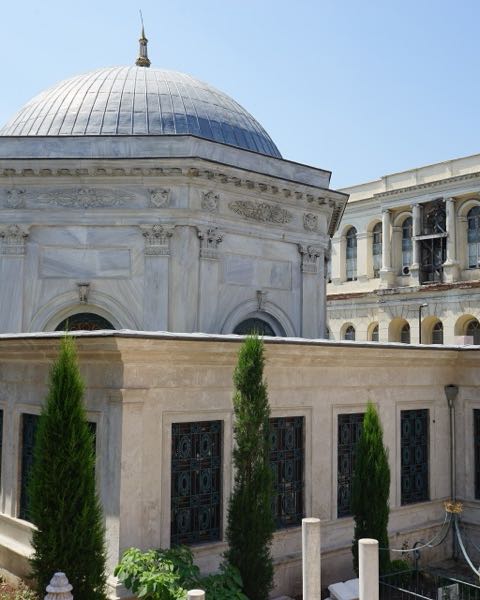
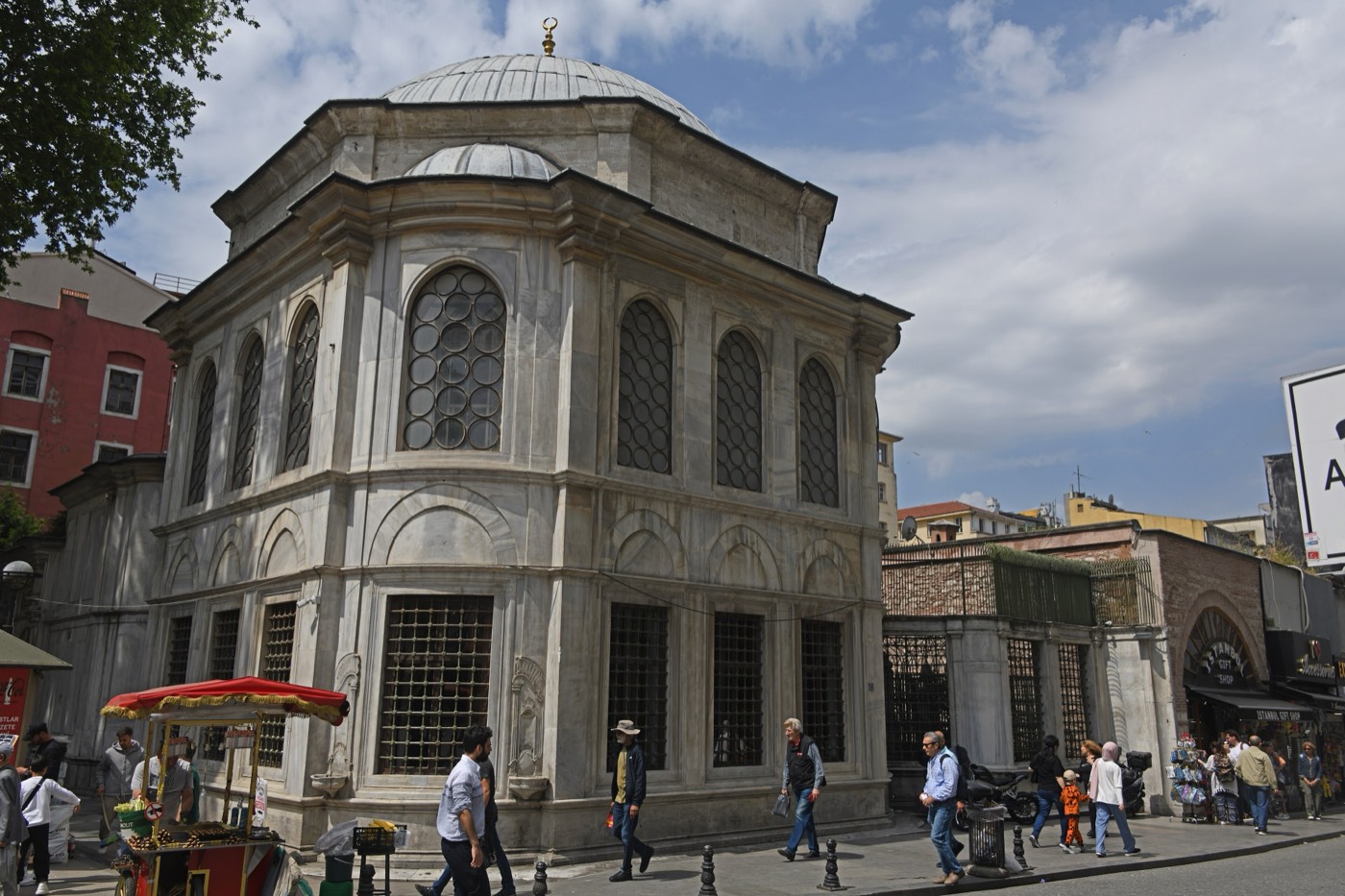
The tomb is built of cut stone and marble on a square plan whose corners are rounded, in keeping with Baroque principles, and dressed with pilasters1,2. Above a three-stepped cornice rises a dome on a blind octagonal drum; the half-domes of the squinches show on the outside, and the dome and all the roofs are covered in lead1. Two rows of windows light the interior: rectangular lower windows with iron grilles under semicircular relieving arches, and round-arched upper windows set in rectangular frames1. TDV dates the iron frames with round panes in the upper windows to the late 19th century, perhaps after the earthquake of 18941.
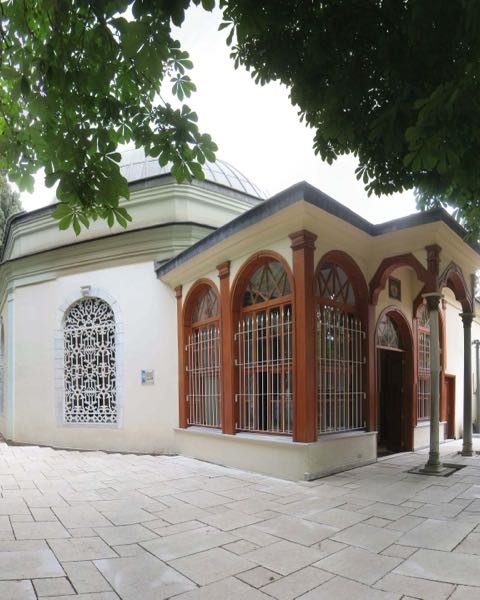
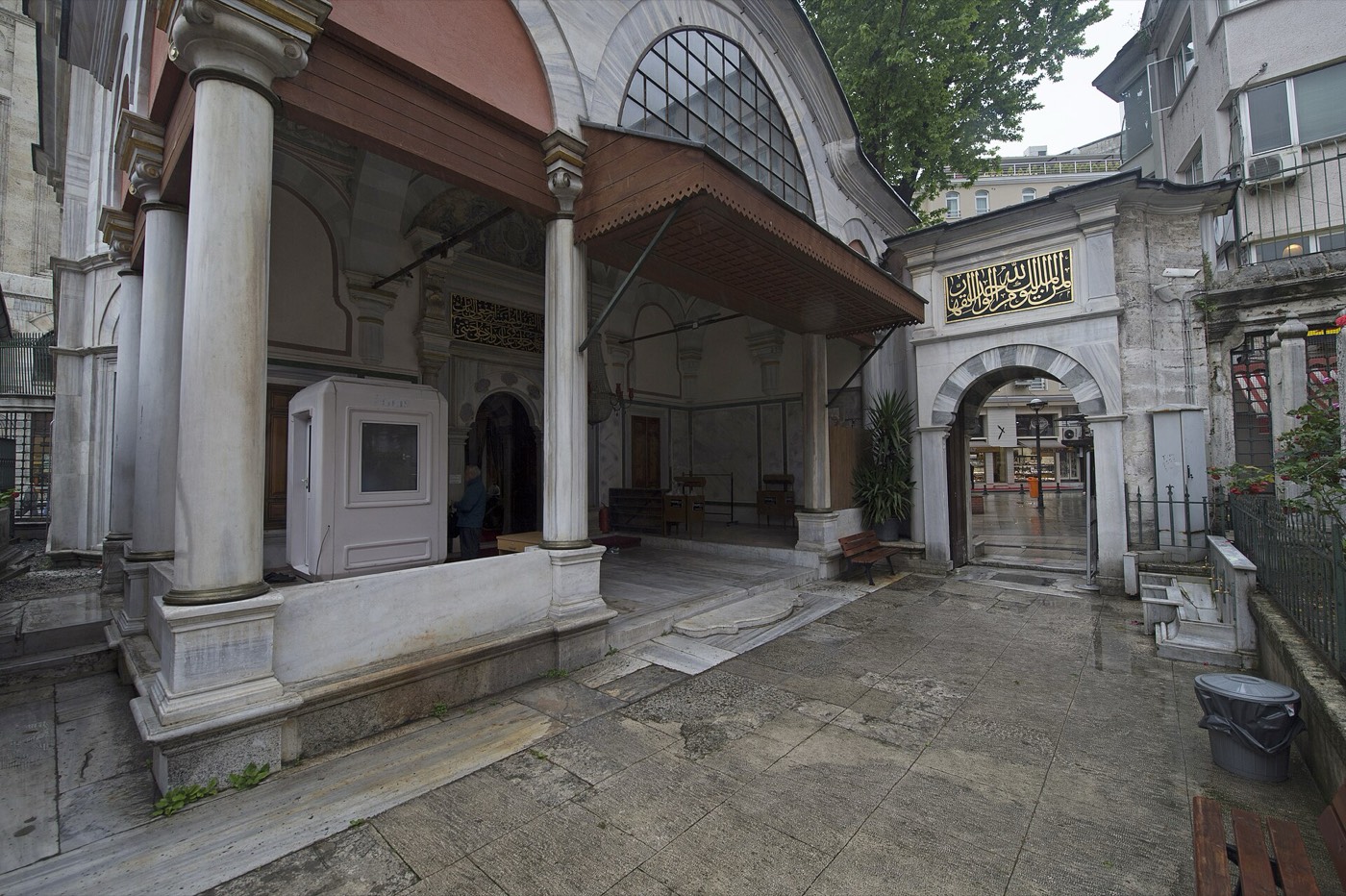
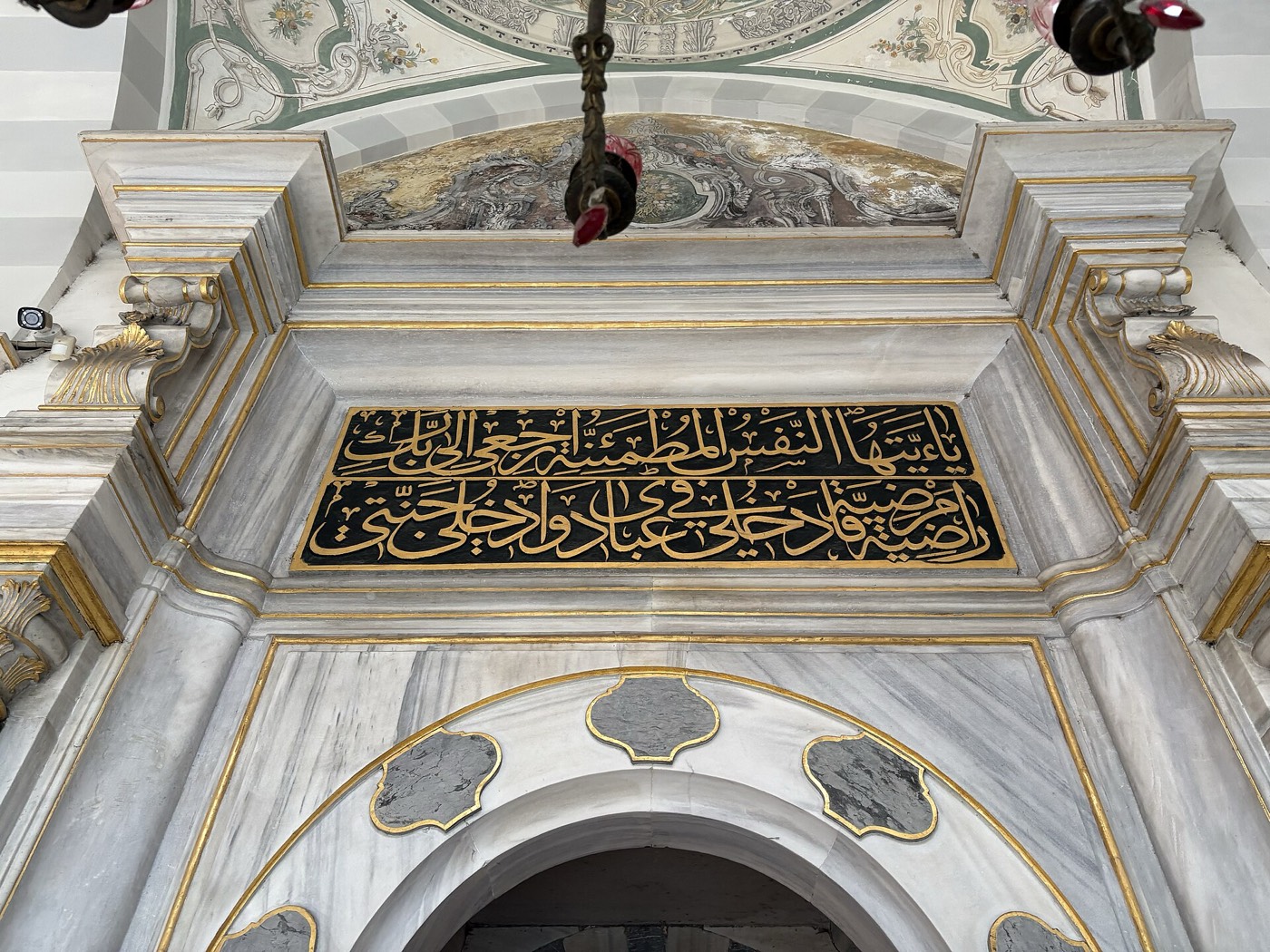
In front of the tomb is an entrance hall, walled on one side and open on the others as a columned portico; two arches divide it into a square central bay under a small dome and two narrow side bays under half-domes, and a Qur'anic verse is carved over the door1,2. Beside the two curved corner windows facing the street are two small fountains with Baroque ornament; TDV writes that they were meant to give passers-by water and to have them recite the Fatiha for the sultan1,2. Düzenli lists the tomb, dated 1780, among the works of the chief architect Mehmed Tâhir Ağa5.
Inside
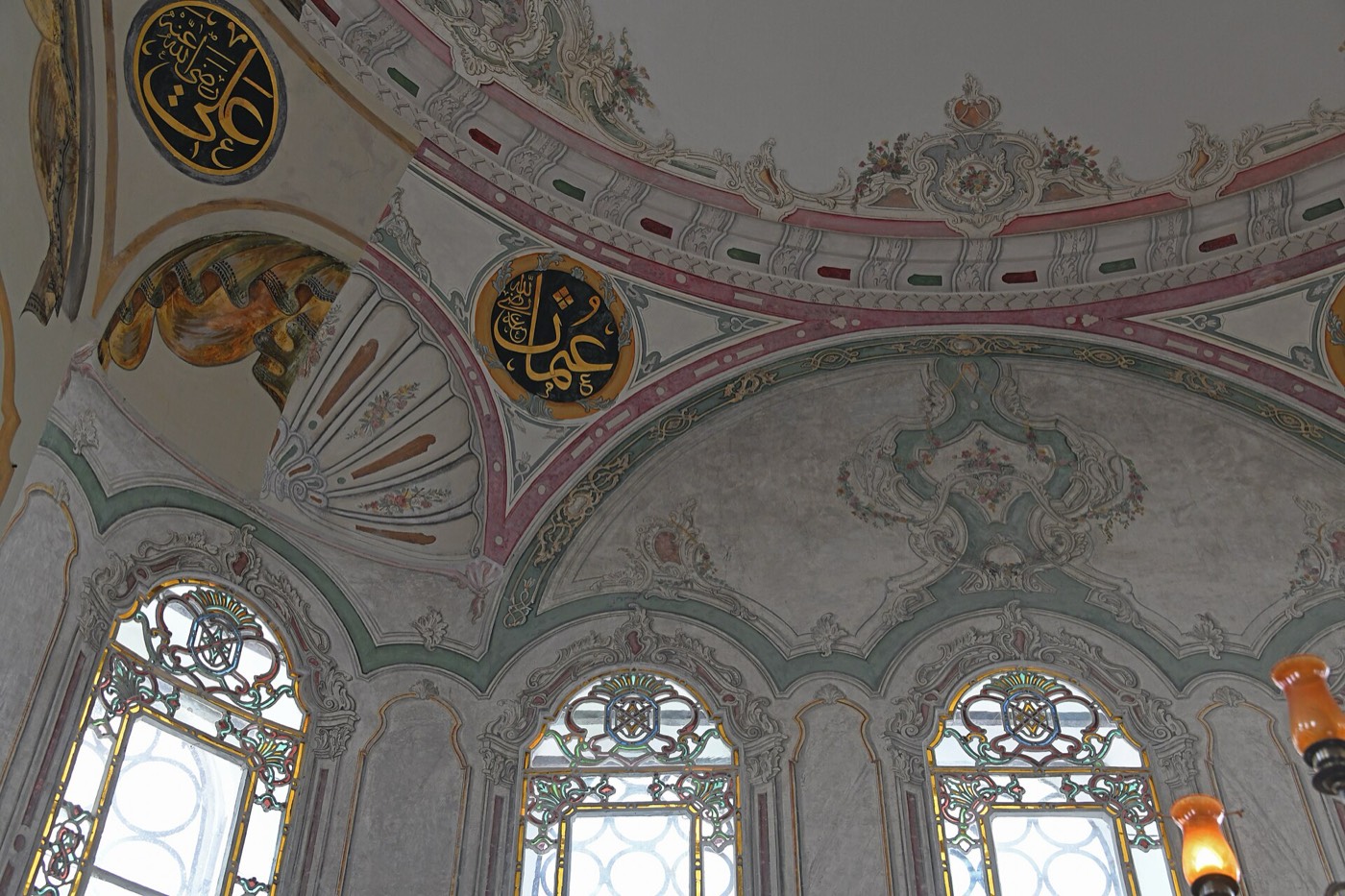
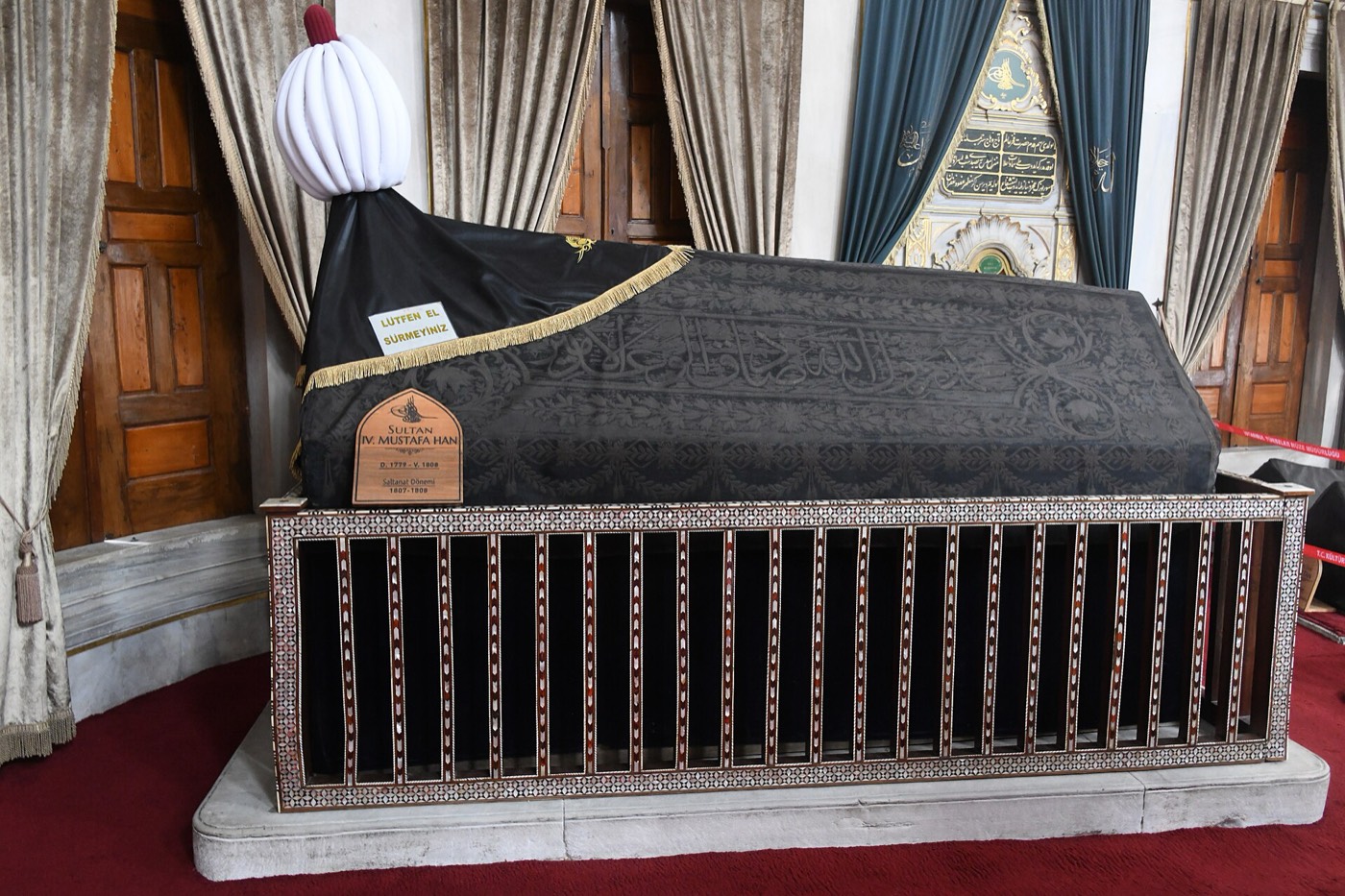
Two rows of windows light the room, the upper ones fitted with stained glass on the inside2. A marble band runs round the walls above the windows with Sura al-Mulk; its colophon names Mehmed Emin Efendi, one of the teachers (hoca) of the Imperial Council, and dates it 29 Zilhicce 1194 AH (26 December 1780)1,2. The arches and the dome are covered with Baroque painted decoration in pastel colours2. Besides the cenotaphs of Abdülhamid I and Mustafa IV there are eighteen of princes and princesses who died young; Şehsuvaroğlu, quoted by TDV, counts thirteen children of Abdülhamid I, three of Mahmud II and two of Abdülmecid, some cenotaphs topped by turbans and some by fezzes1,2. In the wall to the left of Mustafa IV's cenotaph, behind doors of mother-of-pearl, is a stone footprint attributed to the Prophet (kadem-i şerif), which the ministry says Abdülhamid I had brought from Damascus1,2.
What to look for
- Rounded, pilastered corners that give the square tomb its Baroque outline1,2.
- The two small Baroque fountains beside the curved corner windows on the street1,2.
- The entrance hall with a small central dome between two half-domes1.
- The marble band of Sura al-Mulk, signed by Mehmed Emin Efendi and dated December 17801,2.
- The kadem-i şerif set in the wall behind mother-of-pearl doors1,2.
Visiting
- The tomb stands at Hamidiye Caddesi No. 2, Bahçekapı, in the Eminönü area of Fatih, opposite the Fourth Vakıf Han2,3.
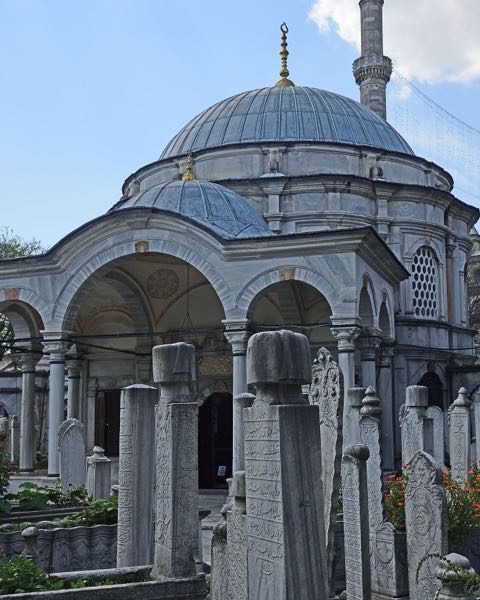
- Its walled burial garden holds the grave of the grand vizier Silâhdar Seyyid Mehmed Pasha and those of several consorts of Abdülhamid I and Mustafa III1.
- The complex's Baroque sebil now stands at Alemdar Yokuşu, against the outer wall of the Zeynep Sultan Mosque, opposite the Gülhane Park gate1.
Official information: Istanbul Tombs Museum Directorate (İstanbul Türbeler Müze Müdürlüğü), Republic of Türkiye Ministry of Culture and TourismDirectionsOpen in OpenStreetMapGuided tours in Istanbul
In a trip guide: Istanbul’s türbes on foot