History
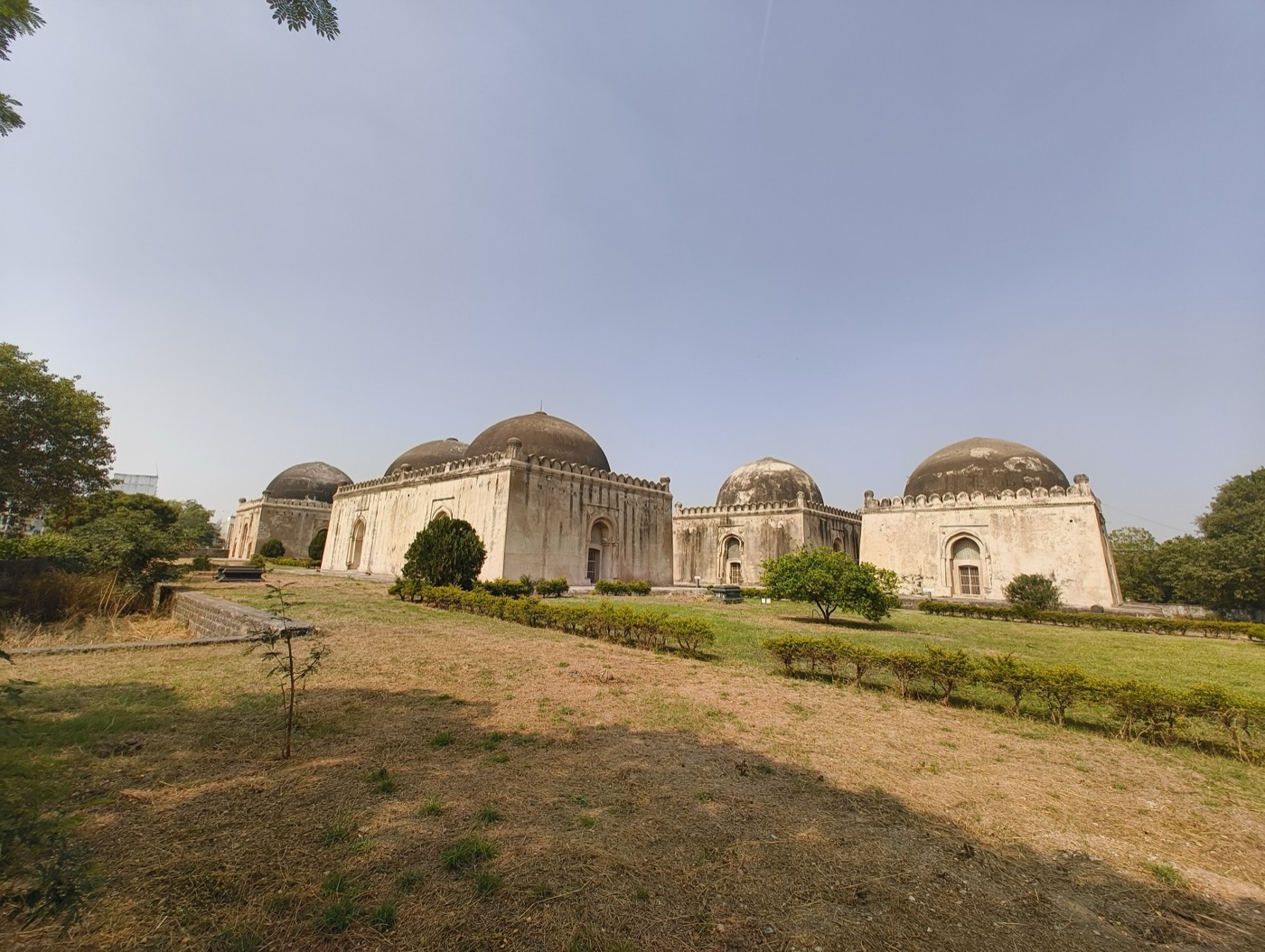
Gulbarga, now Kalaburagi, was the capital of the Bahmani sultanate from its foundation in 1347 until the 1420s, when Ahmad Shah moved the court to Bidar8,6. Its early sultans were buried in two groups of royal tombs5,3. The second group, the Haft Gumbaz or “Seven Domes”, lies on the eastern outskirts and runs from west to east1,3. Its earliest tomb is that of Mujahid Shah, the third sultan, killed in his tent on 15 April 1378 by conspirators led by his uncle Daud1,3,6. Daud ruled for just over a month before he too was assassinated, at the public prayers in the great mosque on 20 May 13786.
Two more tombs date from the crisis of 13973. Ghiyath al-Din, a youth of seventeen, reigned for one month and twenty-six days before Tughalchin, chief of the Turkish slaves, had him blinded and deposed on 14 June 13976. Tughalchin then raised his younger half-brother Shams al-Din Daud to the throne6. In November their cousins Firuz and Ahmad seized the palace; Shams al-Din was blinded and later allowed to go on pilgrimage, and died in the Hijaz6,3. Firuz reigned until his brother Ahmad took the throne on 22 September 1422, and died ten days later6,2. Marshall also lists a tomb of Prince Sanjar, Daud’s infant son, whom Haig says was blinded in 13785,6.
Architecture
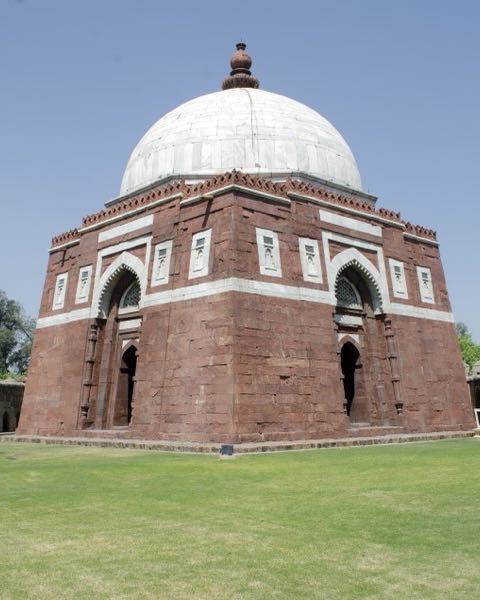
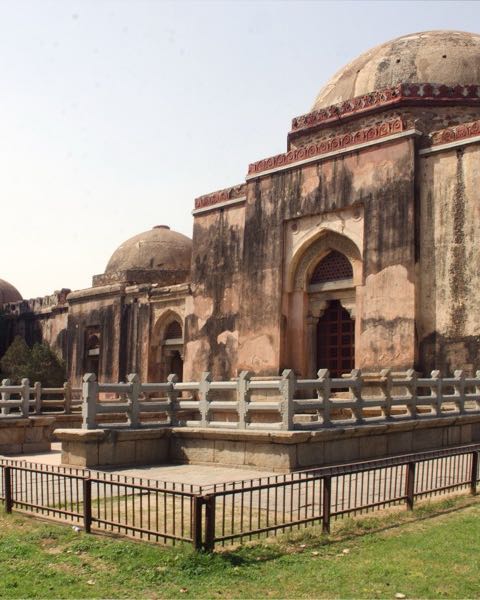
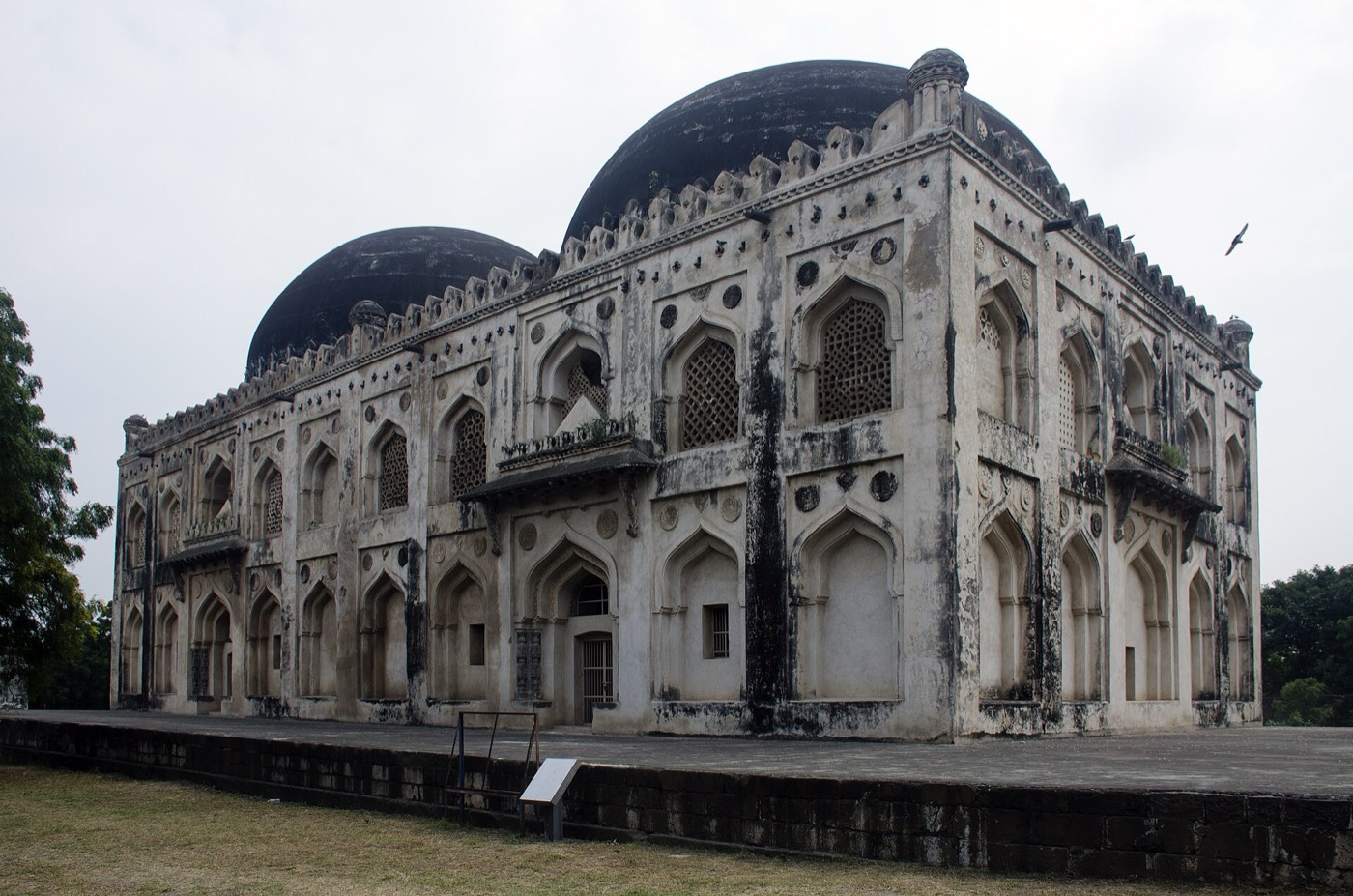
Ara counted nine tombs, two of them anonymous, on the south side of a narrow road3. Marshall saw a strong family likeness among them: the single tombs are square chambers on a low plinth, with battlements, corner turrets and one dome, and the double tombs repeat that unit to make a building twice as long as it is wide, under two domes5. He placed the tombs of Mujahid and Daud in the Tughluq style of Delhi5. Daud’s tomb, like Firuz’s, is a double mausoleum of two domed chambers joined inside1,3. The tombs of Ghiyath al-Din and Shams al-Din share one plinth, and Marshall saw the first sign of Hindu carving in the prayer niche of Ghiyath al-Din’s3,5.
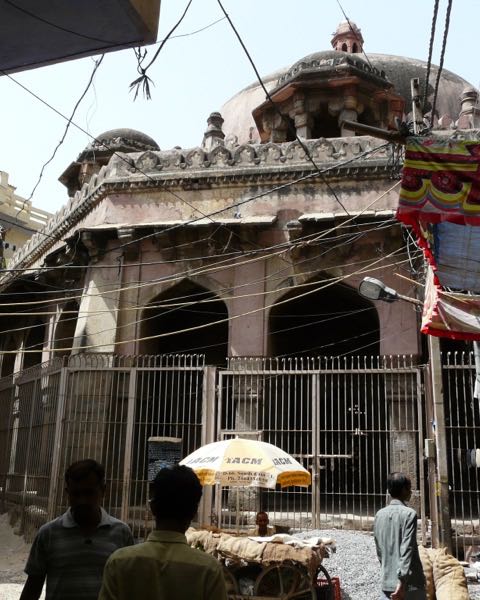
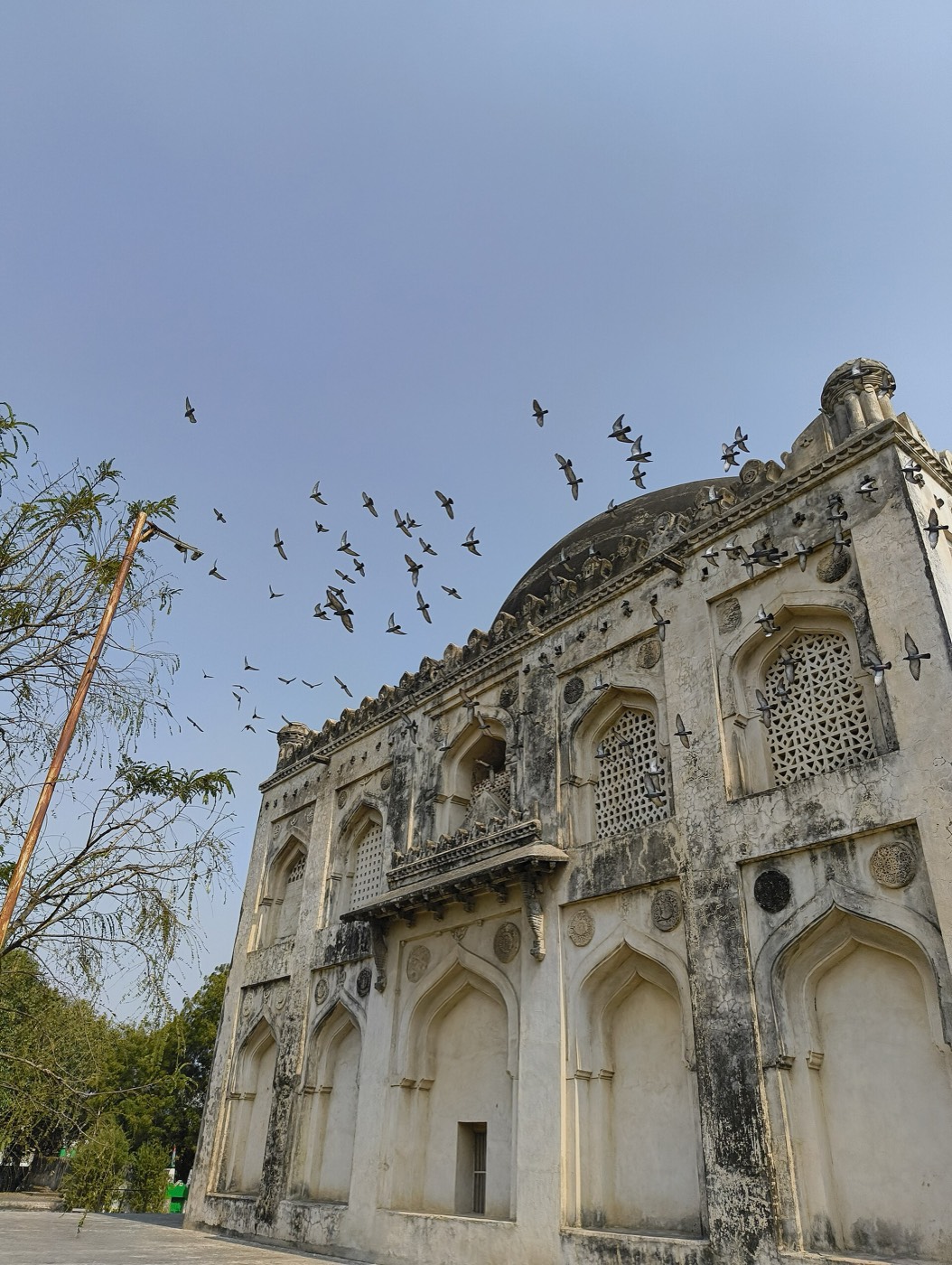
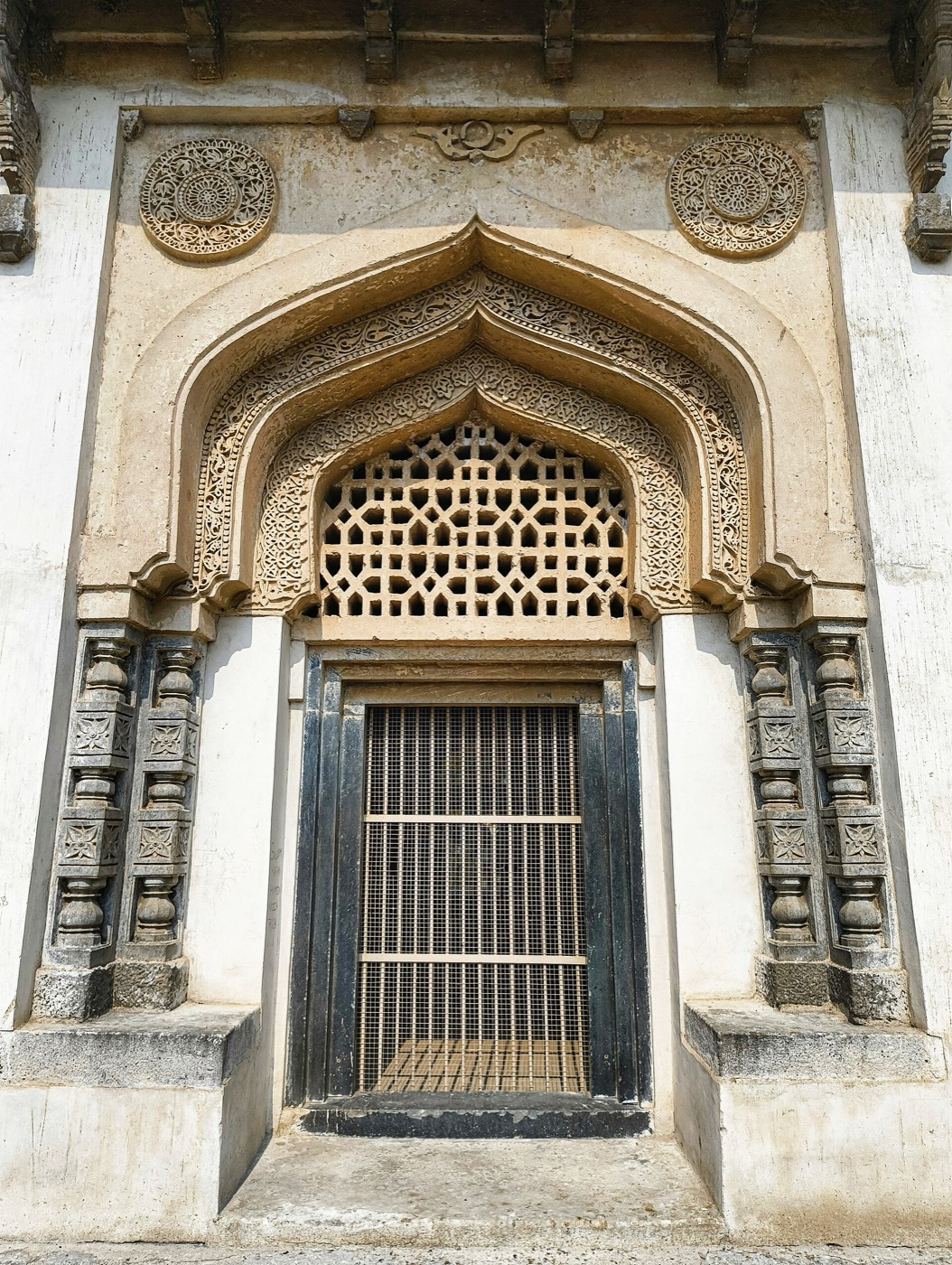
Firuz Shah’s tomb, south-east of the others, is the largest and the most richly decorated of the group1,3. Archnet gives it about 48 by 24 m, Marshall 153 by 78 ft (46.6 by 23.8 m)2,5. Its walls rise 14 m including the parapet, and the hemispherical domes add another 10 m2. Outside and in, the walls are divided into two tiers of double-recessed arches, blind below and filled with pierced stone screens above2,4. Marshall saw growing Hindu influence in the carved and polished black stone pilasters, eaves and brackets of its entrances5. A band of foliage carved in relief runs along the base, and the merlons are cut in leaf shapes2.
Inside
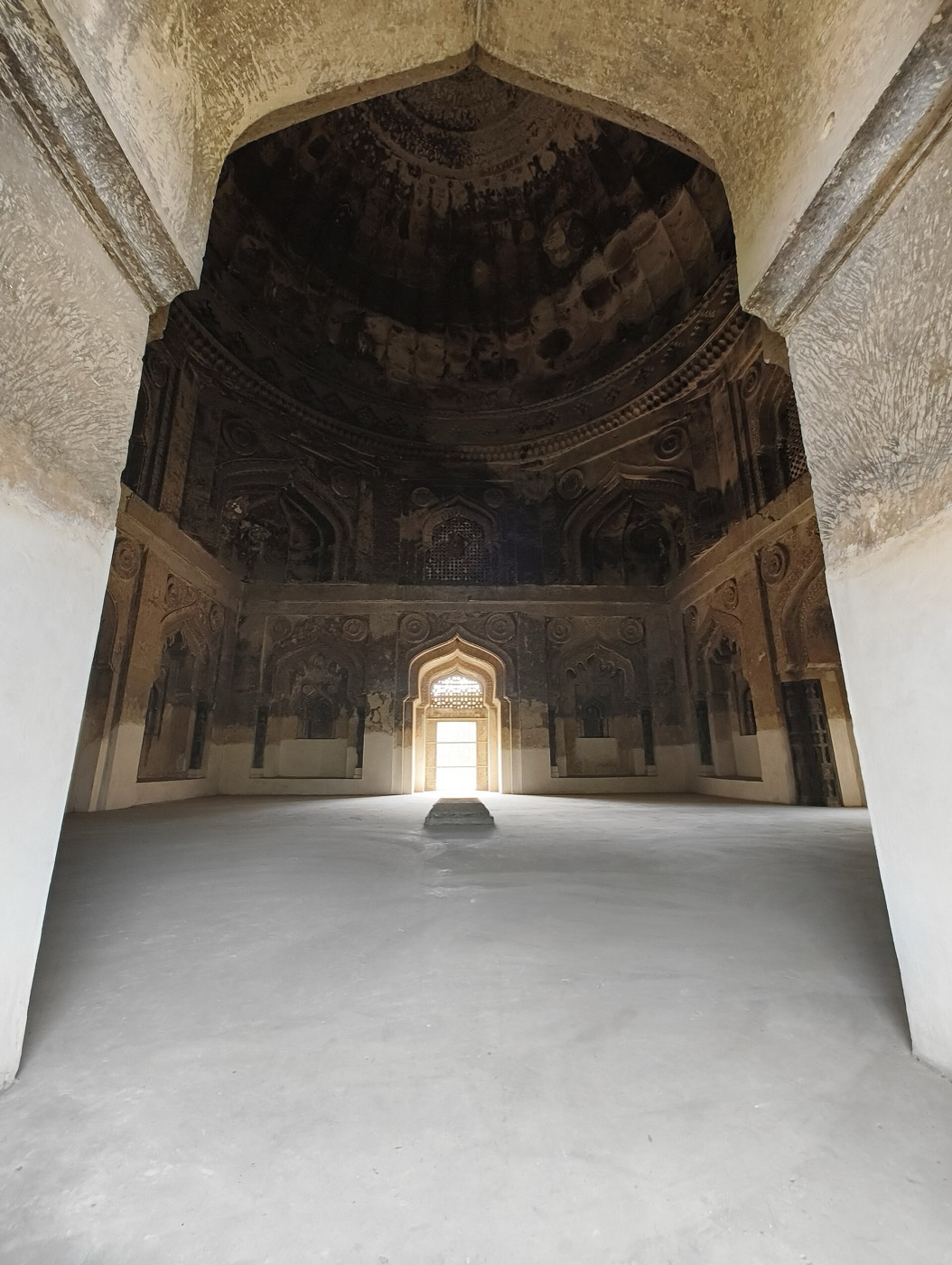
Inside, Firuz Shah’s tomb is divided into two bays joined by an arched opening; ornamental turrets at cornice level mark the line between them on the outside2. Ara found its mihrab, rows of arched niches and squinches more complex and finer than in the other tombs of the region4. Marshall described rich plaster and painted decoration inside, close to that of the Sayyid and Lodi tombs at Delhi and recalling the designs of Persian bookbinding and embroidery5.
What to look for
- Firuz Shah’s double tomb, with pierced stone screens filling its upper arches2,4.
- Polished black stone pilasters and brackets at Firuz Shah’s entrances5.
- Battlements and corner turrets on the earlier single tombs, in the Tughluq manner5.
- The single plinth shared by the tombs of Ghiyath al-Din and Shams al-Din3.
- Leaf-shaped merlons and the carved foliage band along the base of Firuz Shah’s tomb2.
Visiting
- The group lies outside the old city of Kalaburagi to the east1,3.
- The first royal group, with the tombs of the founder ‘Ala-ud-Din Hasan Bahman Shah (d. 1358) and Muhammad Shah I (d. 1375), lies near the fort5,3.
- The ASI protects the group as “Hafth Gumbad Tomb of Firoz shah”; Gulbarga’s Bahmani monuments are a component of “Monuments and Forts of the Deccan Sultanate”, on India’s UNESCO Tentative List since 20149,7.
Official information: Archaeological Survey of India (ASI), Hampi CircleDirectionsOpen in OpenStreetMapGuided tours in Kalaburagi