History
Mirza Iraj was the eldest son of Abdul Rahim Khan-i-Khanan, the Mughal commander based at Burhanpur; in his youth he was called “the young Khan-i-Khanan”2,5,8. He earned the title Bahadur in 1601 after a battle with Malik Ambar near Nanded, and Jahangir gave him the title Shah Nawaz Khan in the sixth year of his reign5. As governor of Berar and Ahmadnagar he defeated Malik Ambar again in 1615, burned the buildings and gardens at Khirki and was raised to the rank of 5,0005. Jahangir also records that a son of Prince Khurram, the future Shah Jahan, by Shah Nawaz Khan’s daughter died at Burhanpur6.
Jahangir had heard that Shah Nawaz Khan was drinking heavily, and he told Khan-i-Khanan to watch over him6. When his father reached Burhanpur he found him very weak, and he died there soon after, “in the thirty-third year of his age”, in Jahangir’s fourteenth regnal year, AH 1028 (1619)5,6. His younger brother Darab succeeded him as governor of Berar and Ahmadnagar6. The National Monuments Authority says his father built the tomb in 1619-1623; MP Tourism gives 1622-1623, and the district administration credits Jahangir2,3,8. In 1908 the Nimar district gazetteer called it the most important tomb in Burhanpur, and it is now a monument of national importance protected by the Archaeological Survey of India1,7.
Architecture
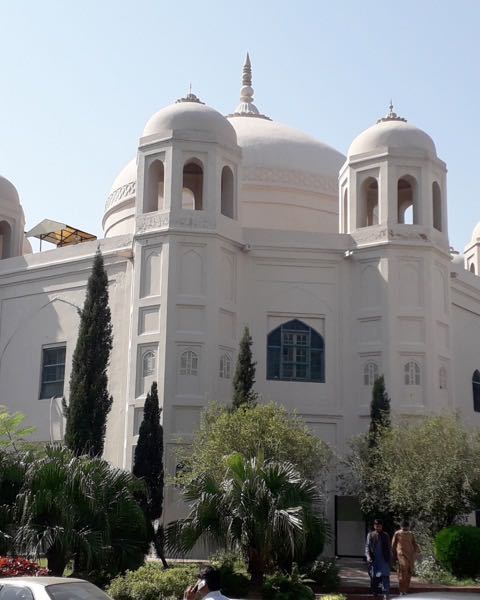
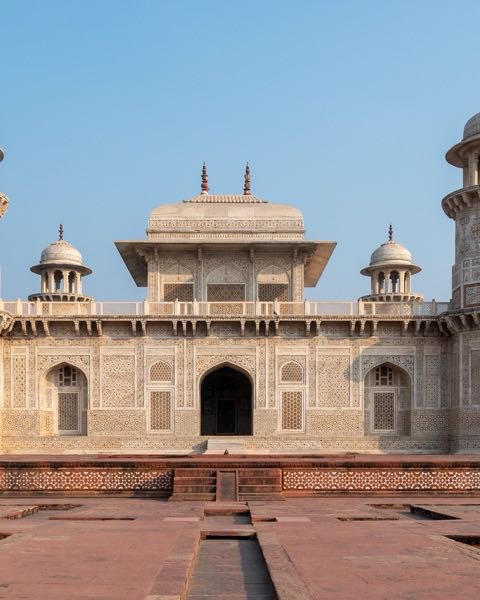
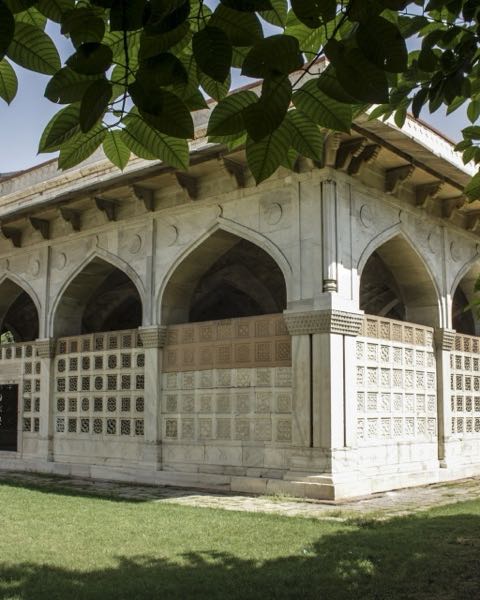
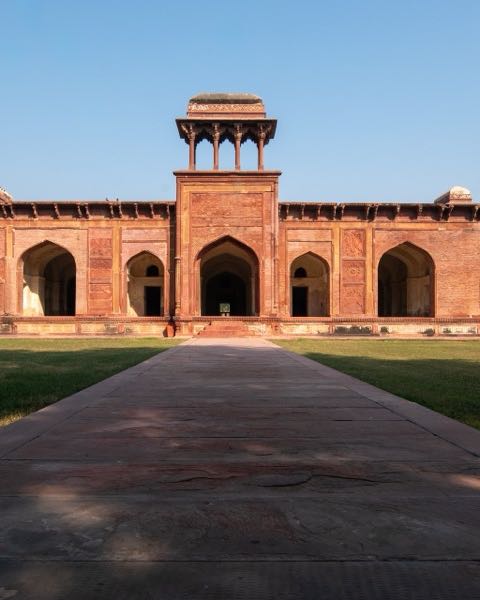
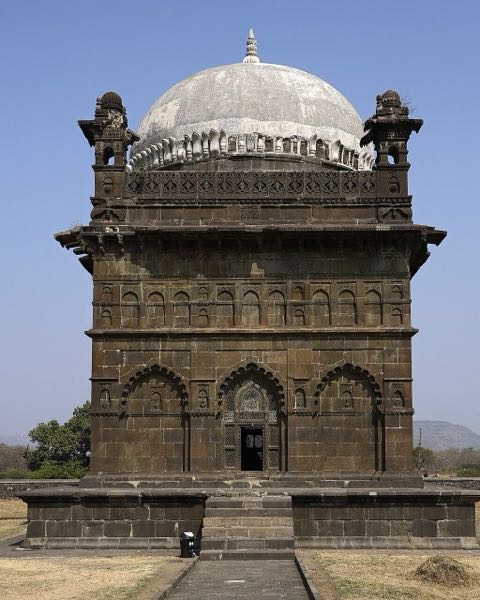
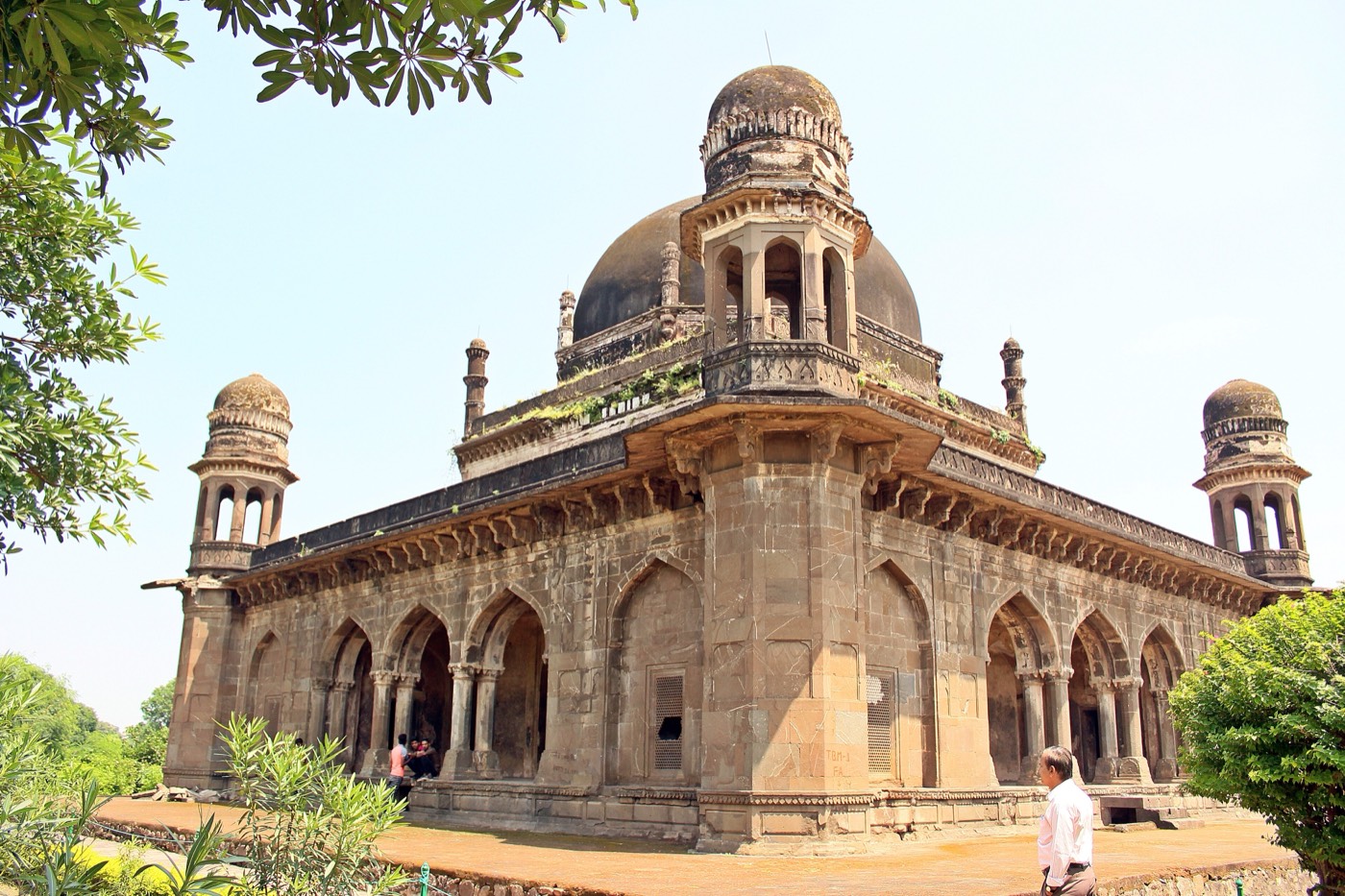
The tomb stands at the north end of a walled garden on the south bank of the Utavali river, about 6 km from Burhanpur railway station, and is approached from a gateway on the south along a central path8. It is built of lakhori brick in lime mortar and faced on the ground floor with local black basalt, which gave it the popular name “Black Taj”8. Arcaded verandahs with rooms at the corners surround the square tomb on all sides, and an octagonal turret topped by a chhatri rises at each corner8. A large dome on an octagonal drum, with small pinnacles (guldastas) at its corners, covers the double-height central hall8. A ruined building east of the walled complex is called the Paandan Mahal, from its likeness to a betel-leaf box3,8.
Percy Brown (1942) saw the tomb as a composition of borrowed elements: a square two-storeyed design perhaps derived from the royal tombs of Gujarat, pinnacles like those of the Tughluq buildings of Delhi with foliations from Bijapur, and a crowning dome of the Lodi type4. In his view it was the last effort of any significance in the regional style of Khandesh, built after the country had come under Mughal rule4.
Inside
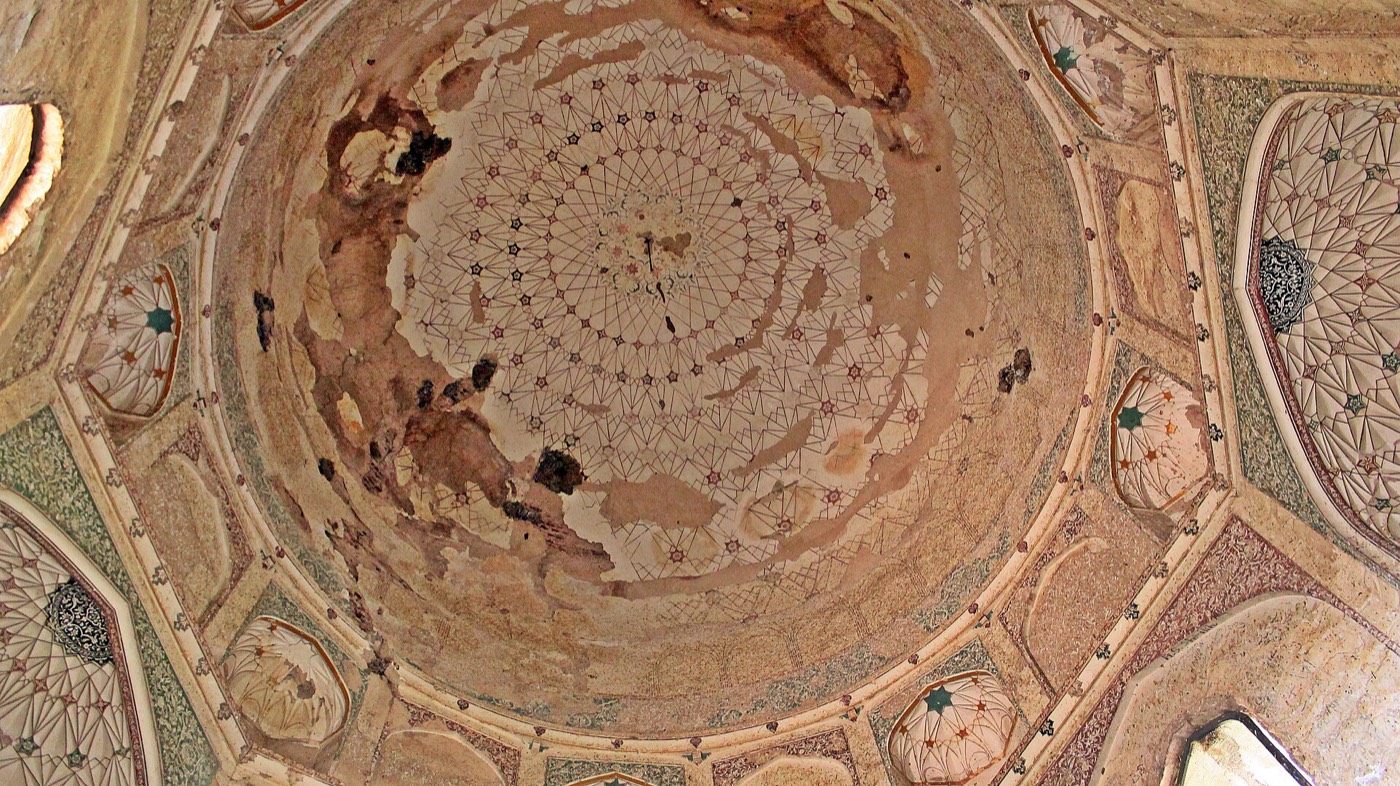
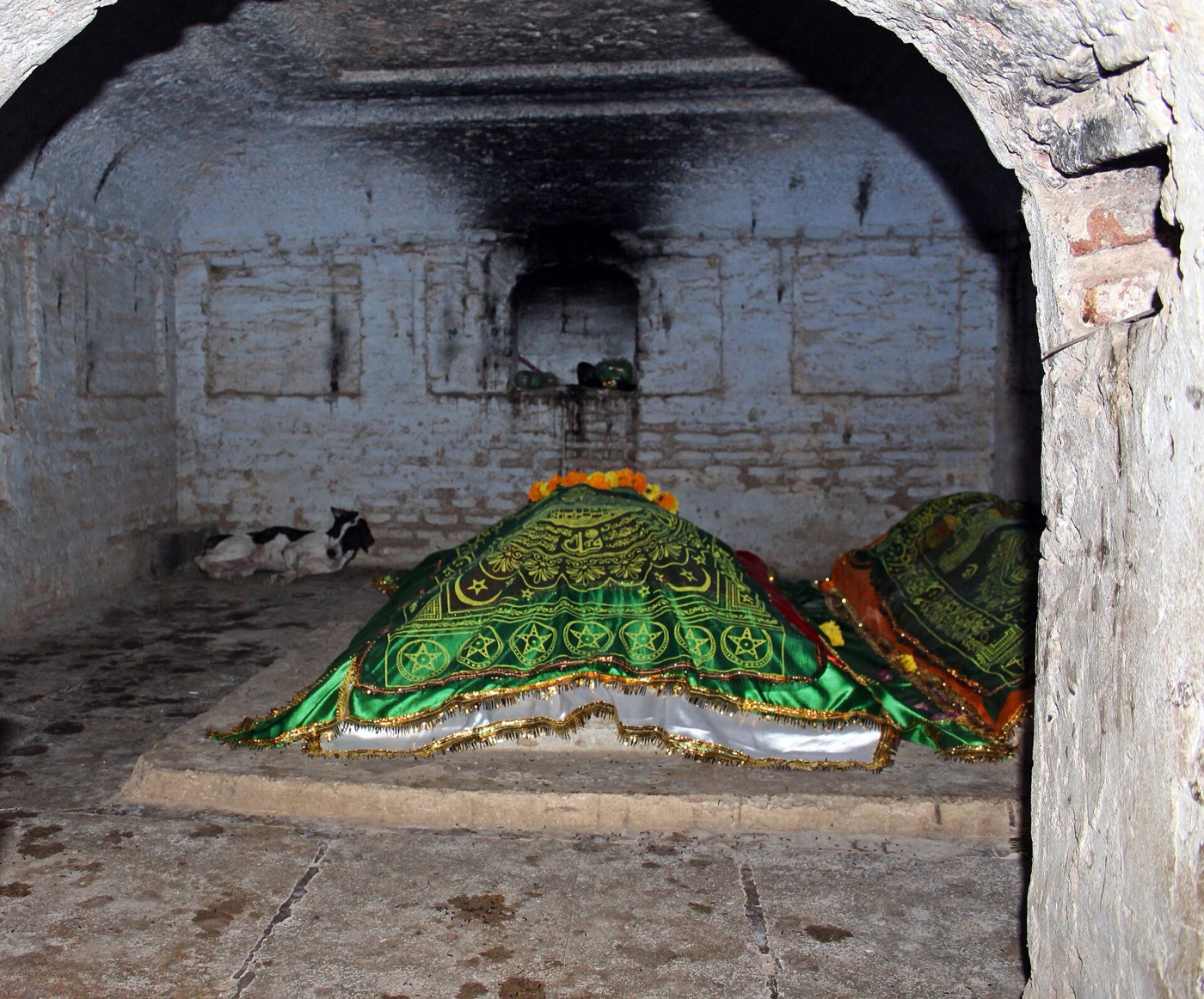
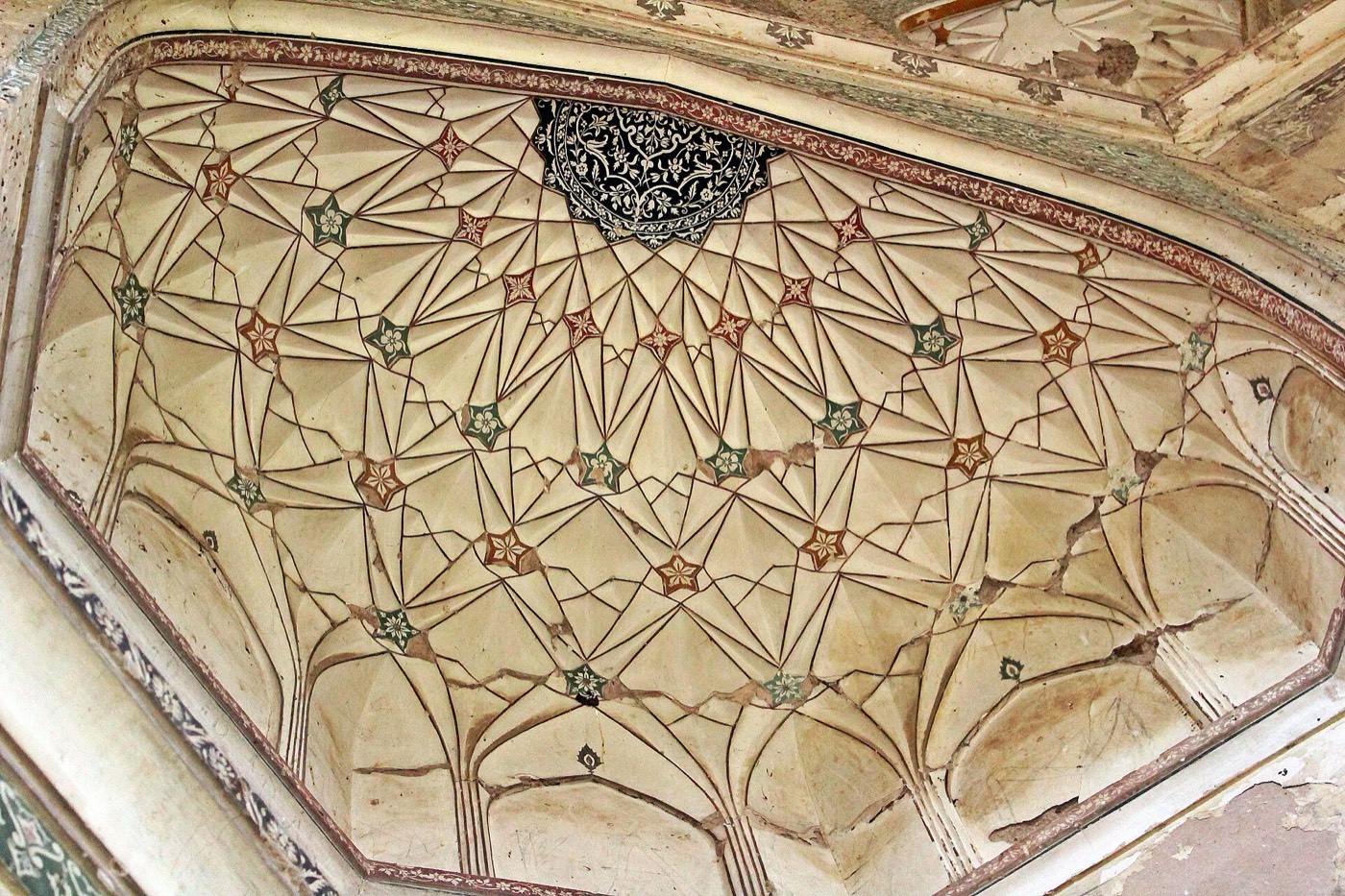
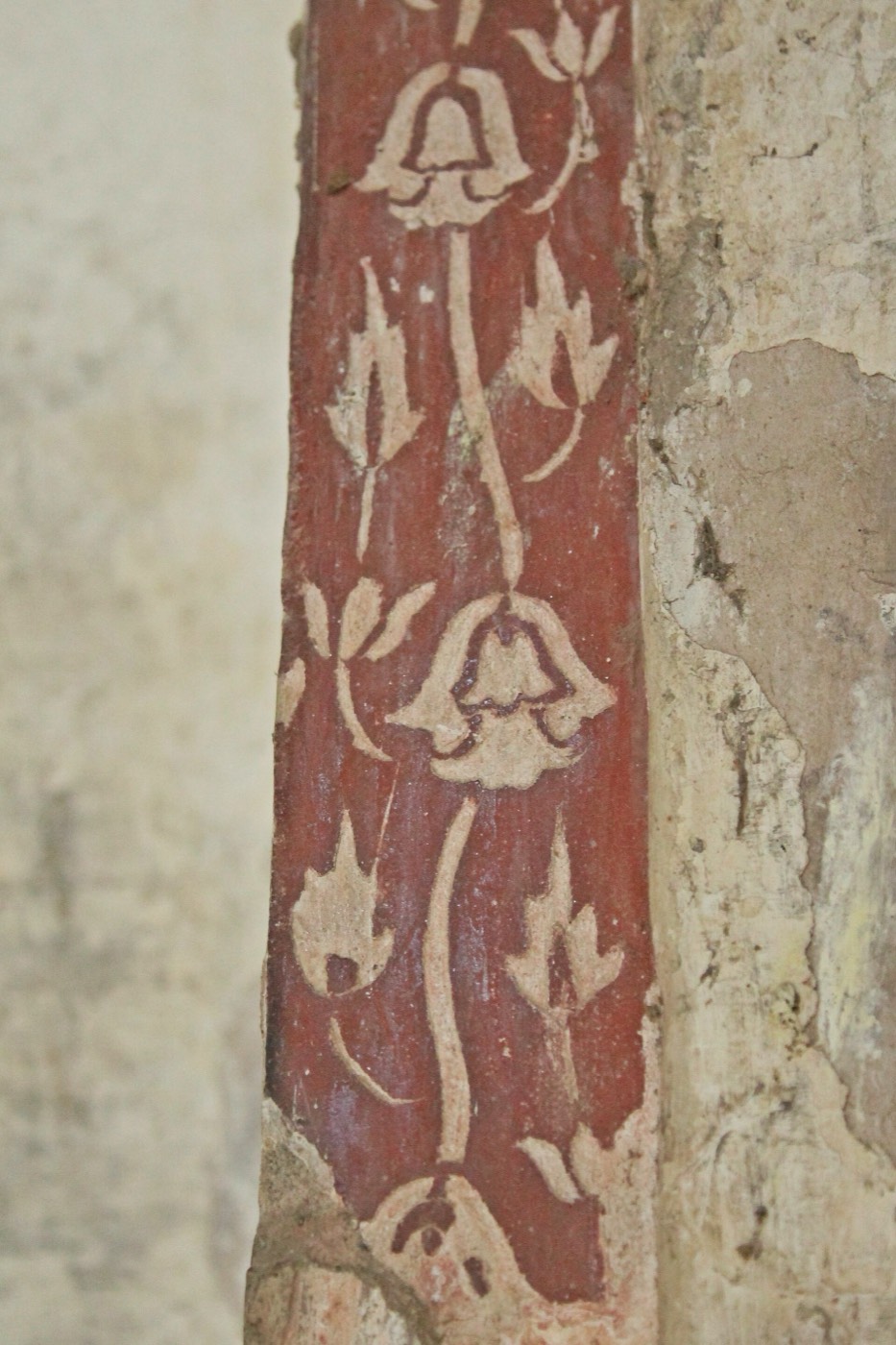
The double-height central hall holds two stone cenotaphs on a platform, and its squinches and arch spandrels carry low-relief plasterwork8. The National Monuments Authority describes the plaster as decorated with floral and geometric patterns picked out in green, maroon and dark blue, and records that the paintings have suffered from chipping and vandalism8. Shah Nawaz Khan’s actual grave is not in the hall but in a basement room below it, reached by a staircase near the front and lit through small openings at plinth level; MP Tourism says that his wife lies beside him3,8. The district administration compares this crypt burial with Mumtaz Mahal’s grave in the Taj Mahal2.
What to look for
- The black basalt facing of the ground floor, which gave the tomb its popular name, the Black Taj8.
- The low-relief plasterwork of the central hall, picked out in green, maroon and dark blue8.
- The basement room below the hall, reached by a staircase, with the actual graves3,8.
- Gujarati, Tughluq and Bijapuri features under a Lodi-type dome, as Percy Brown read them4.
- The ruined Paandan Mahal east of the complex, named after a betel-leaf box3,8.
Visiting
- The tomb stands on the south bank of the Utavali river, north of the old walled city of Burhanpur, about 6 km from Burhanpur railway station8.
- Burhanpur lies on the Mumbai-Delhi railway line; the nearest airport is at Indore2,8.
- The ASI also protects other monuments in Burhanpur, among them the Bibi Sahib’s Masjid, the palace in the fort and the hammam1,8.
Official information: Archaeological Survey of India, Bhopal Circle (protected monument); visitor information from the Burhanpur district administration and MP TourismDirectionsOpen in OpenStreetMapGuided tours in Burhanpur