History
Mehmed II was born in Edirne on 30 March 1432, reigned in 1444-1446 and again from 1451, and took Constantinople on 29 May 14535. He died on 3 May 1481 at Hünkârçayırı, between Üsküdar and Gebze, at the start of a new campaign5. His body was brought to Istanbul and buried in the walled graveyard before the qibla wall of his mosque, built on the site of the Church of the Holy Apostles, burial place of Byzantine emperors1,4. Erkal dates the first tomb, and that of his wife Gülbahar Hatun, to the reign of their son Bayezid II; TDV says it is not known whether Mehmed's was begun before or after his death1,4.
The earthquake of 22 May 1766 ruined the mosque and the tomb1,2,6. Mustafa III had the tomb rebuilt first, with Hâşim Ali Bey as superintendent and, according to the ministry and Düzenli, the chief architect Mehmed Tâhir Ağa, before work on a new mosque began in July 17671,2,3,4. In 1782 the Cibali fire spread to the mosque courtyard, where people had piled their belongings, and burned the tomb's interior with its cenotaph1. Abdülhamid I had it repaired, adding an inscription dated 1199 AH (1784-85) over the door1,2. Abdülaziz renewed the interior decoration in 1865-66, and later repairs followed under Mehmed V and in 1952-19531.
Architecture
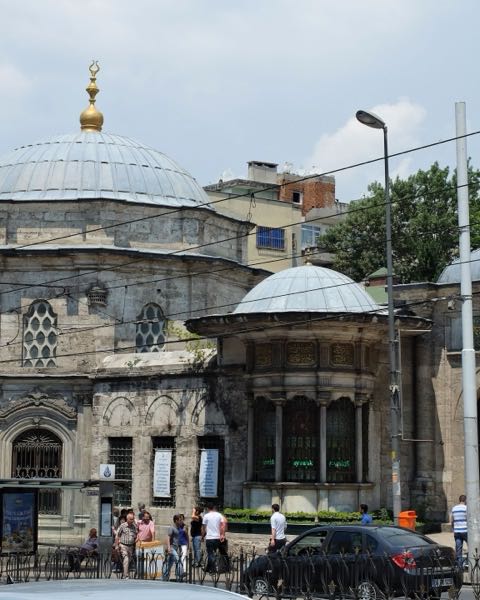
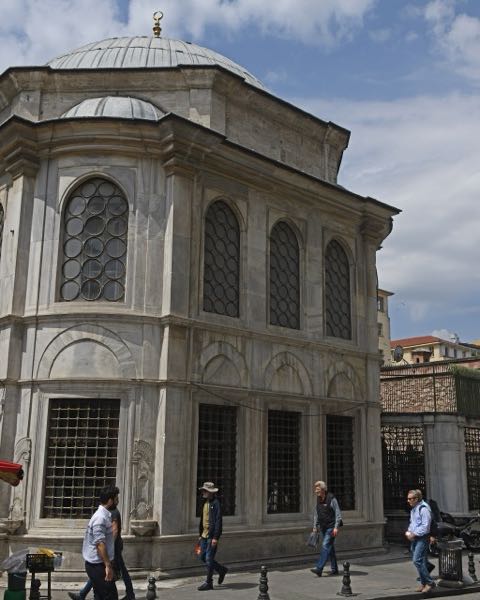
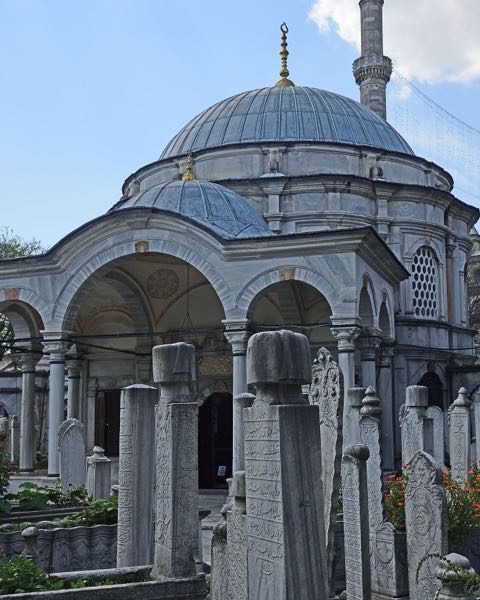
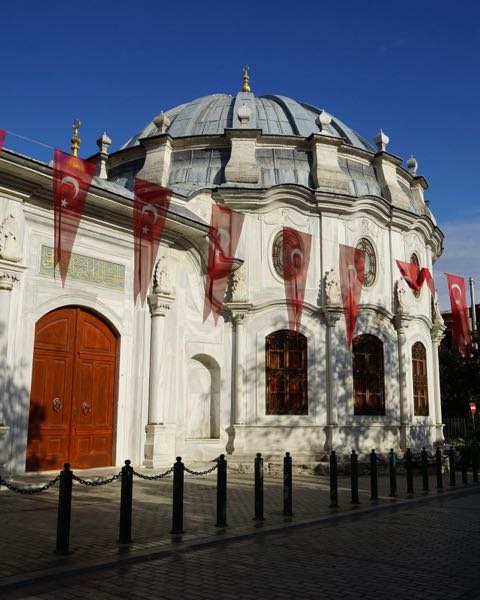
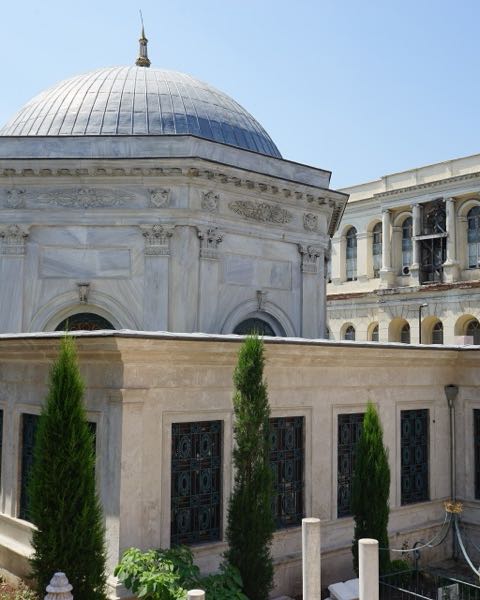
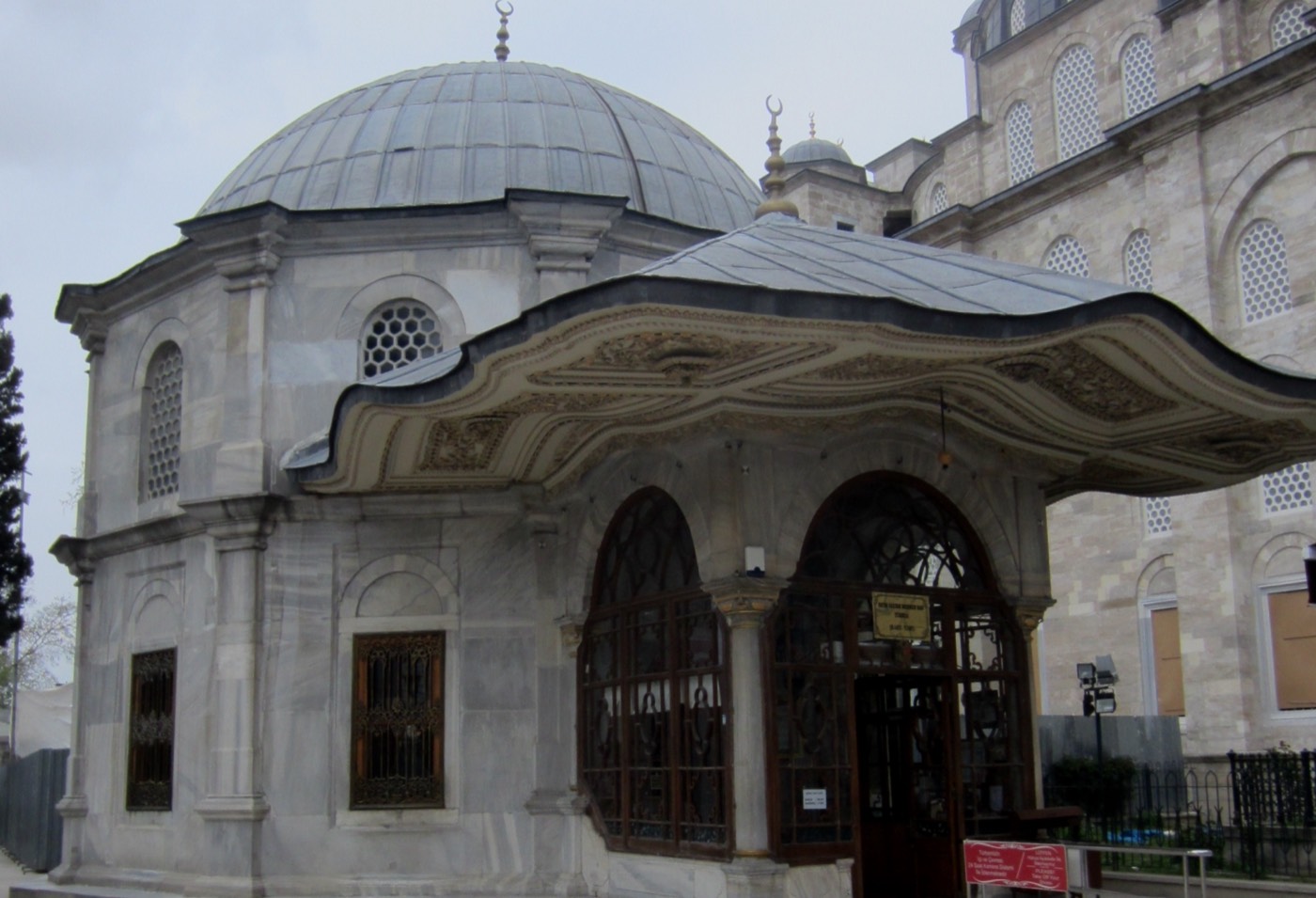
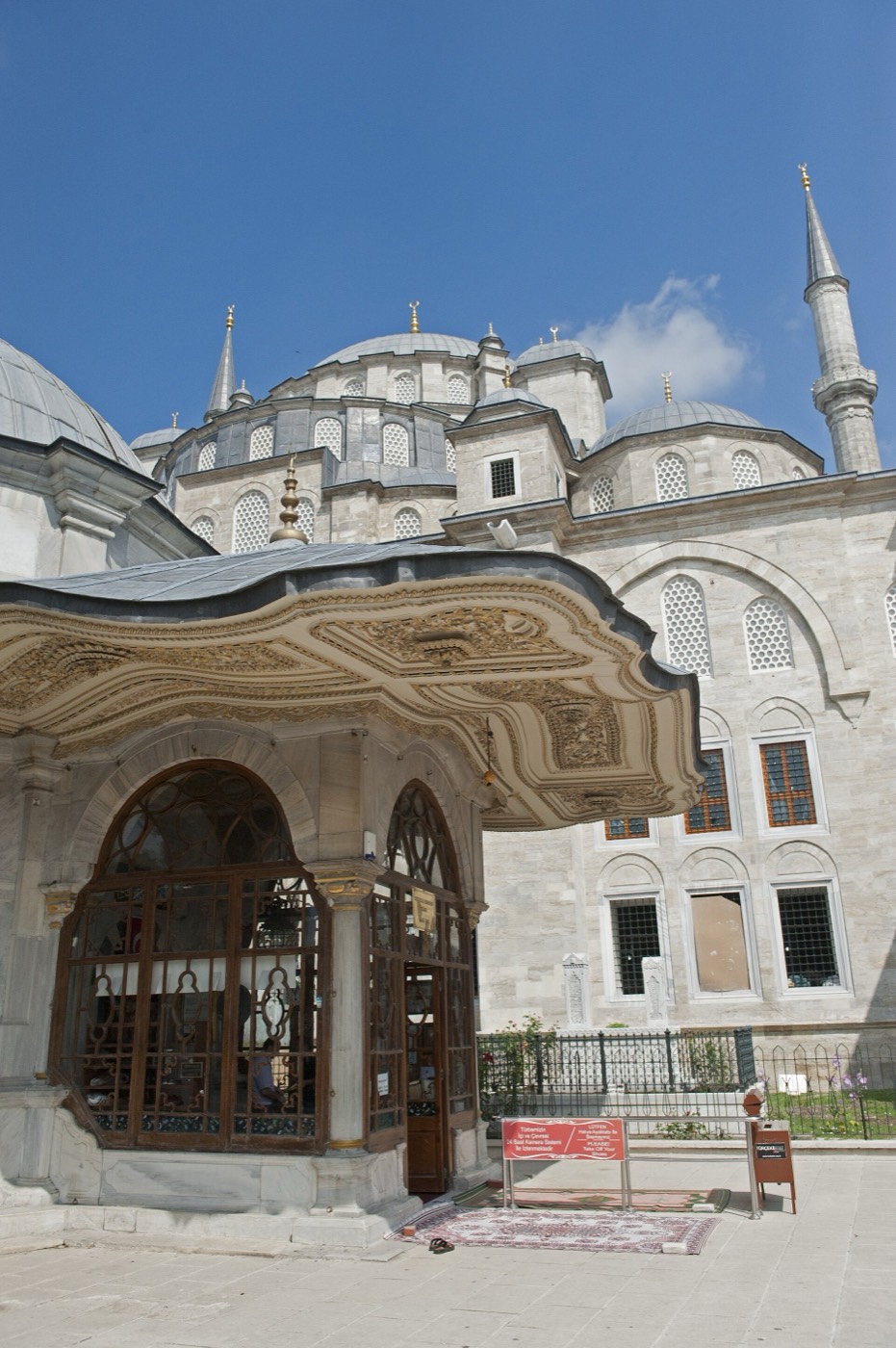
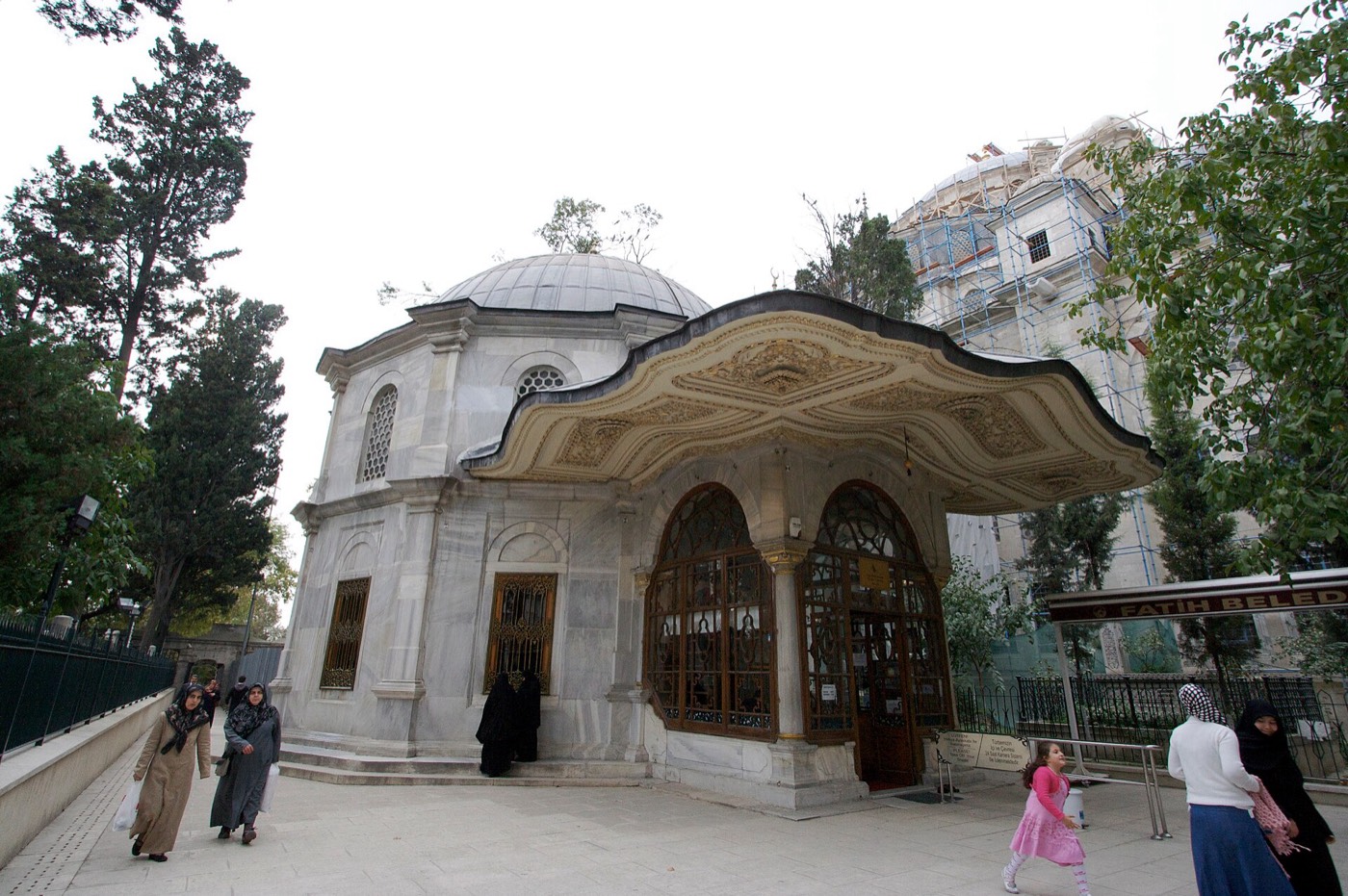
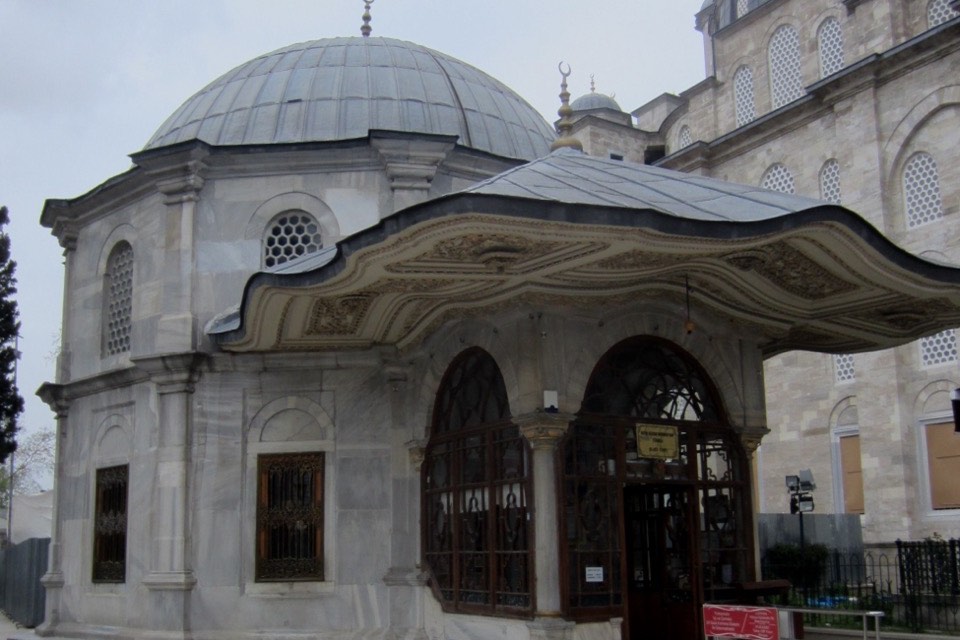
The present tomb is a single-domed building of cut stone, faced with marble1,2. TDV describes its plan as octagonal, the ministry as ten-sided1,2. Its windows keep the classical Ottoman pattern, with marble frames below and plaster grilles above, but TDV reads the square piers projecting at the corners and the stepped mouldings that run round the building as clear marks of the Baroque1,2. A porch on two columns shelters the door, and TDV notes that the wide eave over it is a later addition1. Behind the porch, an arch of two-coloured marble carries the basmala, and a glazed vestibule leads to a door crowned by an inscription from Sura al-Ankabut2.
Düzenli lists the rebuilt tomb among twenty Istanbul tombs of 1755-1918 in which, he says with some caution, the effect of Western styles can be seen, and gives Mehmed Tâhir Ağa as its architect, as for the tombs of Mustafa III and Abdülhamid I3. TDV records a debate over whether the tomb was moved forward from its first site during the rebuilding, which would leave the original grave under the present mosque's mihrab, or stands on the old foundations; only a study of its walls and floor, it says, could settle the question1. TDV's survey of Ottoman tombs notes that setting the tomb in a graveyard before the mihrab wall, first laid out here as a rose garden, was repeated in later imperial and viziers' complexes wherever the terrain allowed7.
Inside
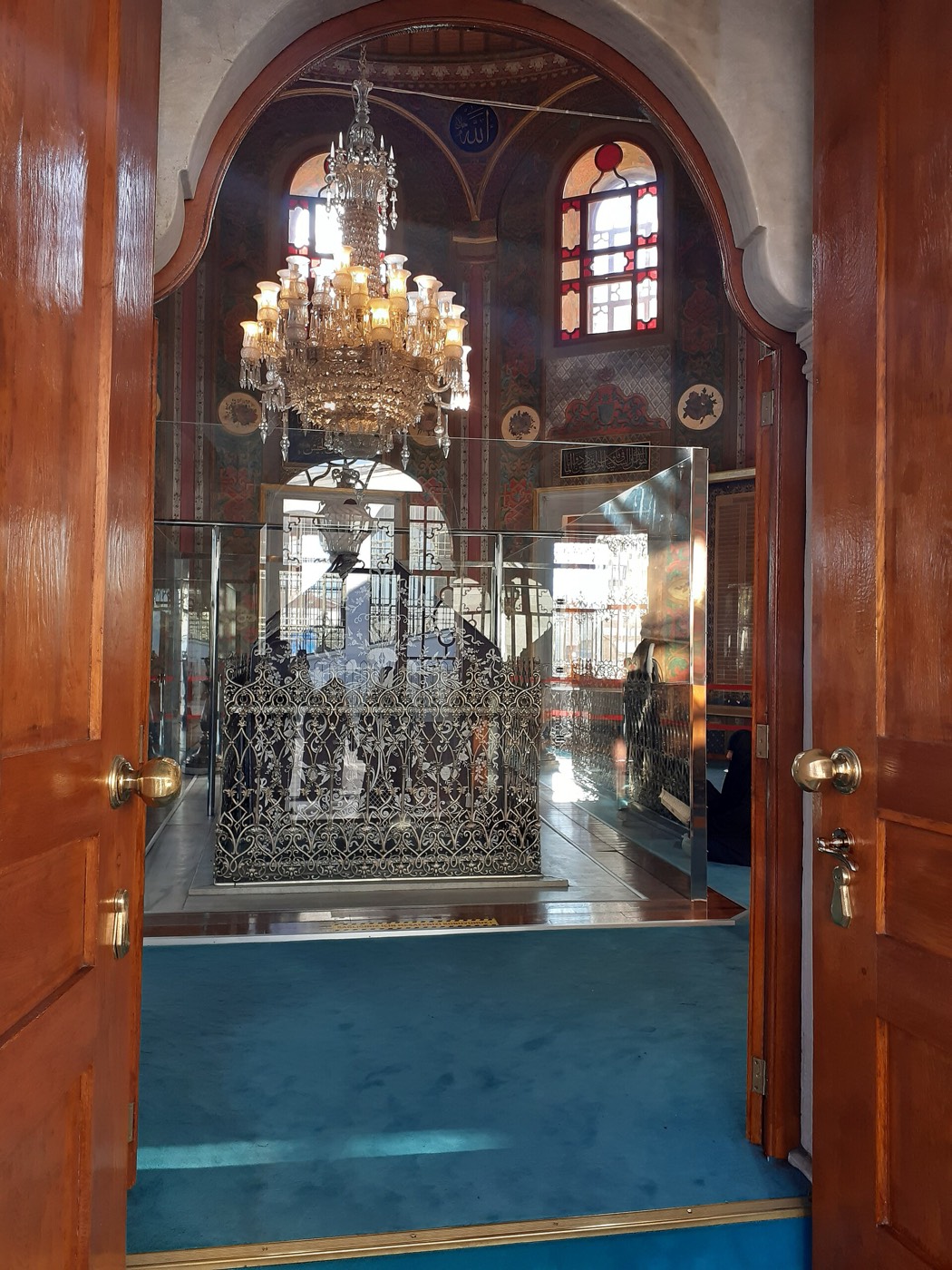
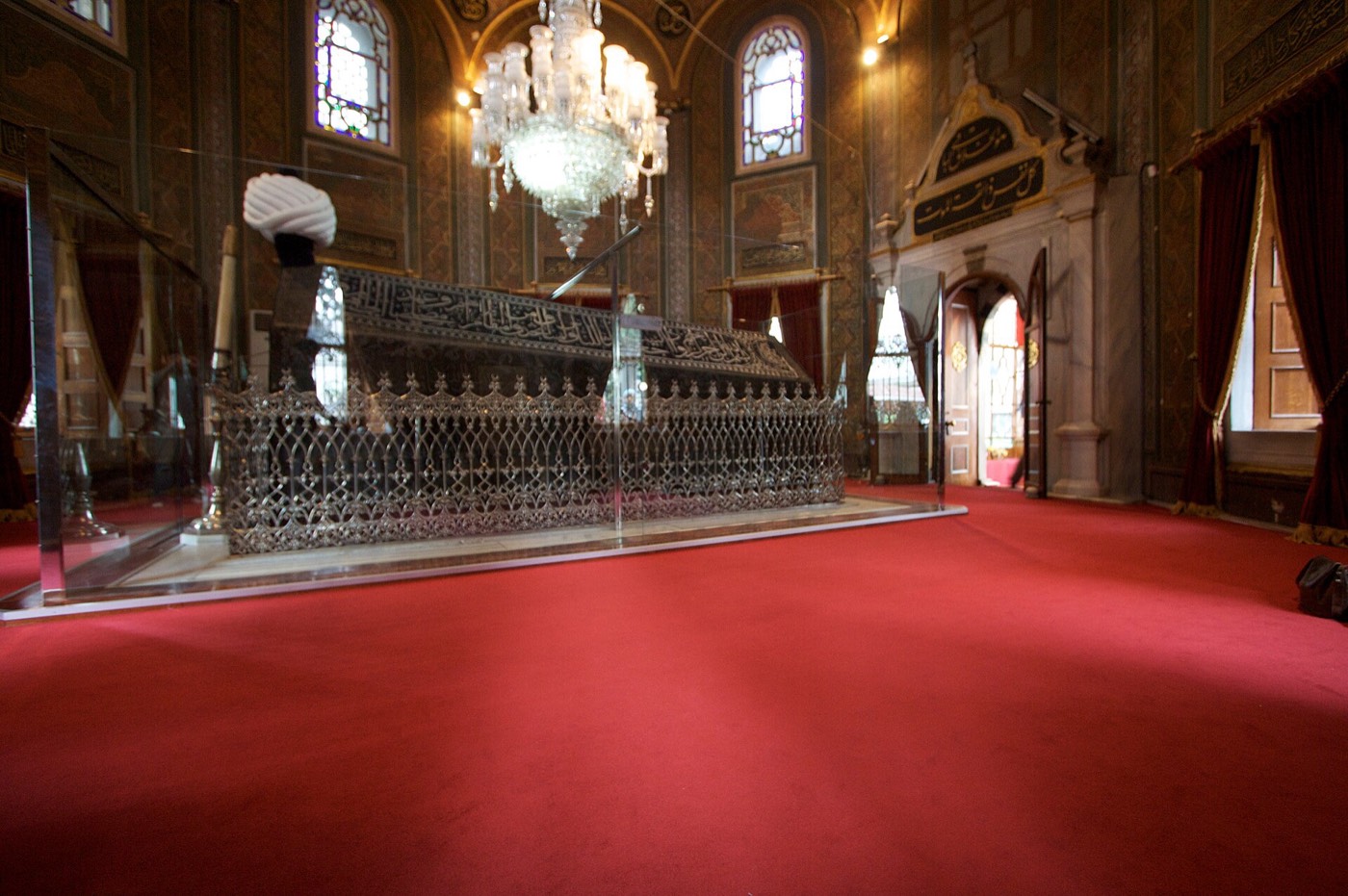
The tomb holds a single cenotaph, Mehmed II's; the one that burned in 1782 was replaced, and TDV says the new one was covered with a cloth from the Kaaba1,2. Rectangular frames above the lower windows carry the basmala and the first five verses of Sura al-Fath, and painted decoration of rumi scrolls, palmettes and lotuses, which the ministry dates to the late 19th century, covers the walls and the dome2. Medallions on the pendentives bear the names of God, the Prophet, the four caliphs, Sa'd and Sa'id2. When Abdülaziz refurnished the tomb, objects were sent from the palace and a crystal chandelier was hung in the dome1. A panel to the right of the entrance carries Abdülhak Hâmid's poem “Merkad-i Fâtih'i Ziyâret” (Visiting the Conqueror's grave), set up with a ceremony during the First World War1,2. A widespread story, which TDV reports only as hearsay, places the body in a chamber at the end of a passage running from the tomb to a point beneath the mosque's mihrab1.
What to look for
- Projecting corner piers and stepped mouldings, the Baroque touches TDV sees in the rebuilt tomb1.
- The two-coloured marble arch with the basmala behind the entrance porch2.
- The first five verses of Sura al-Fath framed above the lower windows inside2.
- Abdülhak Hâmid's poem on visiting the Conqueror's grave, displayed beside the entrance1,2.
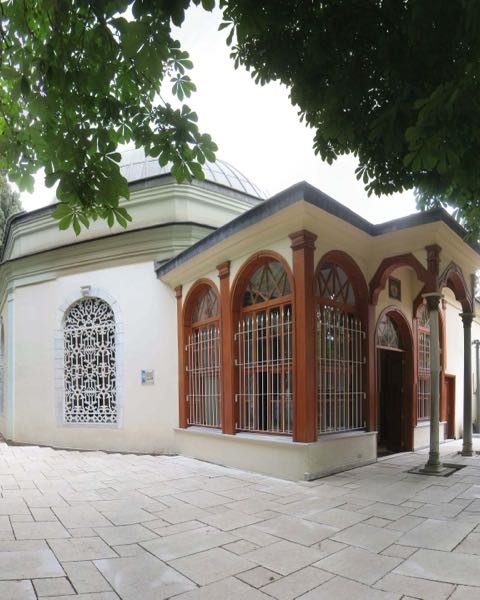
- Gülbahar Hatun's smaller octagonal tomb nearby, also restored after the 1766 earthquake1,2.
Visiting
- The tomb stands in the garden on the mihrab side of the Fatih Mosque, in Kirmasti Mahallesi, Fatih2.
- The same graveyard holds the tomb of Gülbahar Hatun and the tomb of Gazi Osman Pasha, commander at the siege of Plevne, built in 19001,3.
- UNESCO's statement on the Historic Areas of Istanbul names the 15th-century Fatih complex as part of the city's historic skyline8.
Official information: Istanbul Tombs Museum Directorate (İstanbul Türbeler Müze Müdürlüğü), Republic of Türkiye Ministry of Culture and TourismDirectionsOpen in OpenStreetMapGuided tours in Istanbul
In a trip guide: Istanbul’s türbes on foot