History
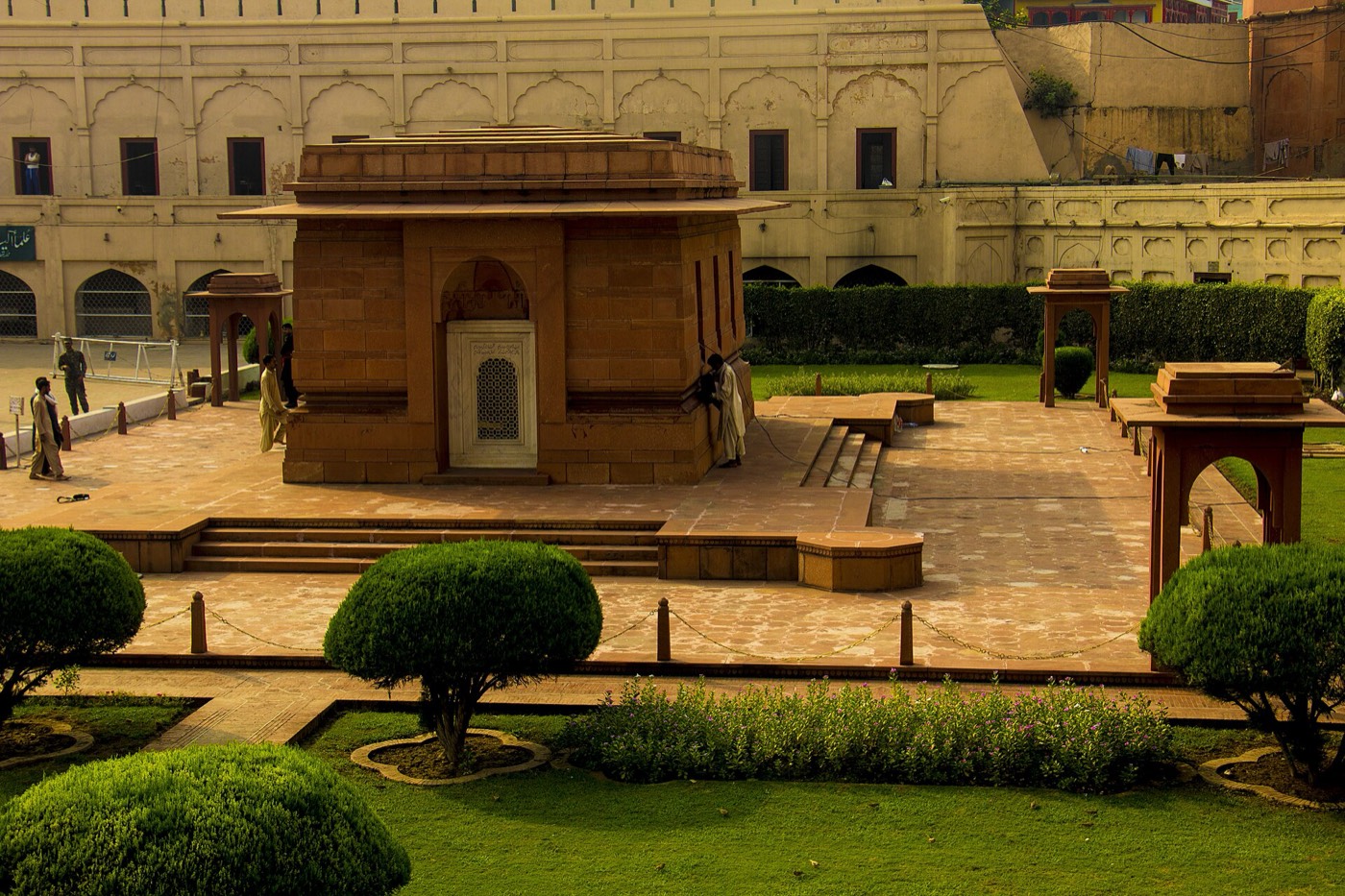
Muhammad Iqbal, whom the University of the Punjab calls the poet-philosopher of the East, died in Lahore at dawn on 21 April 1938, after a night in which his doctors had said the end was hours away2,3. Crowds gathered at his house, Javid Manzil; courts, schools and colleges closed, and some 40,000 to 50,000 people followed his body to the burial place in the shadow of the Badshahi Mosque3. The grave lies in the south-west corner of the Hazuri Bagh, outside the mosque near its steps and under its tall minaret1,2.
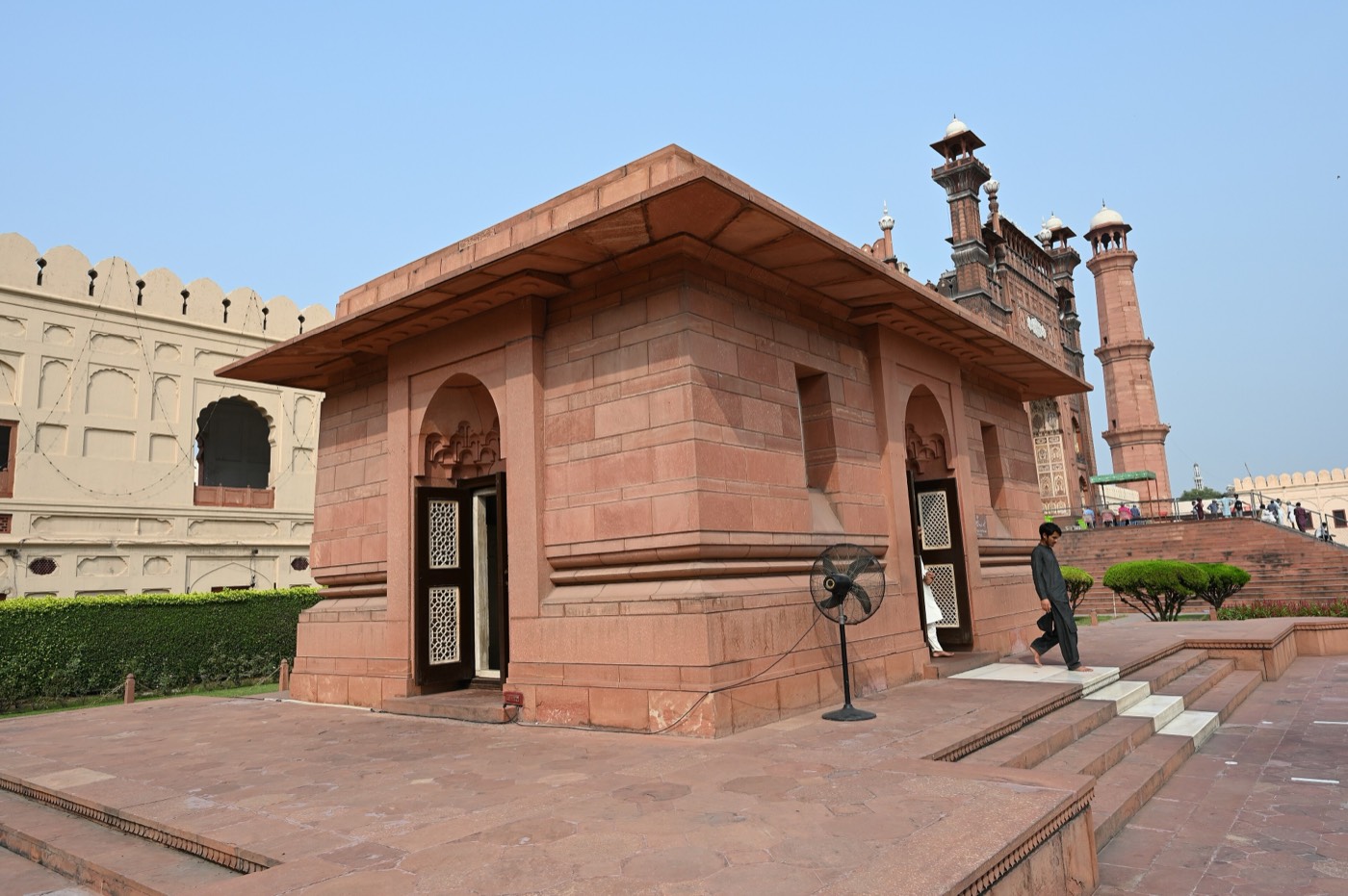
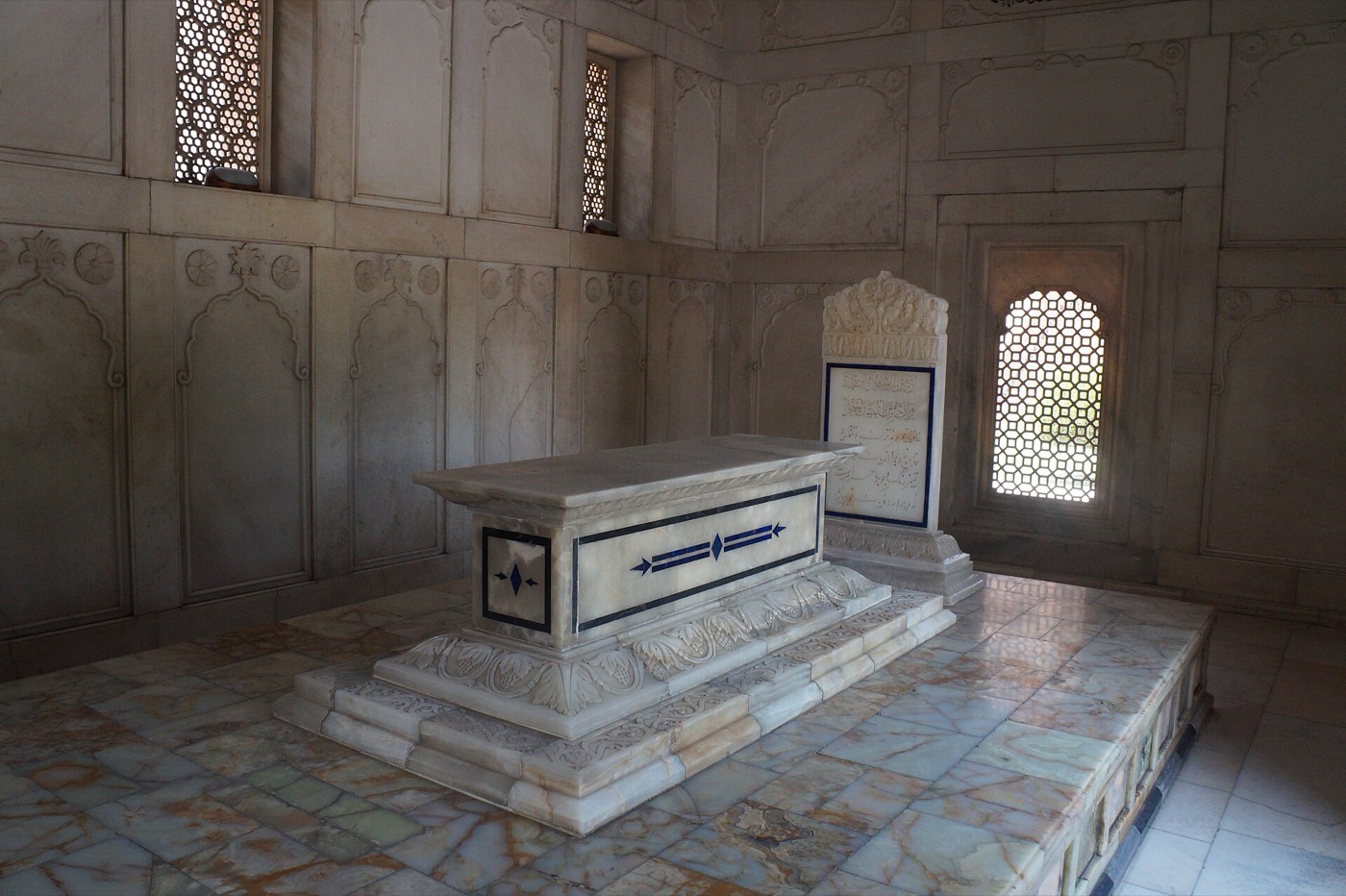
The mausoleum over the grave was built of red sandstone, and DOAM dates it to 19511. Iqbal Singh, writing thirteen years after the poet's death, noted in the preface to his biography of Iqbal that it was still unfinished3. The marble cenotaph, with its platform and its translucent marble headstone, was a gift from the Government of Afghanistan; the headstone carries two couplets by Iqbal against distinctions of race and colour, which DOAM calls his life-long mission1. The tomb is protected under the Antiquities Act 19751. The PWCA has begun conservation work that includes replacing the tomb's red sandstone and floor, cleaning the marble screens and repairing the wooden door4.
Architecture
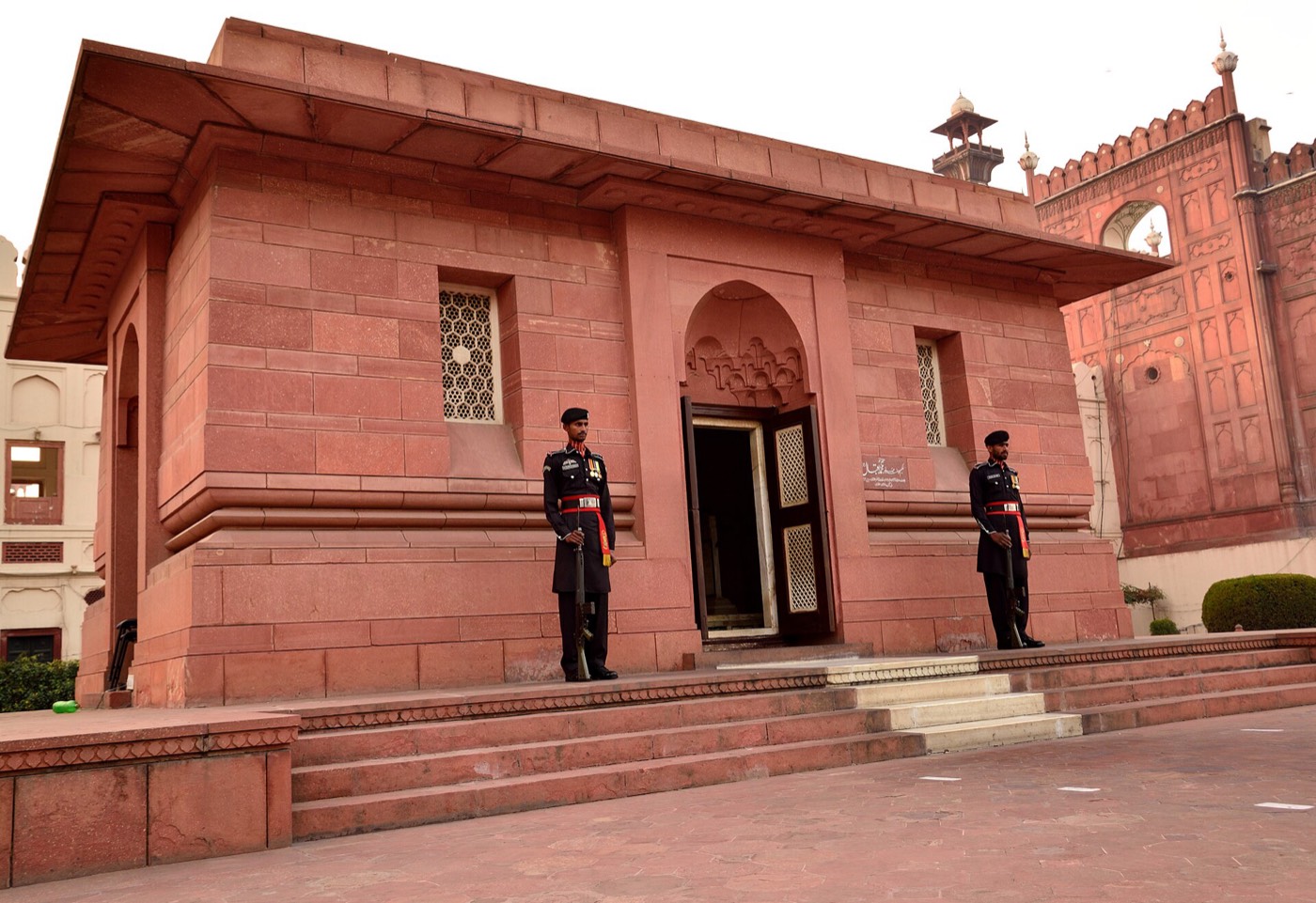
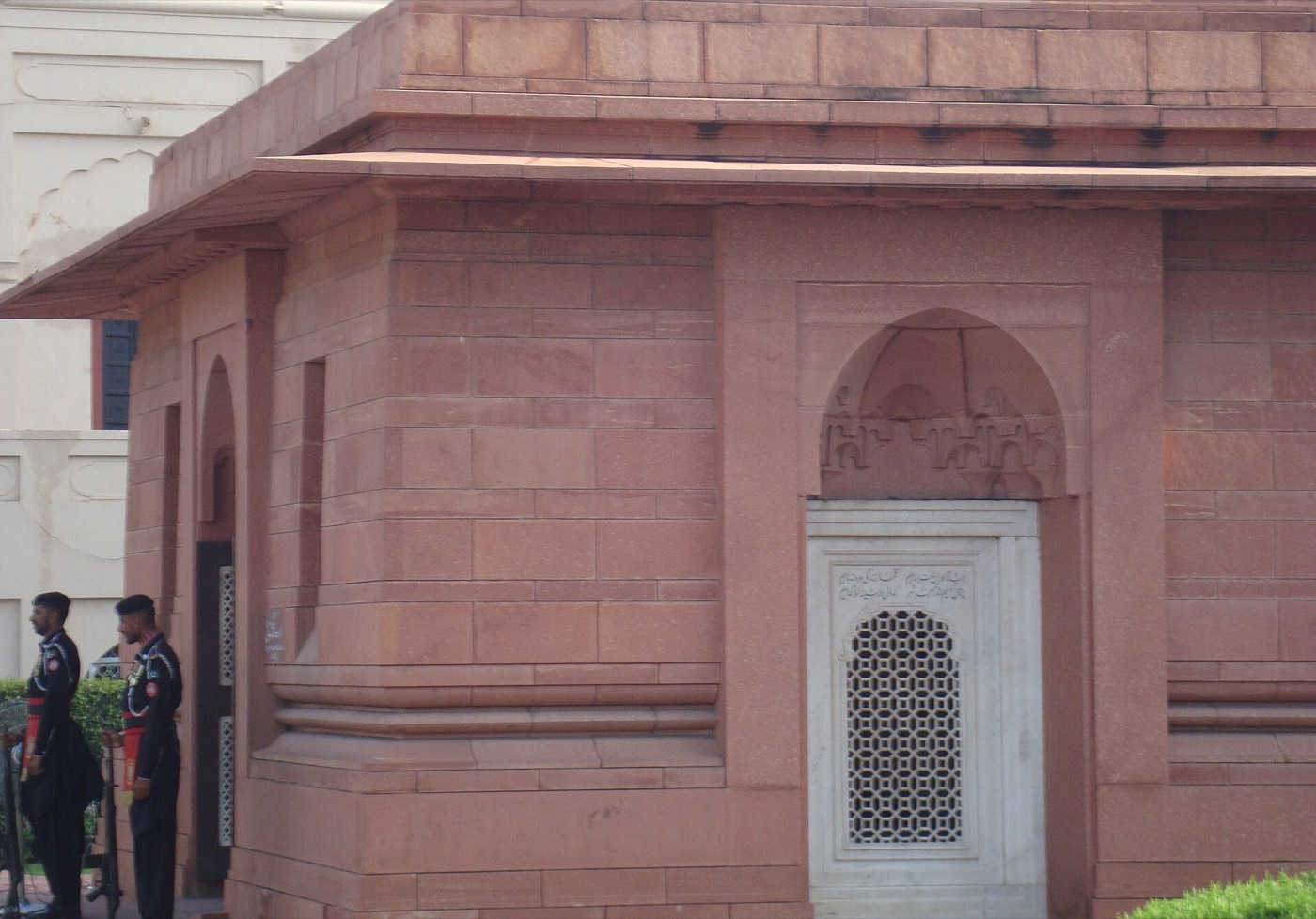
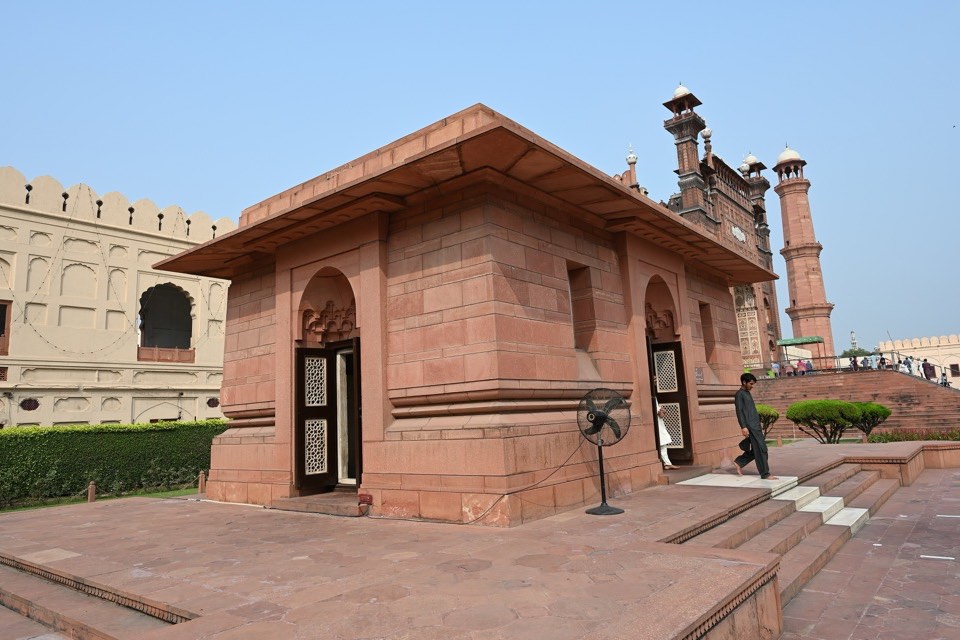
The tomb is a small building of red sandstone, which the University of the Punjab describes as a mixture of Afghan and Moorish architecture1,2. Its walls are slightly battered, leaning inwards as they rise, with bold mouldings set in a cavetto just above the plinth1. It has marble jalis (pierced screens) and a wooden door4. The PWCA's conservation project also covers the Ulema's Academy and the hujras (cells) behind the tomb4.
Inside
Inside, a marble cenotaph stands on a platform decorated with aragonite panels of different colours1. At its head is a headstone of translucent marble, given with the cenotaph by the Government of Afghanistan1. It is carved with two couplets by Iqbal that sum up his opposition to distinctions of race and colour1.
What to look for
- The translucent marble headstone, a gift from the Government of Afghanistan1.
- Two of Iqbal's couplets against distinctions of race and colour, carved on the headstone1.
- Battered red sandstone walls with bold cavetto mouldings above the plinth1.
- The setting below the minaret of the Badshahi Mosque, in the Hazuri Bagh1,2.
Visiting
- The tomb stands outside the Badshahi Mosque near its steps, in the south-west corner of the Hazuri Bagh1,2.
- It is a place of state ceremony: on Independence Day 2025 a Pakistan Army contingent presented a march past as the director of the Iqbal Academy laid a wreath5.
Official information: Government of Pakistan and Government of Punjab: DOAM lists the tomb as federal property protected under the Antiquities Act 1975, and the Punjab Walled Cities & Heritage Areas Authority (PWCA) runs its current conservation projectDirectionsOpen in OpenStreetMapGuided tours in Lahore