History
Mustafa III, son of Ahmed III and Mihrişah Emine Sultan, was born in Edirne on 28 January 1717 and came to the throne on 30 October 17572. Between 1760 and 1764 he built the Laleli complex on what is now Ordu Caddesi: a raised mosque with a market beneath it, a public kitchen, shops, fountains, a sebil, a madrasa, a han, a candle workshop and his own tomb1,2. The complex takes its name from the tomb of a holy man known as Lâleli Baba1. TDV says the chief architect Kara (Hacı) Ahmed Ağa began the work and Mehmed Tâhir Ağa completed it, while the ministry and Düzenli name Mehmed Tâhir Ağa as the tomb's architect1,3,4.
Düzenli dates the tomb to 1763 and notes that it was the first sultan's tomb built in Istanbul for 146 years, since that of Ahmed I4. Mustafa III died on 21 January 1774, his health broken, TDV says, by the strain of the war with Russia, and was buried here2. His son Selim III, the reforming sultan who founded the Nizam-ı Cedid army in 1792, was later buried beside him3. The tomb holds eight wooden cenotaphs: besides the two sultans, TDV lists six of Mustafa III's children, Şehzade Mehmed and the princesses Hibetullah, Mihrişah, Şerife Havva, Fatma and Beyhan1.
Architecture
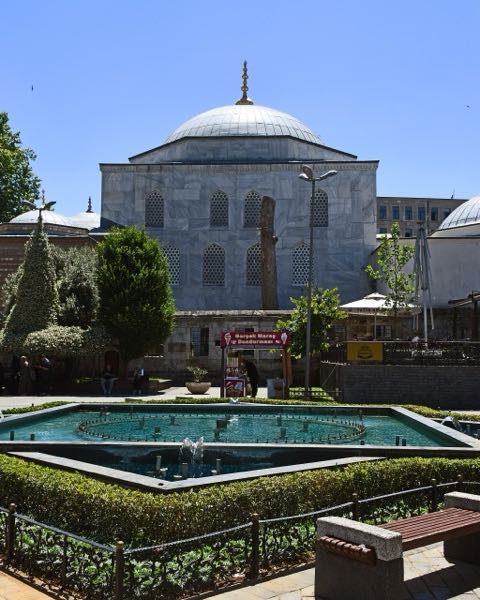
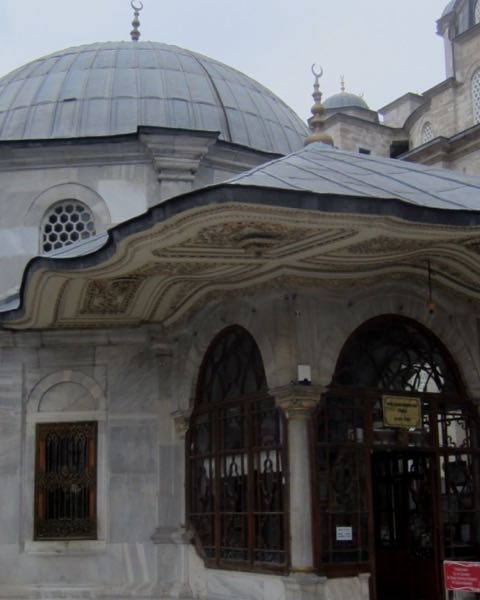
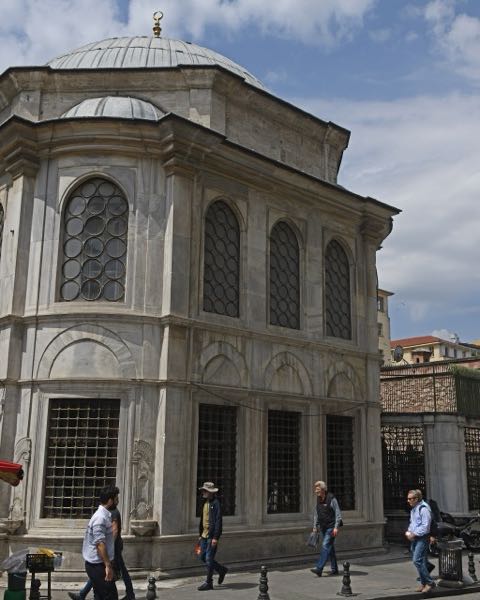
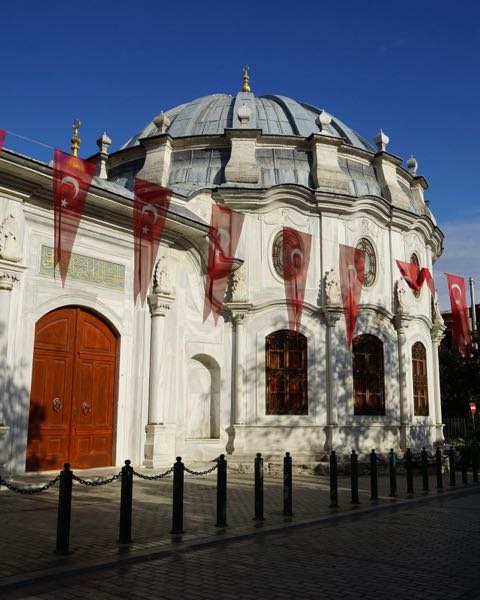
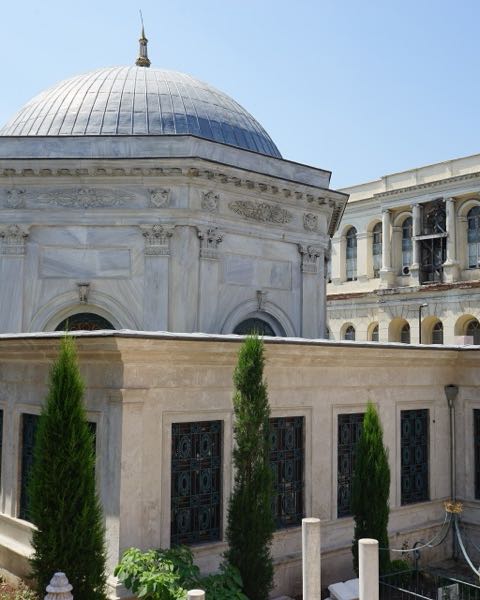
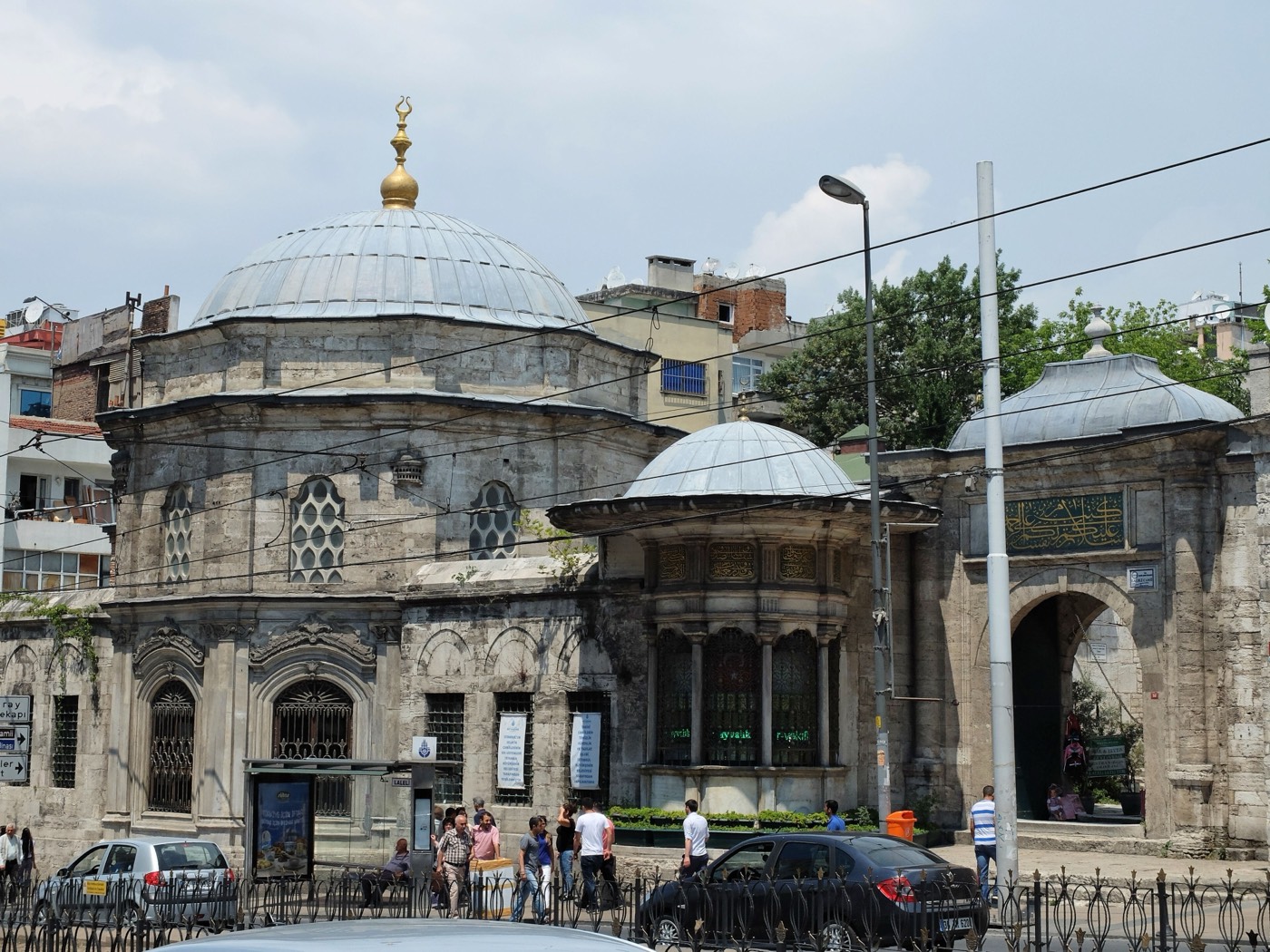
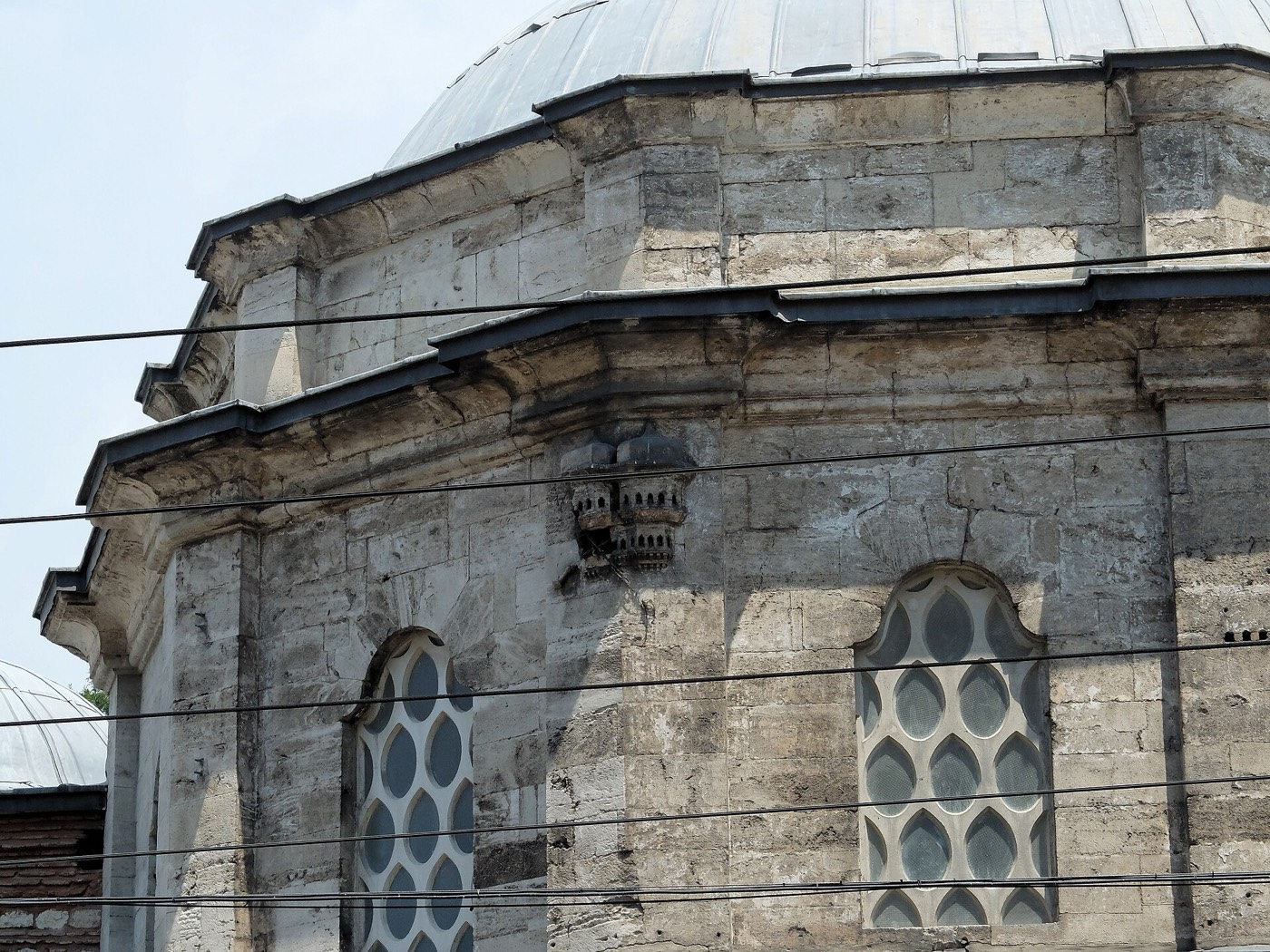
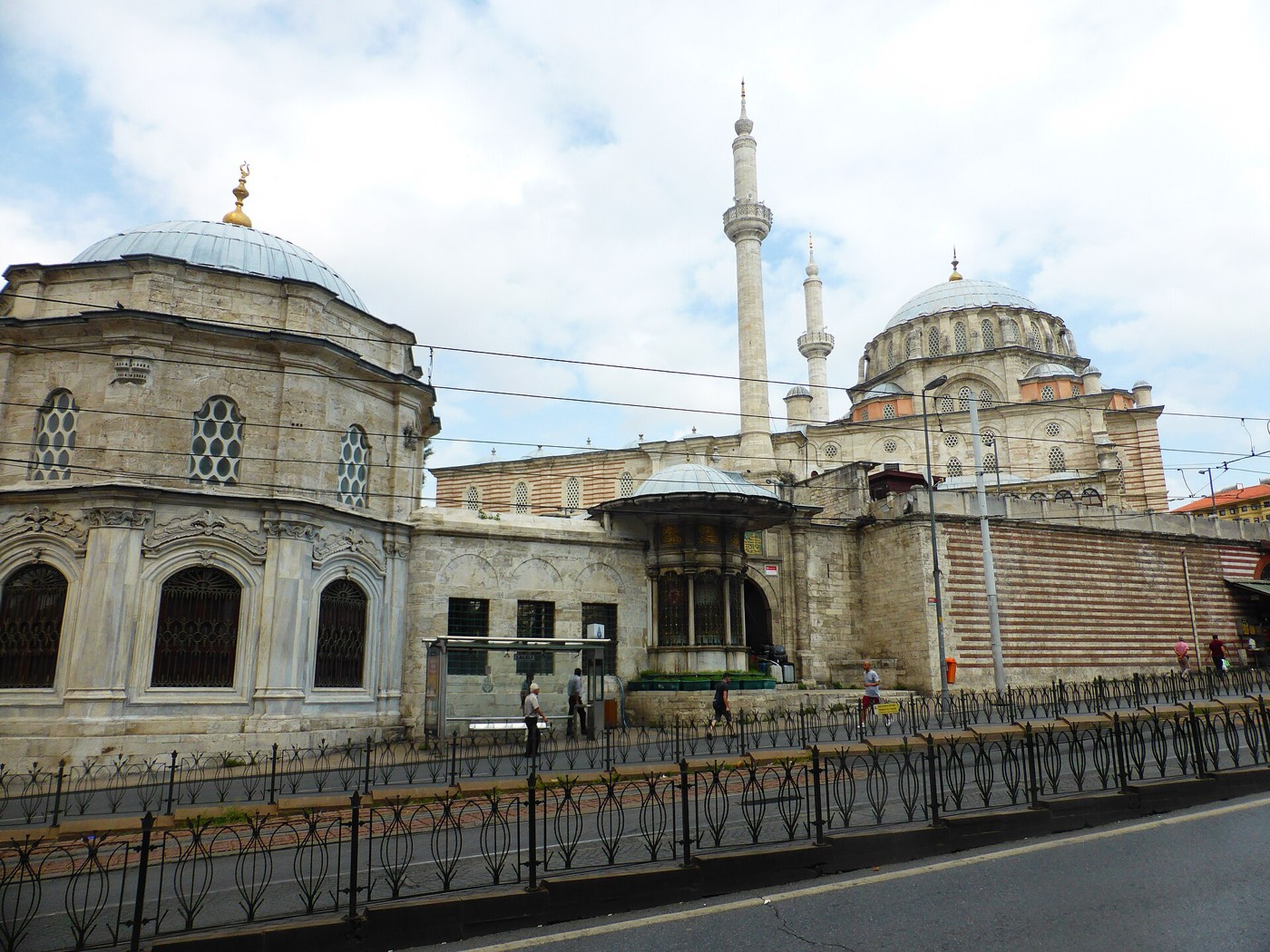
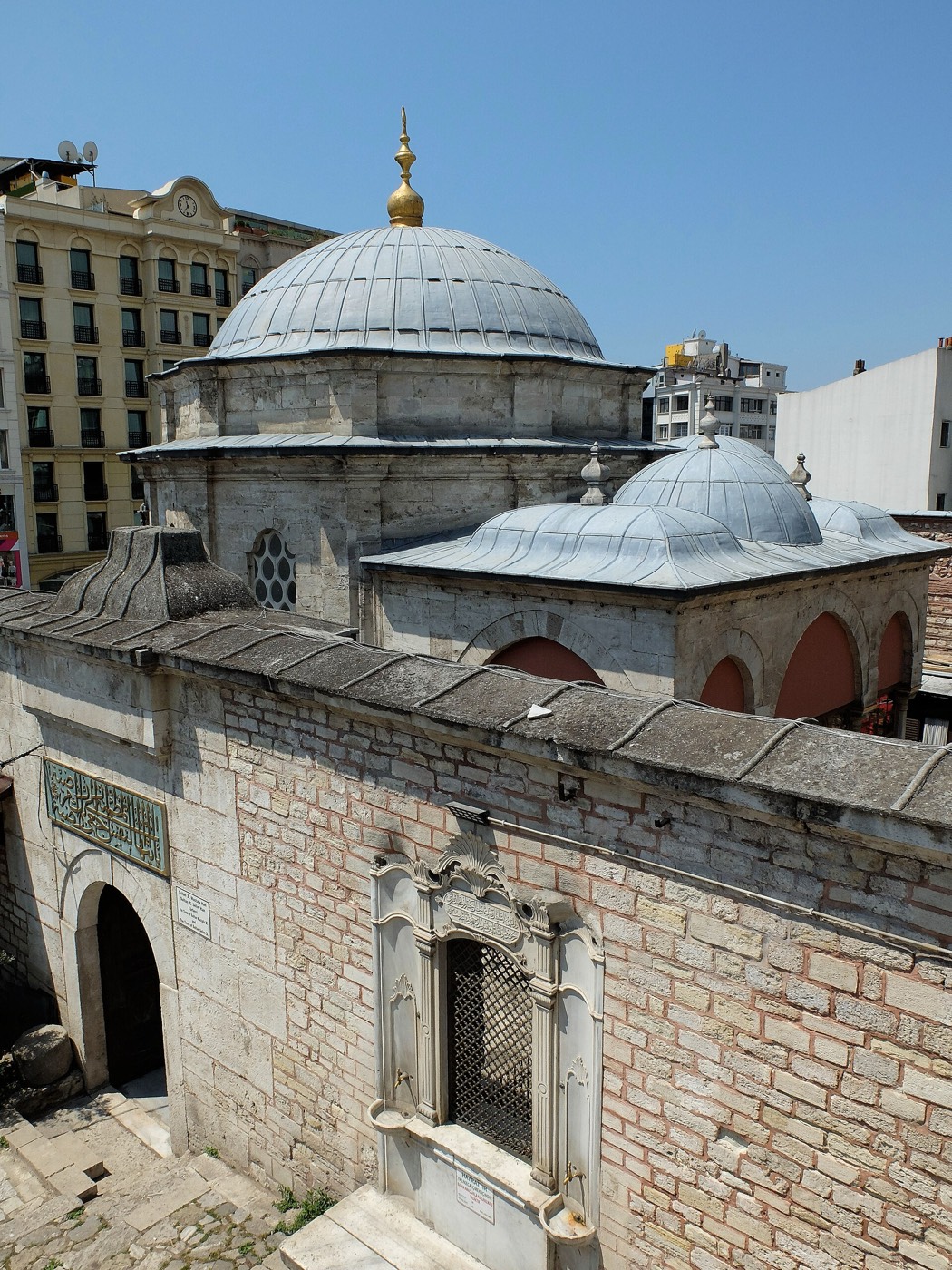
The tomb stands in its own walled garden west of the mosque1. It is a ten-sided building under a dome carried on pendentives, with a three-bay portico in front; three of its faces project outwards, and each face has two rows of windows1,3. On the street side the three lower windows have depressed arches, with marble spandrels carved with flowers in relief; the other lower windows are rectangular and the upper ones round-arched1,3. Higher up on the street front the ministry points out bird houses, which it says appear here for the first time in Ottoman tomb architecture3. The portico has a central dome between two flat-topped (aynalı) vaults on slender columns, and was later closed in with wooden glazing1.
Inside
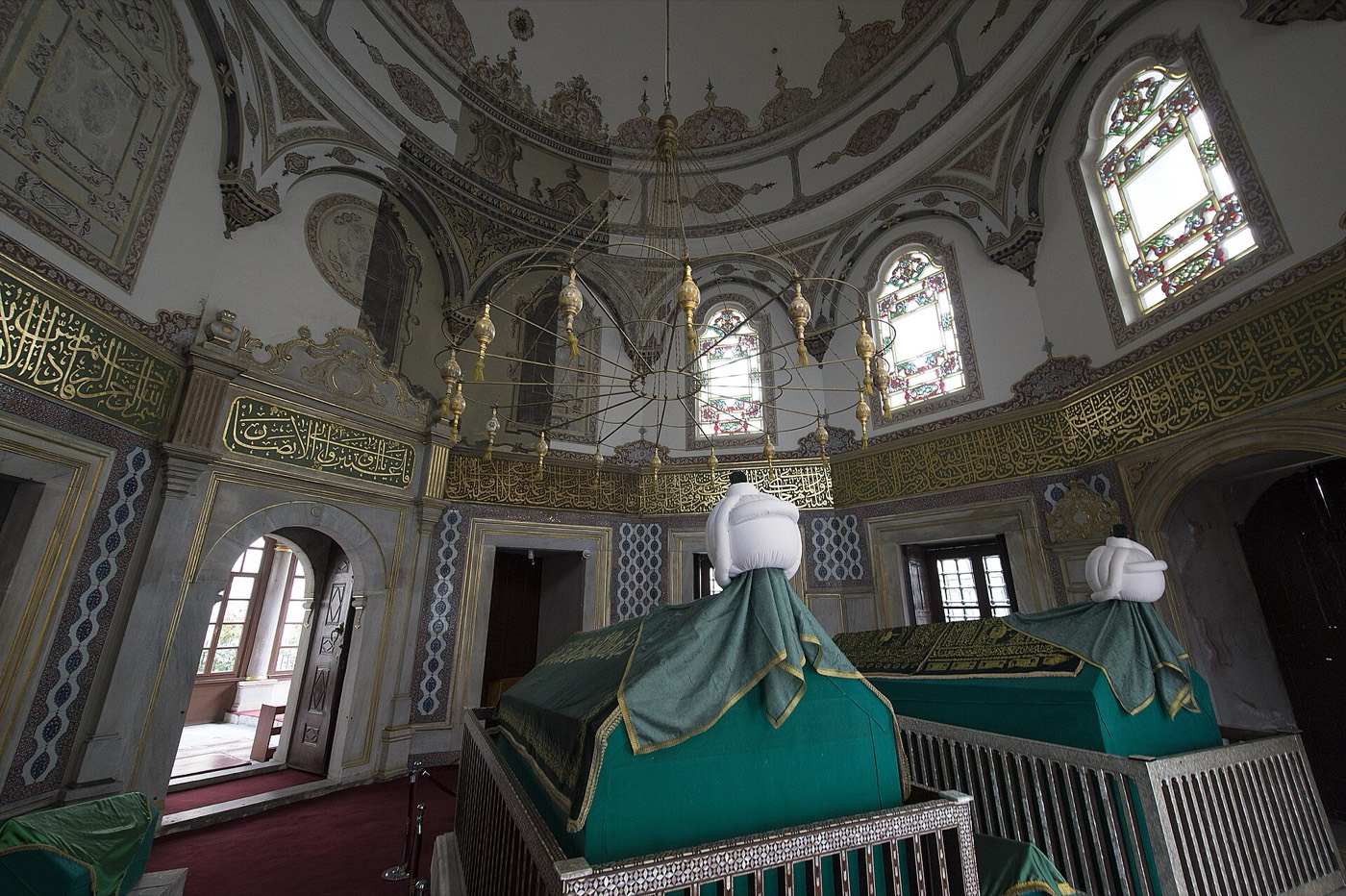
Inside, 16th-century Iznik tiles with coral red, taken from the Üsküdar Palace, cover the walls up to the top of the lower windows; the ministry describes them as underglaze tiles in coral red, blue and white1,3. A broad inscription band runs round the room between the windows, and painted decoration covers the pendentives and dome; stripping of later paintwork has uncovered some of the original floral painting1. There is a mihrab flanked by marble panels, cupboard niches opposite it, and, facing the door, a stone kept as the Prophet's footprint (kadem-i saadet)1,3.
What to look for
- Bird houses high on the street front, which the ministry calls a first in Ottoman tomb architecture3.
- The 16th-century Iznik tiles with coral red, brought from the Üsküdar Palace1.
- The cenotaphs of Mustafa III and his son Selim III, among eight in the room1,3.
- The marble spandrels carved with flowers over the street windows3.
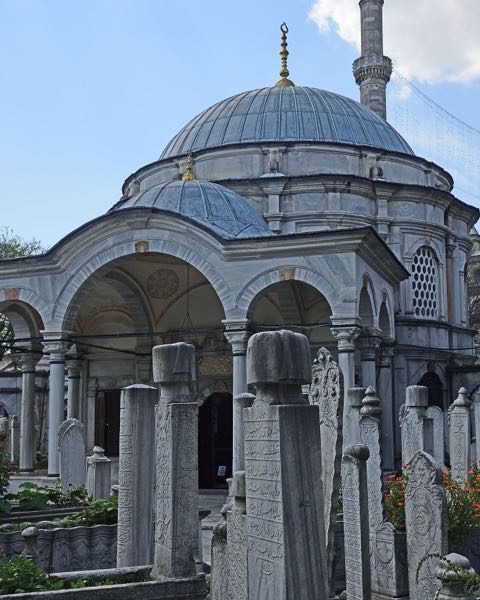
- The adjoining square tomb of Aynülhayat Kadın, its dome carried on ten marble columns1,3.
Visiting
- The tomb stands in its walled garden on Ordu Caddesi, west of the Laleli Mosque, beside the complex's sebil1,3.
- The square tomb joined to it, mentioned in the endowment deed, holds Mustafa III's consort Aynülhayat Kadın and Selim III's chief consort, named Lef'üzar Kadın by TDV and Şefizar Hanım by the ministry, which dates the building to 17641,3.
- About thirty graves lie in the garden; the grave of Âdilşah Kadın (d. 1803) is enclosed in a cage-like metal grille, and in 1804 a window was opened for it in the garden wall facing the mosque courtyard1.
Official information: Istanbul Tombs Museum Directorate (İstanbul Türbeler Müze Müdürlüğü), Republic of Türkiye Ministry of Culture and TourismDirectionsOpen in OpenStreetMapGuided tours in Istanbul
In a trip guide: Istanbul’s türbes on foot