History
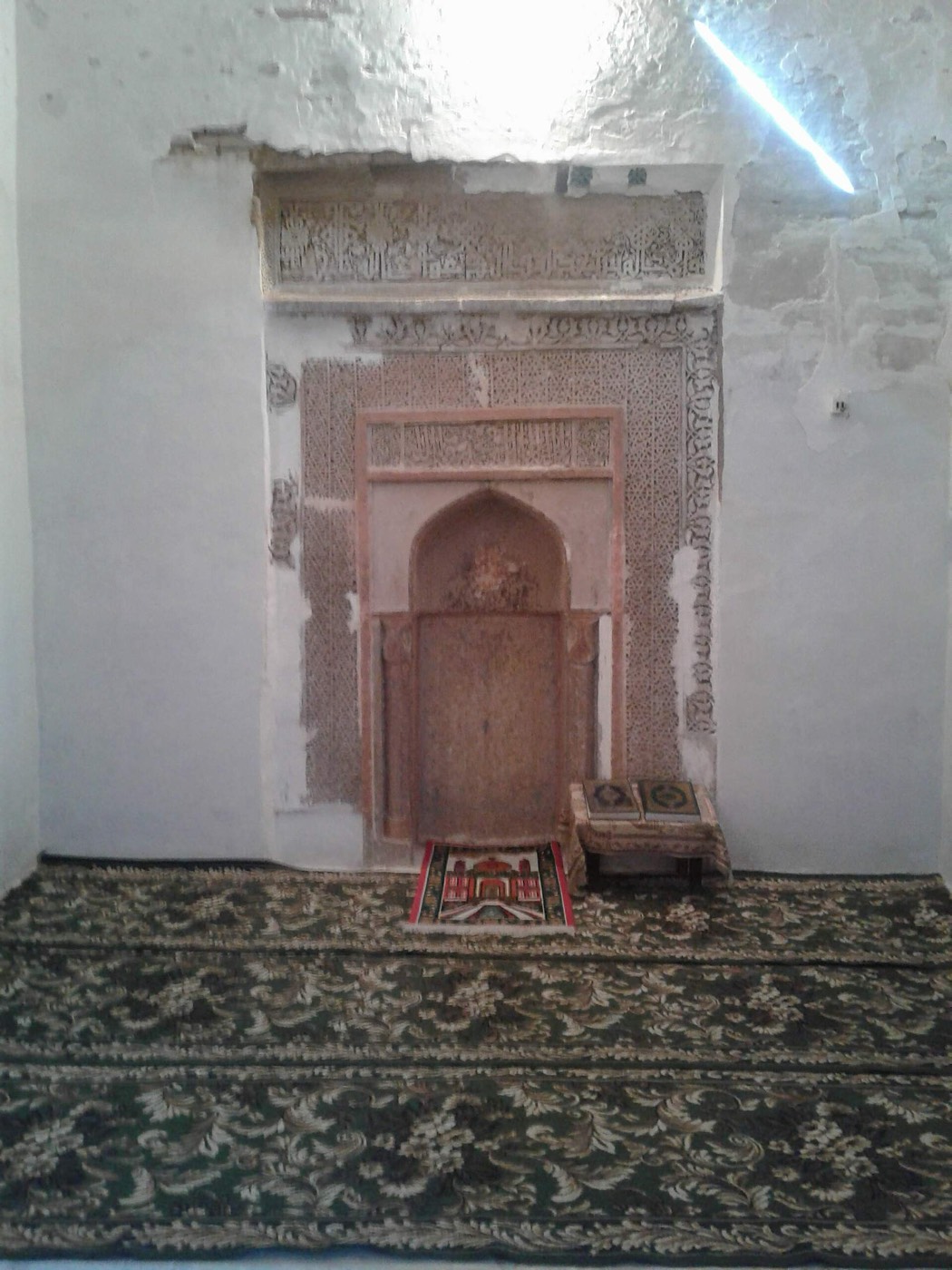
The mausoleum stands in the village of Mazori Sharif, near Panjakent3. Tajikistan placed it on UNESCO's tentative list in 1999 as the Mausoleum of "Mukhammad Bashoro"2,5. The entry dates it to the 11th-12th centuries and describes it as both a mausoleum and a mosque2. The Great Soviet Encyclopedia, which calls it the mausoleum of Muhammad Bashshar, places it with some caution in the same period and notes a mihrab of the 11th century3. ICOMOS noted in 2023 a necropolis, a sacred spring and a stretch of pilgrim route associated with the mausoleum, just outside its buffer zone4.
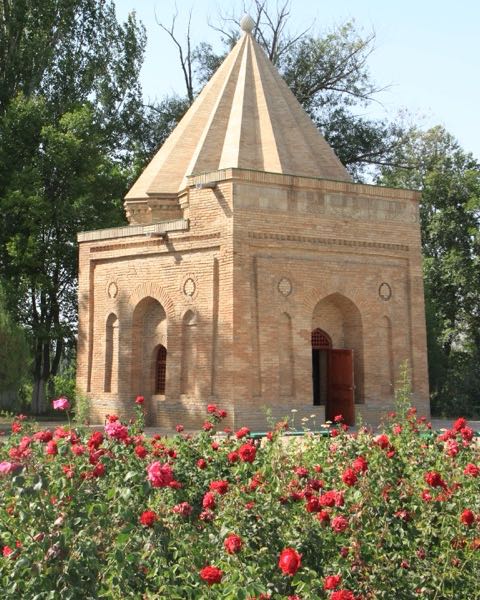
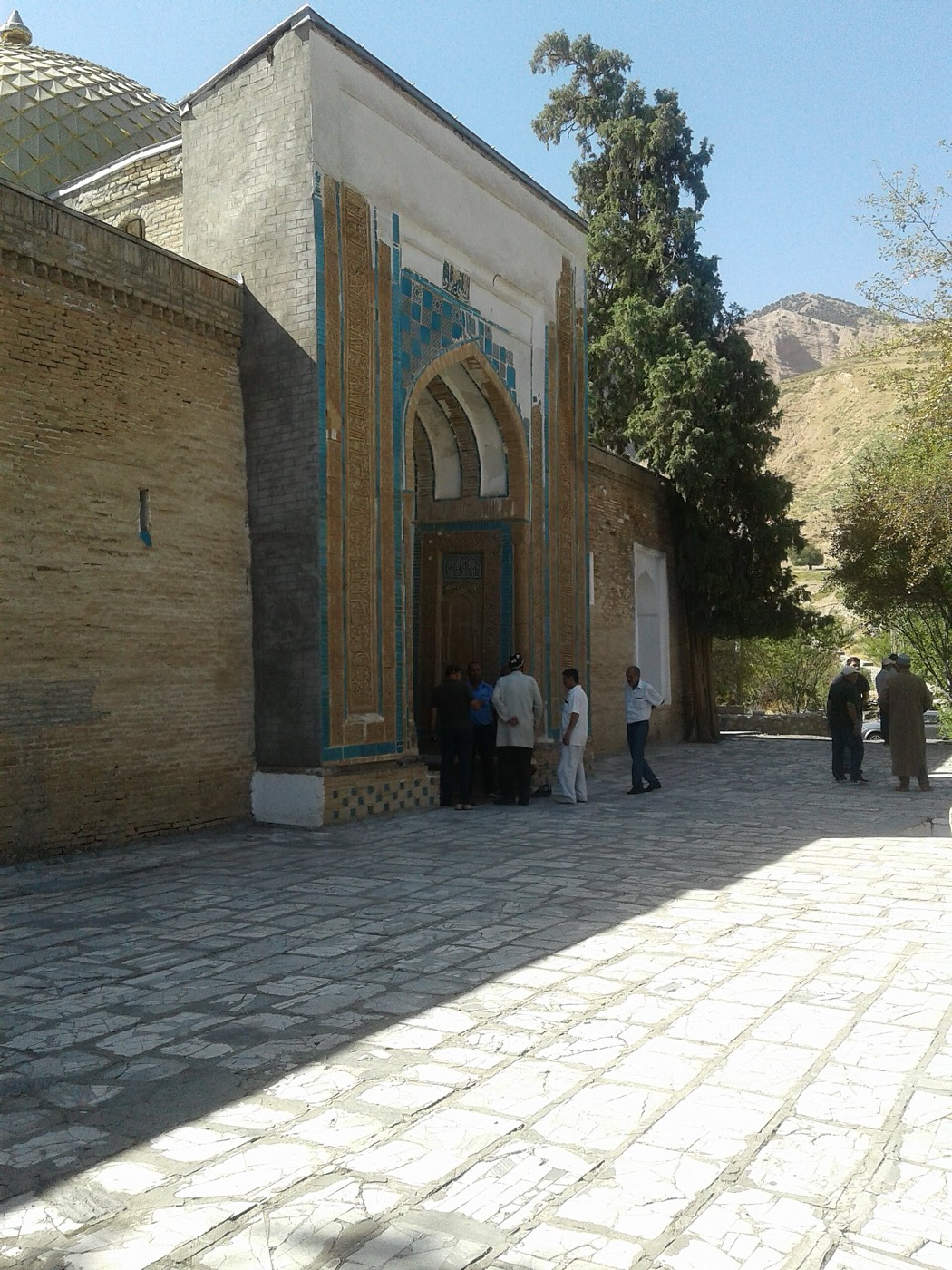
In the 14th century a portal richly decorated with terracotta and glazed tiles was added to the plain, plastered building; the tentative-list entry dates it to 1332 and the encyclopedia to 1342-13432,3. The encyclopedia's main reference is an article by L. S. Bretanitsky in the proceedings of the Tajik Archaeological Expedition, published in 19583. In 2023 UNESCO inscribed the building, as the Mausoleum of Khoja Mukhammad Bashoro, among the 34 component parts of the Silk Roads: Zarafshan-Karakum Corridor, a serial World Heritage property shared by Tajikistan, Uzbekistan and Turkmenistan1. The 866 km corridor runs west along the Zarafshan River and then south-west across the Karakum Desert to the Merv oasis1.
Architecture
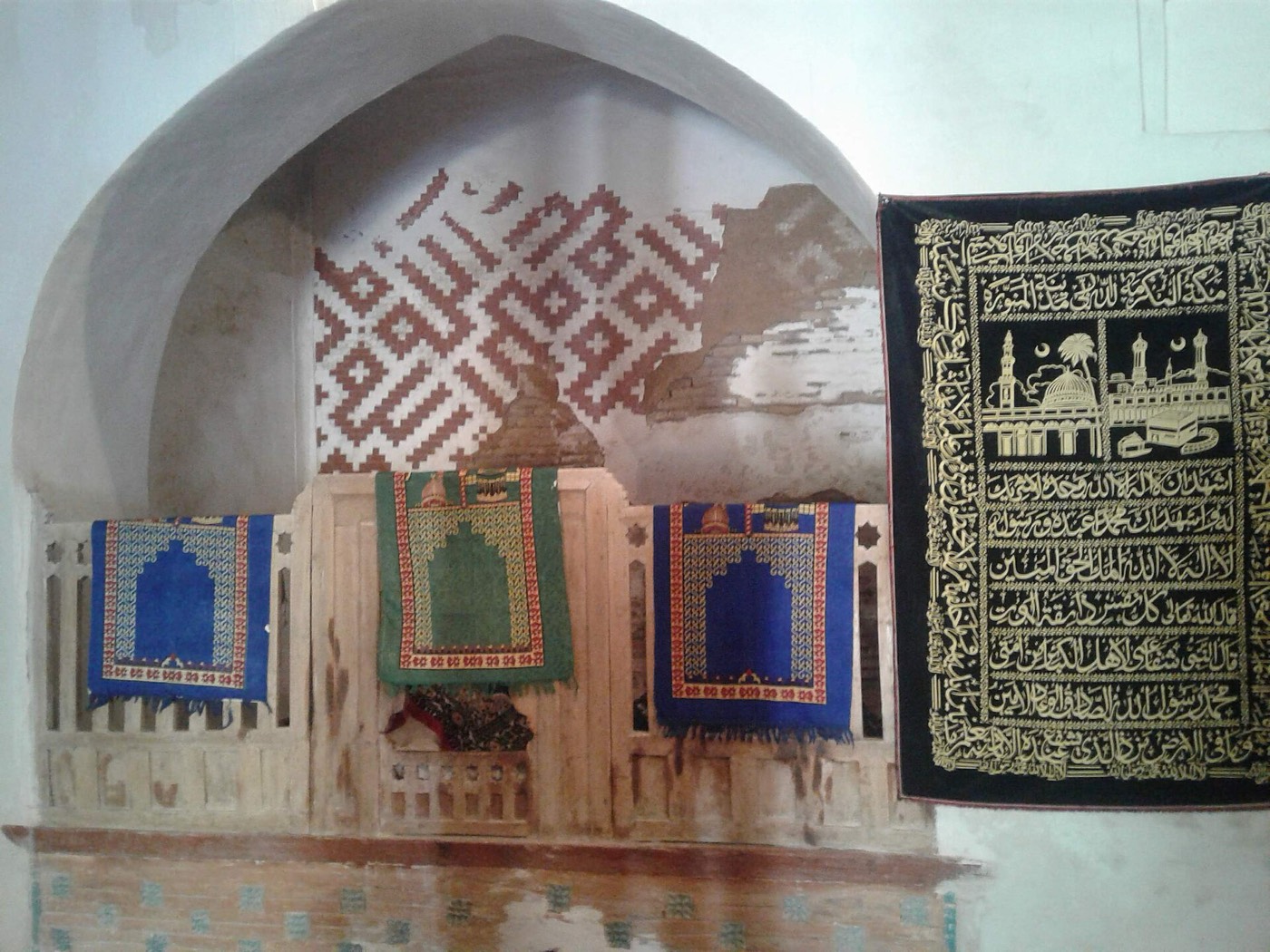
The interior is strictly organised: connected rooms are arranged along three parallel axes, with a spacious domed hall at the centre3. The walls and dome are smoothly plastered, and against these plain surfaces the portal stands out3. Terracotta, partly carved, and glazed majolica tiles cover the portal3. In 2023 ICOMOS rated the building's state of conservation as fair, because of inappropriate repairs in the past4.
Inside
What to look for
Visiting
- The mausoleum is component 1675-006 of the World Heritage property Silk Roads: Zarafshan-Karakum Corridor1.
- It stands in the village of Mazori Sharif, near Panjakent3.
- ICOMOS noted in 2023 that, unlike most of the Tajik components of the property, it can be reached by road4.
Official information: Tajikistan's state heritage authorities; the mausoleum is component 1675-006 of a World Heritage property shared with Uzbekistan and TurkmenistanDirectionsOpen in OpenStreetMapGuided tours in Mazori Sharif