History
Murad III, son of Selim II and Nurbanu Sultan, was born on 4 July 1546 and came to the throne on 22 December 15743,8. He died on 17 January 1595 and was buried in the burial ground (hazire) of Hagia Sophia2,3. Nineteen of his sons were laid there with him: on the accession of his son Mehmed III they had been strangled, under the practice of fratricide then followed by the dynasty2,7. On Mehmed III's order the chief architect Davud Ağa then began a tomb over the graves2.
An early mistake probably slowed the work: the graves had been laid out so that, to keep the sultan's cenotaph at the centre, one wall of the new building had to adjoin the Princes' Tomb (Şehzadegân Türbesi), which in TDV's view upset the design and delayed completion2. Davud Ağa died in 1598, and the tomb was finished in 1599 under his successor Dalgıç Ahmed Ağa, whose name is on the door2,4,5. Murad's consort Safiye Sultan, who died in January 1619, was buried here as well6. Ayvansarâyî counted 54 burials, among them 20 sons and 23 daughters of Murad III; today the tomb holds 50 cenotaphs2,8.
Architecture
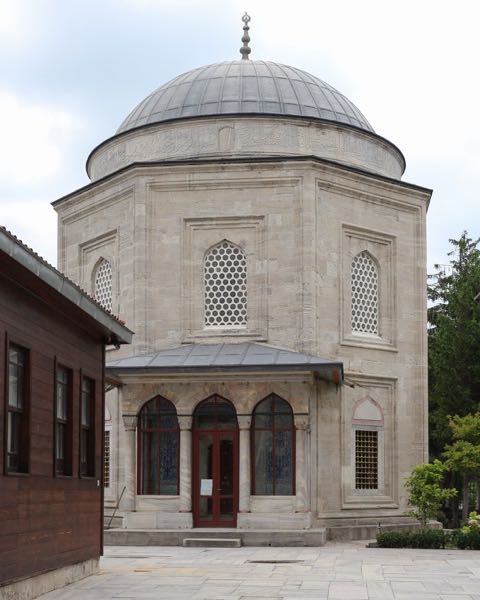
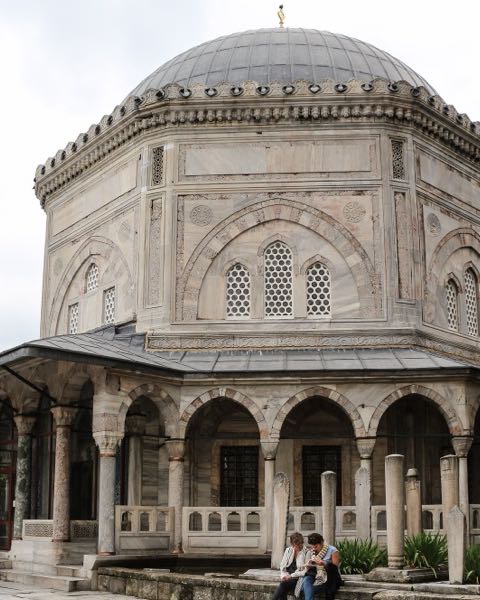
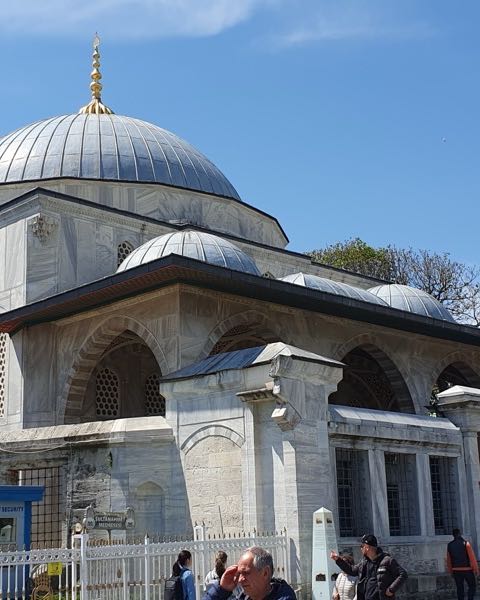
The plan is in essence a hexagon, turned into an irregular octagon by the chamfered corners on either side of the porch2,8. TDV sees the building as the work of Sinan's successors, who carried the double-domed system of his tombs for Süleyman I and Selim II over onto a hexagonal base; the walls are of rough stone inside and fully faced with marble outside2. Three rows of windows open in the walls, and above a muqarnas cornice crowned by palmettes rises a broad drum whose three windows light the space between the two domes2. Düzenli counts it among the seven Istanbul tombs with double domes, the last of which is Mehmed III's9.
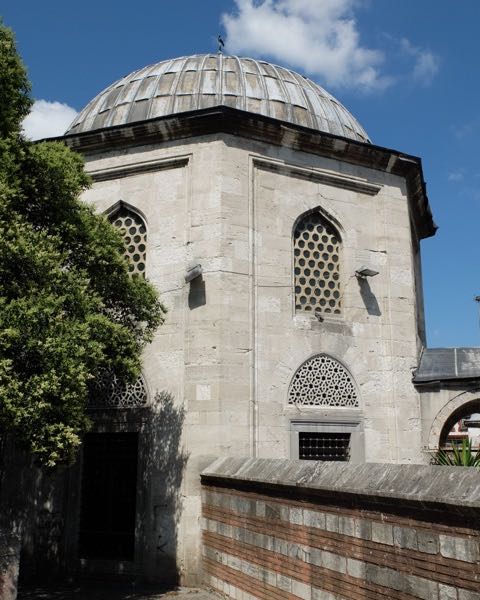
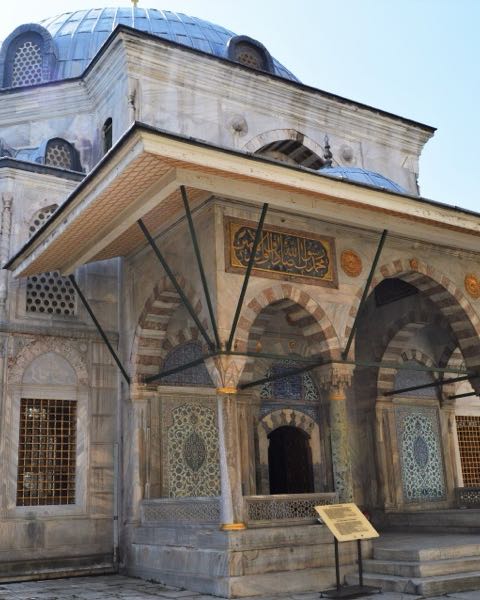
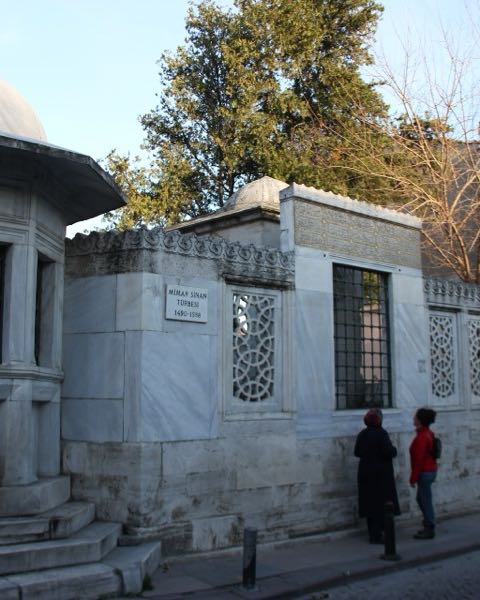
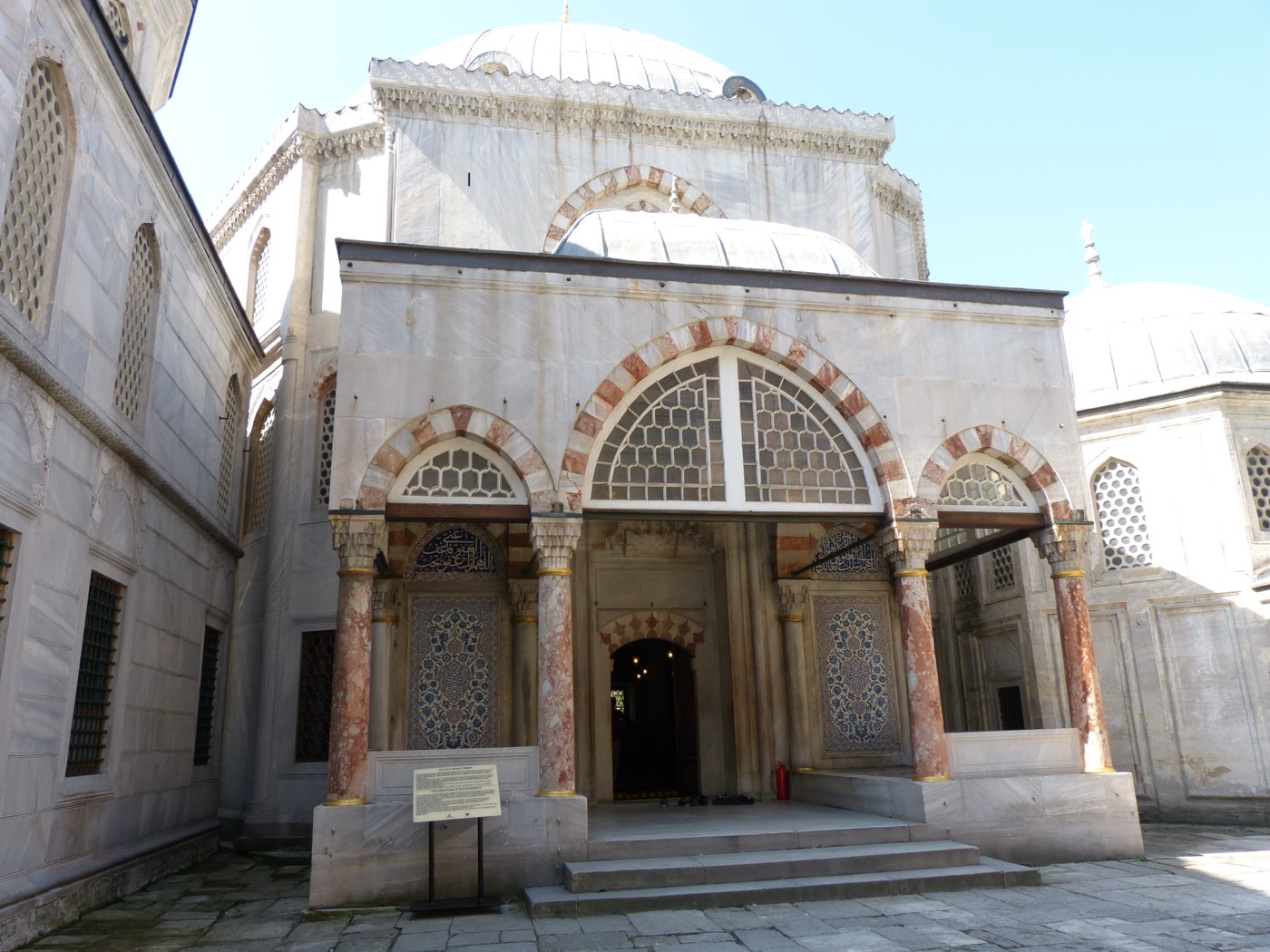
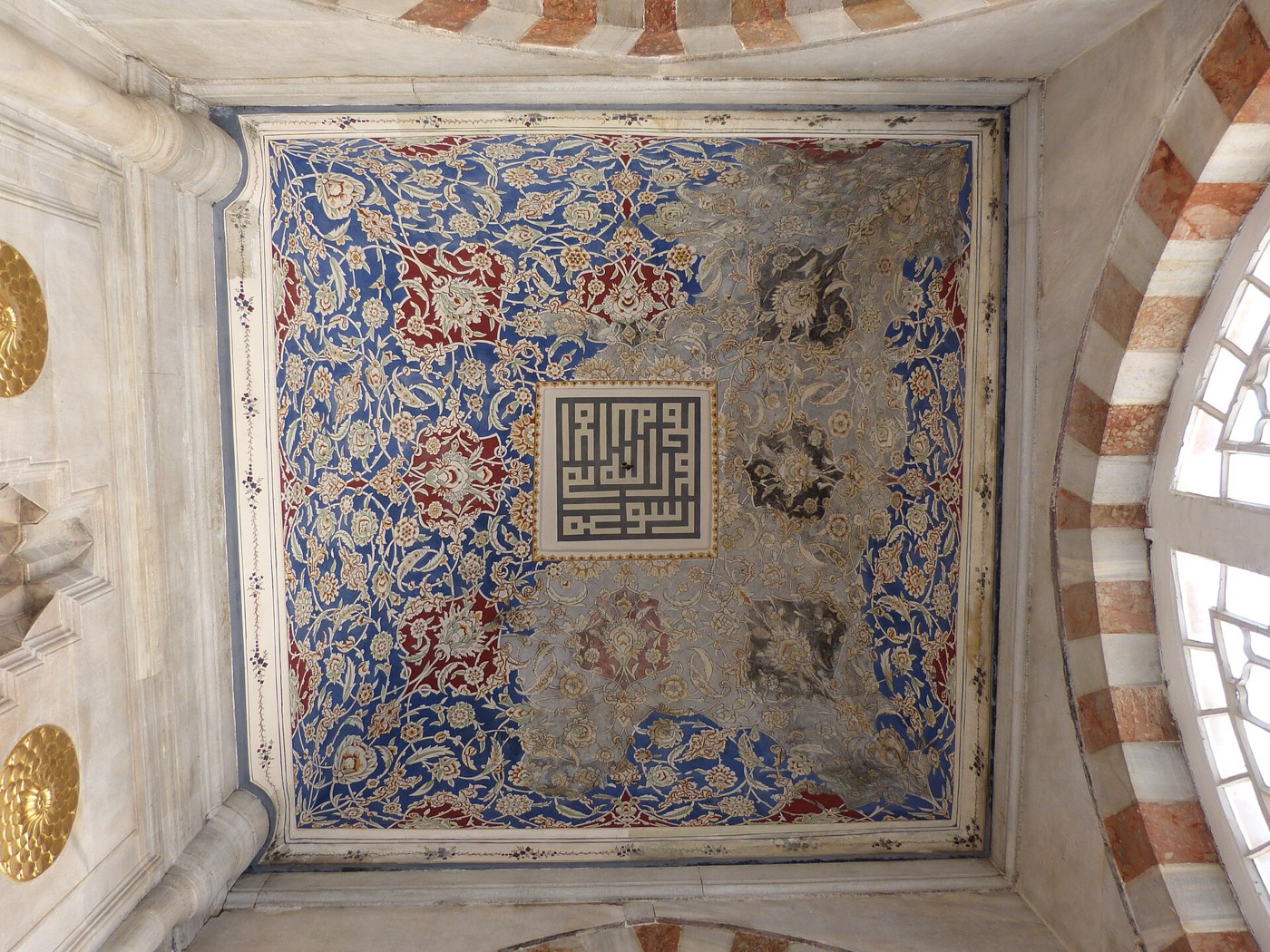
On the north-east side a three-part porch projects from the body and rises to the cornice: the door in the middle, under a vault, and raised platforms on either side whose walls are faced with tile panels2. The ministry dates these Iznik panels to the late 16th century, as in the tomb of Selim II, and mentions the porch's four coloured columns8. The wooden door leaves, inlaid with mother-of-pearl, carry the signature of Dalgıç Ahmed Ağa, and the metal fittings that of a master named İsmail2,4. The porch vaults keep their original painted decoration with Kufic inscriptions, uncovered in the 1978 restoration2. On the side facing Ayasofya Square the burial-ground wall was cut back so that the tomb could be visited from the square: steps on both sides lead to a podium with three hâcet windows, whose grilles differ from those of the other windows2,8.
Inside
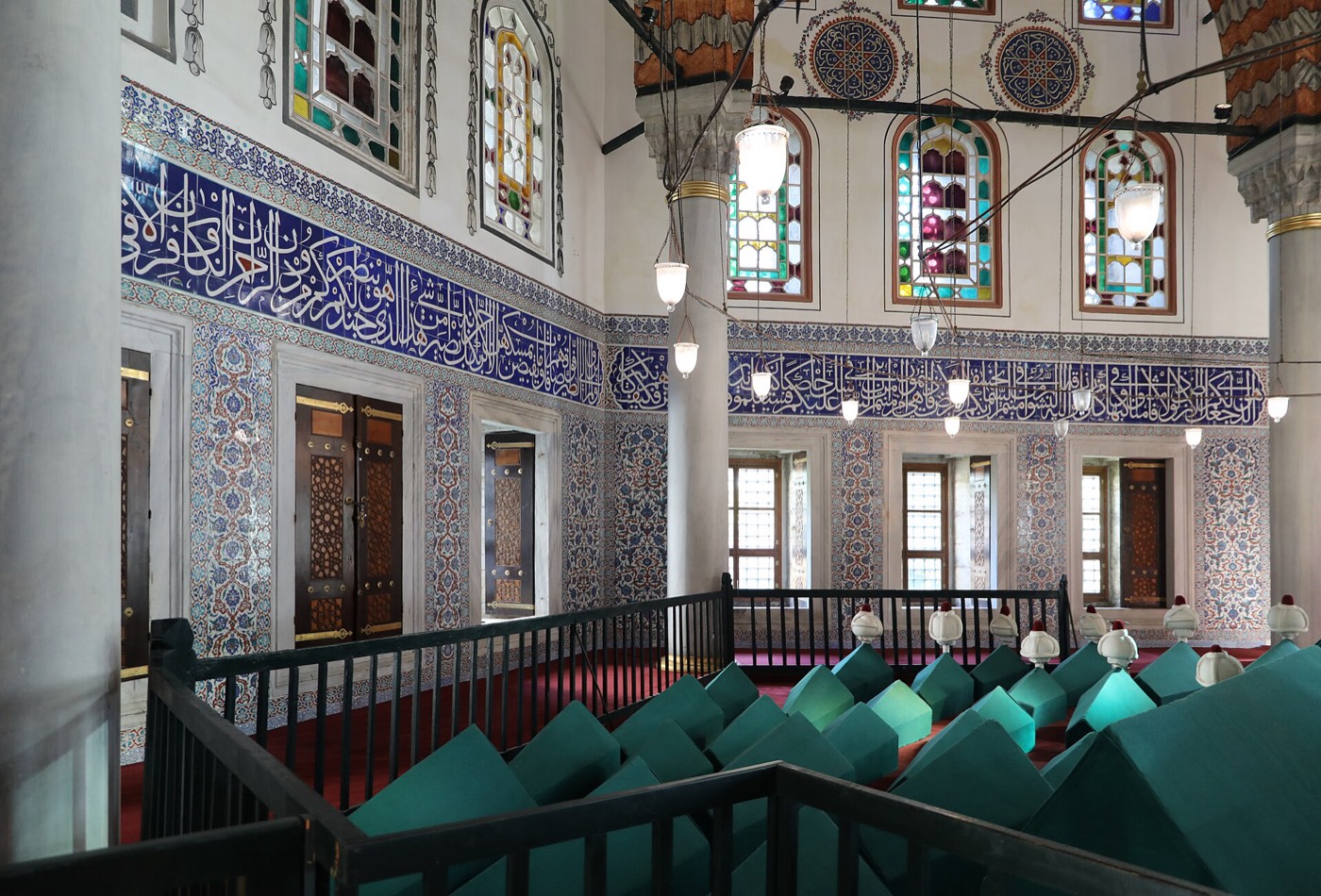
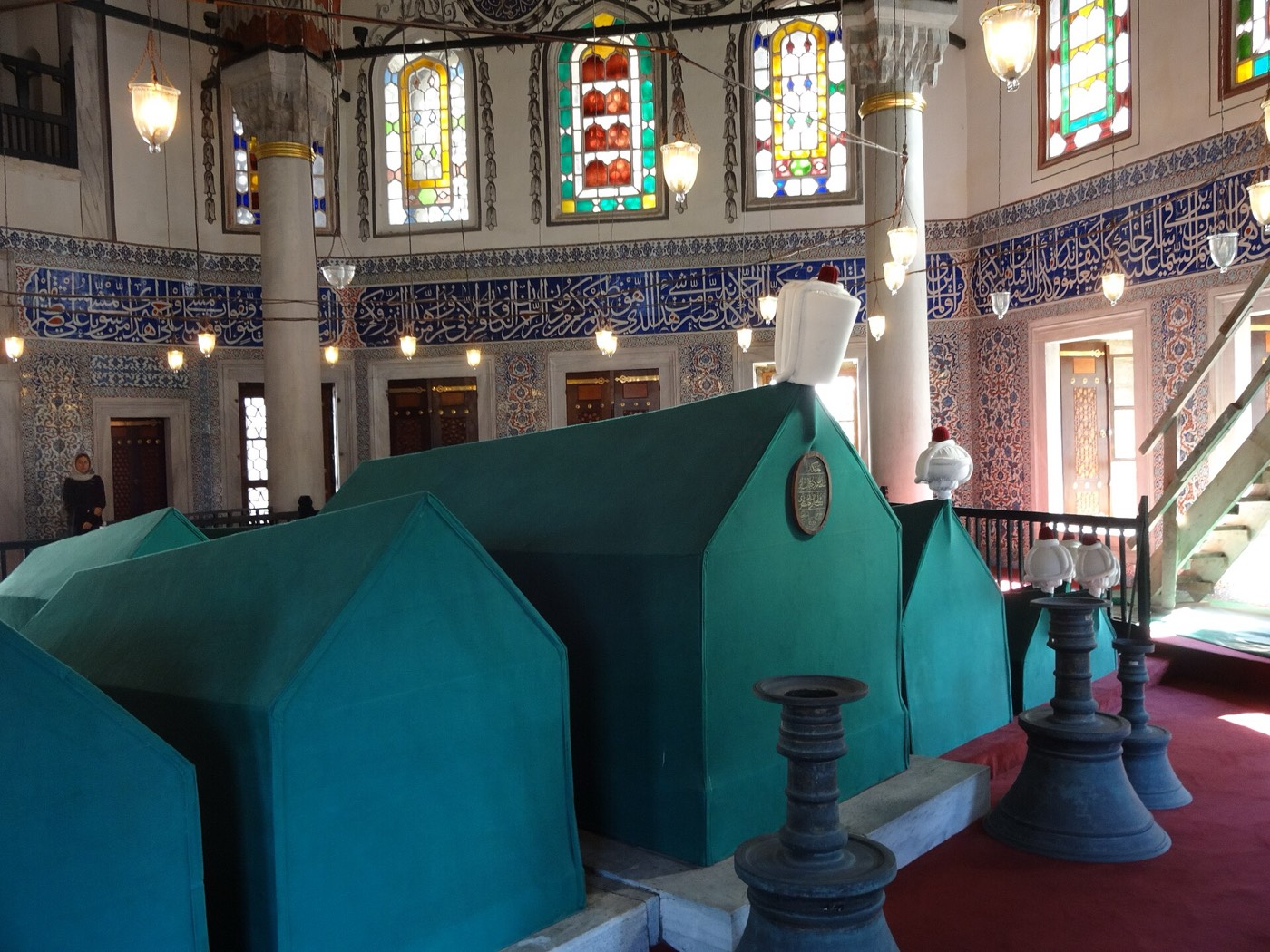
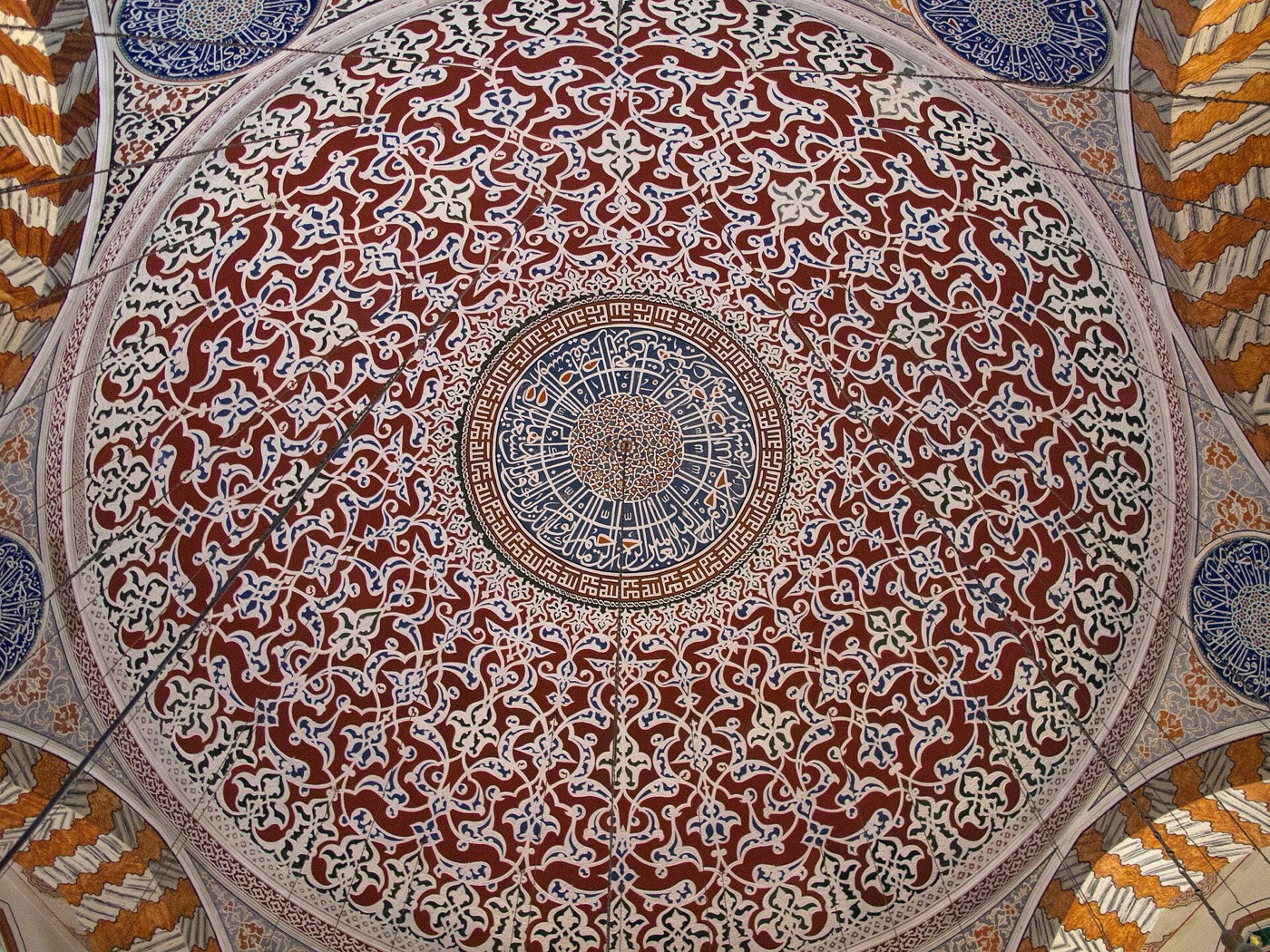
Inside, six marble columns with muqarnas capitals stand before the corners and carry pointed arches under the dome, leaving a wide gallery along the walls2,8. Tile panels alternate with the lower windows, and above them a tile band in white thuluth runs round the room with the basmala and the whole of Surat al-Mulk; the ministry gives its ground as dark blue2,8. Documents show that the tiles were made in Iznik to designs drawn for this building by the palace artists2. Tile medallions with the names of God fill the zone below the dome, and the painted dome has a central medallion with Surat al-Fatiha, ringed by a Kufic band repeating the names Allah and Muhammad2. A stair to the left of the door climbs to an upper gallery, and the floor is filled with 50 cenotaphs2,8.
What to look for
- The mother-of-pearl door leaves signed by Dalgıç Ahmed Ağa, with metalwork by a master named İsmail2,4.
- Late 16th-century Iznik tile panels on the porch2,8.
- The Surat al-Mulk tile band in white thuluth round the hall2,8.
- Six marble columns with muqarnas capitals carrying the inner dome2.
- Three hâcet windows on a podium facing Ayasofya Square2,8.
Visiting
- The tomb stands in the burial garden of Hagia Sophia with the tombs of Selim II and Mehmed III and the Princes' Tomb, to which one of its walls is joined2,8,10.
- It is one of the tombs assigned to the ministry's Istanbul Tombs Museum Directorate; the address given is Cankurtaran, Ayasofya Meydanı, Fatih8.
- It lies in the Sultanahmet area of UNESCO's Historic Areas of Istanbul1.
Official information: Istanbul Tombs Museum Directorate (İstanbul Türbeler Müze Müdürlüğü), Republic of Türkiye Ministry of Culture and TourismDirectionsOpen in OpenStreetMapGuided tours in Istanbul
In a trip guide: Istanbul’s türbes on foot