Turbehتربة

An atlas of Islamic mausoleums

PlateCCXXVof CCXXV

Maqbaratoshoara (Tomb of Poets)

مقبرة الشعراءمقبرةالشعرا Maqbarat-o-Shoʿarā

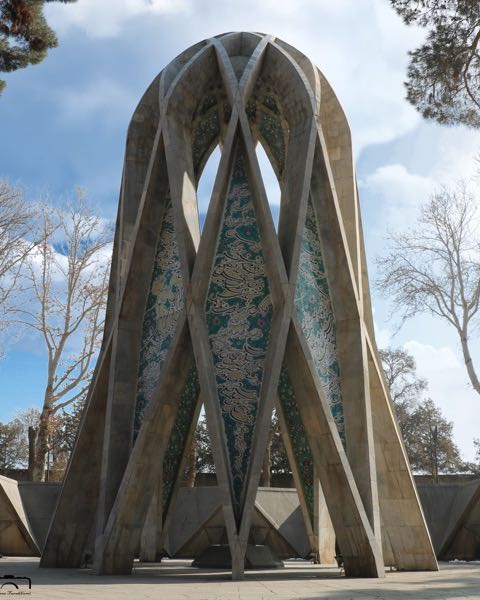
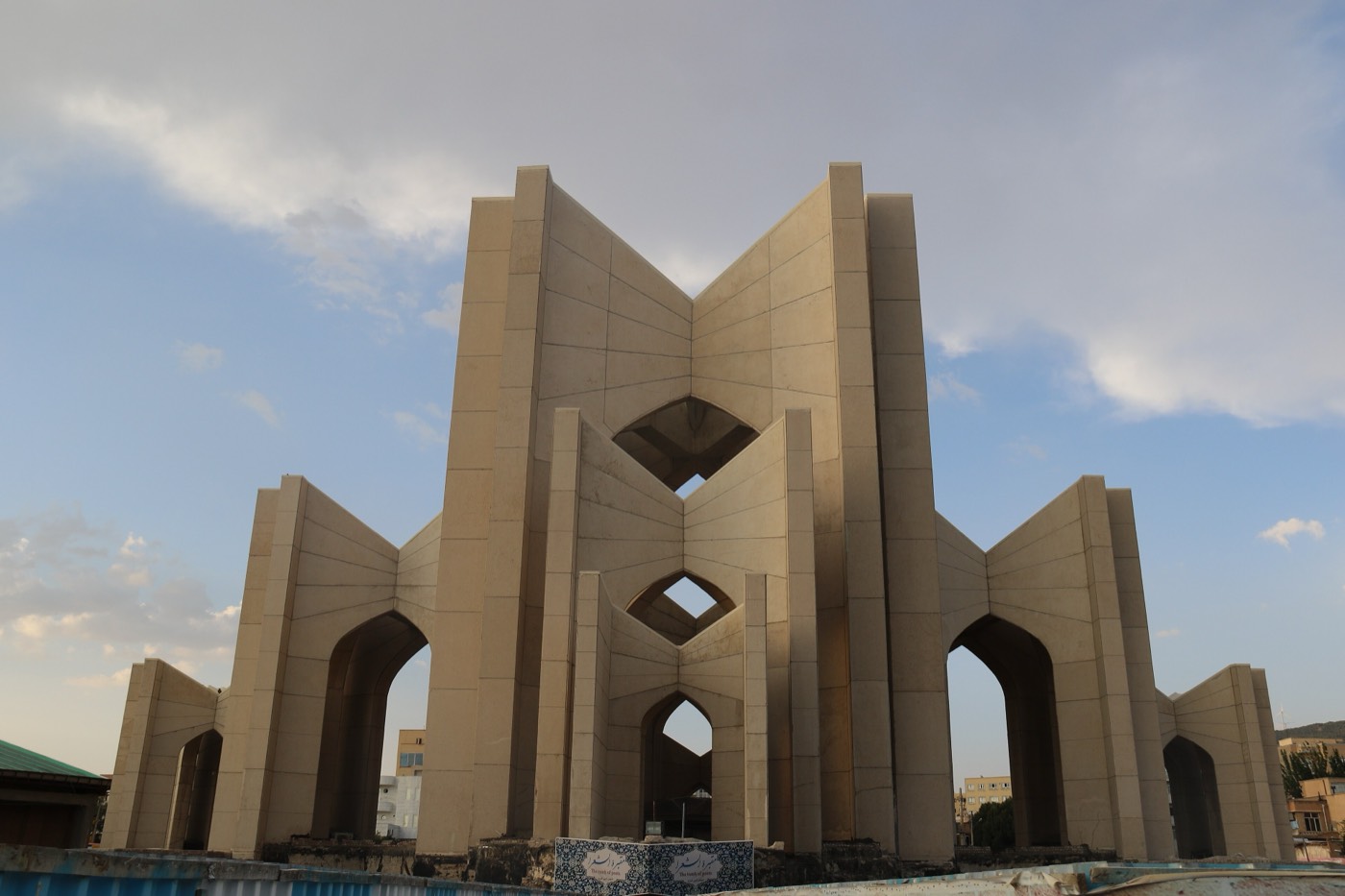
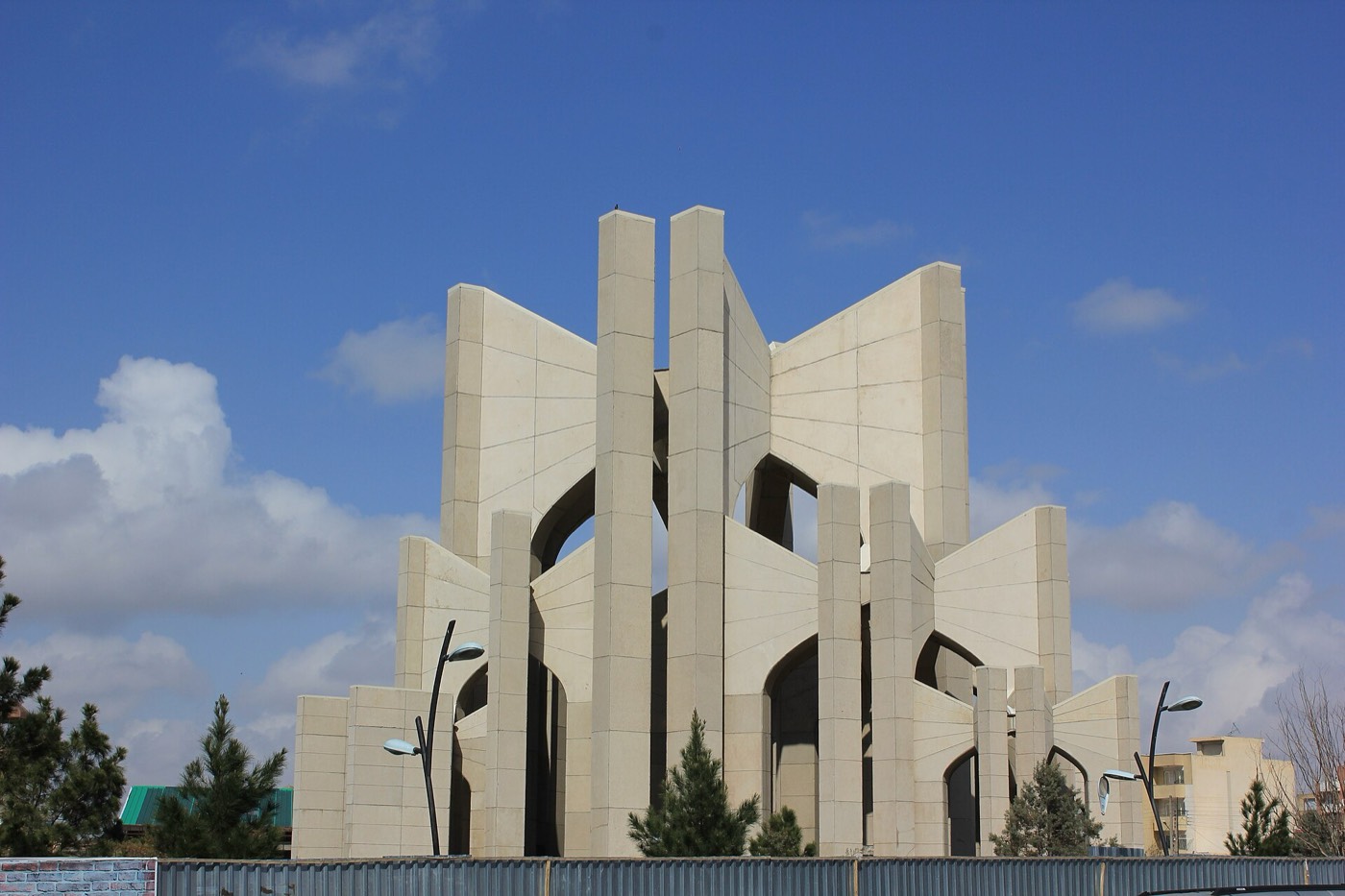
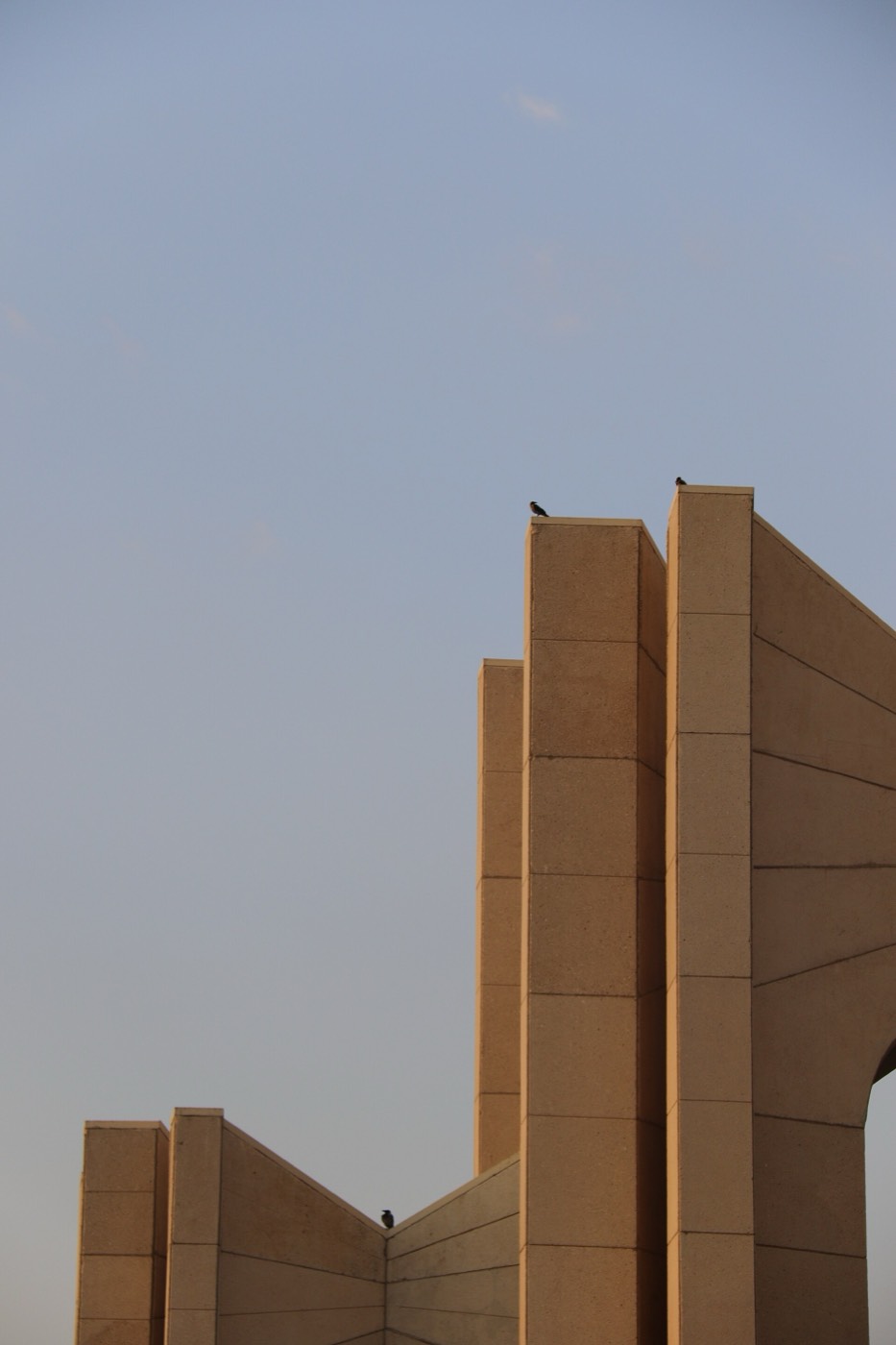
A memorial of intersecting vaults, begun in 1971 over the old Sorkhab cemetery of Tabriz, where Khaqani, Shahriar and many other poets and scholars are buried1,2,3,4.

Built
c. 1971 CE
c. 1390–1391 AH
Visit Iran dates the design competition and the start of construction to 1350 in the Iranian calendar (1971-72)1,2; the trusted sources consulted give no completion date. The cemetery is much older: Khaqani, who died between 1186 and 1199, is buried in it3,6.
Period
Pahlavi era (memorial begun in 1971)
Built for
The poets, scholars and Sufis buried in the Sorkhab cemetery since the Middle Ages, among them Khaqani Shirvani and Mohammad Hossein Shahriar (1906-1988)
Architect
Gholamreza Foruzanmehr, winner of the 1971 design competition (Visit Iran’s spelling; other accounts write Farzanmehr)
Materials
Not described in the trusted sources consulted
Location
Tabriz, Iran
Maqbaratoshoara (Tomb of Poets)
Photograph: Monaesfandiar · CC BY-SA 4.0 · Wikimedia Commons

History

The Maqbaratoshoara, the ‘tomb of the poets’, stands in the old Sorkhab quarter of Tabriz, on a cemetery that Visit Iran describes as more than eight hundred years old1,2. The poet Khaqani Shirvani, who died in Tabriz between 1186 and 1199, lies here3,6. The heritage organisation of East Azerbaijan also names Asadi Tusi, Qatran Tabrizi and Zahir al-Din Faryabi among the poets buried in it, with Sufis, scholars and others such as Sheikh Mohammad Khiabani and Seqat al-Eslam Tabrizi4. Lida Balilan Asl and Fahimeh Doustar link the site with the shrine complex of Seyyed Hamzeh and count the Sorkhab cemetery among the burial grounds that shaped Tabriz from the Ilkhanid to the Safavid period5.

The cemetery stayed in use until the Ottoman invasion of the late 16th century and fell into ruin during the occupation4; Visit Iran adds that it lay abandoned after several earthquakes1,2. Interest revived in 1958-59, after the cemetery holding the graves of the ‘two Kamals’ was restored4. In 1971 (1350 in the Iranian calendar) a competition for a memorial was announced in Ettela’at, Keyhan and Yaghma; the design of Gholamreza Foruzanmehr was chosen, and building began the same year1,2. The poet Mohammad Hossein Shahriar, who died in Tehran on 18 September 1988, was buried here3; according to the heritage organisation of East Azerbaijan, the site has since become one of the province’s tourist attractions4.

Architecture

Visit Iran describes the memorial as a massive building known for its intersecting vaults, reached by two sets of stairways that run around the structure1,2. Its main space is divided into one large hall and several smaller rooms1,2. According to Visit Iran it was built in honour of more than four hundred poets, writers and men of letters1,2. The complex also has a bookshop and a handicrafts shop, where the works of the poets buried here are sold as books and in other forms1,2.

Inside

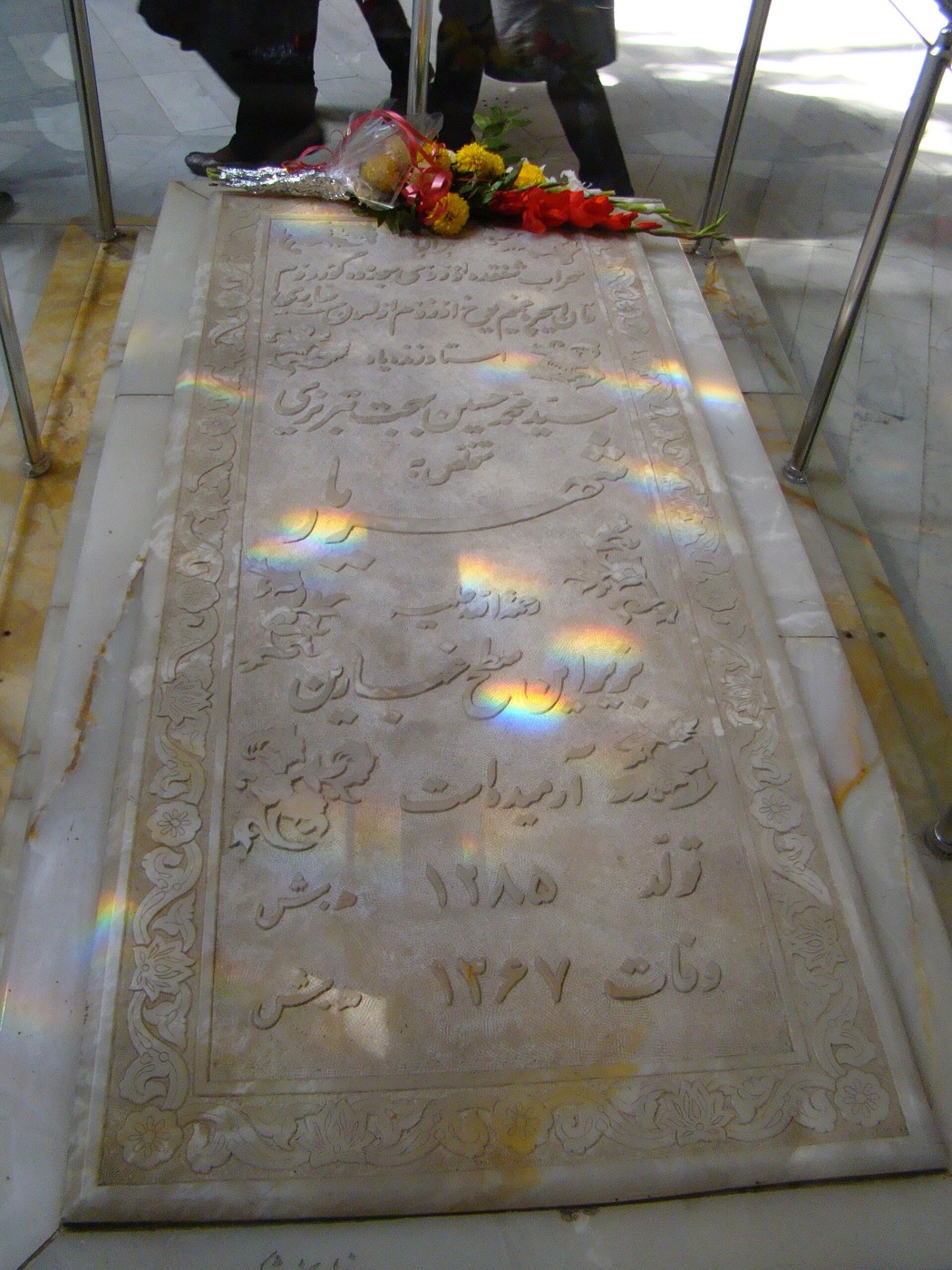
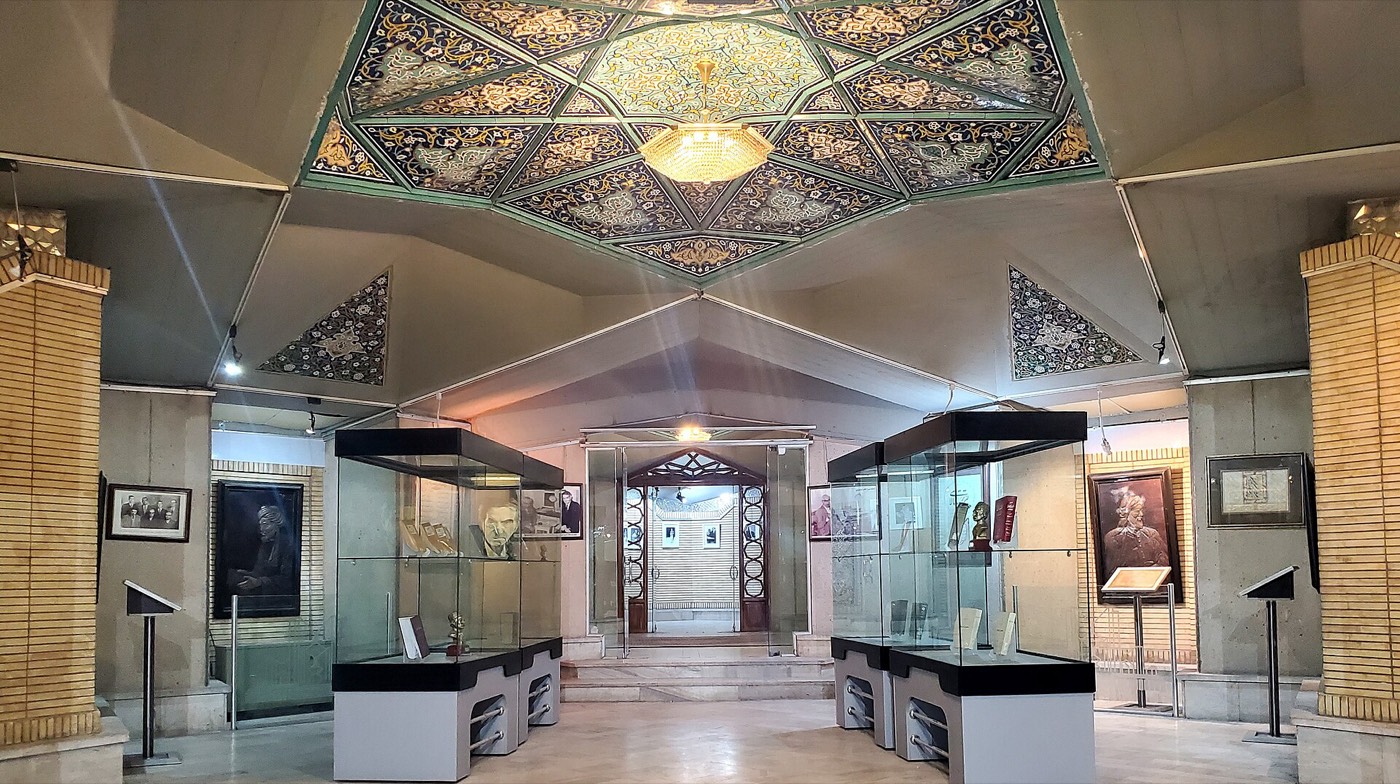
Shahriar’s grave lies in the main hall, enclosed by a glass frame, with the dates of his birth and death engraved1,2. Poems, sculptures and framed panels of verse by the poets buried at the site line the room1,2.

What to look for

  1. The intersecting vaults of the memorial chosen in the 1971 competition1,2.
  2. Shahriar’s grave in the main hall, enclosed in glass1,2,3.
  3. Poems and sculptures of the poets buried at the site around the hall1,2.
  4. The two stairways that run around the structure1,2.

Visiting

  • The memorial stands in the historic Sorkhab quarter of Tabriz1,2.
  • The complex has a bookshop and a handicrafts shop selling the works of the poets buried there1,2.

Sources

  1. Visit Iran, official tourism portal of Iran’s Ministry of Cultural Heritage, Tourism and Handicrafts: Maqbaratoshoara
  2. Visit Iran, official tourism portal of Iran’s Ministry of Cultural Heritage, Tourism and Handicrafts (Persian page): مقبره الشعرای تبریز
  3. Encyclopaedia Iranica, online edition (Kamyar Abedi, 2015): SHAHRYAR, MOHAMMAD HOSAYN
  4. East Azerbaijan Cultural Heritage, Handicrafts and Tourism Organization (Wayback Machine copy of 9 June 2011): مقبره الشعرا
  5. Journal of Researches in Islamic Architecture (Pazhuhesh-ha-ye Me‘mari-ye Eslami), Iran University of Science and Technology, vol. 3, no. 8 (Autumn 2015), pp. 65-90 (Lida Balilan Asl and Fahimeh Doustar; in Persian with an English abstract): بررسی تأثیر مزارات در توسعه‌ی ساختار شهری شهر تبریز از دوره‌ی ایلخانی تا صفوی (The Effect of the Cemeteries in the Development of Urban Structure of Tabriz City since Ilkhanid Era to Safavid Era)
  6. Encyclopaedia Iranica, vol. XV, fasc. 5, pp. 521-529 (Anna Livia Beelaert, 2010): ḴĀQĀNI ŠERVĀNI

Images and 3D