History
Seyid Yahya was born in Shamakhi; TDV counts him as the second founder (pir) of the Khalwatiyya Sufi order and, in a sense, its real founder, and notes that the order spread from Azerbaijan to Anatolia and beyond5. In the order’s chain of masters he follows Sadr al-Din Khiyavi (died 1455), and he died in Baku5. The Icherisheher reserve calls him a court poet and scholar of the time of Shirvanshah Khalilullah I, known as a philosopher, teacher, astrologer and historian8. It describes him as a theologian and Sufi who wrote, mainly in Arabic, on philosophy, history, astronomy, medicine and mathematics, while ICOMOS calls him a court astrologer2,8.
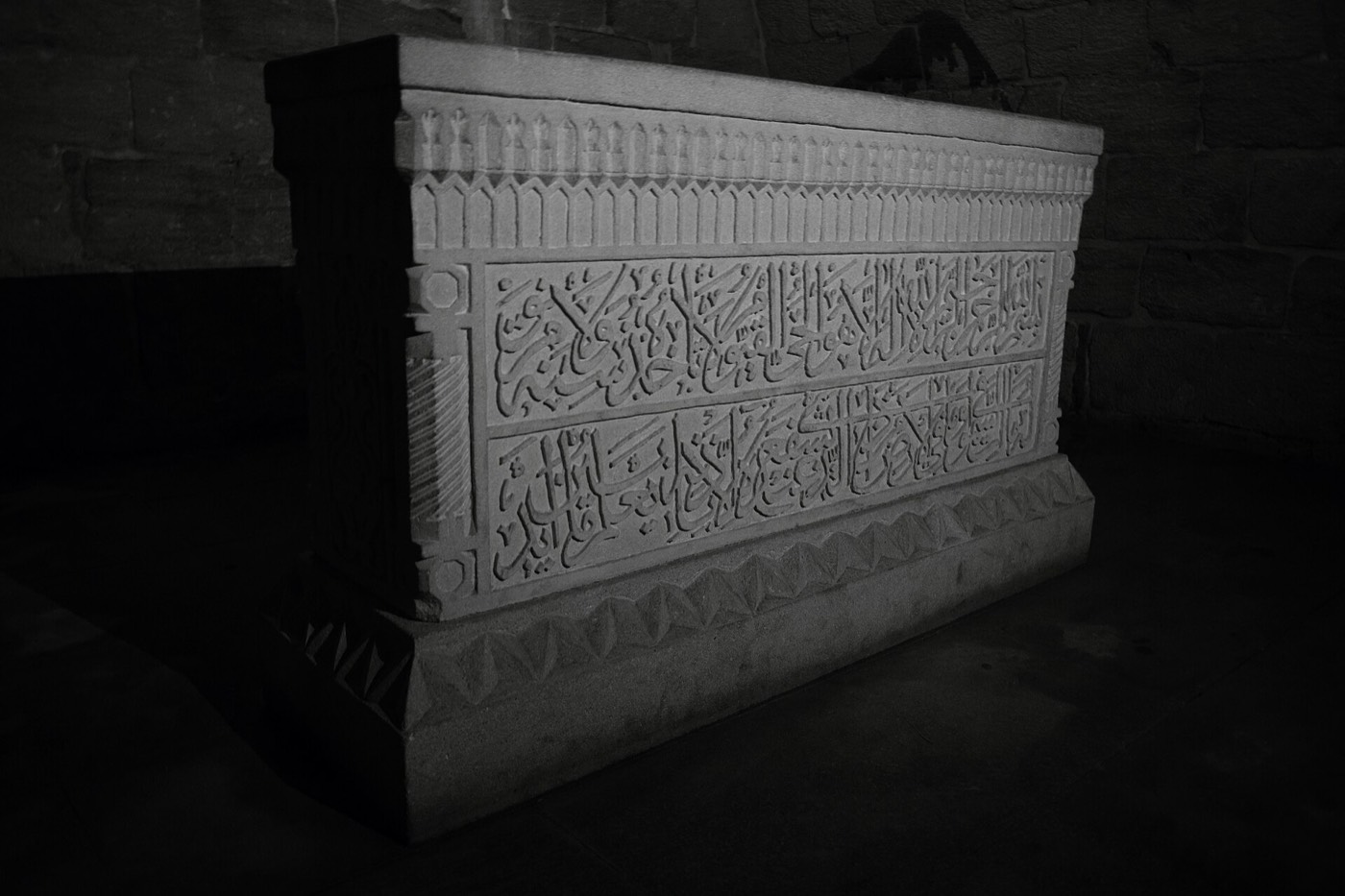
The attribution to Seyid Yahya rests on tradition: TDV calls the tomb mostly attributed to him, and the reserve says it is presumably his4,8. The tomb was first entered through the Keyqubad mosque, of which only remains survive; the mosque’s mihrab stood in its south wall, beside the entrance to the tomb2,7,10. Abbasgulu Bakikhanov wrote that the cell where Seyid Yahya prayed, his school and his grave still stood at the mosque named after him10. The epigraphist Mashadikhanim Nemat suggested that the dervish buried here wrote the 1402-1403 inscription of the Diri Baba tomb at Maraza, though Yaşar Çoruhlu notes that no document supports this9. TDV records a repair of the tomb in 19984.
Architecture
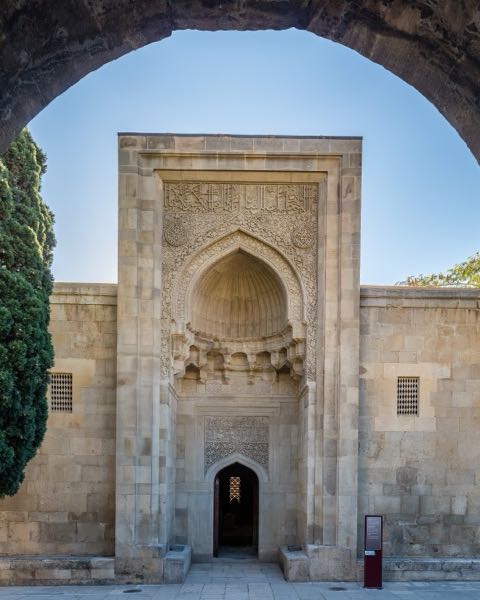
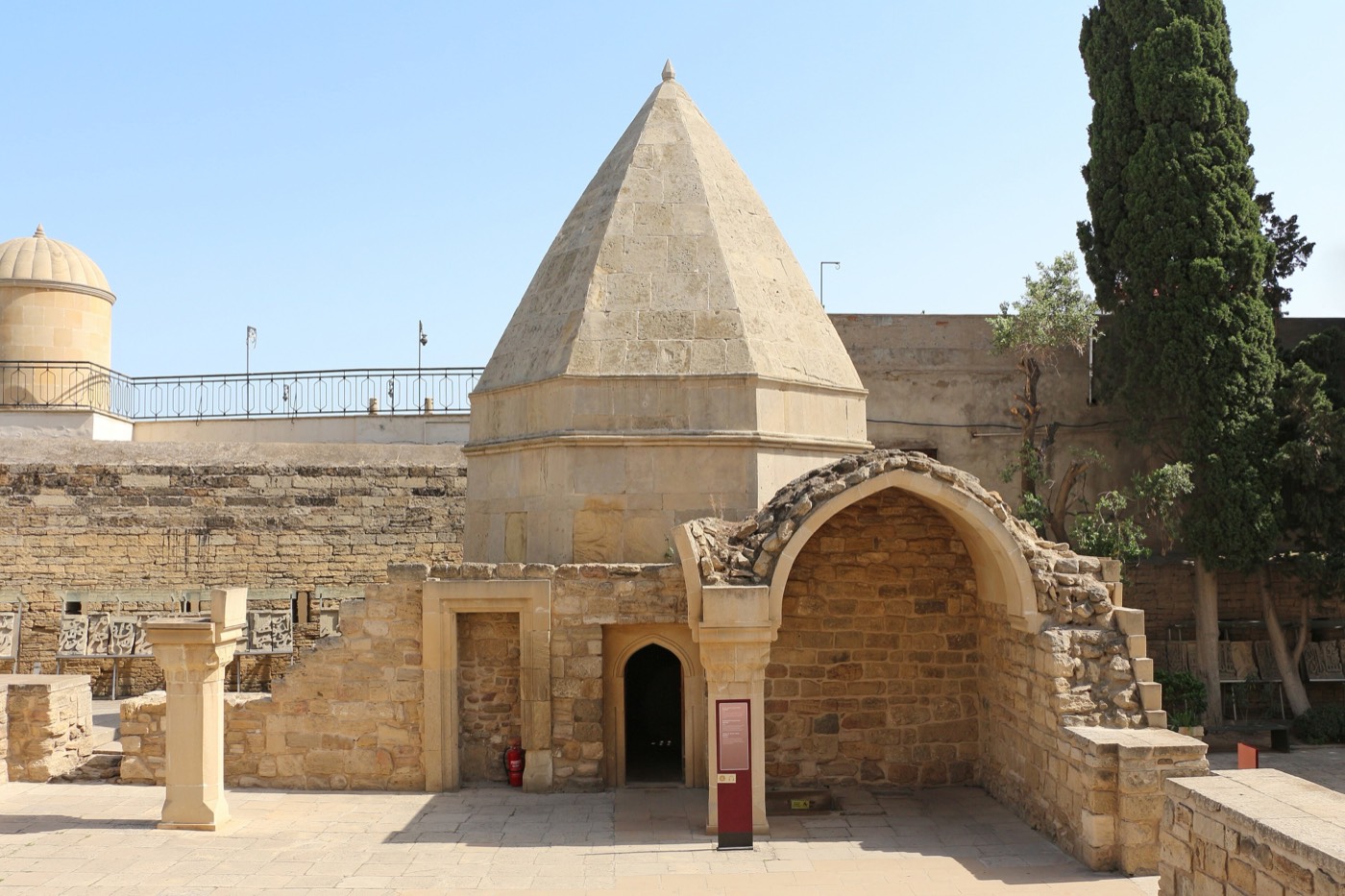
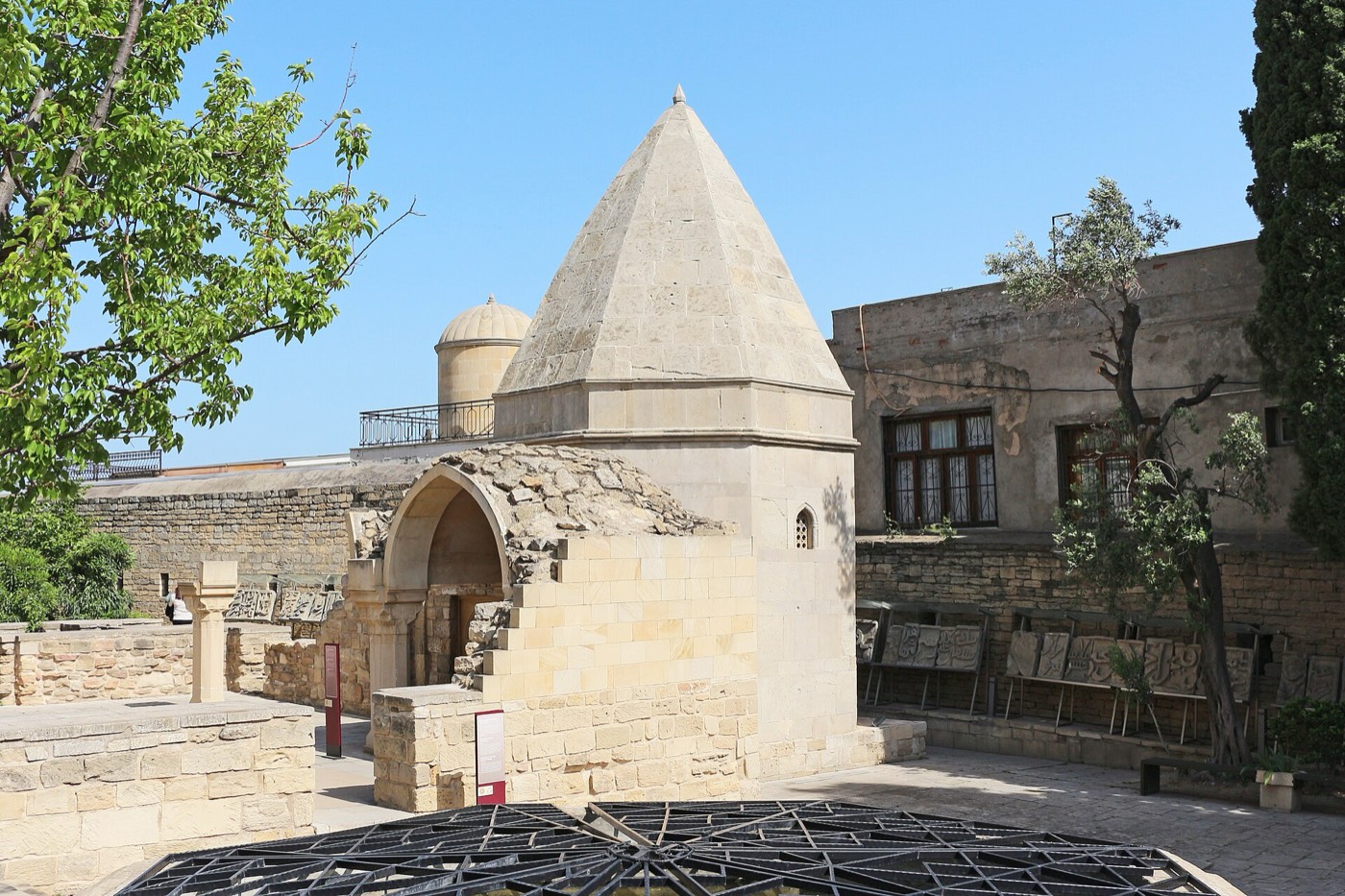
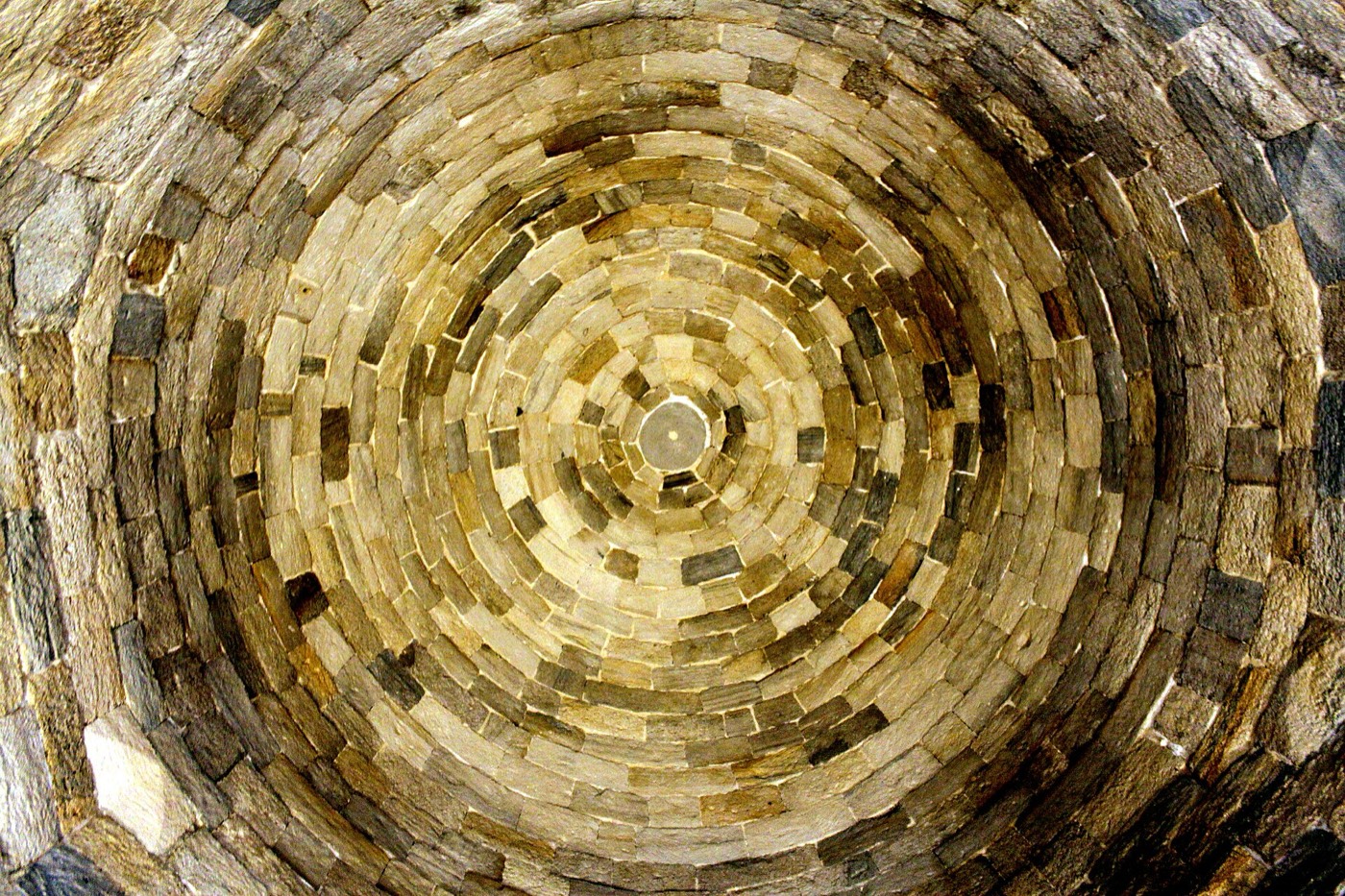
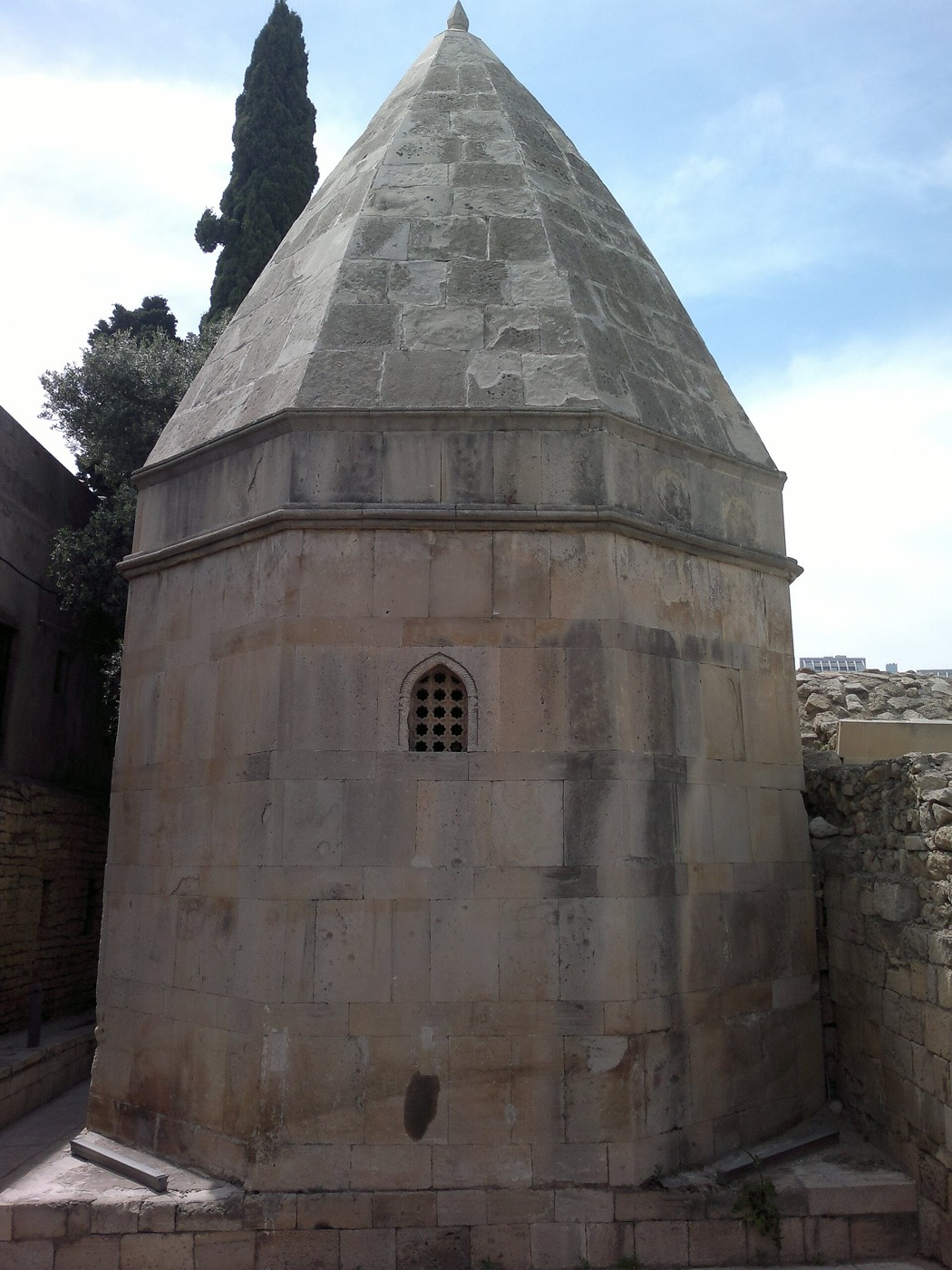
The tomb is a small octagonal prism of well-hewn stone, its walls laid in alternating narrow and broad courses, under a pyramidal stone roof3,4. Under this roof is an inner dome4. The building has two levels, a four-sided crypt below and an octagonal chamber above, a scheme that TDV compares with the kümbets of Anatolian Turkish architecture3,4. Three small windows with carved stone lattices (shebeke) open on the south, east and west sides3. TDV counts the tomb among the fine examples of stone tomb architecture4.
Inside
What to look for
- The eight-sided pyramidal stone roof over an inner dome4.
- Walls of alternating narrow and broad courses of well-hewn stone3.
- Three carved stone lattice windows on the south, east and west sides3.
- The remains of the Keyqubad mosque, through which the tomb was once entered2,7,10.
- Inscribed stones from the sunken Bayil (Sabail) fortress, laid out in the courtyard2,7.
Visiting
- The tomb stands in the middle courtyard of the Shirvanshahs’ Palace Complex, with the remains of the Keyqubad mosque and the Eastern Portal (Murad Gate); the Türbe of the Shirvanshahs is in the lower courtyard7.
- UNESCO lists the tomb among the buildings of the palace complex, inside the Walled City of Baku World Heritage property inscribed in 20001.
- Stone slabs with inscriptions and images from the Bayil fortress, which lay for centuries under Baku Bay, cover the middle courtyard7.
Official information: “Icherisheher” State Historical-Architectural Reserve Administration, responsible for the World Heritage property since 2007 (as described by UNESCO)DirectionsOpen in OpenStreetMapGuided tours in Baku