History
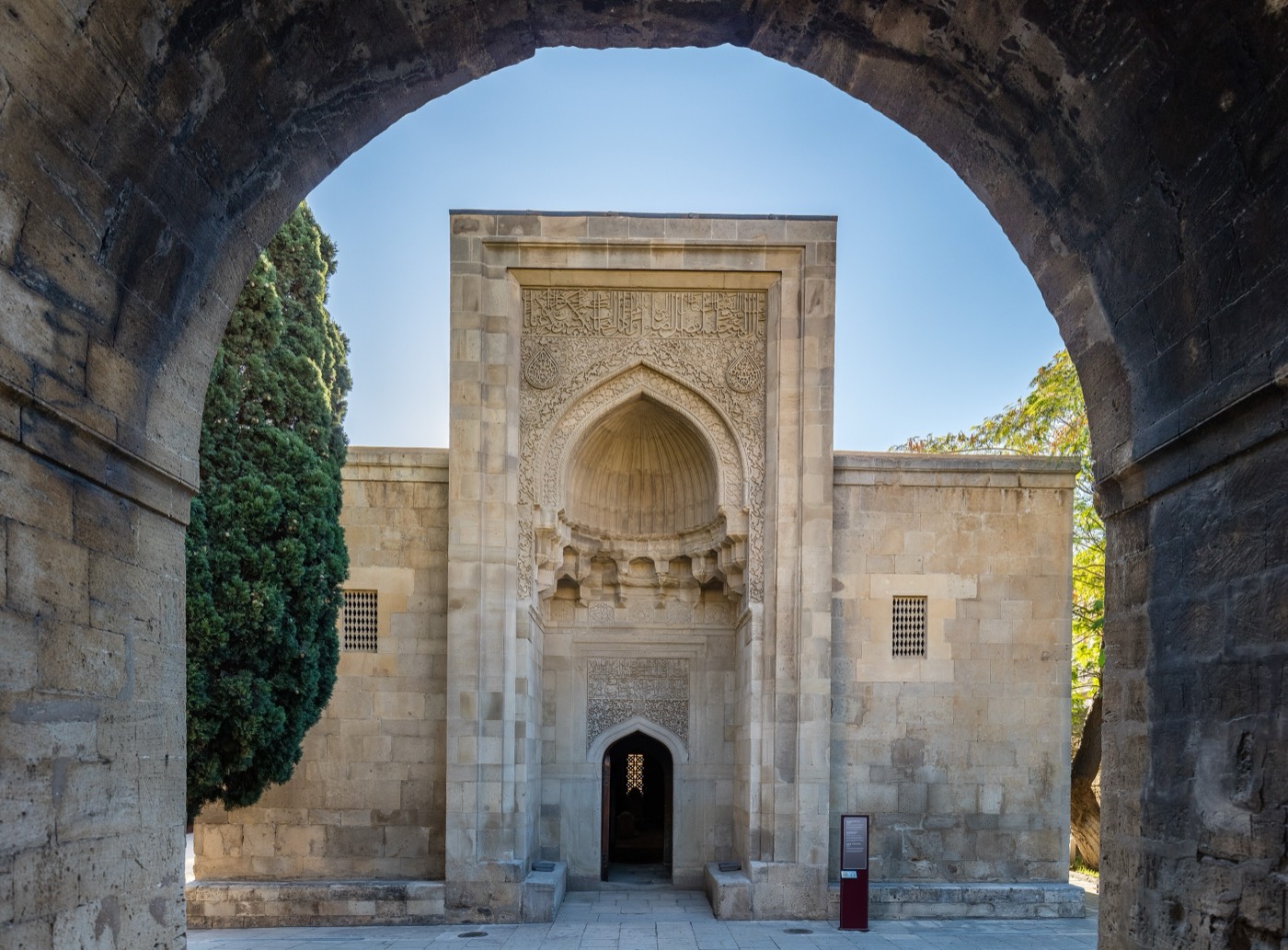
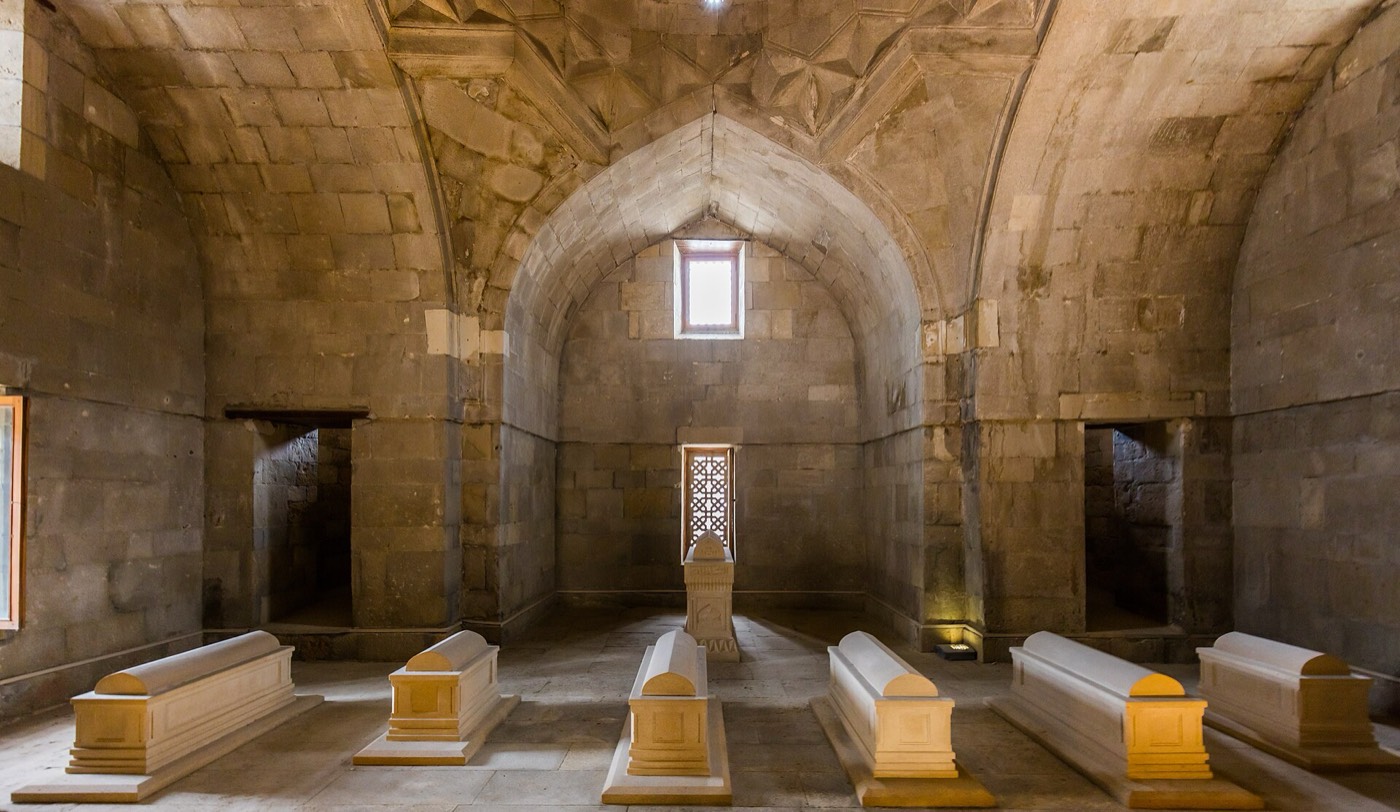
Early in the 15th century Baku replaced Shamakhi as the Shirvanshahs’ capital, and Khalilullah I and his son Farrukh Yasar built a palace on one of the walled city’s hills2,5. The inscription at the entrance of the family tomb, in the palace’s lower courtyard, is dated 839 AH (1435-1436) and says that Khalilullah built it for his mother and his son, a boy of six or seven according to the Icherisheher reserve4,6,8. Excavations in 1945-1946 found seven burials with rich grave goods, and showed that other members of the family had been buried here besides the shah’s mother and son2,3,8.
The palace mosque, set at right angles to the tomb, bears a minaret inscription of Khalilullah dated 845 AH (1441-1442)2,4. In its evaluation of 2000, ICOMOS judged the family tomb to be in relatively good condition and authentic; that year the palace, a museum reserve since 1964, was inscribed with the Walled City of Baku on the World Heritage List1,2,7. UNESCO adds that some researchers see the Divankhana, usually described as a reception hall, as a shah’s tomb, and the Icherisheher reserve lists in the palace’s first courtyard a mausoleum that Farrukh Yasar built for himself1,6.
Architecture
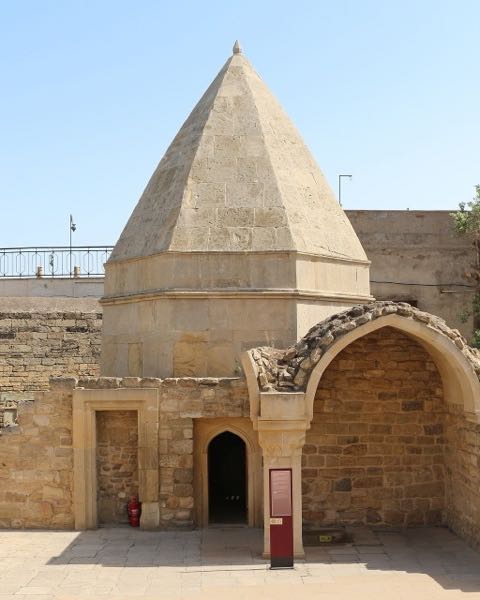
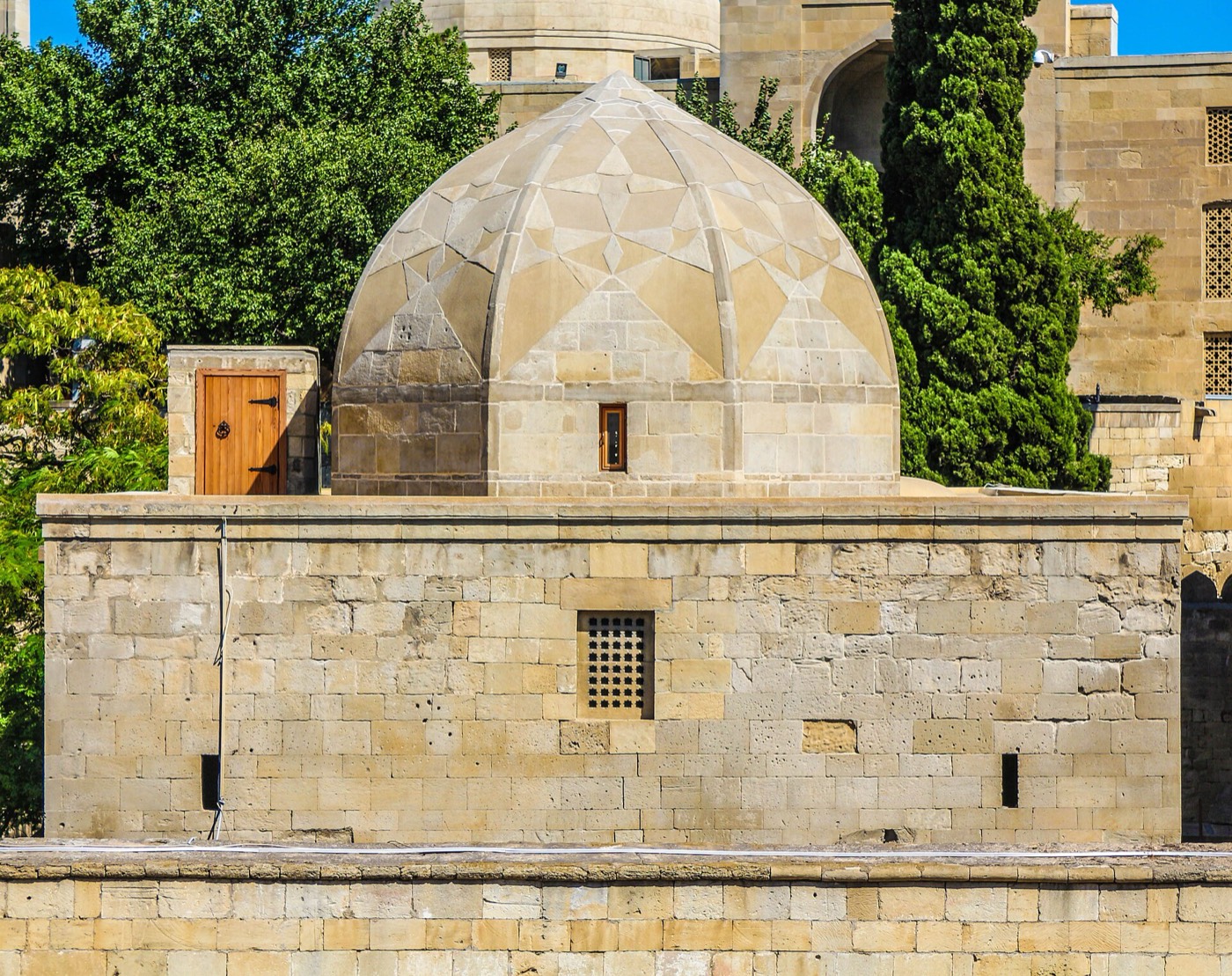
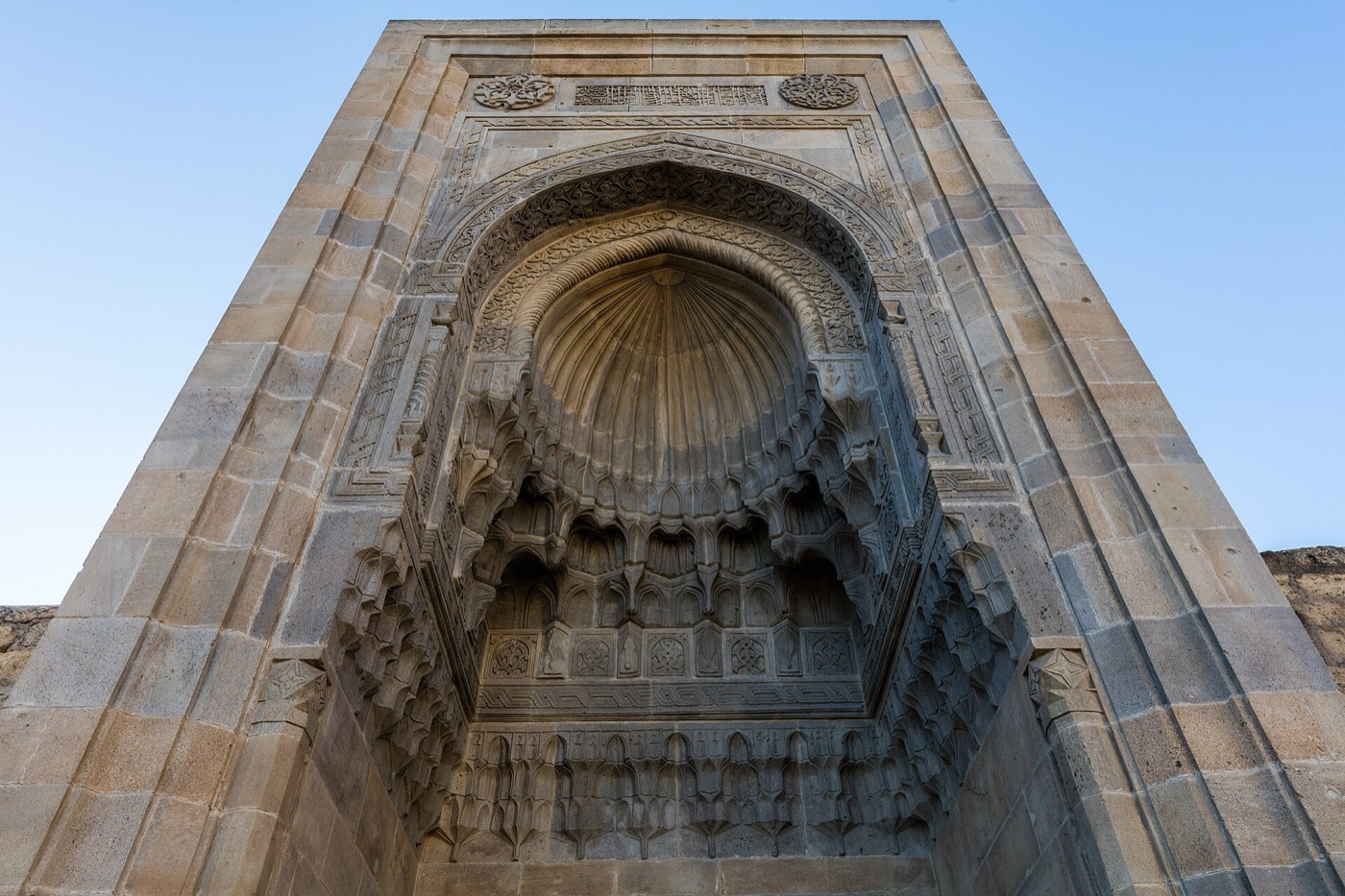
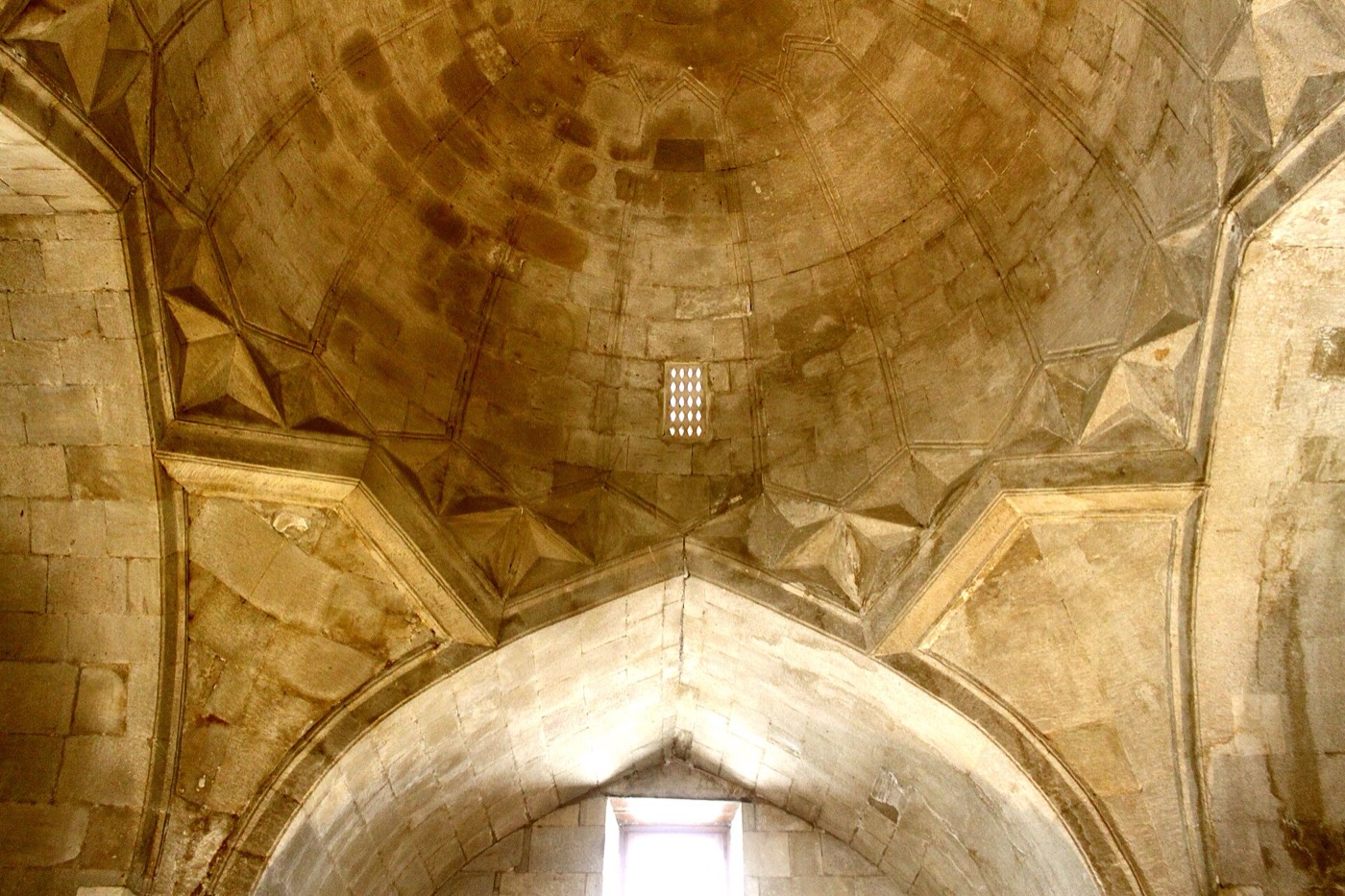
The tomb is rectangular in plan and built of limestone, the stone of the whole palace, with a six-sided stone dome over the burial chamber at its centre2,3. The dome is carved with many-pointed stars, and its sunken parts were once set with turquoise glazed tiles2,8. The entrance sits in a densely carved portal treated as a pishtaq4. The portal carries verse 92 of Surat Yusuf, on God’s forgiveness, and a hadith4. Medallions bear the names Muhammad and Ali and that of the architect, Ali, whom some researchers consider the main architect of the palace4.
Inside
The domed burial chamber lies at the centre of the building3. TDV describes niches in the form of iwans on three sides of it, and vaulted rooms on either side of the entrance and of the eastern niche4. The finds from the burials excavated in 1945-1946, among them textile fragments with medallions and Arabic inscriptions, sky-blue beads, a gold pin set with a turquoise and six rubies, and gold earrings, are kept in the Museum of History of Azerbaijan, not in the tomb2,3.
What to look for
- The entrance inscription of 839 AH (1435-1436) naming Khalilullah, his mother and his young son4,8.
- The six-sided stone dome carved with stars, once set with turquoise tiles2,8.
- Portal medallions with the names Muhammad and Ali and that of the architect Ali4.
- Verse 92 of Surat Yusuf and a hadith carved on the portal4.
- The palace mosque beside it, with a minaret inscription of 1441-14422,4.
Visiting
- The tomb stands in the lower courtyard of the Shirvanshahs’ Palace Complex, together with the palace (Shah) mosque6.
- The palace complex, tomb included, is used as a museum2,7.
- The grave goods found in 1945-1946 are in the Museum of History of Azerbaijan, not on site2,3.
Official information: “Icherisheher” State Historical-Architectural Reserve Administration, responsible for the World Heritage property since 2007 (as described by UNESCO)DirectionsOpen in OpenStreetMapGuided tours in Baku