History
Abdur Rahman Khan spent eleven years in exile in Samarkand as a guest of the Russian government; on 20 July 1880 a tribal council at Charikar proclaimed him Amir of Kabul1. He ruled until 1901, and during his reign Russian-British commissions and the British fixed Afghanistan's northern, western and eastern borders (1887-1893)1. In Kabul he built a new citadel, the Arg1. Zarnegar Park was once part of his palace grounds, where his private palace, the Bustan Serai, stood beside the bungalow of his favourite young wife, Bibi Halima1,7. The long inscription by its main door says he favoured it as a private palace, away from the ceremony of the Arg7.
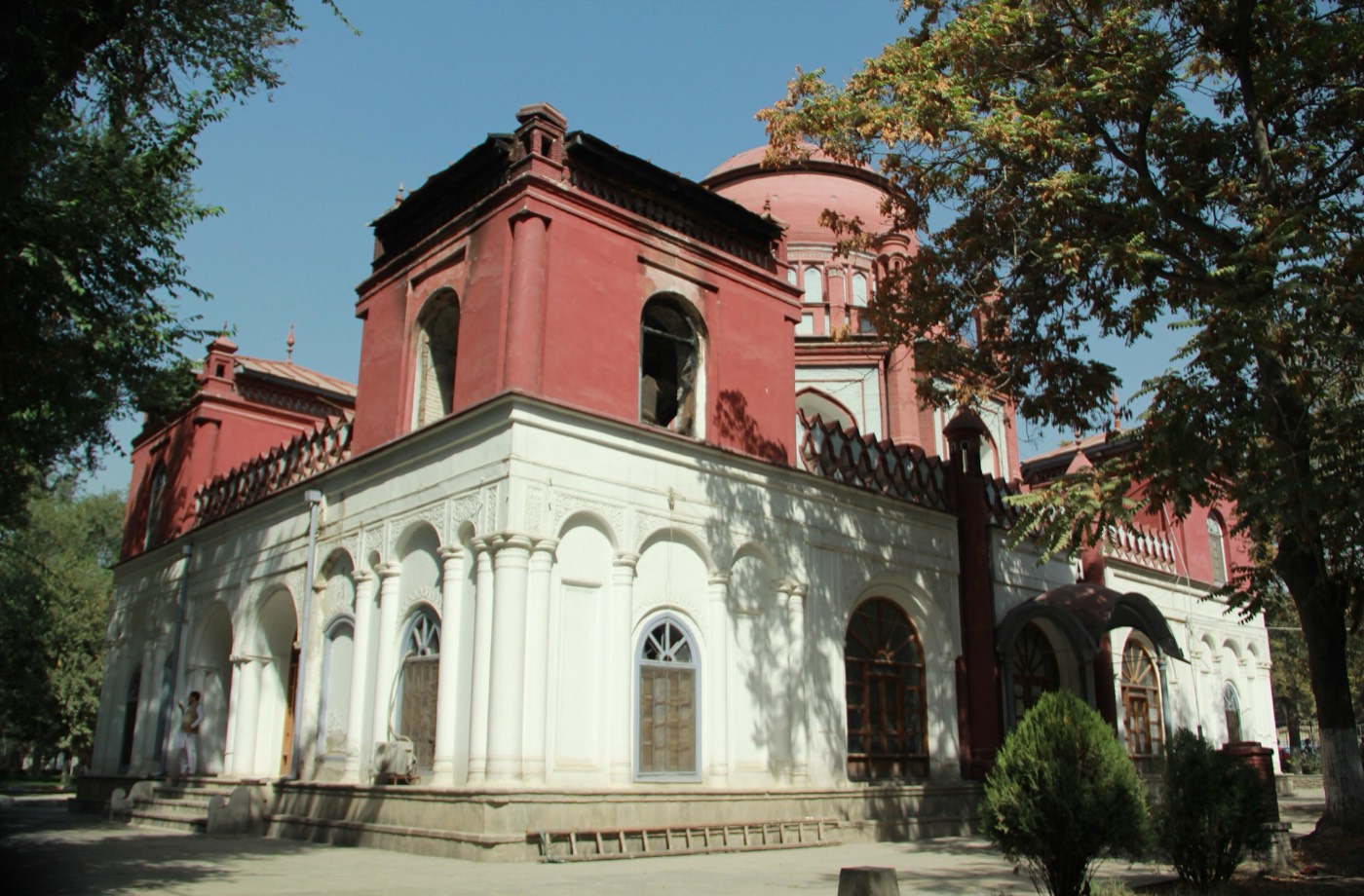
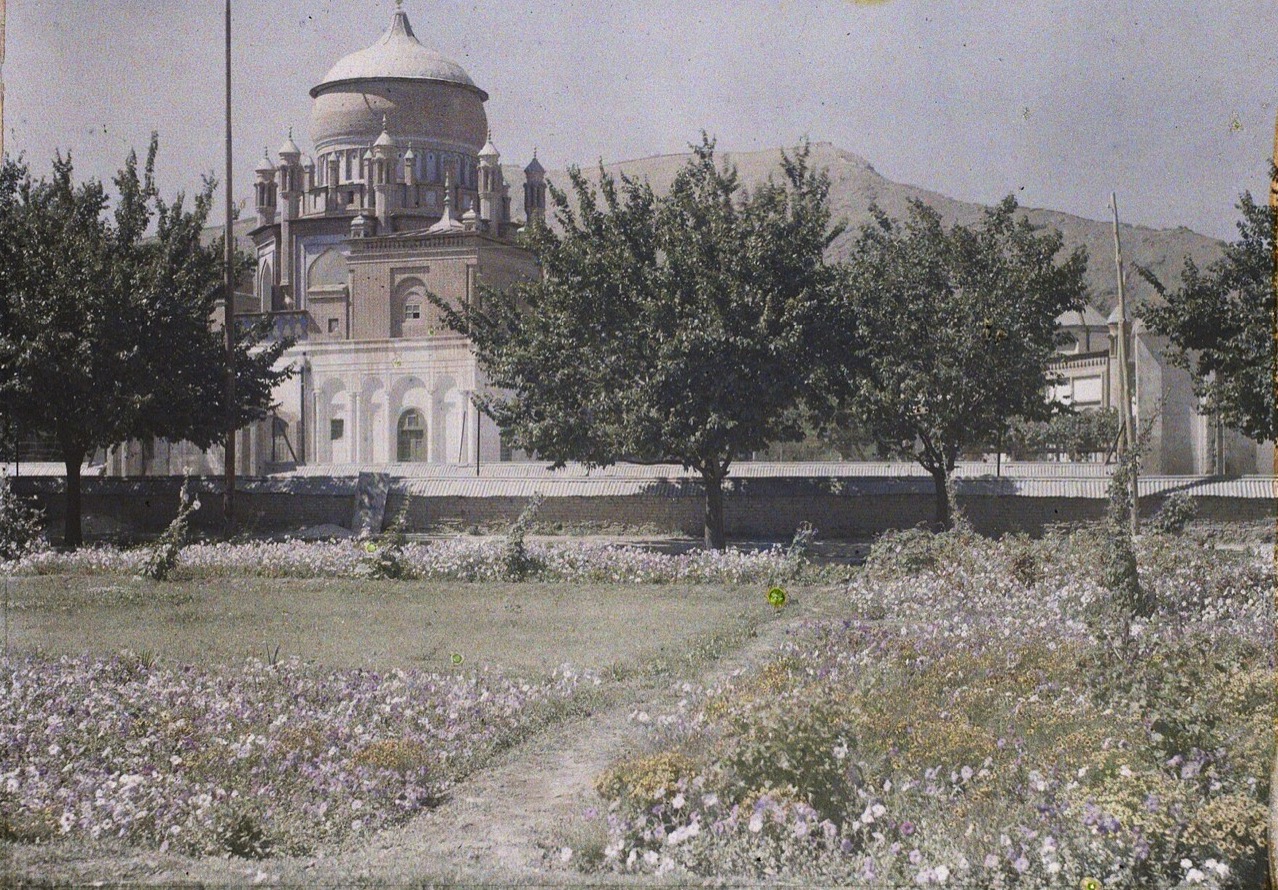
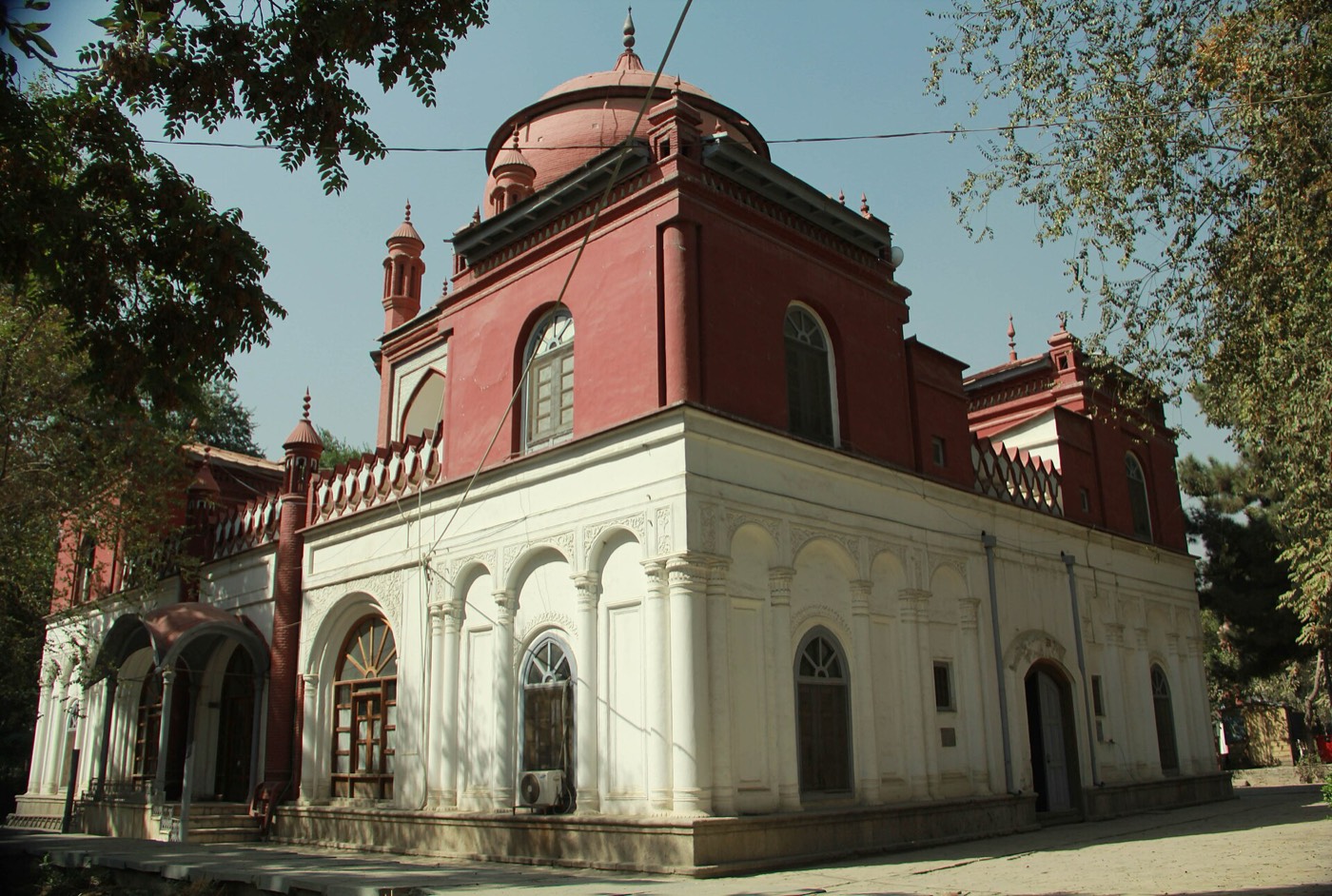
Abdur Rahman died in late September 1901 at Bagh-i Bala, his palace overlooking Kabul1,7. For fear of palace intrigue his body was carried secretly into the city and buried in the east wing of the Bustan Serai; his eldest son Habibullah succeeded him without incident1,7. From 1902 Habibullah spent three years turning the building into a mausoleum, and built a small mosque beside it1,7. In 1964 the neighbouring Zarnegar Palace, which gave the park its name, was pulled down to make way for the park7. According to Archnet, the Department of Historic Monuments, which had occupied the building since the mid-1990s, asked the AKTC in 2003 to help keep water out of its roofs3.
Architecture
Dupree describes the work begun in 1902: much of the original woodwork was replaced by plaster and the mud brick by dark-red fired brick, and an upper storey trimmed with light-blue brick was added, with many small minarets round an iron cupola topped by a golden spire7. She judged the style to be distinctly that of Abdur Rahman's reign, and noted that since 1964 whitewash in varying colours had covered the red brick front7. Bibi Halima's house nearby, the only one of her palaces still standing in 1972, was designed by an architect from Bukhara; its stucco shows birds entwined in flowering vines, which Dupree saw as Central Asian in design1,7.
What to look for
Visiting
- The mausoleum stands on the edge of Zarnegar Park in central Kabul1,7.
- The AKTC rehabilitated Zarnegar Park with new planting, irrigation, paving and public facilities6.
- Dupree's guide of 1977 places Queen Halima's stucco-decorated house near the mausoleum; the sources consulted do not record its present state1.