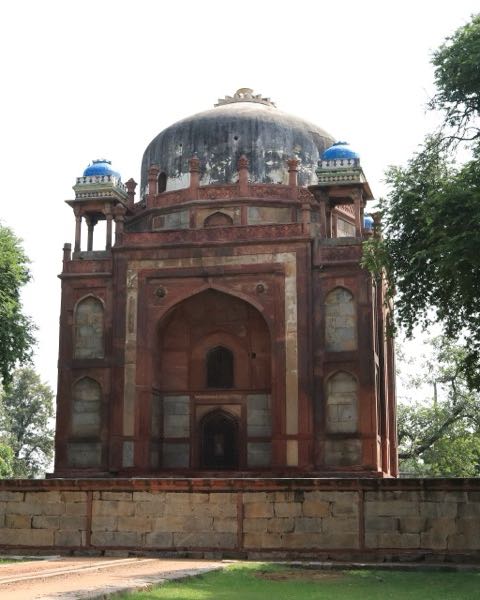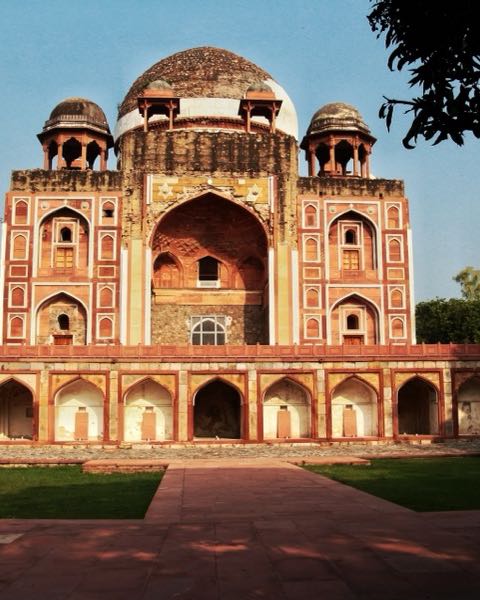
History
Abul Fath, son of Mulla Abd ur-Razzaq of Gilan, left Gilan with his brothers Humam and Nur ud-Din and reached India in the twentieth year of Akbar's reign2. He rose to be Sadr of Bengal and a close adviser of the emperor2. He went with the emperor to Kashmir and then toward Zabulistan, fell sick on the march and died in the thirty-fourth regnal year, 997 AH (1589)2. By Akbar's order Khwaja Shams ud-Din Khawafi took the body to Hasan Abdal and buried it in a vault the Khwaja had made for himself2. On his return the emperor prayed at the tomb2.
Blochmann adds that the Khwaja was himself buried at Lahore in 1599-1600, because the family vault at Hasan Abdal had been used for other purposes2. DOAM's record says the tomb holds two figures of Akbar's time, Hakim Abdul Fateh Gilani and Hakim Karimuddin1. Blochmann does not mention Karimuddin: he names Abul Fath's brothers as Hakim Humam (died 1004 AH, 1595) and Nur ud-Din, and a fourth brother, Hakim Lutfullah, and records at Hasan Abdal only the burial of Abul Fath, giving no burial place for the others2. The two sources are therefore not reconciled here, and the identity of the second burial is unconfirmed. DOAM adds that two graves inside were removed and levelled during Sikh rule1. The building is protected under the Antiquities Act 1975 as federal property1.
Architecture
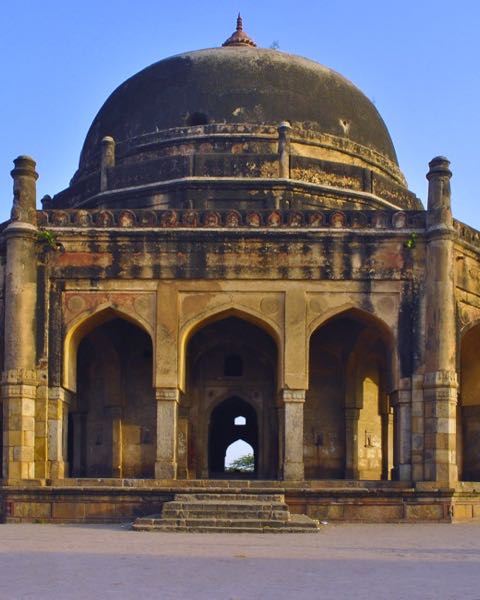
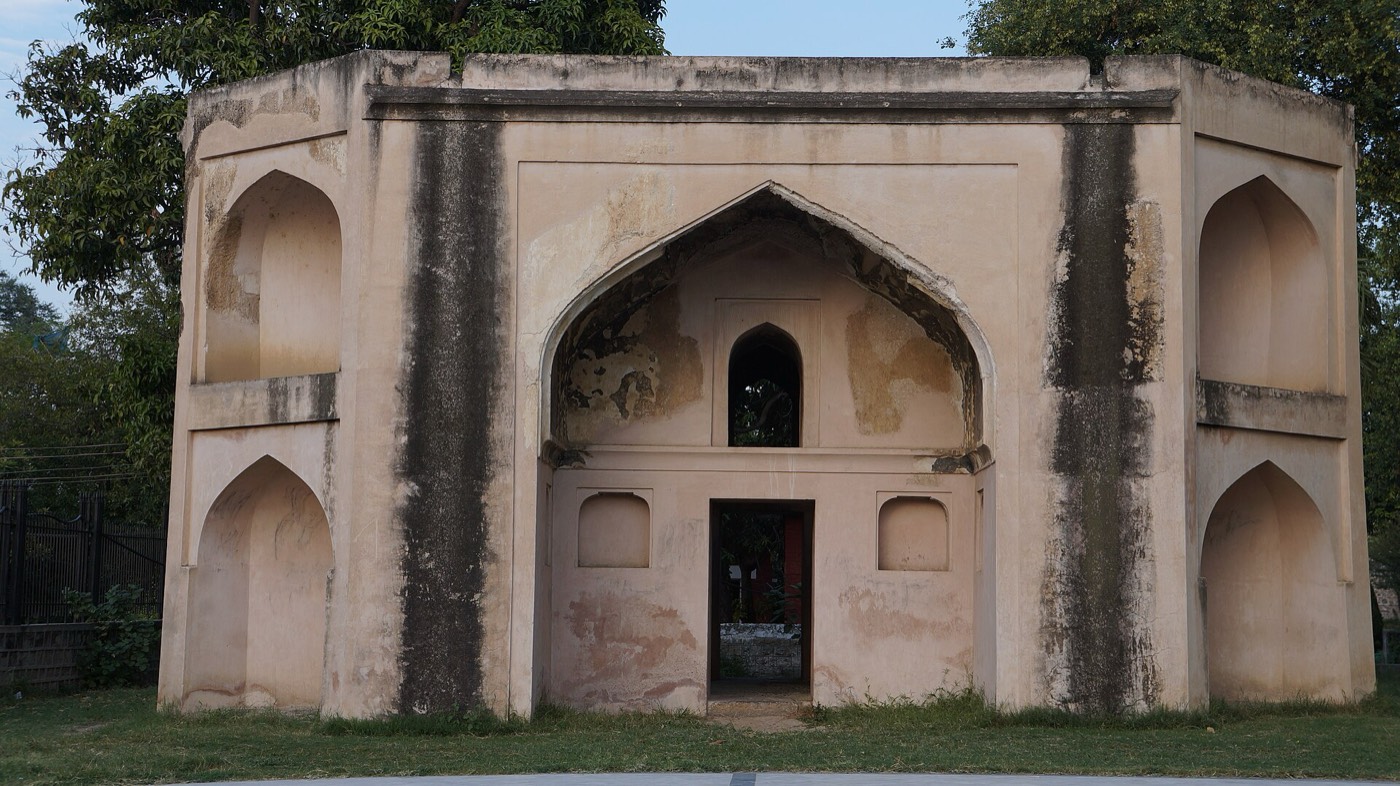
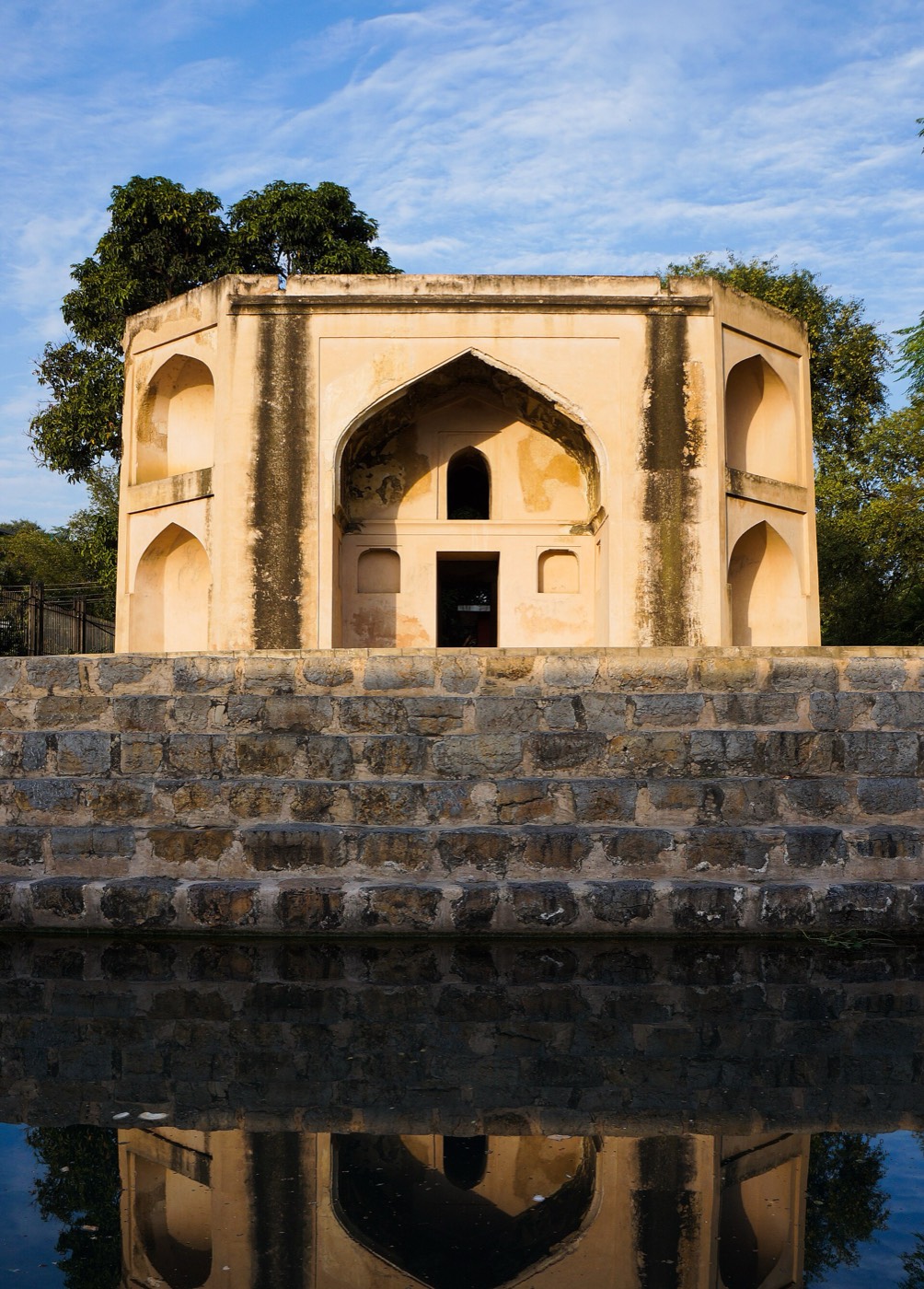
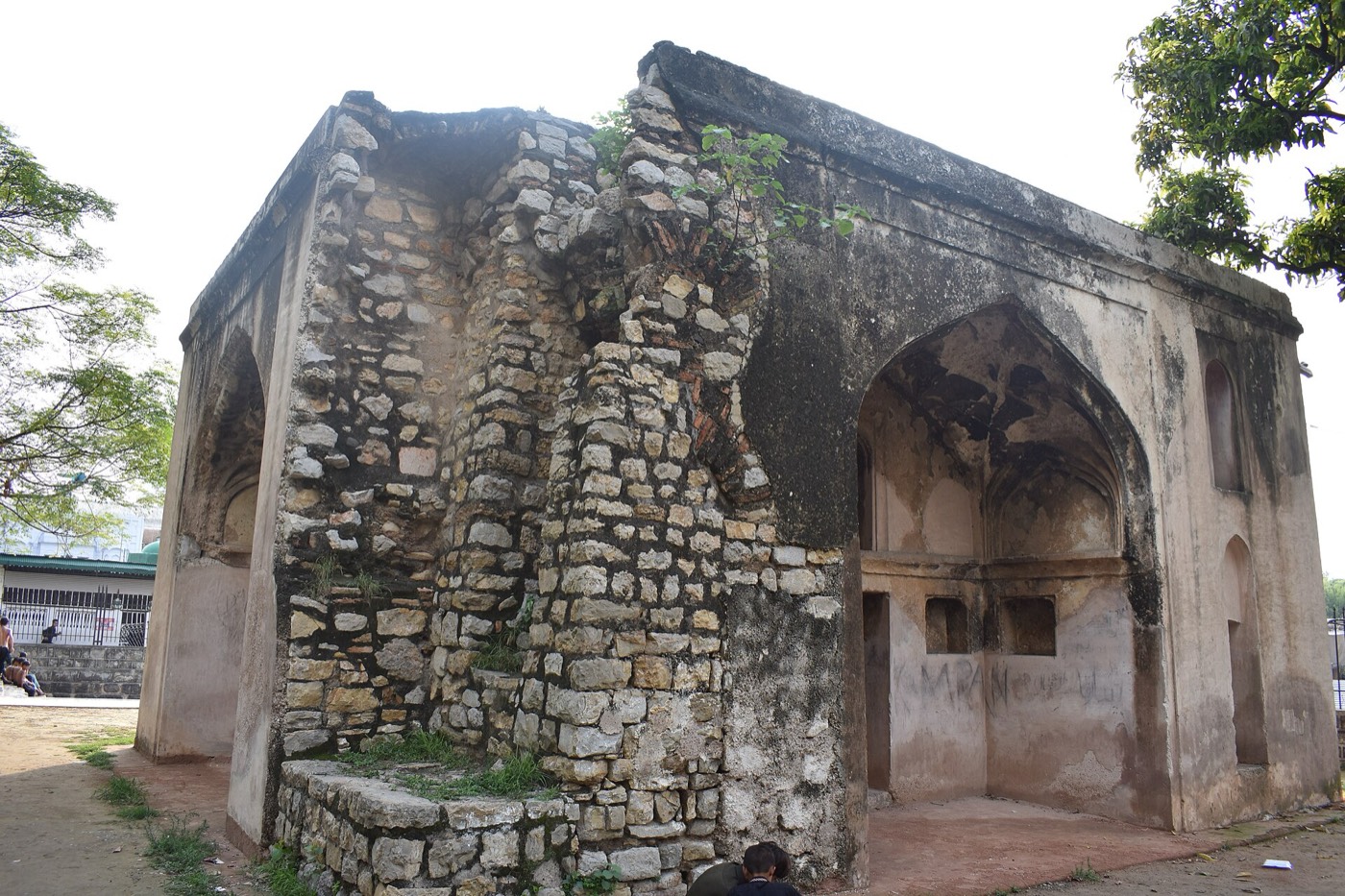
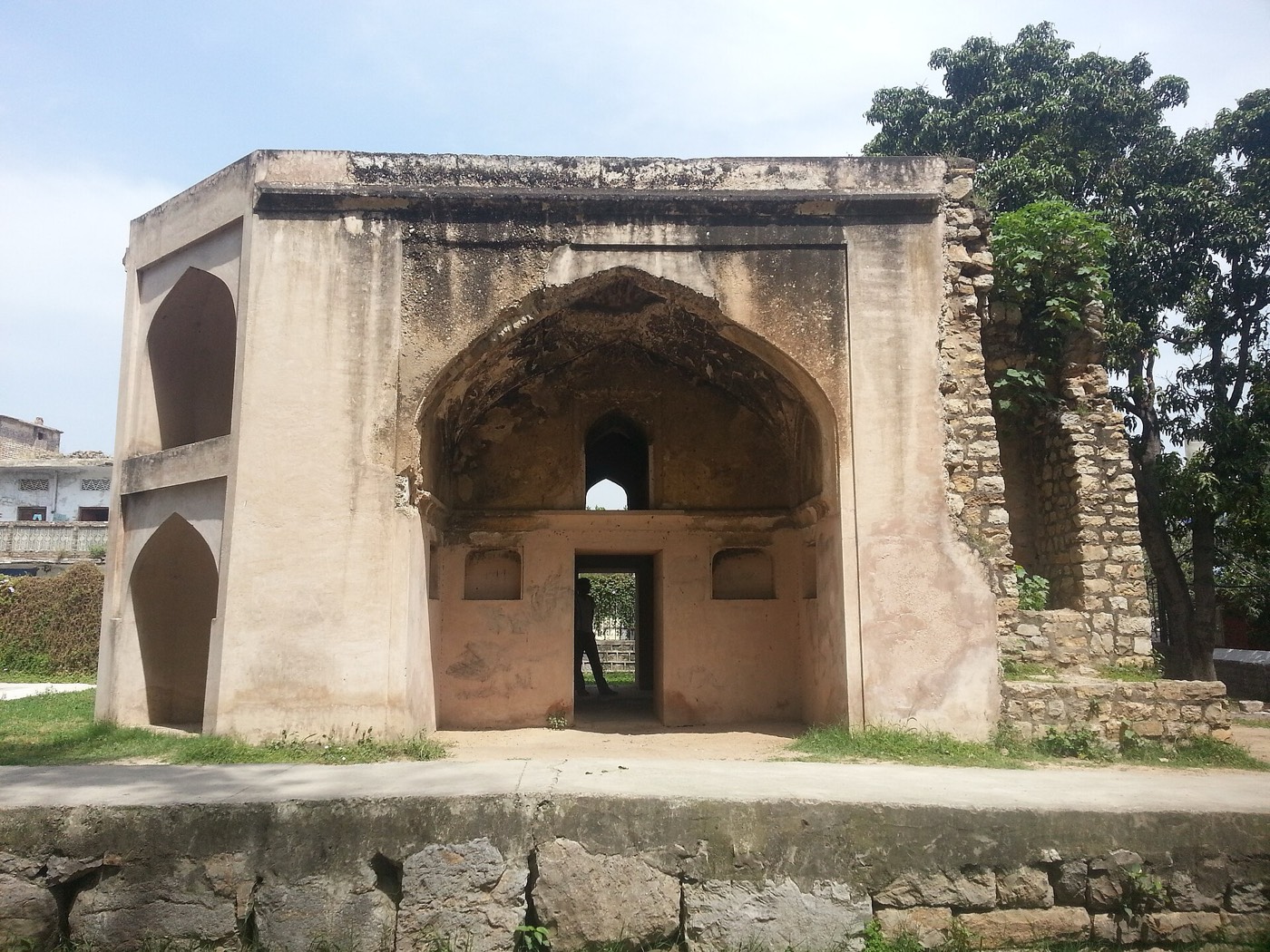
DOAM describes a square structure about 11 m on each side, built of undressed stone blocks and plastered all over with a mixture of lime and concrete about three inches thick1. Its vaulted roof is decorated with rose motifs1. The tomb and a tank stand on a platform about 38.4 m long and 21 m wide, the tomb lying east of the tank1.
DOAM describes the plan as square, each side 11 m, and says nothing about the corners1. A separate enclosure with a sandstone cenotaph, now called the tomb of Lala Rukh, lies nearby; DOAM says early nineteenth-century travellers and Cunningham did not use that name3.
Inside
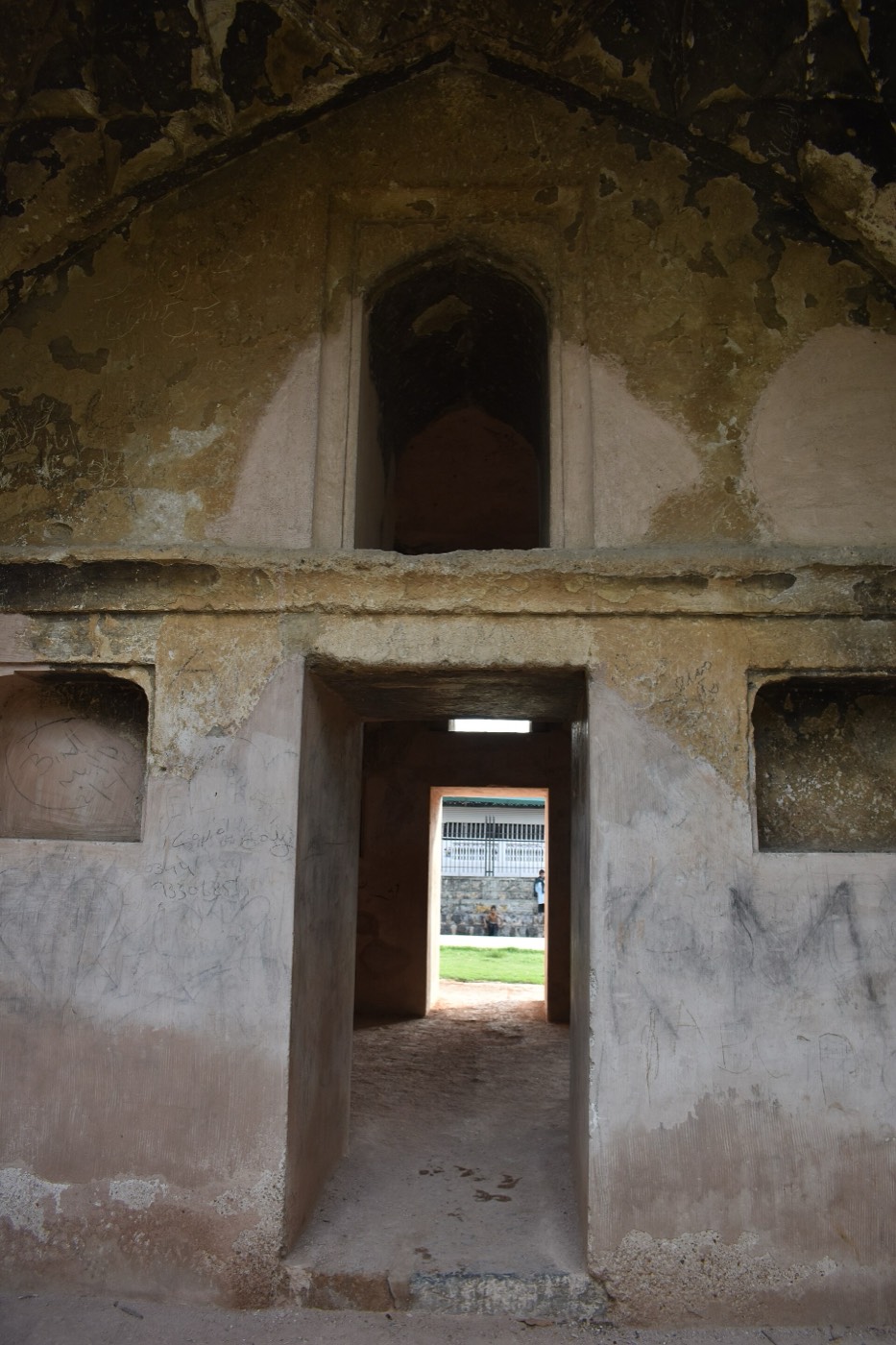
DOAM records plaster over the whole structure and a vaulted roof decorated with rose motifs, and notes that two graves inside were removed and levelled during Sikh rule1.
What to look for
- A plastered stone tomb on a platform, lying east of a tank.
- Rose motifs on the vaulted roof, recorded by DOAM.
- The burial place of Akbar's physician Abul Fath, whose body was brought here by imperial order after his death in 1589.
Visiting
- DOAM dates the tomb as contemporary with Attock Fort1.
- DOAM lists a neighbouring enclosure, now called the tomb of Lala Rukh, as a separate protected monument3.
Official information: Department of Archaeology and Museums, Government of Pakistan: federal property protected under the Antiquities Act 1975DirectionsOpen in OpenStreetMapGuided tours in Hasan Abdal