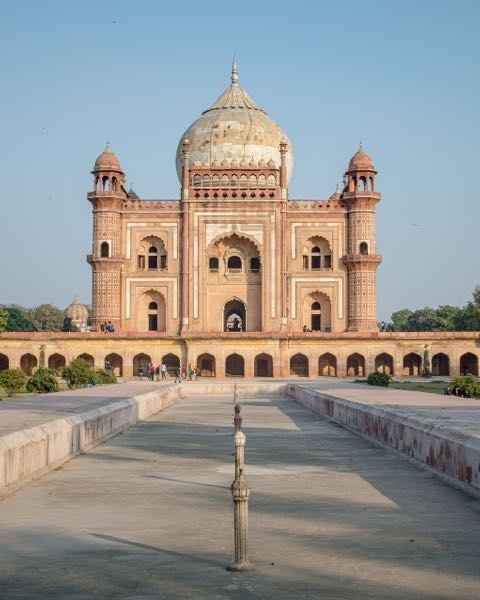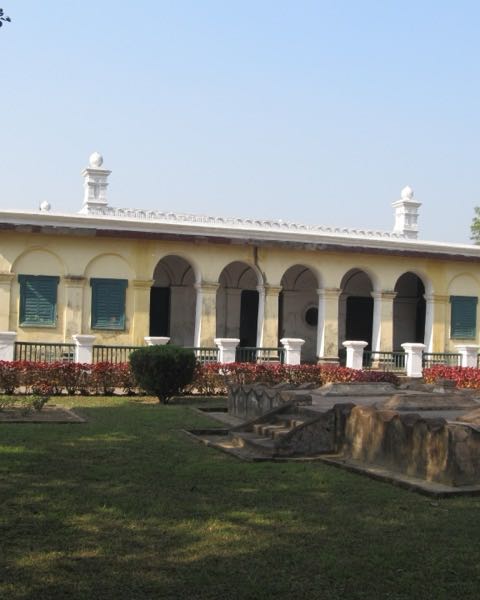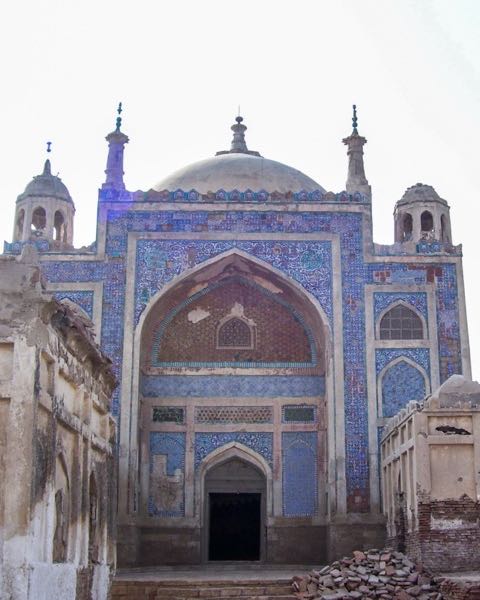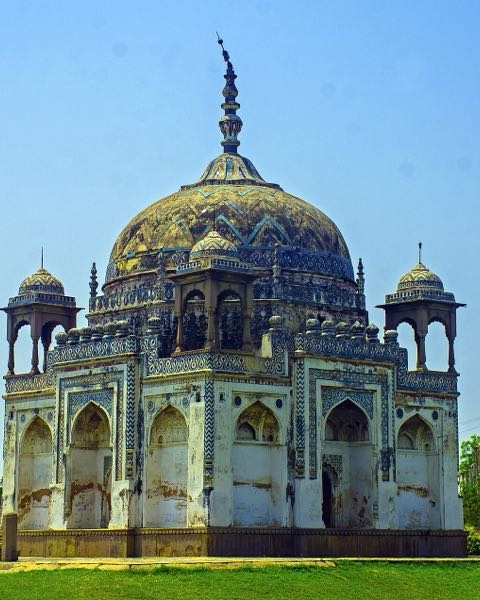
History
Haidar Ali, who rose from military commander to ruler of Mysore, died in camp near Chittoor on 7 December 1782, of an abscess in the back, while the Second Anglo-Mysore War (1780-1784) was still being fought6,2,7. Rice records that his ministers hid the death from the army and sent his body to Kolar in a chest of aromatics, and that Tipu performed the funeral rites there before taking over the army on 2 January 17832. Tipu then built the Gumbaz for his father at the eastern end of Srirangapatna, the island in the Kaveri that was his capital3,4,5. A Persian chronogram on its west wall gives the year of Haidar’s death, 1195 AH (1782)1.
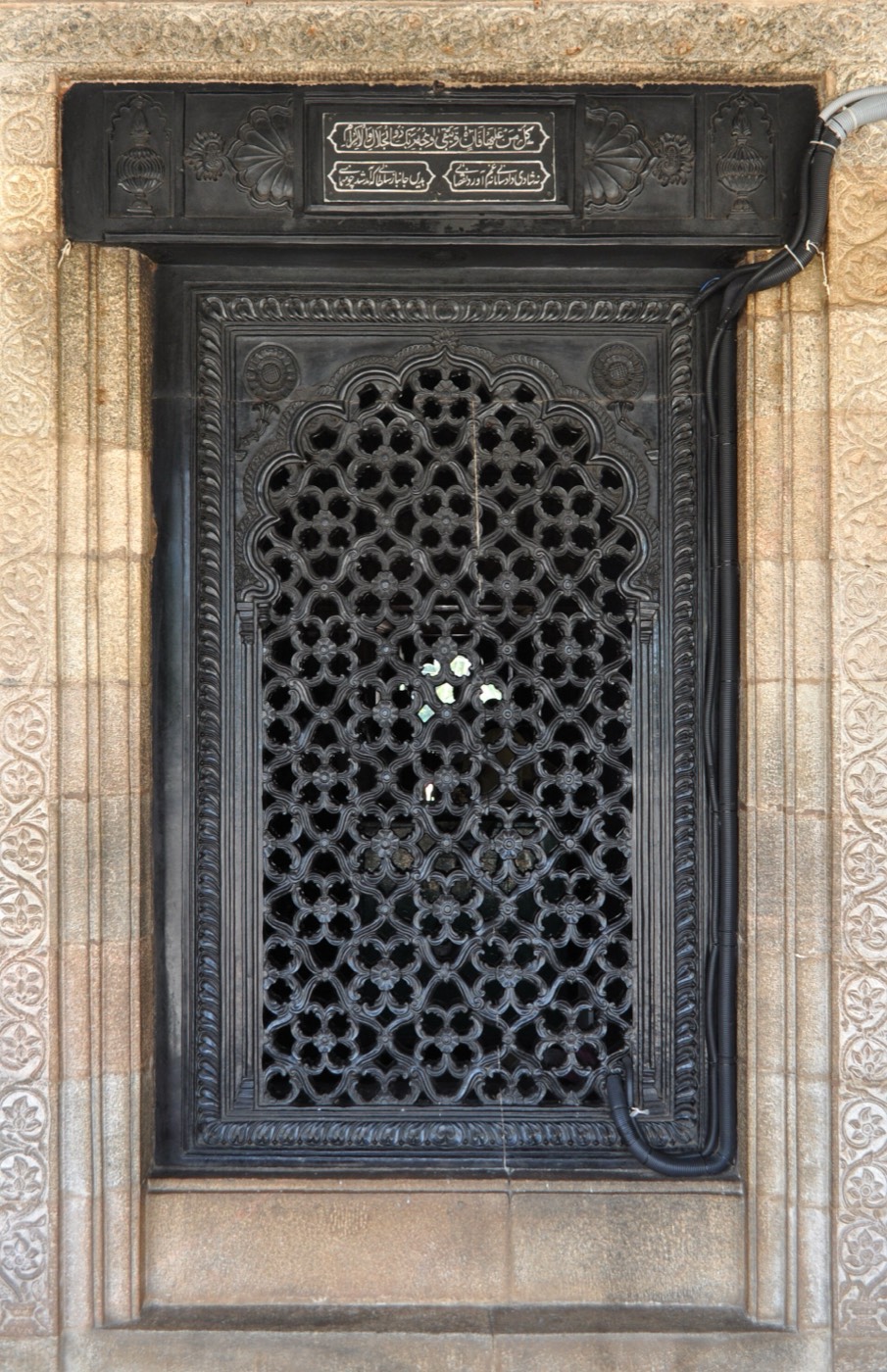
In February 1792, during the Third Anglo-Mysore War, Major Dirom, a staff officer with Lord Cornwallis’s army, described the Lal Bagh as “dignified by the mausoleum of Haidar, and a superb new palace built by Tipu”3,7. Tipu was killed on 4 May 1799, when the British stormed his capital, and he was buried in the Gumbaz, where his mother also lies7,2,3,4. A tablet with Persian verses composed by Mir Husain Ali gives the year of his death, 1213 AH, by the abjad numerals1,3. By 1894 the worn original doors had been replaced by doors of ebony inlaid with ivory, a gift of the Marquess of Dalhousie1.
Architecture
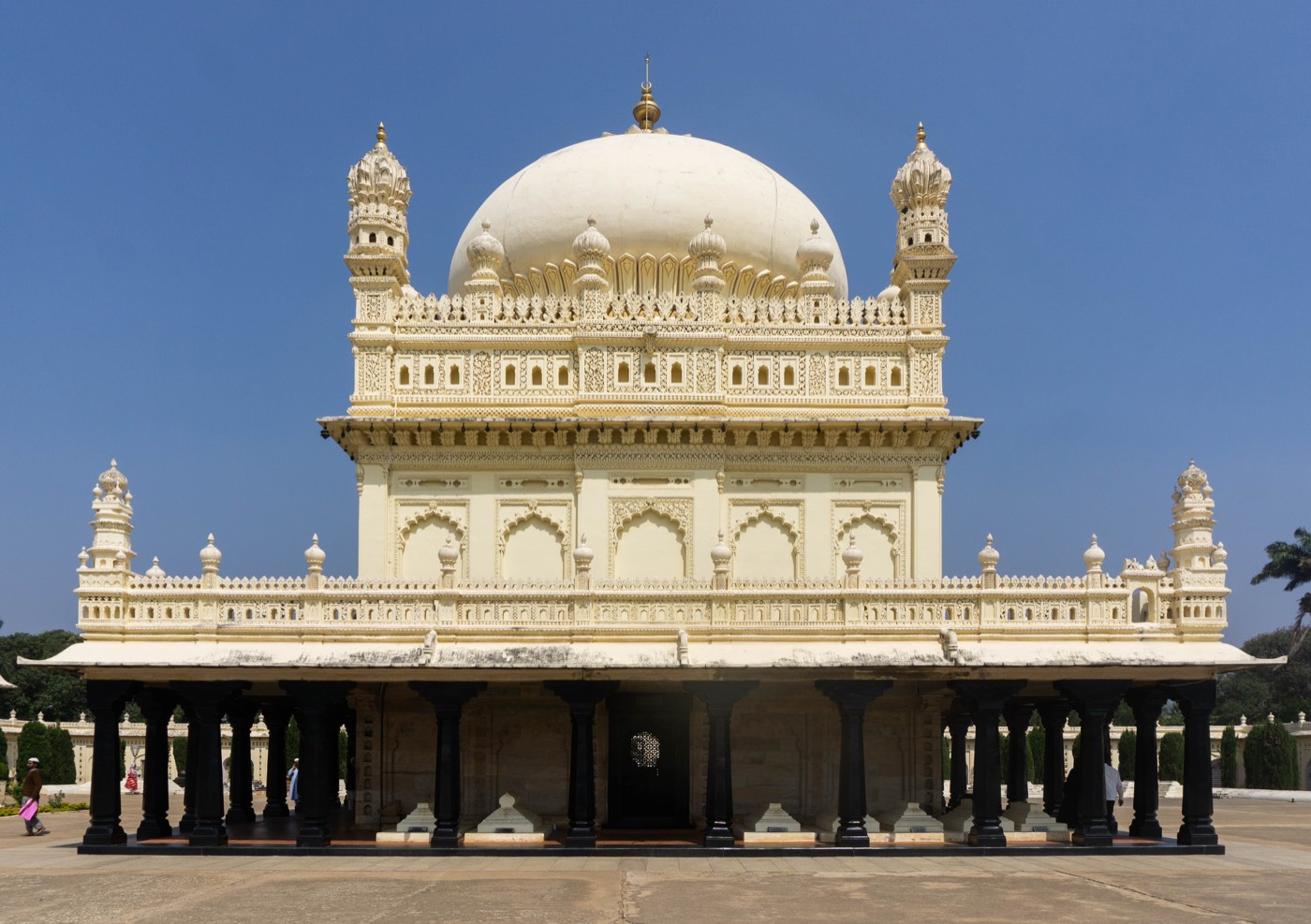
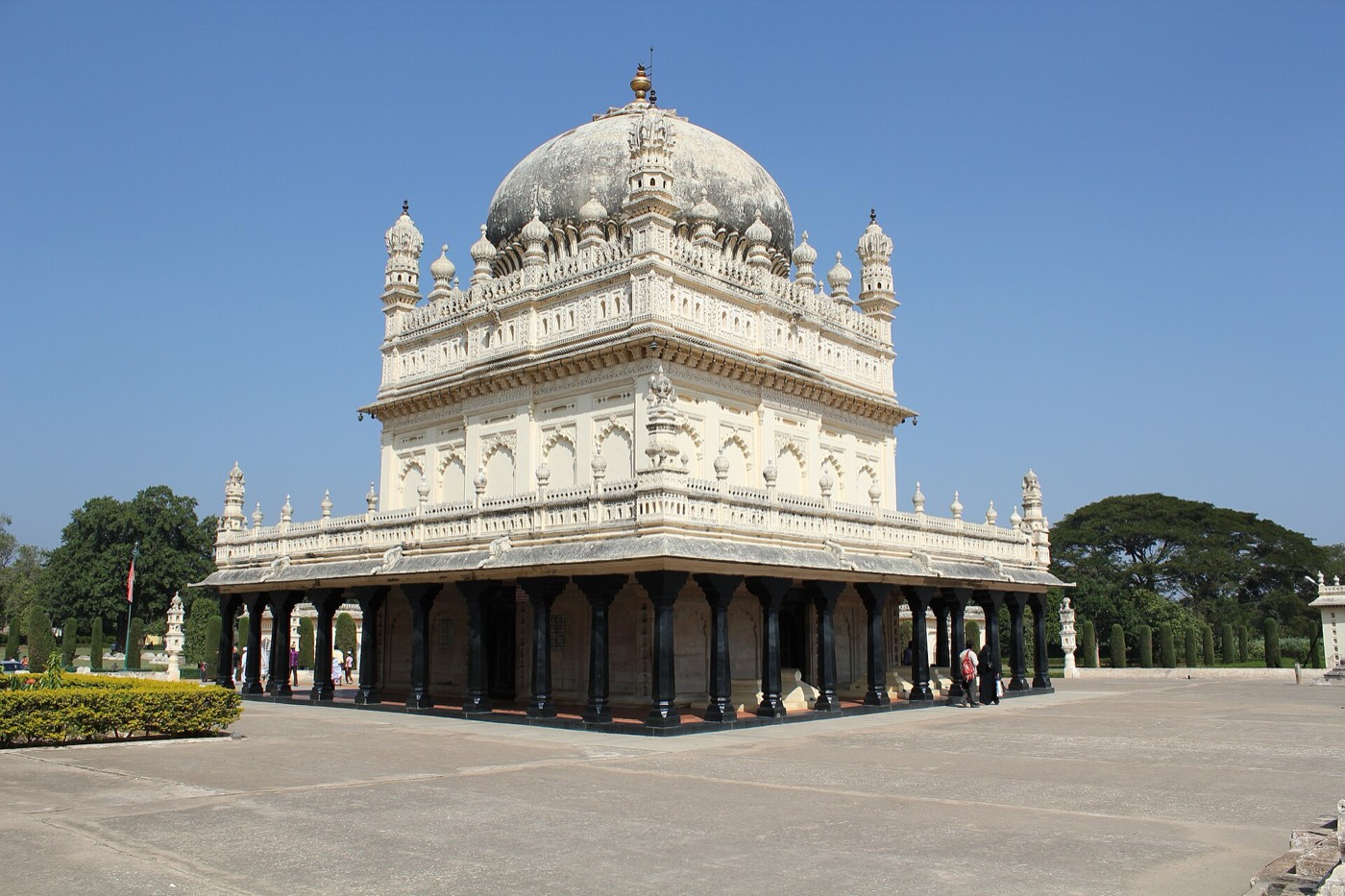
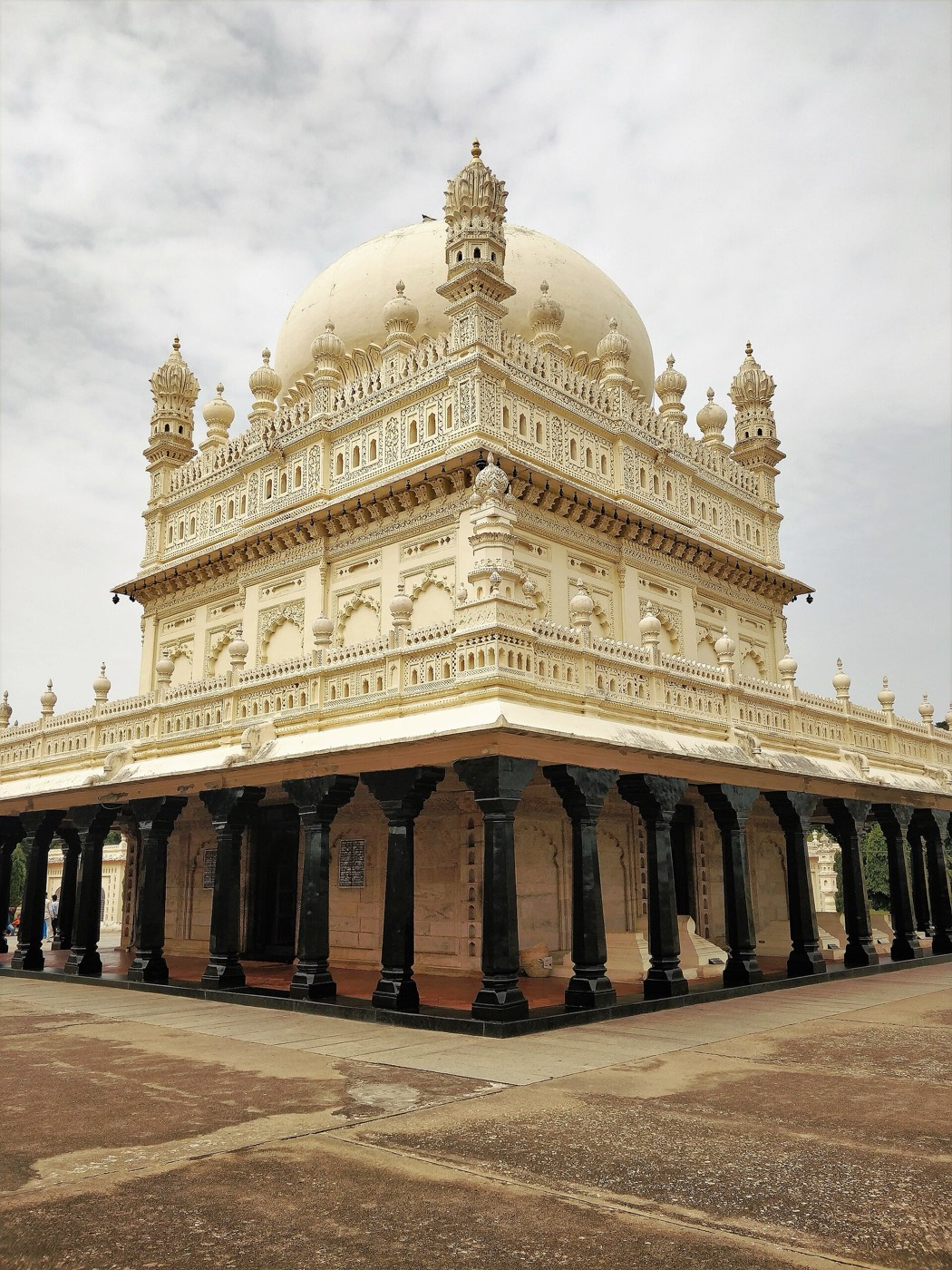
The Gumbaz is a square building with minarets at its corners and a large dome, raised on a basement storey and surrounded by a verandah carried on pillars of black stone1,3,4. Rice called the stone black serpentine, and in his 1897 gazetteer identified it as a dark rock that takes a fine polish, quarried near Turuvekere by the rulers of Mysore for building; the gazetteers of 1930 and 1967 call it black hornblende1,2,3,4. The doors are of ebony inlaid with ivory, a craft for which Mysore was known1,4. The 1930 and 1967 gazetteers compare the building with the Taj Mahal at Agra, “but less profusely ornamented and of a poorer design”3,4.
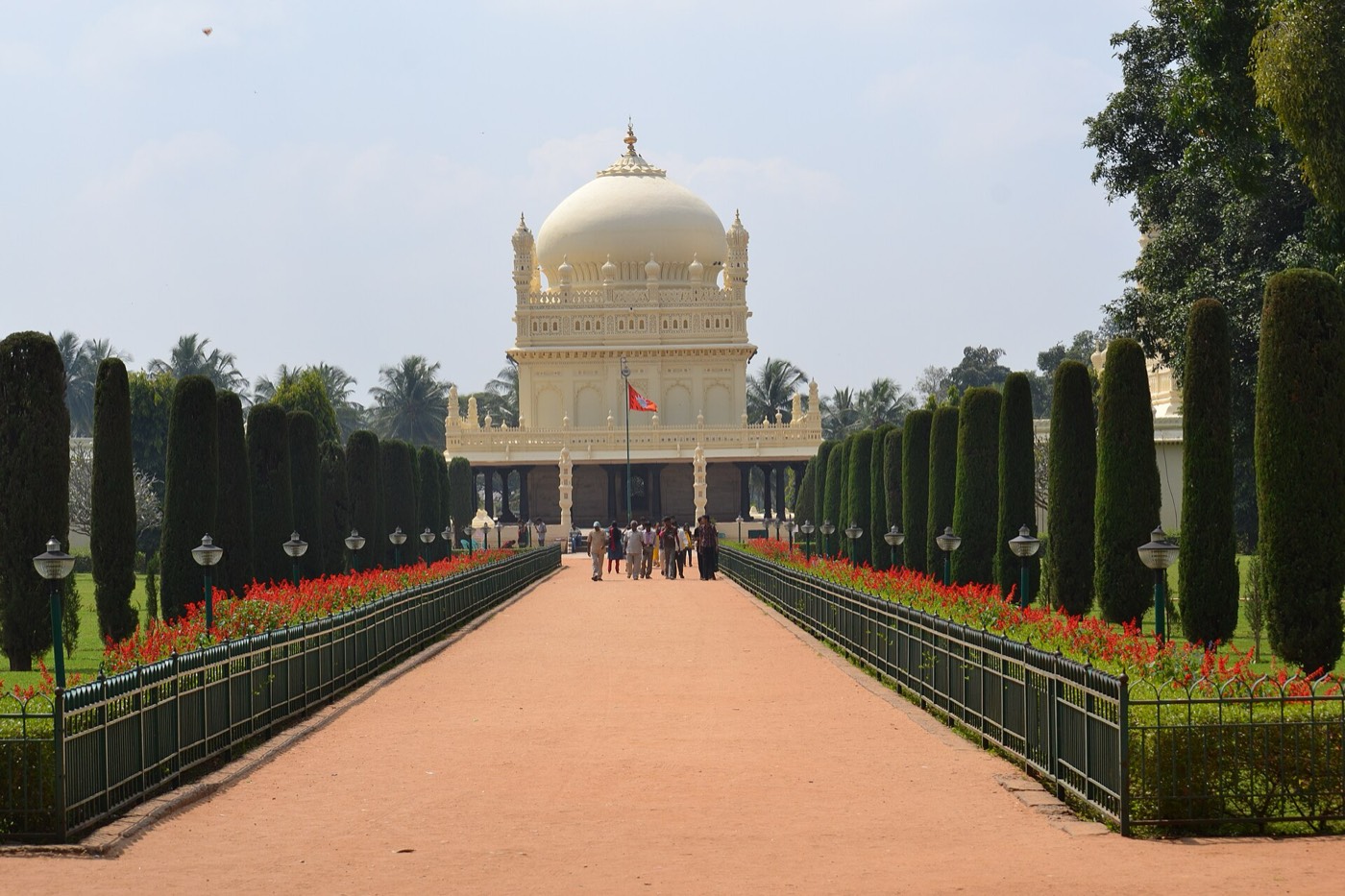
The mausoleum stands in the Lal Bagh, the garden at the eastern end of the island3,4. Dirom saw it in 1792 laid out in regular shady walks of large cypress trees and full of fruit trees, flowers and vegetables3. Tipu’s palace in the same garden has gone; Buchanan wrote in 1800 that, though built of mud, it was the handsomest native building he had ever seen3,4. UNESCO’s tentative-list text notes that the Gumbaz, like the Daria Daulat Bagh, lies outside the fort, which holds most of the island’s major monuments5.
Inside
Inside, the walls are lacquered with the tiger stripe that Tipu adopted for his army’s uniforms1,3,4. Three tombs lie in the hall, those of Haidar Ali, Tipu Sultan and Tipu’s mother, each covered with a pall3,4. Haidar’s Persian verses begin “Marvellous is the dome which from the loftiness of its construction has made the firmament low” and end with his name, whose letters give the date1. Other graves lie nearby: a tombstone south of the building marks that of Sayyid Hamid, commander-in-chief of Tipu’s army, dated 1206 AH (1791-1792), and a tomb close by was built for Burhan-ud-din, brother of one of Tipu’s wives, killed at Satyamangalam in 17901,3.
What to look for
Visiting
- The Gumbaz stands in the Lal Bagh (“Red Garden”), at the eastern end of Srirangapatna island and away from the fort3,8,5.
- East of the entrance to the Gumbaz is the monument raised in 1816 by Lieutenant Colonel John Baillie to his uncle, Colonel William Baillie, who died in the fortress on 13 November 17823,4.
- The ASI lists the “Gumbaz containing tomb of Tipu Sultan” among its protected monuments; the 1967 gazetteer notes that the mausoleums are managed by the ASI and are not wakf property9,4.
Official information: Archaeological Survey of India (ASI), Bangalore CircleDirectionsOpen in OpenStreetMapGuided tours in Srirangapatna