Turbehتربة

An atlas of Islamic mausoleums

PlateLXXIXof CCXXV

Mausoleum of Amir Yunus al-Dawadar

قبة الأمير يونس الدوادارقبة الأمير يونس الدوادار Qubbat al-Amīr Yūnus al-Dawādār

Tomb near Cairo’s Citadel founded by Yunus al-Nayruzi, secretary (dawadar) of Sultan Barquq, around 1382; Nasser Rabbat calls it the first monument of the Burji period4,7,3.

Built
c. 1376–1382 CE
c. 777–784 AH
Creswell and CULTNAT place the building before 783 AH (1381-1382)2,3; O’Kane’s database gives 778-783 AH (1376-1382)4; Nasser Rabbat dates it to 1382 and calls it the first monument of the Burji period7. The foundation inscription calls Yunus dawadar of al-Malik al-Zahir, glossed by O’Kane as Barquq, who took the throne in Ramadan 784 AH (late 1382) according to Creswell4,2.
Period
Mamluk Sultanate (end of the Bahri period or start of the Burji period)
Commissioned by
Amir Sharaf al-Din Yunus al-Nayruzi, dawadar (secretary) of Sultan Barquq
Built for
Yunus al-Dawadar himself, who was killed in Syria in 791 AH (1389) and was not buried here
Materials
Stone (carved inscription bands inside the dome, on its drum and on the façades)
Location
Cairo, Egypt
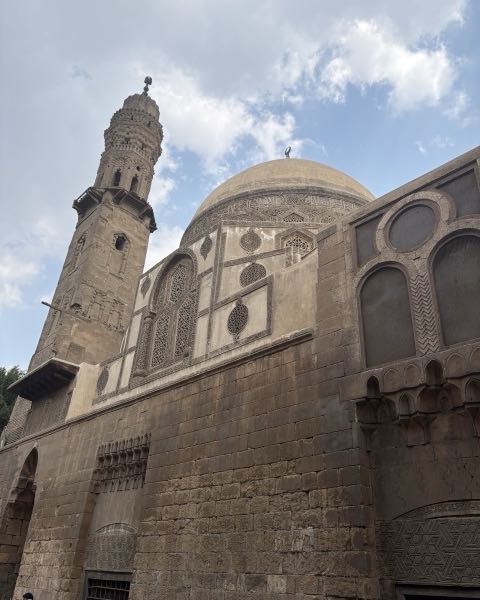
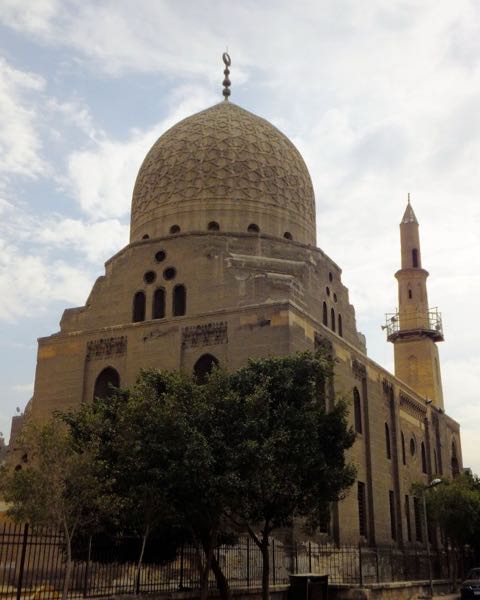
Mausoleum of Amir Yunus al-Dawadar
Photograph: Safaaelghobashey · CC BY-SA 4.0 · Wikimedia Commons

History

Sharaf al-Din Yunus al-Nayruzi was dawadar (secretary) of al-Malik al-Zahir Barquq, as the foundation inscription inside the dome calls him4. Al-Maqrizi, cited by Creswell, says that Yunus built a tomb outside Bab al-Wazir; Creswell placed this building just outside the site of the demolished Bab al-Hattaba, and CULTNAT locates it on Bab al-Wada' Street in the Hattaba quarter below the Citadel2,3. Creswell identified it with al-Maqrizi’s tomb through the inscription, which an 1889 Comité report had found too high to read2. Yunus was never buried here: he was killed in battle in Syria in 791 AH (1389), and his head was buried in a mosque he had built in Damascus2.

Its date is debated: Creswell and CULTNAT place it before 783 AH (1381-1382), Creswell because the biographical dictionary al-Manhal al-Safi says that Barquq’s father Anas, who died in Shawwal 783 (January 1382), was buried in the tomb of Yunus al-Dawadar2,3. Yunus, however, had another tomb: according to al-Maqrizi, as cited by Leonor Fernandes, he was the first amir to build on the old hippodrome that became the Northern Cemetery, where he built his tomb around 780 AH (1378)10. Anas’s epitaph is carved on a dome there, no. 157, which CULTNAT also calls the dome of Yunus al-Dawadar or of Anas9,8. O’Kane dates no. 139 to 778-783 AH (1376-1382), and Nasser Rabbat to 13824,7.

Architecture

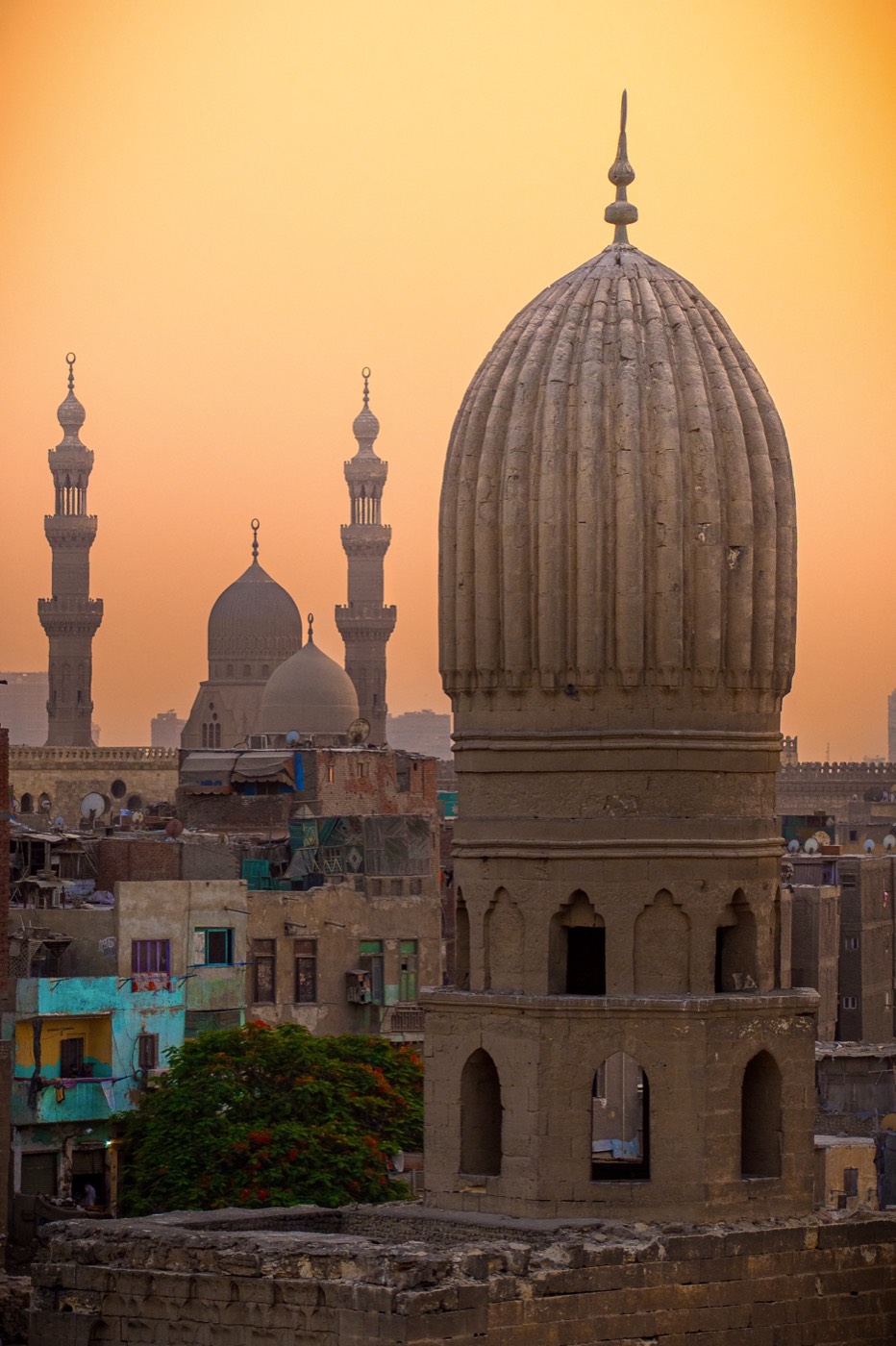
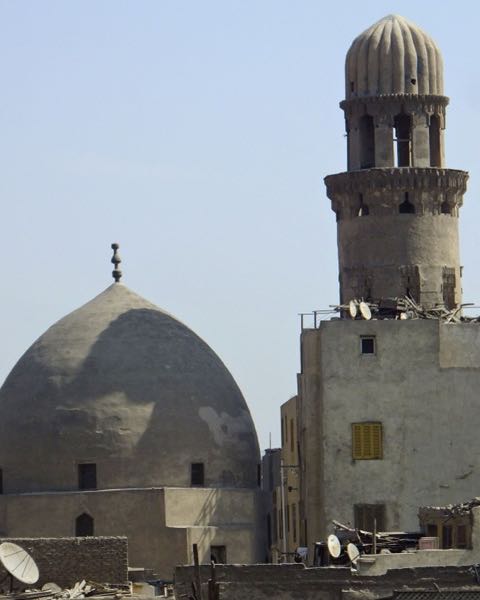
Nasser Rabbat describes an elegant, elongated ribbed dome, the only element left of the ruined complex, which in his view echoes Iranian Ilkhanid domes and prefigures the Timurid domes of Samarkand7. Creswell noted the amir’s heraldic badge in the panels between the windows, and external ribs that run down to rest on muqarnas corbels, a treatment he knew elsewhere in Egypt only on the domes of the Sultaniyya mausoleum2. Outside, carved Qur'anic bands run around the drum of the dome and along the east façade; a band on the north façade can no longer be read6,11,12.

Inside

Inside, the foundation inscription is carved in a stone band around the base of the dome; it is now in poor condition4. A medallion at the apex repeats Qur'an 3:18 twice5. O’Kane notes that an older epigraphic corpus placed the foundation inscription outside, where the dome carries only a Qur'anic text4.

What to look for

  1. The elongated ribbed dome, which Rabbat compares with Ilkhanid and Timurid domes7.
  2. The amir’s heraldic badge in the panels between the windows2.
  3. The foundation inscription naming Yunus as dawadar of al-Malik al-Zahir4.
  4. The medallion at the apex of the dome, repeating Qur'an 3:18 twice5.

Visiting

  • The dome stands on Bab al-Wada' Street in the Hattaba quarter below the Citadel3.
  • It is not the same building as no. 157 in the Northern Cemetery, which CULTNAT also calls the dome of Yunus al-Dawadar, or the dome of Anas8.
  • UNESCO’s Historic Cairo property (1979) includes the Citadel area in one of its five components (89-002)1.

In a trip guide: Cairo’s City of the Dead and the medieval city
Sources

  1. UNESCO World Heritage Centre: Historic Cairo
  2. K. A. C. Creswell, Bulletin de l’Institut français d’archéologie orientale 16 (1919), pp. 39-164, Institut français d’archéologie orientale: A Brief Chronology of the Muhammadan Monuments of Egypt to A.D. 1517
  3. CULTNAT (Center for Documentation of Cultural and Natural Heritage), Bibliotheca Alexandrina: Islamic Cairo monuments database: قبة الأمير يونس الدوادار
  4. Bernard O’Kane, The Monumental Inscriptions of Historic Cairo (American University in Cairo and the ARCE Egyptian Antiquities Project; database hosted by CULTNAT, Bibliotheca Alexandrina): Inscription Details: 139.2, Yunus al-Dawadar
  5. Bernard O’Kane, The Monumental Inscriptions of Historic Cairo (American University in Cairo and the ARCE Egyptian Antiquities Project; database hosted by CULTNAT, Bibliotheca Alexandrina): Inscription Details: 139.5, Yunus al-Dawadar
  6. Bernard O’Kane, The Monumental Inscriptions of Historic Cairo (American University in Cairo and the ARCE Egyptian Antiquities Project; database hosted by CULTNAT, Bibliotheca Alexandrina): Inscription Details: 139.3, Yunus al-Dawadar
  7. MIT, course 4.615 Architecture of Cairo (Prof. Nasser Rabbat): 14 - Burji Mamluk Architecture in the Northern Qarafa
  8. CULTNAT (Center for Documentation of Cultural and Natural Heritage), Bibliotheca Alexandrina: Islamic Cairo monuments database: قبة يونس الدوادار
  9. Bernard O’Kane, The Monumental Inscriptions of Historic Cairo (American University in Cairo and the ARCE Egyptian Antiquities Project; database hosted by CULTNAT, Bibliotheca Alexandrina): Inscription Details: 157.1, Anas (Yunus al-Dawadar)
  10. Leonor Fernandes, Annales islamologiques 17 (1981), pp. 141-156, Institut français d’archéologie orientale: Three Ṣūfī Foundations in a 15th Century Waqfiyya
  11. Bernard O’Kane, The Monumental Inscriptions of Historic Cairo (American University in Cairo and the ARCE Egyptian Antiquities Project; database hosted by CULTNAT, Bibliotheca Alexandrina): Inscription Details: 139.4, Yunus al-Dawadar
  12. Bernard O’Kane, The Monumental Inscriptions of Historic Cairo (American University in Cairo and the ARCE Egyptian Antiquities Project; database hosted by CULTNAT, Bibliotheca Alexandrina): Inscription Details: 139.6, Yunus al-Dawadar

Images and 3D