History
In 1783 Mir Fateh Ali Khan Talpur overthrew the Kalhora rulers of Sindh and founded the Talpur dynasty, which ruled until the British occupation of 18431. Their tombs at Hyderabad form a northern and a southern group1. The northern group holds Mir Karam Ali Khan, Mir Murad Ali Khan, Mir Nur Muhammad Khan, Mir Muhammad Nasir Khan, Mir Shahdad Khan, Mir Hussain Ali Khan and Mir Sohrab Khan, with their women and relatives1. The oldest tomb is Mir Karam Ali Khan's: the Sindh antiquities directorate and DOAM say it was built about 1812, in his lifetime, while Lok Virsa records his death in 1244 AH (1828) and dates the tomb to 1245 AH1,2,3.
Mir Nasir Khan, the last Talpur ruler, was taken to Bombay as a state prisoner after the Talpurs' defeat by Sir Charles Napier in 18431. He died in Calcutta in 1262 AH (1845-1846) and was buried at Pune in trust, as an amanat, until 1855, when his body was moved to the family graveyard here1,5. The Sindh antiquities directorate dates the tomb of Mir Murad Ali Khan, his sons Nur Muhammad and Nasir Khan and his grandson Shahdad Khan to 1847, after the war at Miani, and suggests that the women of the family who stayed behind built it over Murad Ali's grave2. A survey report of 1895-1896 found the group maintained and in excellent condition6.
Architecture
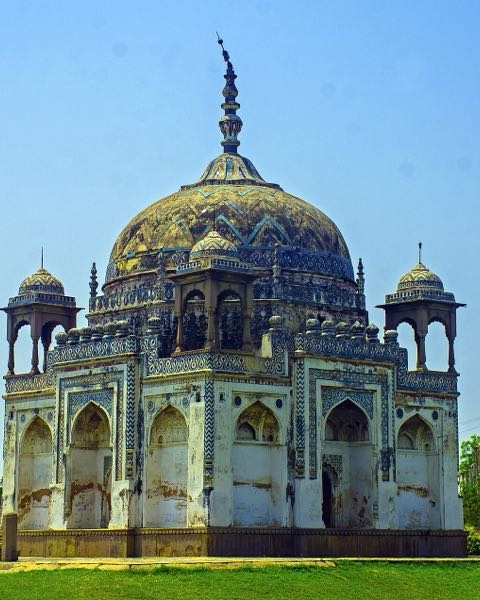
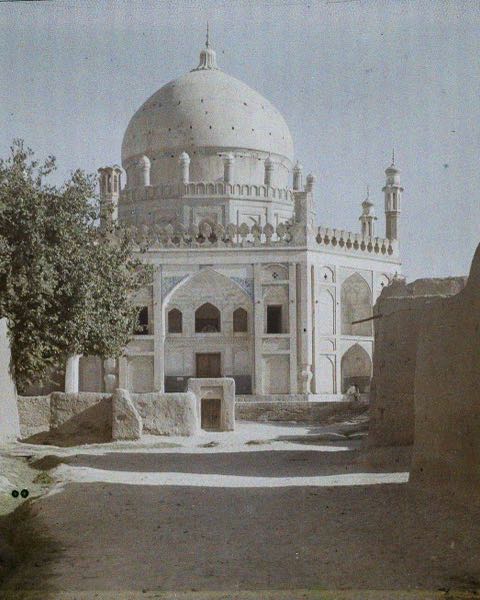
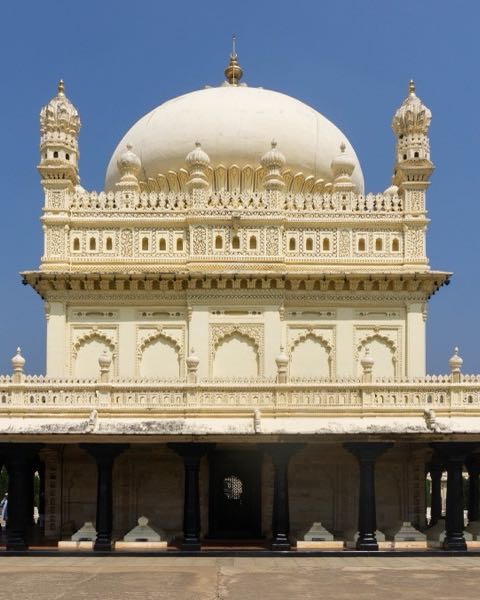
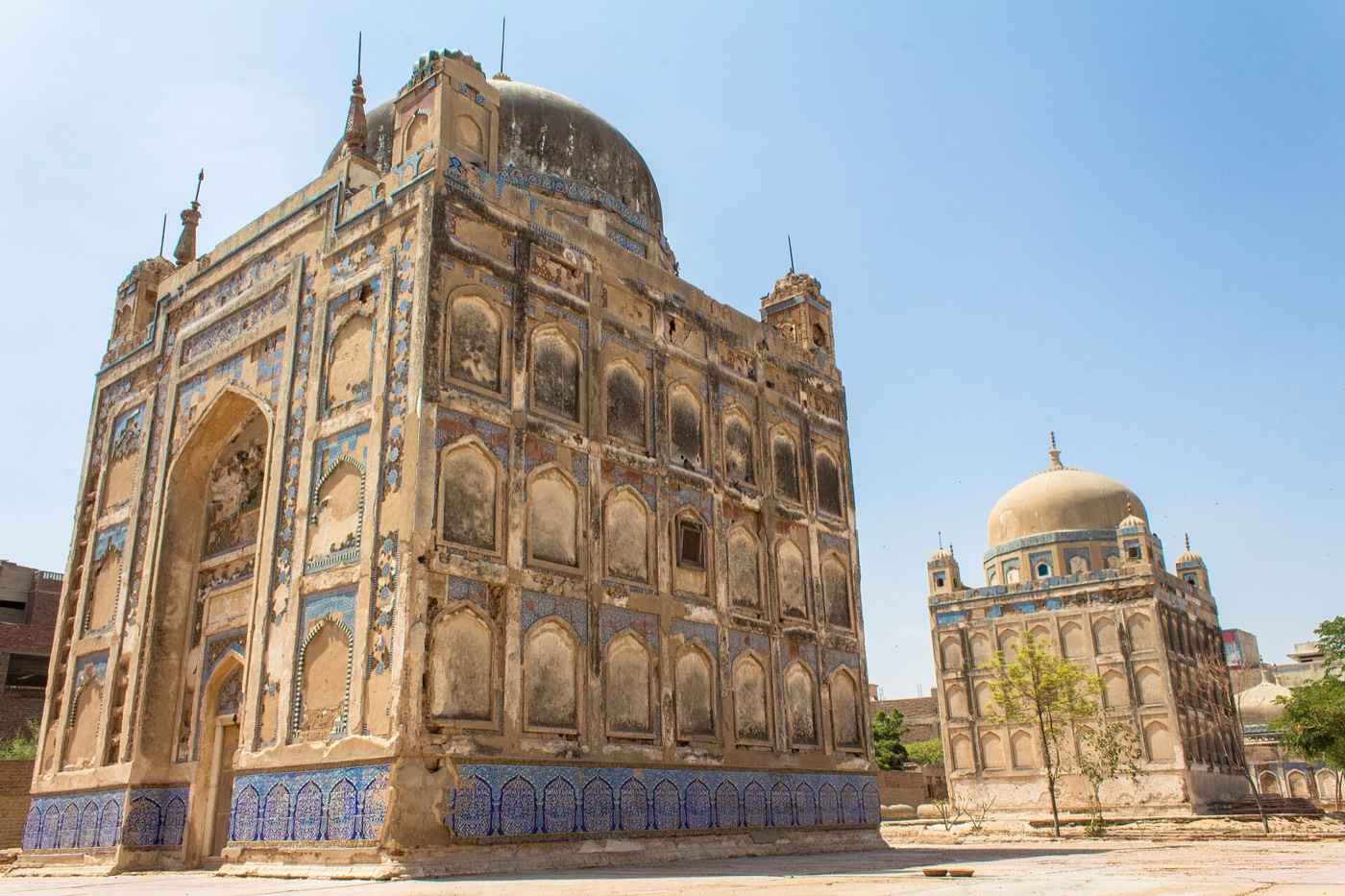
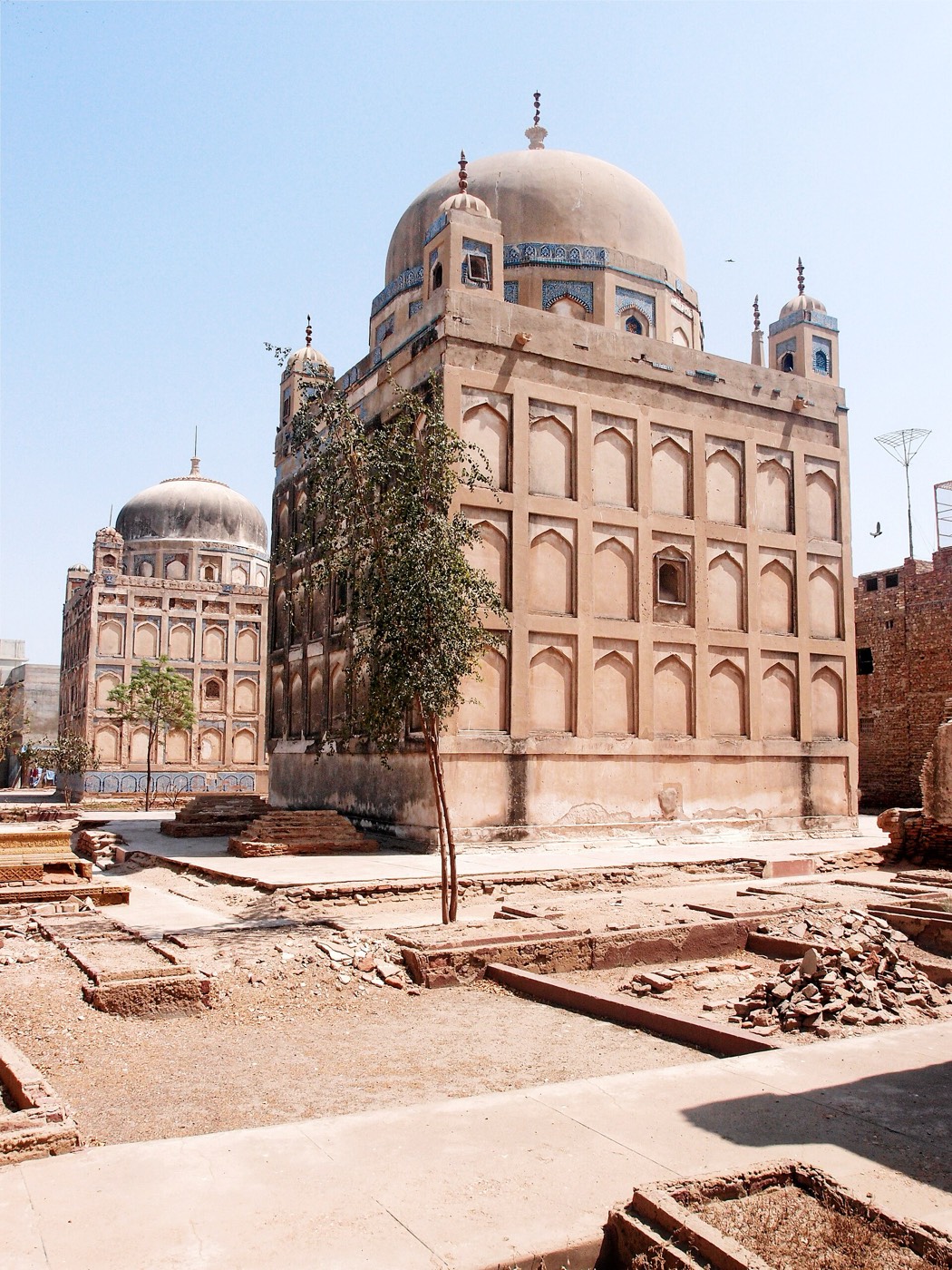
Mir Karam Ali Khan's tomb is entered through an arched portal1. It is square in plan, about 12 by 13 m, with a large dome on an octagonal drum and square kiosks capped by small domes at the corners of the roof1,4. The brick walls, laid in lime mortar on a low stone plinth, have a yellow sandstone dado, and their outer faces are worked into sunken arched panels of multicoloured glazed tiles, including yellow and brown1. Inside, the octagon of the zone of transition becomes a sixteen-sided ring that carries the dome1.
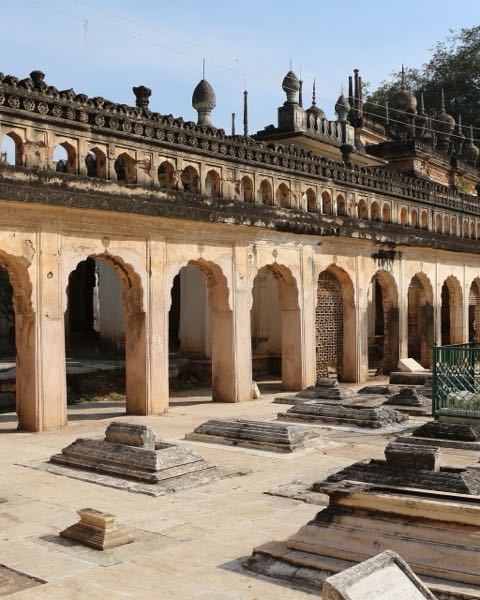
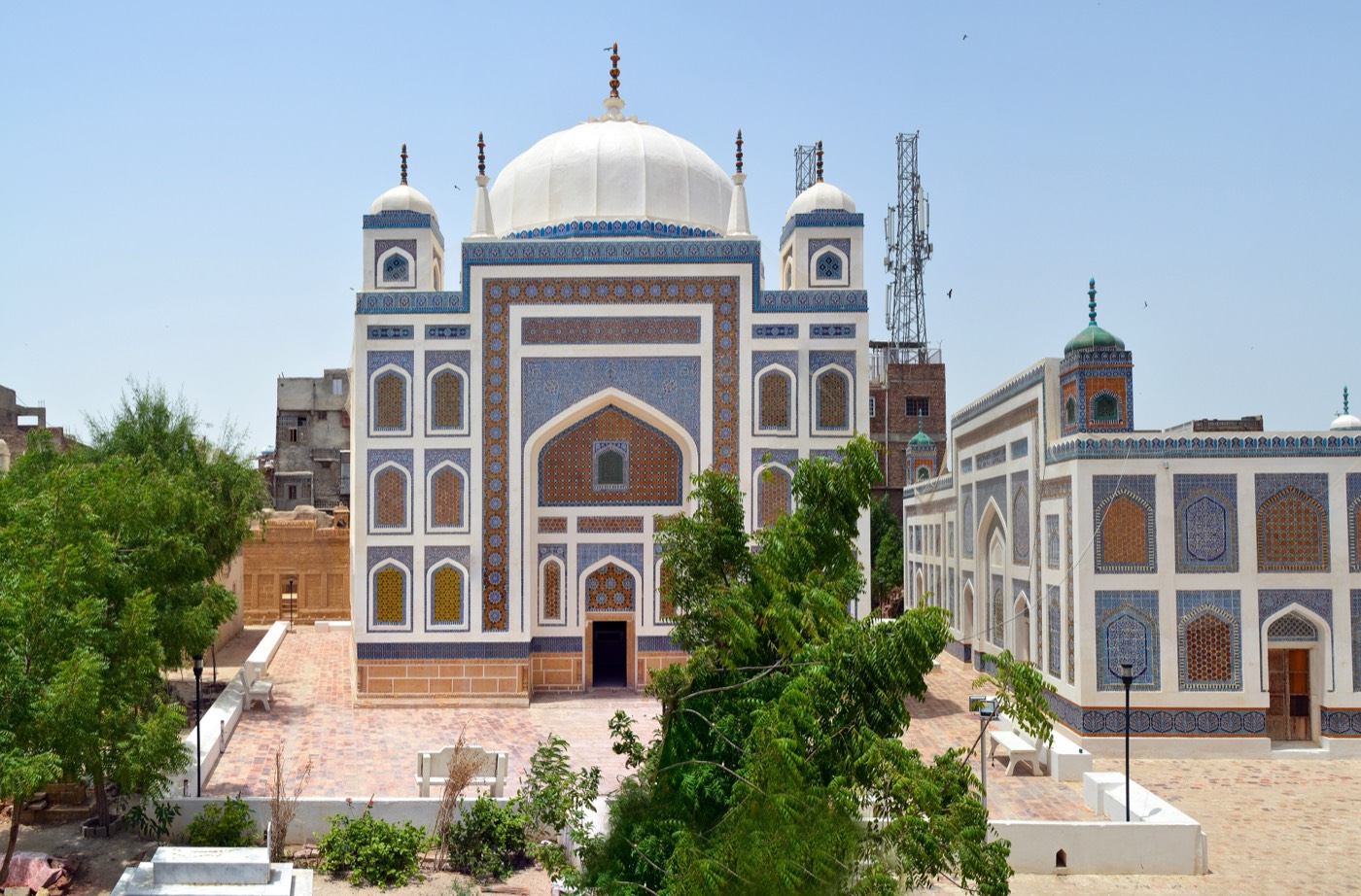
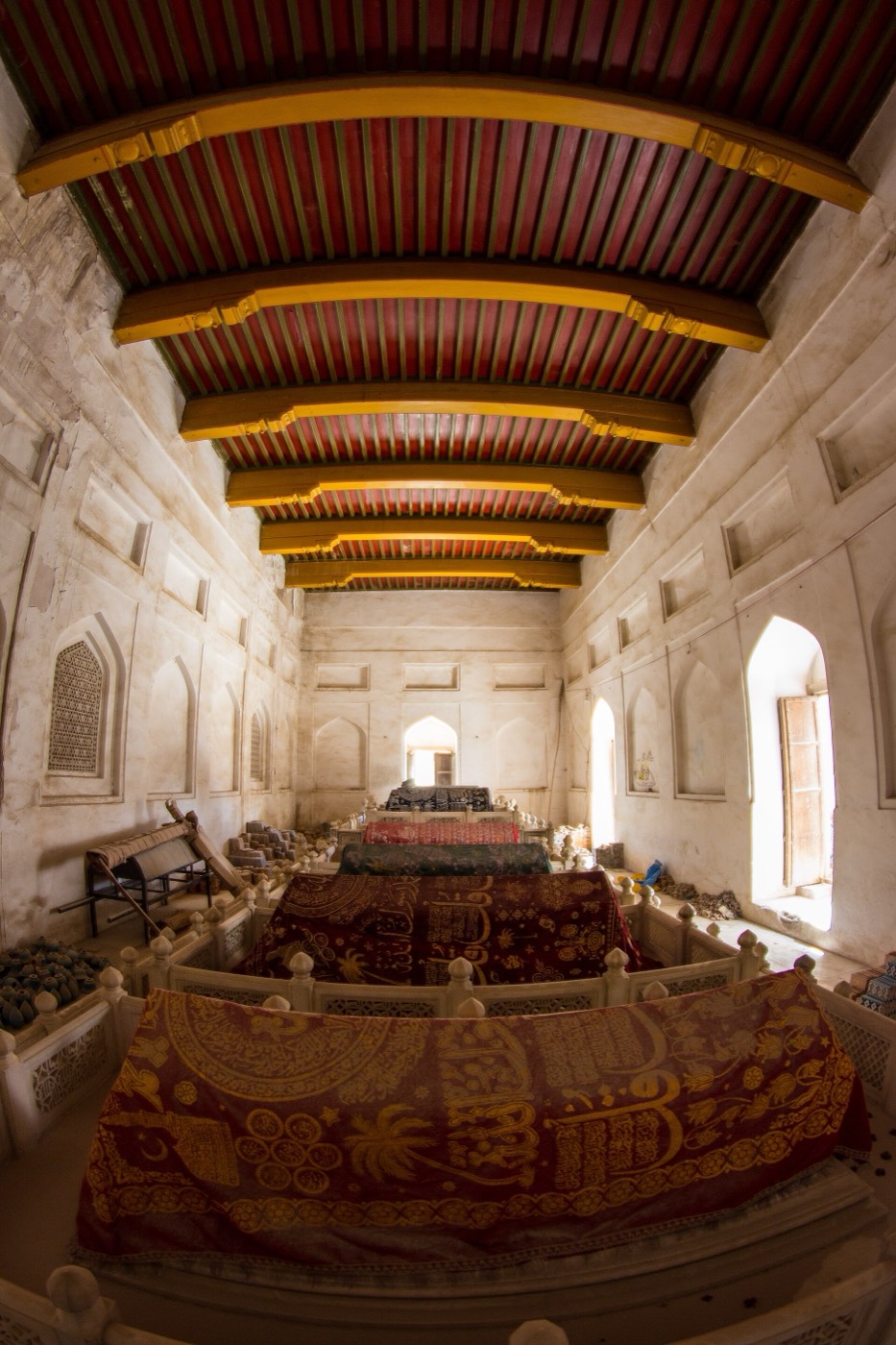
The tomb of Mir Nasir Khan and other Talpur chiefs is rectangular and covered with glazed tiles in white, blue, green and brown, in floral and geometric patterns1. DOAM records that it is built of burnt brick in lime mortar, with four minarets, five entrances and a roof of wooden tiers and girders, and that it holds seven graves, with four more in a connected tomb5. Smaller tombs called tajars hold women of the family; DOAM describes one with a vaulted roof, four graves and walls faced with Nasarpur tile work1,7. Lok Virsa sums up the Sindhi style of the Kalhoras and Mirs as tall and panelled, with a skyline crowded with guldastas, merlons, kiosks, turrets, balustrades and lanterns, glazed tiles outside and frescoes within1. The Sindh antiquities directorate, by contrast, judges the Talpur tombs architecturally inferior to those of the Kalhoras2.
Inside
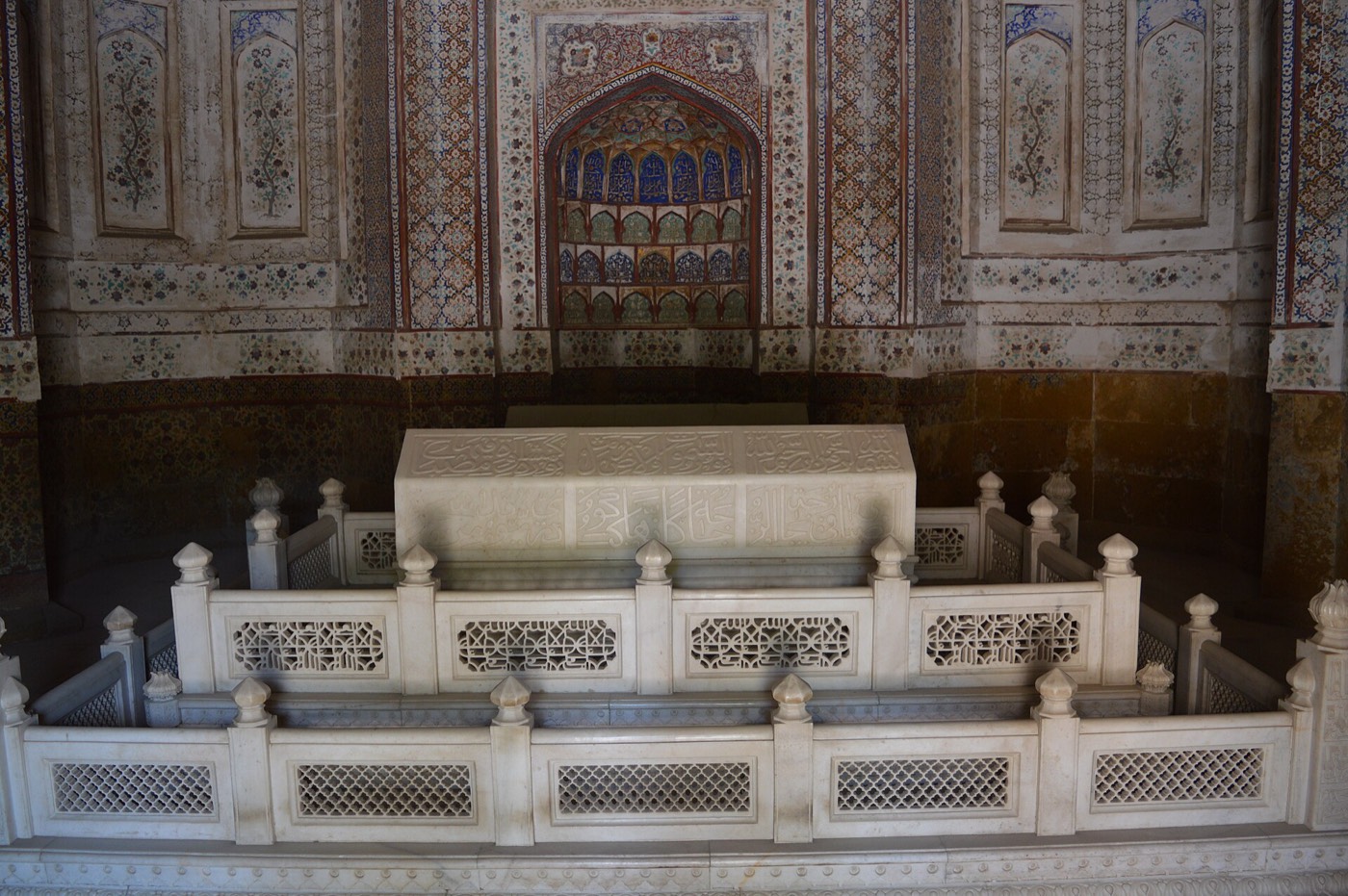
In Mir Karam Ali Khan's tomb a railing of stone fretwork surrounds the marble sarcophagus, which rests on a raised platform under a marble canopy carried on carved pillars1. Henry Cousens recorded a second grave in this tomb, that of Mir Haji Muhammad Khan, whom DOAM calls Karam Ali's brother4,8. The walls are lime-plastered and painted in fresco, and the floor is laid with marble and yellow stone1. In the tomb of Mir Nasir Khan, his marble grave is decorated with fretwork, and the marble graves of the other chiefs are carved and enclosed by railings1. In this mausoleum, north of Karam Ali's, Cousens listed five chiefs: Mir Nasir Khan, Mir Nur Muhammad Khan, Mir Shahdad Khan, Mir Murad Ali Khan and Mir Muhammad Hussain Ali Khan, with their state turbans then set at the ends of their marble graves8. DOAM also records arches and paintings inside Mir Karam Ali Khan's tomb4.
What to look for
- The marble canopy on carved pillars over Mir Karam Ali Khan's sarcophagus1.
- Sunken arched panels of multicoloured glazed tile on Mir Karam Ali Khan's tomb1.
- Corner kiosks with small domes along the roofline1.
- The tajars, smaller tombs for the women of the family1,7.
- Fresco painting on the lime-plastered interiors1,4.
Visiting
- Lok Virsa describes a second, southern group at Hyderabad, with the tombs of Mir Muhammad Khan and Mir Shah Nawaz Khan and their families1.
- Henry Cousens's 1896 photograph of the group is held by the British Library as Photo 1009/3(1446)6.
Official information: Government of Sindh: the Directorate General of Antiquities and Archaeology presents the site; DOAM lists the Talpur tombs enclosure as protected under the Antiquities Act 1975DirectionsOpen in OpenStreetMapGuided tours in Hyderabad