History
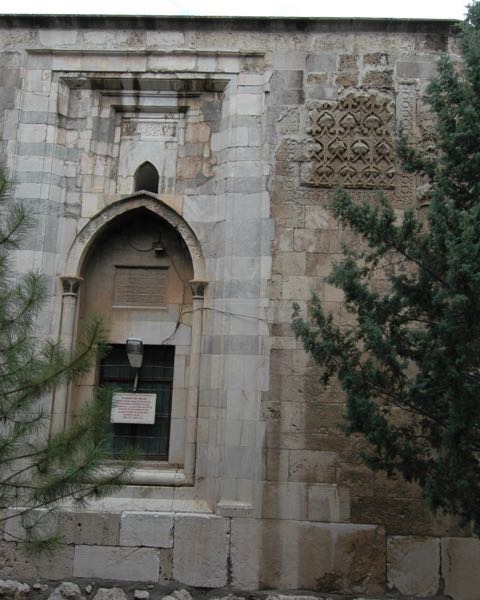
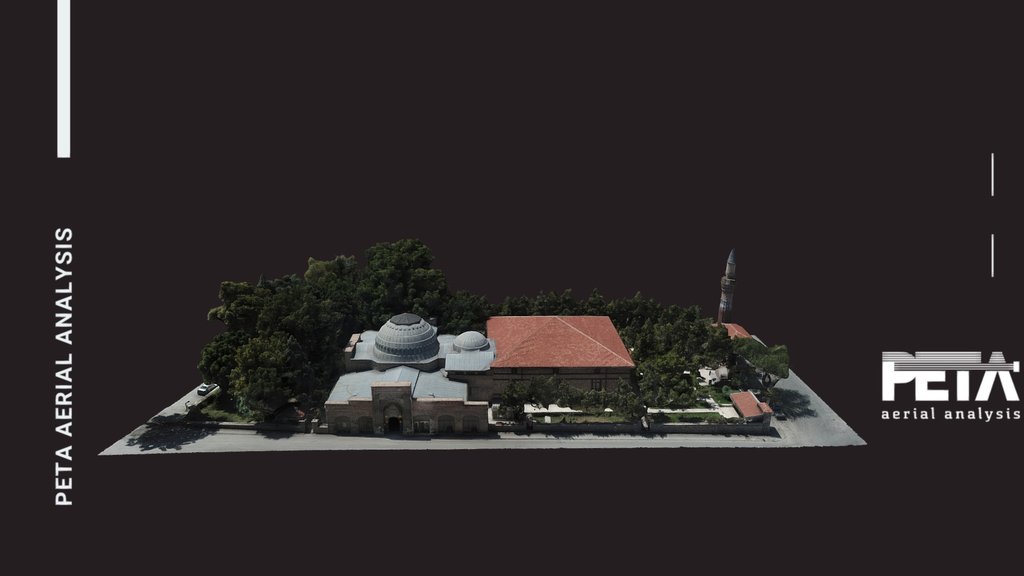
The tomb belongs to the complex that the Seljuk vizier Sahib Ata Fahreddin Ali built outside the Larende gate of Konya: a mosque, his tomb, a khanqah (dervish lodge) and a double bath1,3. The mosque, the oldest part, was begun in 1258, and the khanqah's portal inscription gives 12791. The tomb stands between them, against the qibla wall of the mosque, and has no foundation inscription1,3. A tile inscription on its great arch records that it was renewed in 682 AH (1283)1,3. Hakkı Önkal, cited by Erdemir, suggests that Sahib Ata first built it for his two sons, killed in 1277 fighting the Karamanids, and later rebuilt or redecorated it as a family tomb3.
Sahib Ata, son of Hüseyin of Konya, served the Seljuk state for about forty years and was vizier to several sultans while the sultanate lay under Mongol Ilkhanid domination2. When the treasury ran dry he paid 400,000 dirhams of his own savings towards the Mongols' expenses2. Summoned to Tabriz by the Ilkhan Arghun, he came back ill and died on 22 November 1288 in the village of Nadir near Akşehir; he was buried in his tomb in Konya2. The inscription on his cenotaph gives the end of Shawwal 684 AH (1285) instead, a figure usually explained as a mistake, which Erdemir finds hard to accept3.
Architecture
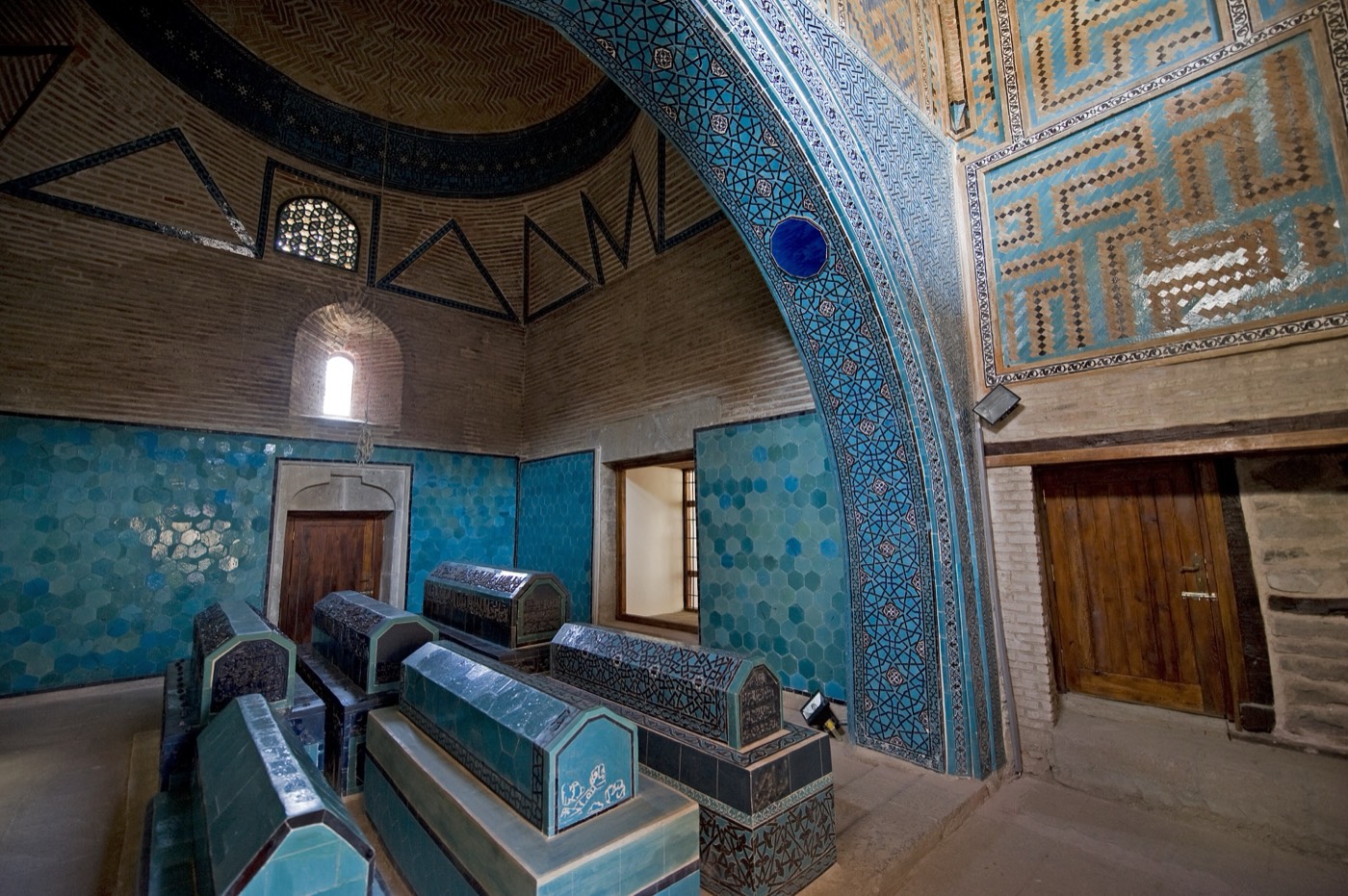
Built of stone and brick, the tomb is a nearly square block of about 8.80 × 11.00 m outside and 6.07 × 8.75 m inside1,3. A wide, tile-faced pointed arch running north to south divides it into a narrow eastern passage, now under a later timber roof, and a square chamber whose dome rests on Turkish triangles1,3. Erdemir classes the plan as a combination of a domed kümbet and an iwan3. A door in the passage leads into the mosque, and a window in the north wall of the domed chamber looks into the prayer hall; Blessing reads this opening as a way of keeping the founder's grave present to those praying in the mosque1,5.
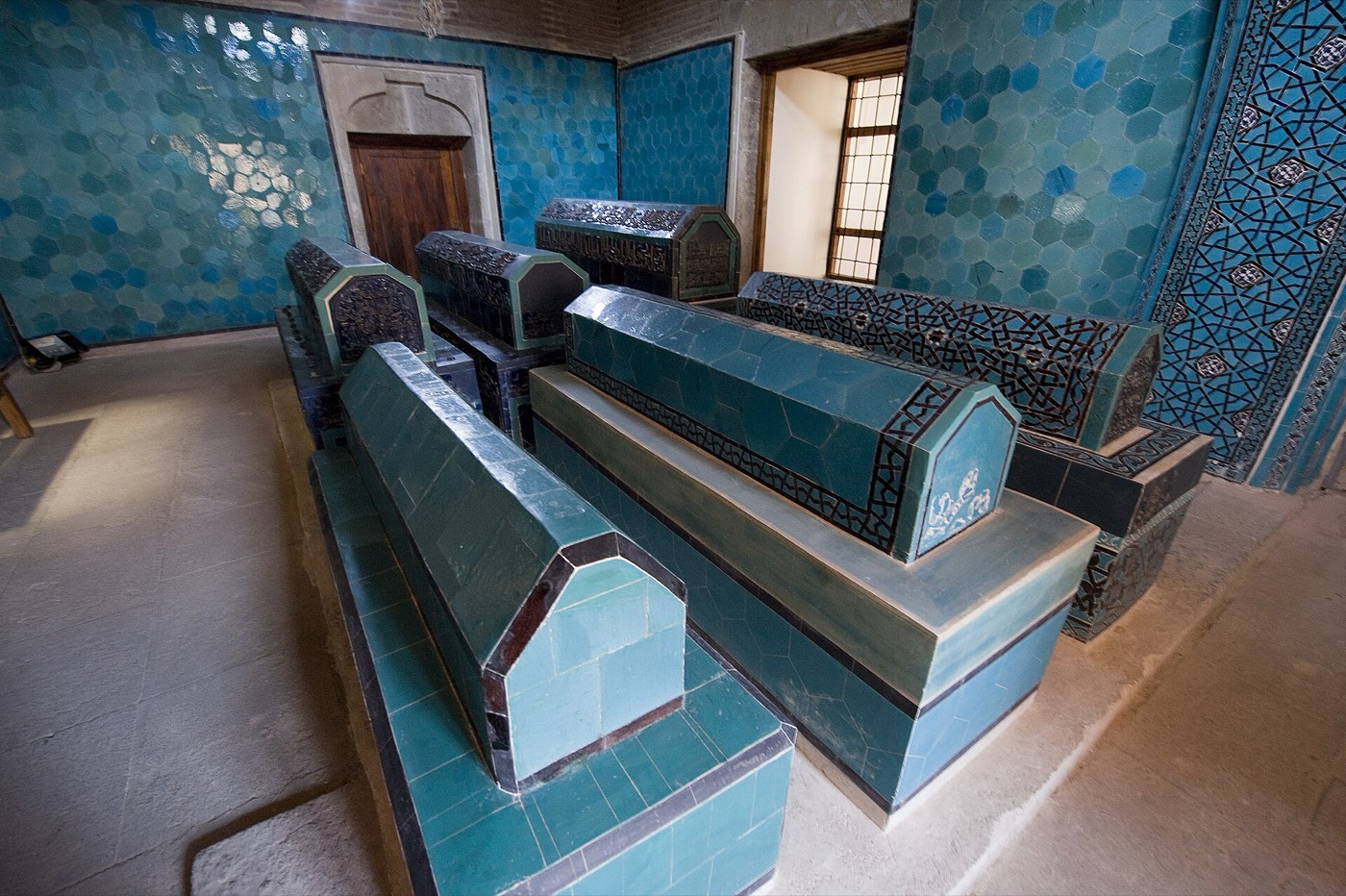
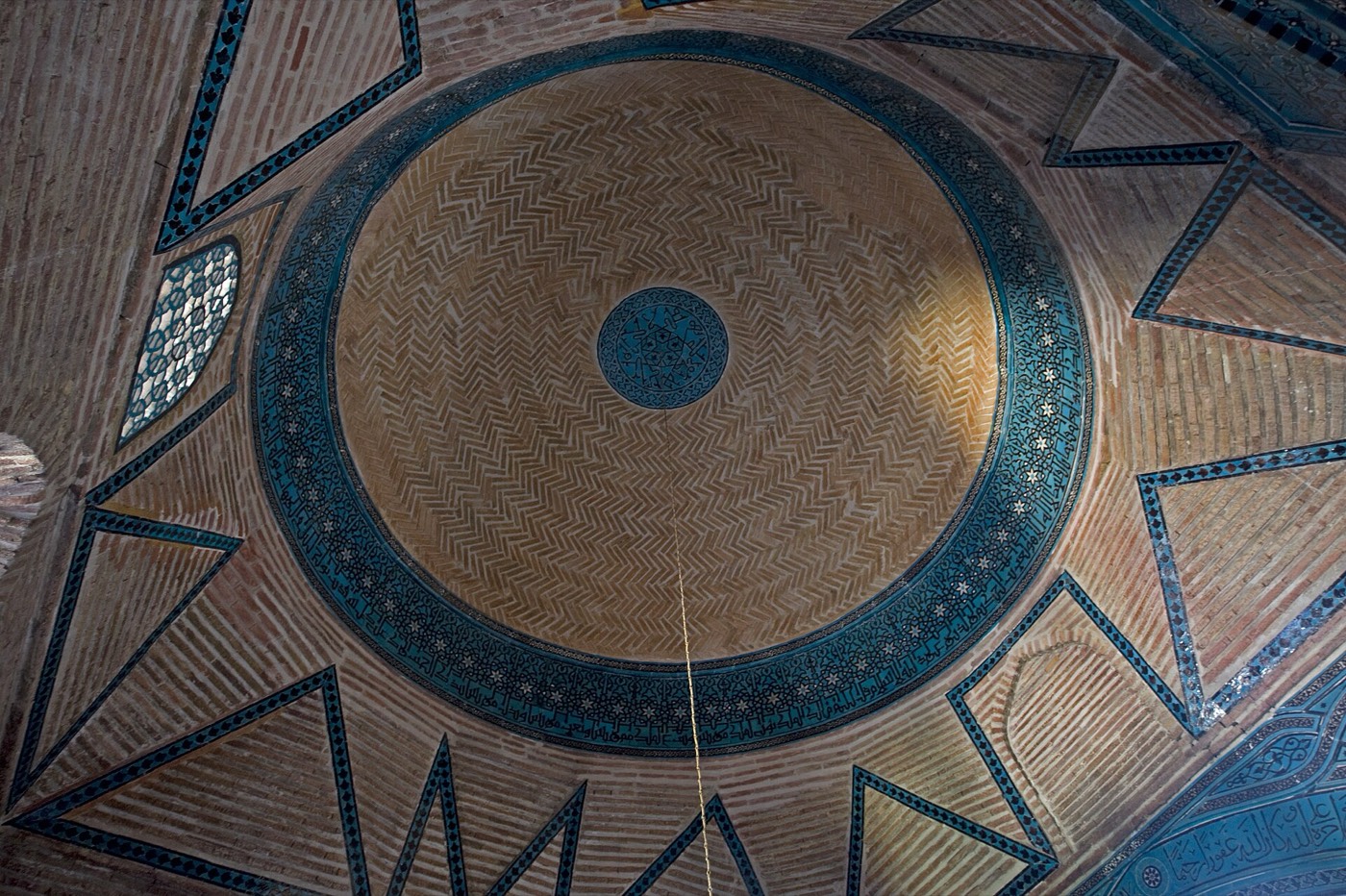
Most of the decoration is tile mosaic in turquoise and aubergine purple3. Tile panels with geometric and floral patterns frame the inner face of the entrance and cover the great arch, over which runs an inscription band of Qur'anic verses and hadiths in Seljuk thuluth that ends with the renewal date3. In each spandrel of the arch a large twelve-sided rosette surrounds a turquoise glazed boss about 30 cm across that was once painted with gold3. Brick and tile spell the name Ali in square Kufic on the passage's east wall1,3. In the chamber, turquoise hexagonal tiles line the walls to a height of about 2.5 to 2.7 m, a tile band with Kufic verses circles the base of the dome, and the dome itself is laid in herringbone brick around a Kufic medallion1,3.
Inside
Six tile-faced cenotaphs stand under the dome in two rows of three1,3. They belong to Sahib Ata, his elder son Tâceddin Hüseyin, his younger son Nusretüddin Hasan and his daughter Melike Hatun (d. 1292), probably also to his grandson Şemseddin Mehmed; the sixth is unidentified1,3. Sahib Ata's, in the north-west corner, is the largest: dark blue tiles carry raised thuluth texts, with a hadith on the plaque at its head and his death date on the one at its foot3. High in the south wall, a pointed window with an openwork tile-mosaic grille, broken in a theft, carries a Persian line taken from Ferdowsi1,3. The crypt below, about 5.30 × 6.20 m under a pointed barrel vault, is reached by seven steps from the khanqah's north iwan; people who have seen it report seven bodies with decayed mummies1,3.
What to look for
- The great tile arch with its thuluth inscription and once-gilded turquoise bosses3.
- Sahib Ata's cenotaph, the largest of the six, in the north-west corner3.
- The herringbone brick dome around its Kufic medallion1,3.
- The name Ali in square Kufic on the passage wall1,3.
- The window linking the tomb with the mosque's prayer hall1,5.
Visiting
- The tomb is entered from the domed courtyard of the khanqah, which houses the Sahib Ata Foundation Museum1,4.
- The complex is on Sahip Ata Caddesi in central Konya, near the Atatürk Monument and next to the Archaeological Museum4.
Official information: Konya Regional Directorate of Foundations, which opened the khanqah as the Sahib Ata Foundation Museum (according to Kültür Portalı)DirectionsOpen in OpenStreetMapGuided tours in Konya