History
Nakşidil, recorded in some documents and on her seal and tombstone as Nakşî Kadın, was a slave woman in the household of Esmâ Sultan the Elder, sister of Abdülhamid I, where the sultan noticed her; like most women brought to the 18th-century harem, she was probably of Caucasian origin2. As Abdülhamid I's seventh consort she bore three children: Şehzade Murad, who died of smallpox as an infant in 1784, the future Mahmud II, born on 20 July 1785, and Sâliha Sultan, born in 17862. TDV rejects the romantic story, still repeated, that she was the Frenchwoman Aimée du Buc de Rivery2.
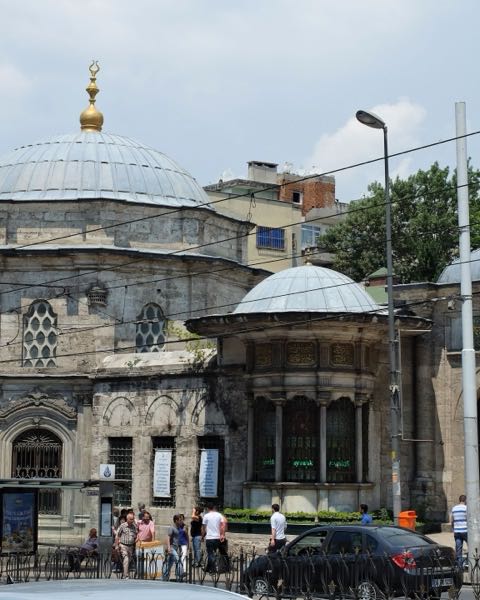
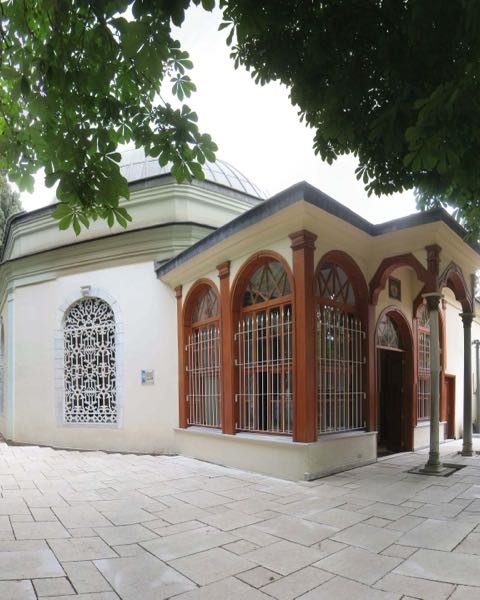
After Abdülhamid I died in 1789 she moved to the Old Palace at Beyazıt, and when her son came to the throne on 28 July 1808 she became valide sultan, the sultan's mother; her procession from the Old Palace to Topkapı on 8 August was the last of its kind2. She lived mostly at the Beşiktaş waterfront palace, where she died of tuberculosis on 6 September 18172. Her small complex on the qibla side of the Fatih Mosque, opposite its tabhane, groups a tomb, a sebil, a fountain, a soup kitchen and a school round a shared courtyard; the soup kitchen and the school had been built in her lifetime1,2.
Architecture
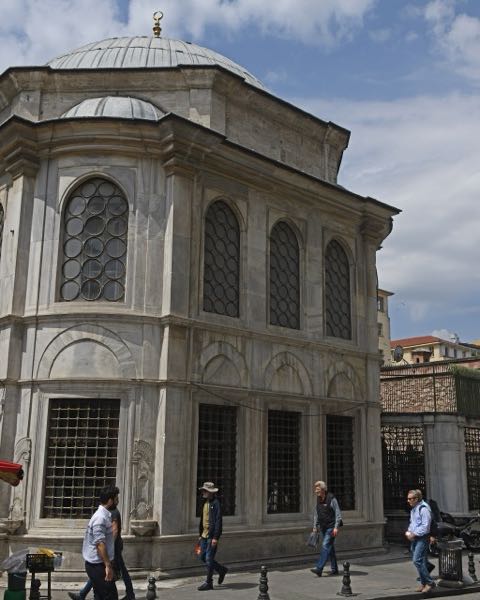
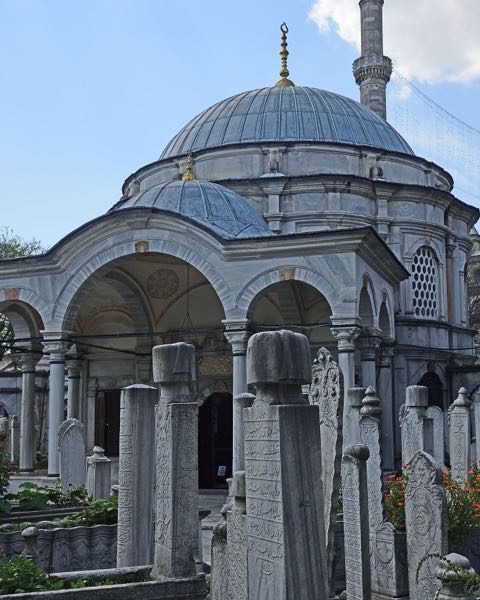
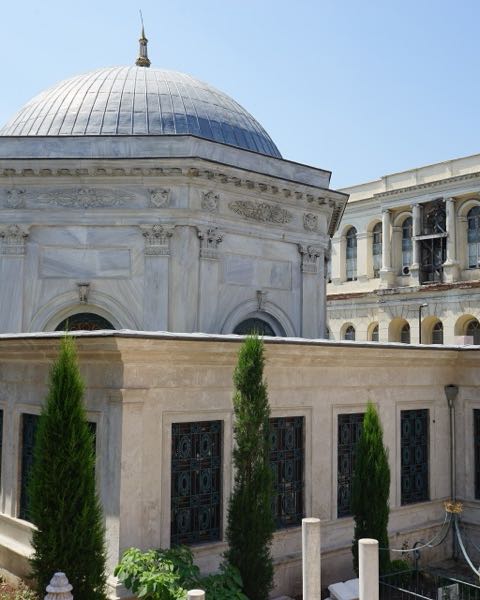
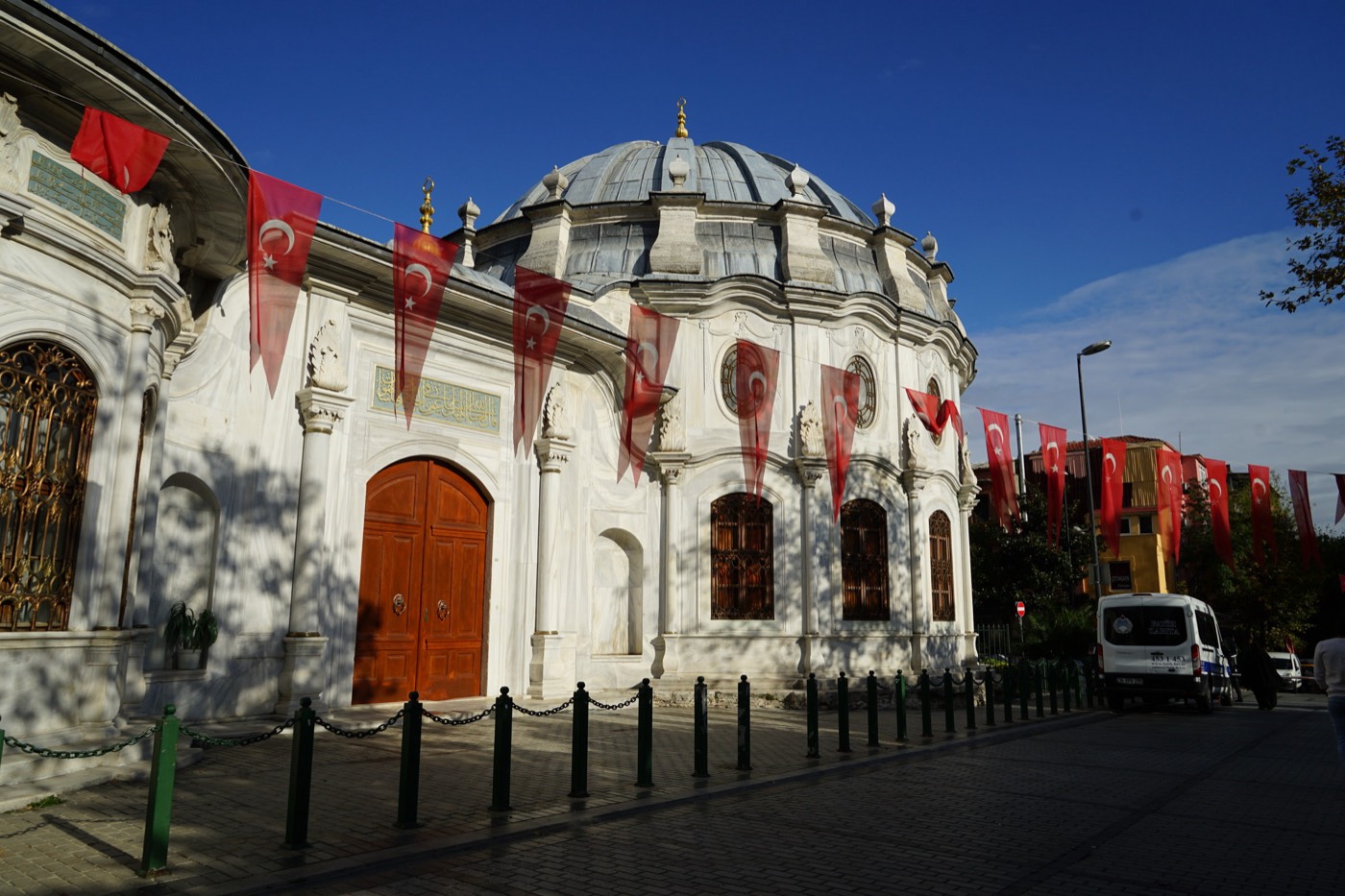
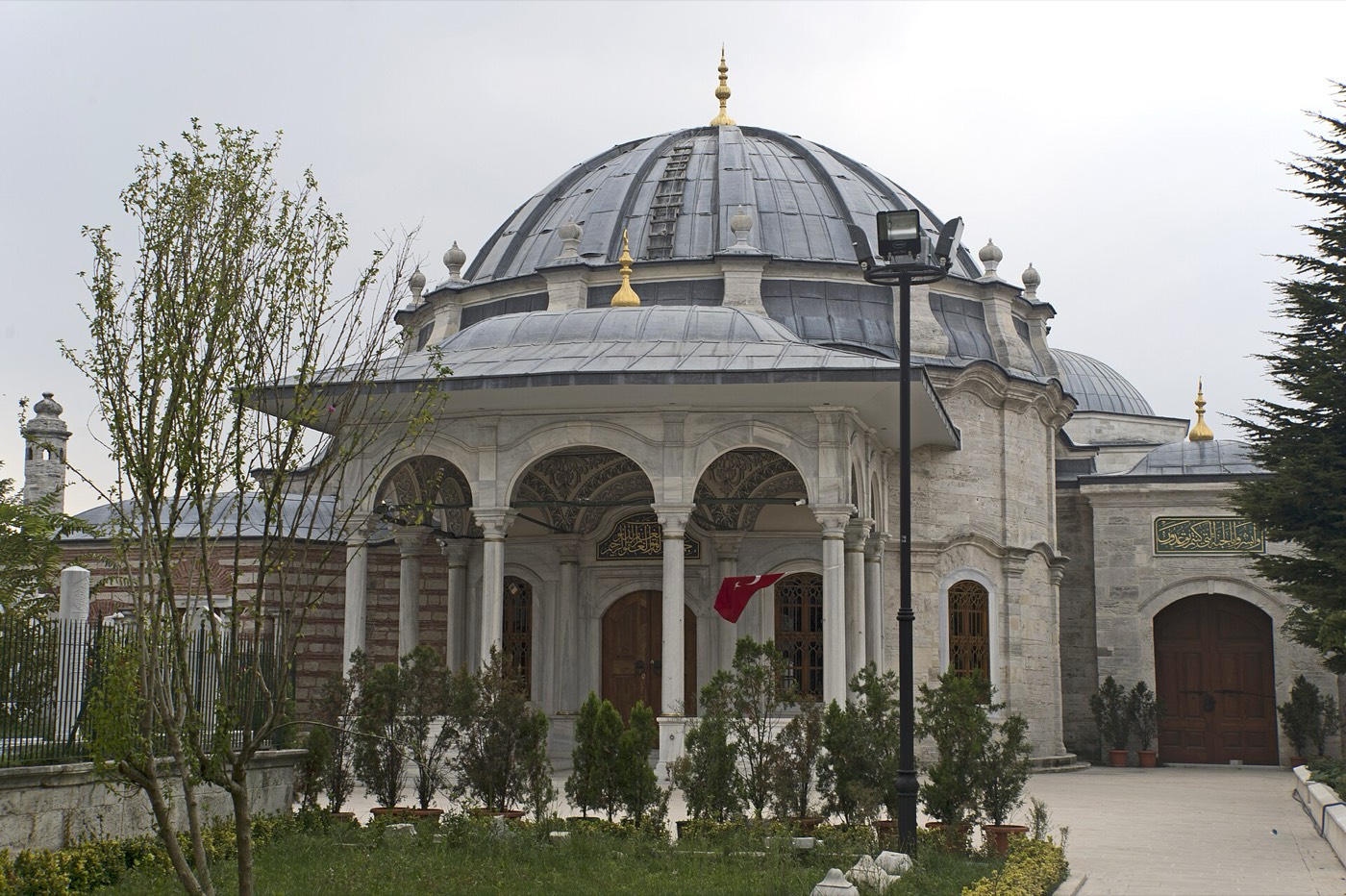
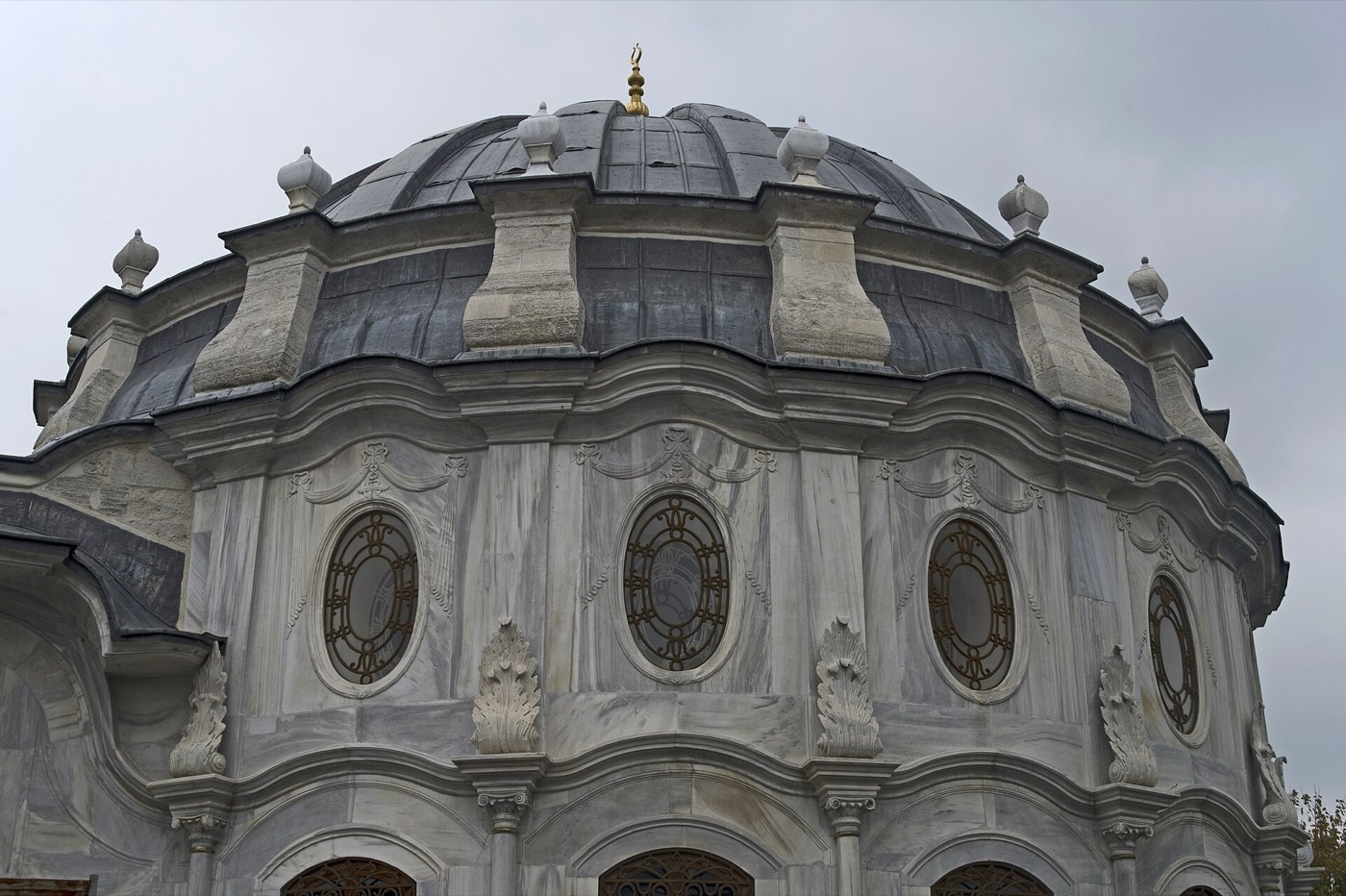
The tomb stands on a two-step base east of the courtyard gate1. TDV describes a cylindrical body and the ministry a sixteen-sided plan, under a low lobed dome that, like its drum, is covered in lead1,3. Large engaged columns buttress the drum, which narrows towards the dome1. TDV calls it one of the showiest Baroque tombs in Istanbul, Eyice a successful example of the Baroque in Turkish tomb architecture, and Düzenli cites it with the Nuruosmaniye tomb as an example of the style1,4,5.
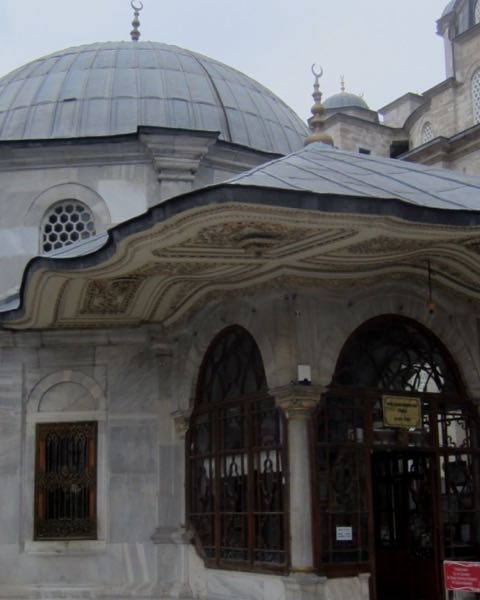
TDV singles out the marble-faced street front: wavy cornices, slender colonnettes whose capitals carry large acanthus-leaf consoles, rectangular lower windows under flattened arches and, above them, oval windows with garland pediments between pilasters that rise to a stepped cornice1,3. The entrance faces north-east onto the courtyard through a wide portico; TDV counts eight marble columns under a mirror vault, while the ministry describes a three-part domed portico with Ionic capitals1,3. The sebil west of the gate is plainer and closer to the Empire style, and its verse inscription is in the hand of Yesârîzâde Mustafa İzzet1.
Inside
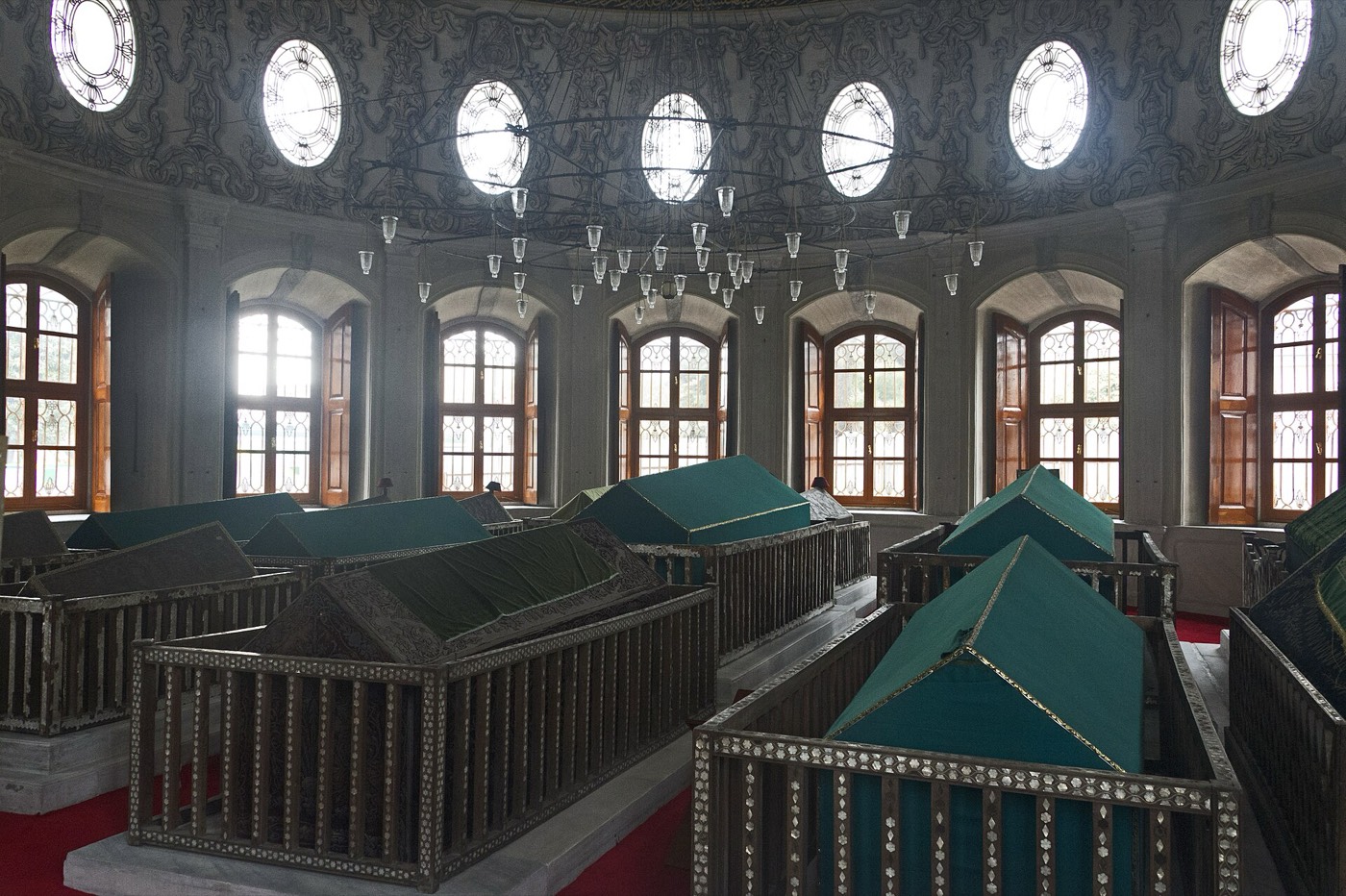
TDV notes that the many windows make the interior bright1. From the level of the upper windows, painted decoration covers the whole dome: cups linked by garlands in black, grey and yellow, a scheme repeated on the portico ceiling1,3. Qur'anic inscriptions in thuluth run over the doors, with al-Zumar 39:53 at the main entrance, and a band of Sura al-Insan circles the drum; all are by the calligrapher Mustafa Râkım Efendi1,3. Besides Nakşidil's cenotaph there are fourteen others, among them those of Cevrî Kalfa, who saved Mahmud's life when he was a prince and later became his chief treasurer, of Mahmud II's consorts Zernigâr and Zeynifelek, and of several of his children1,3.
What to look for
- The marble street front with wavy cornices, acanthus consoles and oval upper windows1,3.
- The low lobed dome, covered in lead, on a drum buttressed by engaged columns1.
- Garlands in black, grey and yellow painted across the dome1,3.
- Inscriptions by the calligrapher Mustafa Râkım Efendi, including Sura al-Insan round the drum1,3.
- The plainer sebil of 1818 beside the courtyard gate, built by Mahmud II1.
Visiting
- The tomb stands on Tabhane Sokak in Kirmasti Mahallesi, Fatih, on the qibla side of the Fatih Mosque1,2,3.
- TDV (2006) reports that most of the complex is used by a girls' Qur'an course of Türkiye's Presidency of Religious Affairs1,2.
- The tomb of Mehmed II stands a short walk away, in the graveyard behind the Fatih Mosque5.
Official information: Istanbul Tombs Museum Directorate (İstanbul Türbeler Müze Müdürlüğü), Republic of Türkiye Ministry of Culture and TourismDirectionsOpen in OpenStreetMapGuided tours in Istanbul
In a trip guide: Istanbul’s türbes on foot