History
Khayrbak, son of Malbay, was a Circassian born around 1464-1465 who entered the service of Sultan Qaytbay with his brothers2. He rose through the ranks of amirs, carried presents to the Ottoman sultan Bayezid II as an envoy in 1497, became grand chamberlain when Qansuh al-Ghuri took the throne and, in 1504, governor of Aleppo2,1. Near Bab al-Wazir he built himself a domed mausoleum: an inscription inside dates it to 908 AH (1502-1503), and Ibn Iyas records that his brother Janbalat was buried in it on 10 August 15021.
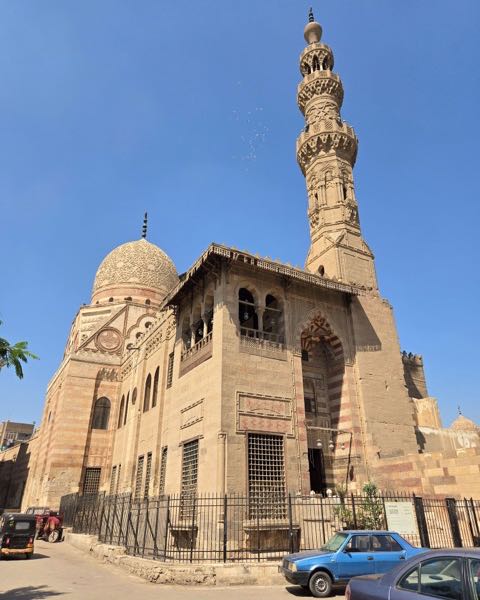
At the battle of Marj Dabiq in 1516 Khayrbak, commanding the Mamluk left wing, withdrew from the field, and he soon went over to the Ottoman sultan Selim I2. Creswell calls him the amir ‘who had betrayed his master’1. After the conquest of Egypt, Selim I made him governor of the province, and in September 1517 he took up office in the Citadel2,1. Beside his mausoleum he added a madrasa-mosque and a sabil-kuttab (public fountain and Qur'an school), which MIT Libraries’ image archive dates to 15206. Khayrbak died on 5 October 1522 and was buried by the mosque he had built in Cairo2.
Architecture
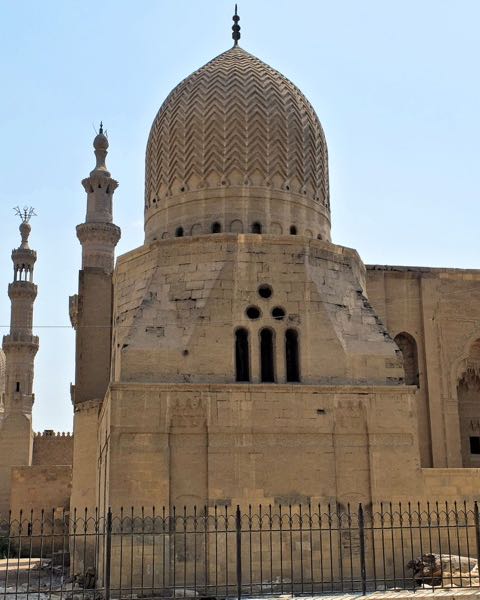
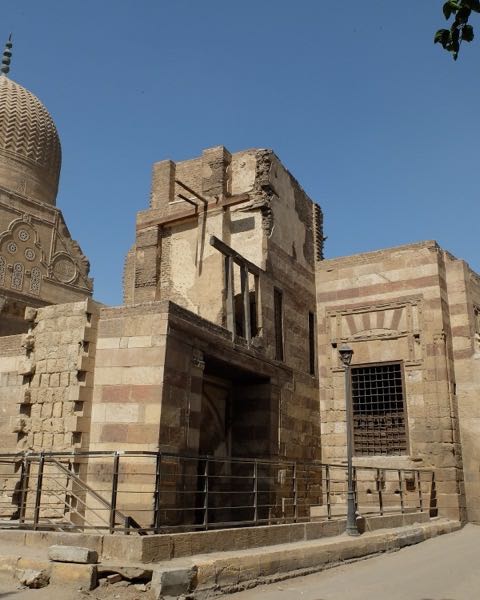
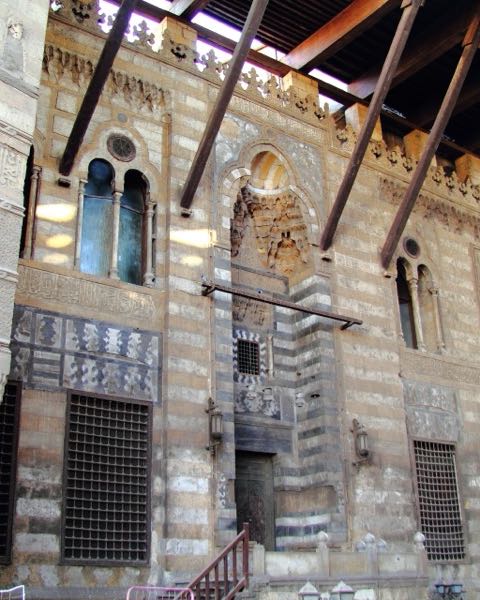
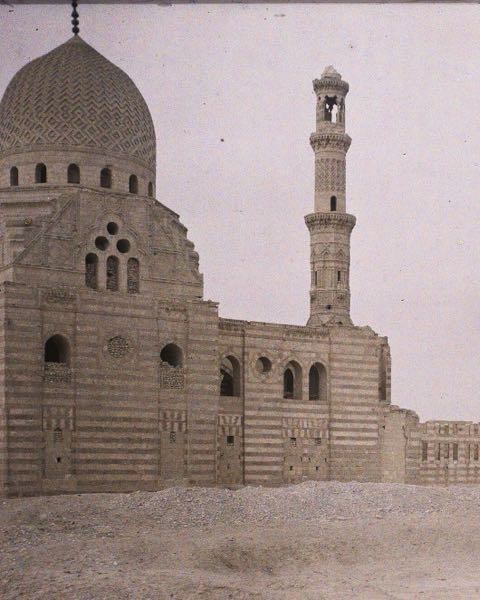
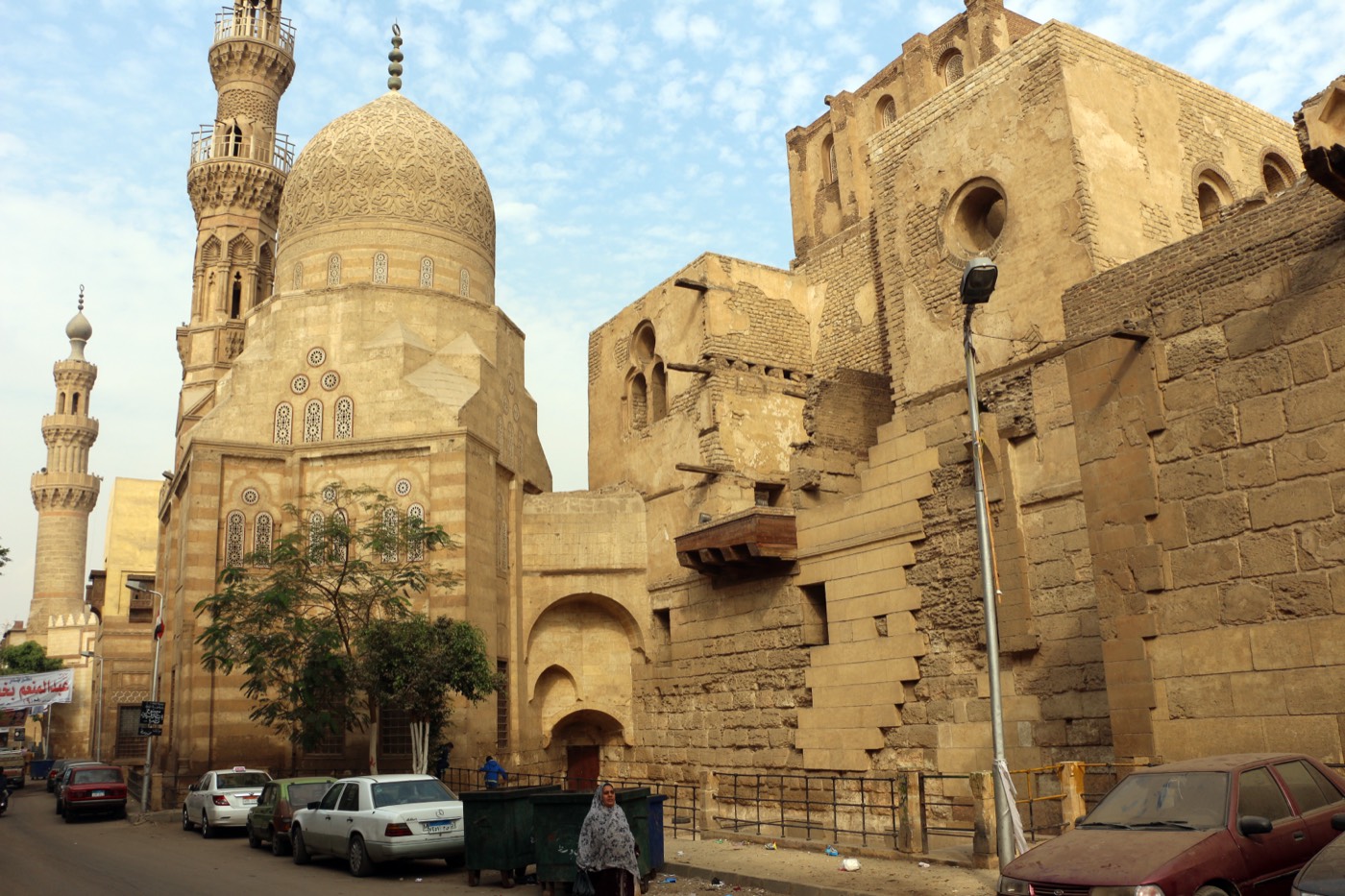
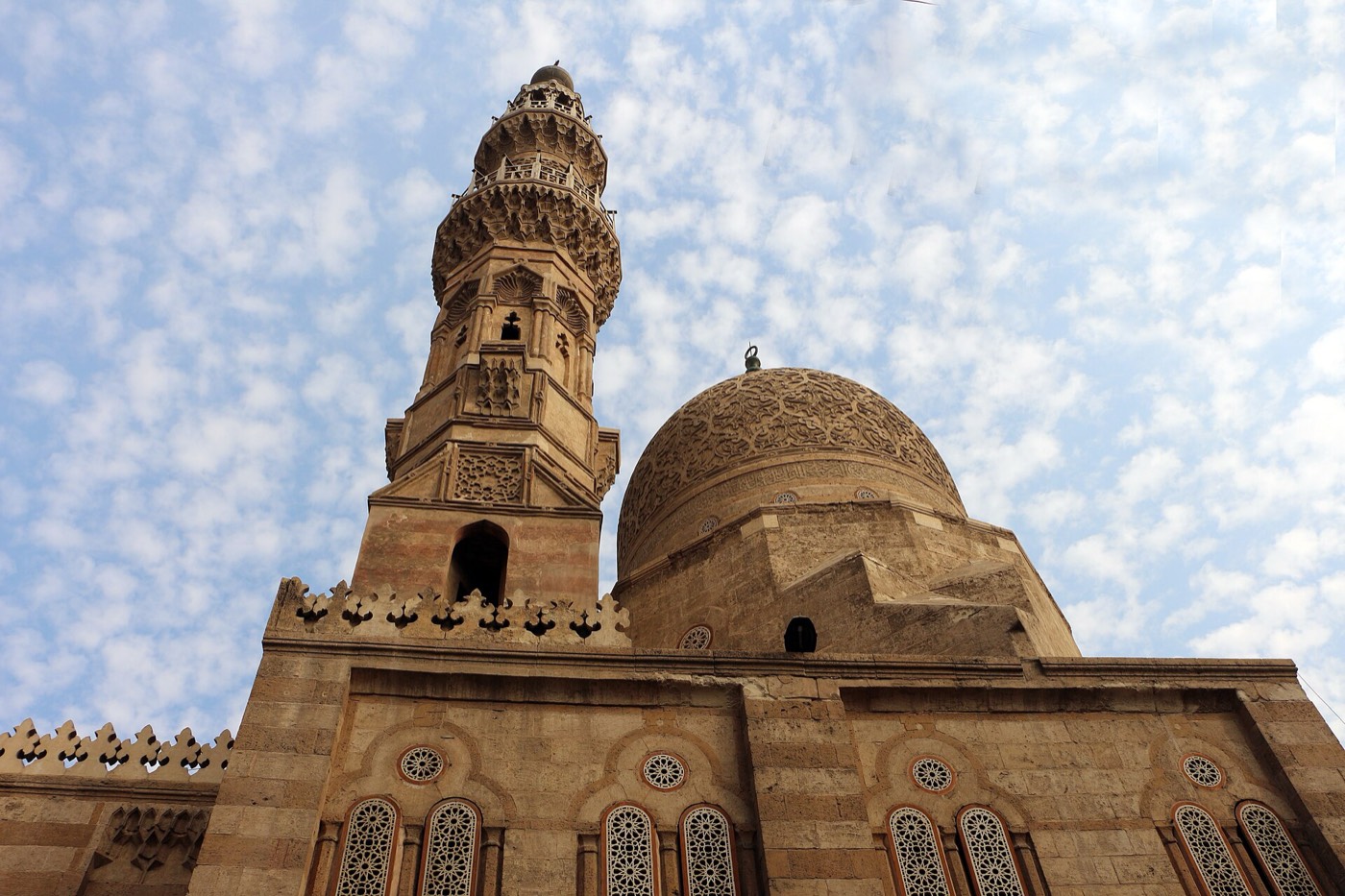
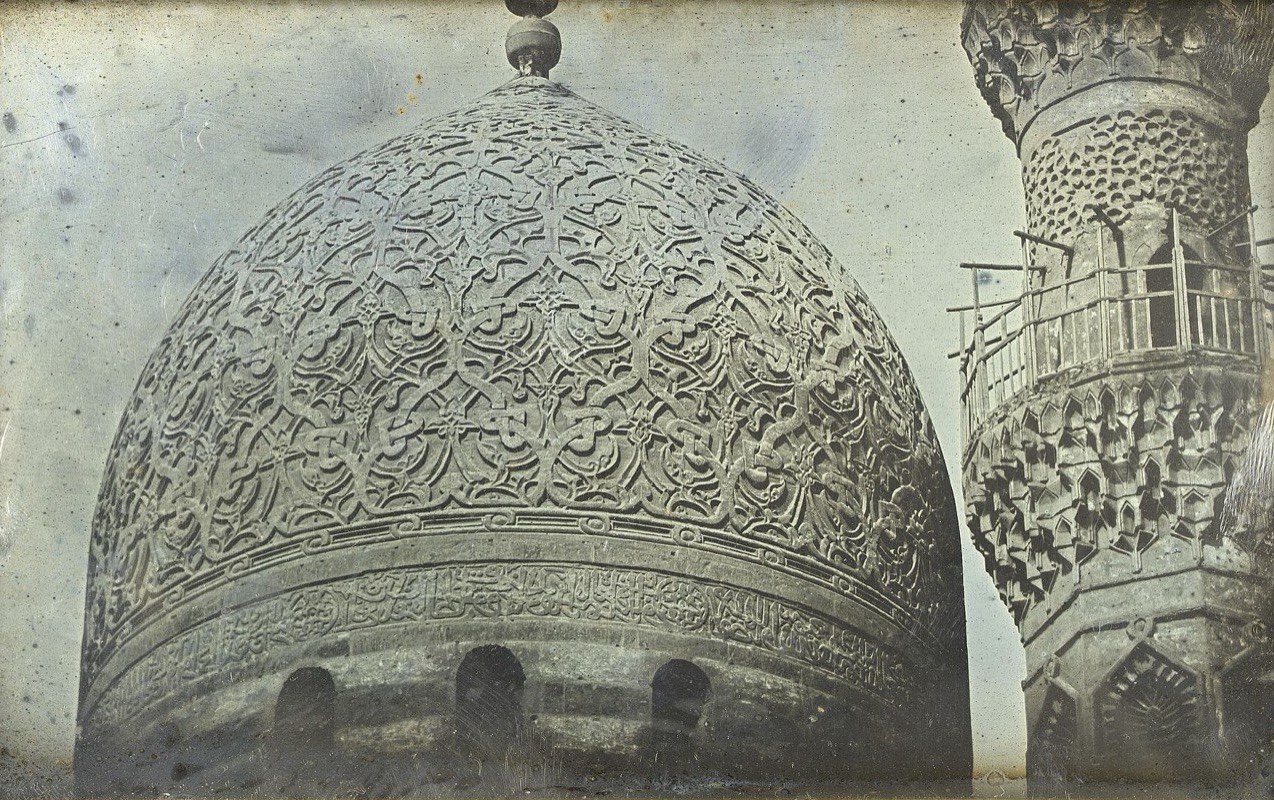
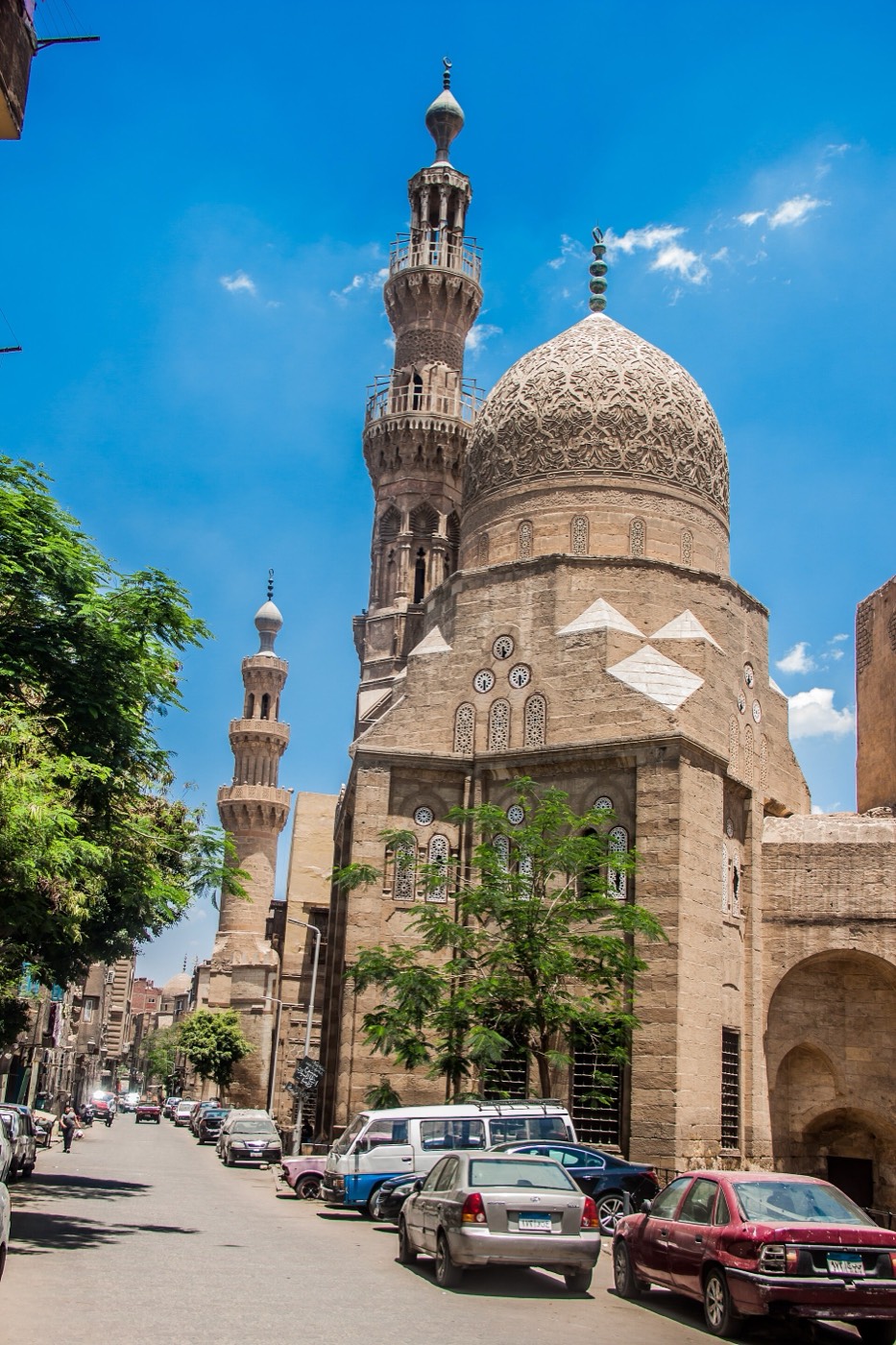
The mausoleum stands on Bab al-Wazir Street and is joined by an arch to a palace, which K. A. C. Creswell took in 1919 to be Khayrbak’s own residence1,4. The Aga Khan Trust for Culture identifies that building as the Mamluk palace of Alin Aq, and the Aga Khan Development Network dates it to the 13th century4,5. The stone dome of the mausoleum is carved outside with arabesques, and Creswell singled out the extreme elaboration and minuteness of its design1. Creswell also observed that the abnormal construction of the mosque’s interior supports its later date1.
The Aga Khan Trust for Culture, working with Egypt’s Supreme Council of Antiquities, restored the complex from 2000: it reconstructed the minaret, a task its publications date to 2003 or 2004, cleaned the stucco reliefs of the minaret shaft and set up a carpentry workshop on the site3,4,7,5. With the palace and two Ottoman houses, the restored ensemble covers about 8,000 square metres3,4. The Aga Khan, Egypt’s Minister of Culture Farouk Hosni and the Governor of Cairo inaugurated it on 26 October 20075.
Inside
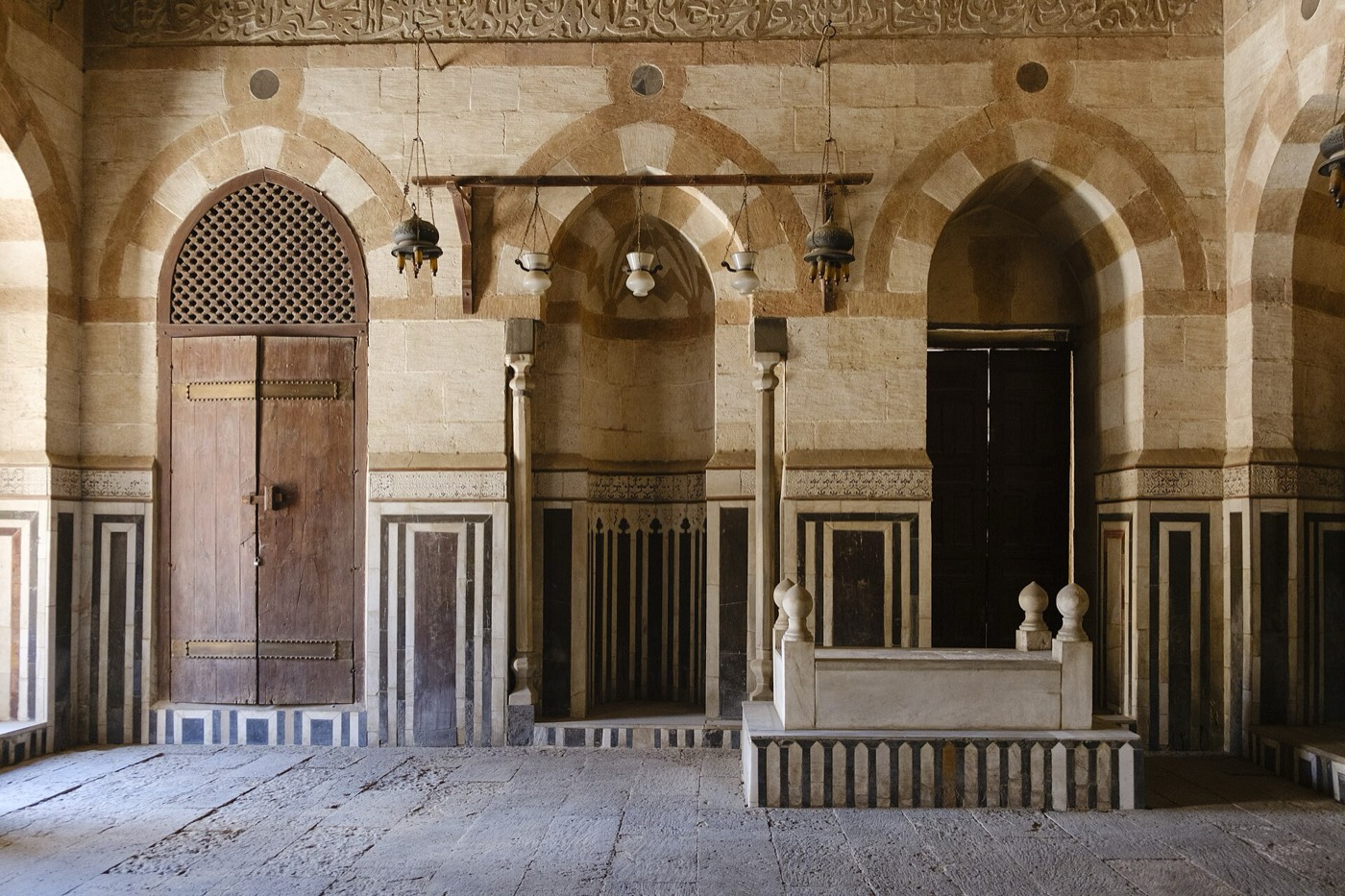
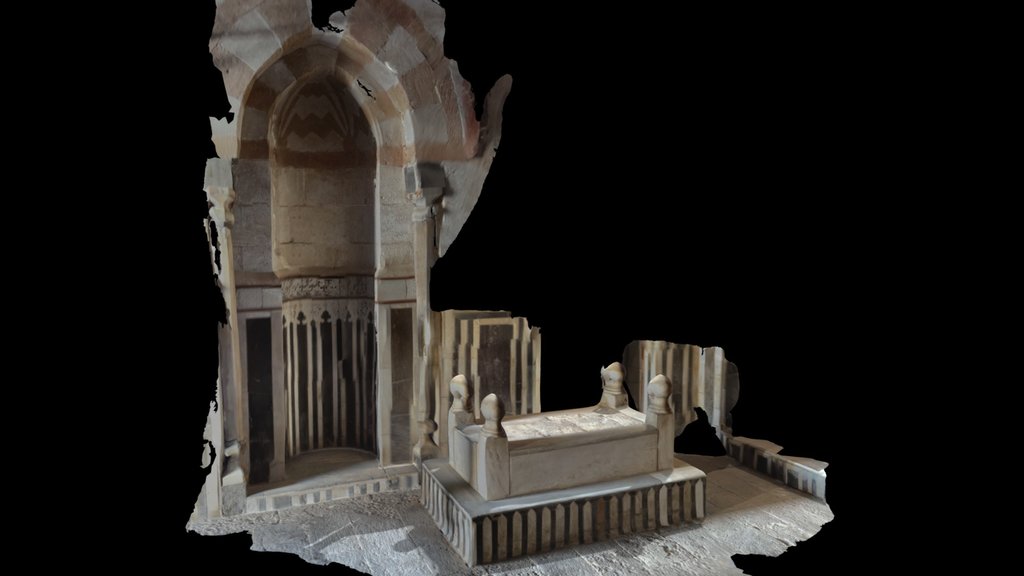
Inside the mausoleum, an inscription at the top of the four walls, below the pendentives of the dome, gives the year of completion, 908 AH1. Photographs taken in 2008 for MIT Libraries’ Aga Khan Visual Archive show the inside of the mausoleum dome with coloured glass set in its clerestory windows, a mihrab, and the prayer hall of the mosque with its minbar6.
What to look for
- The mausoleum’s stone dome, carved outside with arabesques whose elaboration Creswell singled out1.
- The inscription below the pendentives inside the mausoleum, dated 908 AH (1502-1503)1.
- The minaret, reconstructed during the restoration, with the stucco reliefs of its shaft cleaned3,7.
- The arch joining the mausoleum to the older palace of Alin Aq1,4,5.
- The coloured glass in the clerestory windows of the mausoleum dome6.
Visiting
- The complex stands on Bab al-Wazir Street in al-Darb al-Ahmar, next to the southern gate of al-Azhar Park4.
- The mausoleum is no. 248, and the adjoining palace no. 249, in the index of Cairo’s monuments drawn up for the Comité (Committee for the Preservation of Arab Antiquities)1.
DirectionsOpen in OpenStreetMapGuided tours in Cairo
In a trip guide: Cairo’s City of the Dead and the medieval city