History
The tomb belongs to a complex that Mihrişah Valide Sultan, mother of Sultan Selim III, founded at Eyüp in Istanbul. TDV dates the building work to 1792-17961. The Eyüpsultan municipality, citing a chronogram by the poet Aynî, gives completion in 1208 AH (1793)2. The two sources also differ on the architects. TDV names Mehmed Ârif Ağa and Ahmed Nûrullah Ağa as chief architects, while the municipality says Nurullah Efendi began the work and, after his death, Mimar Kethüdası Arif Ağa completed it1,2. Kavafzâde Mehmed Emin Efendi, one of the Anatolian kazaskers (military judges), oversaw the construction1.
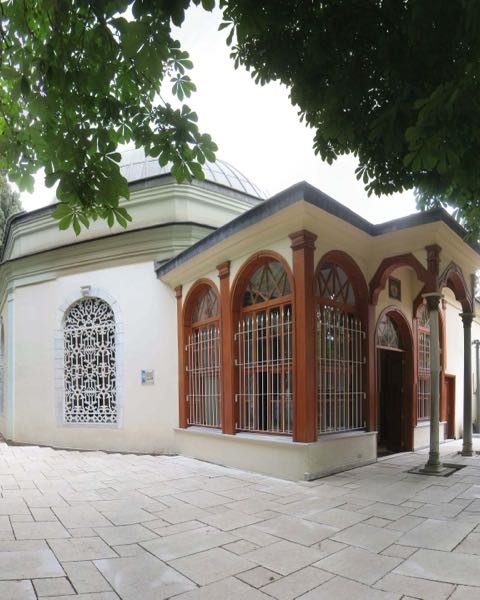
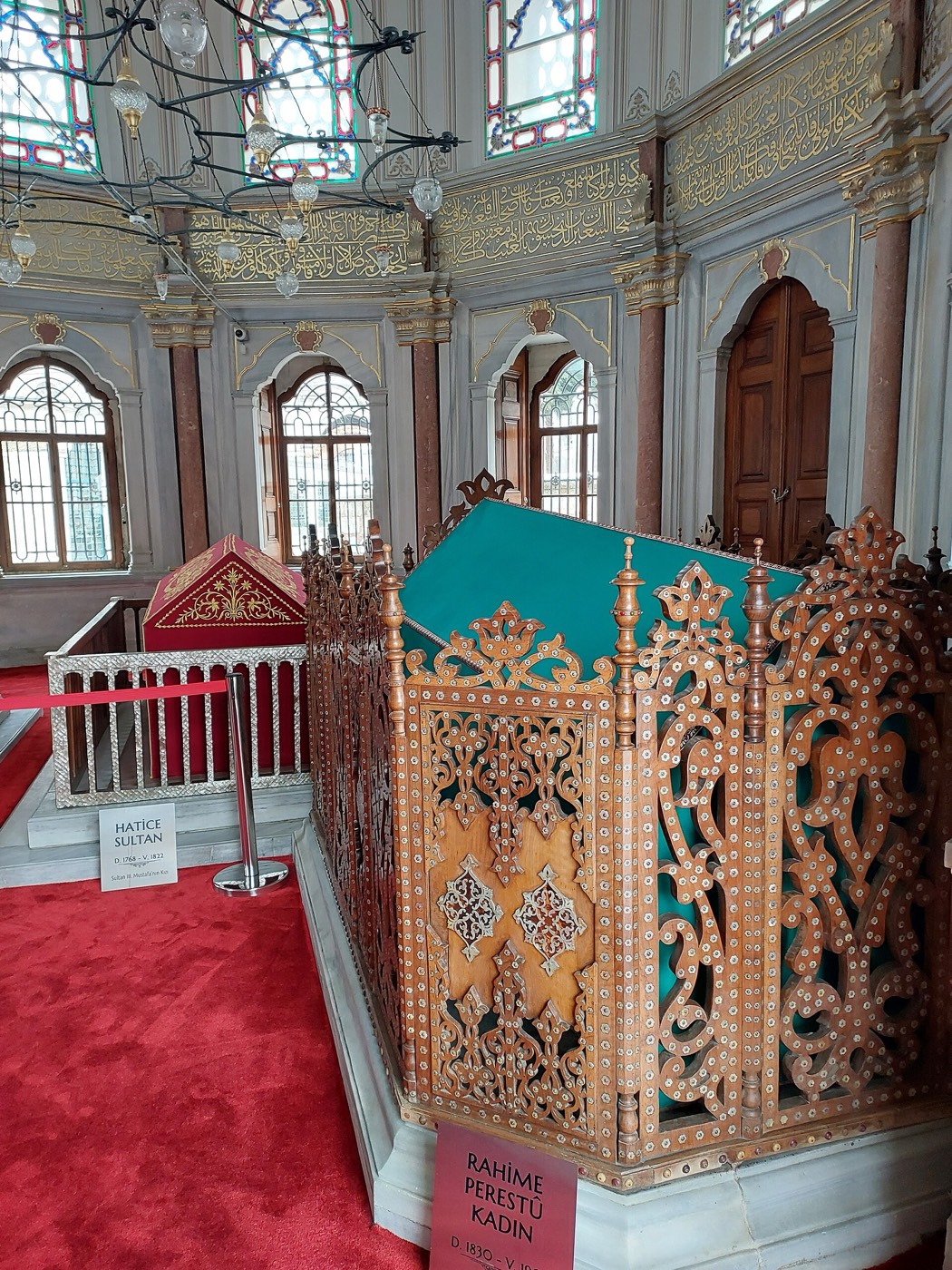
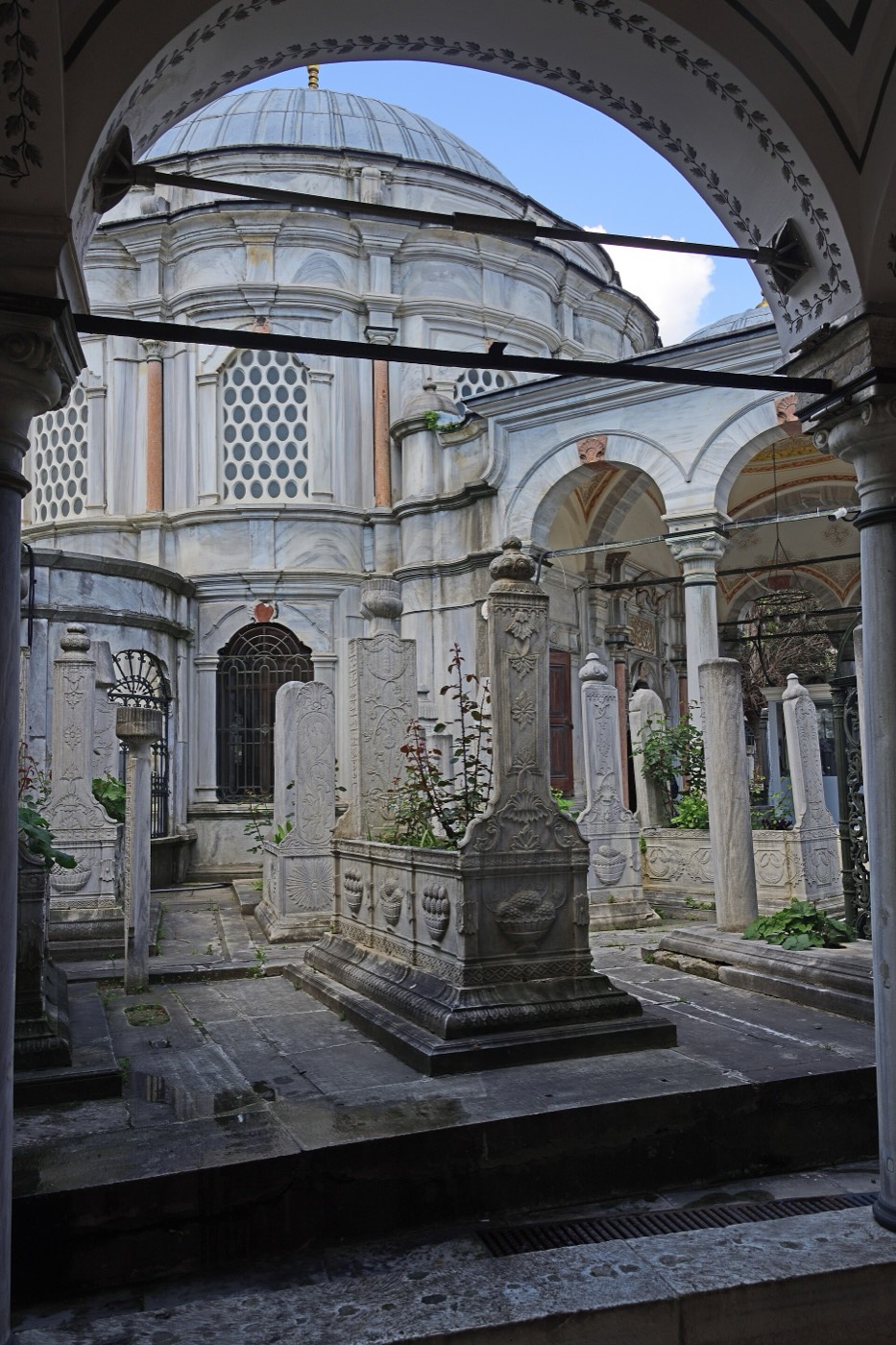
Besides the tomb the complex has a cemetery, a soup kitchen (imaret), a primary school (sıbyan mektebi), a public water kiosk (sebil) and fountains1. Mihrişah died on 16 October 1805 and was buried in the tomb of her own complex2. TDV lists five sarcophagi: hers, placed to the right of the entrance inside a wooden railing inlaid with mother-of-pearl, and those of Hatice Sultan, Beyhan Sultan, Refet Kadın and Rahime Piristû Kadın1. The courtyard later became a burial ground, with graves from the late 18th, 19th and 20th centuries1.
Architecture
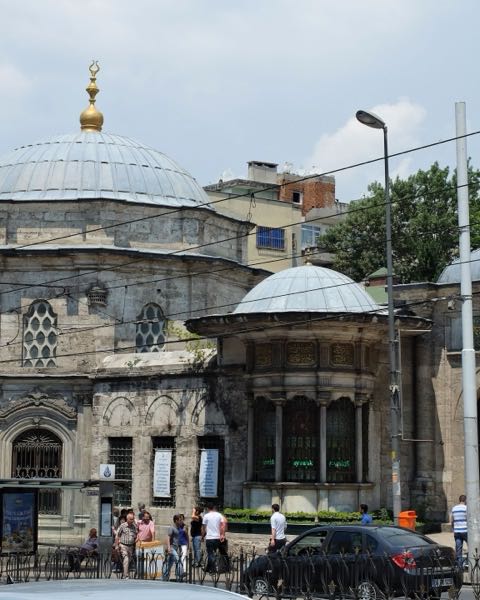
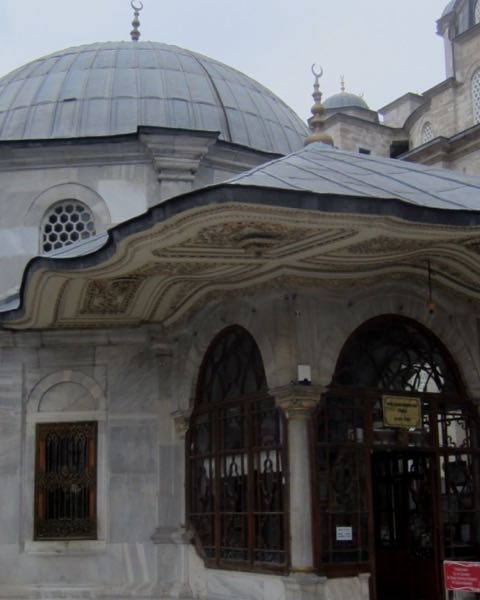
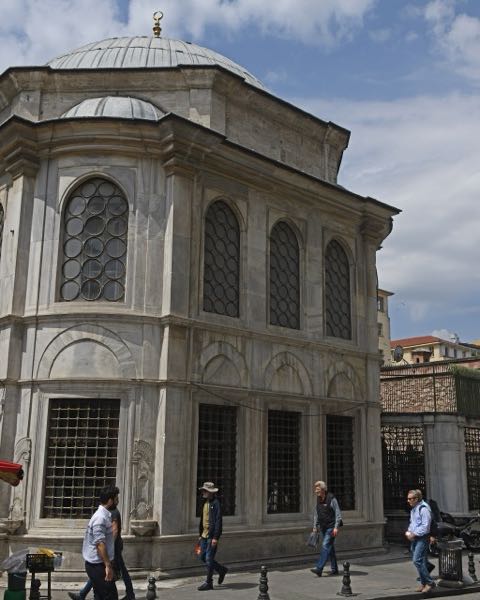
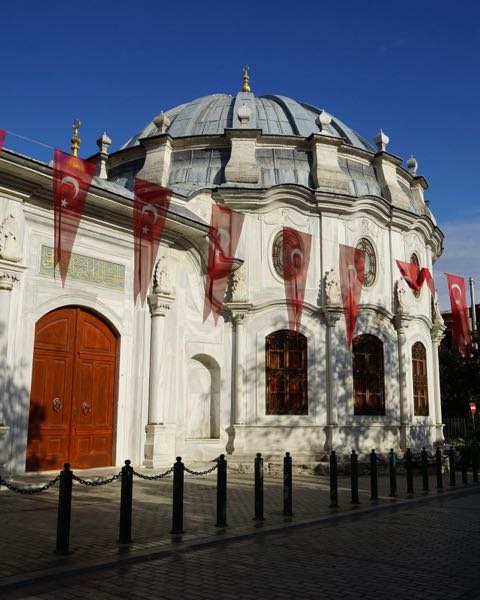
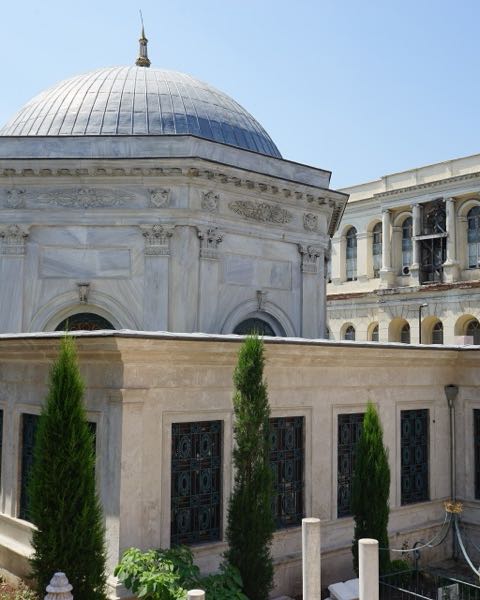
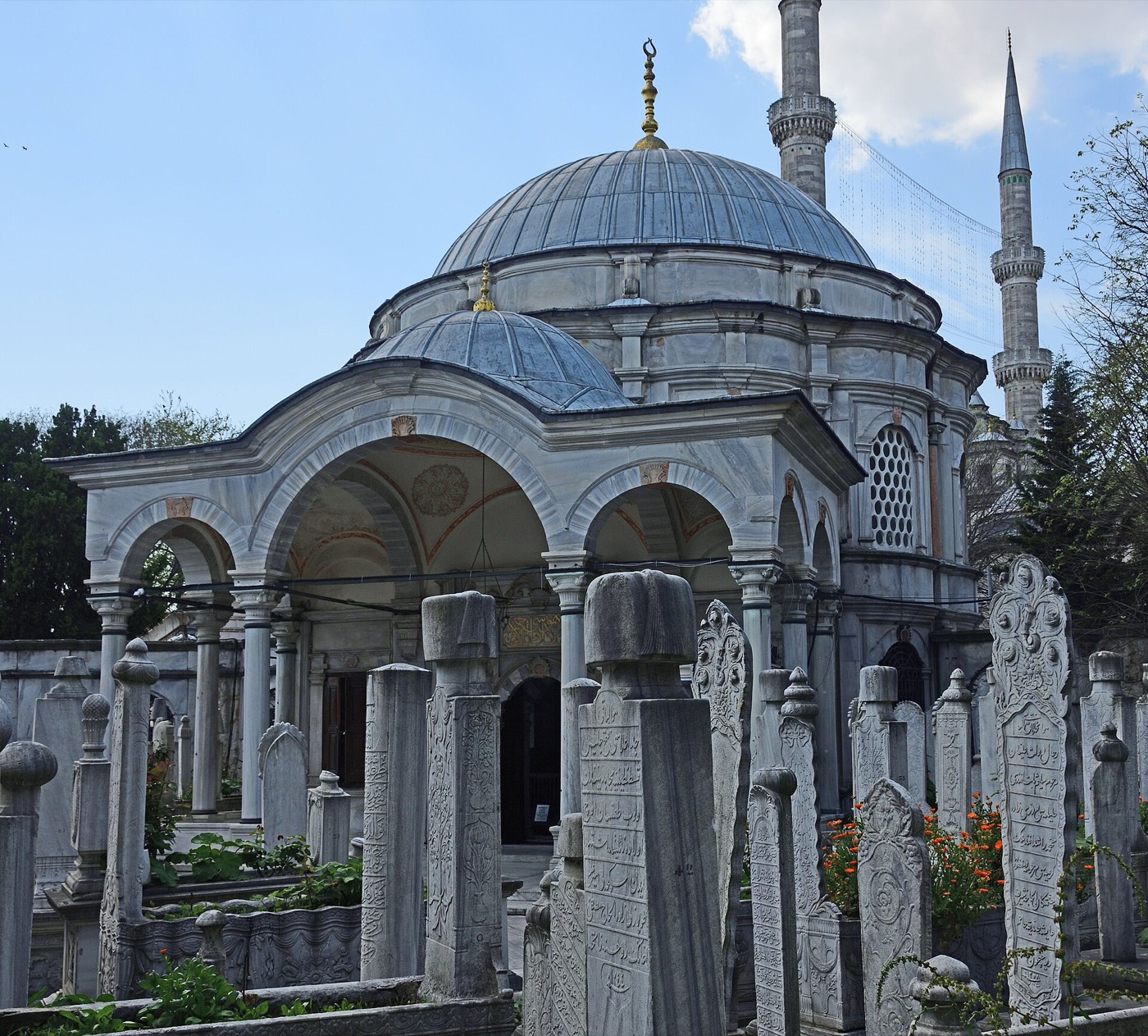
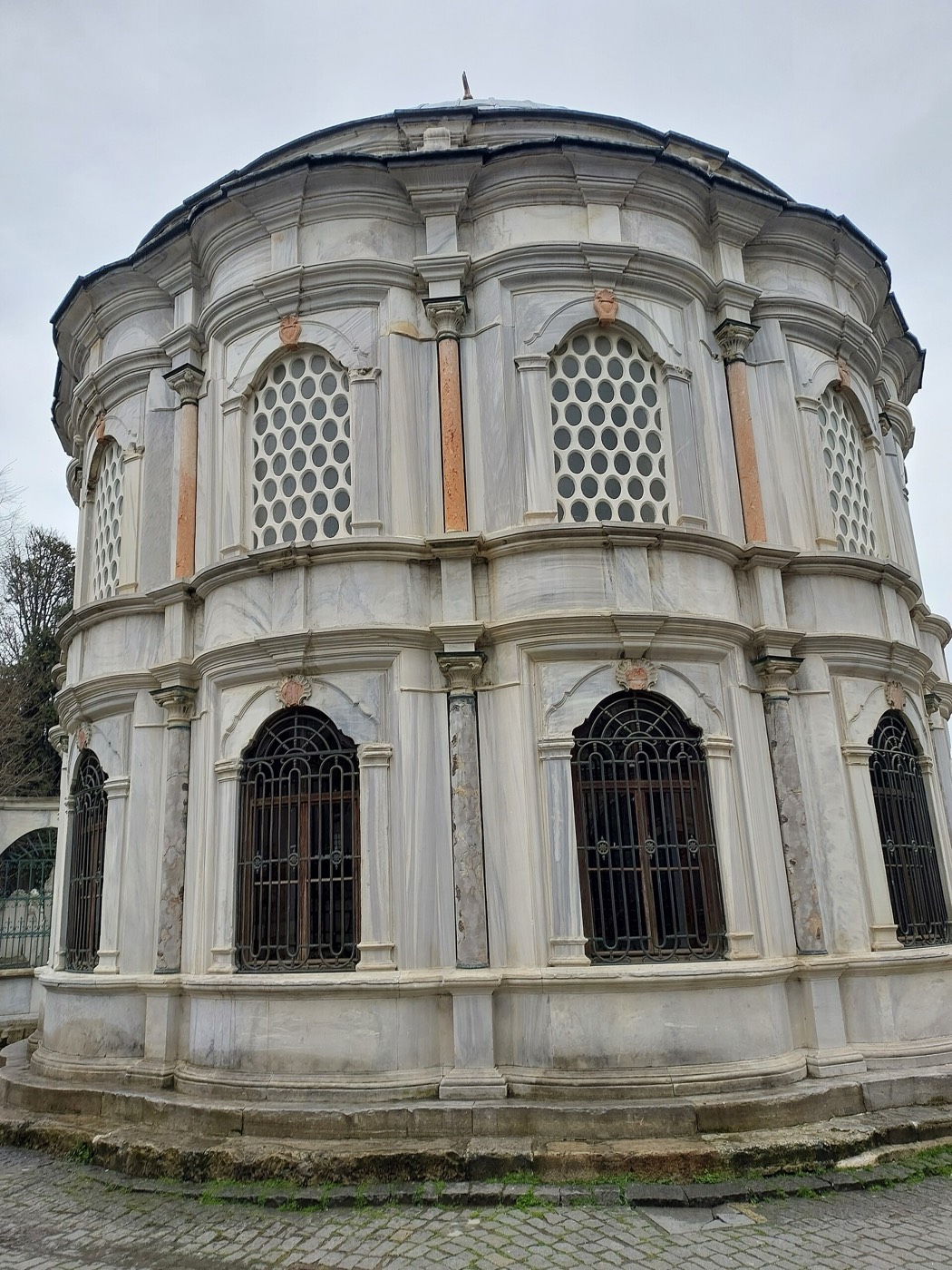
The tomb is a twelve-sided domed building in white marble, with two rows of windows on its oval faces1. The lower windows have cast-iron grilles, and the upper ones are ventilation openings, some with coloured glass1. A portico of three parts, with a central dome and a vault on each side, leads to a door of black-and-white marble under an arch with an S-shaped profile1. The facade of the complex is also in white marble, with portals, round-arched windows, the sebil and fountains, and carries an inscription by the poet Sünbülzâde Vehbî in ta'lik script by Yesârî Mehmed Esad1. TDV calls the tomb an important example of Turkish Baroque architecture1.
Inside
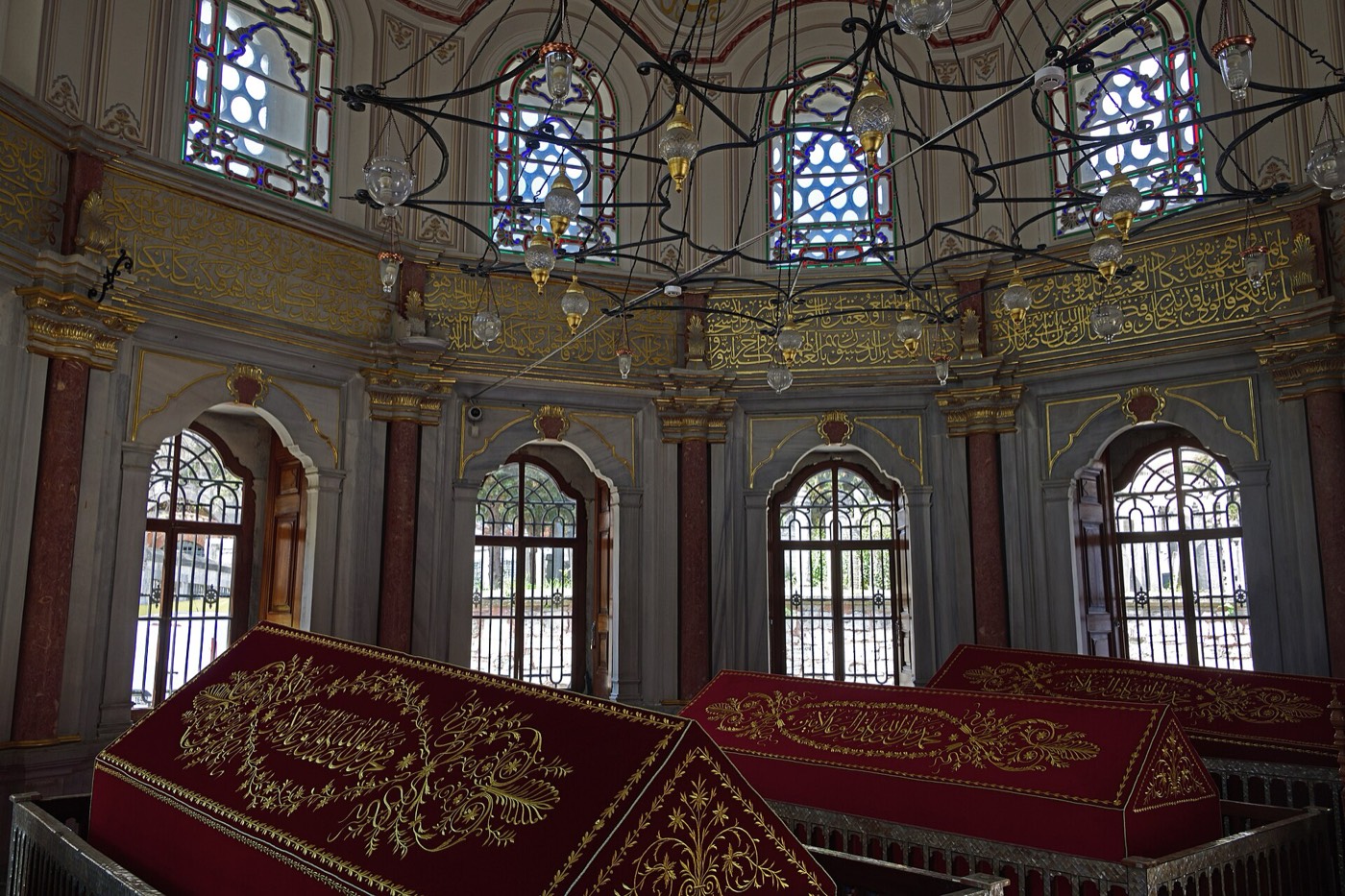
Twelve columns soften the corners of the interior1. The dome is painted with wavy bands in twelve branches that radiate from a central medallion1. The calligraphy is by Hattat Mahmud Celâleddin Efendi and the painting by Mehmed Şevki1. Five sarcophagi stand inside, and the one of Mihrişah, to the right of the entrance, is enclosed by a wooden railing inlaid with mother-of-pearl1.
What to look for
- The twelve-sided marble body with two tiers of windows and a three-part portico1.
- The black-and-white marble doorway under an S-profile arch1.
- The painted dome, with wavy bands radiating from a central medallion1.
- Mihrişah's sarcophagus behind a wooden railing inlaid with mother-of-pearl1.
- The sebil, school and soup kitchen of the same complex1.
Visiting
- The tomb is one part of a larger complex with a school, soup kitchen, sebil and cemetery1.
- The courtyard around the tomb is a cemetery with graves from the 18th to the 20th century1.
- The complex lies in the Eyüp district of Istanbul1,2.
Official information: Eyüpsultan Municipality (page on the Mihrişah Sultan complex)DirectionsOpen in OpenStreetMapGuided tours in Istanbul