History
Bayezid I, born in 1354, earned the name Yıldırım (‘thunderbolt’) for his dash at the battle of Frenk Yazısı in 13865. On a hill east of Bursa he built a complex in 1391-1395: a mosque, a madrasa, a public kitchen, a bath and a hospital (darüşşifa), the first hospital building in Ottoman architecture according to TDV4. The endowment deed of 1400 provided for a tomb and for oil for its lamps, but the tomb was built only later4,8. In 1402 Timur defeated and captured Bayezid at Ankara, and he died in captivity at Akşehir on 8 March 14032,5.
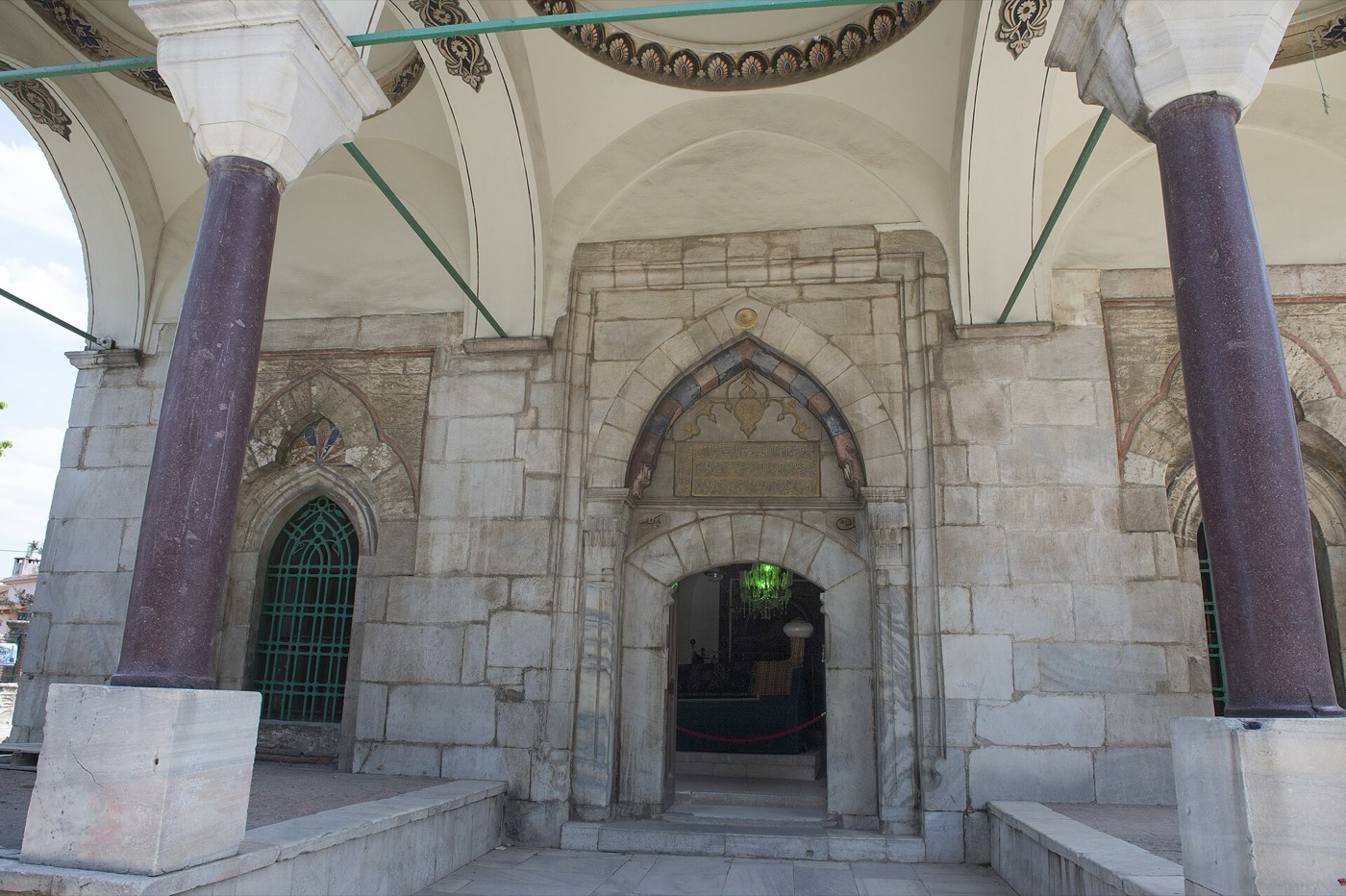
His body was kept at Akşehir for a time and then brought to Bursa for burial in his own complex2,9,10. TDV reports accounts that Timur released Bayezid's son Musa Çelebi and asked him to take the body to Bursa, though other sources tell the story differently6. The inscription over the door states that Bayezid's son Süleyman built the tomb in 809 AH (1406)2,4,9. According to the Bursa Metropolitan Municipality, the same inscription names the architect, Ali, son of Hüseyin11. The nomination file also names him and records repairs in 1618, 1640, 1649, 1780 and 18462. Bayezid's son İsa Çelebi was buried beside his father7,9.
Architecture
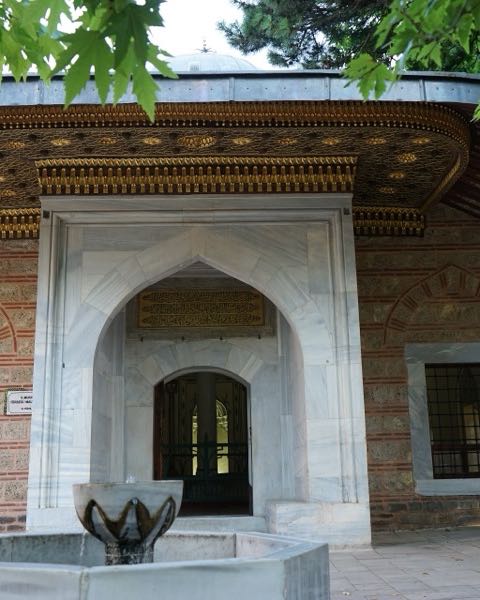
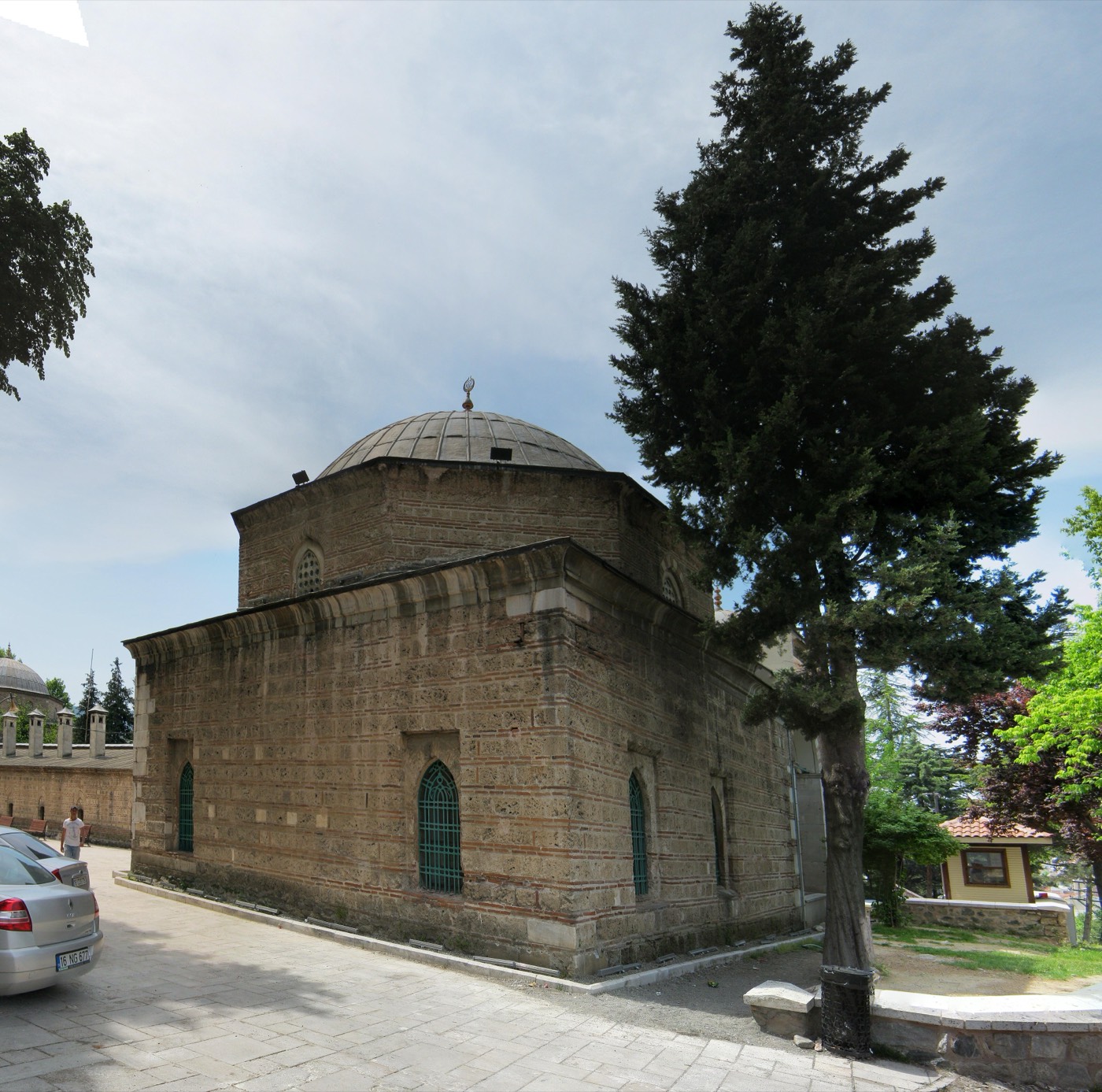
The tomb stands north of the mosque and east of the madrasa2. It is a square, domed building with walls of alternating stone and brick courses2,4,10. A porch of three domed bays runs along the front, with masonry piers at the corners and, in the middle, two polished columns of coloured stone, all joined by round arches2,10. TDV, Kültür Portalı and the nomination file call it the first Ottoman tomb with a porch, and the Bursa Site Management sees it as the forerunner of the porched Ottoman tombs that followed2,4,9,10. For the zone below the dome TDV describes a belt of so-called Turkish triangles, while Kültür Portalı speaks of vaults and the nomination file of pointed vaults across the corners that form an octagon2,4,10.
Inside
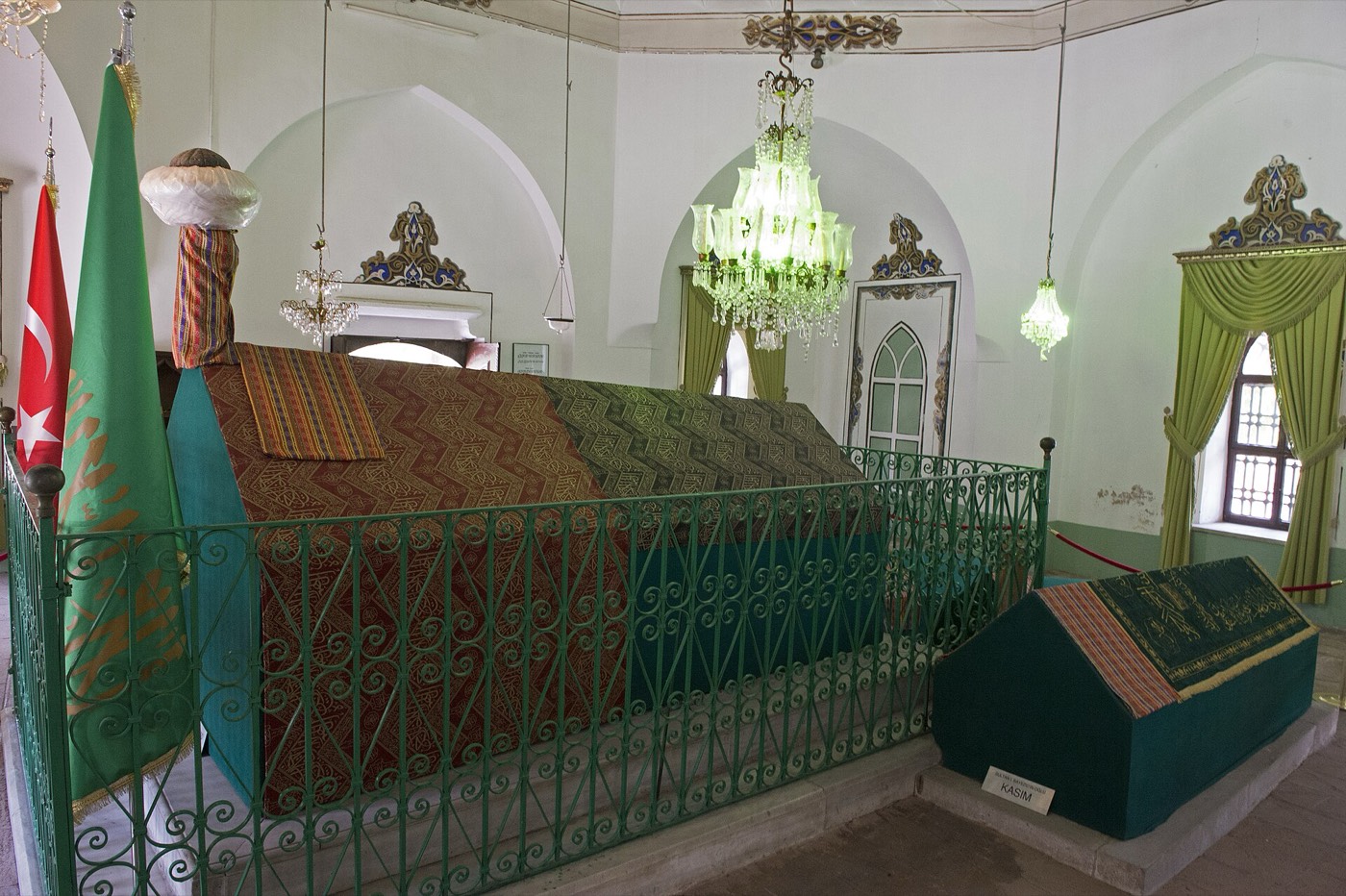
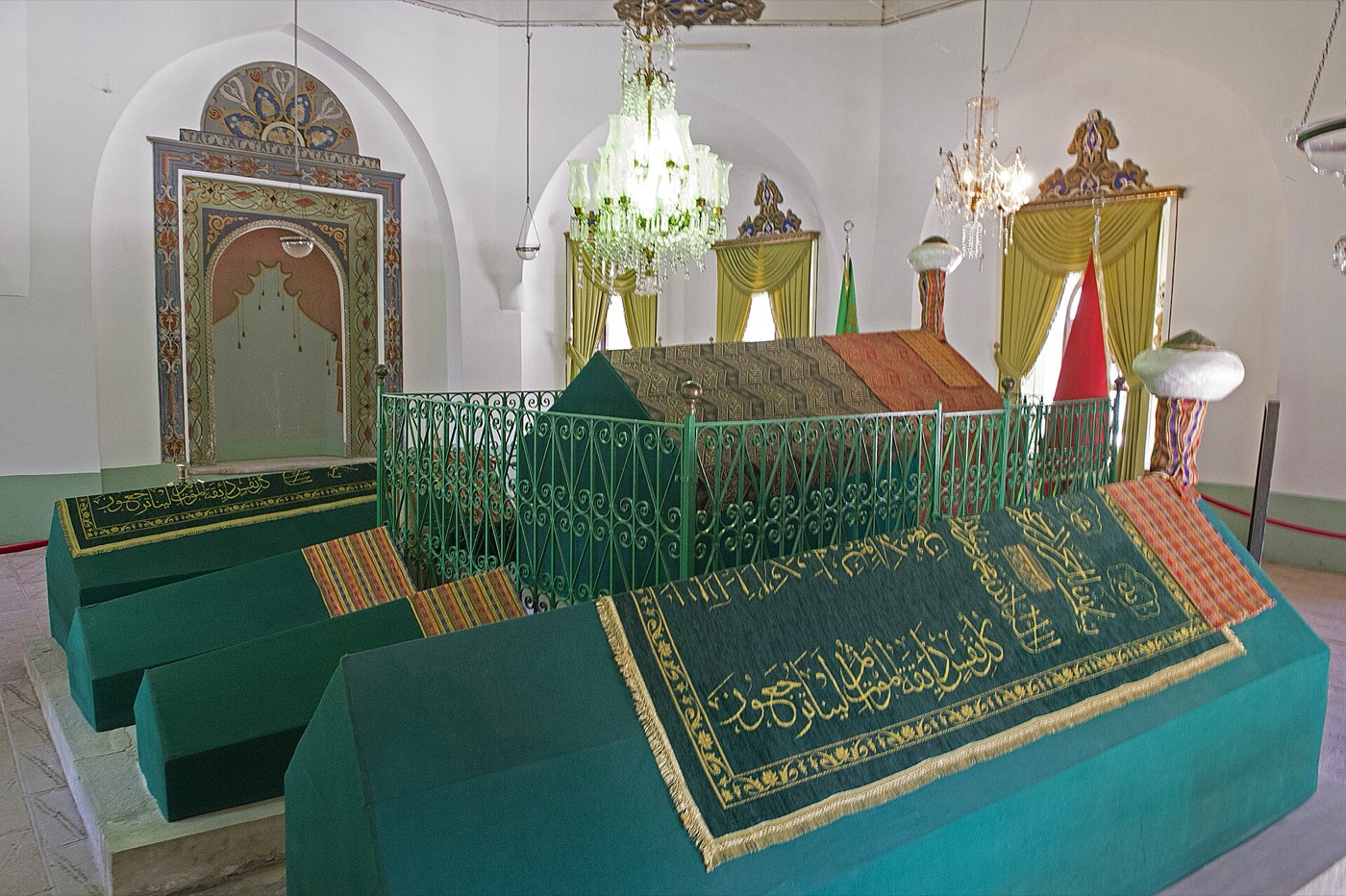
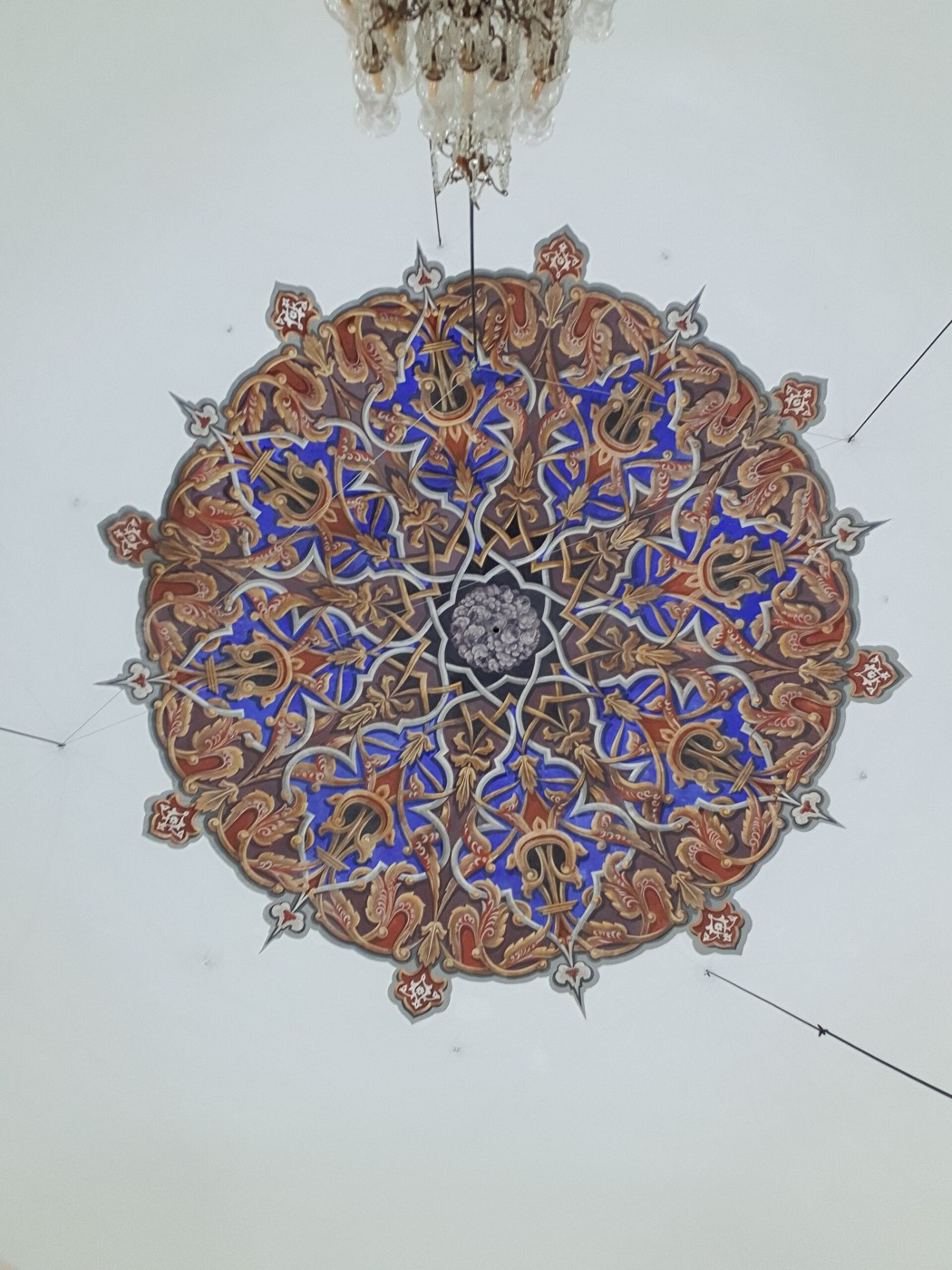
Inside, the single domed room has a brick floor and is lit by nine windows, six in the walls and three in the drum2,10. Five cenotaphs stand in it; TDV and Kültür Portalı identify three as those of Bayezid I, his son İsa Çelebi and a wife of Bayezid, and the other two as unknown4,10. The Bursa Site Management names only the cenotaphs of Bayezid and İsa Çelebi9.
What to look for
- The three-bay domed porch, the first on an Ottoman tomb according to TDV4.
- Two polished columns of coloured stone in the middle of the porch2.
- The inscription of 1406 over the door, naming Bayezid's son Süleyman4.
- Walls of alternating brick and stone courses2,10.
- The cenotaphs of Bayezid I and his son İsa Çelebi4,9.
Visiting
- The tomb belongs to the Yıldırım (Bayezid I) Külliye component of the World Heritage property ‘Bursa and Cumalıkızık: the Birth of the Ottoman Empire’, inscribed in 20141.
- It stands in the Yıldırım district, which takes its name from the complex, north of the Yıldırım Mosque2,4.
- The complex's former hospital now serves as an eye hospital, and its madrasa as a health centre3,4.
Official information: General Directorate of Foundations (Vakıflar Genel Müdürlüğü), owner of the tomb and, according to the nomination file's 2012 inventory, responsible for its maintenanceDirectionsOpen in OpenStreetMapGuided tours in Bursa