History
Hürrem Sultan, known in Western sources as Roxelane, probably came from the region of Rohatyn, then under Polish rule and now in Ukraine; TDV gives her original name as Alexandra Lisowska4. Captured in a Crimean Tatar raid, she was presented to Süleyman while he was still a prince, received the title haseki after bearing him a son, Mehmed, in 1521, and later became his lawful wife4. Her children included Mihrimah, Selim (the future Selim II), Bayezid and Cihangir4. She founded the Haseki complex in Istanbul and charitable works in Jerusalem, Mecca and Medina4.
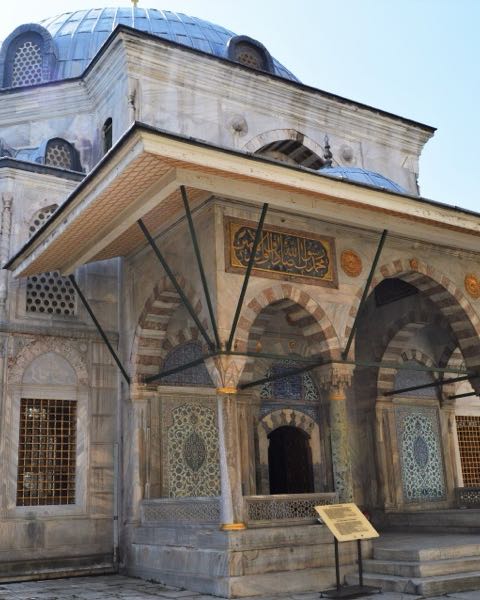
Hürrem died in Istanbul on 15 April 1558 and was buried in the walled graveyard behind the qibla wall of the Süleymaniye Mosque, which Sinan had built for Süleyman in 1550-15571,2,4. Süleyman had a large tomb raised over her grave; TDV and the ministry name Sinan as its architect, Sezer dates it to 1558 and Düzenli to 15592,3,4,5,6. It was the first tomb in the garden: Süleyman's own tomb was built beside it after his death in 15662,5. The ministry lists two other burials inside, Şehzade Mehmed, a son of Selim II, and Hanım Sultan, a daughter of Süleyman's sister Hatice Sultan3.
Architecture
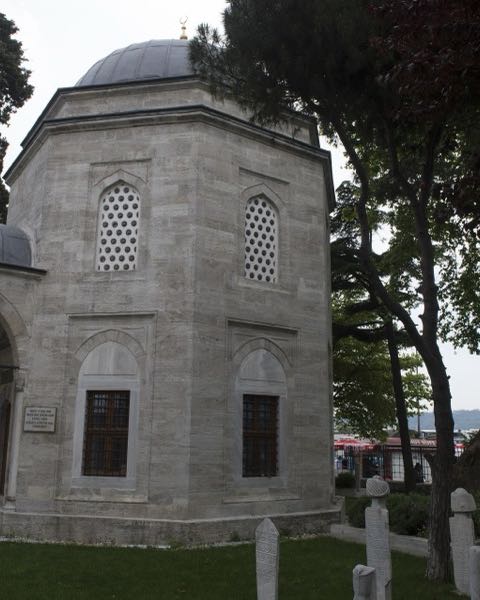
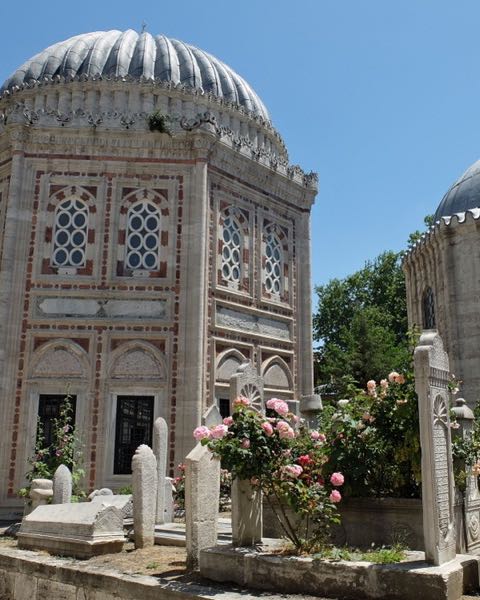
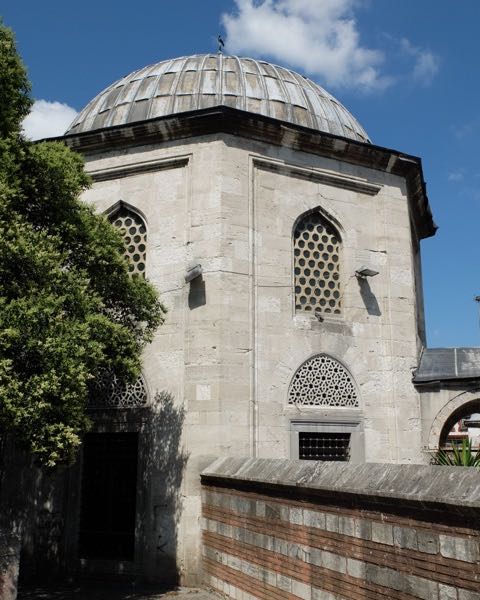
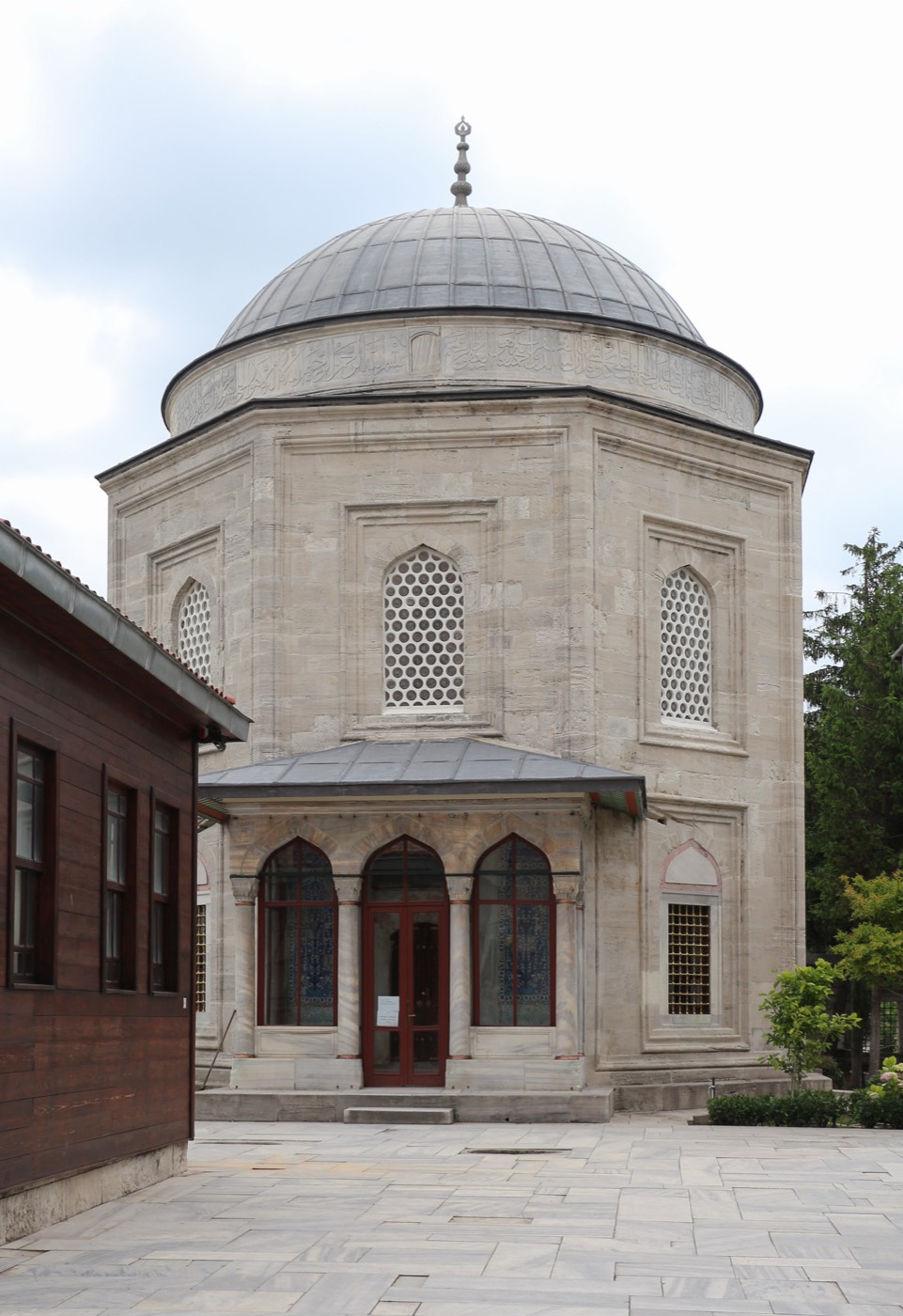
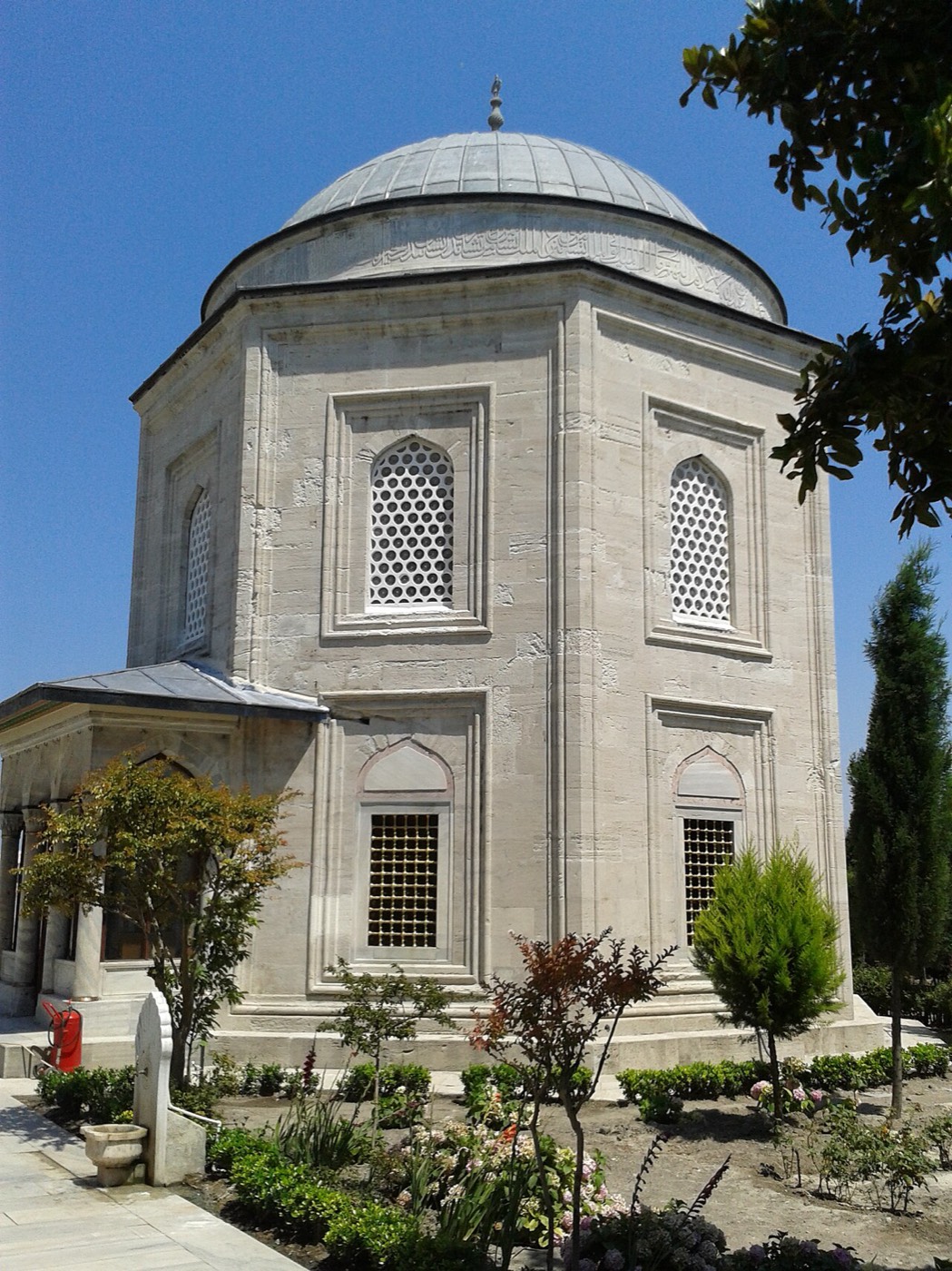
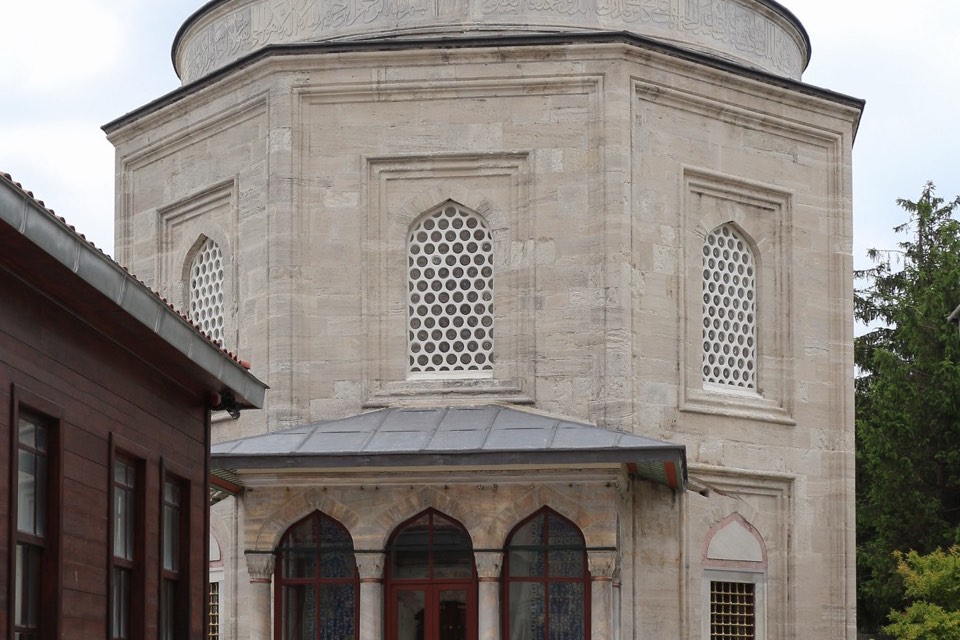
The tomb is octagonal outside and sixteen-sided inside, built of cut limestone (küfeki) with a porch at the entrance2,3. Each face has two rows of windows: rectangular lower windows with marble frames and iron grilles, and pointed-arched upper windows with plaster grilles3. TDV calls the massing and façade design more characteristic of the 16th century, and counts the iron grilles, the pointed-arched upper windows and the stone mouldings among the marks of a mature style2. Under the dome the drum turns circular and carries a Qur'anic inscription in large thuluth (celî sülüs) letters2,3. The entrance porch has a flat roof on six columns, with glazed pointed arches3.
The tomb stands south-east of Süleyman's, in a garden that TDV describes as at first a wide garden round the two tombs and, by the late 18th century, a crowded graveyard2. The Ashmolean Museum's Iznik timeline lists the tomb, of 1558, among the tile programmes that followed the Süleymaniye Mosque, which it says marked the full shift to underglaze tilework7.
Inside
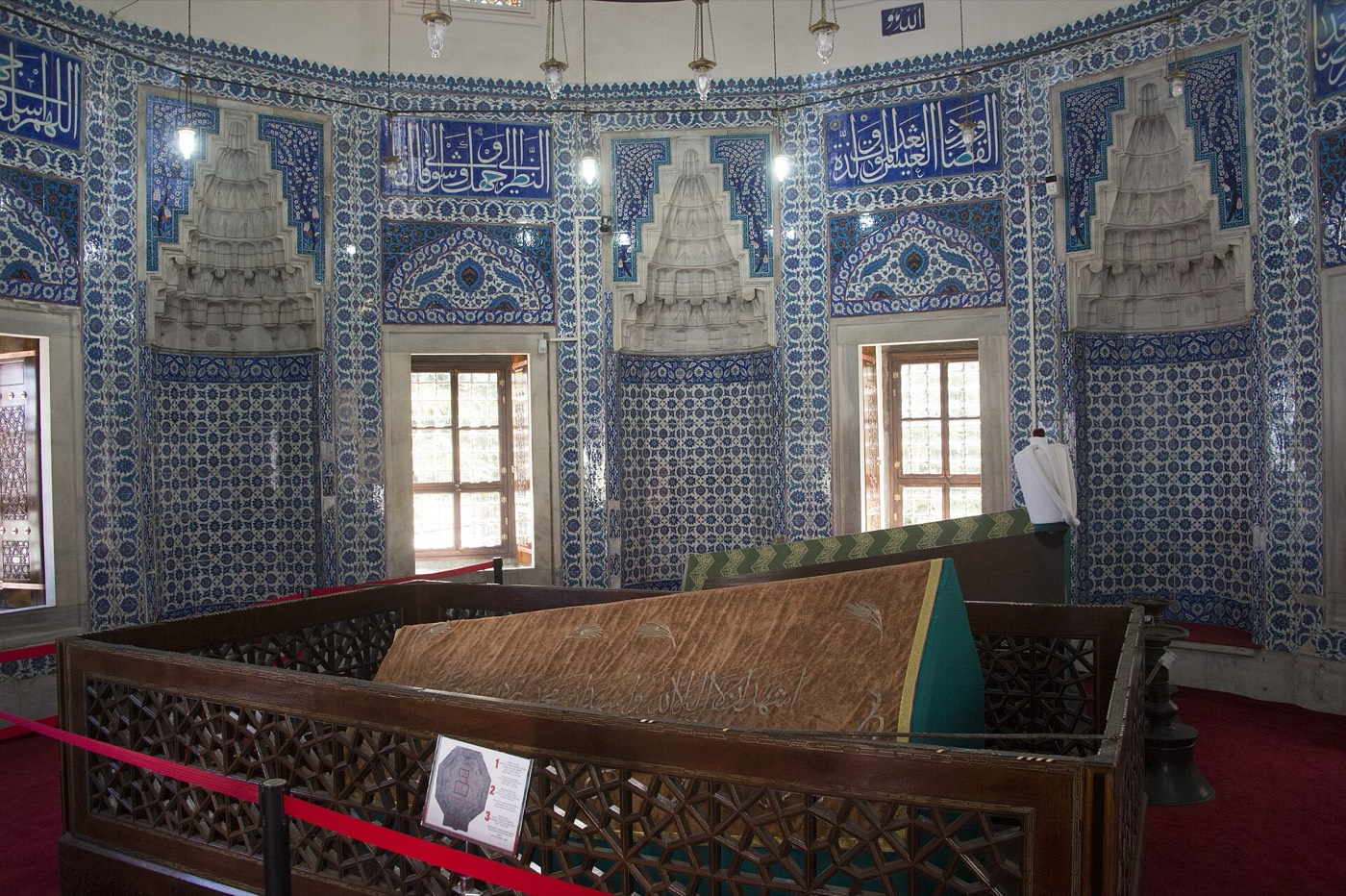
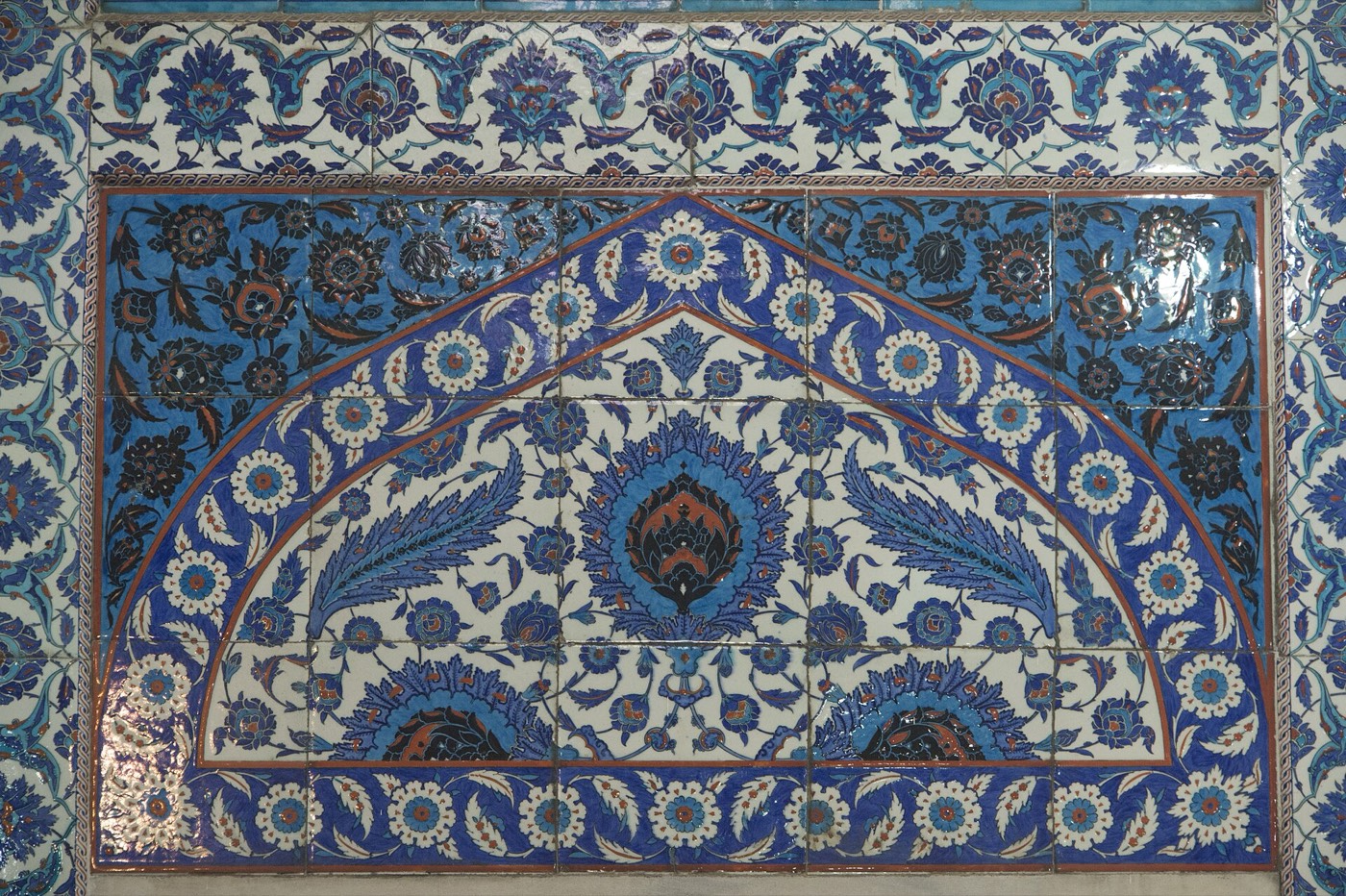
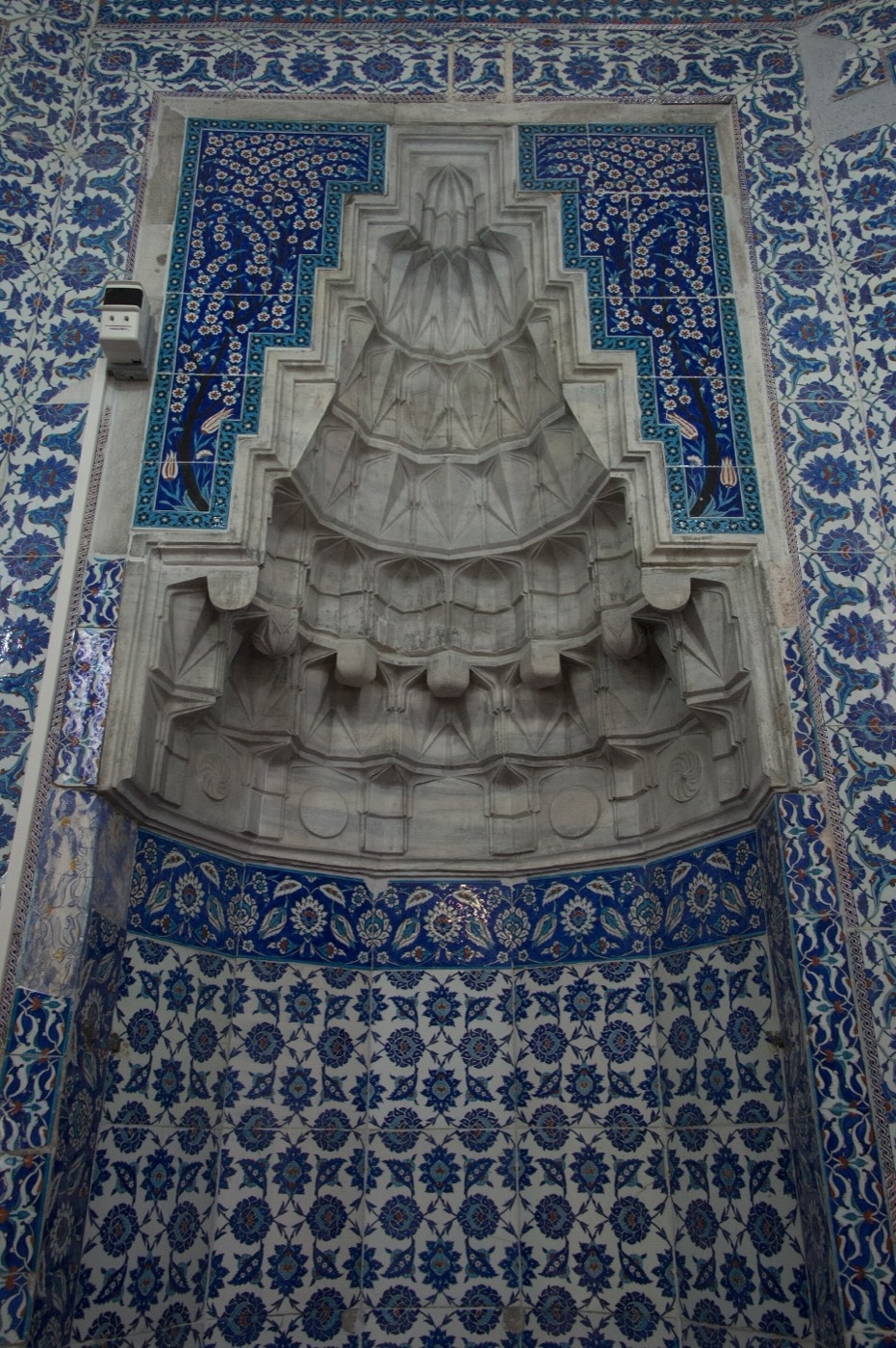
The door opens into a sixteen-sided room lit by two rows of windows3. In the lower zone, windows alternate with muqarnas niches, and tiles of the period with inscriptions and plant ornament cover the walls2. The ministry describes these tiles as underglaze and coloured-glaze (cuerda seca) work dominated by red, blue and turquoise, with compositions of spring blossom, tulips and carnations, and Qur'anic verses in thuluth above the windows3. Three cenotaphs stand in the room, those of Hürrem Sultan, Şehzade Mehmed and Hanım Sultan3.
What to look for
- The Qur'anic inscription in large thuluth letters round the circular drum2,3.
- Tiles with spring blossom, tulips and carnations in red, blue and turquoise3.
- Muqarnas niches alternating with windows in the tiled lower walls2.
- The glazed entrance porch on six columns3.
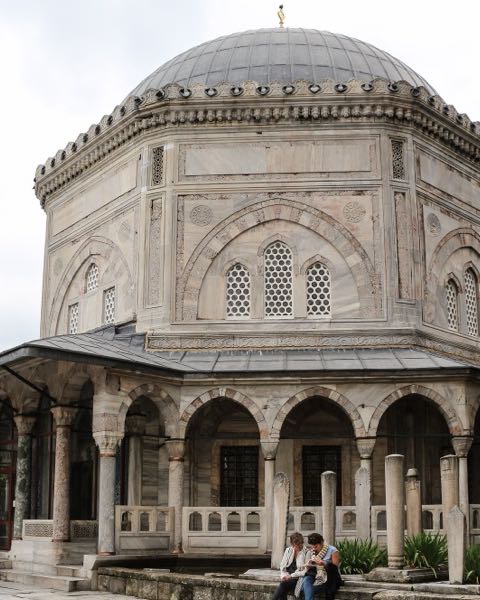
- Süleyman I's colonnaded tomb next to it, built by Sinan after 15662,5.
Visiting
- The tomb stands in the walled garden behind the qibla wall of the Süleymaniye Mosque, south-east of Süleyman I's tomb2,3.
- It lies in the Süleymaniye area of UNESCO's World Heritage property Historic Areas of Istanbul, inscribed in 19851.
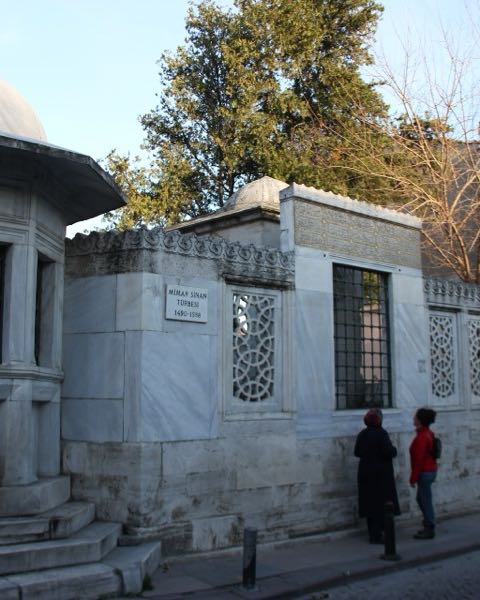
- Sinan's own small tomb stands north of the mosque, near the Third (Sâlis) Madrasa2.
Official information: Istanbul Tombs Museum Directorate (İstanbul Türbeler Müze Müdürlüğü), Republic of Türkiye Ministry of Culture and TourismDirectionsOpen in OpenStreetMapGuided tours in Istanbul
In a trip guide: Istanbul’s türbes on foot