History
Bayezid II, born in Dimetoka (Didymoteicho) in 1448, was the eldest son of Mehmed II and Gülbahar Hatun and reigned from 1481 to 15122,3. Between 1501 and 1505 he built the mosque of his complex on a corner of the Forum of Theodosius, which TDV calls the largest square of Byzantine Constantinople1. In April 1512, pressed by the janissaries, he abdicated in favour of his son Selim and set out for Dimetoka2. He fell ill on the road and died at Abalar near Çorlu, on 10 June 1512 according to TDV, while the ministry gives 26 May 15122,3. TDV notes that some sources suggest he was poisoned2.
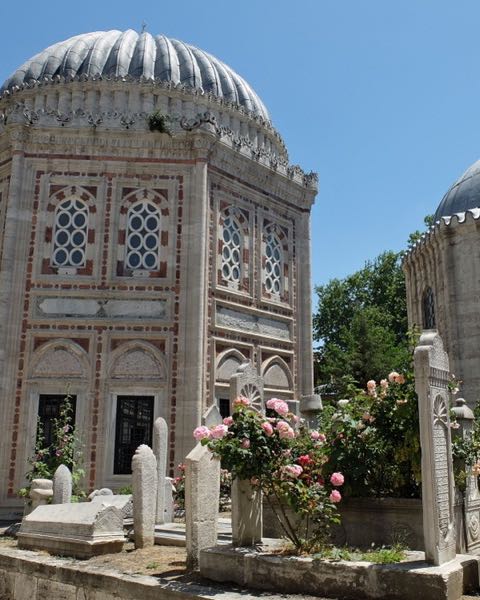
His body was brought back to Istanbul and buried beside his mosque, and a tomb was later raised over the grave2. TDV and the ministry say that Selim I built it; TDV places it on the open ground on the qibla side of the mosque1,3. Düzenli dates it to 1513 and puts it first in his chronological list of the fourteen separate sultans' tombs in Istanbul4. A smaller octagonal tomb nearby holds Bayezid's daughter Selçuk Sultan (d. 1508)1,3. Many people were buried in the garden in the 18th and especially the 19th century, and Gaspare Fossati built a tomb in its corner for the grand vizier Mustafa Reşid Pasha, which Düzenli dates to 18581,4.
Architecture
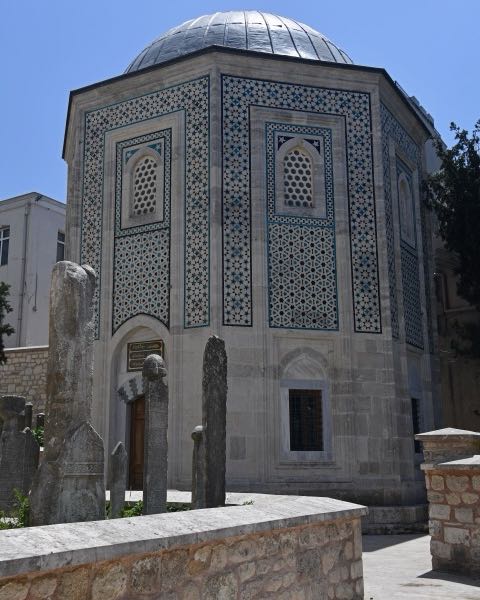
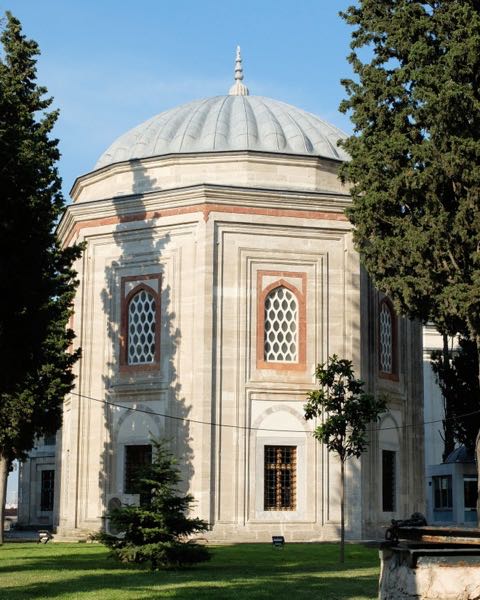
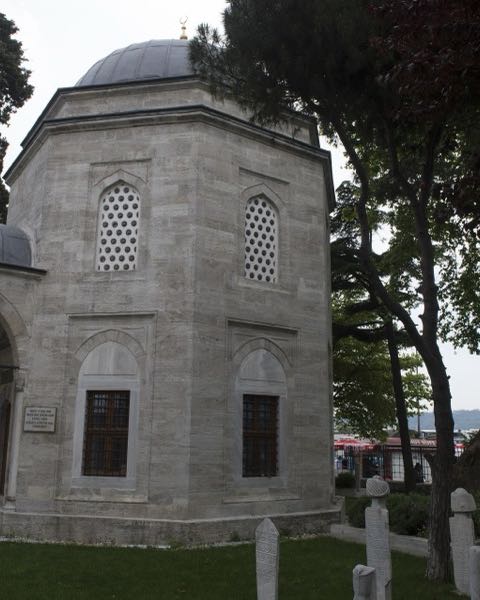
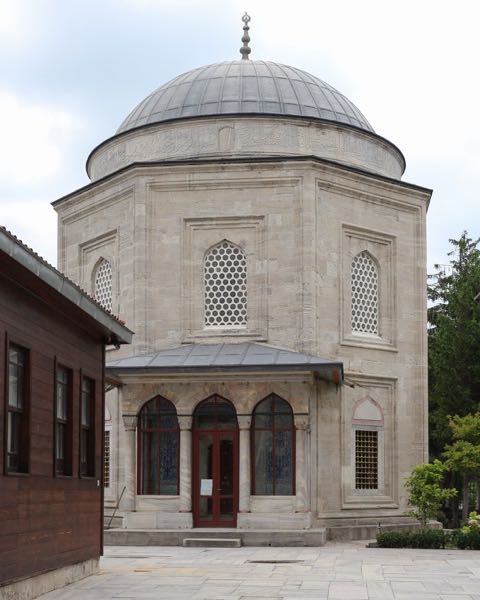
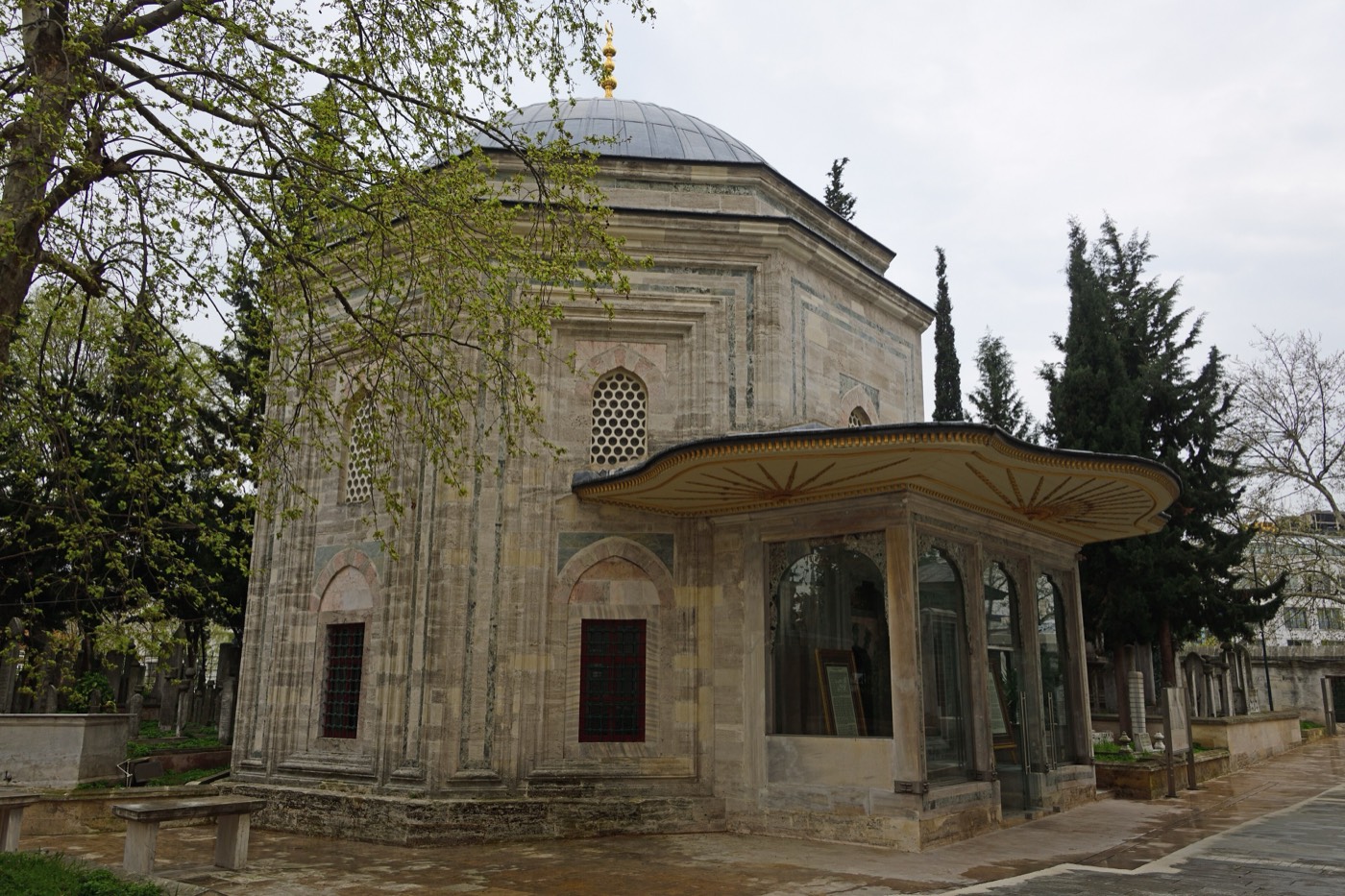
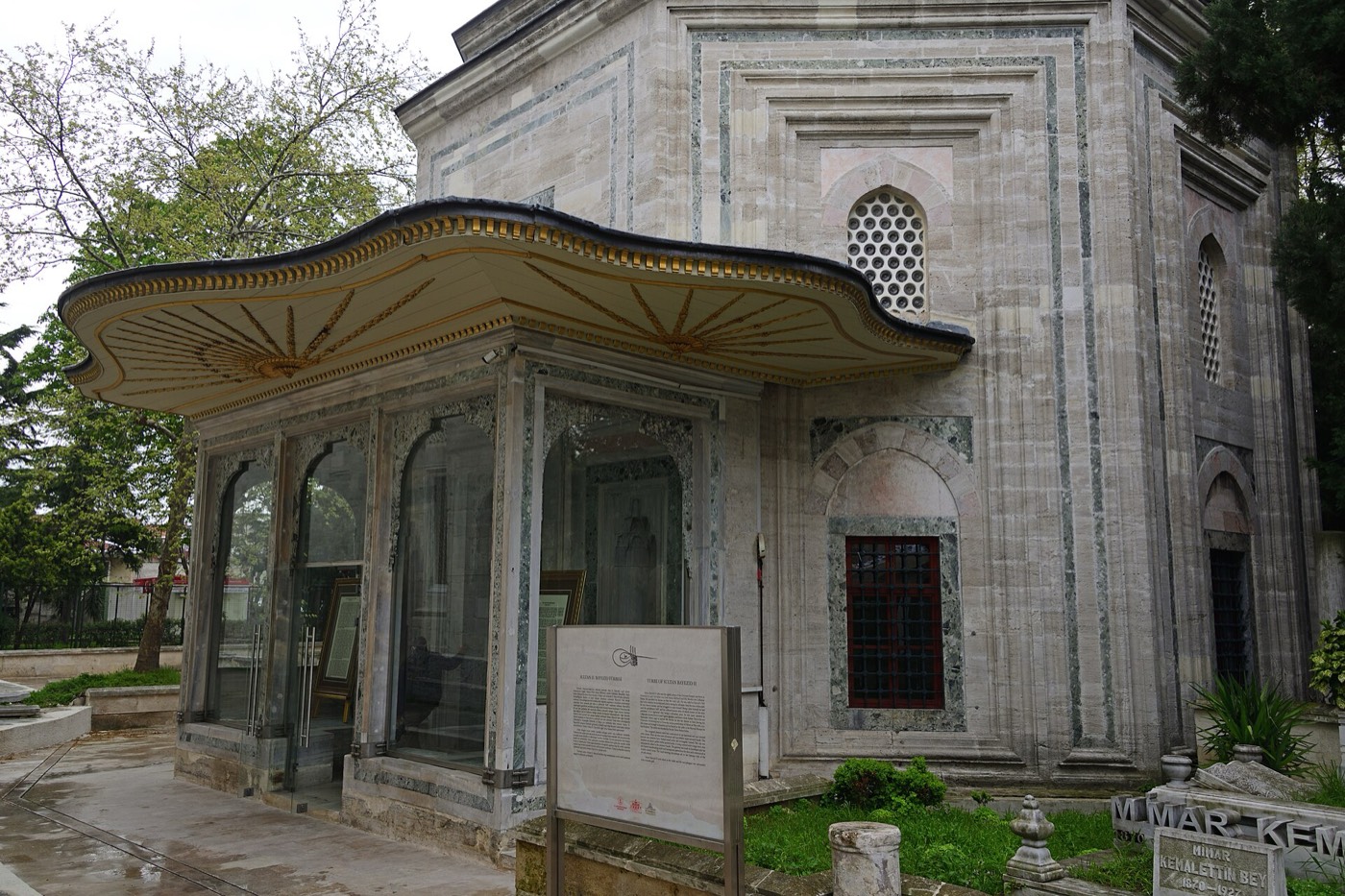
The tomb is an octagon of cut küfeki limestone, each side 5.35 m long, covered by a dome on a drum without windows1,3. Each face has two windows, one above the other: rectangular lower windows with marble frames under round-arched tympana, and upper windows under pointed arches filled with plaster grilles, all set within nested rectangular mouldings1,3. The broad-eaved porch at the entrance is a later addition; TDV thinks it was built towards the end of the 18th century in place of an older one, and the ministry describes it as a three-bay portico1,3.
The door arch is of two-coloured stone, and above it the basmala is painted where a building inscription would be expected1,3. The door leaves are carved in interlocking kündekari work and were studded with gilded metal bosses, but TDV notes that most of these have been stolen1,3.
Inside
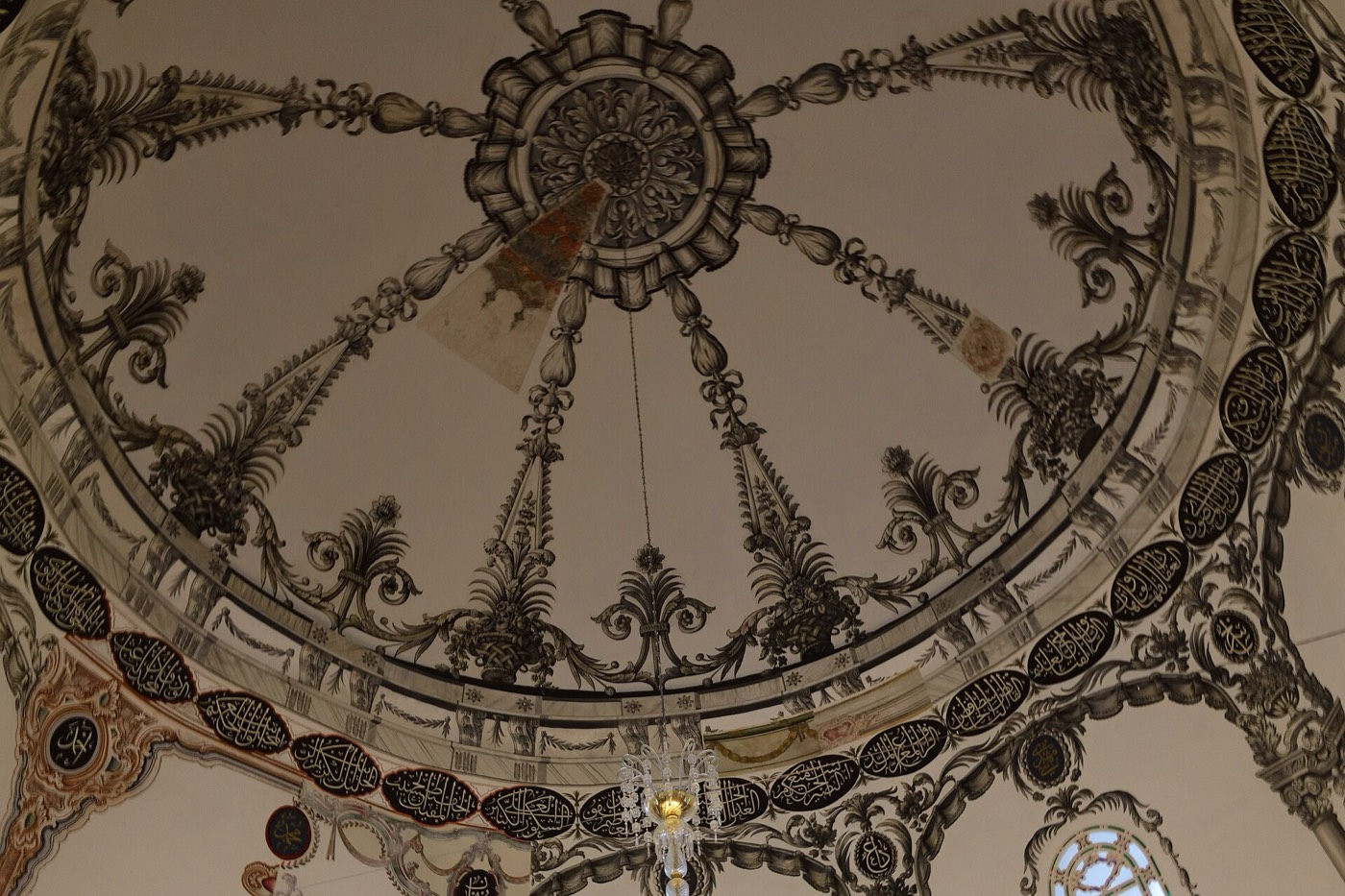
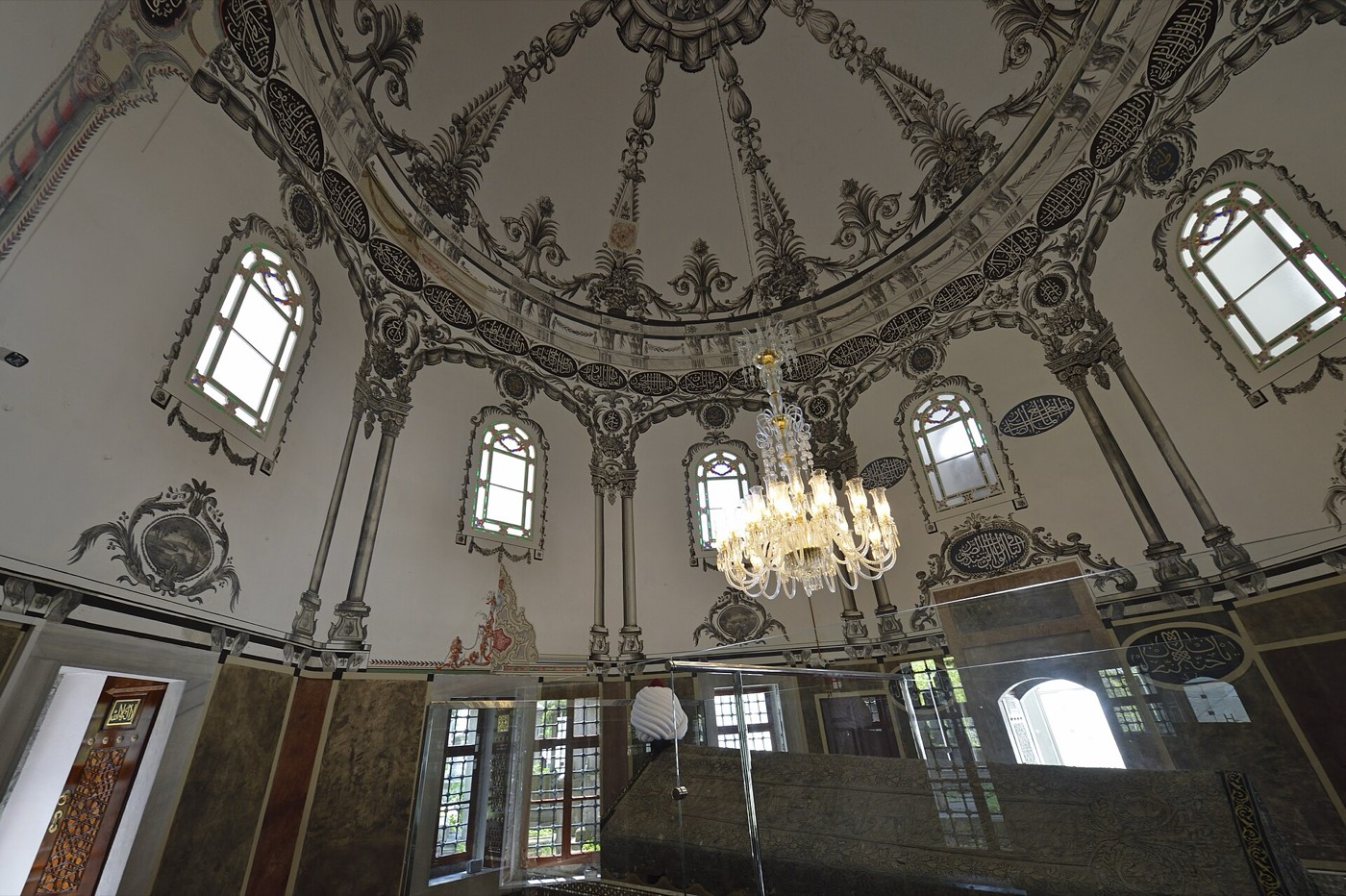
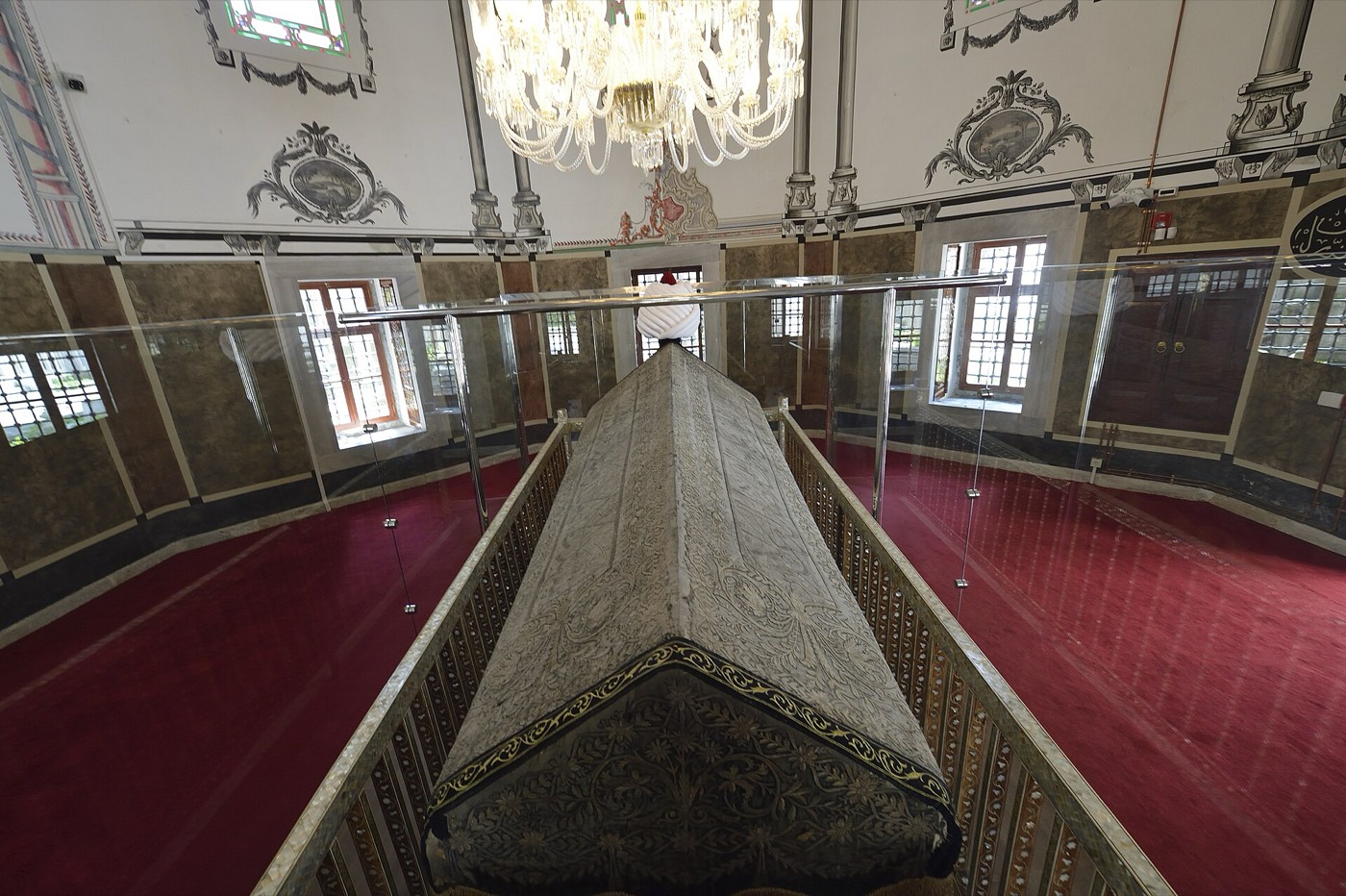
Bayezid's cenotaph stands alone in the middle of the room, and his is the only burial in the tomb1,3. The painted decoration inside is in the late baroque style, which the ministry dates to the 18th and 19th centuries, and its medallions carry the Beautiful Names of God1,3. A chandelier hangs from the dome, and TDV notes that the wooden shutters of the windows are original1.
What to look for
- The octagon of cut küfeki stone, 5.35 m a side, under a dome on a windowless drum1.
- The basmala painted over the two-coloured door arch in place of a building inscription1,3.
- The carved kündekari door leaves, which once had gilded metal bosses1,3.
- Bayezid's lone cenotaph under the baroque painted dome1,3.
- Selçuk Sultan's smaller octagonal tomb and Fossati's tomb of Mustafa Reşid Pasha in the same garden1,4.
Visiting
- The tomb stands in the garden on the qibla side of the Bayezid Mosque, on Çadırcılar Caddesi beside Beyazıt Square1,2,3.
- The same garden holds the tomb of Bayezid's daughter Selçuk Sultan and that of the grand vizier Mustafa Reşid Pasha1,3,4.
- In February 1922 bones from a grave believed to be that of the architect Kemaleddin, once proposed as the mosque's architect, were reburied in this garden1.
Official information: Istanbul Tombs Museum Directorate (İstanbul Türbeler Müze Müdürlüğü), Republic of Türkiye Ministry of Culture and TourismDirectionsOpen in OpenStreetMapGuided tours in Istanbul
In a trip guide: Istanbul’s türbes on foot