History
Ali Pasha was born in Tepelenë (southern Albania) in 1740 or 17443,4. He gained the sancak of Yanina (Ioannina) in 1787 according to TDV, or 1788 according to Britannica, and governed it for about 33 years with growing autonomy from the Sultan2,3,4. He rebuilt the fortifications of Ioannina Castle1,2. On its south-eastern citadel, Its Kale, he began a palace (saray) around 1788 and about 1795 renovated the Fethiye Mosque to serve it1. In 1800, after the death of his wife Ummgülsüm, he built an open-air family tomb beside the mosque2. TDV calls her Emine, one of two names it gives for the daughter of Kaplan Pasha of Delvinë, whom Ali married in 17683.
In August 1820 Ali Pasha clashed with the Ottoman government, and the Sultan’s troops besieged Ioannina until early 18222. Promised his life, he withdrew to the monastery of Agios Panteleimon on the island in the lake, where he was killed in February 1822: on the 5th according to Britannica, on the 14th according to TDV3,4. His head was taken to Istanbul, displayed in public and buried outside the Silivri Gate with the heads of three of his sons and a grandson3. His headless body was buried at the Fethiye Mosque, beside his wife1,3. The saray remained the seat of government until 1870, when it was destroyed1.
Architecture
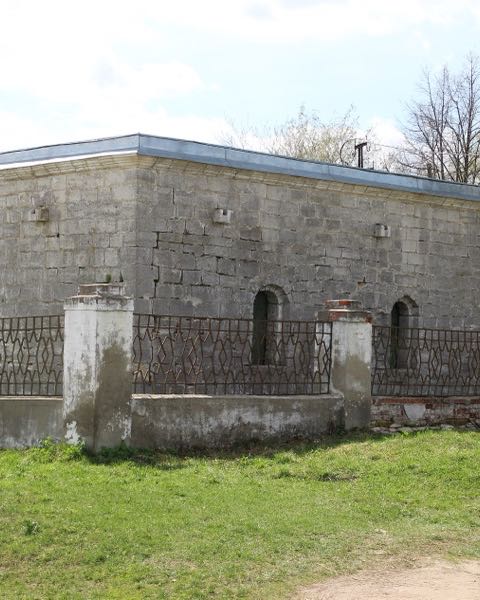
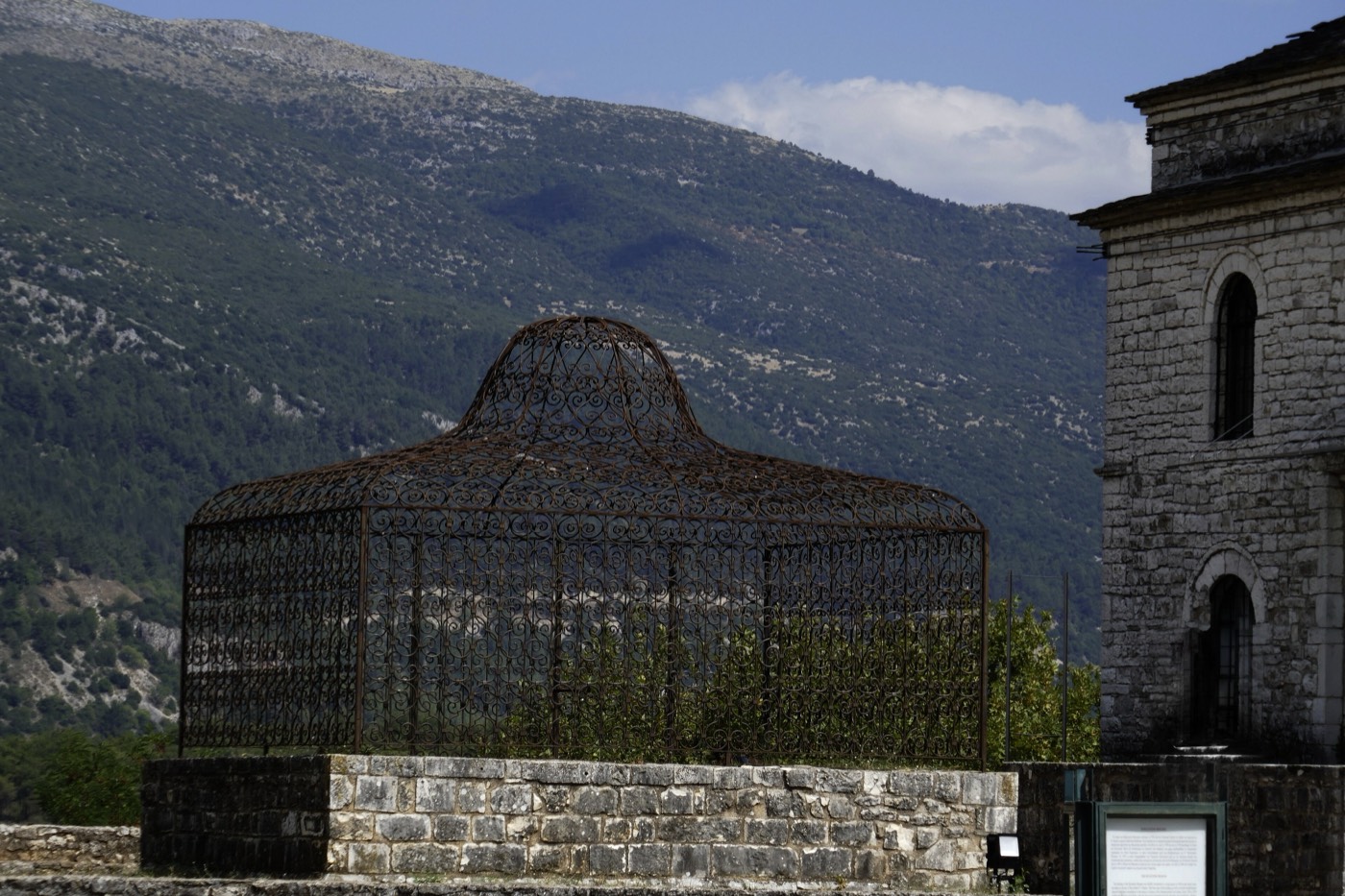
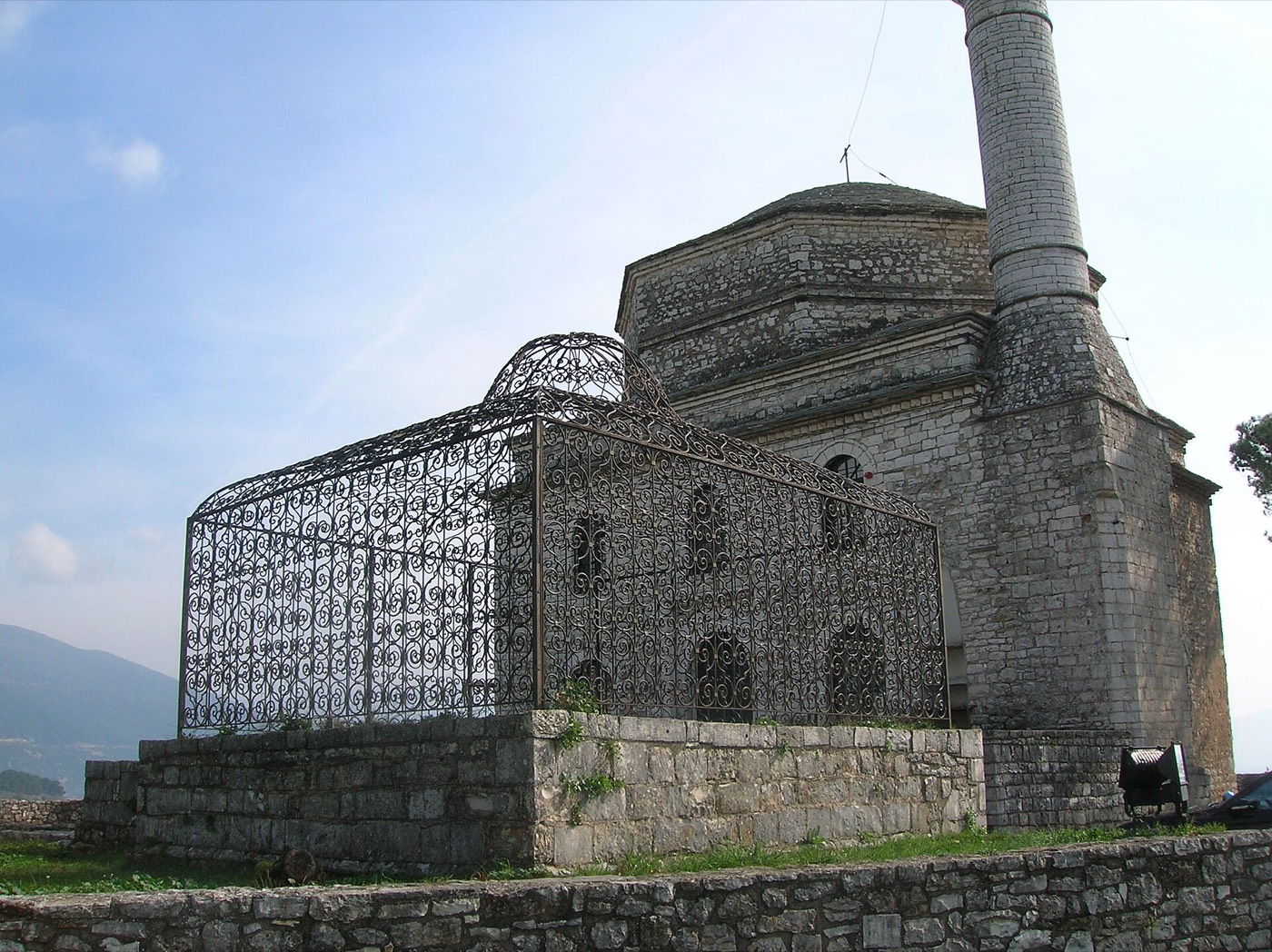
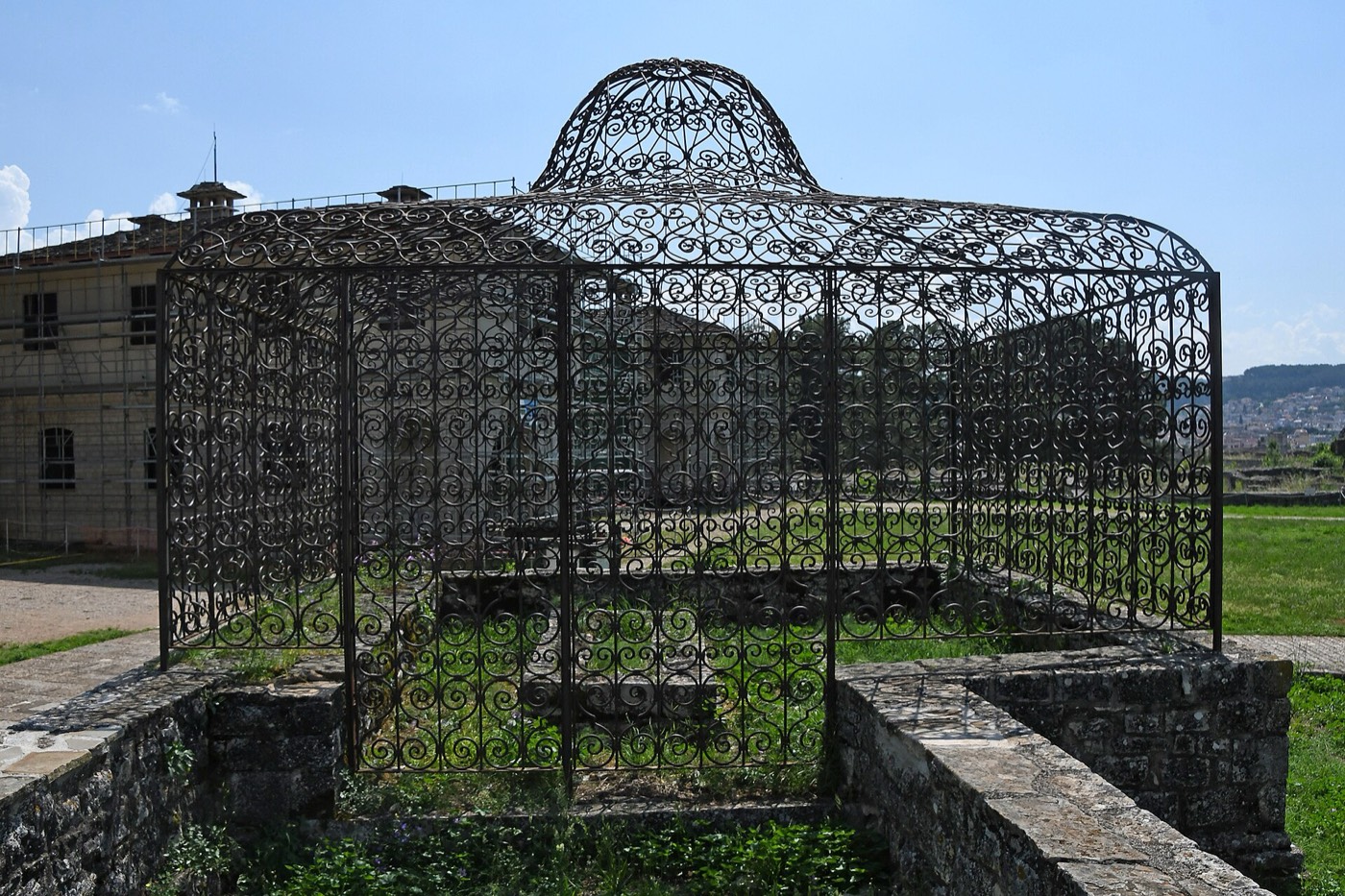
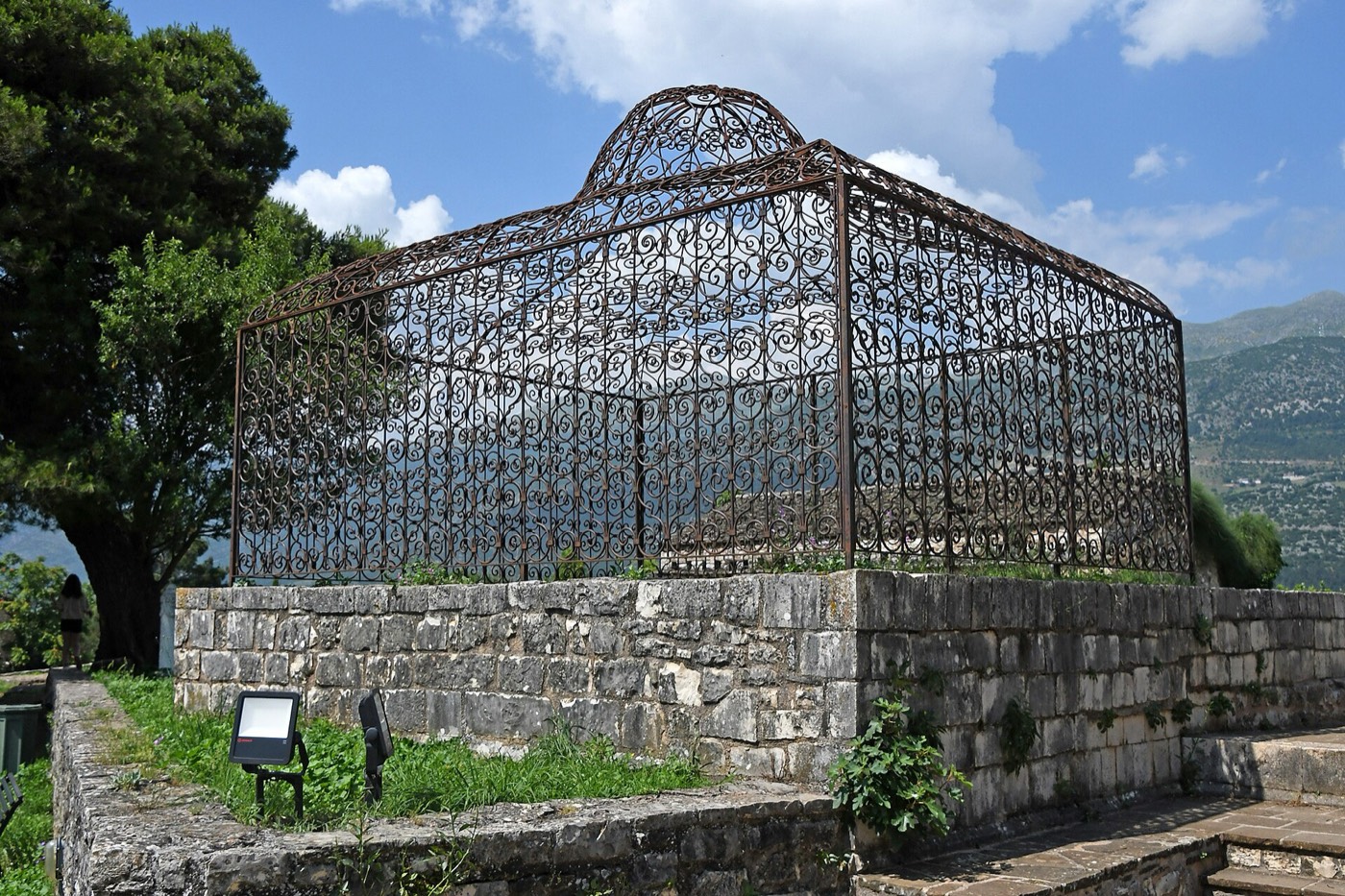
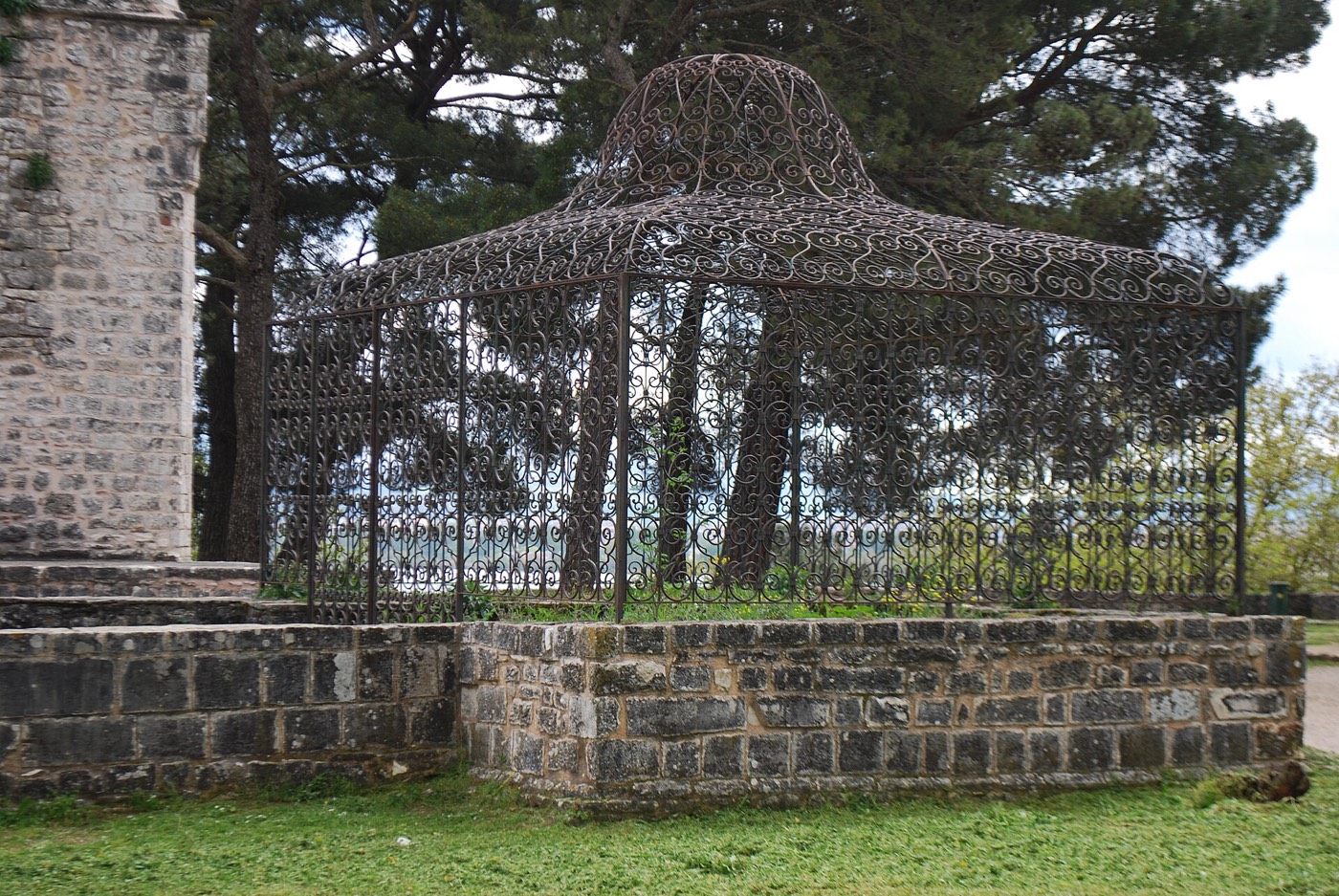
The Odysseus portal of the Greek Ministry of Culture describes the tomb as a monument of rectangular plan divided into two parts, with the graves in the first1. It lies north-west of the Fethiye Mosque, which occupies the easternmost and highest point of Its Kale1. Over the graves stands a wrought-iron cage that copies the original wrought-iron structure1,2. The same portal judges that the first construction over Ali’s headless body was undoubtedly grand1.
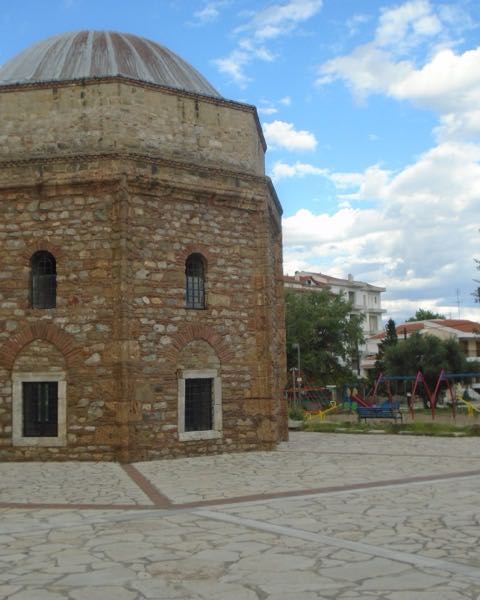
The Fethiye (Conquest) Mosque goes back to a first small mosque built after the Ottoman takeover of 1430; Celali Pasha paid for a new building in the 17th century, it was rebuilt around 1770, and Ali Pasha renovated it around 17951. It is a single hall under a large dome on four squinches, painted with floral and geometric designs and Arabic inscriptions1,2. Two 13th-century marble pillars from the Byzantine church of the Taxiarchs, which tradition places on this site, are built into the mihrab, which also has Baroque and Rococo plasterwork1,2.
Inside
The tomb is open to the sky, so the graves are seen through the wrought-iron lattice, in the first part of the rectangular enclosure1,2. Only Ali Pasha’s headless body lies here; the Odysseus portal names one of his wives as the other burial, while Cultural Egnatia speaks of the tomb of Ali Pasha and his family1,2. A few steps away, the restored Fethiye Mosque houses an exhibition on Ioannina in the late Ottoman period and on Ali Pasha’s life1,2.
What to look for
- The wrought-iron cage over the graves, a replica of the original that survived until about 19401,2.
- The graves of Ali Pasha’s headless body and of his wife, in the enclosure’s first part1,3.
- The Fethiye Mosque beside the tomb, renovated by Ali Pasha around 1795 as his palace mosque1.
- The mihrab, with two 13th-century Byzantine marble pillars built into it and Baroque and Rococo plasterwork1,2.
- The Byzantine Museum, built in 1958 on the site of the south wing of Ali’s saray2.
Visiting
- The tomb is inside Its Kale, the south-eastern citadel of Ioannina Castle, which is open to visitors as an archaeological site1,5.
- The Fethiye Mosque next to the tomb is a branch of the Byzantine Museum of Ioannina and houses an exhibition on Ali Pasha1,2.
- Ali Pasha’s head is not buried here but in Istanbul, outside the Silivri Gate3.
Official information: Ephorate of Antiquities of Ioannina (Εφορεία Αρχαιοτήτων Ιωαννίνων), Hellenic Ministry of CultureDirectionsOpen in OpenStreetMapGuided tours in Ioannina