History
Muhammad Shah was the son of Farid and a grandson of Khizr Khan, who founded the Sayyid dynasty at Delhi in 14141,4. When his uncle Mubarak Shah was murdered in February 1434, the nobles raised Muhammad to the throne4. His reign was a series of disturbances, first from the minister Sarvar al-Mulk, who had plotted Mubarak’s murder, and later from the Lodi chiefs, Bahlul Lodi among them1,4. The Cambridge History of India records that by his death in 1444 no frontier of his kingdom lay more than forty miles from Delhi4. His son Ala al-Din succeeded him as Alam Shah and in 1451 gave up the throne to Bahlul Lodi4.
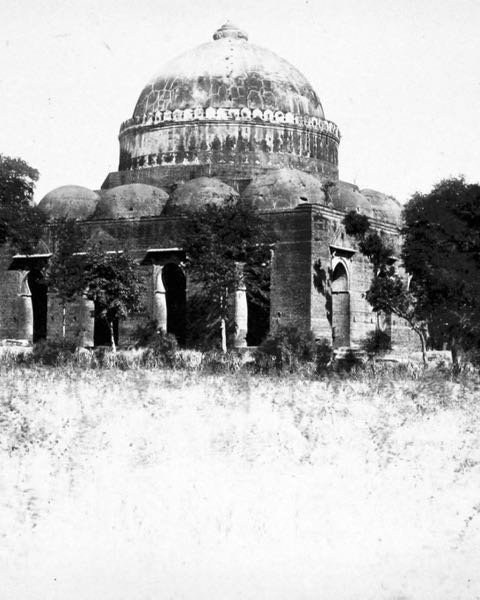
The tomb stands in what was the village of Khairpur, north-east of Safdar Jang’s tomb, and Carr Stephen records that Muhammad Shah was buried in Khairpur1,5. The ASI’s 1919 list, which records its local name, Mubarak Khan ka Gumbad, found it in good condition and noted that its overhanging eave (chajja) had been rebuilt in 1913-141. The same list hoped that the group of Lodi tombs might one day be surrounded by a small park1. The tomb now stands in Lodi Garden, the old Lady Willingdon Park, which Delhi Tourism describes as dotted with monuments of the Sayyid and Lodi periods8. The ASI’s list of protected monuments still calls it the tomb of Mohammed Shah known as Mubarak Khan-ka-Gumbaz7.
Architecture
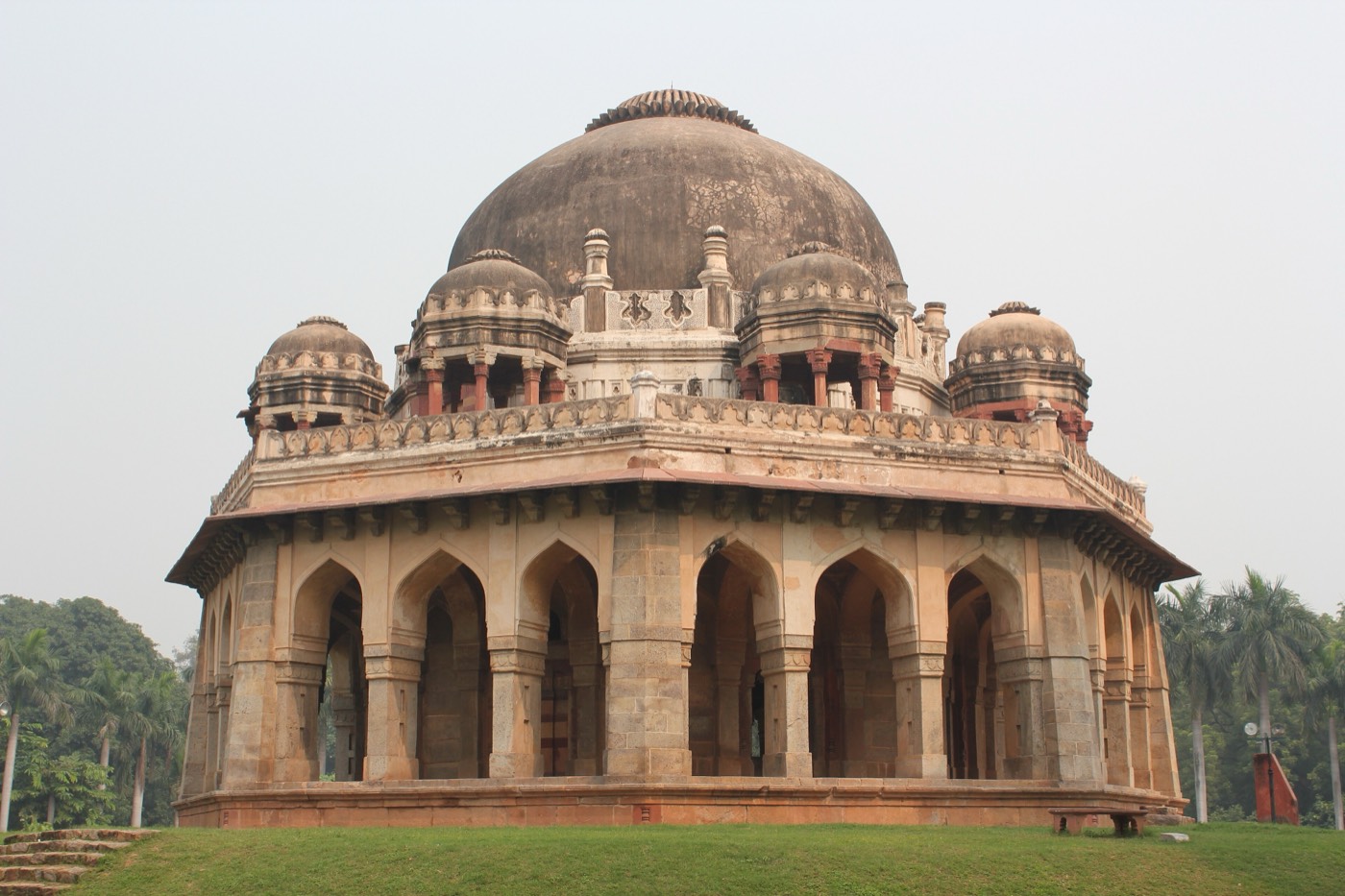
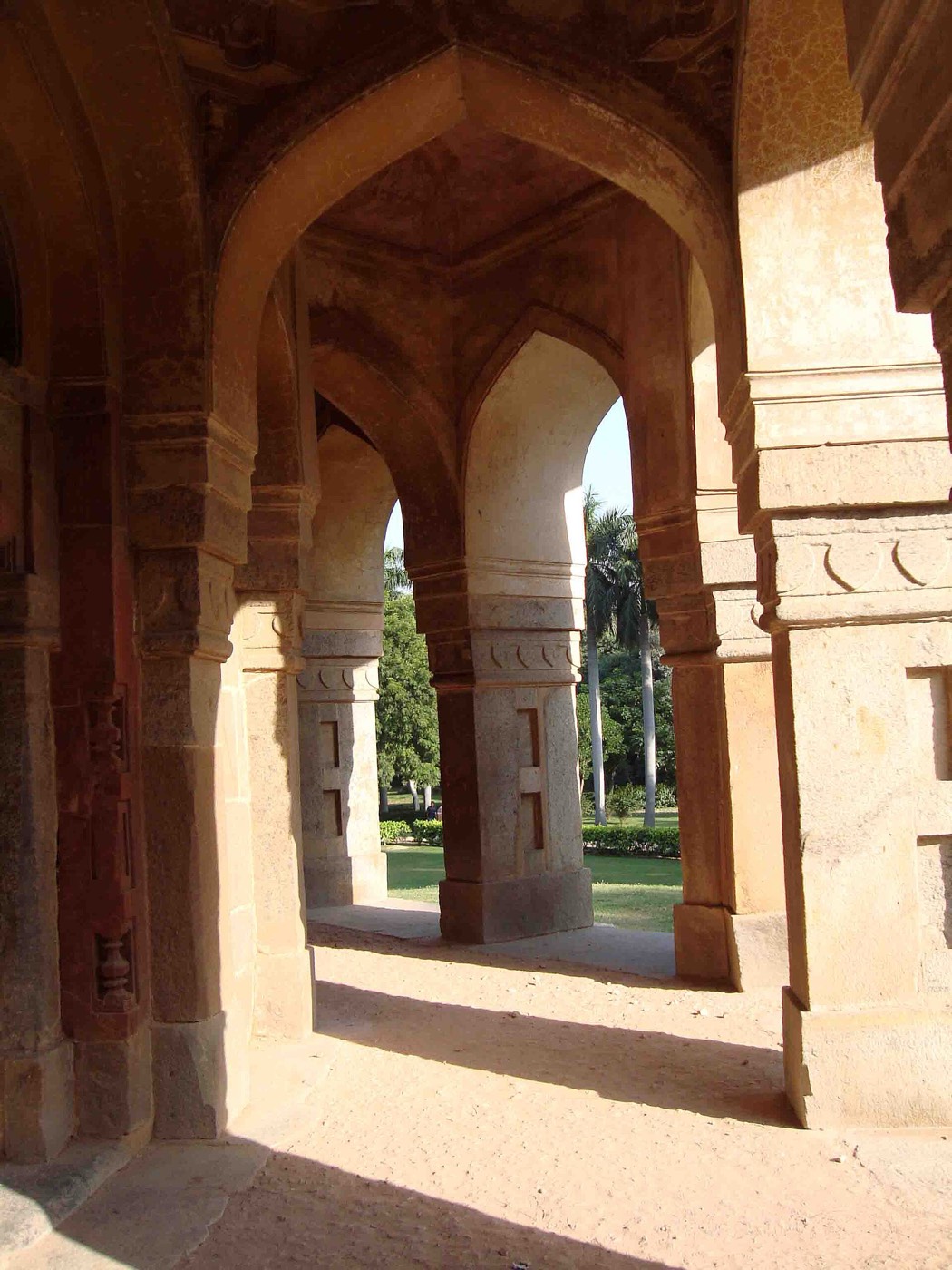
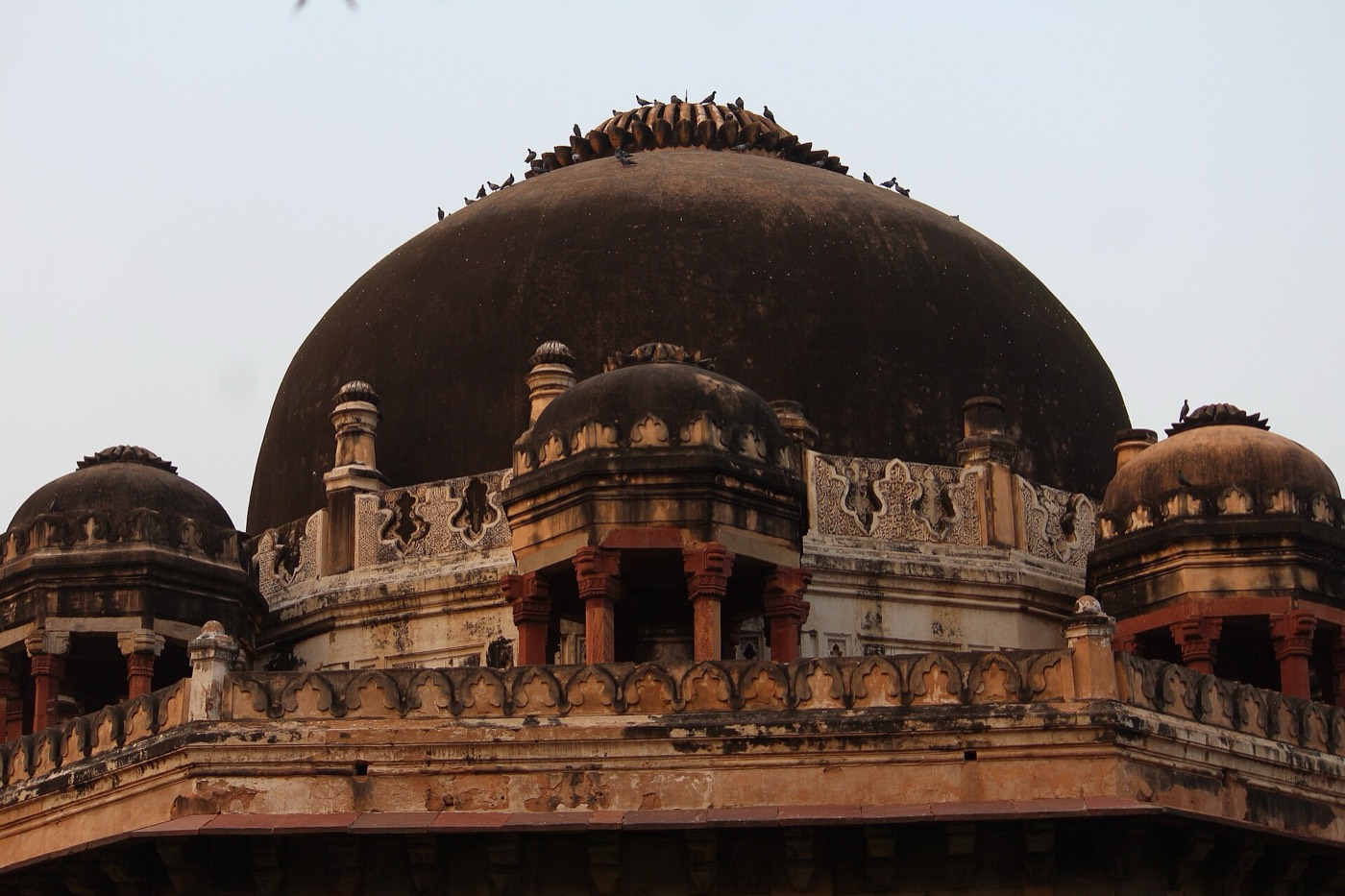
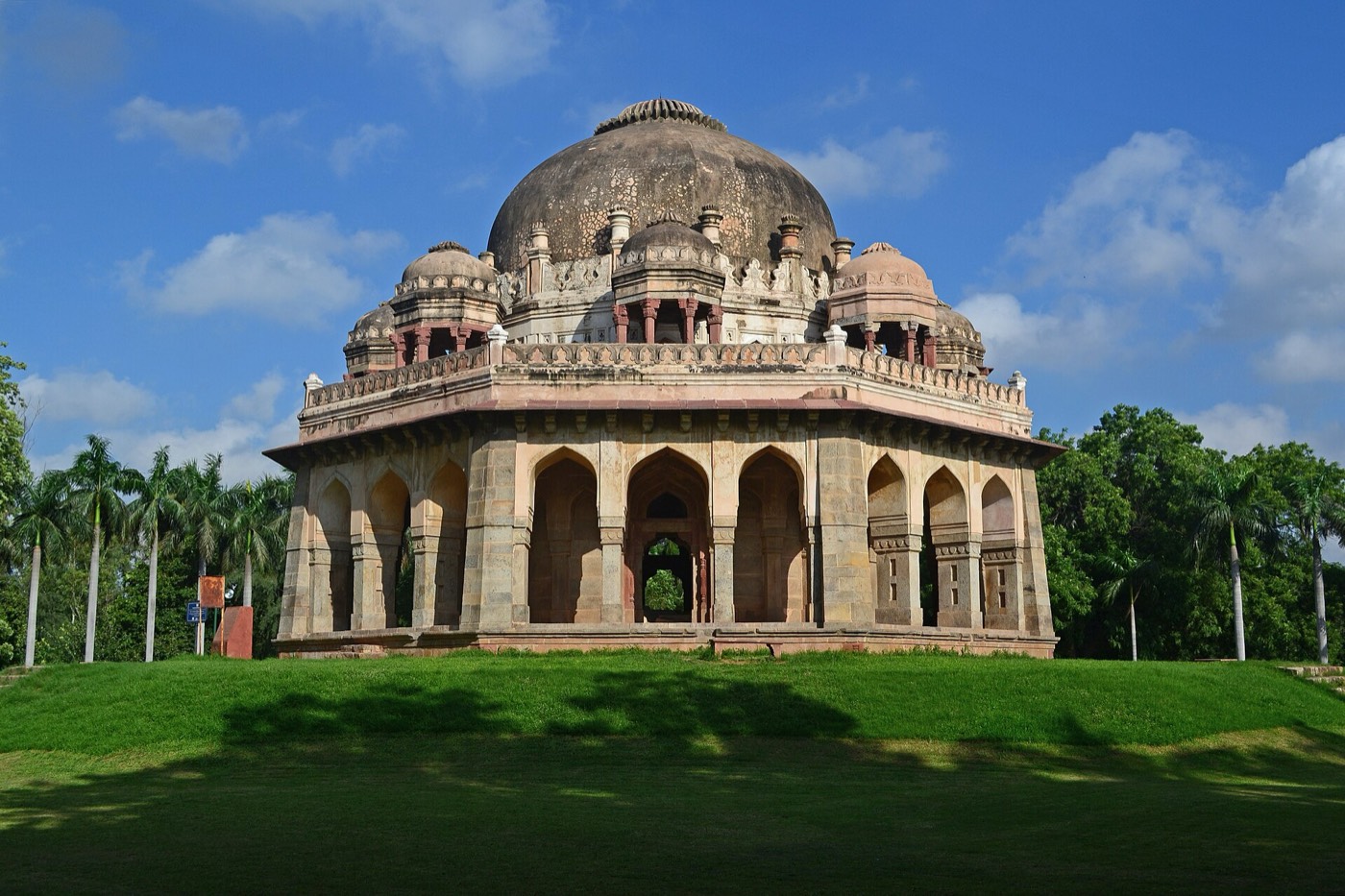
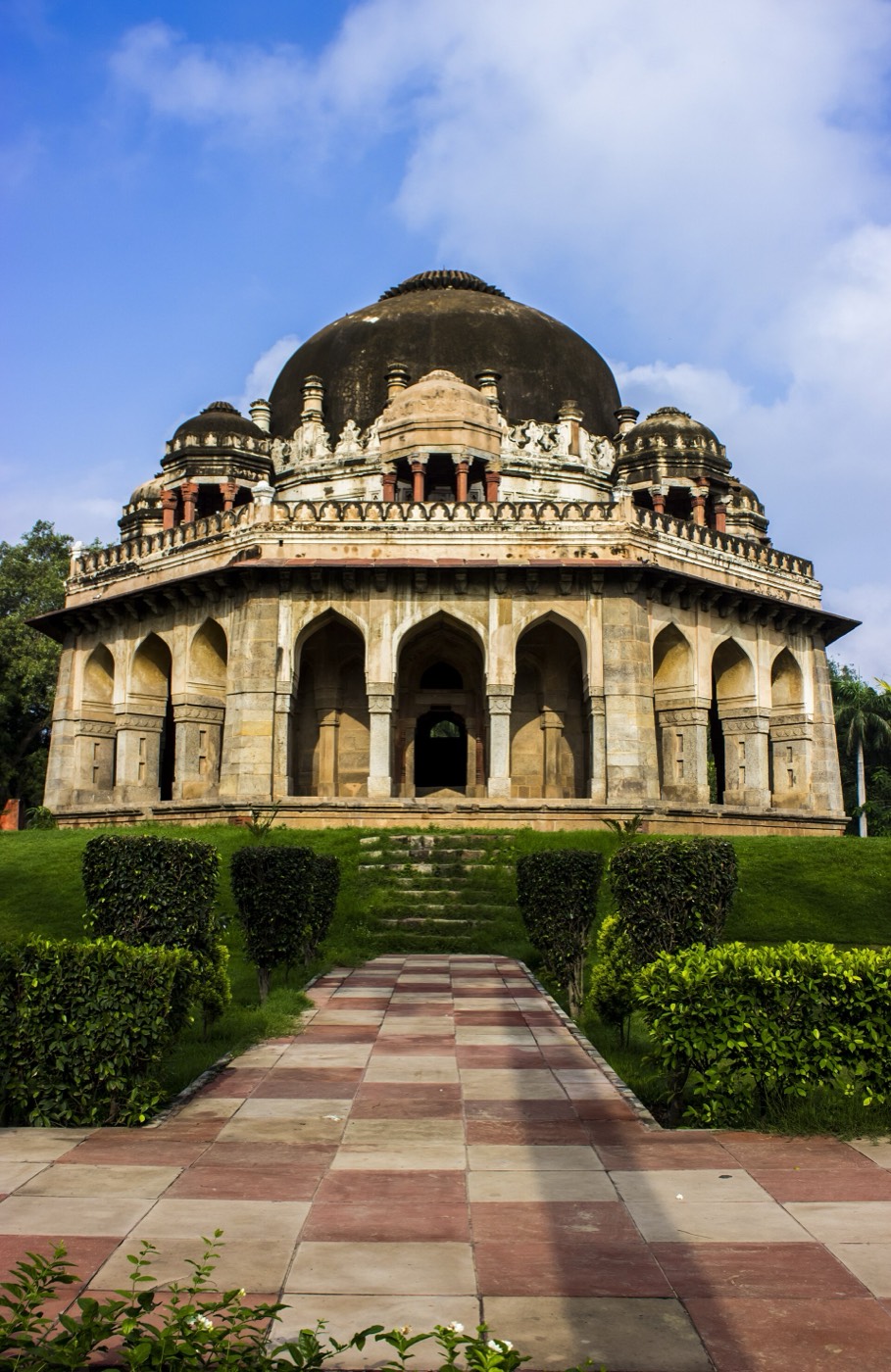
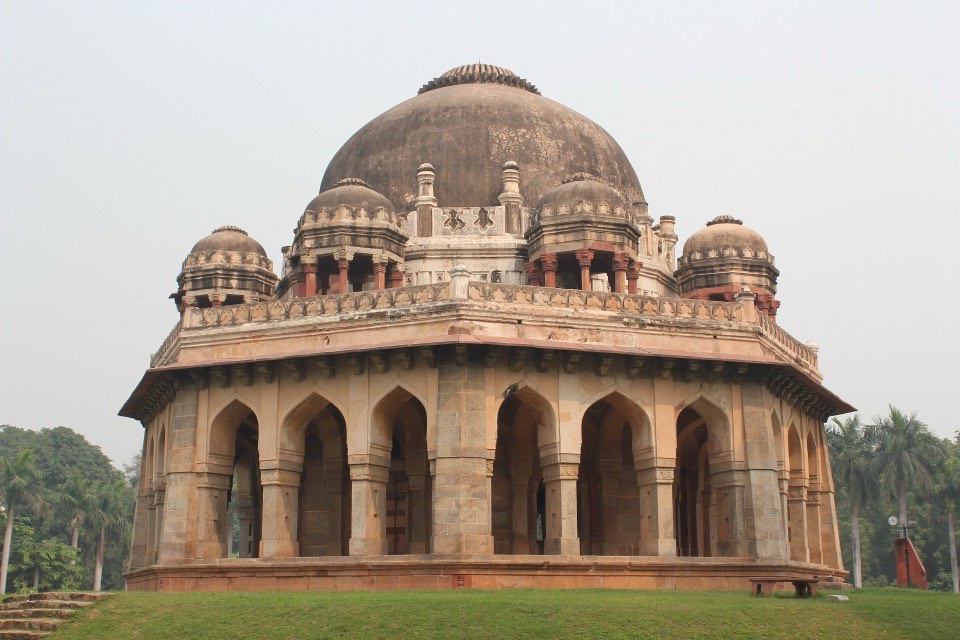
The tomb is an octagonal chamber ringed by a verandah; each face of the verandah opens in three arches carried on paired square pillars, and a sloping buttress strengthens every corner1,6. Above the arches a chajja rests on heavy stone brackets, and the parapet carries a pinnacle (guldasta) at each corner1. The dome rises from a sixteen-sided drum with pinnacles at its angles; its lotus finial had gone by 1919, leaving only the base, and on the roof an eight-pillared kiosk (chhatri) marks the centre of each face1. The building is of local grey stone1.
Archnet notes that this octagonal plan with an outer arcade was used mostly for royal tombs, while square tombs served high-ranking nobles2. Marshall traces the type to the tomb of Khan-i-Jahan Tilangani (d. 1368-69) and describes Muhammad Shah’s tomb as a step beyond Mubarak Shah’s, with a taller central dome and kiosks and a second row of pinnacles on the angles of the verandah parapet3. Archnet calls it a refinement of the earlier tomb, more compact in plan and with a higher dome2. The same design was later followed for Sikandar Lodi’s tomb1.
Inside
The chamber has a doorway in each of its eight sides, with the main entrance on the south1,2. Quranic texts are incised in the plaster inside the dome and the domes of the roof kiosks, and Archnet describes carved stucco with circular designs and arabesques on the ceiling1,2. Eight graves lie in the chamber: the central one is probably Muhammad Shah’s, and the ASI took the others to be those of two men and five women, perhaps his relatives1. The ASI found no evidence of a crypt beneath them and thought it likely that the bodies lie under the floor of the chamber itself1.
What to look for
- The eight roof kiosks, one centred on each face of the octagon1.
- The sloping corner buttresses and the pinnacles (guldastas) on the parapet and the drum1,3.
- Arches on paired square pillars, three to each face of the verandah1.
- Quranic texts incised in the plaster of the dome interior1.
- Compare it with Mubarak Shah’s earlier tomb and Sikandar Lodi’s later one1,3.
Visiting
- The tomb is in Lodi Garden on Lodi Road, beside the India International Centre, together with Sikandar Lodi’s tomb, the Bara Gumbad and the Shish Gumbad8.
- The main entrance to the tomb chamber is on the south side2.
Official information: Archaeological Survey of India (ASI); the tomb stands in Lodi GardenDirectionsOpen in OpenStreetMapGuided tours in Delhi