History
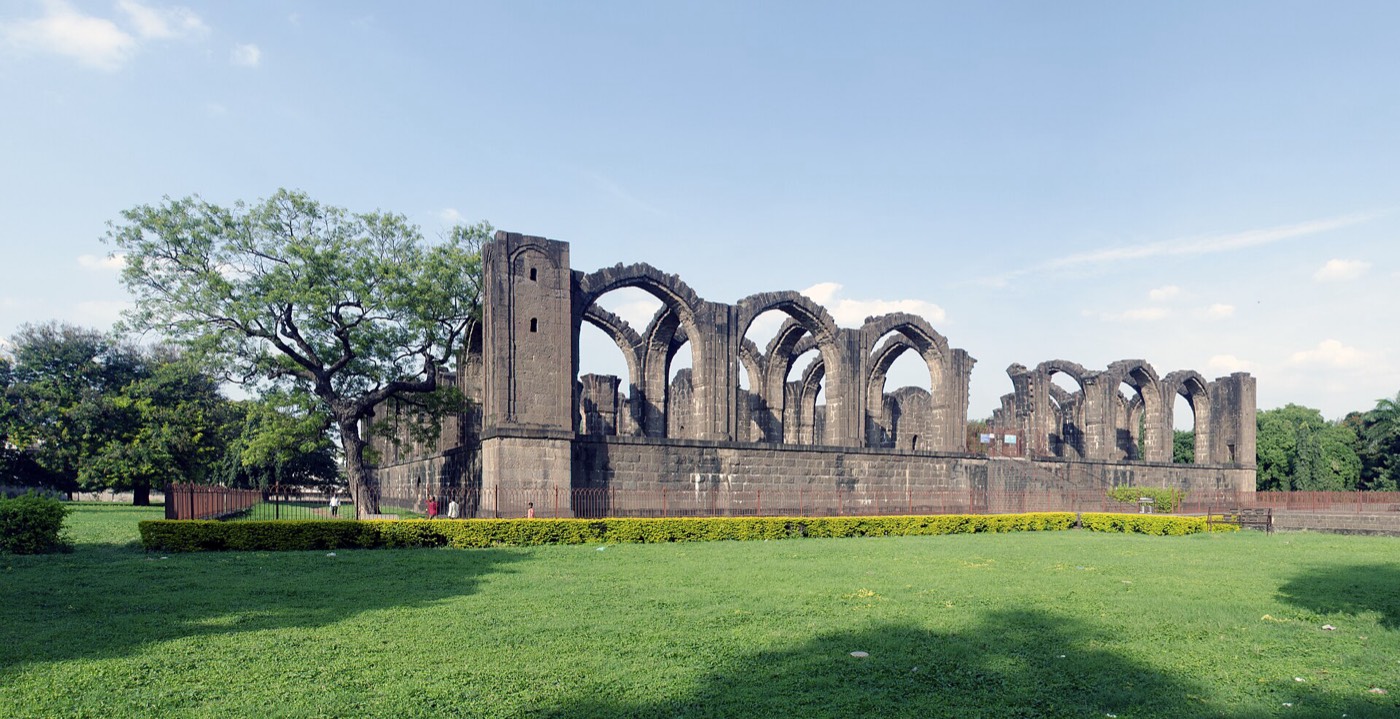
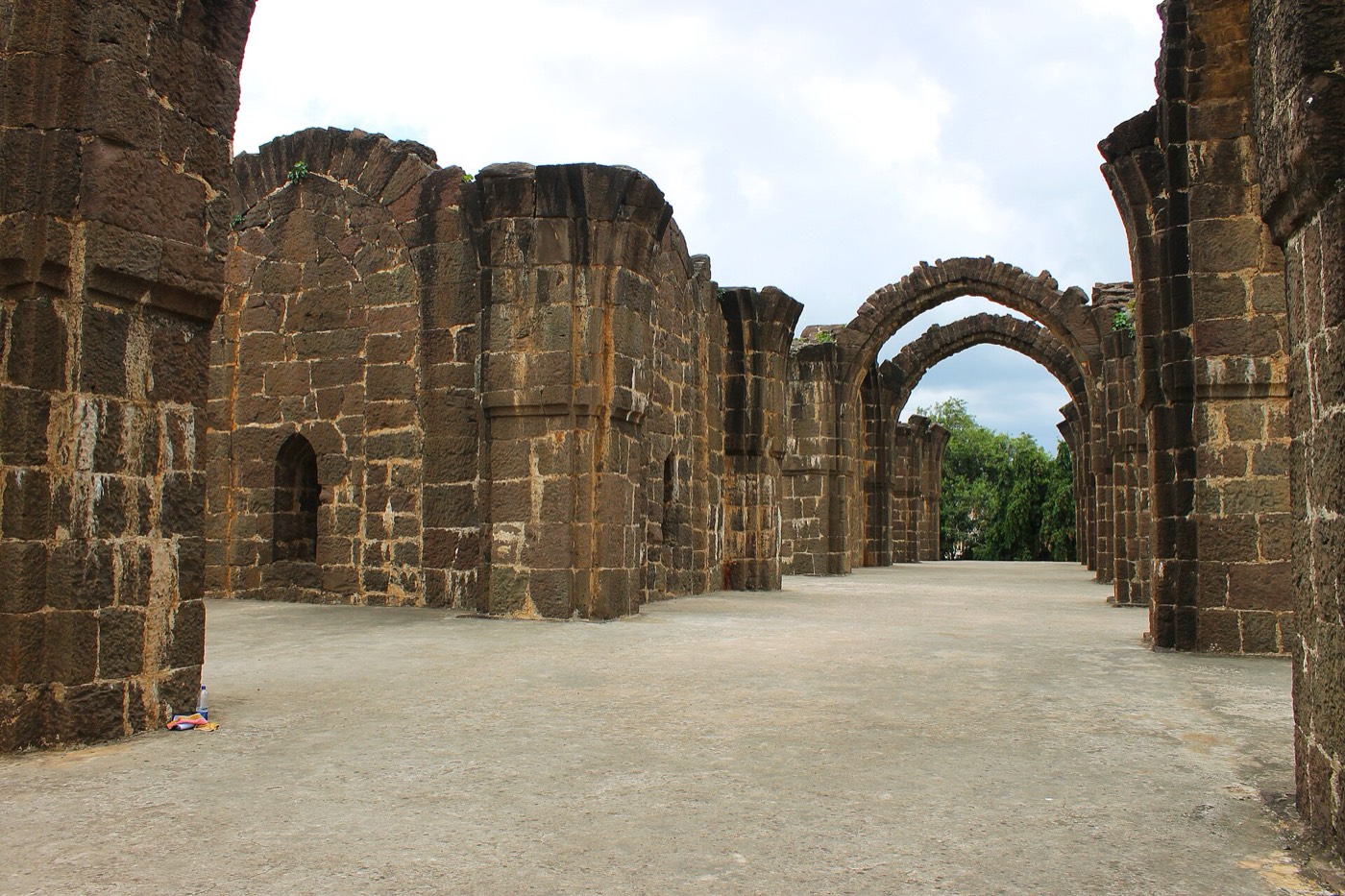
Bara Kaman is the unfinished tomb of Ali Adil Shah II, a sultan of the Adil Shahi dynasty of Bijapur1. The Archaeological Survey of India (ASI) says work began in the 1670s and that the monument was meant to surpass every other building in the city1. Incredible India, the national tourism portal, gives 1672 as the year of building and says the plan was to enclose the tomb with twelve arches2. The next ruler, Sikandar, held the throne from 1672 to 1686 and was the last Bijapur sultan1.
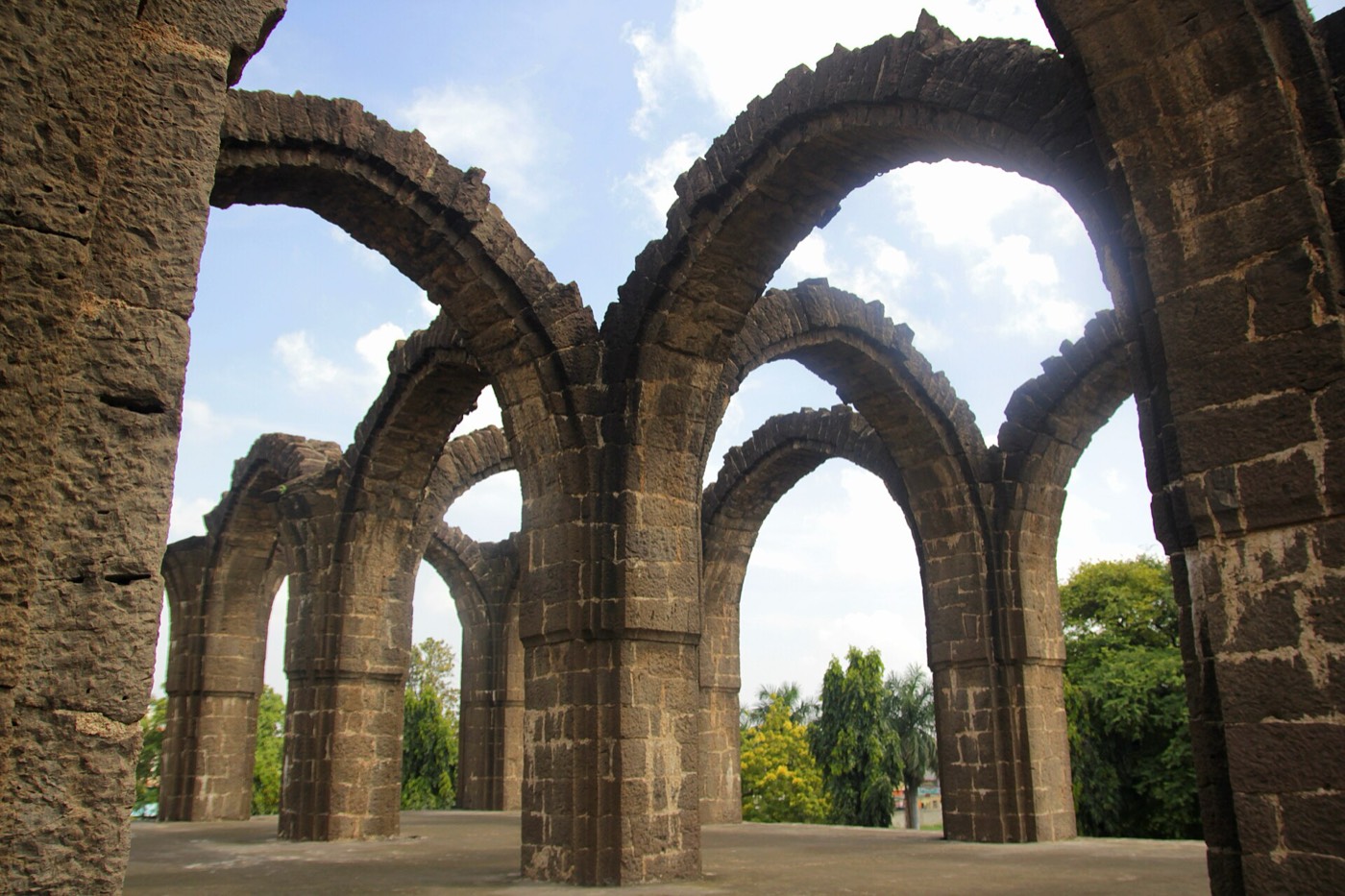
Only the outer arcade was completed, and its masonry was left undressed1. The sources consulted give no documented reason for the halt. Incredible India reports two local stories without endorsing either: that the king died at his father's hands, and that work stopped so that the tomb would not overshadow the Gol Gumbaz2. The ASI gives the scale: the base is 65.5 m square, against 48 m for the Gol Gumbaz1.
Architecture
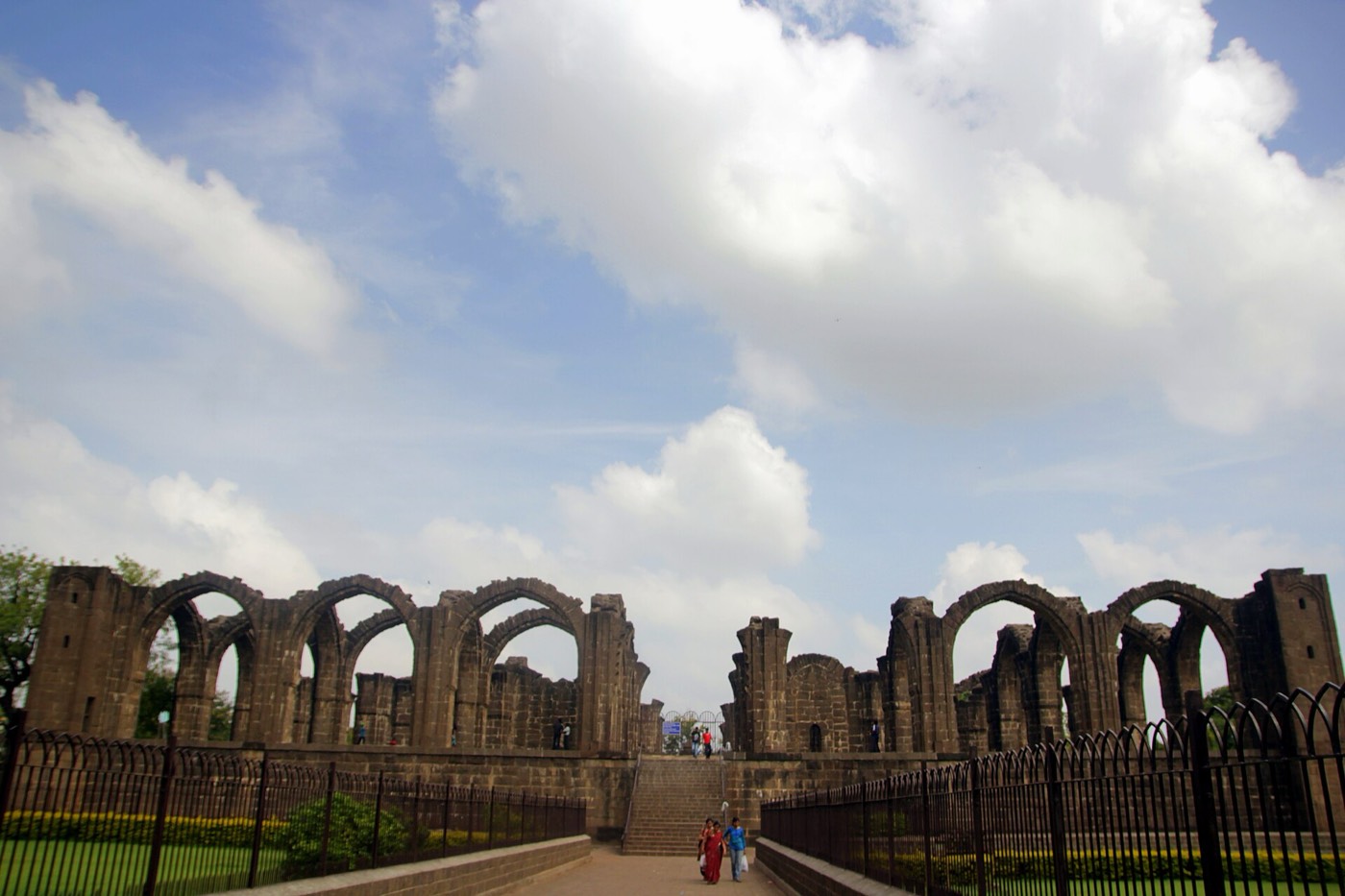
The monument is a roofless square structure with unfinished arches of dark basalt2. It stands on a base 65.5 m square1. Only the outer arcade of arches was completed, and the stone was never dressed1.
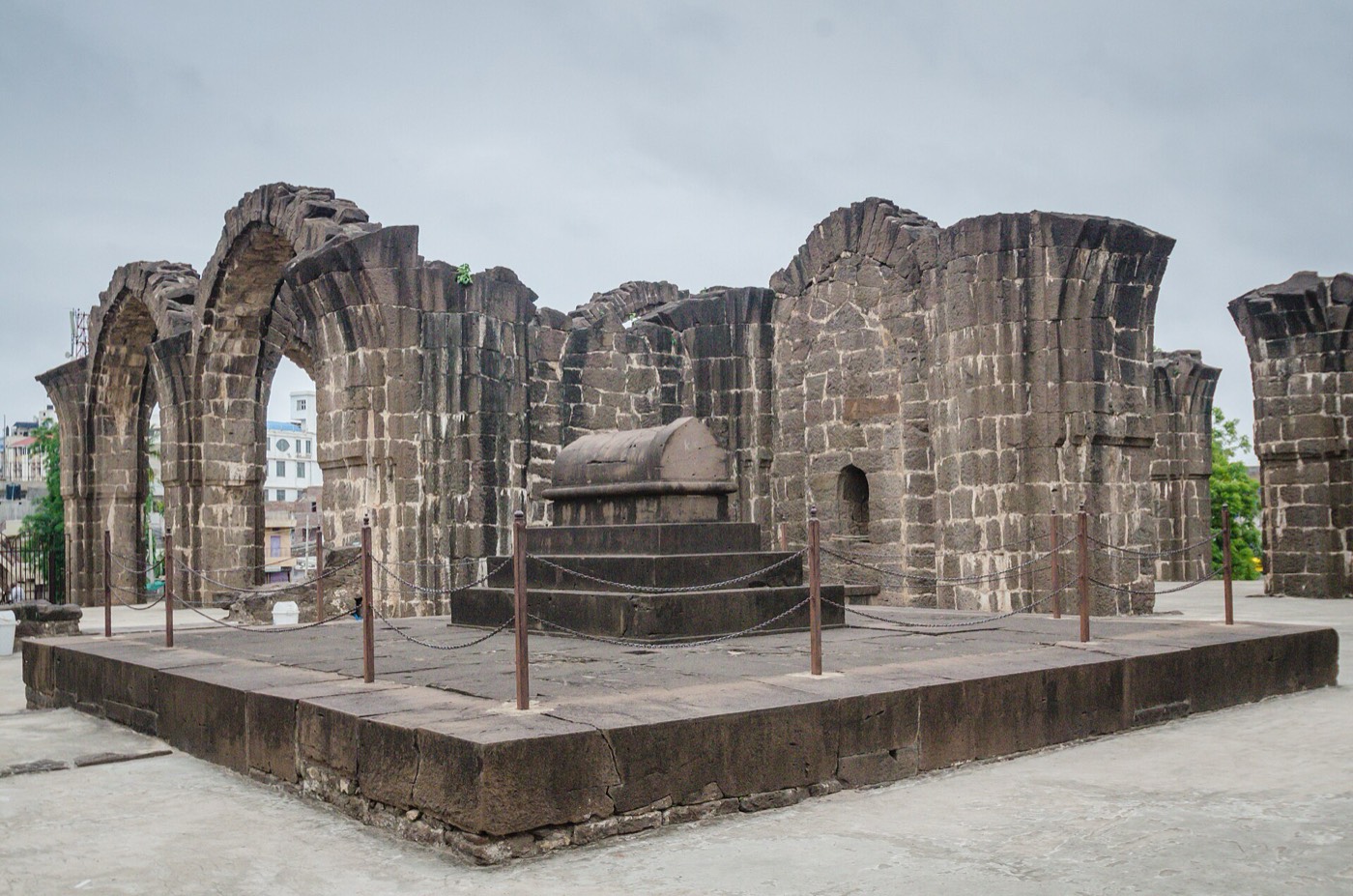
Ali Adil Shah's tomb lies in the inner enclosure on a raised platform1. A crypt beneath is entered by a door on the east side2. The site is laid out with landscaped gardens2.
Inside
Inside the arcade, the ASI records Ali Adil Shah's tomb on a raised platform in the inner enclosure. A small platform in the south-west corner is said to be that of Khurshida Khanum, mother of Sikandar, and thirteen other graves are listed1. Incredible India adds that tombstones for Ali Adil Shah II and other family members stand at the centre, with a crypt below2.
What to look for
- The outer arcade of arches, the only part finished.
- Stone left undressed, which shows how far the work had got.
- The raised platform in the inner enclosure with the sultan's tomb.
- Comparison with the nearby Gol Gumbaz: 65.5 m against 48 m.
Visiting
- The ASI page also lists, nearby, the mosque and tomb of Malik Sandal and the plain tomb of Sikandar, the last Bijapur sultan1.
- The structure is roofless and set in gardens2.
Official information: Archaeological Survey of India (ASI), Dharwad CircleDirectionsOpen in OpenStreetMapGuided tours in Vijayapura