History
Selim I, known by the epithet Yavuz for his harsh temper and daring, was born in Amasya, probably in 1470, and reigned from 1512 to 15203. In July 1520 he left Istanbul for Edirne, but a large swelling on his back, probably a plague bubo, stopped him at Çorlu, where he died on the night of 21-22 September 15203. His death was kept secret until his son Süleyman arrived from Manisa3. On 1 October the body reached Istanbul; after a funeral prayer at the Fatih Mosque, led by Zenbilli Ali Efendi, it was buried under a temporary tent at a place called Mirza Sarayı, beside the Byzantine open cistern now known as Çukurbostan1,3.
Süleyman I then built a tomb and a mosque complex there1,3. A tile panel beside the tomb's door names him as its founder, and TDV reads its date as Muharram 929 (December 1522), the same as that of the mosque1,2. TDV thinks the tomb most probably the work of the chief architect Acem Ali, as the ministry states, while Düzenli finds the attribution of the mosque undocumented, though likely1,2,4. The endowment deed of 1557 lists a tomb built to honour Selim's soul among Süleyman's foundations1. Süleyman's mother Hafsa Sultan was buried beside Selim in 15341. The princes' tomb in the same garden holds three of Süleyman's sons and two of Selim's daughters1,2.
Architecture
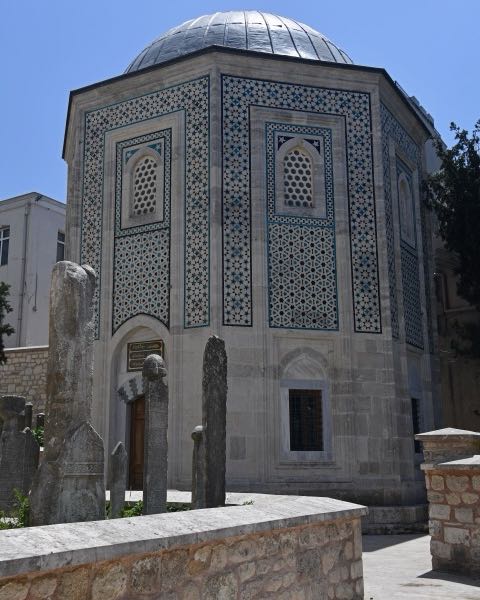
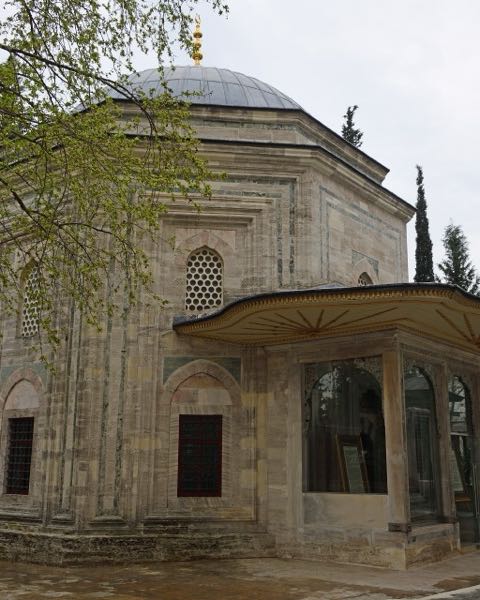
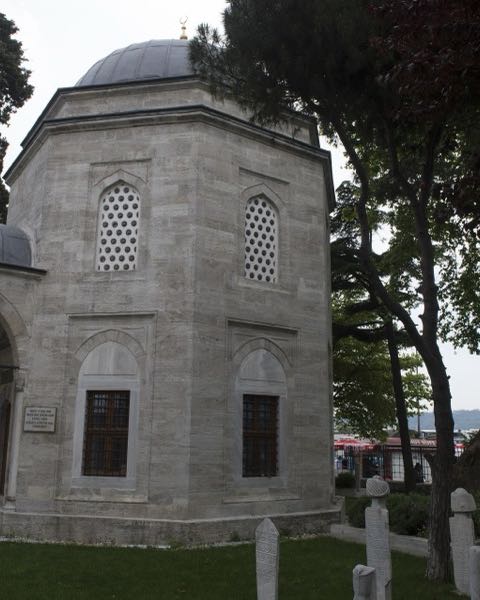
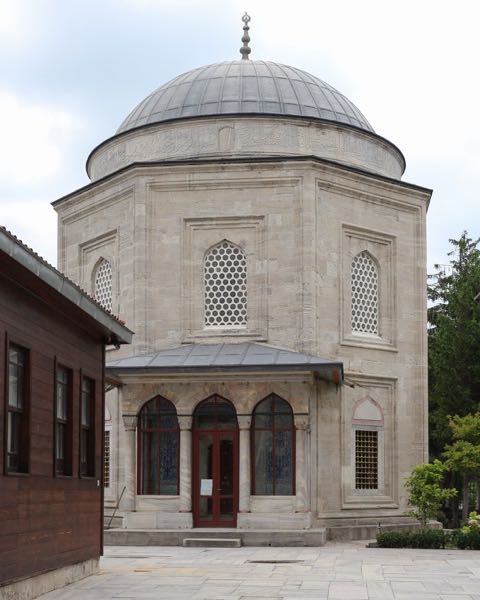
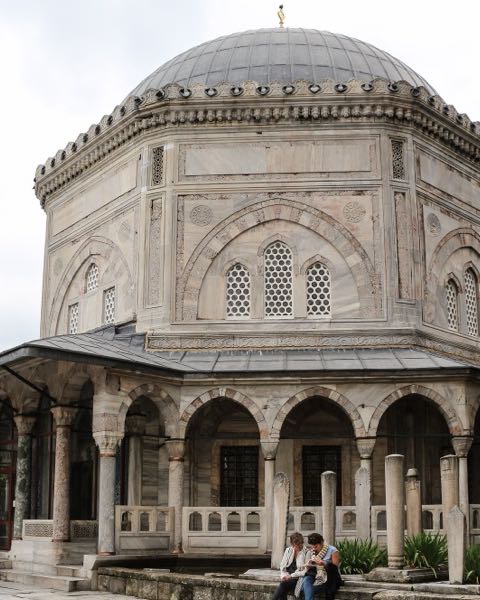
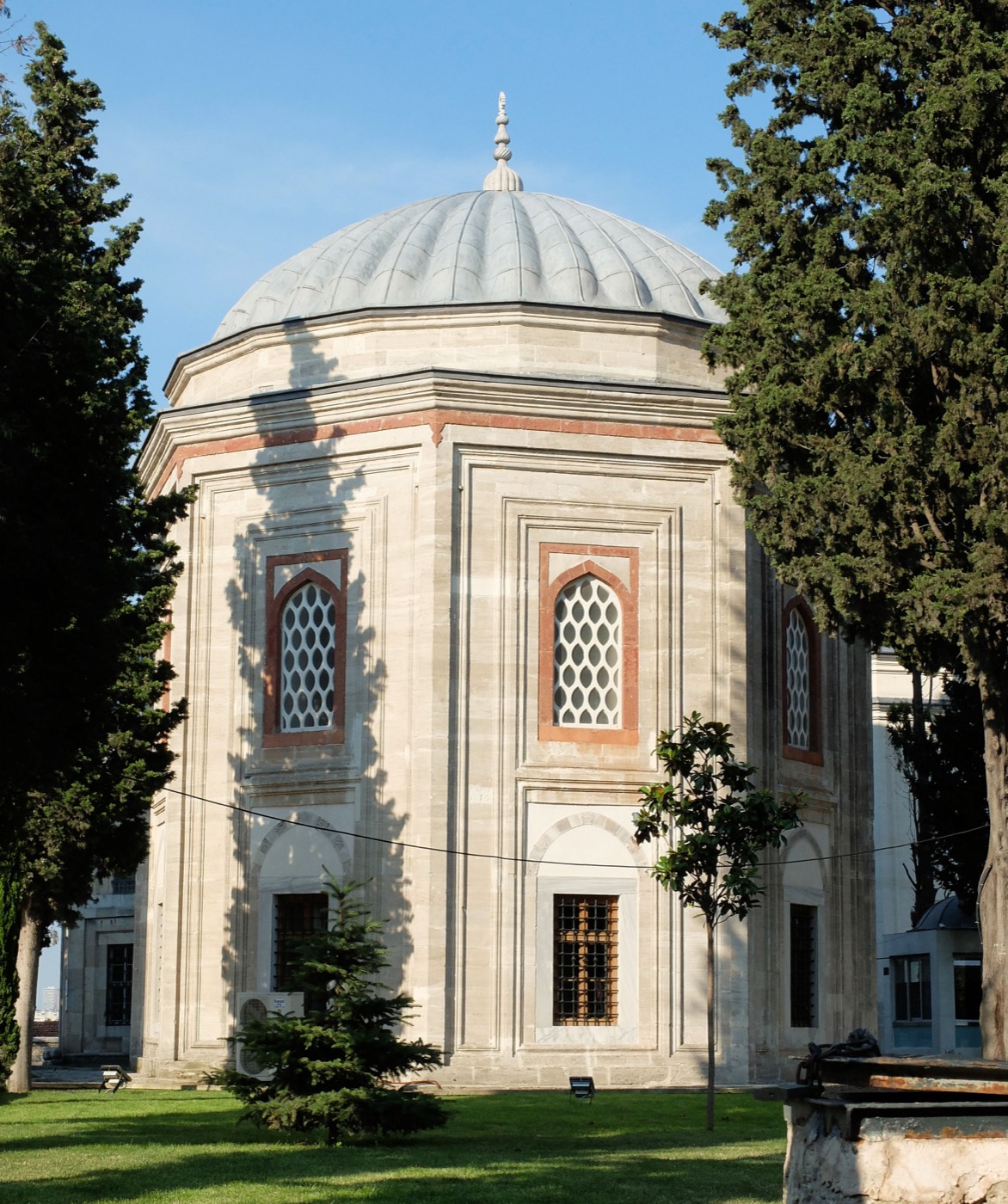
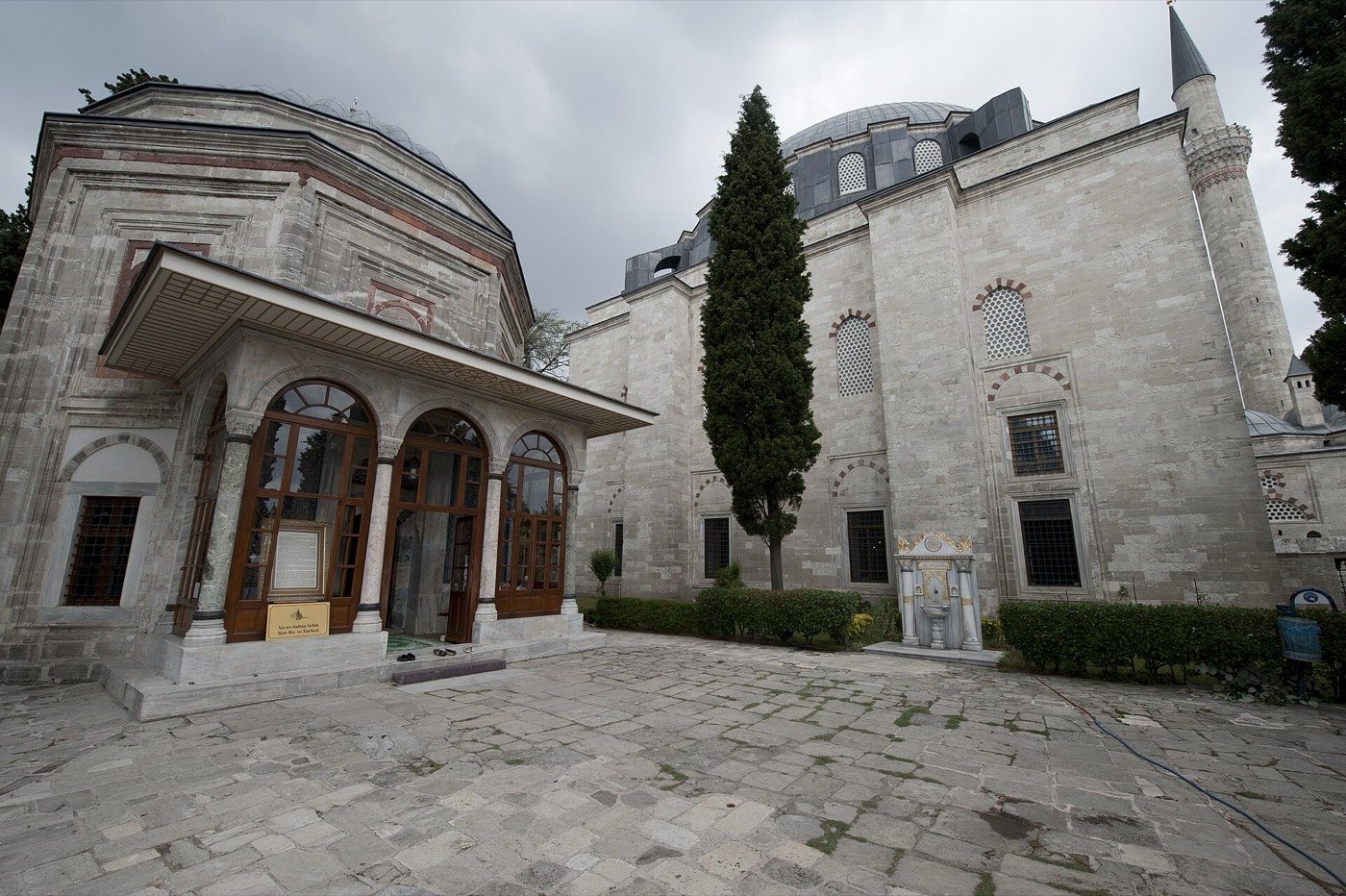
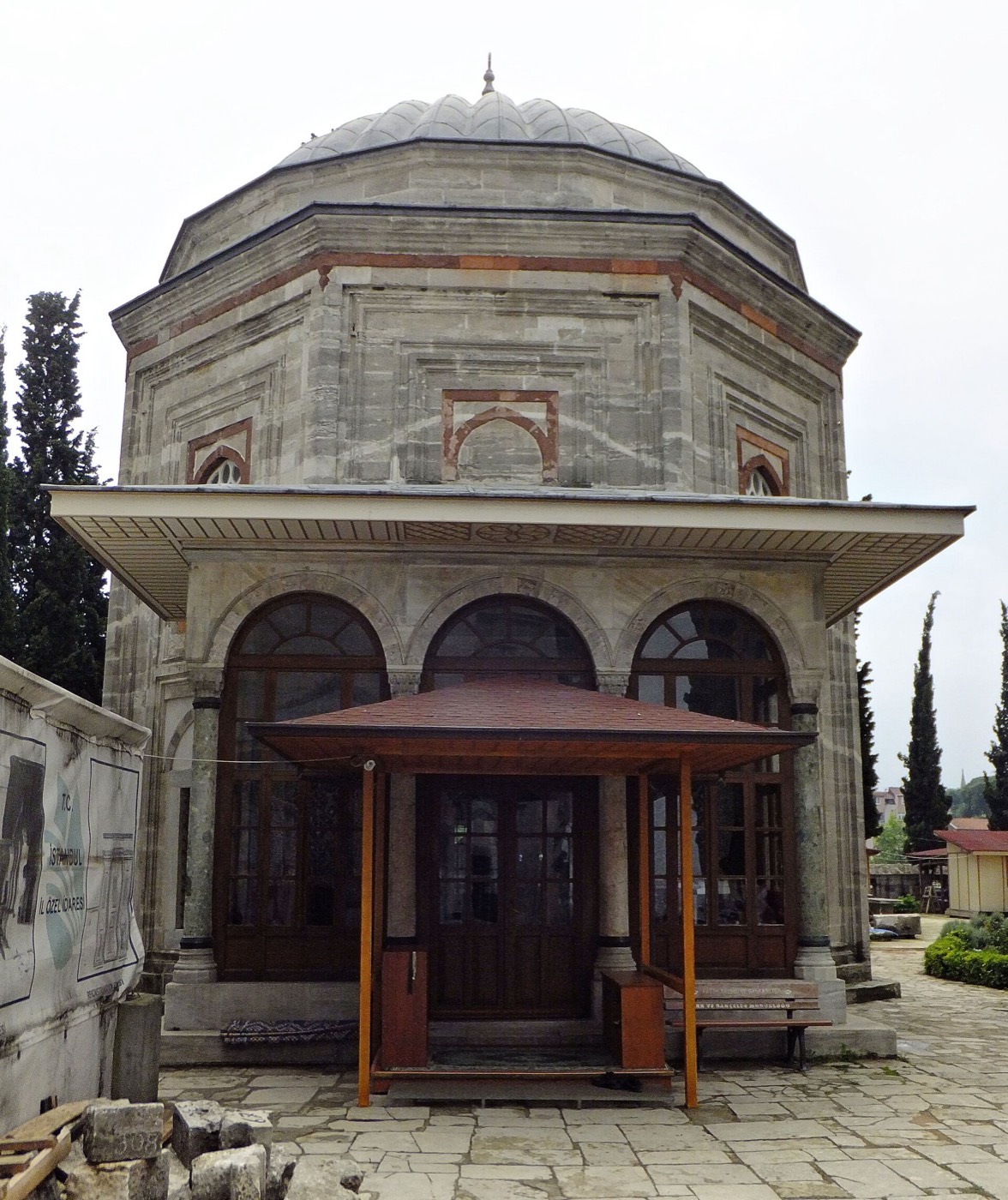
The tomb is an octagon of cut limestone (küfeki) under a fluted dome, the domed octagonal scheme that TDV's survey of Ottoman tombs gives for the tombs of Bayezid II and Selim I1,2,6. Each face has two windows, one above the other: framed rectangular lower windows with iron grilles, and upper windows under pointed arches with plaster grilles, all set in nested rectangular mouldings1,2. Red stone picks out the arches and borders of the upper windows, and TDV thinks the tympana of the lower windows, now plastered over, once held tile panels like those of the mosque1. A portico of three arches on four round columns shelters the entrance2.
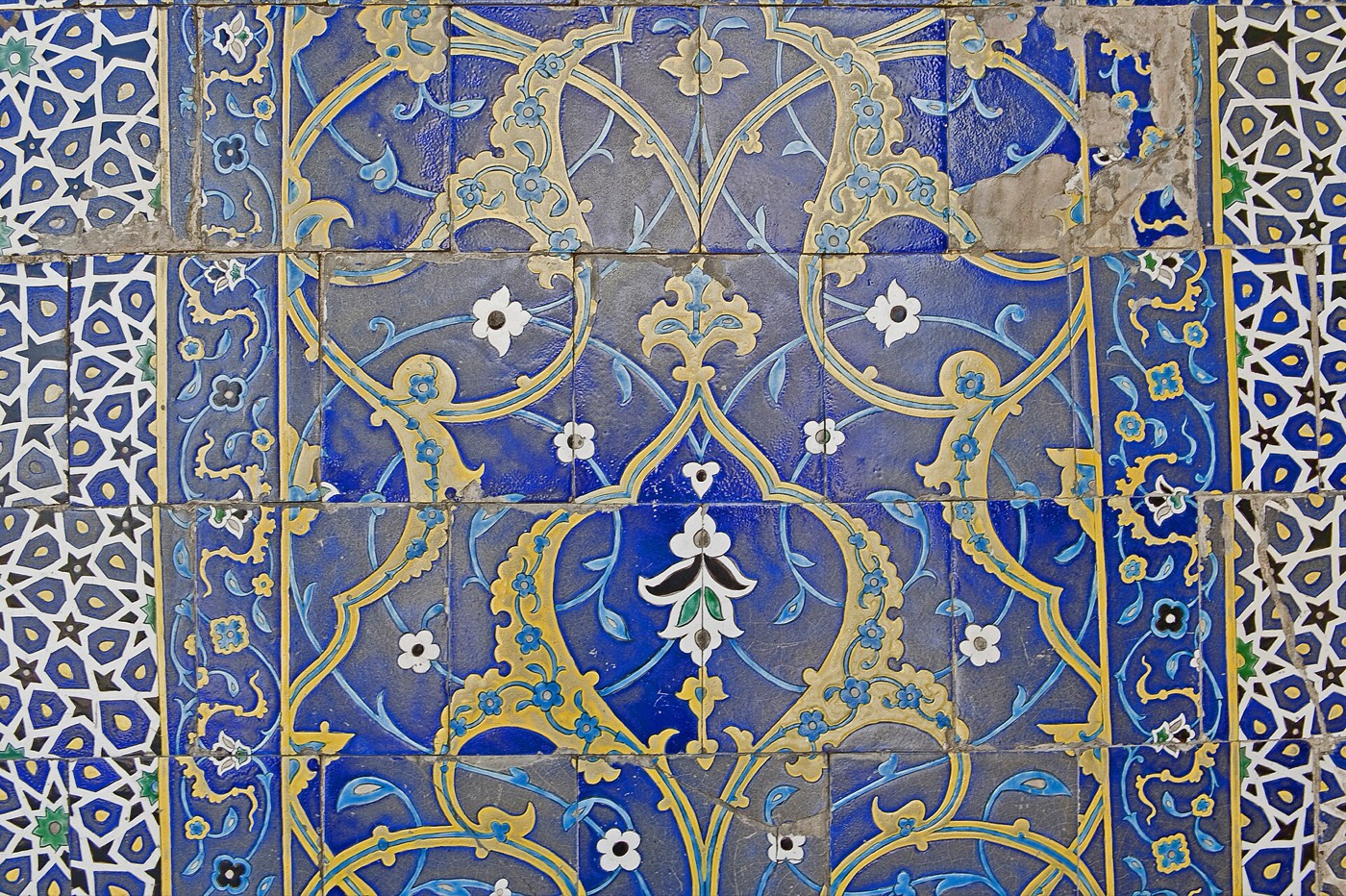
The doorway has an arch of interlocking black and white marble and wooden leaves inlaid with mother-of-pearl and ivory1. On either side of the portico is a large 16th-century tile panel, dominated by yellow, with inscriptions in white celî sülüs on a dark blue ground1,2. One gives the foundation text, which calls Süleyman master of the sultans of the Arabs and Persians, lord of the lands and seas and protector of the two Holy Sanctuaries; the other carries Qur'anic verses, Yusuf 12:101 above and al-Shu'ara 26:87-89 below2.
Inside
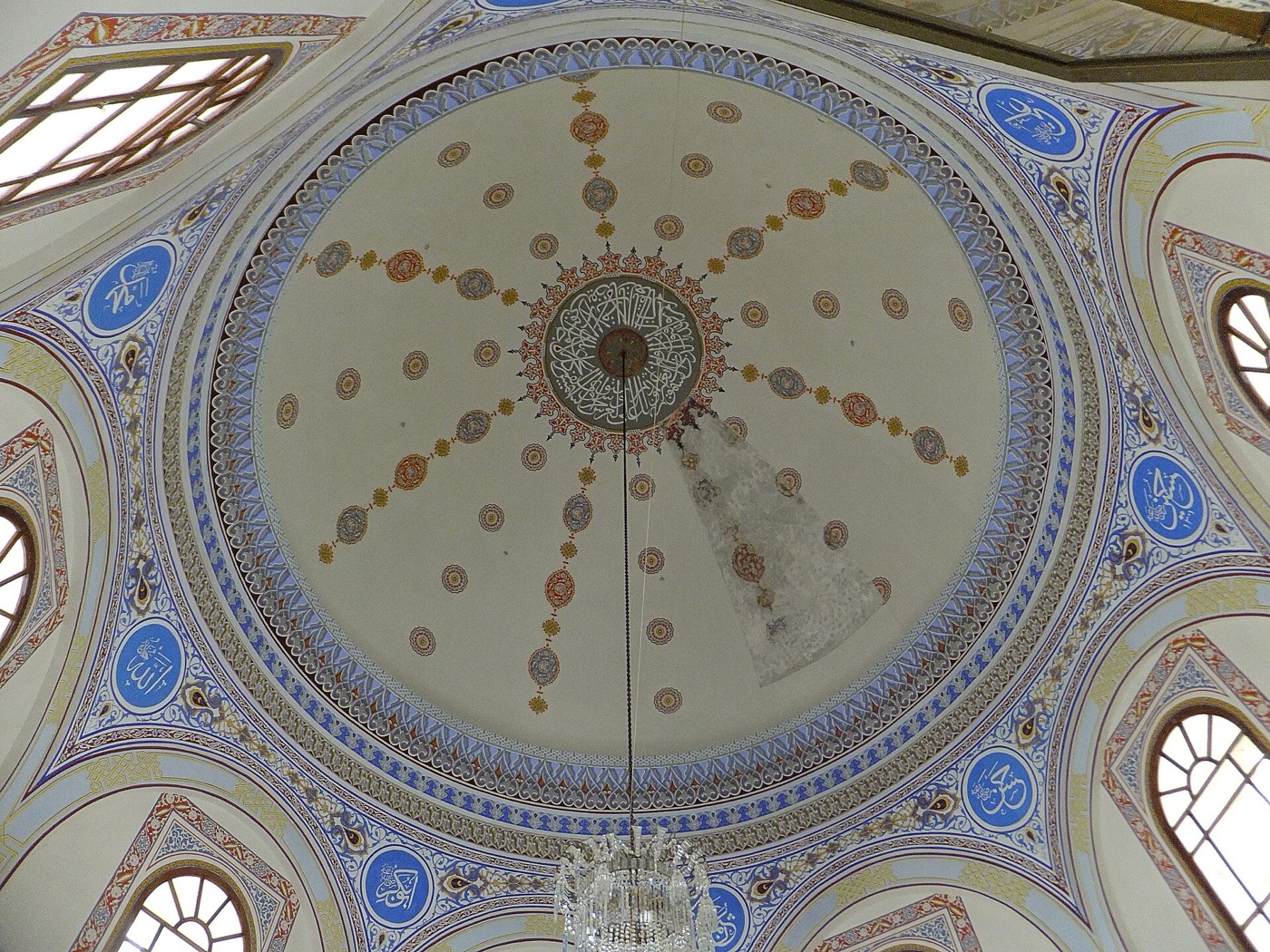
Inside there is a single grave, Selim's, marked by an imposing cenotaph topped by a large turban1. Evliya Çelebi wrote that no other sultan's tomb held such awe, the sultan lying with his turban like a seven-headed dragon in ambush1. According to a tradition recorded by TDV, Selim asked in his will that his caftan, splashed with mud by the horse of the scholar Kemalpaşazâde, be laid over the cenotaph1. Painted decoration of the 19th century runs round the window borders and the drum, and medallions on the pendentives carry the names of God, the Prophet, the four caliphs, Hasan and Husayn2. A marble plaque bears a saying attributed to Ibn Arabi, linked with Selim's conquest of Damascus and with the finding of Ibn Arabi's grave there, over which Selim built a tomb1,3.
What to look for
- The fluted dome over a cut-stone octagon, with red stone in the upper window arches1,2.
- The two yellow and blue tile panels by the door, one naming Süleyman I as founder1,2.
- The door of black and white marble with leaves inlaid with mother-of-pearl and ivory1.
- The large turban on Selim's cenotaph, the only grave in the tomb1.
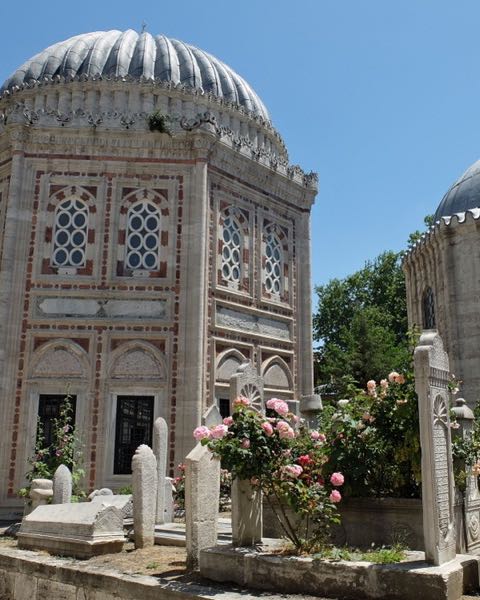
- Hafsa Sultan's tomb and the princes' tomb in the same garden1,2.
Visiting
- The tomb stands in the garden on the qibla side of the Yavuz Selim Mosque, in the Yavuz Selim (Sultan Selim) quarter of Fatih, on the slope above the Golden Horn1,2.
- The garden also holds the tombs of Hafsa Sultan, of the princes and of Sultan Abdülmecid (d. 1861)1,2.
- Evliya Çelebi named one of the four gates of the complex's walled precinct, on the qibla side, the Tomb Gate1.
Official information: Istanbul Tombs Museum Directorate (İstanbul Türbeler Müze Müdürlüğü), Republic of Türkiye Ministry of Culture and TourismDirectionsOpen in OpenStreetMapGuided tours in Istanbul
In a trip guide: Istanbul’s türbes on foot