Turbehتربة

An atlas of Islamic mausoleums

PlateCLXXXVof CCXXV

Tourbet of Hammouda Pacha

تربة حمودة باشاتربة حمودة باشا المرادي Turbat Ḥammūda Bāshā al-Murādī

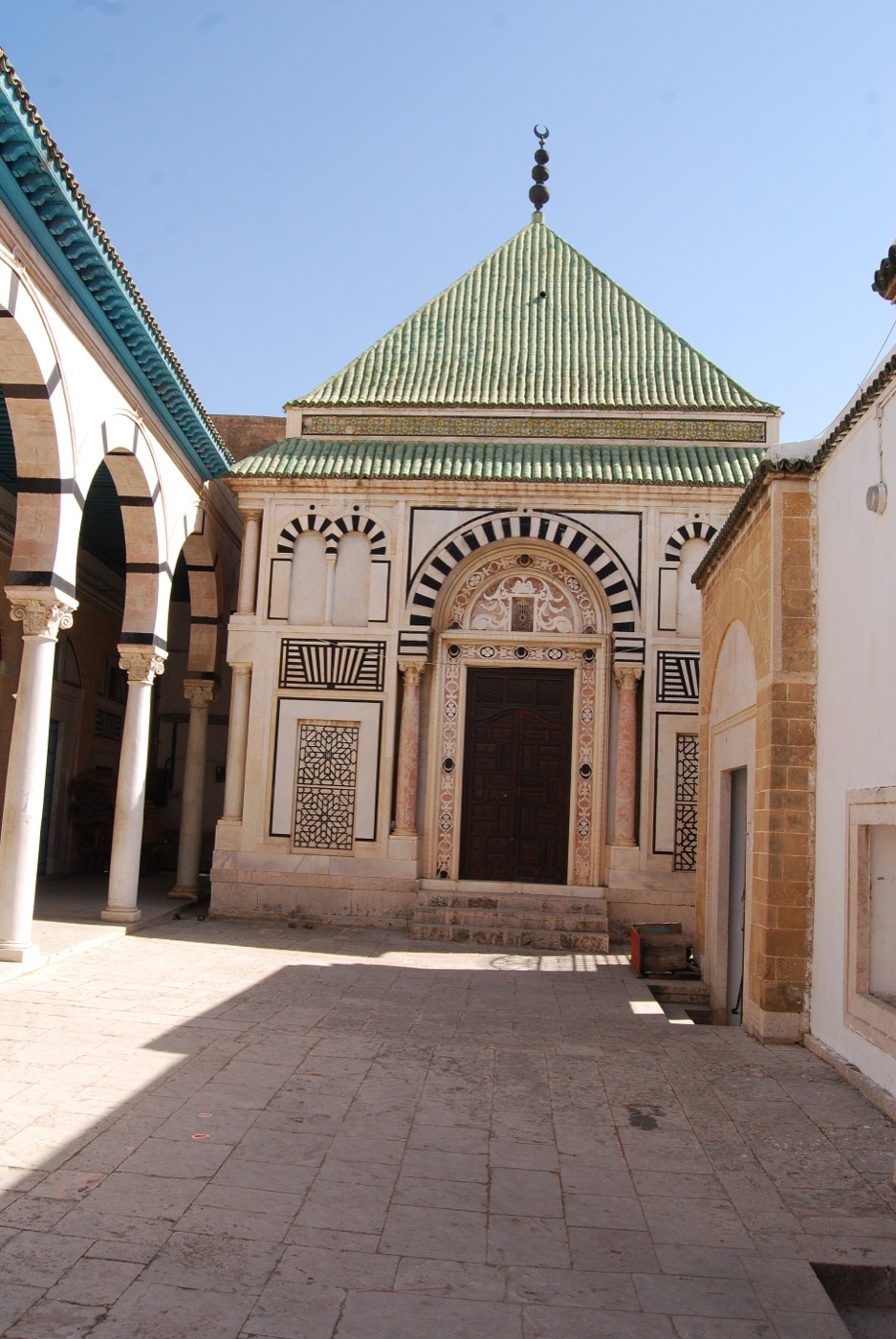
Square marble tomb of the Muradid ruler Hammouda Pacha in his mosque's courtyard in the Medina of Tunis, built by his grandson and finished in 1097 AH (1685-1686)2,3,4.

Built
c. 1685–1686 CE
c. 1096–1098 AH
The last line of the Arabic verse inscription on the west façade gives the year 1097 AH (1685-1686) for the completion of the work4; TDV reports that the tomb's Turkish and Arabic inscriptions name Hammouda Pacha's grandson as its builder3. Discover Islamic Art dates the mosque beside it to 1066 AH (1655)2.
Period
Muradid dynasty
Commissioned by
Muhammad (Mehmed) Bey, son of Murad and grandson of Hammouda Pacha, carrying out his grandfather's will
Built for
Hammouda Pacha al-Muradi, founder of the mosque, and members of his family
Materials
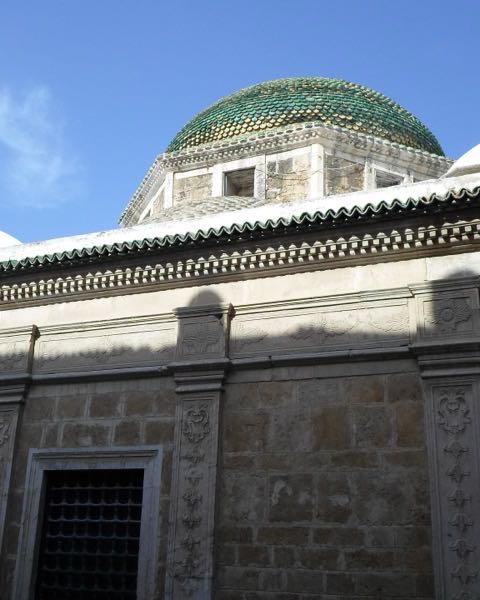
Marble facing in alternating black and white courses, with floral marble marquetry and carving; pyramidal roof of green glazed tiles above a polychrome ceramic frieze
Side of the square plan
8.20 m2
Location
Tunis, Tunisia
Tourbet of Hammouda Pacha
Photograph: Zied Nsir · CC BY-SA 3.0 · Wikimedia Commons

History

Hammouda Pacha al-Muradi, the Muradid ruler of Tunis, founded the Hanafi mosque that bears his name2,3. Discover Islamic Art dates it to 1066 AH (1655) from an inscription on the dome in front of the mihrab, while TDV states that the mosque has no inscription and that the date of 1655 comes from written sources2,3. Mohamed Béji Ben Mami, writing for Discover Islamic Art, notes that it was modelled on the mosque of Yusuf Dey2. He classes it as a funerary mosque, one that joins the founder's tomb to the place of prayer, and notes that Italian captives probably took part in the work2.

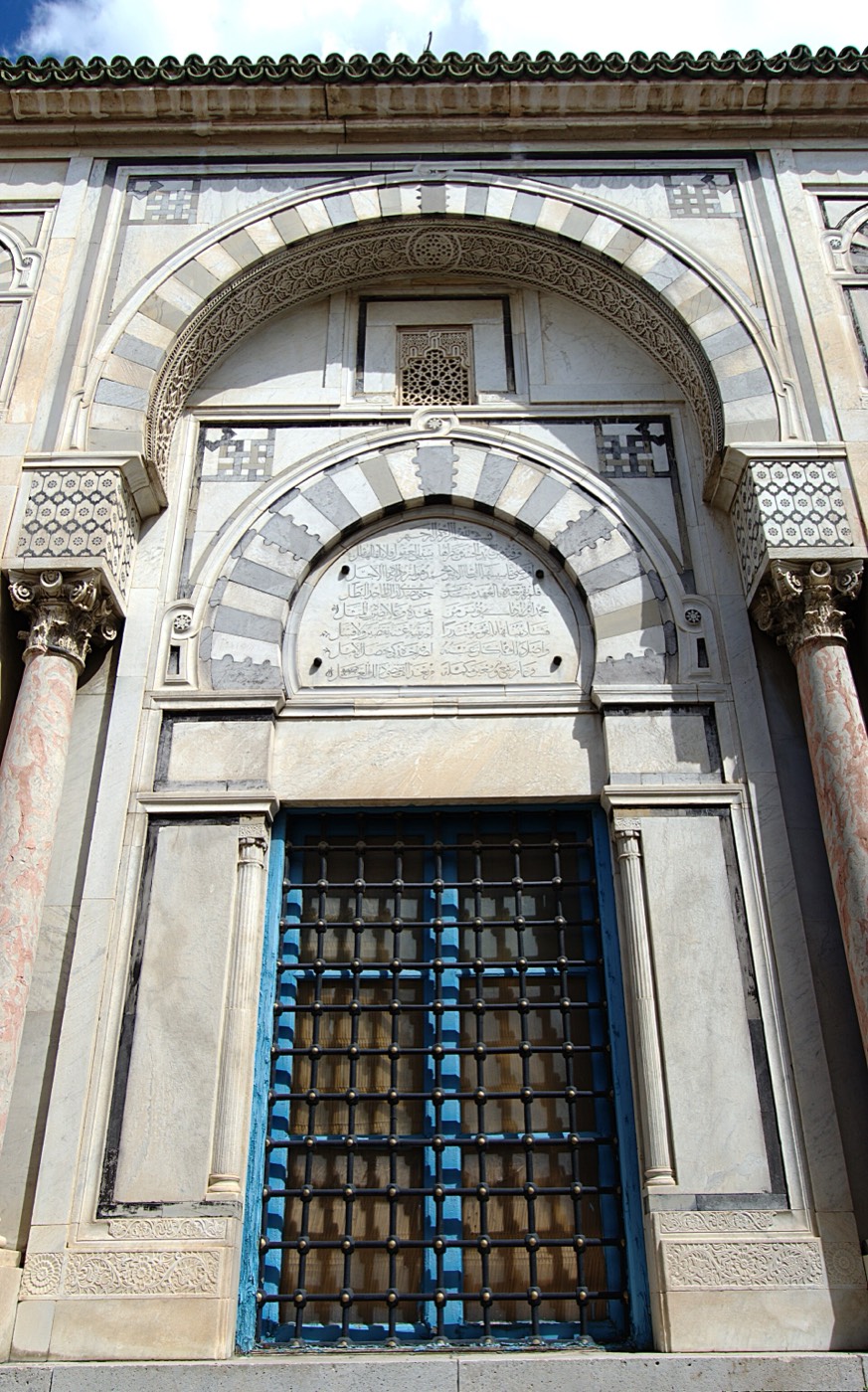
The tourbet was finished some thirty years after the mosque2,4. According to TDV, its Turkish and Arabic inscriptions record that Hammouda Pacha's grandson Mehmed Pasha built it in fulfilment of his grandfather's will3. The Arabic verse inscription over the street window of the west façade says that the Pasha willed the building as his death drew near, and that no one acted on his wish until Muhammad son of Murad, Bey of Tunis, built it with what his grandfather had assigned to it4. Its last line dates the completion of the work to 1097 AH (1685-1686)4. The tourbet holds the remains of Hammouda Pacha and members of his family2.

Architecture

The tourbet stands at the corner of the mosque's west courtyard opposite the octagonal minaret, which rises at the north-west corner, and its west façade faces Rue Sidi Ben Arous2,4. It is a square building, 8.20 m a side, under a pyramidal roof of green glazed tiles2. Each of its four faces has a central arch flanked by a rectangular panel with two niches above it, and the façades combine courses of black and white marble with Italianate floral motifs in marble marquetry or carved in the round2. Ben Mami notes that baroque ornament abounds on its façades2. A frieze of polychrome ceramic tiles with geometric and floral motifs runs between the two roofs, and the arches below have black and white marble voussoirs5.
What to look for

  1. The pyramidal roof of green glazed tiles above a polychrome ceramic frieze2,5.
  2. Courses of black and white marble and Italianate floral marquetry on the façades2.
  3. The Arabic verse inscription over the window on Rue Sidi Ben Arous4.
  4. The octagonal minaret at the opposite corner of the same courtyard2.

Visiting

  • The tourbet stands in the courtyard of the Hammouda Pacha Mosque on Rue Sidi Ben Arous, and its west façade faces the street2,4.
  • The mosque's octagonal minaret rises at the opposite corner of the same courtyard2.
  • The Medina of Tunis was inscribed on the World Heritage List in 19791.

Sources

  1. UNESCO World Heritage Centre: Medina of Tunis
  2. Museum With No Frontiers, Discover Islamic Art (entry by Mohamed Béji Ben Mami): Hanefite Mosque of Hammuda Pasha
  3. TDV İslâm Ansiklopedisi; article by Kadir Pektaş: Hammûde Paşa Camii ve Türbesi
  4. Maison méditerranéenne des sciences de l'homme (MMSH, Aix-en-Provence), Phonothèque, Fonds André Raymond, photograph of 1958 (MédiHAL 4000220): Texte de fondation du mausolée de Hammuda Pacha à Tunis
  5. Maison méditerranéenne des sciences de l'homme (MMSH, Aix-en-Provence), Phonothèque, Fonds André Raymond, photograph of 1958 (MédiHAL 4010223): Toit du mausolée de la Mosquée de Hammuda Pacha

Images and 3D