History
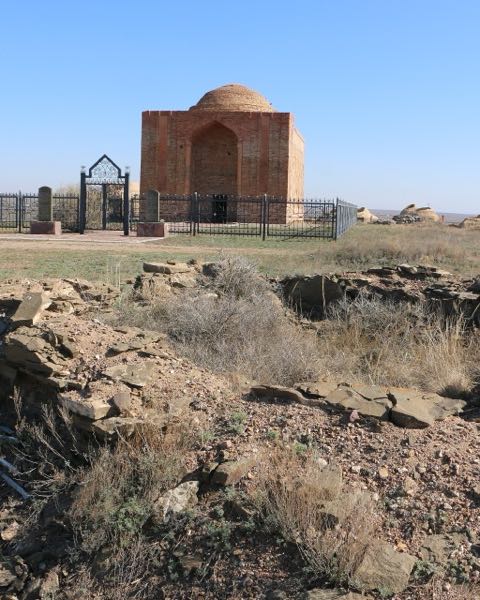
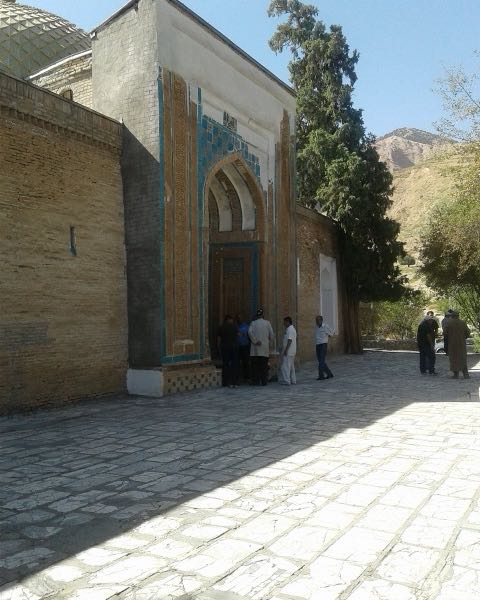
Khoja Mashhad stands near the village of Sayod (Sayot or Sayat in Soviet literature), about 6 km south of Shahrituz according to Tajikistan's tentative-list entry1,3. Tajikistan placed it on UNESCO's tentative list in 1999 as the Mausoleum of "Khoja Mashkhad" and later included it in its list of Silk Roads sites1,7. The 1999 entry calls it one of the few pre-Mongol madrasas of the 11th-12th centuries to survive, and dates the older, eastern of its two domed buildings to the 9th-10th centuries1. Local tradition, recorded by S. Mullojonov of Khujand State University, links the name with a pious khoja from Mashhad; he dates the mausoleum to the 9th century6.
A. M. Belenitsky published the mausoleum at Sayat in 1950, and N. Negmatov and S. Khmelnitsky later dated its eastern building to the 10th-11th centuries3. E. D. Zilivinskaya, drawing on Khmelnitsky's plan, describes it as an 11th-century Khorasanian madrasa, similar in plan to the 12th-century madrasa of Shah-i Mashhad in Afghanistan5. E. I. Kononenko points out that its 11th-century plan already set iwans on the axes of the courtyard, the arrangement later repeated in the Nizamiyya madrasas of the Great Seljuks at the end of the 11th century, in Syria in the 12th and in Anatolia in the 13th4.
Architecture
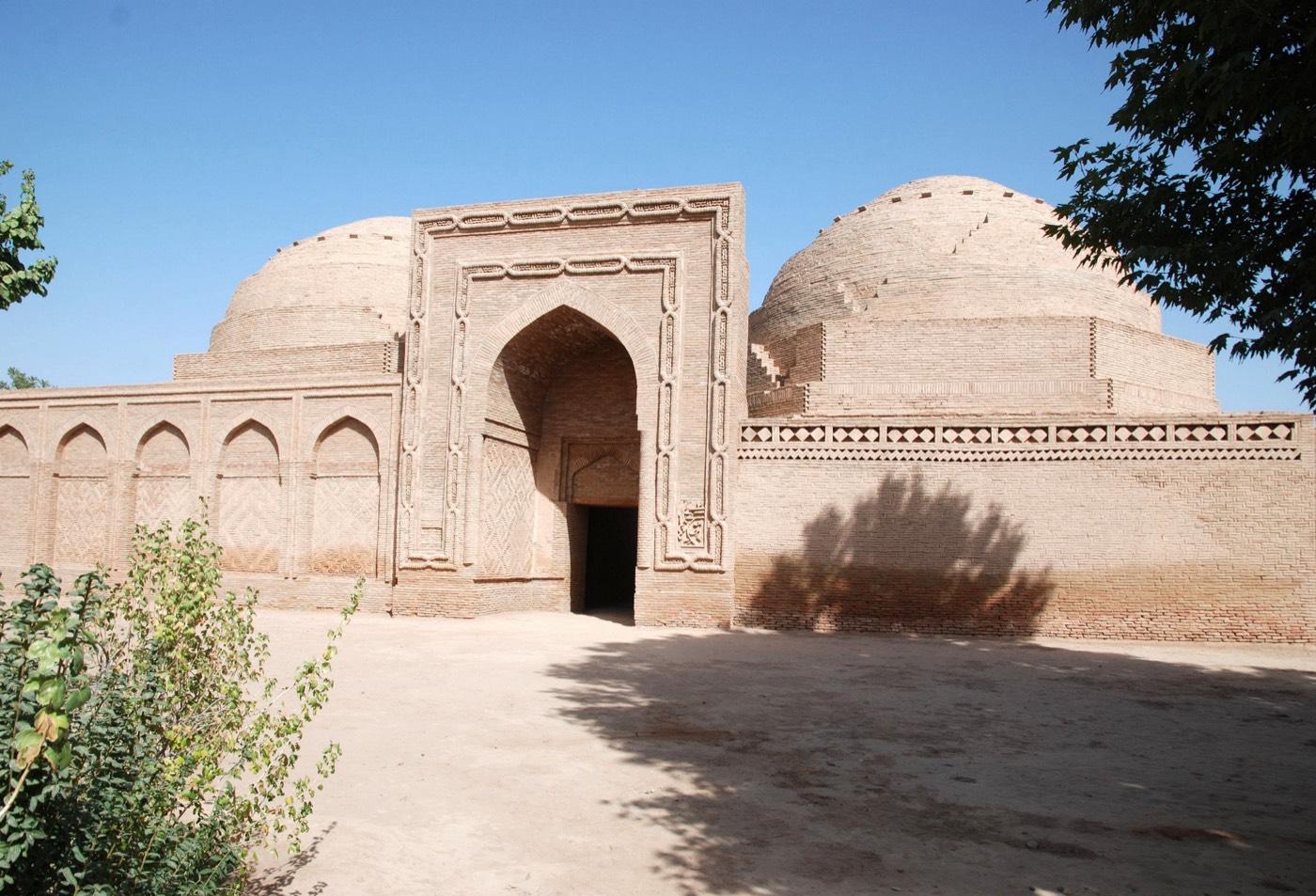
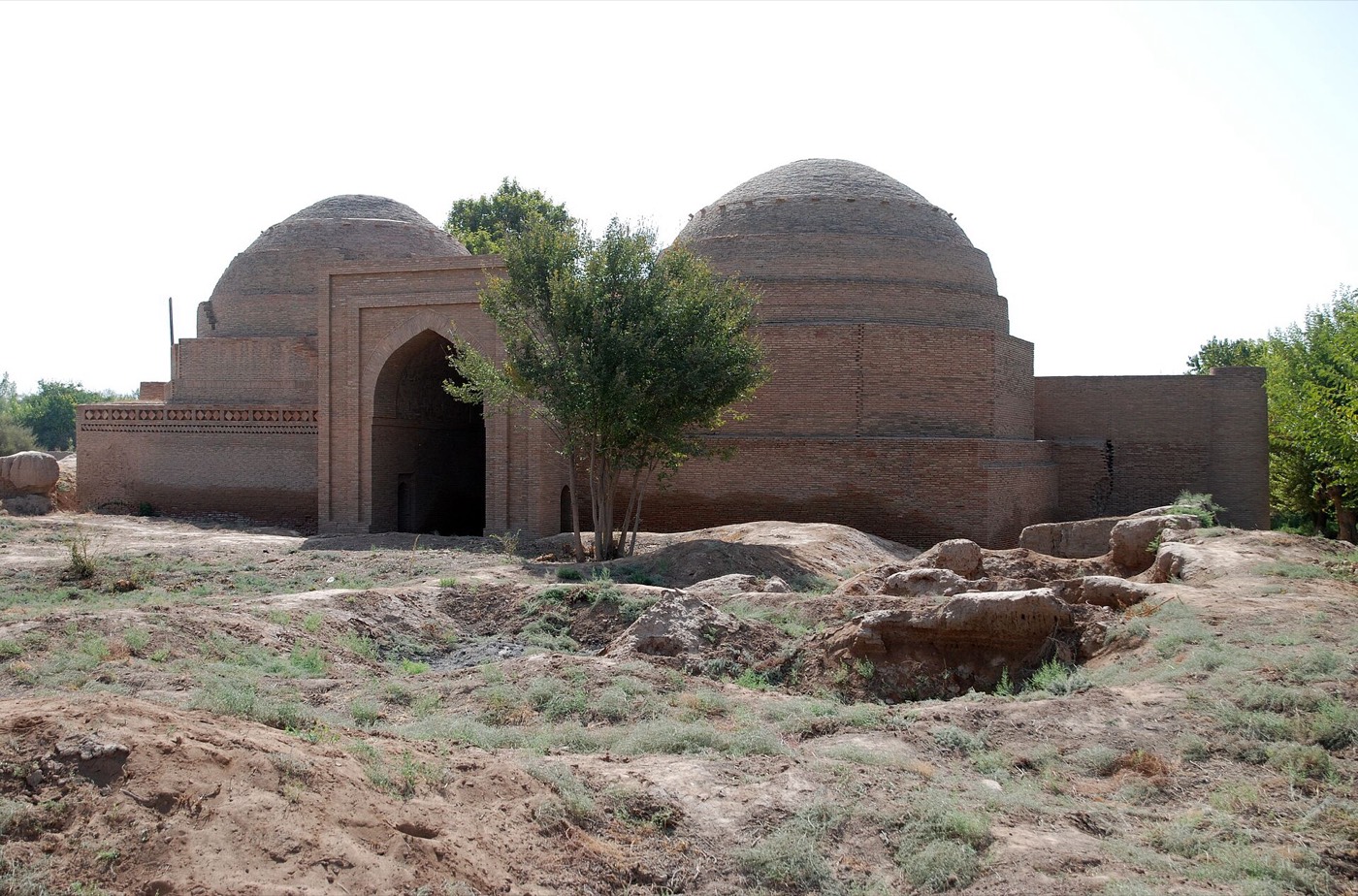
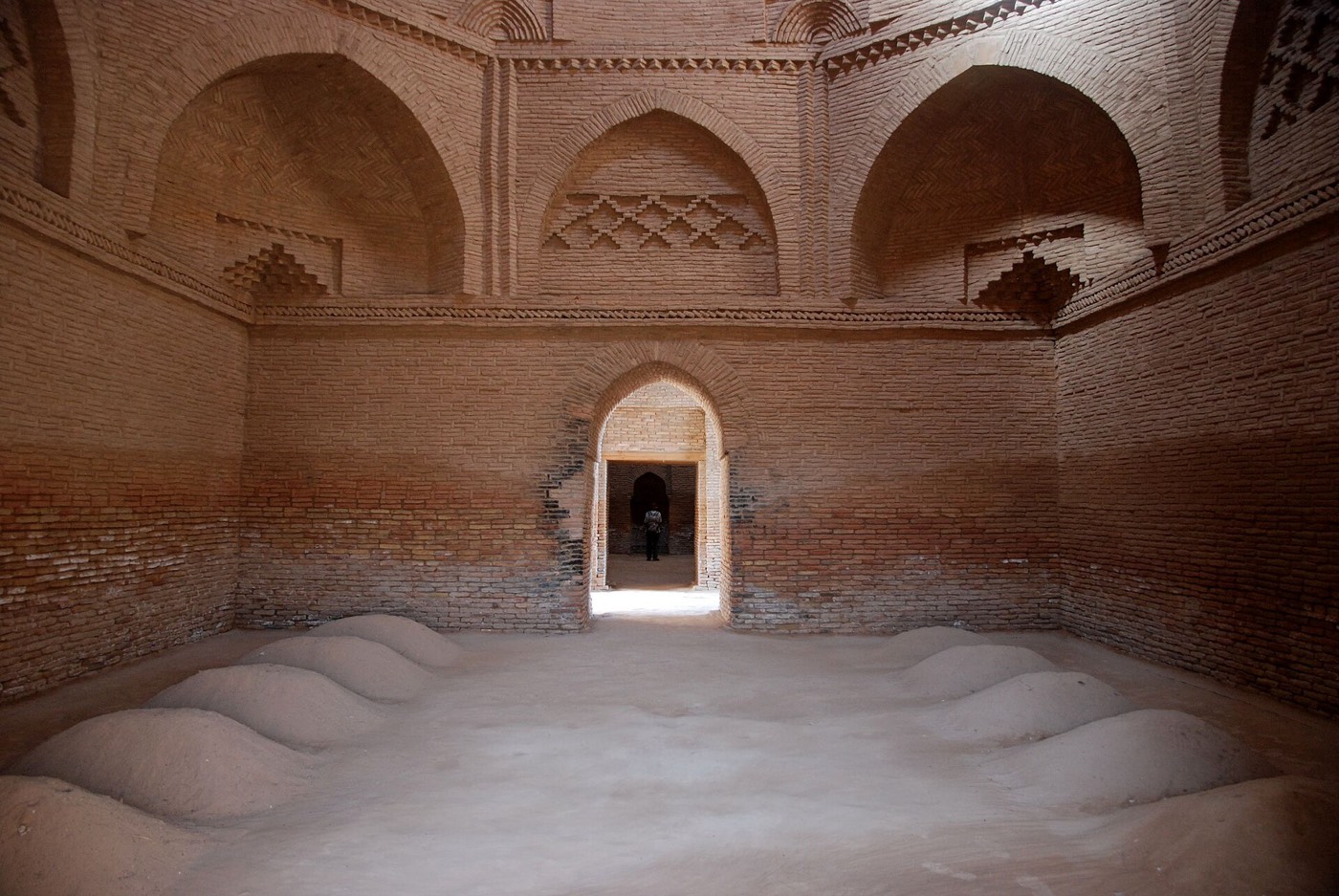
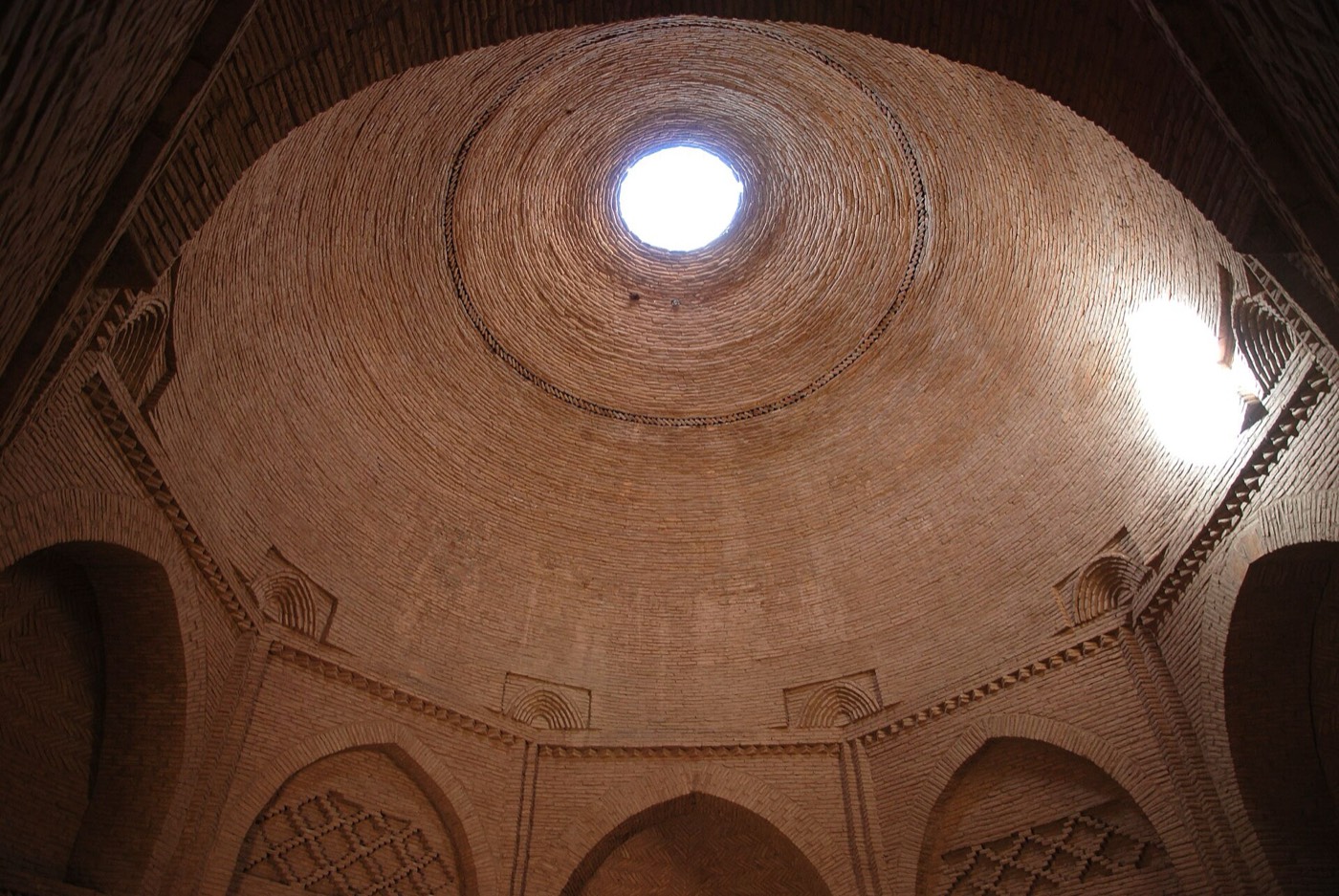
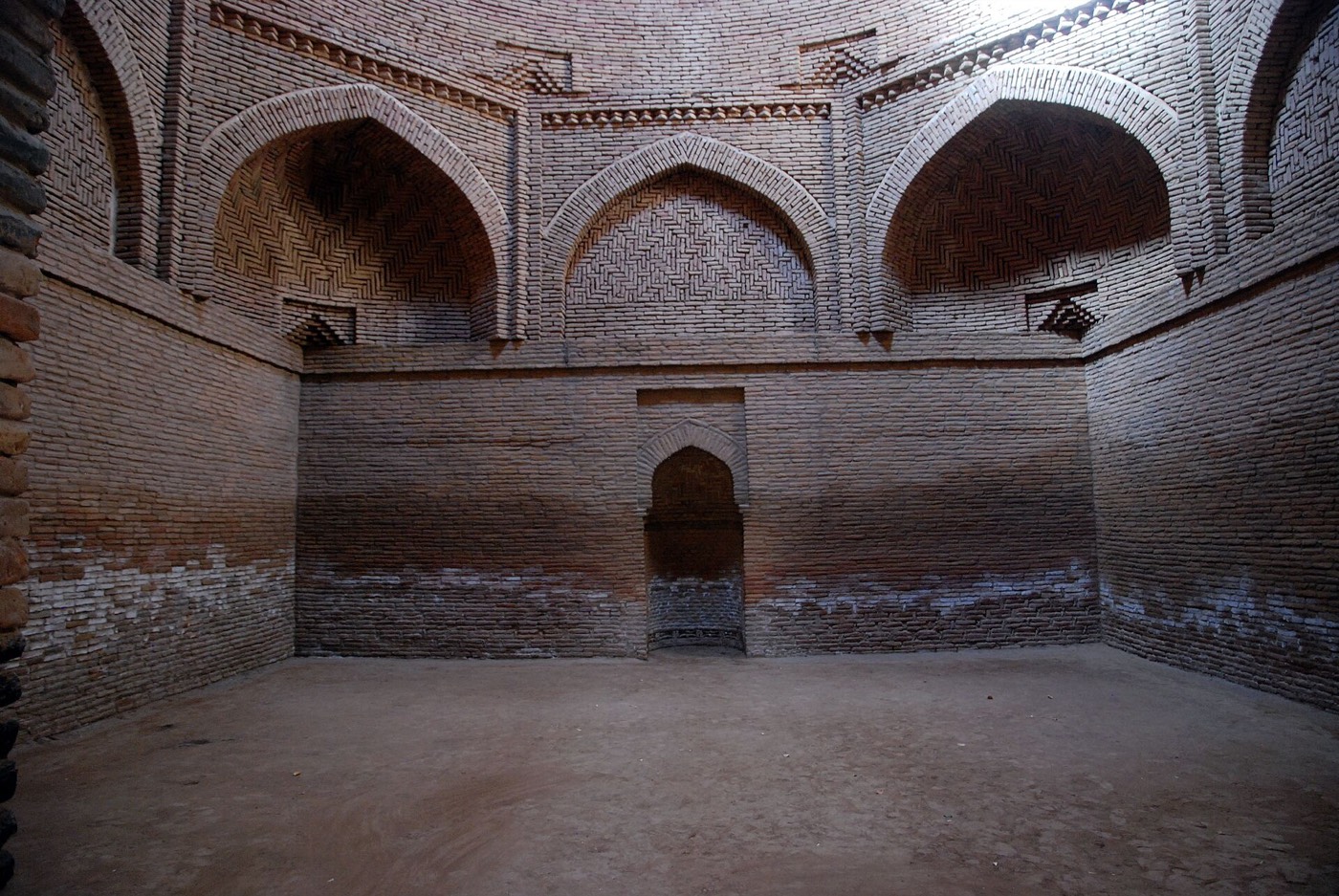
The madrasa was built round a courtyard4,5. On either side of its south portal stand two large domed rooms, which Zilivinskaya identifies as an earlier mausoleum and a mosque5. A second portal on the north side was flanked by rooms with smaller domes, which probably served as classrooms5. Small round towers strengthened the corners, a feature Zilivinskaya also finds at Shah-i Mashhad and at the khanqah of Tash Rabat5. The eastern domed building is decorated with a frieze of bricks laid at a slant, an old motif that, according to Negmatov and Khmelnitsky, survived in Tajik building until recent times3. Tajikistan's tentative-list entry states that, apart from the fired-brick south front, the madrasa was built of mud brick and pakhsa (rammed earth), which has fallen into ruin1.
Inside
Inside, the main spaces are the two large domed rooms either side of the south portal5. Zilivinskaya, following Khmelnitsky, takes one for an earlier mausoleum and the other for a mosque5. The eastern one, the older according to Tajikistan's tentative-list entry, is the building that Negmatov and Khmelnitsky date to the 10th-11th centuries1,3.
What to look for
Visiting
- The site lies near the village of Sayod, south of Shahrituz in southern Tajikistan1,3.
- Khoja Mashhad is on UNESCO's tentative list (1999) and is also included in Tajikistan's tentative list of Silk Roads sites1,7.
Official information: Ministry of Culture of the Republic of Tajikistan, which placed the site on UNESCO's tentative list in 1999DirectionsOpen in OpenStreetMapGuided tours in Sayod