History
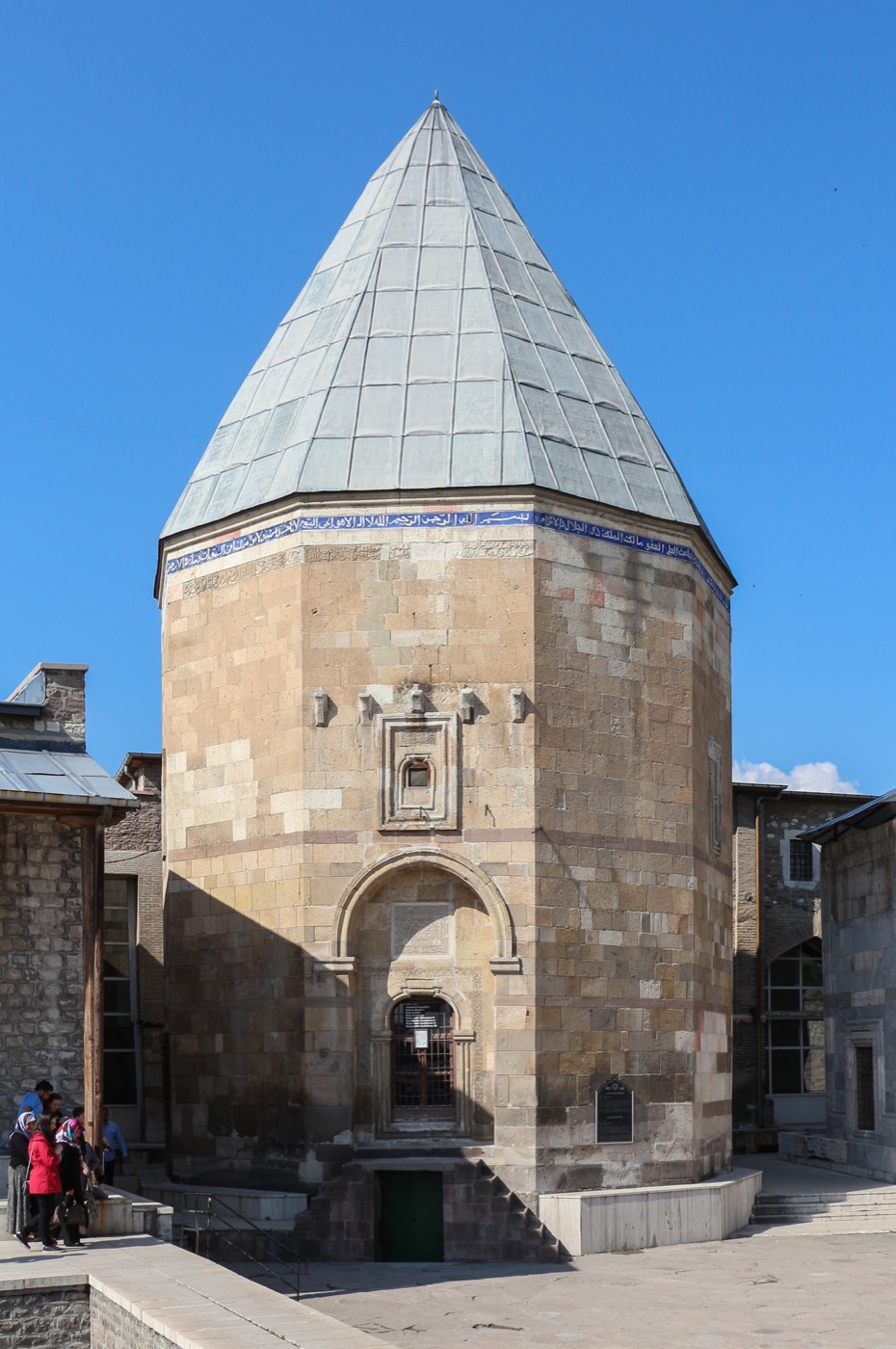
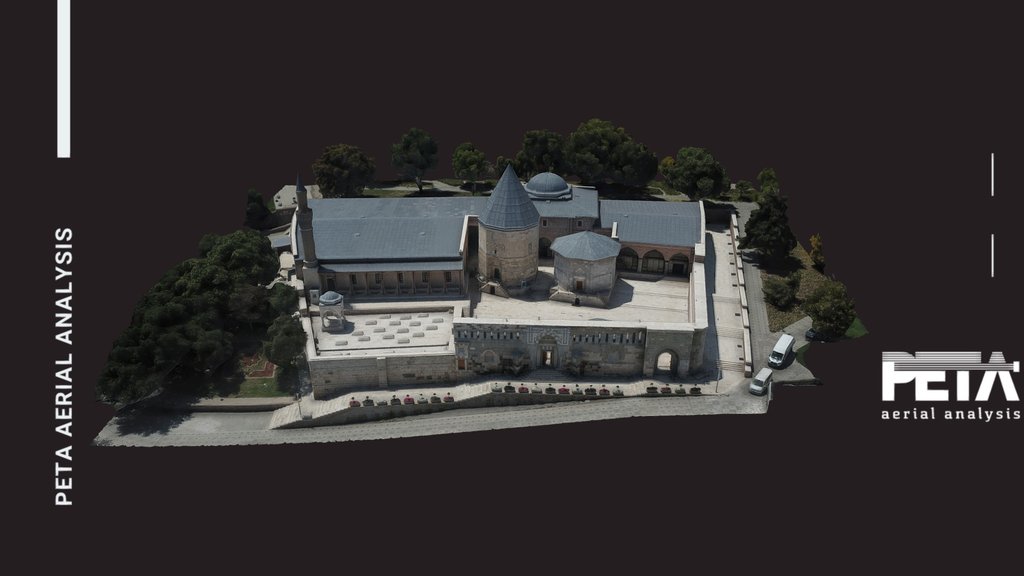
The tomb stands in the courtyard of the Alaeddin Mosque, Konya's Seljuk great mosque on the Alaeddin hill1,5. A tile inscription below its roof records that Kılıç Arslan, son of Mesud, son of Kılıç Arslan, ordered the building, which places it in the reign of Sultan Kılıç Arslan II (1155-1192)1,3. Betül Erikoğlu dates it to the end of his reign, while Haluk Karamağaralı, as summarised by Yılmaz Önge, assigned it to the building phase of Mesud I and Kılıç Arslan II7,8. Kılıç Arslan II fell ill and died on 26 August 1192 while besieging Aksaray; his body was taken to Konya and buried in the tomb beside the mosque3.
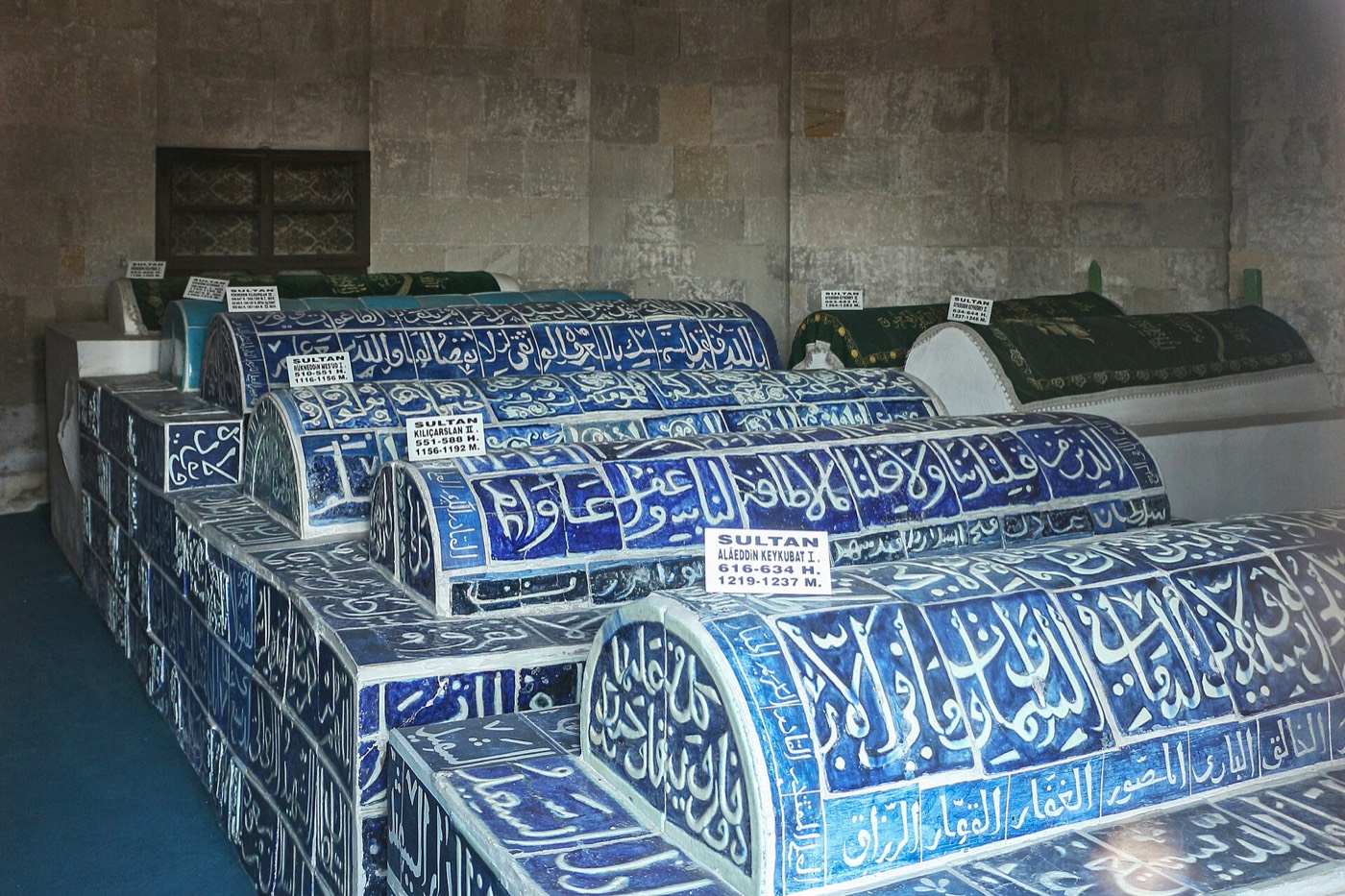
The tomb became the burial place of a large part of the dynasty, although exactly who lies here is uncertain1. Ibn Bibi names Mesud I, Kılıç Arslan II, Keyhüsrev I and Süleyman Şah II; TDV's Konya article lists eight sultans, adding Alaeddin Keykubad I, Keyhüsrev II, Kılıç Arslan IV and Keyhüsrev III1,2. Semavi Eyice notes that only Kılıç Arslan II is identified with certainty, through a tile inscription1. The Konya Governorship reports that bones left in plastic bags inside the sarcophagi by earlier interventions were later sorted by a forensic team from Necmettin Erbakan University, assigned to Mesud I, Kılıç Arslan II and Keyhüsrev II, and reburied after a funeral prayer6.
Architecture
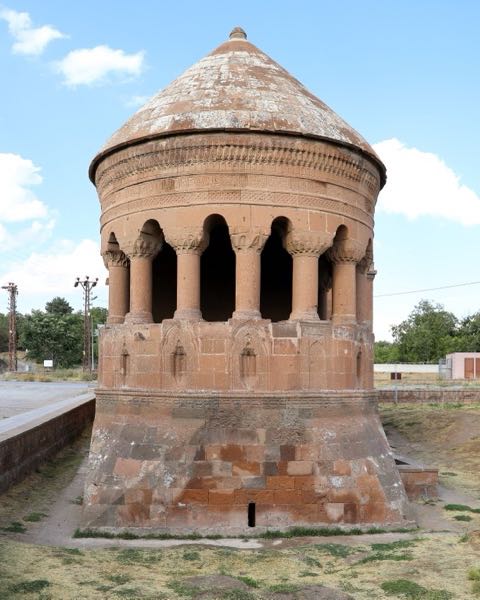
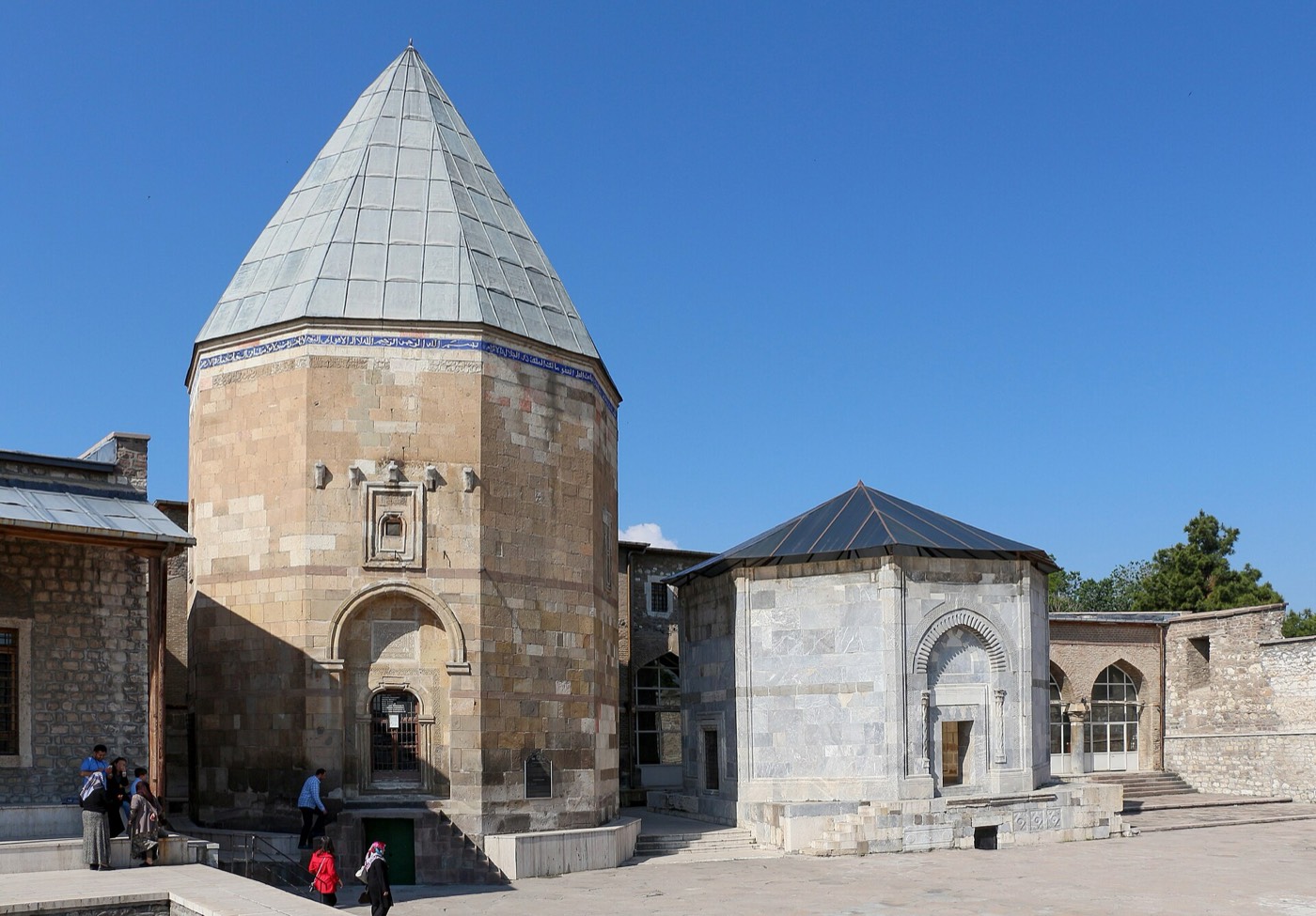
The tomb has a ten-sided body of cut stone standing over a burial crypt1,2. A masonry dome covers the chamber inside, and outside it is hidden by a ten-faced pyramidal roof1. Traces show that this brick roof was once faced with tiles, and around its base runs a tile inscription in white letters on a dark blue ground1,4. The builder is named over a window on the east side: Semavi Eyice reads the name as Yusuf son of Abd al-Ghaffar, while TDV's Konya article gives Abd al-Ghaffar son of Yusuf1,2. The ministry's Kültür Portalı states that no other conical kümbet in Turkey is of its standard and height4.
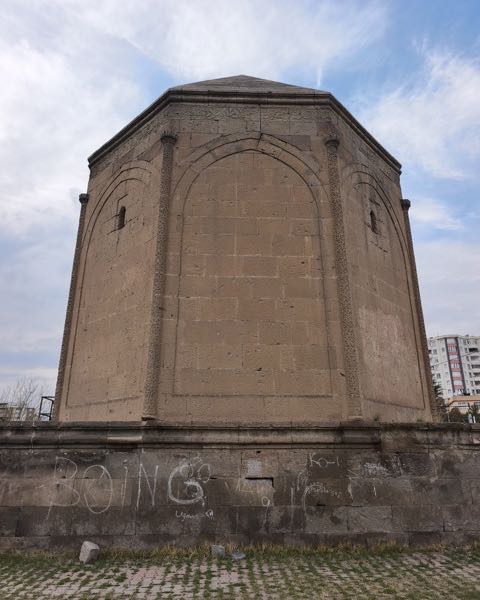
West of it stands a second, octagonal tomb that was never finished1,5. Its walls stop at the cornice, the inscription panel over its door was left blank, and according to İbrahim Hakkı Konyalı its crypt long served as a cistern1. Its corners are carved with chain mouldings, and inside, the niche on the qibla side was made into a mihrab with carved friezes and muqarnas1. Eyice considers it certain that it was built for a Seljuk sultan but notes that it is not known for whom; Konya's culture directorate attributes it to Keykavus I, and Önge links it with work begun on his orders1,5,8. Later extensions of the prayer hall left parts of the outer walls of both tombs inside the mosque1.
Inside
The chamber holds eight cenotaphs1,4. They were originally faced entirely with tiles whose raised inscriptions, white on dark blue, named the people buried beneath1. In later periods the cenotaphs were broken up and many tiles were removed or lost; the surviving pieces were stuck back haphazardly, and when Eyice wrote in 1989 four cenotaphs were bare, covered only with plaster1. Niches are set into the walls of the chamber1. Below lies the crypt; according to a story reported by Eyice, the embalmed bodies once kept there were taken out and destroyed1.
What to look for
- The ten-sided cut-stone body and pyramidal roof, the only finished tomb in the courtyard1,4.
- The white-on-blue tile band below the roof, naming Kılıç Arslan son of Mesud1.
- The builder's name over the east window1,2.
- Eight cenotaphs, some still faced with white-on-blue relief tiles1.
- The unfinished octagonal tomb to the west, with its blank inscription panel1.
Visiting
- The tomb stands next to the Alaeddin Mosque on the Alaeddin hill in central Konya4,5.
- The unfinished second tomb stands beside it in the same courtyard1,5.
Official information: Republic of Türkiye Ministry of Culture and Tourism (Kültür Portalı)DirectionsOpen in OpenStreetMapGuided tours in Konya