History
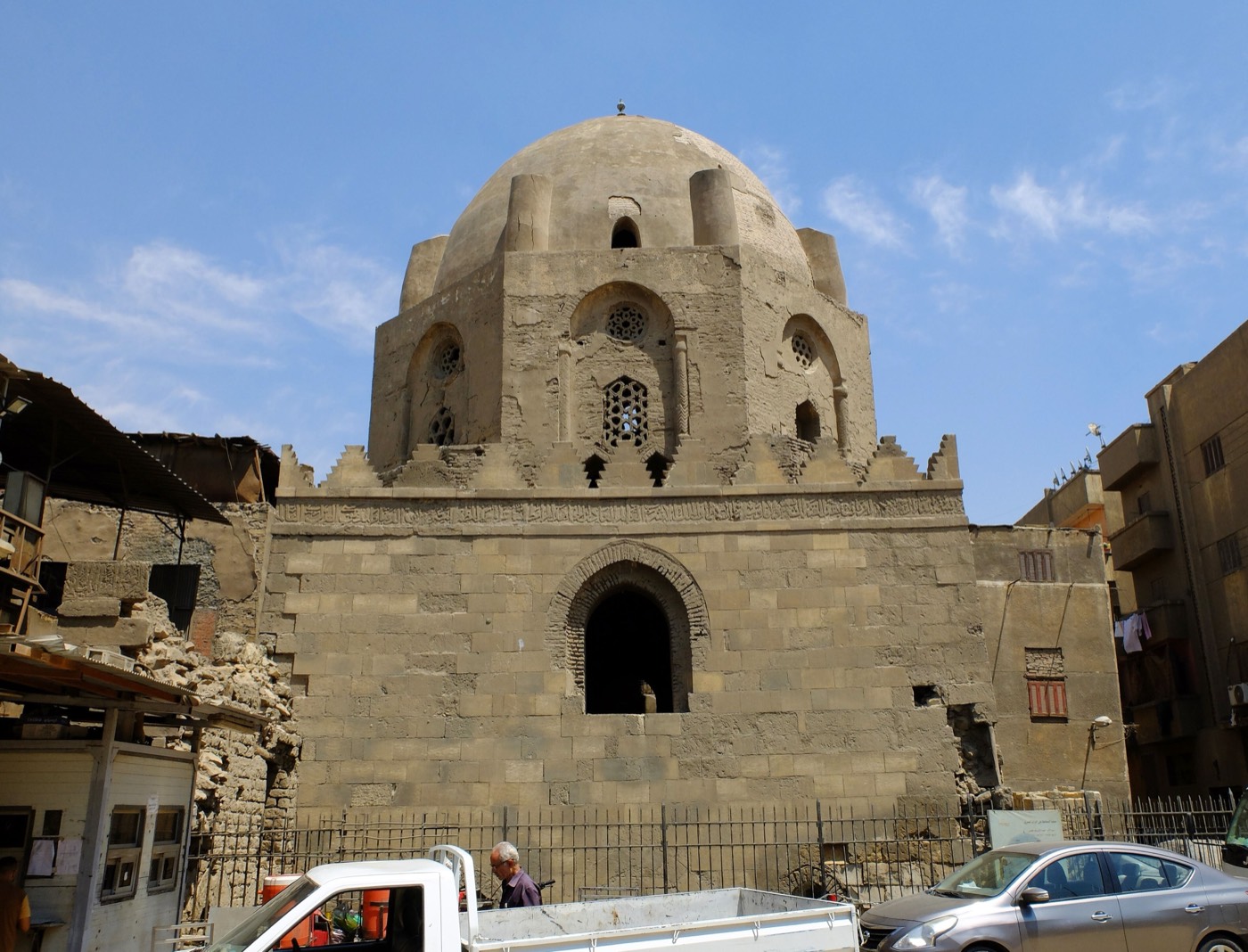
Al-Ashraf Khalil, born in 666 AH (1267-1268), was a son of the Mamluk sultan al-Mansur Qalawun6. When his elder brother, the heir al-Salih 'Ali, died on 4 Sha'ban 687 (September 1288), Qalawun named Khalil heir a week later4,6. A long inscription at the top of the tomb’s walls states that Khalil ordered “this noble dome” in the year 687 (1288-1289), and it already gives him a sultan’s titles2,4. Van Berchem concluded that it was composed after he became heir4. The tomb belonged to his madrasa, the Ashrafiyya, close to the shrine of Sayyida Nafisa and to the tomb his father had built for al-Salih 'Ali’s mother4,5,10.
Khalil became sultan in November 1290 and took Acre from the Crusaders in May 12916. In 690 AH (1291) he endowed villages near Acre for the Ashrafiyya4. A group of amirs killed him on 12 Muharram 693 (13 December 1293), and Maqrizi, quoted by van Berchem, records his burial here on the morning of Friday 22 Safar 693 (January 1294)4,6. The madrasa later disappeared, but the tomb survived4. Under the Muhammad Ali family the dome became a takiyya, a lodge for dervishes11. In 1883 the Comité found it “completely devastated”, rented to a gravedigger as a store, with a steam mill built against it7.
Architecture
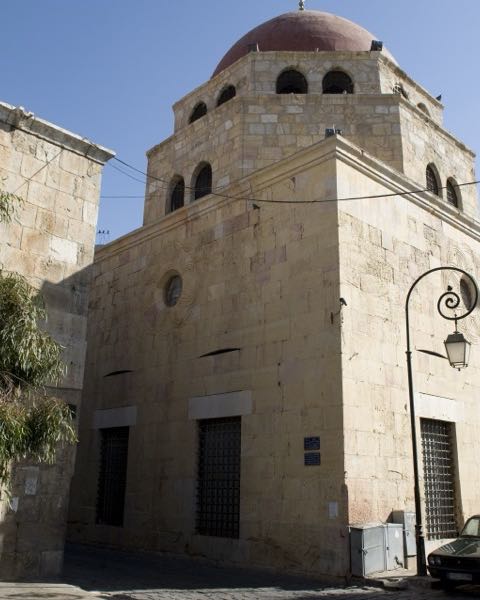
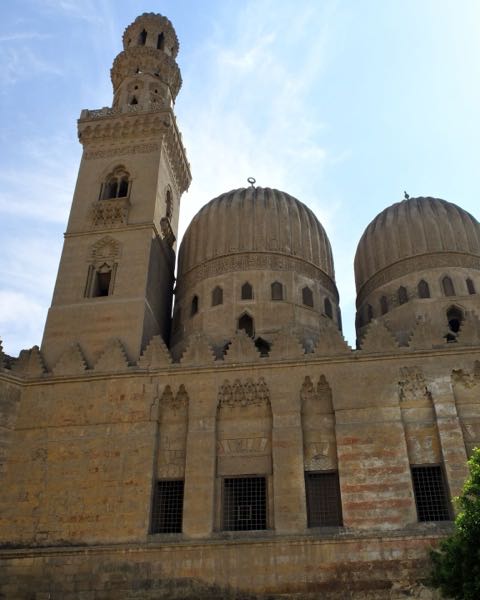
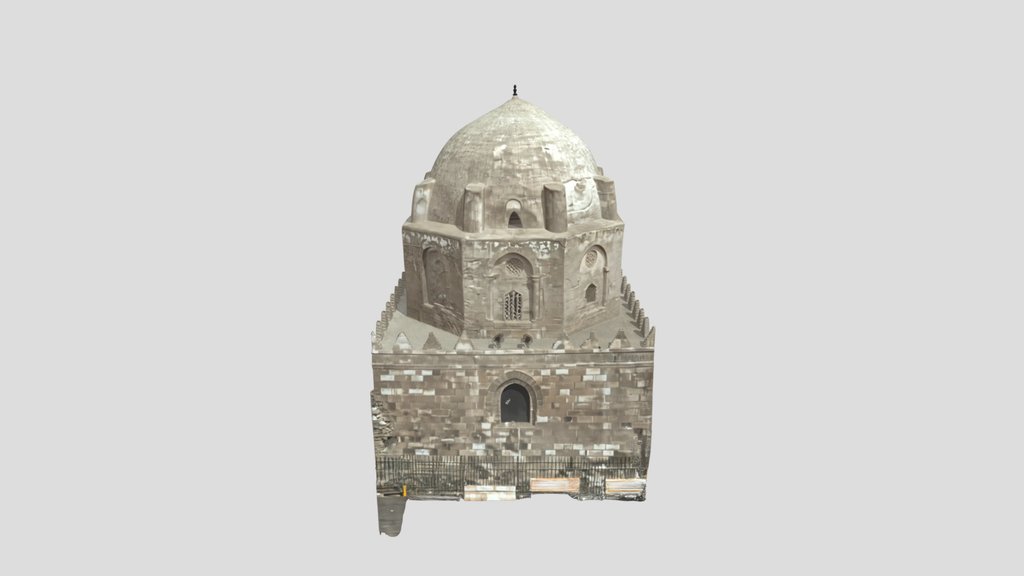
What survives of the complex is the domed tomb chamber; the madrasa has gone4. A foundation band of carved stone in naskh runs round the top of the square chamber, with letters about 50 cm high and a total length of about 40 m2,4. Van Berchem, publishing it in the 1890s, found it well preserved, while O’Kane records it as badly damaged, with missing parts2,4. Its text gives Khalil and his father their full sovereign titles, among them Khalil’s epithet “vindicator of the oppressed from the oppressors”2,4. Above the chamber rises the dome that the Comité took as its model when it rebuilt the dome of Qalawun’s mausoleum5.
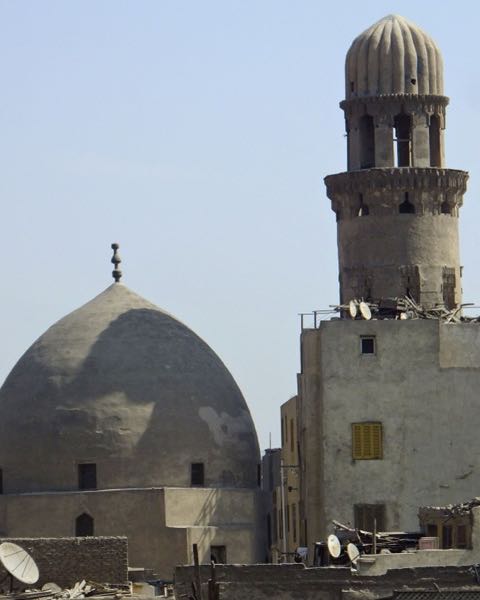
Khalil’s tomb and Umm al-Salih’s, a few steps to its north, belong together: van Berchem called them twin monuments, and the Comité judged in 1901 that they must date from the same period, so closely do they resemble each other4,9. In 1883 the Comité asked for the south-west corner of the dome to be rebuilt, new lintels to be set and some piers to be repaired7. By 1901 accumulated earth made the tomb look sunk into the ground and modern buildings hemmed it in on every side, so Herz Bey proposed a retaining wall topped by a railing to hold back earth and rainwater9.
Inside
Inside, a stucco band in naskh runs round the base of the dome, with the basmala and verses 190-193 of the third sura, Al 'Imran, ending “God Most Great has spoken the truth”; O’Kane records it in good condition3. Van Berchem noted verses of the same sura in the niche of the mihrab4. The Comité’s reports also show how the room was used later: in 1883 a gravedigger kept his equipment in it, and in 1895 the Comité ordered a solid door and entrusted the key to the sheikh of the neighbouring Qadiriyya takiyya7,8.
What to look for
- The carved foundation band round the top of the chamber, its naskh letters about 50 cm high2,4.
- The dome that the Comité copied for its rebuilt dome over Qalawun’s mausoleum5.
- The stucco band of verses from Al 'Imran at the base of the dome inside3.
- The ruined tomb of Umm al-Salih a few steps north, the twin of this tomb4,9.
Visiting
- The tomb, no. 275 on the Comité’s plan of the monuments of Cairo, stands a short walk north of the shrine of Sayyida Nafisa in the al-Khalifa district, with Umm al-Salih’s tomb immediately to its north4,5,12.
- UNESCO inscribed Historic Cairo on the World Heritage List in 1979; one of its five components is named after the nearby cemetery of Sayyida Nafisa1.
- Athar Lina reports severe damp and salt damage from rising groundwater, mostly from leaking supply pipes; the conservation school that it organised with the Ministry of Antiquities in 2016, funded by ARCE, chose this dome as one of its case studies12,13.
Official information: Egypt’s Ministry of Tourism and Antiquities (Supreme Council of Antiquities)DirectionsOpen in OpenStreetMapGuided tours in Cairo
In a trip guide: Cairo’s City of the Dead and the medieval city