Trip guide
Mughal tombs of Delhi and Agra
Sixteen tombs in Delhi and Agra: fifteen from the Mughal period and one, Isa Khan Niyazi’s of 1547-48, from the reign of the Sur sultans. UNESCO calls Humayun’s Tomb the first of the grand Mughal dynastic mausoleums, a line that culminated in the Taj Mahal, and the ASI calls Safdarjung’s Tomb, of about 1754, the last example of that pattern.
- Tombs
- 16
- Routes
- 5
- Straight-line distance
- 15 km
- Location
- Delhi · Agra · Sikandra, India
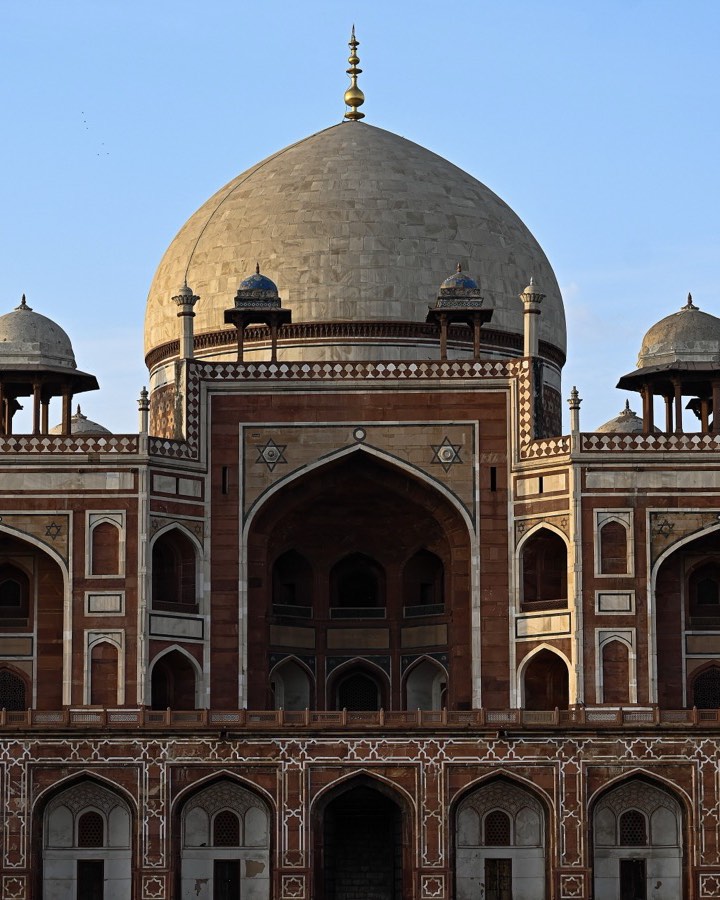
1 Delhi: around Humayun’s Tomb
Straight-line distance: 740 m
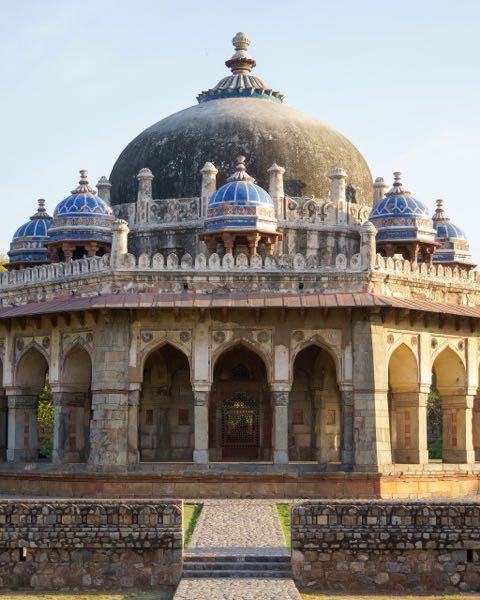 1Tomb of Isa Khan NiyaziThe octagonal garden tomb of Isa Khan Niyazi, a noble of the Sur sultans, dated 1547-48 by its inscription and now part of the Humayun’s Tomb World Heritage property.
170 m to the next stop, in a straight line
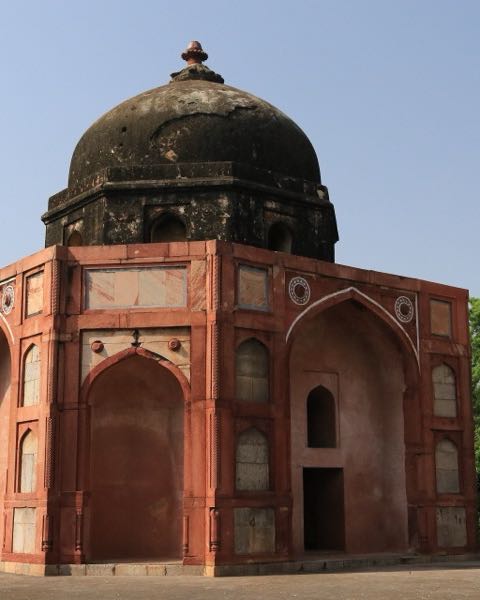 2Afsarwala TombAn octagonal, double-domed tomb in the Humayun’s Tomb complex, known only as ‘the officer’s’ (Afsarwala); a marble grave inside is dated 974 AH (1566-67).
280 m to the next stop, in a straight line
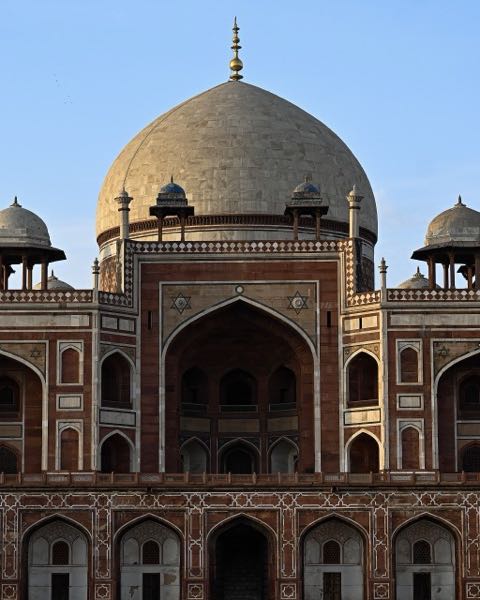 3Humayun’s TombEmperor Humayun’s garden-tomb in Delhi, built in the 1560s–1570s; UNESCO calls it the first of the grand Mughal dynastic mausoleums, a line that culminated in the Taj Mahal.
160 m to the next stop, in a straight line
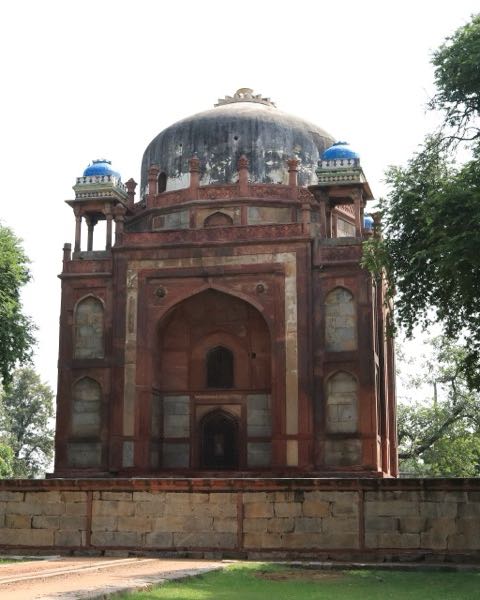 4Barber’s Tomb (Nai ka Gumbad)A square, double-domed red sandstone tomb with four tiled corner pavilions in Humayun’s tomb garden; its occupants are unknown, and one grave is marked 999 AH (1590-91).
130 m to the next stop, in a straight line
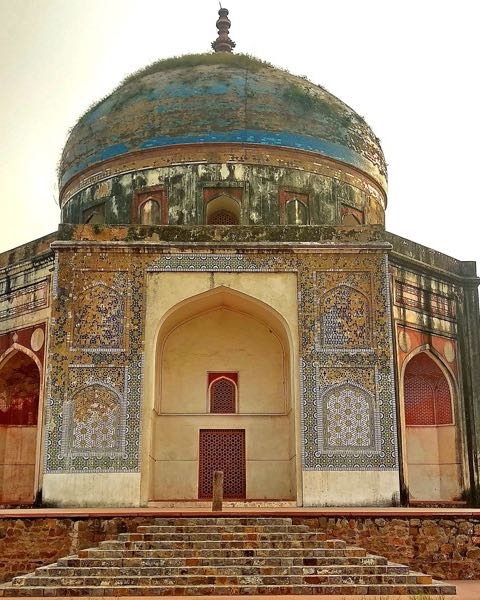 5Nila GumbadA tomb with a turquoise-tiled dome just outside Humayun’s tomb garden in Delhi; its occupant is unknown, and UNESCO and ICOMOS treat it as older than Humayun’s tomb.
2 Delhi: around Nizamuddin
Straight-line distance: 680 m
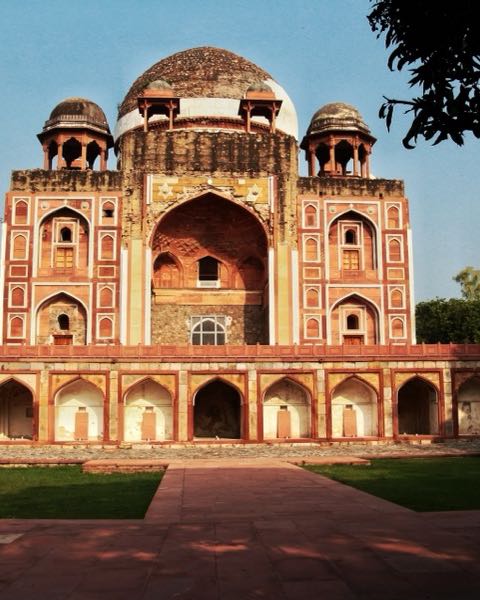 6Tomb of Abdul Rahim Khan-i-KhananAbdul Rahim Khan-i-Khanan, Akbar’s commander and a celebrated poet, built this domed tomb in 1598 for his wife Mah Banu and was buried in it in 1627.
600 m to the next stop, in a straight line
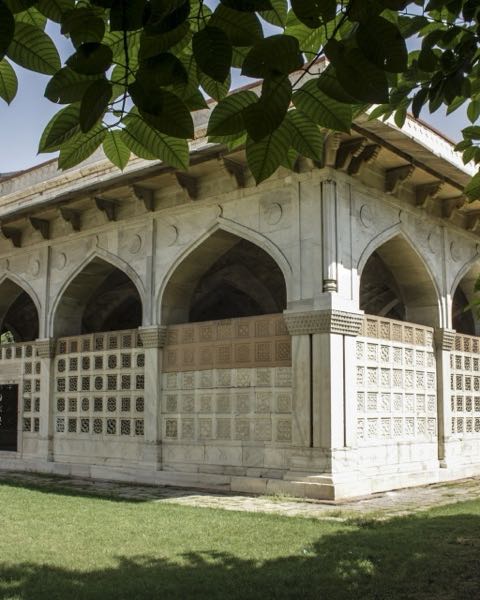 7Chausath KhambaA flat-roofed hall of white marble in Delhi’s Nizamuddin quarter, whose 64 pillars carry 25 small domes over the grave of Mirza Aziz Kokaltash, Akbar’s foster brother, dated 1623-24.
80 m to the next stop, in a straight line
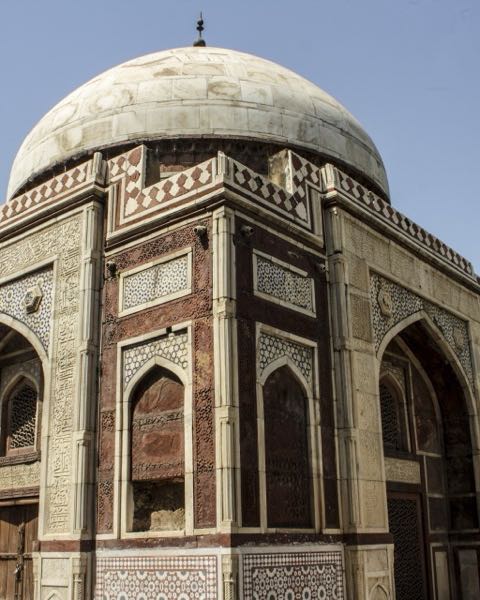 8Tomb of Atgah KhanFinished in 1566-67 beside the shrine of Nizamuddin Auliya in Delhi, the marble-domed tomb of Atgah Khan, Akbar’s foster father and chief minister, murdered in 1562.
3 Delhi: further south, to Mehrauli
Straight-line distance: 8.5 km
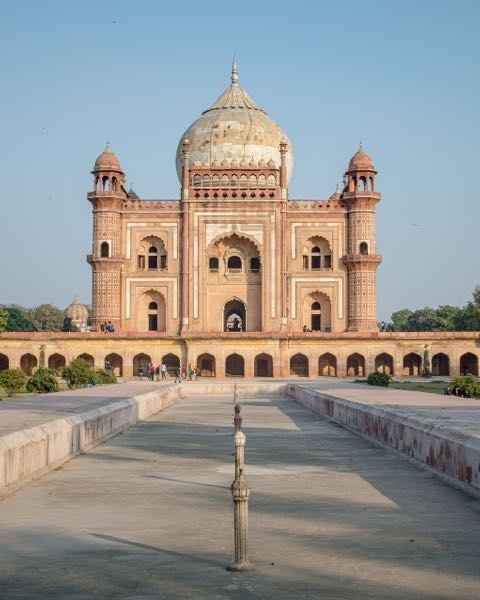 9Safdarjung’s TombBuilt about 1754 by Shuja-ud-Daula for his father Safdar Jang, this Delhi garden tomb is, in the ASI’s words, the last example of the pattern begun at Humayun’s tomb.
7.9 km to the next stop, in a straight line
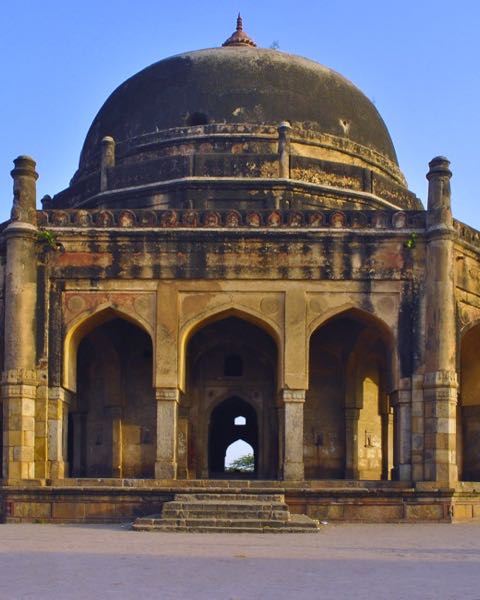 10Tomb of Adham KhanBhul Bhulaiyan, the labyrinth: the octagonal tomb that Akbar raised at Mehrauli for his foster brother Adham Khan, executed in 1562, and Adham’s mother Maham Anaga.
620 m to the next stop, in a straight line
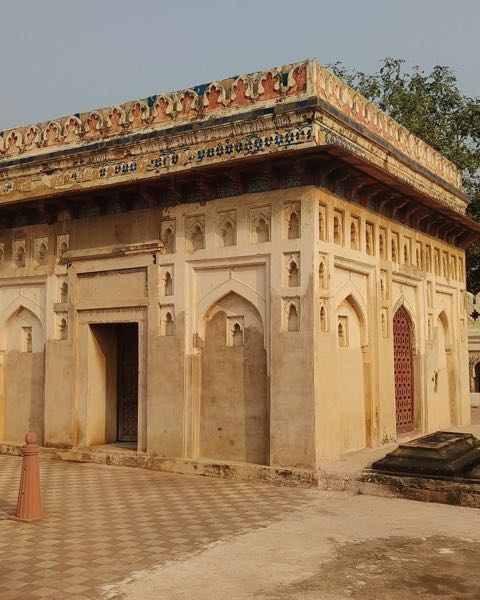 11Tomb of Jamali and KamaliThe flat-roofed tomb of the poet Jamali (d. 1535-36) beside his mosque in Mehrauli, built about 1528-29 and decorated inside with tiles, painted plaster and his own verses.
4 Agra: Sikandra
Straight-line distance: 950 m
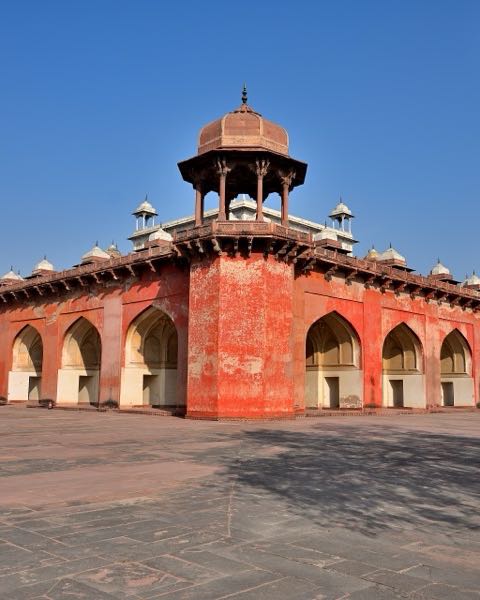 12Akbar's TombAkbar's tomb at Sikandra, Agra: a five-storey mausoleum of red sandstone with a white marble top storey, finished by his son Jahangir around 1613 in a walled garden.
950 m to the next stop, in a straight line
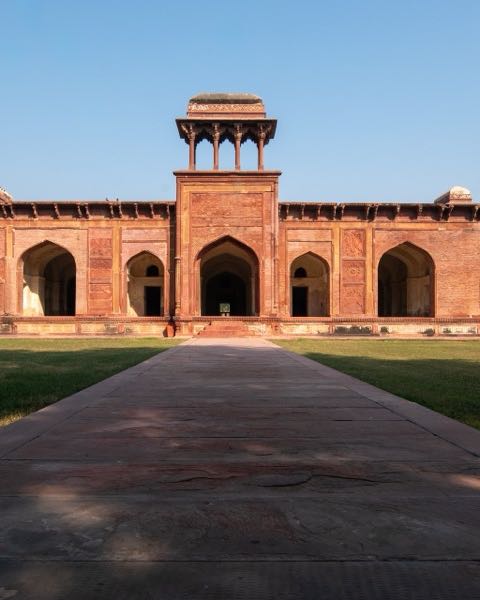 13Tomb of Mariam-uz-ZamaniA red sandstone pavilion built by Sultan Sikandar Lodi in 1495 at Sikandra, Agra, converted in 1623 into the tomb of Mariam-uz-Zamani, Akbar’s wife and Jahangir’s mother.
5 Agra: on the Yamuna
Straight-line distance: 3.9 km
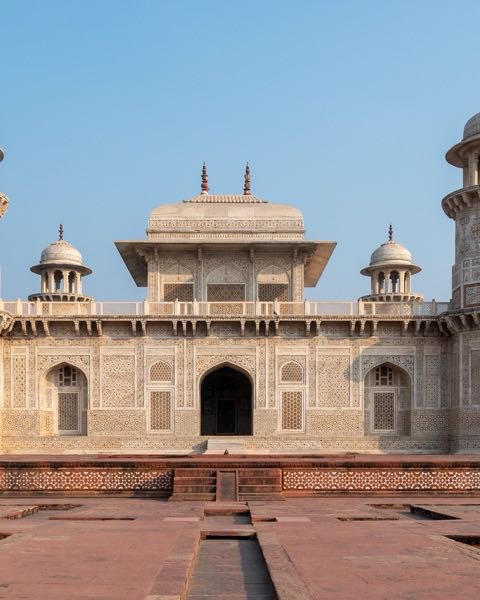 14Tomb of I'timad-ud-DaulahNur Jahan's tomb for her parents on the Yamuna at Agra (1622-1628), which Archnet calls the first Mughal structure completely encased in marble.
950 m to the next stop, in a straight line
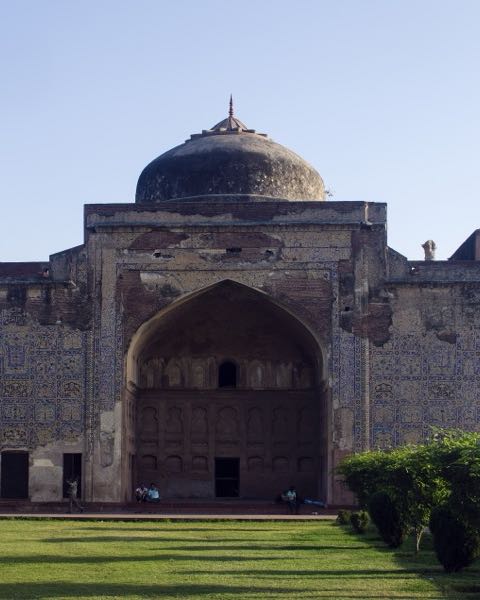 15Chini ka RauzaThe riverside tomb at Agra traditionally ascribed to Afzal Khan Shirazi, Shah Jahan’s prime minister (d. 1639), once faced entirely in glazed tile mosaic.
3.0 km to the next stop, in a straight line
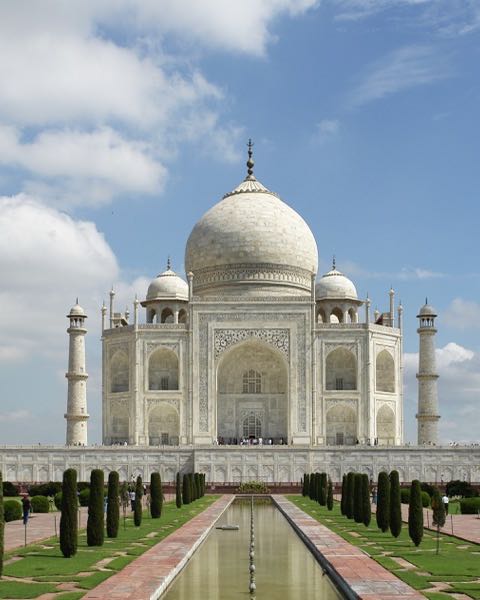 16Taj MahalShah Jahan’s white-marble mausoleum for his wife Mumtaz Mahal, on the Yamuna at Agra, which UNESCO calls the jewel of Muslim art in India.